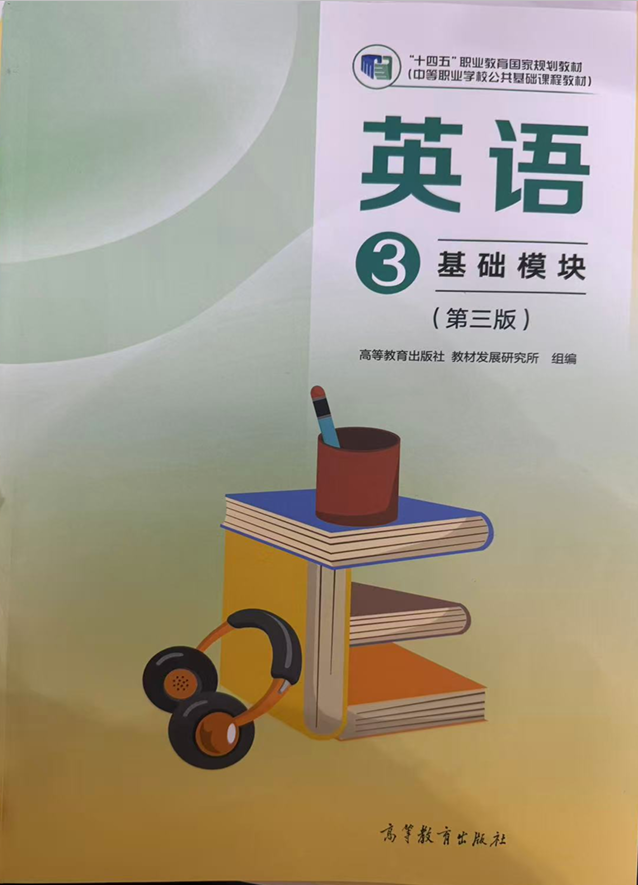
3.3 Artificial Intelligence(Reading and Writing 2)-《英语 基础模块3》(高教版第三版)《一课一练》(原卷版+解析版)
2026-09-20
|
2份
|
5页
|
28人阅读
|
0人下载
摘要:
**基本信息**
基于中职学情,通过“课前预习-课堂检测”分层设计,以词汇变形夯实基础,语法填空与阅读理解递进培养语言应用能力,适配课前课后闭环教学。
**分层设计**
|层次|知识覆盖|设计特色|
|----|----------|----------|
|课前预习|词汇变形(动词-形容词/名词转换)|直接考查8组核心词形变化,聚焦基础词汇积累,培养学习能力|
|课堂检测|语法填空(词汇变形在语篇中的应用)、阅读理解(信息提取与推断)|采用天津本地情境(Hexi district)和真实工厂案例(Geely机器人),语法填空融合词汇与语法,阅读理解提升语言理解与思维分析能力|
内容正文:
编写说明:基于中职学生英语基础薄弱、学习内驱力不足的学情特点,为提升学习效率,落实课前、课中、课后教学闭环,本专辑依据最新《中等职业学校英语课程标准》,打造天津专用《英语 基础模块 3》(高教版第三版)《一课一练》,专辑共 40 练。
本卷为《英语 基础模块 3》(高教版第三版)Unit 3 Artificial Intelligence(Reading and Writing 2)的课前预习与课堂检测。
Unit 3 Artificial Intelligence
一课一练(3) Reading and Writing 2
【课前预习】
一、词汇变形
1._______ v. 使用 → _______ adj. 有用的
2._______ n./v. 小心;关心 → _______ adj. 小心的
3._______ n. 危险 → _______ adj. 危险的
4._______ v. 应用;申请 → _______ n. 应用;申请
5._______ v. 提高;改进 → _______ n. 提高;改进
6._______ v. 发明 → _______ n. 发明
7._______ v./n. 推理;理由 → _______ n. 推理;判断力
8._______ v. 服务;接待 → _______ n. 服务
【答案】1.use → useful 2.care → careful 3.danger → dangerous 4.apply → application 5.improve → improvement 6.invent → invention 7.reason → reasoning 8.serve → service
【课堂检测】
一、语法填空
阅读下面短文,在空白处填入1个适当的单词或括号内单词的正确形式。
In Hexi district of Tianjin, Grandma Zhang, 76, uses an AI voice terminal(语音终端) at home. Thousands of seniors in the city use the same kind of terminal. The terminal is 1.______ (use) to order meals, shop and seek medical advice. Her family is told to be 2.______ (care) with passwords and personal information. The 3.______ (improve) of home care tools helps one worker serve more seniors. Falling alone can be 4.______ (danger), so a smart mattress(床垫) can alert staff quickly. 5.______ people still need kind service from real caregivers in the community.
【答案】1.used 2.careful 3.improvement 4.dangerous 5.But / However
【导语】本篇是一篇说明性短文,介绍天津河西一位老人使用语音终端点餐、问诊,并说明智能工具需与人工照护结合。
【详解】
1.考查被动语态与过去分词。句意:该终端被用来点餐、购物和问诊。terminal 与 use 为被动关系,用 used。
2.考查词性转换。句意:家人被告知要对密码和个人信息小心。be 后接形容词 careful。
3.考查名词。句意:居家照护工具的改进帮助一名工作人员服务更多老人。The 后接名词 improvement。
4.考查形容词。句意:独自跌倒可能很危险。be 后接形容词 dangerous。
5.考查转折连词。句意:但是人们仍需要社区里真照顾者的温暖服务。前后转折,填 But 或 However。
二、阅读下面短文,根据短文内容回答问题
In Geely’s Zeekr 5G smart factory in Ningbo, Zhejiang, tall silver robots now work on the assembly lines. Each Walker S1 robot is about 172 centimeters tall. The robots glide between workstations. They sort materials, carry boxes and install parts with care. What once looked like a scene from a film is now part of real factory life.
The first test was not easy. In July 2024, a shorter robot called Walker S Lite worked in the factory for 21 days. It moved slowly, needed QR codes to find its way, and reached only about 20 percent of a human worker’s efficiency. Engineers faced many problems with routes, speed and long work hours. Later, the upgraded Walker S1 arrived. It walked more steadily, worked about 25 percent faster, and could check parts with high precision. Its smart hands could even hold soft materials.
In a March 2025 show, two robots lifted and moved crates together. They changed their path to avoid people. A factory engineer said the robots can share what they learn, like a team. Company leaders say robots will not replace humans. They can be smart helpers for heavy or boring jobs, while people still plan, repair and create.
6.Where do the tall silver robots work?
_________________________________________________________________
7.How tall is a Walker S1 robot?
_________________________________________________________________
8.What problems did Walker S Lite have in July 2024?
_________________________________________________________________
9.What did two robots do in the March 2025 show?
_________________________________________________________________
10.According to the passage, will robots replace humans?
_________________________________________________________________
【答案】
6.In Geely’s Zeekr 5G smart factory in Ningbo, Zhejiang. / In a smart auto factory in Ningbo.
7.It is about 172 centimeters tall.
8.It moved slowly, needed QR codes to find its way, and reached only about 20 percent of a human worker’s efficiency.
9.They lifted and moved crates together and changed their path to avoid people.
10.No. They can be smart helpers, while people still plan, repair and create.
【导语】本文是一篇说明文,介绍宁波极氪智慧工厂中的人形机器人:早期测试较慢,升级后能精细作业,两台机器人可协作搬箱,并强调机器人是助手而非完全取代人类。
【详解】
6.考查细节理解。句意:这些高高的银色机器人在哪里工作。首段写明在宁波吉利极氪 5G 智慧工厂。
7.考查细节理解。句意:Walker S1 有多高。首段写到约 172 厘米。
8.考查细节理解。句意:2024 年 7 月 Walker S Lite 有什么问题。第二段写到动作慢、靠二维码导航、效率约为人的 20%。
9.考查细节理解。句意:2025 年 3 月的展示中两台机器人做了什么。末段写到一起抬箱搬运并避开行人。
10.考查细节理解。句意:根据短文,机器人会取代人类吗。末段明确说不会取代,而是智能助手,人类仍负责规划、维修与创造。
原创精品资源学科网独家享有版权,侵权必究!
原创精品资源学科网独家享有版权,侵权必究!
原创精品资源学科网独家享有版权,侵权必究!
学科网(北京)股份有限公司
$
编写说明:基于中职学生英语基础薄弱、学习内驱力不足的学情特点,为提升学习效率,落实课前、课中、课后教学闭环,本专辑依据最新《中等职业学校英语课程标准》,打造天津专用《英语 基础模块 3》(高教版第三版)《一课一练》,专辑共 40 练。
本卷为《英语 基础模块 3》(高教版第三版)Unit 3 Artificial Intelligence(Reading and Writing 2)的课前预习与课堂检测。
Unit 3 Artificial Intelligence
一课一练(3) Reading and Writing 2
【课前预习】
一、词汇变形
1._______ v. 使用 → _______ adj. 有用的
2._______ n./v. 小心;关心 → _______ adj. 小心的
3._______ n. 危险 → _______ adj. 危险的
4._______ v. 应用;申请 → _______ n. 应用;申请
5._______ v. 提高;改进 → _______ n. 提高;改进
6._______ v. 发明 → _______ n. 发明
7._______ v./n. 推理;理由 → _______ n. 推理;判断力
8._______ v. 服务;接待 → _______ n. 服务
【课堂检测】
一、语法填空
阅读下面短文,在空白处填入1个适当的单词或括号内单词的正确形式。
In Hexi district of Tianjin, Grandma Zhang, 76, uses an AI voice terminal(语音终端) at home. Thousands of seniors in the city use the same kind of terminal. The terminal is 1.______ (use) to order meals, shop and seek medical advice. Her family is told to be 2.______ (care) with passwords and personal information. The 3.______ (improve) of home care tools helps one worker serve more seniors. Falling alone can be 4.______ (danger), so a smart mattress(床垫) can alert staff quickly. 5.______ people still need kind service from real caregivers in the community.
二、阅读下面短文,根据短文内容回答问题
In Geely’s Zeekr 5G smart factory in Ningbo, Zhejiang, tall silver robots now work on the assembly lines. Each Walker S1 robot is about 172 centimeters tall. The robots glide between workstations. They sort materials, carry boxes and install parts with care. What once looked like a scene from a film is now part of real factory life.
The first test was not easy. In July 2024, a shorter robot called Walker S Lite worked in the factory for 21 days. It moved slowly, needed QR codes to find its way, and reached only about 20 percent of a human worker’s efficiency. Engineers faced many problems with routes, speed and long work hours. Later, the upgraded Walker S1 arrived. It walked more steadily, worked about 25 percent faster, and could check parts with high precision. Its smart hands could even hold soft materials.
In a March 2025 show, two robots lifted and moved crates together. They changed their path to avoid people. A factory engineer said the robots can share what they learn, like a team. Company leaders say robots will not replace humans. They can be smart helpers for heavy or boring jobs, while people still plan, repair and create.
6.Where do the tall silver robots work?
_________________________________________________________________
7.How tall is a Walker S1 robot?
_________________________________________________________________
8.What problems did Walker S Lite have in July 2024?
_________________________________________________________________
9.What did two robots do in the March 2025 show?
_________________________________________________________________
10.According to the passage, will robots replace humans?
_________________________________________________________________
原创精品资源学科网独家享有版权,侵权必究!
原创精品资源学科网独家享有版权,侵权必究!
原创精品资源学科网独家享有版权,侵权必究!
学科网(北京)股份有限公司
$
资源预览图

1
由于学科网是一个信息分享及获取的平台,不确保部分用户上传资料的 来源及知识产权归属。如您发现相关资料侵犯您的合法权益,请联系学科网,我们核实后将及时进行处理。