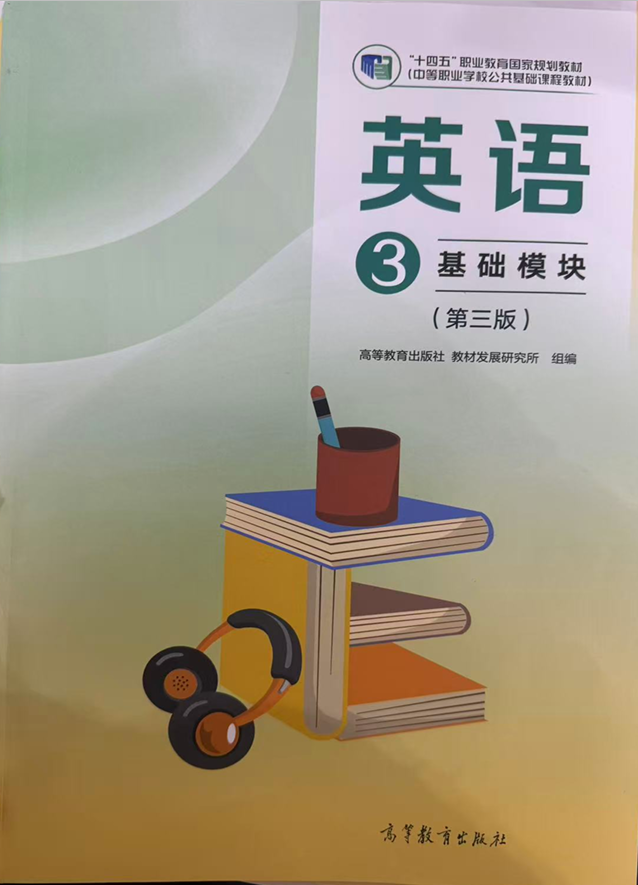
2.1(教案)Community Life-Warming up and Listening&Speaking-《英语 基础模块3》(高教版第三版)【上好课】
2026-09-15
|
12页
|
151人阅读
|
1人下载
精品
内容正文:
基于课程标准的“教-学-评”一致性课堂教学设计
科目
英语
授课教材
高等教育出版社《英语3 基础模块》(第三版)
授课题目
Unit 2 Community Life
Warming Up & Listening and Speaking
课时
课型
2课时(90分钟)
听说课
主题情境
人与社会——社区生活与公共服务
授课教师
语篇研读
【What】
本课选取 Unit 2 “Community Life”中的 Warming Up 与 Listening and Speaking。内容从“理想的社区是什么样”和“社区里有哪些公共设施”两个问题导入,借助 clinic, reading center, kindergarten, fitness center 等图片激活已有经验;随后通过活动1—2识别 laundry, convenience store, gym, clinic 等社区设施词汇,并判断询问社区信息时常用的表达。听力部分围绕 Neal Walker 搬入新社区后向 Zhang Qian 了解购物、健身和医疗设施的对话展开:活动3听取社区拥有的设施,活动4进一步提取位置、距离、营业时间等信息,活动5补全 Neal 对新社区的介绍。第二课时通过活动6学习“问路—询问设施—回应与介绍”的功能句和方位表达,并结合 where/which 引导的限制性定语从句、from...to...等语言点进行操练;随后完成对话复述、活动7社区图问答和活动8售房推荐角色扮演,最后以练习、总结和分层作业巩固。
【Why】
本课旨在帮助学生在真实的社区生活情境中发展“看图识别—听懂信息—询问设施—指路说明—介绍社区”的听说能力。学生不仅要掌握常见公共设施和方位词汇,还要能够礼貌询问路线与社区服务信息,听懂距离、位置、开放时间等细节,并用较完整的语言介绍社区配套。通过比较便利店、健身中心、诊所、交通和周边环境等生活要素,引导学生关注社区公共服务与生活便利性,形成积极参与和建设美好社区的意识。
【How】
教学按照“情境导入—词汇匹配—功能句识别—主旨/设施听力—细节听力—语篇补全—对话跟读—语言聚焦—复述—支架输出—情境迁移—评价巩固”推进。听力任务由易到难:活动3识别设施,活动4抓取位置、距离和营业时间,活动5借助完整语篇整合信息;活动6通过听、读、划线识别询问社区设施的句式,并结合问路表达和定语从句进行替换操练。输出阶段从活动7的社区图半控制对话过渡到活动8“售房推荐”真实情境,形成“理解—操练—迁移—评价”的连续任务链。
学情分析
学生对 supermarket, hospital, gym, clinic 等常见生活设施已有一定认知,也能够使用简单的 Where is...? / Is there...? 进行问答。但其社区设施词汇往往零散,对 laundry, convenience store, fitness center 等表达不够熟悉;连续听取对话时,容易只捕捉设施名称,而忽略“behind Building 8, near the main gate, 15 minutes’ walk, open from...to...”等位置、距离和时间信息。在口语输出中,学生常能提出单一问题,却难以自然完成“问路—追问设施—介绍位置/营业时间—回应感谢”的完整交际链;where/which 引导的定语从句也容易混淆。课堂因此借助图片、社区图、关键词表格、句型支架、同伴互评和角色任务逐步降低表达难度。
课标要求
结合中等职业学校英语课程对基础模块语言能力、文化意识、思维品质和学习能力的要求,本课重点落实:
1. 能听懂语速适中、话题熟悉的社区设施与问路类对话,获取设施名称、位置、距离、开放时间等关键信息。
2. 能围绕社区生活进行简单交流,使用恰当表达询问路线、询问公共设施并介绍设施的位置和服务信息。
3. 能借助图片、选项、表格和上下文进行听前预测、关键词记录、信息核对与对话复述,形成基本的听说学习策略。
4. 能关注社区公共服务与生活便利性,在交流中表达对良好社区环境和完善公共设施的认识。
教学目标
通过本节90分钟连堂课学习,学生能够:
1.(学习理解)识别并正确使用 laundry, convenience store, gym, clinic, kindergarten, fitness center, facility, opposite 等词汇及 at the end of, from...to..., by the way, Why not...? 等表达;完成活动1—5并准确获取社区设施及位置、距离、营业时间等信息。
2.(应用实践)理解并运用 Could you tell me the way to...? / How can I get to...? / Is there a...near here? / What other facilities do we have? / Is there a place where I can...? / It’s about...minutes’ walk. / Turn right... 等核心句型,完成活动6的听、读、划线、跟读和问答。
3.(迁移创新)借助“Facility—Location—Distance/Opening Hours—Response”支架完成活动7社区图对话,并在活动8中以 house seller / potential buyer 身份围绕设施、服务、交通和周边环境完成较完整的售房推荐交流。
4.(社会意识)能够用简单英语评价社区生活的便利性,认识完善公共设施、服务和交通对建设美好社区的重要作用。
教学
重难点
重点:
1. 掌握社区公共设施、方位和营业时间相关核心词汇、短语以及问路/询问设施功能句。
2. 运用听前预测、关键词记录和分层听力策略完成活动3—5,提取“facility—location—distance—opening hours”等关键信息。
3. 使用 Could you tell me the way to...? / Is there a place where...? / There is a...which... 等结构完成社区信息交流。
难点:
1. 将零散词句整合为“问路—询问设施—说明位置/时间—回应”的完整交际链,并在社区图和售房情境中灵活迁移。
2. 在语境中准确区分并使用 where 与 which 引导的限制性定语从句,同时正确表达方位、距离和开放时间。
核心语言
【核心词汇】community, facility, laundry, convenience store, gym, clinic, kindergarten, fitness center, swimming pool, supermarket, hospital, medicine, opposite, beside
【方位/时间表达】behind Building 8; near the main gate; in the center of; opposite our community; beside the laundry; about 5/15 minutes’ walk; turn right/left; at the end of...; from...to...
【交际功能】Could you tell me the way to...? / How can I get to...? / Where is...? / Is there a...near here/nearby? / What other facilities do we have? / Is there a place where I can...? / With pleasure. / Why not...?
【重点结构】There is/are...; I’d like to do...; where 引导限制性定语从句;which 引导限制性定语从句;There is a clinic which is open from...to...
教学工具
PPT、教材、配套音频、社区平面图/任务单、角色卡、计时器/投屏设备。
教学策略
任务型教学法(设施匹配、信息选择、细节勾选、语篇补全、复述、角色扮演);情境教学法(新居民咨询、社区问路、售房推荐);交际教学法(询问—说明—追问—回应);合作学习法(pair work / group discussion / role play / peer feedback);支架式教学(图片、社区图、关键词、句型框架);形成性评价(自评、互评、师评)。
教学过程
教学环节
教学活动
学生活动
设计意图
Period 1(45 min)
Part 1:
Lead-in &
Learning Objectives
(6 min)
T: Present the learning objectives and ask Ss to read the three goals quickly: learn language about public facilities, ask about/introduce community facilities, and recognize good community services.
T: Show the prompt “What do you think community should look like?” Ask Ss to think for 20 seconds and share one or two ideas with a partner.
T: Show the facility pictures and ask: “What facilities do you think are available in the community?” Elicit clinic, reading center, kindergarten and fitness center, then add other familiar examples from Ss.
Ss: Read the objectives and identify today’s topic and final speaking task.
Ss: Think—pair—share what a good community should be like, using simple words such as convenient, clean, safe or beautiful.
Ss: Observe the pictures, name the facilities they know and repeat the target words after T.
利用PPT已有问题和设施图片激活生活经验,在“理想社区—公共设施”之间建立主题联系,同时让学生明确两课时的听说任务。(感知与注意)
评价方式:师评+即时口头反馈。观察学生能否说出至少2种社区设施,并能用1—2个简单词描述理想社区。
Part 2:
Warming up
Activities 1-2
(10 min)
T: Present Activity 1 “Look and match”. Ask Ss to match laundry, convenience store, gym and clinic with the pictures individually, then check in pairs.
T: Check the answers by pointing to each picture. Use quick pronunciation drilling for laundry, convenience store and clinic.
T: Present Activity 2 “Think and tick”. Ask Ss to tick the sentences that can be used to ask for community information.
T: After checking, ask pairs to classify the selected sentences into two purposes: asking the way / asking about facilities. Invite one group to explain why “Why not shop at the convenience store in our community?” is a suggestion rather than a question for information.
Ss: Complete Activity 1 independently and compare answers with a partner.
Ss: Repeat the four facility words and correct pronunciation.
Ss: Complete Activity 2, compare choices and categorize the useful sentences by communicative purpose.
落实PPT活动1—2,从“词汇识别”过渡到“功能句识别”,帮助学生建立设施词汇与真实交际目的之间的联系,为听力活动做语言准备。(获取与梳理)
评价方式:自评+互评+师评。以活动1匹配正确率、活动2勾选结果及“能否说明句子的交际功能”为评价点,对 laundry / convenience store 等易错词即时纠音。
Part 3:
Listening
Activity 3
(6 min)
T: Present Activity 3 “Listen and choose”. Ask Ss to preview the facility pictures/options and predict which places may be mentioned in a new community.
T: Play the audio once. Ask Ss to choose the facilities the community has without trying to understand every word.
T: Play the key part again if necessary and ask Ss to justify each choice with one word or phrase they heard.
Ss: Preview the options and make a quick prediction.
Ss: Listen for facility names and complete Activity 3.
Ss: Compare answers in pairs and give one listening clue for each choice.
先让学生只抓“有哪些设施”,降低首次听力负担,训练利用选项预测和抓关键词获取主旨性信息的能力。(获取与梳理)
评价方式:自评+互评+师评。观察学生能否根据关键词完成设施选择,并能说出至少1条听力依据;必要时针对高频错误局部重播。
Part 4:
Listening
Activities 4-5
(13 min)
T: Present Activity 4 “Listen and tick”. Before playing the audio, guide Ss to read the paired details and underline the information types: location, walking distance, opening hours and other facilities.
T: Play the audio again. Ask Ss to tick the correct information, then compare in pairs.
T: Present Activity 5. Ask Ss to predict the type of each blank in Neal’s introduction (facility / number / facility / facility / position word).
T: Play the audio once more and ask Ss to complete the five blanks. Check the answers: convenience store, 15, fitness center, clinic, opposite.
T: Ask Ss to read the completed introduction aloud in pairs and identify one sentence that shows Neal’s positive feeling about the community.
Ss: Preview Activity 4 and mark what kind of detail each choice tests.
Ss: Listen for specific information and complete Activity 4, then check with a partner.
Ss: Predict the blank types, listen again and complete Activity 5.
Ss: Read the completed community introduction and locate the sentence expressing convenience.
按照“位置/距离/时间细节—完整语篇补全”逐层提升听力难度,引导学生从抓单词过渡到整合信息,并形成听前预测、听中记录、听后验证的策略。(获取与梳理、描述与阐释)
评价方式:自评+互评+师评。活动4重点检查位置、距离和营业时间等细节,活动5检查5个关键信息;教师根据集中错误决定是否再次播放对应片段。
Part 5:
Script Study
(10 min)
T: Display the listening script. Play/read the dialogue sentence by sentence and ask Ss to shadow read.
T: Ask Ss to circle the expressions about location and facilities: on Xinhua Road, 15 minutes’ walk, behind Building 8, near the main gate, in the center of, opposite our community, fitness center, clinic and hospital.
T: Ask short comprehension questions: “Why does Zhang Qian suggest the convenience store?” “What facilities are mentioned besides shopping places?” “Why does Neal say it is convenient to live here?”
T: Organize a 1-minute pair task: Student A is a new resident and asks two questions about the community; Student B answers with information from the script.
Ss: Shadow read the script and mark the target expressions.
Ss: Answer the comprehension questions with short complete sentences.
Ss: Use the script information to complete a short new-resident question-and-answer exchange in pairs.
回到录音原文实现“听音—见文—懂义—开口”,并通过简短问答把听力信息转化为可使用的口语材料,为第二课时活动6和问路表达做准备。(内化与运用)
评价方式:师评+同伴核对。以跟读准确度、位置/设施信息理解和1分钟问答完整度为依据;将高频错误词句列入第二课时开头快速复现。
Period 2(45 min)
Part 6:
Activity 6
Listen, Read &
Underline
(10 min)
T: Present Activity 6. Play the dialogue between Zhang Li and Sara Smith. Ask Ss to listen, read and underline all the sentences used to ask about community facilities or directions.
T: Check the underlined expressions, including “Could you tell me the way to the nearest laundry?”, “Is there a gym in the community?” and “Is there a place where I can buy some medicine?”
T: Ask Ss to role-read the dialogue in pairs, changing roles once. Remind them to use natural stress in questions and polite responses.
T: Ask three quick questions: “How far is the laundry?” “Where is the swimming pool?” “When is the clinic open?”
Ss: Listen, follow the text and underline the target inquiry sentences.
Ss: Read the dialogue in pairs and change roles.
Ss: Answer the three detail questions in complete sentences and correct information with a partner if needed.
落实PPT活动6,把“听、读、划线”与信息理解结合起来,使学生直接识别并模仿问路、询问设施和获取服务信息的核心功能句。(获取与梳理、模仿与内化)
评价方式:互评+师评。检查划线内容是否覆盖“问路、询问设施、询问用途地点”三类表达,并观察成对朗读的语音、停顿和信息理解。
Part 7:
Key Language
Points
(12 min)
T: Use the PPT language-point slides to explain and practise the target expressions in context.
T: ① Asking the way: Could you tell me the way to...? / How can I get to...? / Where is...? / Is there a...near here/nearby? Ask Ss to change “laundry” into two other facilities.
T: ② Giving directions: turn right / turn left / at the end of... Explain the difference between at the end of... and in the end, then give a quick direction-following command.
T: ③ “Is there a place where I can buy some medicine?” Guide Ss to notice that where refers to a place and functions as an adverbial of place. Ask Ss to make one sentence with “a place where...”.
T: ④ “There is a clinic which is open from 6:00 a.m. to 10:00 p.m.” Guide Ss to notice that which refers to a thing/place and acts as a subject/object in the clause. Practise from...to... with one new opening-hours example.
Ss: Take brief notes and answer concept-checking questions.
Ss: Make substitution sentences with different facilities and directions.
Ss: Follow the direction command and distinguish at the end of from in the end.
Ss: Produce one where-clause sentence and one which-clause/opening-hours sentence, then compare with a partner.
对PPT全部语言点采用“例句观察—规则提示—替换操练”的方式处理,使语法和词块直接服务于问路与社区介绍,而非停留在孤立规则记忆。(内化与运用)
评价方式:师评+快速口头检测。每个语言点抽查1—2名学生造句;重点观察问路句式、at the end of、where/which及 from...to... 的准确性。
Part 8:
Retell the
Dialogue
(5 min)
T: Show the Chinese translation cues from the PPT without the full English dialogue.
T: Ask pairs to retell the first half (asking for the laundry and gym) and the second half (swimming pool and clinic), then connect the two halves.
T: Invite one pair to retell the dialogue. Give only keyword prompts when they get stuck: laundry—5 minutes—turn right; gym—swimming pool—beside; medicine—clinic—6:00 to 10:00.
Ss: Use the Chinese cues and keywords to retell the dialogue in pairs.
Ss: Try to keep the communication chain complete rather than reciting every word exactly.
Ss: Listen to one pair and note one expression they can borrow.
借助PPT参考译文进行“去全文支架”的复述,帮助学生从机械跟读过渡到按交际逻辑组织语言,为活动7的改编输出搭桥。(归纳与内化)
评价方式:互评+师评。以“问路—询问设施—位置/时间说明—感谢回应”是否完整和核心句型是否准确为主要评价标准。
Part 9:
Activity 7
Imitate and Talk
(6 min)
T: Present Activity 7 and the community map. Ask pairs to imitate Activity 6 and complete a new dialogue using the prompts.
T: Remind Ss to include four elements: ask the way to one place, give distance/direction, ask about another facility, and introduce an alternative with opening hours.
T: Give pairs 2 minutes to prepare. Invite two pairs to perform, then show the reference content about the coffee shop, hospital and clinic for self-correction.
Ss: Use the community map and sentence frame to prepare a dialogue in pairs.
Ss: Perform the dialogue with appropriate polite expressions and directions.
Ss: Compare their version with the reference content and make one correction or improvement.
活动7提供社区图、句型框架和参考对话,是半控制输出任务,使学生在较低风险下把活动6的语言迁移到新的设施和路线信息中。(内化与运用)
评价方式:自评+互评+师评。使用简短检查项:Ask the way ✓ / Direction or distance ✓ / Ask another facility ✓ / Opening hours ✓ / Polite response ✓。
Part 10:
Activity 8
Role Play
(6 min)
T: Present Activity 8. Assign roles: Student A is a house seller; Student B is a potential buyer.
T: Ask Ss to use the four information groups on PPT: Facilities (clinic, kindergarten, laundry, convenience store, gym, underground parking lot), Services (24-hour community center), Transportation (subway lines 1, 5 and 6), and Surroundings (shopping mall, school, big garden).
T: Give pairs 2 minutes to plan a 6-turn recommendation conversation. Encourage the buyer to ask at least two follow-up questions and the seller to use “There is/are...” or “We have...” plus one relative clause if possible.
T: Invite selected pairs to perform and ask the class to identify which advantage sounds most attractive.
Ss: Read the situation and divide the information into facilities, services, transportation and surroundings.
Ss: Plan and perform a house-selling recommendation dialogue in pairs.
Ss: Ask/answer follow-up questions and give one piece of peer feedback on completeness, clarity or persuasiveness.
活动8把语言迁移到“售房推荐”职场/生活情境中,要求学生从单一设施问答提升到综合介绍社区配套,增强真实交际性和信息组织能力。(迁移与创新)
评价方式:同伴互评+师评。评价维度:信息完整(4类优势)、功能完整(推荐+至少2次追问)、语言准确、表达得体、介绍有条理。
Part 11:
Exercises
(3 min)
T: Give the two exercise sets on PPT as an exit check. Ask Ss to complete Items 1—8 independently without notes.
T: Check the answers quickly. Ask Ss to explain the language focus of selected items: where, beside, clinic, minutes’, turn right, would like to do, from...to..., which.
Ss: Complete the exercises independently.
Ss: Check answers, correct mistakes and state the rule or phrase tested in selected items.
用PPT原有练习进行即时检测,覆盖词汇、介词、固定搭配及 where/which 定语从句,验证核心语言是否达成。(评价与反馈)
评价方式:自评+师评。统计课堂正确率;对 where/which、beside/besides、minutes’ walk、would like to do 和 from...to... 的错误进行针对性反馈。
Part 12:
Summary
(2 min)
T: Use the PPT summary pages for rapid retrieval. Show the Chinese meanings first and ask Ss to say the English words/phrases: laundry, gym, facility, clinic, opposite, convenience store, at the end of, from...to..., by the way, With pleasure, Why not...?
T: Ask the class to complete three sentence stems orally: “Could you tell me the way to...?” “By the way, is there...?” “Is there a place where I can...?”
Ss: Recall the vocabulary and phrases before the answers are shown.
Ss: Say the three core sentence patterns together and explain when each one is used.
利用PPT总结页进行主动提取,帮助学生形成“设施词汇—方位表达—功能句—社区介绍任务”的整体框架。(概括与整合)
评价方式:自评+师评。学生用“会说/需复习”标记词汇和句型,教师根据全班反应明确课后复习重点。
Part 13:
Homework
(1 min)
T: Assign the homework on PPT.
T: Basic Task: review the vocabulary, phrases and sentences; finish the related workbook exercises and correct mistakes carefully.
T: Challenge Task: make a dialogue for the situation “You want to know more about your community.” Require at least 6 exchanges, including one direction question and two facility questions.
Ss: Record the homework and clarify the requirements.
Ss: Choose the basic task and complete the challenge dialogue according to their level.
作业与课堂听说任务保持一致:基础作业巩固输入,挑战作业将核心功能句迁移到学生自己的社区情境,体现分层与实践性。
评价方式:课后作业评价。下一课时抽查核心词汇/句型,并按“6轮问答+1次问路+2次设施询问+信息完整+表达得体”检查挑战任务。
板书设计
Unit 2 Community Life
1. Public facilities: laundry / convenience store / gym / clinic / fitness center ...
2. Ask: Could you tell me the way to...? Is there a...? What other facilities do we have?
Is there a place where I can...?
3. Give information: It’s about...minutes’ walk. Turn right/left... beside / opposite / behind...
There is a...which is open from...to...
4. Introduce a community: Facilities → Services → Transportation → Surroundings
教学反思
(课后填写)
课后重点记录:
1. 活动3—5的听力梯度是否合适,学生困难主要来自设施词汇、语速,还是位置/距离/时间等细节信息记录,并据此调整重播与关键词支架。
2. 活动6及语言点中的问路句式、where/which 定语从句能否在活动7—8中转化为主动使用;重点记录学生最易混淆的表达。
3. 活动8售房推荐中学生是否能按“设施—服务—交通—周边”有条理地介绍社区;根据参与度和输出质量调整角色分工、准备时间与支架数量。
《英语 基础模块3》(高教版 第三版)
精品资源学科网独家享有版权,侵权必究!
学科网(北京)股份有限公司
学科网(北京)股份有限公司
$
资源预览图

1

2

3
由于学科网是一个信息分享及获取的平台,不确保部分用户上传资料的 来源及知识产权归属。如您发现相关资料侵犯您的合法权益,请联系学科网,我们核实后将及时进行处理。