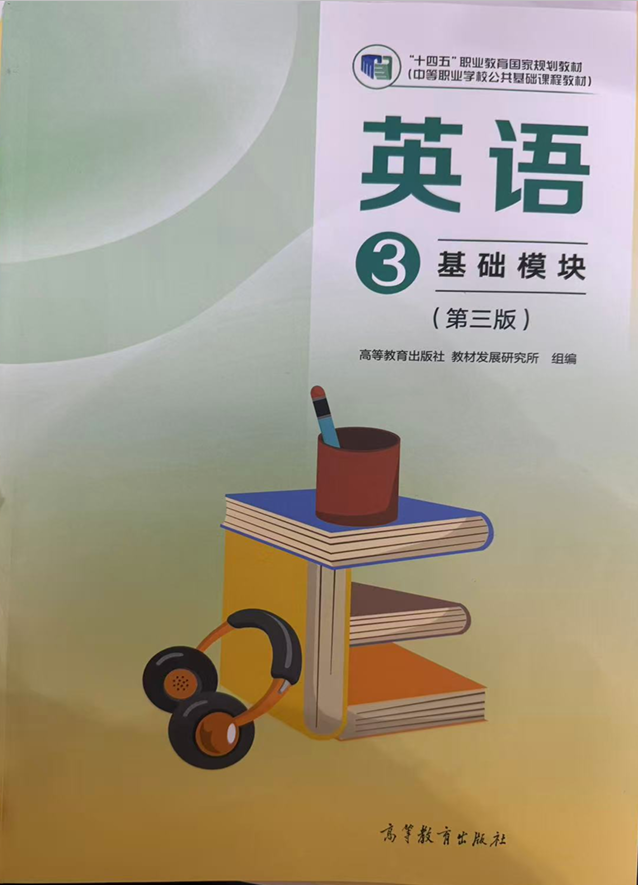
Unit 1-4 综合测试卷(1)-《英语 基础模块3》(高教版第三版)单元过关卷(原卷版+解析版)
2026-09-11
|
2份
|
24页
|
62人阅读
|
0人下载
摘要:
**基本信息**
紧扣《英语 基础模块3》Unit1-4核心考点,AB卷分层设计(A卷基础巩固、B卷能力提升),综合测试卷模拟实战,适配单元复习,提升语言应用与应试能力。
**题型特征**
|题型|题量/分值|知识覆盖|命题特色|
|----|-----------|----------|----------|
|语言知识运用|25/25|情态动词、非谓语、定语从句等语法及词汇|基础考点训练,如非谓语作状语题(第22题)|
|阅读理解|15/30|职业技能培训、环保生活、人际交往|真实服务案例(如Li Na培训经历),提升信息获取能力|
|补全对话|5/5|服务场景交际用语|结合低碳生活话题,强化实用沟通能力|
|短文填空|10/10|动词形式、连词、形容词比较级|融入服务工作情境,考查语法应用|
|书面表达|1/10|志愿实践经历与环保理念|结合职业认知,提升综合语言输出与思维品质|
内容正文:
编写说明:本套试卷紧扣《英语 基础模块3》(高教版第三版)教材,以教材单元为基准精准覆盖核心考点。
每个单元设置AB卷,A卷为基础巩固卷,侧重基础考点训练,帮助学生扎实掌握知识要点;B卷为能力提升卷,注重知识整合与全面检测,引导学生构建知识网络。全书设计4份综合测试卷,模拟实战情境,聚焦解题能力突破,全面提升应试能力与知识应用水平。
《英语 基础模块3》(高教版第三版)《单元过关卷》
Unit 1 -- Unit 4综合测试卷(1)
考试时间:60分钟 满分:80分
班级 姓名 学号 成绩
第一部分:语言知识运用(共25小题,每小题1分,共25分)
1. —Would you mind giving me some advice on job‑hunting?
—______. I’m glad to share my ideas with you.
A. I’m afraid not B. Of course not C. No, thanks D. You’re welcome
【答案】B
【详解】考察内容:交际用语(Would you mind 应答)
详解:句意:— 你介意给我一些求职建议吗?— 当然不介意,我很高兴和你分享想法。Of course not 用来回答 mind 问句。故选B。
2. Many young people hope ______ practical skills for their future jobs.
A. learn B. learning C. to learn D. learned
【答案】C
【详解】考察内容:非谓语动词作宾语(hope to do)
详解:hope 后接不定式作宾语,hope to do sth. 希望做某事。句意:很多年轻人希望为未来的工作学习实用技能。故选C。
3. We ______ listen carefully when customers express their real feelings. It is our duty.
A. can B. may C. must D. might
【答案】C
【详解】考察内容:Unit1 情态动词 must
详解:must 表示 “必须”,强调工作职责。句意:顾客表达真实想法的时候我们必须认真倾听。故选C。
4. The skill training book ______ my elder sister bought is very helpful for new clerks.
A. what B. that C. who D. whom
【答案】B
【详解】考察内容:定语从句(先行词 book 指物,that 作宾语)
详解:先行词 the skill training book 是事物,关系代词 that 在从句中作 bought 的宾语。句意:我姐姐买的这本技能培训书对新店员很有用。故选B。
5. He enjoys ______ part‑time service work in his spare time.
A. do B. doing C. to do D. done
【答案】B
【详解】考察内容:非谓语动词作宾语(enjoy doing)
详解:enjoy 后面接动名词作宾语,enjoy doing sth. 喜欢做某事。句意:他空闲时间喜欢做兼职服务工作。故选B。
6. —Thank you for giving me so many useful suggestions.
—______.
A. My pleasure B. That’s right C. Good idea D. Come on
【答案】A
【详解】考察内容:交际用语(回应感谢)
详解:My pleasure 不客气,用于回应别人感谢。故选A。
7. The green project carried out by our school is ______ than last year’s.
A. valuable B. more valuable C. most valuable D. the most valuable
【答案】B
【详解】考察内容:Unit3 形容词比较级
详解:than 提示比较级,valuable 多音节,more valuable 更有价值。故选B。
8. We decide ______ small changes to reduce pollution in daily life.
A. make B. making C. to make D. made
【答案】C
【详解】考察内容:非谓语动词作宾语(decide to do)
详解:decide to do sth. 决定做某事,不定式作 decide 的宾语。句意:我们决定做出小小的改变,在日常生活中减少污染。故选C。
9. ______ you meet with difficult customers, you should keep calm.
A. Though B. When C. Unless D. Until
【答案】B
【详解】考察内容:状语从句‑时间状语从句 when
详解:when 当…… 时候。句意:当你遇到难沟通的顾客,你应当保持冷静。故选B。
10. The girl ______ is good at communication wants to work in the service industry.
A. which B. whom C. who D. whose
【答案】C
【详解】考察内容:定语从句(先行词 the girl 指人,who 作主语)
详解:先行词 the girl 是人,who 在从句作主语。句意:擅长沟通的这个女孩想要在服务行业工作。故选C。
11. —What do you think of the online service experience?
—______. It brings convenience to ordinary people.
A. Quite good B. Bad luck C. I’m sorry D. See you
【答案】A
【详解】考察内容:交际用语(评价事物)
详解:Quite good 相当不错;句意:你觉得线上服务体验怎么样?相当好,它给普通人带来便利。故选A。
12. The volunteers ______ to protect the environment will take part in weekend activities.
A. invite B. invited C. inviting D. to invite
【答案】B
【详解】考察内容:非谓语动词作定语(过去分词 invited 表被动)
详解:The volunteers invited to protect the environment “被邀请保护环境的志愿者”,volunteer 和 invite 被动关系,过去分词作后置定语。故选B。
13. We should get along well with our ______ in the service workplace.
A. workmates B. relatives C. patients D. visitors
【答案】A
【详解】考察内容:Unit4 单元词汇 workmates 同事。故选A。
14. You won’t make great progress ______ you keep practising service skills.
A. if B. though C. unless D. because
【答案】C
【详解】考察内容:状语从句‑条件状语从句 unless
详解:unless 除非;句意:除非你坚持练习服务技能,否则你不会取得很大进步。故选C。
15. Some teenagers expect ______ themselves well before graduation.
A. improve B. improving C. to improve D. improved
【答案】C
【详解】考察内容:非谓语动词作宾语(expect to do)
详解:expect to do sth. 期待做某事,不定式作宾语。句意:一些青少年期待毕业前提升自我。故选C。
16. Respect is the key ______ building good relationship with other people.
A. to B. of C. for D. with
【答案】A
【详解】考察内容:Unit4 固定短语 the key to …… 的关键。故选A。
17. —I think we should do more things for environmental protection.
—______. Every small effort counts.
A. That’s true B. No problem C. Bad luck D. You’re welcome
【答案】A
【详解】考察内容:交际用语(赞同观点)
详解:That’s true 的确如此。故选A。
18. The report ______ talks about green lifestyles is popular among vocational students.
A. who B. what C. which D. whose
【答案】C
【详解】考察内容:定语从句(先行词 report 指物,which 作主语)
详解:先行词 the report 是事物,which 在从句作主语。句意:这篇讲述绿色生活方式的报告在中职学生中很受欢迎。故选C。
19. ______ he has lots of pressure from work, he still keeps patient to every guest.
A. Though B. If C. Because D. Since
【答案】A
【详解】考察内容:状语从句‑让步状语从句 though
详解:though 虽然,引导让步状语从句。句意:虽然他工作压力很大,但依旧对每一位客人保持耐心。故选A。
20. The young clerk practises ______ different ways of dealing with complaints every day.
A. try B. trying C. to try D. tried
【答案】B
【详解】考察内容:非谓语动词作宾语(practise doing)
详解:practise 后面接动名词作宾语,practise doing 练习做某事。句意:这位年轻店员每天练习处理投诉的不同方法。故选B。
21. The boy ______ we interviewed yesterday wants to be a customer‑service worker.
A. whose B. whom C. which D. what
【答案】B
【详解】考察内容:定语从句(先行词 the boy 指人,whom 作 interviewed 宾语)
详解:先行词 the boy 是人,whom 在从句作宾语。句意:我们昨天采访的男孩想要成为客服工作人员。故选B。
22. ______ facing all kinds of challenges, the service staff never give up.(非谓语作状语)
A. When B. While C. Although D. /
【答案】D
【详解】考察内容:非谓语动词作状语(现在分词作让步 / 伴随状语)
详解:Facing all kinds of challenges 为现在分词作状语,省略引导词。句意:面对各种各样的挑战,服务人员从不放弃。故选D。
23. We should learn ______ experienced workers so that we can grow fast.
A. from B. to C. with D. for
【答案】A
【详解】1考察内容:Unit4 短语 learn from 向…… 学习。故选A。
24. The leaflets ______ by our class tell people simple ways of saving energy.
A. print B. printing C. printed D. to print
【答案】C
【详解】考察内容:非谓语动词作定语(过去分词 printed 被动)
详解:the leaflets printed by our class “我们班印制的宣传单”,leaflet 与 print 被动,过去分词作后置定语。故选C。
25. ______ we keep learning new skills, we will become more competitive.
A. If B. Though C. Unless D. Since
【答案】A
【详解】考察内容:状语从句‑条件状语从句 if
详解:if 引导条件状语从句,主将从现。句意:如果我们持续学习新技能,我们将会变得更有竞争力。故选A。
第二部分:阅读理解(共15小题,每小题2分,共30分)
第五节 在本节中,你将读到三则阅读材料,从短文后各题所给的A、B、C、D四个选项中选出可以填入空白处的最佳选项,并将答题卡上对应选项的方框涂满、涂黑。
A
Nowadays, more vocational students choose to take different kinds of skill‑training courses. Hoping to prepare for future jobs, many of them spend spare time learning service‑related knowledge. Taking training courses is not easy, but it can bring great rewards.
Li Na is a Grade‑Three vocational student. She chose a customer‑service training course last winter holiday. Wanting to improve her communication skills, she took every class carefully. The textbook used in the course covers many real‑life service cases. The teachers giving the lessons are workers with rich working experience.
During the training, Li Na practised dealing with different kinds of customers. Sometimes she met difficult situations. But she never refused to try new ways. After finishing the one‑month course, she got much confidence. She believes the skills learned in class will help her in her future job hunt.
It is not training itself but our hard work that helps us make progress. No matter what job we will take, continuous learning plays an important role.
26. Why do many vocational students take skill‑training courses?
A. To kill their free time
B. To get ready for future jobs
C. To travel around different cities
D. To make lots of money at once
27. When did Li Na take the customer‑service training course?
A. Last spring holiday
B. Last winter holiday
C. This summer holiday
D. This winter holiday
28. Who are the teachers giving the lessons?
A. Famous movie stars
B. Rich business managers
C. Workers with rich working experience
D. Professional sports players
29. How long did Li Na’s training course last?
A. For one month
B. For two weeks
C. For half a year
D. For one year
30. What can we learn from the passage?
A. Training courses can bring progress only with hard work
B. Taking training courses always makes people rich quickly
C. Service jobs need no communication skills at all
D. All students can find good jobs after training
【答案】26.B 27.B 28.C 29.A 30.A
【导语】本文围绕“职业培训”主题展开,主要讲述了中职学生参加客服技能培训。
26. B 细节。Hoping to prepare for future jobs 很多学生参加培训为未来工作做准备。
27. B 细节。She chose a customer‑service training course last winter holiday。
28. C 细节。The teachers giving the lessons are workers with rich working experience 授课老师是拥有丰富工作经验的从业者。
29. A 细节。After finishing the one‑month course 课程为期一个月。
30. A 主旨推理。只有付出努力,培训才能带来进步。
B
Green living has become a hot topic among young people. Protecting our environment does not always mean big projects. We can do lots of small things in our daily life.
Many service shops encourage their workers to form green habits. Workers working in these shops are asked to save paper and electricity. They also advise visitors to take reusable shopping bags instead of plastic ones. Some shops hand out leaflets introducing simple low‑carbon lifestyles. Printed by young volunteers, these leaflets tell people easy ways of cutting down waste.
If every person takes small green actions, the environment will become better. Though single actions seem tiny, thousands of small efforts can produce great changes. Service workers can spread green ideas while providing good service for customers. In this way, customer service and environmental protection can go hand in hand.
31. What does green living mean according to the text?
A. We must take large‑scale environment projects only
B. We can do small things to protect environment in daily life
C. People should only buy green‑coloured goods
D. Everyone must stop shopping completely
32. The underlined word “reusable” in Paragraph 2 means ______.
A. 一次性的 B. 可重复使用的 C. 昂贵的 D. 易碎的
33. Who printed the leaflets about low‑carbon lifestyles?
A. Government officials
B. Young volunteers
C. Shop managers
D. Famous scientists
34. What can we infer from the passage?
A. Small green actions also make a difference
B. Only big projects can change the environment
C. Service shops must stop offering goods to visitors
D. Green ideas have nothing to do with customer service
35. What is the main idea of the passage?
A. Small green actions and green ideas in service work
B. How to open a big shopping supermarket
C. The history of plastic shopping bags
D. Ways to make money in service industry
【答案】31.B 32.B 33.C 34.A 35.A
【导语】这是一篇说明文。本文结合商店服务岗位践行绿色生活。
31. B 细节。保护环境并不总是大型工程,日常生活中小事也可以践行。
32. B 词义猜测。reusable 可重复使用的。
33. B 细节。Printed by young volunteers 由青年志愿者印制宣传单。
34. A 推理。Though single actions seem tiny, thousands of small efforts can produce great changes 微小行动也会产生作用。
35. A 主旨。文章讲述服务工作中的绿色小行动和环保理念。
C
Good interpersonal skills are necessary for service‑industry workers. People who can get on well with others are more likely to solve problems smoothly in working places.
Wang Qiang once worked as a part‑time shop assistant. At the beginning, he had trouble communicating with some customers. He didn’t know how to show respect when facing different people. The workmates that he worked with gave him plenty of useful advice. They told him to listen patiently and try to understand other people’s feelings.
Wanting to make improvements, Wang Qiang kept practising in his spare time. Every time he finished serving a guest, he would think over what he could do better. Step by step, he made great progress. He learned that good communication does not mean agreeing with everyone. It means respecting others even when opinions are different.
Good relationships will not form by themselves. We need to learn, practise and reflect. Whether in part‑time jobs or future full‑time work, interpersonal skills are of great value for every young person.
36. What is necessary for service‑industry workers?
A. Good interpersonal skills
B. Much expensive clothing
C. Large amounts of money
D. Rich travel experience
37. Who gave Wang Qiang lots of practical advice?
A. His school teachers
B. His workmates
C. His family members
D. Famous scientists
38. What did Wang Qiang do to improve himself?
A. He kept practising and reflected on his work
B. He gave up his part‑time job at once
C. He argued with every difficult customer
D. He spent all his time playing games
39. The underlined phrase “interpersonal skills” in Paragraph 1 means ______.
A. 运动技能 B. 人际交往能力 C. 绘画技巧 D. 烹饪手艺
40. What is the main idea of the passage?
A. The importance of interpersonal skills for service workers
B. How to make much money in a short time
C. Different kinds of part‑time jobs for teenagers
D. History of modern shopping industry
【答案】36.A 37.B 38.A 39.B 40.A
【导语】本文讲述兼职店员提升人际交往能力
36. A 细节。Good interpersonal skills are necessary for service‑industry workers 人际交往能力对服务业从业者必不可少。
37. B 细节。The workmates that he worked with gave him plenty of useful advice 同事给了他很多实用建议。
38. A 细节。Wanting to make improvements, Wang Qiang kept practising in his spare time 坚持练习并且反思工作。
39. B 词义猜测。interpersonal skills 人际交往能力。
40. A 主旨。文章阐述人际交往能力对于服务从业者的重要意义
第三部分 补全对话(共5题,每题1分,共5分)
Tom: Hi, Amy! Long time no see. What have you been busy with recently?
Amy: Hi Tom! I 41.______ part in a service‑skill training course last month. I tried to improve my communication ability.
Tom: That sounds meaningful! 42.______ long did the training course last?
Amy: It lasted for four weeks. I learned a great deal.
Tom: By the way, your shop calls on customers to live low‑carbon lives, right?
Amy: Yes. It is our 43.______ to spread green ideas to visitors.
Tom: What measures does your shop take in your daily 44.______ work?
Amy: We advise guests to use reusable bags. We also hold environmental 45.______ every two months.
Tom: That’s really wonderful.
Amy: Thank you.
41.___________42.___________43.___________44.___________45.__________
【答案】41. took 42. How 43. duty 44. culture 45. activities
【导语】这是一则关于环保活动的对话。
41. took 详解:take part in 参加;last month 一般过去时。
42. How 详解:How long 询问时长。
43. duty 详解:It is one’s duty to do sth. 做某事是某人的责任。
44. service 详解:daily service work 日常服务工作,单元主题词汇。
45. activities 详解:environmental activities 环保活动,复数表泛指。
第四部分 短文填空(共10题,每题1分,共10分)
As vocational students, we need to prepare ourselves for future jobs. Last term, our school held a series of skill‑training activities. I chose 46.________(take) the customer‑service group training. Every week, we took part in practice tasks 47.________(design) for service learners.
I got a part‑time service job later. The workers 48.________(work) with me are all friendly and helpful. I practise 49.________(deal) with all kinds of visitors every day. Besides, our shop encourages us 50.________(spread) green living ideas to customers.
I feel lucky to have this working chance. The working environment is 51.________(pleasant) than I expected. 52.________ I sometimes meet hard‑to‑please customers, I keep trying my best. We take part in different team 53.________(activity) to improve our teamwork. It is important for us 54.________(build) good interpersonal relationships in service posts.
I hope 55.________(keep) learning all the time and make myself more competitive.
46.___________47.___________48.___________49.___________50.___________
51.___________52.___________53.___________54.___________55.___________
【答案】
46. to take 47. designed 48.working 49. dealing 50. to spread
51. more pleasant 52. Though / Although 53. activities 54. to build 55. to keep
【导语】短文讲述中职学生参加志愿实践的经历
46. to take
考察:非谓语动词作宾语,choose to do sth. 选择做某事。
47. designed
考察:非谓语动词作定语,过去分词表被动 “为服务学习者设计的实践任务”。
48. working
考察:非谓语动词作定语,现在分词 working 作后置定语,the workers working with me 和我一起工作的同事。
49. dealing
考察:非谓语动词作宾语,practise doing sth. 练习做某事。
50. to spread
考察:非谓语动词作宾语,encourage sb. to do sth. 鼓励某人做某事。
51. more pleasant
考察:形容词比较级,than 提示比较级。
52. Though / Although
考察:让步状语从句,“虽然我有时遇到难伺候的顾客,但依旧尽全力”。
53. activities
考察:名词复数,different 后接可数名词复数。
54. to build
考察:重点句型 It is +adj.+for sb. to do sth.
55. to keep
考察:非谓语动词作宾语,hope to do sth. 希望做某事。
第五部分 书面表达(10分)
假定你是中职毕业生,结合志愿实践经历,以 **My Views on Volunteer Work** 为题写英语短文。
要点:
1. 简单介绍你参加过的社区志愿实践;
2. 志愿工作带给你的收获(沟通、职业认知);
3. 志愿活动中践行环保理念;
4. 谈谈今后的打算。
注意:
1. 不得出现真实校名、个人姓名;
2. 词数 80‑120;
3. 开头、结尾已给出,不计入总词数。
My Views on Volunteer Work
Volunteer work plays an important part in teenagers’ growth.
_________________________________________________________________________________________________________________________________________________________________________________________________________________________________________________________________________________________________________________________________________________________________________________________________________________________________________________________________________________________________________________________________________________________________________
I will keep learning and make progress step by step.
【答案】
My Views on Volunteer Work
Volunteer work plays an important part in teenagers’ growth.
I once took part in community volunteer work during summer vacation. I offered help for local residents. From this experience, I improved my communication skills and got better understanding of public‑service jobs. While working, I also spread low‑carbon ideas to people around me.
Volunteer work teaches me a lot. In future, I will take more practical chances and keep improving myself.
I will keep learning and make progress step by step。
【导语】本篇书面表达属于观点类书面表达
【详解】1.要点覆盖:
①参加社区志愿实践:I once took part in community volunteer work during summer vacation
②收获沟通与职业认知:improved my communication skills and got better understanding of public‑service jobs
③践行环保:spread low‑carbon ideas to people around me
④今后打算:take more practical chances and keep improving myself
语法亮点拆解
1. 时间状语从句(省略结构):While working,完整形式 While I was working,作时间状语,精简句式。
2. 非谓语动词作宾语:keep improving (keep doing sth 非谓语动名词作宾语)。
3. 固定短语(单元重点):take part in 参加;communication skills 沟通能力;low‑carbon ideas 低碳理念。
学科网(北京)股份有限公司 (
1
)原创精品资源学科网独家享有版权,侵权必究!
学科网(北京)股份有限公司
$
编写说明:本套试卷紧扣《英语 基础模块3》(高教版第三版)教材,以教材单元为基准精准覆盖核心考点。
每个单元设置AB卷,A卷为基础巩固卷,侧重基础考点训练,帮助学生扎实掌握知识要点;B卷为能力提升卷,注重知识整合与全面检测,引导学生构建知识网络。全书设计4份综合测试卷,模拟实战情境,聚焦解题能力突破,全面提升应试能力与知识应用水平。
《英语 基础模块3》(高教版第三版)《单元过关卷》
Unit 1 -- Unit 4综合测试卷(1)
考试时间:60分钟 满分:80分
班级 姓名 学号 成绩
第一部分:语言知识运用(共25小题,每小题1分,共25分)
1. —Would you mind giving me some advice on job‑hunting?
—______. I’m glad to share my ideas with you.
A. I’m afraid not B. Of course not C. No, thanks D. You’re welcome
2. Many young people hope ______ practical skills for their future jobs.
A. learn B. learning C. to learn D. learned
3. We ______ listen carefully when customers express their real feelings. It is our duty.
A. can B. may C. must D. might
4. The skill training book ______ my elder sister bought is very helpful for new clerks.
A. what B. that C. who D. whom
5. He enjoys ______ part‑time service work in his spare time.
A. do B. doing C. to do D. done
6. —Thank you for giving me so many useful suggestions.
—______.
A. My pleasure B. That’s right C. Good idea D. Come on
7. The green project carried out by our school is ______ than last year’s.
A. valuable B. more valuable C. most valuable D. the most valuable
8. We decide ______ small changes to reduce pollution in daily life.
A. make B. making C. to make D. made
9. ______ you meet with difficult customers, you should keep calm.
A. Though B. When C. Unless D. Until
10. The girl ______ is good at communication wants to work in the service industry.
A. which B. whom C. who D. whose
11. —What do you think of the online service experience?
—______. It brings convenience to ordinary people.
A. Quite good B. Bad luck C. I’m sorry D. See you
12. The volunteers ______ to protect the environment will take part in weekend activities.
A. invite B. invited C. inviting D. to invite
13. We should get along well with our ______ in the service workplace.
A. workmates B. relatives C. patients D. visitors
14. You won’t make great progress ______ you keep practising service skills.
A. if B. though C. unless D. because
15. Some teenagers expect ______ themselves well before graduation.
A. improve B. improving C. to improve D. improved
16. Respect is the key ______ building good relationship with other people.
A. to B. of C. for D. with
17. —I think we should do more things for environmental protection.
—______. Every small effort counts.
A. That’s true B. No problem C. Bad luck D. You’re welcome
18. The report ______ talks about green lifestyles is popular among vocational students.
A. who B. what C. which D. whose
19. ______ he has lots of pressure from work, he still keeps patient to every guest.
A. Though B. If C. Because D. Since
20. The young clerk practises ______ different ways of dealing with complaints every day.
A. try B. trying C. to try D. tried
21. The boy ______ we interviewed yesterday wants to be a customer‑service worker.
A. whose B. whom C. which D. what
22. ______ facing all kinds of challenges, the service staff never give up.(非谓语作状语)
A. When B. While C. Although D. /
23. We should learn ______ experienced workers so that we can grow fast.
A. from B. to C. with D. for
24. The leaflets ______ by our class tell people simple ways of saving energy.
A. print B. printing C. printed D. to print
25. ______ we keep learning new skills, we will become more competitive.
A. If B. Though C. Unless D. Since
第二部分:阅读理解(共15小题,每小题2分,共30分)
第五节 在本节中,你将读到三则阅读材料,从短文后各题所给的A、B、C、D四个选项中选出可以填入空白处的最佳选项,并将答题卡上对应选项的方框涂满、涂黑。
A
Nowadays, more vocational students choose to take different kinds of skill‑training courses. Hoping to prepare for future jobs, many of them spend spare time learning service‑related knowledge. Taking training courses is not easy, but it can bring great rewards.
Li Na is a Grade‑Three vocational student. She chose a customer‑service training course last winter holiday. Wanting to improve her communication skills, she took every class carefully. The textbook used in the course covers many real‑life service cases. The teachers giving the lessons are workers with rich working experience.
During the training, Li Na practised dealing with different kinds of customers. Sometimes she met difficult situations. But she never refused to try new ways. After finishing the one‑month course, she got much confidence. She believes the skills learned in class will help her in her future job hunt.
It is not training itself but our hard work that helps us make progress. No matter what job we will take, continuous learning plays an important role.
26. Why do many vocational students take skill‑training courses?
A. To kill their free time
B. To get ready for future jobs
C. To travel around different cities
D. To make lots of money at once
27. When did Li Na take the customer‑service training course?
A. Last spring holiday
B. Last winter holiday
C. This summer holiday
D. This winter holiday
28. Who are the teachers giving the lessons?
A. Famous movie stars
B. Rich business managers
C. Workers with rich working experience
D. Professional sports players
29. How long did Li Na’s training course last?
A. For one month
B. For two weeks
C. For half a year
D. For one year
30. What can we learn from the passage?
A. Training courses can bring progress only with hard work
B. Taking training courses always makes people rich quickly
C. Service jobs need no communication skills at all
D. All students can find good jobs after training
B
Green living has become a hot topic among young people. Protecting our environment does not always mean big projects. We can do lots of small things in our daily life.
Many service shops encourage their workers to form green habits. Workers working in these shops are asked to save paper and electricity. They also advise visitors to take reusable shopping bags instead of plastic ones. Some shops hand out leaflets introducing simple low‑carbon lifestyles. Printed by young volunteers, these leaflets tell people easy ways of cutting down waste.
If every person takes small green actions, the environment will become better. Though single actions seem tiny, thousands of small efforts can produce great changes. Service workers can spread green ideas while providing good service for customers. In this way, customer service and environmental protection can go hand in hand.
31. What does green living mean according to the text?
A. We must take large‑scale environment projects only
B. We can do small things to protect environment in daily life
C. People should only buy green‑coloured goods
D. Everyone must stop shopping completely
32. The underlined word “reusable” in Paragraph 2 means ______.
A. 一次性的 B. 可重复使用的 C. 昂贵的 D. 易碎的
33. Who printed the leaflets about low‑carbon lifestyles?
A. Government officials
B. Young volunteers
C. Shop managers
D. Famous scientists
34. What can we infer from the passage?
A. Small green actions also make a difference
B. Only big projects can change the environment
C. Service shops must stop offering goods to visitors
D. Green ideas have nothing to do with customer service
35. What is the main idea of the passage?
A. Small green actions and green ideas in service work
B. How to open a big shopping supermarket
C. The history of plastic shopping bags
D. Ways to make money in service industry
C
Good interpersonal skills are necessary for service‑industry workers. People who can get on well with others are more likely to solve problems smoothly in working places.
Wang Qiang once worked as a part‑time shop assistant. At the beginning, he had trouble communicating with some customers. He didn’t know how to show respect when facing different people. The workmates that he worked with gave him plenty of useful advice. They told him to listen patiently and try to understand other people’s feelings.
Wanting to make improvements, Wang Qiang kept practising in his spare time. Every time he finished serving a guest, he would think over what he could do better. Step by step, he made great progress. He learned that good communication does not mean agreeing with everyone. It means respecting others even when opinions are different.
Good relationships will not form by themselves. We need to learn, practise and reflect. Whether in part‑time jobs or future full‑time work, interpersonal skills are of great value for every young person.
36. What is necessary for service‑industry workers?
A. Good interpersonal skills
B. Much expensive clothing
C. Large amounts of money
D. Rich travel experience
37. Who gave Wang Qiang lots of practical advice?
A. His school teachers
B. His workmates
C. His family members
D. Famous scientists
38. What did Wang Qiang do to improve himself?
A. He kept practising and reflected on his work
B. He gave up his part‑time job at once
C. He argued with every difficult customer
D. He spent all his time playing games
39. The underlined phrase “interpersonal skills” in Paragraph 1 means ______.
A. 运动技能 B. 人际交往能力 C. 绘画技巧 D. 烹饪手艺
40. What is the main idea of the passage?
A. The importance of interpersonal skills for service workers
B. How to make much money in a short time
C. Different kinds of part‑time jobs for teenagers
D. History of modern shopping industry
第三部分 补全对话(共5题,每题1分,共5分)
Tom: Hi, Amy! Long time no see. What have you been busy with recently?
Amy: Hi Tom! I 41.______ part in a service‑skill training course last month. I tried to improve my communication ability.
Tom: That sounds meaningful! 42.______ long did the training course last?
Amy: It lasted for four weeks. I learned a great deal.
Tom: By the way, your shop calls on customers to live low‑carbon lives, right?
Amy: Yes. It is our 43.______ to spread green ideas to visitors.
Tom: What measures does your shop take in your daily 44.______ work?
Amy: We advise guests to use reusable bags. We also hold environmental 45.______ every two months.
Tom: That’s really wonderful.
Amy: Thank you.
41.___________42.___________43.___________44.___________45.___________
第四部分 短文填空(共10题,每题1分,共10分)
As vocational students, we need to prepare ourselves for future jobs. Last term, our school held a series of skill‑training activities. I chose 46.________(take) the customer‑service group training. Every week, we took part in practice tasks 47.________(design) for service learners.
I got a part‑time service job later. The workers 48.________(work) with me are all friendly and helpful. I practise 49.________(deal) with all kinds of visitors every day. Besides, our shop encourages us 50.________(spread) green living ideas to customers.
I feel lucky to have this working chance. The working environment is 51.________(pleasant) than I expected. 52.________ I sometimes meet hard‑to‑please customers, I keep trying my best. We take part in different team 53.________(activity) to improve our teamwork. It is important for us 54.________(build) good interpersonal relationships in service posts.
I hope 55.________(keep) learning all the time and make myself more competitive.
46.___________47.___________48.___________49.___________50.___________
51.___________52.___________53.___________54.___________55.___________
第五部分 书面表达(10分)
假定你是中职毕业生,结合志愿实践经历,以 **My Views on Volunteer Work** 为题写英语短文。
要点:
1. 简单介绍你参加过的社区志愿实践;
2. 志愿工作带给你的收获(沟通、职业认知);
3. 志愿活动中践行环保理念;
4. 谈谈今后的打算。
注意:
1. 不得出现真实校名、个人姓名;
2. 词数 80‑120;
3. 开头、结尾已给出,不计入总词数。
My Views on Volunteer Work
Volunteer work plays an important part in teenagers’ growth.
_________________________________________________________________________________________________________________________________________________________________________________________________________________________________________________________________________________________________________________________________________________________________________________________________________________________________________________________________________________________________________________________________________________________________________
I will keep learning and make progress step by step.
学科网(北京)股份有限公司 (
1
)原创精品资源学科网独家享有版权,侵权必究!
学科网(北京)股份有限公司
$
资源预览图

1

2

3
由于学科网是一个信息分享及获取的平台,不确保部分用户上传资料的 来源及知识产权归属。如您发现相关资料侵犯您的合法权益,请联系学科网,我们核实后将及时进行处理。