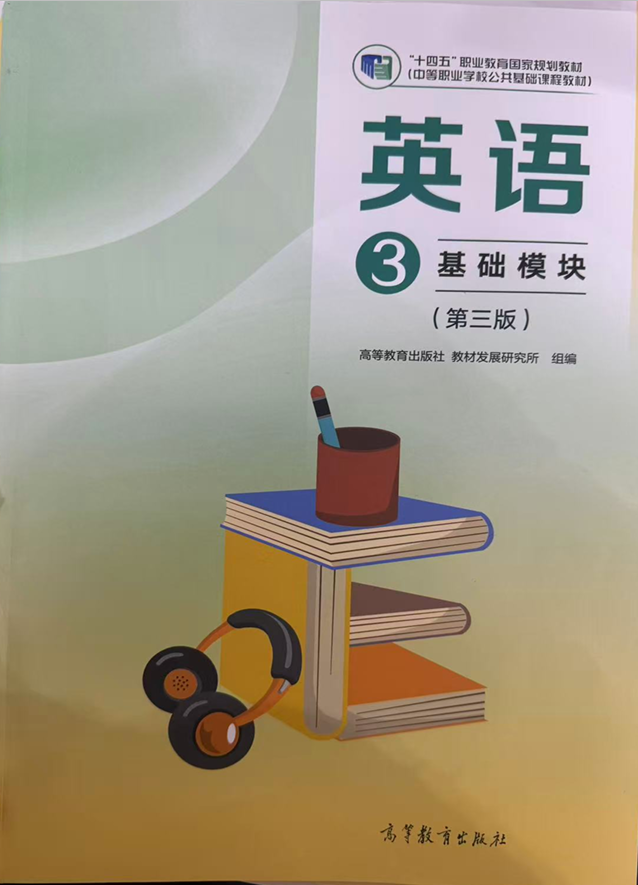
1.2(教案)Festivals Around the World-Reading and Writing-《英语 基础模块3》(高教版第三版)【上好课】
2026-09-10
|
10页
|
213人阅读
|
1人下载
精品
内容正文:
基于课程标准的“教-学-评”一致性课堂教学设计
科目
英语
授课教材
高等教育出版社《英语3 基础模块》(第三版)
授课题目
Unit 1 Festivals Around the World
Reading and Writing
课时
课型
2课时(90分钟)
读写课
主题情境
人与社会——中外节日文化与跨文化交流
授课教师
语篇研读
【What】
本课选取 Unit 1 “Festivals Around the World”中的 Reading and Writing。内容围绕春节、圣诞节和宋干节展开:先通过不同节日图片、猜节日和庆祝活动匹配激活背景知识;随后阅读三段说明性语篇,完成主题选择、文体与阅读策略判断、结构图信息梳理和正误判断;在语言学习中聚焦 prefer doing、enjoy doing、非限制性定语从句、one of + 最高级、expect sb. to do、the way 后定语从句、if 条件句及一般将来时被动语态等结构,并结合三段中文译文巩固理解。第二课时由“比较春节与圣诞节异同”过渡到句子补全与节日描述,最后依据 Robert 的圣诞派对信息补全邀请函,完成读写迁移。
【Why】
本课旨在帮助学生从“读懂节日介绍”进一步发展到“用英语描述并书写节日信息”。学生通过比较春节、圣诞节和宋干节的时间、庆祝方式及文化寓意,理解不同节日文化的特点与共同价值;通过从语篇中提取信息、归纳说明文特点、使用语法结构描述节日并完成邀请函,提升信息获取、语言运用和基础写作能力,同时形成尊重不同节日文化、主动介绍中华传统节日的意识。
【How】
教学严格按照课件任务顺序推进:“节日图片激活—猜节日—阅读匹配—整体阅读与主题判断—说明文与阅读策略识别—结构图梳理—语言点学习—译文对照—正误判断—中外节日比较—句子支架描述—邀请函补全—练习检测—总结与分层作业”。阅读由整体到细节,写作由词块和句型补全逐步过渡到完整邀请函,使“读—析—练—写”形成连续任务链,并以自评、互评和师评贯穿课堂。
学情分析
学生对春节和圣诞节较熟悉,对“团圆饭、圣诞树、礼物、泼水”等典型活动有一定生活经验,也能理解简单的节日介绍句。但在连续阅读较长说明性语篇时,容易只关注生词而忽略段落主旨和信息结构;对 Songkran、yangge performance、temple fair、handicraft 等词汇以及 which 非限制性定语从句、the way 后定语从句、现在分词作伴随状语和一般将来时被动语态等结构掌握不够稳定。写作方面,学生能够完成单句填空,但将“时间—庆祝活动—文化信息—邀请”组织成连贯文本仍需词块和句型支架。因此课堂依托课件中的图片、结构图、关键词提示和邀请函框架,逐步完成从阅读理解到书面表达的迁移。
课标要求
结合中等职业学校英语课程对基础模块语言能力、文化意识、思维品质和学习能力的要求,本课重点落实:
1. 能读懂话题熟悉、语言难度适中的节日介绍类语篇,获取主旨和时间、人物、活动、文化寓意等关键信息。
2. 能借助标题、首句、图片、结构图和上下文进行预测、略读、寻读与信息归纳,识别基本语篇类型和说明方式。
3. 能运用所学词汇、短语和语法结构,用简单连贯的英语描述节日并补全一封节日邀请函。
4. 能比较中外节日的相似点与差异,以尊重、开放的态度理解多元节日文化,并尝试用英语介绍中国节日。
教学目标
通过本节90分钟连堂课学习,学生能够:
1.(学习理解)理解春节、圣诞节和宋干节三段语篇的主旨与主要庆祝活动,完成 Read and match、Read and choose、Read and complete 和 Read and decide 等阅读任务。
2.(应用实践)理解并运用 prefer doing sth., enjoy doing sth., one of + 形容词最高级 + 名词复数, expect sb. to do sth., which 引导的非限制性定语从句、the way 后定语从句、if 条件句及一般将来时被动语态等结构,完成节日描述与课堂练习。
3.(迁移创新与文化意识)借助 fall on, a time for, decorate...with..., a symbol of, plan to hold, invite sb. to..., look forward to... 等表达,完成圣诞节图片描述和邀请函补全,并能用简单英语比较或介绍节日,尊重不同节日文化。
教学
重难点
重点:
1. 获取三段节日说明文的主旨、主要庆祝活动及文化信息,并用结构图梳理关键信息。
2. 掌握课件中的核心词汇、短语和重点语法结构,并能在 Read and describe 与 Exercise 中正确运用。
3. 使用时间、庆祝活动、象征意义和邀请类表达补全节日描述及圣诞派对邀请函。
难点:
1. 在语篇中准确理解 which 非限制性定语从句、the way 后定语从句、现在分词作伴随状语和一般将来时被动语态的意义与用法。
2. 将阅读获得的信息和词句支架整合为较连贯的节日描述与书面邀请,做到信息完整、表达准确。
核心语言
【核心词汇】mark, traditional, performance, temple fair, handicraft, snack, mean, decorate, express, fireplace, expect, Songkran, playful, nowadays
【核心短语】family reunion dinner; watch yangge performances; go to temple fairs; watch lion dances; visit flower fairs; decorate...with...; express good wishes; put stockings near the fireplace; splash water at each other; wash away bad luck; a symbol of joy
【重点结构】prefer doing sth.; prefer to do A rather than do B; prefer doing A to doing B; enjoy doing sth.; like doing/to do sth.; which 引导非限制性定语从句; one of + 形容词最高级 + 名词复数; expect sb. to do sth.; V-ing 作伴随状语; the way (that/which)...; if 条件状语从句; will be done
【写作表达】fall on...; a time for...; celebrate...; decorate...with...; best wishes; plan to hold; invite sb. to...; learn about the festival; help sb. decorate...; look forward to...
教学工具
PPT、教材、课堂任务单、计时器/投屏设备。
教学策略
任务型教学法(匹配、主题判断、结构图、正误判断、句子补全、邀请函补全);阅读策略指导(文体识别、首句抓主旨、略读与寻读);语境化语法教学(语篇例句—规则归纳—课堂练习);合作学习法(group discussion / pair checking);支架式教学(结构图、关键词、句型与邀请函框架);形成性评价(自评、互评、师评)。
教学过程
教学环节
教学活动
学生活动
设计意图
Period 1(45 min)
Part 1:
Lead-in &
Learning Objectives
(7 min)
T: Show the four festival scenes and the celebration clues: the Spring Festival, Christmas, Songkran and Halloween. Ask Ss to identify each festival from the pictures and activities.
T: Continue with the “Have a guess” items and let Ss name the Spring Festival, Halloween, Christmas and Songkran.
T: Present the three learning objectives and tell Ss that the lesson will move from reading festival introductions to writing about a festival.
Ss: Observe the pictures and match familiar activities with the festival names.
Ss: Guess and say the four festival names aloud.
Ss: Read the learning objectives and know the reading-and-writing goals for the lesson.
利用课件原有节日图片、庆祝活动和猜节日任务激活背景知识,并直接呈现学习目标,为后续三篇节日语篇阅读建立主题语境。(感知与注意)
评价方式:师评+即时口头反馈。观察学生能否根据图片与活动线索正确说出主要节日名称,并理解本课“读懂—描述—写作”的学习目标。
Part 2:
Read and match
(5 min)
T: Present “Read and match”. Ask Ss to read the four celebration descriptions and match them with the corresponding festival pictures.
T: Check the answers and briefly confirm the key action phrases: watch lion dances, go to temple fairs, decorate Christmas trees and splash water.
Ss: Read the four descriptions and complete the picture matching independently.
Ss: Check answers and read the key celebration phrases aloud.
通过“文字描述—节日图片”匹配建立节日与典型活动的对应关系,为阅读三段语篇预先激活核心词块。(获取与梳理)
评价方式:自评+师评。以四项匹配正确率和关键词识别为评价点,及时纠正 lion dance、temple fair、decorate...with...、splash water 等表达。
Part 3:
Read and choose
& Reading strategy
(10 min)
T: Ask Ss to read the three passages about the Spring Festival, Christmas and Songkran and choose the best topic from the four options.
T: Guide Ss to identify the text type by comparing argumentation, narration and exposition, then focus on the features of exposition shown in the lesson.
T: Present the reading strategy choices and guide Ss to notice that reading the first sentence of each paragraph helps locate the main idea of this text.
T: Check the topic choice and ask Ss to state which words in the first sentences support the answer.
Ss: Read the three passages and choose the best topic.
Ss: Distinguish exposition from argumentation and narration according to the prompts.
Ss: Select the suitable reading strategy and use the first sentence of each paragraph to confirm the main idea.
把主题判断与课件中的“文体识别—阅读策略”内容合并落实,帮助学生形成从首句快速获取说明文主旨的意识。(获取与梳理、策略建构)
评价方式:自评+师评。检查学生能否选出总主题“Festival Celebrations in Different Countries”,并能说明说明文与首句抓主旨的判断依据。
Part 4:
Read and complete
(6 min)
T: Present the structure chart and ask Ss to read the passages again for specific celebration information.
T: Ask Ss to complete the chart with “family reunion dinner”, “sing Christmas songs”, “express good wishes” and “splash water”, and identify the corresponding festivals.
T: Check the chart in the order of the three passages.
Ss: Reread the passages and scan for the required celebration details.
Ss: Complete the structure chart and compare answers with a partner.
Ss: Use the completed chart to review the main activities of the three festivals.
借助结构图把三段语篇中的零散细节组织为“Festival—Celebrations”信息框架,训练寻读和信息归纳能力。(获取与梳理)
评价方式:自评+互评+师评。以结构图信息是否完整、是否能回到原文定位依据为评价点。
Part 5:
Key points, Translation
& Read and decide
(17 min)
T: Explain the key language in the original sentences: prefer doing / prefer to do A rather than do B / prefer doing A to doing B; enjoy doing and like doing/to do; which in a non-restrictive relative clause; one of + superlative + plural noun; expect sb. to do and V-ing as an accompanying adverbial; the way followed by a relative clause; if-clause and the future passive “will be done”.
T: Use the examples provided in the lesson to check each structure and let Ss complete the short example blanks where shown.
T: Present the Chinese versions of the three festival passages and guide Ss to compare them with the English text, focusing on the main sentences and expressions.
T: Present “Read and decide”. Ask Ss to judge the five statements according to the passages and check the textual evidence.
Ss: Follow the key sentences, take brief notes and answer the example questions in the lesson.
Ss: Compare the Chinese and English versions and identify how the key sentences are expressed.
Ss: Complete the five true-or-false statements and locate evidence in the passages.
在语篇原句中完成语言点理解,再通过译文对照和正误判断回到文本验证理解,实现“语言形式—语篇意义—阅读证据”的闭环。(内化与运用、评价与反馈)
评价方式:师评+自评。通过课件例题、译文对照和5个判断题检查重点结构与语篇理解;对 which、one of + 最高级、expect sb. to do、the way、will be done 等集中错误即时反馈。
Period 2(45 min)
Part 6:
Discuss and compare
(7 min)
T: Present “Discuss and compare”. Ask groups to compare the Spring Festival with Christmas and decide in what ways the two festivals are similar or different.
T: Reveal and organize the similarities: both are important festivals, families get together, and people decorate their homes before the festival.
T: Continue with the differences in date, cultural origin and children’s gifts or lucky money.
Ss: Discuss in groups and compare the two festivals.
Ss: Sort the information into similarities and differences and check it with the reference content.
通过课件原有比较任务把阅读信息转化为分类与对比,帮助学生从“理解单个节日”提升到“比较中外节日”。(比较与分析)
评价方式:小组互评+师评。检查每组能否至少说出2项相似点和2项差异,并保证时间、庆祝目的和儿童习俗等信息与课文一致。
Part 7:
Read and describe I
(6 min)
T: Present the first two “Read and describe” items. Ask Ss to complete the Christmas description with “fall on”, “a time for” and “celebrate”.
T: Continue with the Christmas-tree description and ask Ss to use “Christmas trees”, “decorate” and “with” to complete the sentences.
T: Check the complete sentences and draw attention to the fixed patterns “fall on + date” and “decorate...with...”.
Ss: Complete the first two picture descriptions with the given words and phrases.
Ss: Read the complete sentences and check the word order and collocations.
利用明确词块支架,把阅读中出现的节日信息转化为规范句子,为后续邀请函写作积累可直接迁移的表达。(内化与运用)
评价方式:自评+师评。重点检查 fall on、a time for、to celebrate、decorate...with... 的搭配和句子完整性。
Part 8:
Read and describe II
(6 min)
T: Present the third description and ask Ss to complete the sentences with “a symbol of”, “sing Christmas songs” and “best wishes”.
T: Present Robert’s Christmas-party information and ask Ss to complete the description with “plan to hold”, “invite some friends” and “learn about the festival”.
T: Check the answers and ask Ss to read Robert’s complete party information once as preparation for writing.
Ss: Complete the third and fourth descriptions using the given language.
Ss: Read Robert’s complete party information and identify the party time, purpose and planned activities.
继续用词块完成图片描述,并把 Robert 的派对信息完整化,使学生在进入邀请函前已掌握写作所需的核心内容。(内化与运用)
评价方式:自评+师评。检查 a symbol of、best wishes、plan to hold、invite sb. to...、learn about... 等表达是否使用准确,并确认学生能提取派对关键信息。
Part 9:
Write and practice I
(6 min)
T: Present the first half of Robert’s invitation letter. Ask Ss to complete the three blanks according to the party information from the previous task.
T: Guide Ss to use “invite you to my Christmas party”, “to learn about the festival” and “Christmas celebrations” in the correct positions.
T: Check the first half and ask Ss to notice the function of the opening, invitation details and activity introduction.
Ss: Reread Robert’s party information and complete the first three blanks of the invitation.
Ss: Read the completed first half and identify the invitation purpose and main activity information.
让学生直接依据上一活动的信息补全邀请函前半部分,落实“读信息—选表达—写进文本”的读写迁移。(应用实践)
评价方式:自评+师评。以三个空格的内容对应、语法准确和邀请信息完整为评价点。
Part 10:
Write and practice II
(6 min)
T: Present the second half of the invitation letter. Ask Ss to complete the remaining blanks with the information and expressions provided in the lesson.
T: Check “help us decorate the tree”, “I look forward to” and “wear red clothes”, then ask Ss to read the whole invitation from beginning to end.
T: Briefly point out the complete writing sequence: invitation → activities → extra suggestion → expectation for reply → closing.
Ss: Complete the second half of the invitation letter.
Ss: Read the full invitation and check whether all party information is included in a logical order.
完成邀请函后对文本结构进行整体确认,使学生看到课件中词句支架如何组合成完整、连贯的实用书面文本。(迁移与整合)
评价方式:自评+互评+师评。检查邀请函是否包含时间、活动、装饰建议、着装建议和期待回复等信息,重点关注 help sb. do、look forward to 等表达。
Part 11:
Exercise
(5 min)
T: Present the seven multiple-choice exercises and ask Ss to finish them independently.
T: Check the answers in order and connect each item with the corresponding language point: prefer, which, one of + superlative, expect sb. to do, the way, future passive after if, and enjoy doing.
Ss: Complete the seven exercises independently.
Ss: Check answers and state the language point tested in each item.
使用课件原有7道练习对本课核心语法进行集中检测,验证学生能否将语篇中的规则迁移到新句子中。(评价与反馈)
评价方式:自评+师评。统计7题正确率,并根据错误集中点对 prefer、which、one of + 最高级、expect、the way、will be done、enjoy doing 进行针对性纠错。
Part 12:
Summary
(5 min)
T: Use the “Summary: words and phrases” page to review the Chinese meanings and ask Ss to recall the English words and phrases.
T: Use the “Summary: sentences” page to review the three key sentences about the Spring Festival, Christmas and Songkran.
T: Ask Ss to read the words, phrases and three sentences together and identify which festival each sentence describes.
Ss: Recall and read the key words and phrases.
Ss: Read the three key sentences and connect each sentence with the correct festival.
完全依据课件总结页回收“词汇—短语—核心句”,帮助学生形成读写课的语言清单并为课后背诵做好准备。(概括与整合)
评价方式:自评+师评。学生根据能否准确说出词义、读出重点句并对应节日进行“已掌握/需复习”自评。
Part 13:
Homework
(4 min)
T: Assign the three-level homework exactly as shown in the lesson.
T: Level A — recite one festival passage of choice and review the key words and phrases.
T: Level B — complete Level A and write 5–6 sentences to introduce one of the three festivals.
T: Level C — complete Level A and compare two festivals in about 80 words, including their time, celebrations and cultural meanings.
Ss: Record the homework requirements.
Ss: Complete Level A and choose Level B or Level C according to their learning needs.
分层作业与课件保持一致:基础层强化背诵与词汇,提升层完成节日介绍,挑战层进行双节日比较,实现从输入巩固到书面迁移。
评价方式:课后作业评价。下一课时抽查Level A背诵;Level B关注5—6句信息完整与语言准确;Level C关注约80词比较中是否包含时间、庆祝活动和文化意义。
板书设计
Unit 1 Festivals Around the World — Reading & Writing
1. Reading: The Spring Festival / Christmas / Songkran → Time / Celebrations / Meaning
2. Key structures: prefer doing; which...; one of + superlative + plural noun; expect sb. to do; the way (that)...; if..., will be done
3. Description: fall on... / a time for... / decorate...with... / a symbol of...
4. Writing: plan to hold → invite sb. to... → activities → look forward to...
教学反思
(课后填写)
课后重点记录:
1. 学生能否利用首句、结构图和文本证据完成主题判断、信息梳理与正误判断;如仍依赖逐词翻译,下次需强化阅读策略示范。
2. 重点语法是否真正迁移到 Read and describe、Exercise 和邀请函中,重点观察 which、one of + 最高级、expect sb. to do、the way、will be done。
3. 邀请函补全后学生是否能理解“邀请—活动—建议—期待回复”的文本结构;根据完成度调整后续独立写作支架。
《英语 基础模块 3》(高教版 第三版)
精品资源学科网独家享有版权,侵权必究!
学科网(北京)股份有限公司
学科网(北京)股份有限公司
$
资源预览图

1

2

3
由于学科网是一个信息分享及获取的平台,不确保部分用户上传资料的 来源及知识产权归属。如您发现相关资料侵犯您的合法权益,请联系学科网,我们核实后将及时进行处理。