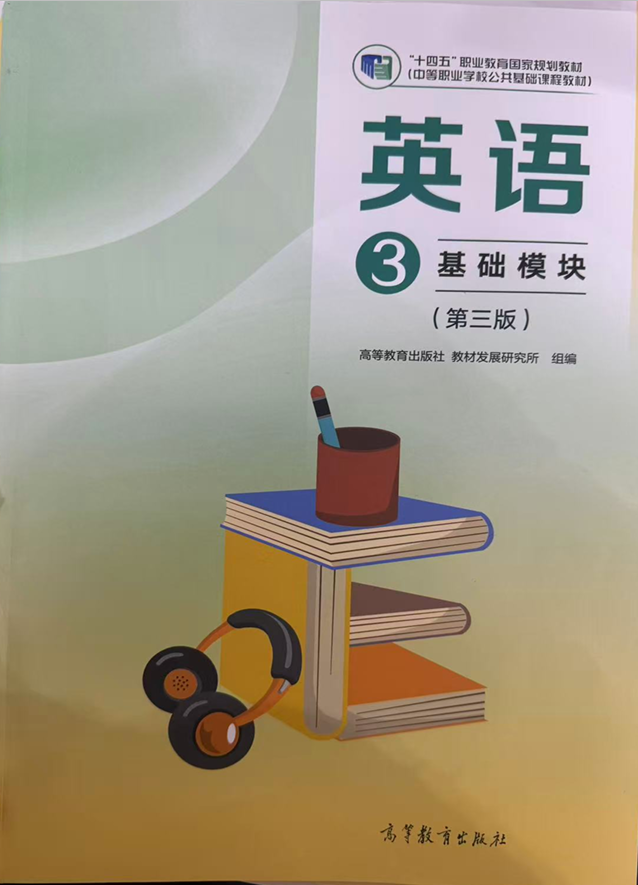
1.1(练习)-Warming up; Listening and Speaking-《英语 基础模块3》(高教版第三版)【上好课】(原卷版+解析版)
2026-09-09
|
2份
|
16页
|
211人阅读
|
2人下载
摘要:
**基本信息**
《英语 基础模块3》Unit1同步练习以“基础巩固-能力提升-综合应用”分层设计,覆盖词汇、语法及跨文化理解,通过阶梯式题型培养语言能力与文化意识,适配中职教学目标。
**分层设计**
|层次|知识覆盖|设计特色|
|----|----------|----------|
|基础层|核心词汇(如celebrate、symbol)、基础语法(时态、介词搭配)|选择题(1-15题)、词汇拼写(16-23题),夯实语言基础能力|
|进阶层|句型转换、汉译英(如节日表达)|完成句子(24-30题)、翻译题(31-35题),提升语言组织与表达能力|
|综合应用层|对话逻辑、跨文化理解(如中外节日对比)|补全对话(36-40题)、阅读理解(41-45题),培养跨文化意识与思维品质|
内容正文:
《英语 基础模块3》(高教版第三版)
Unit1 Festivals Around the World
Warming up; Listening & Speaking同步练习
一、英语知识运用
1. Robert was very happy to ______ Li Fei’s invitation to celebrate the Mid-Autumn Festival.
A. send B. refuse C. receive D. write
2. I plan ______ home this weekend and have a reunion dinner with my grandparents.
A. go B. to go C. going D. went
3. —We’ll make apple pie and watch movies at the party.
—That sounds ______!
A. interest B. interested C. interestingly D. interesting
4. The Spring Festival falls ______ a specific day, while Mother’s Day falls ______ May.
A. on; in B. in; on C. at; in D. on; on
5. Thanksgiving Day is ______ the Mid-Autumn Festival in one way: both are times for family members to get together.
A. different from B. famous for C. similar to D. ready for
6. What Amy loves most at the Spring Festival ______ watching the Spring Festival Gala with her family.
A. are B. is C. be D. were
7. —Would you like to come to my home for the Lantern Festival?
—______ I have to finish a school project that evening.
A. Of course I will. B. That sounds nice.
C. I’m glad to hear that. D. I’d love to, but I can’t.
8. ______ a student studying abroad, Tony enjoys learning about festivals in different cultures.
A. As B. With C. For D. By
9. People at the Water-Splashing Festival celebrate the day ______ water at one another.
A. splash B. to splash C. by splashing D. splashed
10. The full moon looks especially ______ on the night of the Mid-Autumn Festival.
A. brightness B. bright C. brightly D. brighten
11. In Chinese culture, the full moon is a ______ of family reunion.
A. calendar B. harvest C. festival D. symbol
12. Autumn is an important ______ season for many farmers.
A. harvest B. reunion C. invitation D. celebration
13. —What is Fang Ming going to do this weekend?
—He ______ the Lantern Festival with his family.
A. celebrated B. celebrates C. celebrate D. is going to celebrate
14. The Spring Festival begins on the first day of the first Chinese ______ month.
A. solar B. lunar C. weekly D. modern
15. Which sentence is the most natural way to ask about festival activities?
A. What festival time? B. Where does it fall?
C. Why celebrate it? D. How do you celebrate it?
二、词汇拼写与完成句子
16. Every October, the town holds a big ________ (celebrate) for the harvest.
17. Yesterday I ________ (receive) an invitation to a New Year’s Eve party.
18. Dragon boat racing is a ________ (典型的) activity during the Dragon Boat Festival.
19. We stood outdoors and enjoyed the ________ (bright) of the full moon.
20. The first fireworks can be a ________ (标志) that the New Year celebration has begun.
21. The two festivals are ________ (similar) in meaning than I expected.
22. In Chinese culture, the full moon ________ (symbol) family reunion.
23. Look at our plan! We ________ (visit) my grandparents and have a reunion dinner next weekend.
24. 我们计划周六晚上举办一个新年聚会。
We ________ ________ ________ a New Year party on Saturday evening.
25. 今年的中秋节恰逢九月二十五日。
The Mid-Autumn Festival ________ ________ September 25 this year.
26. —Would you like to join us for the Spring Festival dinner?
—______________________________________________ (表示欣然接受)
27. People celebrate New Year’s Eve by making apple pie, playing games and watching movies.(对画线部分提问)
________ do people ________ New Year’s Eve?
28.元宵节在农历正月十五。
The Lantern Festival falls on the ________ day of the ________ Chinese lunar month.
29. I love eating yuanxiao and enjoying lantern shows most.(用 What I love most 改写)
______________________________________________.
30. 收到你的邀请我很开心。
I’m so happy ________ ________ your invitation.
三、汉译英
31. 我计划回家和家人一起庆祝春节。
____________________________________________________________
32. 泼水节期间,人们互相泼水来表达快乐并祝愿好运。
____________________________________________________________
33. 在中国文化中,满月是家庭团圆的象征。
____________________________________________________________
34. 这个节日听起来和我们国家的一个节日很相似。
____________________________________________________________
35. ——你愿意周六来参加我们的聚会吗?——我很想去,但是那天我要照顾妹妹。
____________________________________________________________
四、补全对话
A: Hi, Linda. I plan to celebrate the Lantern Festival with my family. 36. ________________________________?
B: I’d love to. I know little about it. 37. ________________________________?
A: It falls on the 15th day of the first Chinese lunar month.
B: I see. 38. ________________________________?
A: We usually celebrate it by eating yuanxiao and enjoying lantern shows.
B: Sounds interesting. I heard it was also a romantic festival in ancient China.
A: 39. ________________________________. It provided a chance for unmarried young people to meet.
B: That’s amazing. 40. ________________________________.
五、阅读理解
A Festival Evening Abroad
Chen Yu is a Chinese vocational-school student studying in Canada for one term. In September, she invited her classmate Emma to celebrate the Mid-Autumn Festival with several Chinese students. Before the party, Chen Yu explained that the festival falls on the 15th day of the eighth Chinese lunar month. For many Chinese families, it is a time for reunion. The full moon is often seen as a symbol of people staying close even when they live far apart.
At the party, the students made tea, shared moon cakes and appreciated the moon outdoors. Emma brought a homemade pumpkin pie because the Mid-Autumn Festival reminded her of Thanksgiving Day. “The foods are different, but both festivals make me think of family and gratitude,” she said.
Later, the group talked about other celebrations. A student from Thailand described the Water-Splashing Festival, while another student showed a short video of dragon boat racing. Chen Yu realized that festivals may have different dates, foods and activities, but many of them express similar wishes: happiness, reunion and a better future. She was glad that a simple invitation had become a chance for everyone to understand one another’s culture better.
41. What is the passage mainly about?
A. Moon-cake recipes. B. School life abroad.
C. Thanksgiving history. D. A festival culture exchange.
42. Why did Emma bring a pumpkin pie?
A. No moon cakes. B. Chen Yu asked her.
C. For a food contest. D. It reminded her of Thanksgiving.
43. The word “gratitude” in Paragraph 2 is closest in meaning to ______.
A. thankfulness B. surprise C. brightness D. luck
44. Which activity did the students NOT do to celebrate the Mid-Autumn Festival?
A. Making tea. B. Sharing moon cakes. C. Dragon-boat race. D. Appreciating the moon.
45. What did Chen Yu learn from the evening?
A. Dates are the same. B. Wishes are shared.
C. Food matters most. D. Only own festivals matter.
五、阅读理解
The Spring Festival is coming. This year, Jack, an exchange student, 46. ________ (receive) an invitation from his Chinese friend Liu Tao yesterday. Liu Tao plans 47. ________ (take) Jack to his grandparents’ home. The family is going to celebrate the festival by 48. ________ (have) a big reunion dinner and watching the Spring Festival Gala together. Jack thinks the celebration sounds 49. ________ (interest), and he is very happy 50. ________ (learn) more about Chinese culture.
原创精品资源学科网独家享有版权,侵权必究!
学科网(北京)股份有限公司
学科网(北京)股份有限公司
$
《英语 基础模块3》(高教版第三版)
Unit1 Festivals Around the World
Warming up; Listening & Speaking同步练习
一、英语知识运用
1. Robert was very happy to ______ Li Fei’s invitation to celebrate the Mid-Autumn Festival.
A. send B. refuse C. receive D. write
【答案】C
【详解】考查动词辨析。句意:Robert很高兴收到李飞邀请他一起庆祝中秋节的邀请。receive意为“收到”,receive an invitation意为“收到邀请”,符合语境;send意为“发送”;refuse意为“拒绝”;write意为“写”。故选C。
2. I plan ______ home this weekend and have a reunion dinner with my grandparents.
A. go B. to go C. going D. went
【答案】B
【详解】考查非谓语动词。句意:我计划这个周末回家,和祖父母一起吃团圆饭。plan to do sth.意为“计划做某事”,是固定搭配,因此用to go。故选B。
3. —We’ll make apple pie and watch movies at the party.
—That sounds ______!
A. interest B. interested C. interestingly D. interesting
【答案】D
【详解】考查形容词。句意:“我们将在聚会上做苹果派、看电影。”“听起来很有趣!”sound为系动词,后接形容词作表语;interesting意为“有趣的”,常修饰事物,符合语境。interested意为“感兴趣的”,常形容人的感受;interest可作名词或动词;interestingly为副词。故选D。
4. The Spring Festival falls ______ a specific day, while Mother’s Day falls ______ May.
A. on; in B. in; on C. at; in D. on; on
【答案】A
【详解】考查时间介词。句意:春节在一个具体的日期,而母亲节在五月。表示具体的某一天或日期用介词on;表示月份用介词in。因此第一空填on,第二空填in。故选A。
5. Thanksgiving Day is ______ the Mid-Autumn Festival in one way: both are times for family members to get together.
A. different from B. famous for C. similar to D. ready for
【答案】C
【详解】考查形容词短语辨析。句意:从某种意义上说,感恩节和中秋节很相似:两个节日都是家人团聚的时刻。similar to意为“与……相似”,符合语境;different from意为“与……不同”;famous for意为“因……而闻名”;ready for意为“为……做好准备”。故选C。
6. What Amy loves most at the Spring Festival ______ watching the Spring Festival Gala with her family.
A. are B. is C. be D. were
【答案】B
【详解】考查主谓一致。句意:Amy在春节最喜欢的是和家人一起看春节联欢晚会。“What Amy loves most at the Spring Festival”为主语从句,主语从句作主语时谓语动词通常用单数形式,因此用is。故选B。
7. —Would you like to come to my home for the Lantern Festival?
—______ I have to finish a school project that evening.
A. Of course I will. B. That sounds nice.
C. I’m glad to hear that. D. I’d love to, but I can’t.
【答案】D
【详解】考查情景交际。句意:“你愿意来我家过元宵节吗?”“我很想去,但是我去不了。我那天晚上必须完成一个学校项目。”I’d love to, but I can’t.既表达了愿意参加,又与后文不能参加的原因相呼应,符合语境。故选D。
8. ______ a student studying abroad, Tony enjoys learning about festivals in different cultures.
A. As B. With C. For D. By
【答案】A
【详解】考查介词辨析。句意:作为一名在国外学习的学生,Tony喜欢了解不同文化中的节日。as意为“作为”,表示身份或角色,符合语境。故选A。
9. People at the Water-Splashing Festival celebrate the day ______ water at one another.
A. splash B. to splash C. by splashing D. splashed
【答案】C
【详解】考查介词与非谓语动词。句意:泼水节上的人们通过互相泼水来庆祝这个节日。by doing sth.表示“通过做某事”,说明做某事的方式,因此用by splashing。故选C。
10. The full moon looks especially ______ on the night of the Mid-Autumn Festival.
A. brightness B. bright C. brightly D. brighten
【答案】B
【详解】考查形容词。句意:中秋节的晚上,满月看起来格外明亮。look为系动词,后接形容词作表语;bright为形容词,意为“明亮的”,especially可修饰形容词。brightness为名词;brightly为副词;brighten为动词。故选B。
11. In Chinese culture, the full moon is a ______ of family reunion.
A. calendar B. harvest C. festival D. symbol
【答案】D
【详解】考查名词辨析。句意:在中国文化中,满月是家庭团圆的象征。symbol意为“象征”,a symbol of意为“……的象征”,符合语境;calendar意为“日历”;harvest意为“收获”;festival意为“节日”。故选D。
12. Autumn is an important ______ season for many farmers.
A. harvest B. reunion C. invitation D. celebration
【答案】A
【详解】考查名词辨析。句意:对许多农民来说,秋天是一个重要的收获季节。harvest意为“收获”,harvest season意为“收获季节”,符合语境;reunion意为“团聚”;invitation意为“邀请”;celebration意为“庆祝活动”。故选A。
13. —What is Fang Ming going to do this weekend?
—He ______ the Lantern Festival with his family.
A. celebrated B. celebrates C. celebrate D. is going to celebrate
【答案】D
【详解】考查一般将来时。句意:“方明这个周末打算做什么?”“他打算和家人一起庆祝元宵节。”问句中的“is ... going to do”以及时间状语this weekend表明此处表示计划好的将来动作,应用be going to结构,主语He对应is going to celebrate。故选D。
14. The Spring Festival begins on the first day of the first Chinese ______ month.
A. solar B. lunar C. weekly D. modern
【答案】B
【详解】考查词义辨析。句意:春节始于中国农历正月初一。lunar意为“月亮的;阴历的”,Chinese lunar month意为“中国农历月份”,符合语境;solar意为“太阳的”;weekly意为“每周的”;modern意为“现代的”。故选B。
15. Which sentence is the most natural way to ask about festival activities?
A. What festival time? B. Where does it fall?
C. Why celebrate it? D. How do you celebrate it?
【答案】D
【详解】考查情景交际。句意:哪一个句子是询问节日活动最自然的表达?How do you celebrate it?意为“你们怎样庆祝它?”,用于询问庆祝方式或活动,表达自然且符合题意。故选D。
二、词汇拼写与完成句子
16. Every October, the town holds a big ________ (celebrate) for the harvest.
【答案】celebration
【详解】考查词性转换。句意:每年十月,这个小镇都会为丰收举行一次大型庆祝活动。空前有不定冠词a和形容词big,空处应填可数名词单数。celebrate为动词,其名词形式为celebration。故填celebration。
17. Yesterday I ________ (receive) an invitation to a New Year’s Eve party.
【答案】received
【详解】考查一般过去时。句意:昨天我收到了一张参加除夕聚会的邀请。根据时间状语Yesterday可知,本句描述过去发生的事情,应用一般过去时,receive的过去式为received。故填received。
18. Dragon boat racing is a ________ (典型的) activity during the Dragon Boat Festival.
【答案】typical
【详解】考查词汇拼写。句意:赛龙舟是端午节期间一项典型的活动。“典型的”对应形容词typical,修饰名词activity。故填typical。
19. We stood outdoors and enjoyed the ________ (bright) of the full moon.
【答案】brightness
【详解】考查词性转换。句意:我们站在户外欣赏满月的明亮。空前有定冠词the,空后有of the full moon,空处应填名词。bright为形容词,其名词形式为brightness。故填brightness。
20. The first fireworks can be a ________ (标志) that the New Year celebration has begun.
【答案】sign
【详解】考查词汇拼写。句意:第一轮烟花可能是新年庆祝活动已经开始的一个标志。“标志”在此处表示某事发生的迹象,应用名词sign;a sign that...表示“……的标志/迹象”。故填sign。
21. The two festivals are ________ (similar) in meaning than I expected.
【答案】more similar
【详解】考查形容词比较级。句意:这两个节日在意义上比我预想的更相似。根据than可知,空处应用比较级;similar的比较级形式为more similar。故填more similar。
22. In Chinese culture, the full moon ________ (symbol) family reunion.
【答案】symbolizes
【详解】考查词性转换和主谓一致。句意:在中国文化中,满月象征家庭团圆。空处作谓语,symbol为名词,其动词形式为symbolize;本句陈述客观事实,用一般现在时,主语the full moon为第三人称单数,因此填symbolizes。故填symbolizes。
23. Look at our plan! We ________ (visit) my grandparents and have a reunion dinner next weekend.
【答案】are going to visit
【详解】考查一般将来时。句意:看看我们的计划!下周末我们要去看望祖父母并一起吃团圆饭。根据“Look at our plan!”和next weekend可知,此处表示已经计划好的将来安排,应用be going to do;主语We对应are going to visit。故填are going to visit。
24. 我们计划周六晚上举办一个新年聚会。
We ________ ________ ________ a New Year party on Saturday evening.
【答案】plan to hold
【详解】考查固定搭配。句意:我们计划周六晚上举办一个新年聚会。plan to do sth.意为“计划做某事”;“举办聚会”可用hold a party表示。故填plan to hold。
25. 今年的中秋节恰逢九月二十五日。
The Mid-Autumn Festival ________ ________ September 25 this year.
【答案】falls on
【详解】考查固定搭配和主谓一致。句意:今年的中秋节恰逢九月二十五日。fall on意为“适逢;正当(某日)”,主语The Mid-Autumn Festival为第三人称单数,因此fall用第三人称单数形式falls。故填falls on。
26. —Would you like to join us for the Spring Festival dinner?
—______________________________________________ (表示欣然接受)
【答案】I’d love to.
【详解】考查情景交际。句意:“你愿意和我们一起吃春节团圆饭吗?”“我很愿意。”Would you like to...?用于发出邀请,欣然接受时可回答I’d love to.。故答I’d love to.。
27. People celebrate New Year’s Eve by making apple pie, playing games and watching movies.(对画线部分提问)
________ do people ________ New Year’s Eve?
【答案】How; celebrate
【详解】考查特殊疑问句。句意:人们怎样庆祝除夕?原句画线部分“by making apple pie, playing games and watching movies”表示庆祝的方式,因此用How提问;助动词do后应用动词原形celebrate。故填How;celebrate。
28.元宵节在农历正月十五。
The Lantern Festival falls on the ________ day of the ________ Chinese lunar month.
【答案】fifteenth; first
【详解】考查序数词。句意:元宵节在农历正月十五。“第十五天”用序数词fifteenth;“第一个中国农历月份”用序数词first。故填fifteenth;first。
29. I love eating yuanxiao and enjoying lantern shows most.(用 What I love most 改写)
______________________________________________.
【答案】What I love most is eating yuanxiao and enjoying lantern shows.
【详解】考查主语从句和句型转换。原句表示“我最喜欢的是吃元宵和赏花灯”。用What I love most作主语从句,谓语用单数is,后接原句中并列的动名词短语。故答案为What I love most is eating yuanxiao and enjoying lantern shows.。
30. 收到你的邀请我很开心。
I’m so happy ________ ________ your invitation.
【答案】to receive
【详解】考查非谓语动词。句意:收到你的邀请我很开心。be happy to do sth.意为“很高兴做某事”,因此用动词不定式to receive。故填to receive。
三、汉译英
31. 我计划回家和家人一起庆祝春节。
____________________________________________________________
【答案】I plan to go home and celebrate the Spring Festival with my family.
【详解】考查汉译英。plan to do sth.表示“计划做某事”;go home表示“回家”;celebrate the Spring Festival with my family表示“和家人一起庆祝春节”。故答案为I plan to go home and celebrate the Spring Festival with my family.。
32. 泼水节期间,人们互相泼水来表达快乐并祝愿好运。
____________________________________________________________
【答案】During the Water-Splashing Festival, people splash water at one another to express happiness and wish for good luck.
【详解】考查汉译英。during the Water-Splashing Festival表示“泼水节期间”;splash water at one another表示“互相泼水”;动词不定式to express... and wish...表示目的。故答案为During the Water-Splashing Festival, people splash water at one another to express happiness and wish for good luck.。
33. 在中国文化中,满月是家庭团圆的象征。
____________________________________________________________
【答案】In Chinese culture, the full moon is a symbol of family reunion.
【详解】考查汉译英。in Chinese culture表示“在中国文化中”;a symbol of表示“……的象征”;family reunion表示“家庭团圆”。故答案为In Chinese culture, the full moon is a symbol of family reunion.。
34. 这个节日听起来和我们国家的一个节日很相似。
____________________________________________________________
【答案】This festival sounds very similar to a festival in our country.
【详解】考查汉译英。sound为系动词,后接形容词作表语;be/sound similar to表示“与……相似”。故答案为This festival sounds very similar to a festival in our country.。
35. ——你愿意周六来参加我们的聚会吗?——我很想去,但是那天我要照顾妹妹。
____________________________________________________________
【答案】—Would you like to come to our party on Saturday? —I’d love to, but I have to look after my younger sister that day.
【详解】考查汉译英和情景交际。Would you like to...?可用于发出邀请;I’d love to, but...表示“我很想……,但是……”;have to do sth.表示“不得不做某事”;look after表示“照顾”。故答案为—Would you like to come to our party on Saturday? —I’d love to, but I have to look after my younger sister that day.。
四、补全对话
A: Hi, Linda. I plan to celebrate the Lantern Festival with my family. 36. ________________________________?
B: I’d love to. I know little about it. 37. ________________________________?
A: It falls on the 15th day of the first Chinese lunar month.
B: I see. 38. ________________________________?
A: We usually celebrate it by eating yuanxiao and enjoying lantern shows.
B: Sounds interesting. I heard it was also a romantic festival in ancient China.
A: 39. ________________________________. It provided a chance for unmarried young people to meet.
B: That’s amazing. I am so happy 40. ________________________________.
【答案】36. Would you like to join us 37. When does it fall 38. How do you celebrate it 39. That’s right 40. to receive your invitation
【导语】本文是一段关于元宵节的对话。两人围绕节日邀请、节日日期、庆祝方式以及元宵节在古代中国的文化意义展开交流。
【详解】
36. 考查交际表达。根据答语“I’d love to.”可知,此处应是向Linda发出邀请;结合上文“I plan to celebrate the Lantern Festival with my family.”可填Would you like to join us。
37. 考查特殊疑问句。根据答语“It falls on the 15th day of the first Chinese lunar month.”可知,此处询问元宵节的日期,可填When does it fall。
38. 考查特殊疑问句。根据答语“We usually celebrate it by eating yuanxiao and enjoying lantern shows.”可知,此处询问庆祝方式,可填How do you celebrate it。
39. 考查交际表达。上句提到“元宵节在古代中国也是一个浪漫的节日”,下句进一步说明其为未婚年轻人提供见面的机会,因此此处应表示肯定,可填That’s right。
40. 考查交际表达。根据前文“I am so happy…”可知,此处指很开心收到对方的邀请,可填to receive your invitation。此题答案不唯一,符合语境且表达正确即可。
五、阅读理解
A Festival Evening Abroad
Chen Yu is a Chinese vocational-school student studying in Canada for one term. In September, she invited her classmate Emma to celebrate the Mid-Autumn Festival with several Chinese students. Before the party, Chen Yu explained that the festival falls on the 15th day of the eighth Chinese lunar month. For many Chinese families, it is a time for reunion. The full moon is often seen as a symbol of people staying close even when they live far apart.
At the party, the students made tea, shared moon cakes and appreciated the moon outdoors. Emma brought a homemade pumpkin pie because the Mid-Autumn Festival reminded her of Thanksgiving Day. “The foods are different, but both festivals make me think of family and gratitude,” she said.
Later, the group talked about other celebrations. A student from Thailand described the Water-Splashing Festival, while another student showed a short video of dragon boat racing. Chen Yu realized that festivals may have different dates, foods and activities, but many of them express similar wishes: happiness, reunion and a better future. She was glad that a simple invitation had become a chance for everyone to understand one another’s culture better.
41. What is the passage mainly about?
A. Moon-cake recipes. B. School life abroad.
C. Thanksgiving history. D. A festival culture exchange.
42. Why did Emma bring a pumpkin pie?
A. No moon cakes. B. Chen Yu asked her.
C. For a food contest. D. It reminded her of Thanksgiving.
43. The word “gratitude” in Paragraph 2 is closest in meaning to ______.
A. thankfulness B. surprise C. brightness D. luck
44. Which activity did the students NOT do to celebrate the Mid-Autumn Festival?
A. Making tea. B. Sharing moon cakes. C. Dragon-boat race. D. Appreciating the moon.
45. What did Chen Yu learn from the evening?
A. Dates are the same. B. Wishes are shared.
C. Food matters most. D. Only own festivals matter.
【答案】41. D 42. D 43. A 44. C 45. B
【导语】本文为一篇记叙文。文章讲述陈宇在加拿大邀请同学一起庆祝中秋节,并由中秋节、感恩节、泼水节和龙舟竞渡等话题展开节日文化交流,说明不同节日虽然形式各异,却常寄托着相似的美好愿望。
【详解】
41. 主旨大意题。文章主要讲述陈宇邀请来自不同文化背景的同学一起庆祝中秋节,大家分享各自节日的食物、活动和意义,并增进对彼此文化的理解,因此主题是一次节日文化交流。故选D。
42. 细节理解题。根据第2段的“Emma brought a homemade pumpkin pie because the Mid-Autumn Festival reminded her of Thanksgiving Day.”可知,Emma带南瓜派是因为中秋节使她想起了感恩节。故选D。
43. 词义猜测题。根据第2段的“both festivals make me think of family and gratitude”以及感恩节的语境可知,gratitude表示“感激;感谢”,与thankfulness意思最接近。故选A。
44. 细节理解题。根据第2段的“the students made tea, shared moon cakes and appreciated the moon outdoors”可知,学生们庆祝中秋节时泡茶、分享月饼并赏月。第3段提到的是另一名学生展示赛龙舟的短视频,并非他们庆祝中秋节时进行的活动。故选C。
45. 细节理解题。根据最后一段的“many of them express similar wishes: happiness, reunion and a better future”可知,陈宇认识到不同节日常常表达相似的愿望。故选B。
五、阅读理解
The Spring Festival is coming. This year, Jack, an exchange student, 46. ________ (receive) an invitation from his Chinese friend Liu Tao yesterday. Liu Tao plans 47. ________ (take) Jack to his grandparents’ home. The family is going to celebrate the festival by 48. ________ (have) a big reunion dinner and watching the Spring Festival Gala together. Jack thinks the celebration sounds 49. ________ (interest), and he is very happy 50. ________ (learn) more about Chinese culture.
【答案】46. received 47. to take 48. having 49. interesting 50. to learn
【导语】本文主要介绍交换生Jack受邀体验中国春节的计划。刘涛准备带Jack去祖父母家,一家人将通过吃团圆饭、看春节联欢晚会等方式庆祝春节,Jack也期待进一步了解中国文化。
【详解】
46. 考查一般过去时。句意:今年,交换生Jack昨天收到了中国朋友刘涛的邀请。根据时间状语yesterday可知,本句描述过去发生的事情,应用一般过去时,receive变为received。故填received。
47. 考查非谓语动词。句意:刘涛计划带Jack去祖父母家。plan to do sth.表示“计划做某事”,因此take前用不定式to take。故填to take。
48. 考查非谓语动词。句意:这家人打算通过吃一顿丰盛的团圆饭和一起看春节联欢晚会来庆祝春节。介词by后接动名词,have变为having,并与后面的watching并列。故填having。
49. 考查形容词。句意:Jack觉得这次庆祝活动听起来很有趣。sound为系动词,后接形容词作表语;主语the celebration表示事物,应用interesting。故填interesting。
50. 考查非谓语动词。句意:他很高兴能更多地了解中国文化。be happy to do sth.表示“很高兴做某事”,因此填to learn。故填to learn。
原创精品资源学科网独家享有版权,侵权必究!
学科网(北京)股份有限公司
学科网(北京)股份有限公司
$
资源预览图

1

2
由于学科网是一个信息分享及获取的平台,不确保部分用户上传资料的 来源及知识产权归属。如您发现相关资料侵犯您的合法权益,请联系学科网,我们核实后将及时进行处理。