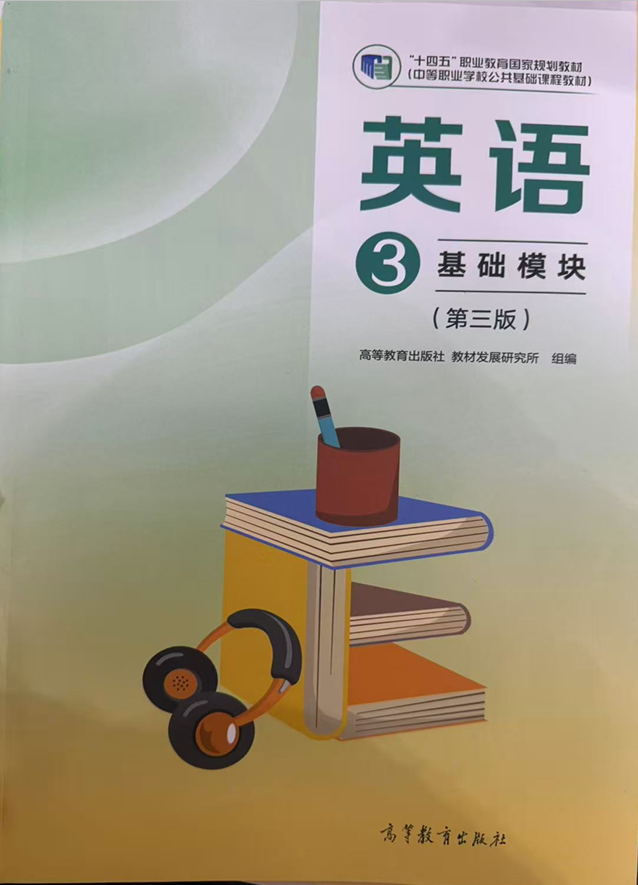
Unit 8 Role Models of the Times(A卷·基础巩固)《英语 基础模块3》(高教版第三版)单元过关卷(原卷版+解析版)
2026-09-08
|
2份
|
16页
|
26人阅读
|
0人下载
摘要:
**基本信息**
紧扣《英语 基础模块3》Unit 8“时代楷模”主题,A卷基础巩固卷通过宝塔消防队、张桂梅等真实时代楷模情境,覆盖词汇、语法及阅读技能,适配单元复习,提升语言能力与文化意识。
**题型特征**
|题型|题量/分值|知识覆盖|命题特色|
|----|-----------|----------|----------|
|完形填空|10题/20分|动词、名词等核心词汇|以宝塔消防队事迹设题,考查语境理解与词汇运用|
|语法填空|10题/15分|介词、时态等语法点|融入王吉、李丽科学贡献素材,检测语法应用能力|
|阅读理解|12题/30分|细节查找、主旨归纳|选取乡村建设、国际志愿者等多元楷模故事,培养信息提取与思维品质|
|补全对话|5题/15分|日常交际用语|围绕“榜样”主题设计对话,提升语言表达与沟通能力|
|阅读回答问题|5题/20分|信息转述与整合|聚焦张桂梅教育事迹,考查语言输出与综合应用能力|
内容正文:
编写说明:本套试卷紧扣《英语 基础模块3》(高教版第三版)教材,以教材单元为基准精准覆盖核心考点。每个单元设置AB卷,A卷为基础巩固卷,侧重基础考点训练,帮助学生扎实掌握知识要点;B卷为能力提升卷,注重知识整合与全面检测,引导学生构建知识网络。全书设计4份综合测试卷,模拟实战情境,聚焦解题能力突破,全面提升应试能力与知识应用水平。
《英语 基础模块3》(高教版第三版)《单元过关卷》
Unit 8 Role Models of the Times
A卷·基础巩固
考试时间:60分钟 满分:100分
班级_____姓名_____学号_____成绩_____
第Ⅰ卷 客观题(共80分)
Ⅰ. 完形填空(1—10题,每题2分,共20分)
阅读下面短文,掌握大意,然后从每题所给的四个选项中选出最佳选项。
Baota Fire Team is in Yan'an, Shaanxi. It started in 1973, and now it has 32 workers. In 2023, the team got the name Role Model of the Times.
The team helps people in fires and floods. It also helps with problems in daily life. When a call comes, the firemen leave ____1____. They take water, ropes and other tools. They work as one team and take people to a safe ____2____.
In about 50 years, the team answered about 12,500 calls for ____3____. It ____4____ more than 3,200 people. The team also kept many homes and things away from ____5____.
The work is not easy. The firemen may be tired, but they do not ____6____ when people need them. They practise every day because good skills can save ____7____. After a rescue, they speak kindly to people at home. Their kind words make people feel less ____8____.
The name is a way to say thank you for the team's long ____9____. Their story shows that a role model can be a normal worker who always helps others year after year. The Baota team will keep saving local people and make its own ____10____ very safe each day.
1.A.slowly
B.happily
C.quickly
D.quietly
2.A.place
B.shop
C.room
D.school
3.A.fun
B.food
C.games
D.help
4.A.met
B.saved
C.found
D.called
5.A.trouble
B.weather
C.water
D.noise
6.A.wait
B.forget
C.stop
D.laugh
7.A.books
B.roads
C.homes
D.lives
8.A.afraid
B.ready
C.busy
D.proud
9.A.holiday
B.work
C.lesson
D.game
10.A.city
B.exam
C.home
D.farm
【答案】
1.C 2.A 3.D 4.B 5.A 6.C 7.D 8.A 9.B 10.C
【导语】
本文是一篇记叙文,讲述陕西延安宝塔消防队多年参加火灾和洪水救援、帮助群众并获评“时代楷模”的事迹。
【详解】
1.考查副词词义;句意:接到电话时,消防员迅速出发。slowly慢慢地;happily高兴地;quickly迅速地;quietly安静地。救援需要马上出发,选C。
2.考查名词词义;句意:他们把人们带到安全的地方。place地方;shop商店;room房间;school学校。safe place表示安全的地方,选A。
3.考查名词词义;句意:约50年间,消防队接到约12500个求助电话。fun乐趣;food食物;games游戏;help帮助。calls for help表示求助电话,选D。
4.考查动词词义;句意:消防队救了3200多人。met遇见;saved救;found找到;called打电话。saved符合救援结果,选B。
5.考查名词词义;句意:消防队还使许多房屋和物品远离危险。trouble麻烦、危险;weather天气;water水;noise噪声。keep...away from trouble符合语境,选A。
6.考查动词词义;句意:人们需要他们时,消防员不会停下。wait等待;forget忘记;stop停止;laugh笑。选C。
7.考查名词词义;句意:良好的技能可以挽救生命。books书;roads路;homes家;lives生命。save lives为固定搭配,选D。
8.考查形容词词义;句意:亲切的话使人们不那么害怕。afraid害怕;ready准备好;busy忙碌;proud自豪。选A。
9.考查名词词义;句意:这个称号是对消防队长期工作的感谢。holiday假期;work工作;lesson课程;game游戏。long work符合语境,选B。
10.考查名词词义;句意:宝塔消防队将继续救人,让自己的家园安全。city城市;exam考试;home家园;farm农场。选C。
Ⅱ. 语法填空(11—20题,每题1.5分,共15分)
阅读下面短文,从方框中选择适当的词填空,使短文完整通顺。每个词限用一次。
A. in
B. For
C. up
D. Using E. to
Wang Ji is a software expert (软件专家) at a university in Changsha. ____11____ over 40 years, he has worked on software for national defense (国防). He is honored (受表彰) as a "Role Model of the Times" (时代楷模). Twelve years ago, he lost a leg ____12____ an operation. ____13____ a wheelchair, he still goes to work every day. "As long as my mind is clear and my hands can move, I can keep working," he says. His students look up ____14____ him. They say he never gives ____15____. Wang believes a real hero is one who keeps trying.
【答案】
11.B 12.A 13.D 14.E 15.C
【导语】
本文是一篇记叙文,介绍国防科技大学软件专家王戟:截肢 11 年仍坚持工作,用轮椅开启每一天,获评“时代楷模”,用行动诠释“英雄就是永不放弃的人”。
【详解】
11. 考查介词。句意:40 多年来,他一直从事国防软件开发工作。for 后接一段时间,意为“长达……”,故选 B。
12. 考查介词。句意:十二年前,他在一次手术中失去了一条腿。in an operation 意为“在手术中”,故选 A。
13. 考查非谓语动词(现在分词作伴随状语)。句意:借助轮椅,他仍然每天坚持上班。use 与逻辑主语 he 之间是主动关系,用现在分词 Using 作伴随状语,故选 D。
14. 考查介词。句意:他的学生们都敬仰他。固定搭配 look up to 意为“敬仰、尊敬”,故选 E。
15. 考查动词短语。句意:他们说他从不放弃。固定搭配 give up 意为“放弃”,故选 C。
阅读下面短文,在空白处填入1个适当单词或括号内单词的正确形式。
Li Li is a rice scientist (水稻科学家) in Hunan. She was a student of Yuan Longping, the "father of hybrid rice" (杂交水稻之父). When she ____16____ (work) with Mr Yuan, she learned to love the fields. Years later, Li and her team tried ____17____ (grow) rice without harmful metals (有害金属). The work was hard. ____18____ the hot summer, they worked in the fields day after day. ____19____ (final), they made "Xizi 3", China's first safe low-metal rice. Li works hard ____20____ (help) farmers and feed more people. She says a good scientist must be a good seed.
【答案】
16.worked 17.to grow 18.In 19.Finally 20.to help
【导语】
本文是一篇说明文,介绍袁隆平的弟子、水稻科学家李莉:历经多年攻关,培育出中国首个低镉水稻“西子 3 号”,守护粮食安全。
【详解】
16. 考查一般过去时。句意:当她和袁先生一起工作时,她学会了热爱田野。叙述过去的事,用一般过去时 worked。
17. 考查非谓语动词(不定式作宾语)。句意:多年后,李莉和她的团队尝试种植不含重金属的稻米。try to do sth 意为“尝试做某事”,故填 to grow。
18. 考查介词(无提示词)。句意:在炎热的夏天,他们日复一日地在田间劳作。in the hot summer 意为“在炎热的夏天”,故填 In。
19. 考查副词。句意:最终,他们培育出“西子 3 号”。Finally 意为“最终”,作句首状语,故填 Finally。
20. 考查非谓语动词(不定式作目的状语)。句意:李莉努力工作,为的是帮助农民、养活更多人。work hard to do sth 中不定式表目的,故填 to help。
Ⅲ. 阅读理解(21—32题,每题2.5分,共30分)
阅读下面三篇短文,从每题所给的四个选项中选出最佳选项。
Passage A
Item — Information
Event — Green Day at the Women and Children Museum
Date and place — Saturday, May 18; museum garden
Time — 9:00 a.m.–3:00 p.m.
About the day — Join families. Visitors can see old tools, clothes and pictures of women who helped China.
Morning — A talk starts at 10:00. At 11:00, children can draw a picture of a kind person.
After lunch — A helper shows how to make a paper flower.
Role model card — Each child gets a card. Write one thing about a role model on it. Put it on the wall before leaving.
In the garden — There is a reading corner and a place to drink water. Bring a hat because the day may be hot.
Rules — Keep rooms clean. Do not touch old things. Children must come with an adult.
Travel — The museum is near the library. Bus 12 and Bus 45 stop at the gate.
Need help — Call 010-6400-1234.
Places — The day is free, but there are only 80 places. Come early to get a seat and enjoy the stories of people.
21. What can visitors see in the museum?
A.Old tools and clothes.
B.New cars and bikes.
C.Farm animals and birds.
D.Sports games for children.
22. What do children do at 11:00?
A.Drink water in the garden.
B.Make lunch for visitors.
C.Draw a kind person.
D.Read a long story.
23. How can people get to the museum?
A.By train from the town.
B.By Bus 12 or Bus 45.
C.By boat on the river.
D.By bike from school.
24. What must children do?
A.Touch all the old things.
B.Pay money for a card.
C.Stay there at night.
D.Come with an adult.
【答案】
21.A 22.C 23.B 24.D
【导语】
本文是一篇应用文,介绍博物馆绿色主题活动的时间、地点、活动安排、乘车方式和参加要求。
【详解】
21.细节理解题。根据表格“About the day”可知,参观者可以看到旧工具和衣服。故选A。
22.细节理解题。根据表格“Morning”可知,11点孩子们画一位善良的人。故选C。
23.细节理解题。根据表格“Travel”可知,12路和45路公交车在门口停靠。故选B。
24.细节理解题。根据表格“Rules”可知,孩子必须和一名成人一起来。故选D。
Passage B
Some people become role models because they help others for many years. Wang Jiayuan is one of them. He once worked in a city, but he went back to his village in Guizhou. The village had poor roads. Wang wanted to make life better there. He helped build a road and brought trees to the hills. He chose plum trees because they grow well there. When the trees gave fruit, Wang showed villagers how to care for and sell it. Families then got more money. The village became greener. Wang asked young people to join him, so work became faster.
An art show put paintings about Wang and other helpful people in a museum. The pictures show simple acts, such as fixing a road. They tell us that a role model is not always famous. A person may be a role model when he keeps doing good work at home. Wang visits the village and talks with farmers. He hopes children learn that helping others brings joy. His story gives a clear idea: care for a place, and it can change. His work also gives village children a very good local person to follow and learn from every single day.
25. Why did Wang go back to his village?
A.To open a small hotel.
B.To make life much better.
C.To study art in town.
D.To buy a new car.
26. Why did Wang choose plum trees?
A.They need no clean water.
B.They are very tall trees.
C.They grow only in cities.
D.They grow very well there.
27. What happened after families sold the fruit?
A.The families left the village.
B.The roads closed for years.
C.They got much more money.
D.The trees died in winter.
28. What is the main idea of the passage?
A.A man helped his village for years.
B.A village became a new school for children.
C.Paintings are very hard to make well.
D.Young people should move away from home soon.
【答案】
25.B 26.D 27.C 28.A
【导语】
本文是一篇说明文,介绍王家元回乡修路、种梅树、帮助村民增收,并说明普通人也能成为榜样。
【详解】
25.细节理解题。根据第一段“Wang wanted to make life better there”可知,他回乡是为了改善生活。故选B。
26.细节理解题。根据第二段“He chose plum trees because they grow well there”可知,梅树适合当地土地。故选D。
27.细节理解题。根据第二段“Families then got more money”可知,卖水果后家庭收入增加。故选C。
28.主旨理解题。全文围绕王家元多年帮助家乡展开。故选A。
Passage C
When Lugazo came to Wuhan, he did not know the city or its language well. He was a student from Tanzania. People at the bus station helped him. Later, Lugazo joined a volunteer team at his university. He helped passengers read signs, find buses and carry bags. He also went to a children’s centre on weekends. There he played games with children and taught them easy English words. Some children felt lonely, so he talked with them and listened to their stories.
Lugazo said the work was not for money. He wanted to give back the kindness he had received. At first, he was shy and made mistakes in Chinese. Team members spoke slowly and showed him what to do. He learned each day. Soon he could talk with more passengers and children.
The team kept a record of each activity. It showed that young volunteers helped many people. Lugazo was happy when a child remembered a word or an old person found the bus. He believes a role model can be a young person ready to help. Small kind acts can make a city friendlier. Lugazo plans to volunteer while he studies in Wuhan. He hopes other students will join and share more time with people who need help.
29. Where is Lugazo from?
A.China in East Asia.
B.India in South Asia.
C.Tanzania in Africa.
D.Canada in North America.
30. What did Lugazo help passengers do?
A.Cook meals for young children.
B.Build roads near the bus station.
C.Sell books at the train station.
D.Read signs and find buses.
31. What did he do at the children’s centre?
A.Drove a bus for children.
B.Taught easy English words.
C.Painted a house with friends.
D.Sold fruit at the gate.
32. What does “give back” mean in the passage?
A.Return kindness by helping.
B.Go back to his home.
C.Give back a heavy bag.
D.Stop playing a game.
【答案】
29.C 30.D 31.B 32.A
【导语】
本文是一篇记叙文,讲述坦桑尼亚学生Lugazo在武汉参加志愿服务、帮助乘客和孩子的经历。
【详解】
29.细节理解题。根据首段“He was a student from Tanzania”可知,Lugazo来自坦桑尼亚。故选C。
30.细节理解题。根据第二段“He helped passengers read signs, find buses and carry bags”可知,他帮助乘客看标志、找公交车并搬包。故选D。
31.细节理解题。根据第二段“taught them easy English words”可知,他在儿童中心教简单英语单词。故选B。
32.词义猜测题。结合上下文,他想回报曾得到的善意,因此give back意为“通过帮助他人来回报”。故选A。
Ⅳ. 补全对话(33—37题,每题3分,共15分)
阅读下面对话,从A—G七个选项中选出五个最佳选项,其中有两个多余选项。
A: Hi, Bob! Who is your role model?
B: Yuan Longping. ____33____
A: Yes. He helped more people have enough food.
B: Exactly. ____34____
A: My role model is a nurse in our city.
B: ____35____
A: She works hard and cares for every patient.
B: That’s great. ____36____
A: I want to be a helpful person like her.
B: Me too. ____37____
A: I agree. Role models show us the way forward.
A. We should also take action in daily life.
B. What can we learn from role models?
C. When did you meet Yuan Longping?
D. Why do you laugh at hard-working people?
E. Why do you admire her?
F. Who do you look up to?
G. He spent his life working on better rice.
【答案】
33.G 34.F 35.E 36.B 37.A
【导语】
本篇是一则时代榜样话题情景对话。对话围绕袁隆平与城市护士等榜样展开:两人讨论他们努力工作、关爱他人的品质,并表示要向榜样学习、在日常生活中付诸行动,体现树立正确榜样观的日常交际场景。
【详解】
33. 考查上下文逻辑衔接。句意:他一生都在研究更好的水稻。前文点明榜样是袁隆平,下文 A 肯定其让更多人吃饱,本句补充其事迹,G 选项自然承接。
34. 考查情景交际。句意:你钦佩谁?下文 A 回答钦佩本市一位护士,可知此处反问对方的榜样,F 选项与答语对应。
35. 考查情景交际。句意:你为什么钦佩她?下文 A 说明她工作努力、关心每位病人,此处应询问钦佩原因,E 选项符合问答逻辑。
36. 考查情景交际。句意:我们能从榜样身上学到什么?下文 A 表示想像她一样成为乐于助人的人,可知此处询问启示,B 选项承上启下。
37. 考查情景交际。句意:我们也应在日常生活中付诸行动。前文已表达向榜样学习的愿望,本句强调实践,后文 A 表示同意,A 选项符合结尾点题。
第Ⅱ卷 主观题(共20分)
Ⅴ. 阅读下面短文,根据短文内容回答问题。(38—42题,每题4分,共20分)
Zhang Guimei works in a mountain area in Yunnan. She saw girls leave school because their families had little money. Zhang wanted them to have a better future.
She talked with families and asked for help. In 2008, a free high school for girls opened. The girls could live and study there without paying.
Zhang got up early each day and cared about the students. When a girl felt sad, Zhang talked with her. When a girl wanted to give up, Zhang told her to stay and try again.
Many girls finished school and went to college. Some became teachers, doctors or workers. They said Zhang gave them a chance to change their lives.
Zhang is not young now, but she still visits the school. She says education can help a child see a bigger world. Her story shows that a role model can use love and hard work to help others. Small help each day can bring big change.
38. Where does Zhang Guimei work?
________________________________________________
39. Why did some girls leave school?
________________________________________________
40. When did the free high school open?
________________________________________________
41. What did Zhang do when a girl felt sad?
________________________________________________
42. What does Zhang’s story show?
________________________________________________
【答案】
38. In a mountain area in Yunnan.
39. Their families had little money.
40. In 2008.
41. She talked with her.
42. A role model can use love and hard work to help others.
【导语】
本文是一篇记叙文,介绍张桂梅创办免费女子高中、关心贫困女生并帮助她们走进大学的故事。
【详解】
38.考查地点信息。根据首句“works in a mountain area in Yunnan”可知,她在云南山区工作。
39.考查原因信息。根据第一段“because their families had little money”可知,女孩因家庭贫困而离校。
40.考查时间信息。根据第二段“In 2008, a free high school for girls opened”可知,学校于2008年开办。
41.考查事实提取。根据第三段“When a girl felt sad, Zhang talked with her”可知,女孩难过时她会谈心。
42.考查主旨概括。文章最后指出,榜样可以用爱和努力帮助他人。
原创精品资源学科网独家享有版权,侵权必究!
原创精品资源学科网独家享有版权,侵权必究!
原创精品资源学科网独家享有版权,侵权必究!
学科网(北京)股份有限公司
$
编写说明:本套试卷紧扣《英语 基础模块3》(高教版第三版)教材,以教材单元为基准精准覆盖核心考点。每个单元设置AB卷,A卷为基础巩固卷,侧重基础考点训练,帮助学生扎实掌握知识要点;B卷为能力提升卷,注重知识整合与全面检测,引导学生构建知识网络。全书设计4份综合测试卷,模拟实战情境,聚焦解题能力突破,全面提升应试能力与知识应用水平。
《英语 基础模块3》(高教版第三版)《单元过关卷》
Unit 8 Role Models of the Times
A卷·基础巩固
考试时间:60分钟 满分:100分
班级_____姓名_____学号_____成绩_____
第Ⅰ卷 客观题(共80分)
Ⅰ. 完形填空(1—10题,每题2分,共20分)
阅读下面短文,掌握大意,然后从每题所给的四个选项中选出最佳选项。
Baota Fire Team is in Yan'an, Shaanxi. It started in 1973, and now it has 32 workers. In 2023, the team got the name Role Model of the Times.
The team helps people in fires and floods. It also helps with problems in daily life. When a call comes, the firemen leave ____1____. They take water, ropes and other tools. They work as one team and take people to a safe ____2____.
In about 50 years, the team answered about 12,500 calls for ____3____. It ____4____ more than 3,200 people. The team also kept many homes and things away from ____5____.
The work is not easy. The firemen may be tired, but they do not ____6____ when people need them. They practise every day because good skills can save ____7____. After a rescue, they speak kindly to people at home. Their kind words make people feel less ____8____.
The name is a way to say thank you for the team's long ____9____. Their story shows that a role model can be a normal worker who always helps others year after year. The Baota team will keep saving local people and make its own ____10____ very safe each day.
1.A.slowly
B.happily
C.quickly
D.quietly
2.A.place
B.shop
C.room
D.school
3.A.fun
B.food
C.games
D.help
4.A.met
B.saved
C.found
D.called
5.A.trouble
B.weather
C.water
D.noise
6.A.wait
B.forget
C.stop
D.laugh
7.A.books
B.roads
C.homes
D.lives
8.A.afraid
B.ready
C.busy
D.proud
9.A.holiday
B.work
C.lesson
D.game
10.A.city
B.exam
C.home
D.farm
Ⅱ. 语法填空(11—20题,每题1.5分,共15分)
阅读下面短文,从方框中选择适当的词填空,使短文完整通顺。每个词限用一次。
A. in
B. For
C. up
D. Using E. to
Wang Ji is a software expert (软件专家) at a university in Changsha. ____11____ over 40 years, he has worked on software for national defense (国防). He is honored (受表彰) as a "Role Model of the Times" (时代楷模). Twelve years ago, he lost a leg ____12____ an operation. ____13____ a wheelchair, he still goes to work every day. "As long as my mind is clear and my hands can move, I can keep working," he says. His students look up ____14____ him. They say he never gives ____15____. Wang believes a real hero is one who keeps trying.
阅读下面短文,在空白处填入1个适当单词或括号内单词的正确形式。
Li Li is a rice scientist (水稻科学家) in Hunan. She was a student of Yuan Longping, the "father of hybrid rice" (杂交水稻之父). When she ____16____ (work) with Mr Yuan, she learned to love the fields. Years later, Li and her team tried ____17____ (grow) rice without harmful metals (有害金属). The work was hard. ____18____ the hot summer, they worked in the fields day after day. ____19____ (final), they made "Xizi 3", China's first safe low-metal rice. Li works hard ____20____ (help) farmers and feed more people. She says a good scientist must be a good seed.
Ⅲ. 阅读理解(21—32题,每题2.5分,共30分)
阅读下面三篇短文,从每题所给的四个选项中选出最佳选项。
Passage A
Item — Information
Event — Green Day at the Women and Children Museum
Date and place — Saturday, May 18; museum garden
Time — 9:00 a.m.–3:00 p.m.
About the day — Join families. Visitors can see old tools, clothes and pictures of women who helped China.
Morning — A talk starts at 10:00. At 11:00, children can draw a picture of a kind person.
After lunch — A helper shows how to make a paper flower.
Role model card — Each child gets a card. Write one thing about a role model on it. Put it on the wall before leaving.
In the garden — There is a reading corner and a place to drink water. Bring a hat because the day may be hot.
Rules — Keep rooms clean. Do not touch old things. Children must come with an adult.
Travel — The museum is near the library. Bus 12 and Bus 45 stop at the gate.
Need help — Call 010-6400-1234.
Places — The day is free, but there are only 80 places. Come early to get a seat and enjoy the stories of people.
21. What can visitors see in the museum?
A.Old tools and clothes.
B.New cars and bikes.
C.Farm animals and birds.
D.Sports games for children.
22. What do children do at 11:00?
A.Drink water in the garden.
B.Make lunch for visitors.
C.Draw a kind person.
D.Read a long story.
23. How can people get to the museum?
A.By train from the town.
B.By Bus 12 or Bus 45.
C.By boat on the river.
D.By bike from school.
24. What must children do?
A.Touch all the old things.
B.Pay money for a card.
C.Stay there at night.
D.Come with an adult.
Passage B
Some people become role models because they help others for many years. Wang Jiayuan is one of them. He once worked in a city, but he went back to his village in Guizhou. The village had poor roads. Wang wanted to make life better there. He helped build a road and brought trees to the hills. He chose plum trees because they grow well there. When the trees gave fruit, Wang showed villagers how to care for and sell it. Families then got more money. The village became greener. Wang asked young people to join him, so work became faster.
An art show put paintings about Wang and other helpful people in a museum. The pictures show simple acts, such as fixing a road. They tell us that a role model is not always famous. A person may be a role model when he keeps doing good work at home. Wang visits the village and talks with farmers. He hopes children learn that helping others brings joy. His story gives a clear idea: care for a place, and it can change. His work also gives village children a very good local person to follow and learn from every single day.
25. Why did Wang go back to his village?
A.To open a small hotel.
B.To make life much better.
C.To study art in town.
D.To buy a new car.
26. Why did Wang choose plum trees?
A.They need no clean water.
B.They are very tall trees.
C.They grow only in cities.
D.They grow very well there.
27. What happened after families sold the fruit?
A.The families left the village.
B.The roads closed for years.
C.They got much more money.
D.The trees died in winter.
28. What is the main idea of the passage?
A.A man helped his village for years.
B.A village became a new school for children.
C.Paintings are very hard to make well.
D.Young people should move away from home soon.
Passage C
When Lugazo came to Wuhan, he did not know the city or its language well. He was a student from Tanzania. People at the bus station helped him. Later, Lugazo joined a volunteer team at his university. He helped passengers read signs, find buses and carry bags. He also went to a children’s centre on weekends. There he played games with children and taught them easy English words. Some children felt lonely, so he talked with them and listened to their stories.
Lugazo said the work was not for money. He wanted to give back the kindness he had received. At first, he was shy and made mistakes in Chinese. Team members spoke slowly and showed him what to do. He learned each day. Soon he could talk with more passengers and children.
The team kept a record of each activity. It showed that young volunteers helped many people. Lugazo was happy when a child remembered a word or an old person found the bus. He believes a role model can be a young person ready to help. Small kind acts can make a city friendlier. Lugazo plans to volunteer while he studies in Wuhan. He hopes other students will join and share more time with people who need help.
29. Where is Lugazo from?
A.China in East Asia.
B.India in South Asia.
C.Tanzania in Africa.
D.Canada in North America.
30. What did Lugazo help passengers do?
A.Cook meals for young children.
B.Build roads near the bus station.
C.Sell books at the train station.
D.Read signs and find buses.
31. What did he do at the children’s centre?
A.Drove a bus for children.
B.Taught easy English words.
C.Painted a house with friends.
D.Sold fruit at the gate.
32. What does “give back” mean in the passage?
A.Return kindness by helping.
B.Go back to his home.
C.Give back a heavy bag.
D.Stop playing a game.
Ⅳ. 补全对话(33—37题,每题3分,共15分)
阅读下面对话,从A—G七个选项中选出五个最佳选项,其中有两个多余选项。
A: Hi, Bob! Who is your role model?
B: Yuan Longping. ____33____
A: Yes. He helped more people have enough food.
B: Exactly. ____34____
A: My role model is a nurse in our city.
B: ____35____
A: She works hard and cares for every patient.
B: That’s great. ____36____
A: I want to be a helpful person like her.
B: Me too. ____37____
A: I agree. Role models show us the way forward.
A. We should also take action in daily life.
B. What can we learn from role models?
C. When did you meet Yuan Longping?
D. Why do you laugh at hard-working people?
E. Why do you admire her?
F. Who do you look up to?
G. He spent his life working on better rice.
第Ⅱ卷 主观题(共20分)
Ⅴ. 阅读下面短文,根据短文内容回答问题。(38—42题,每题4分,共20分)
Zhang Guimei works in a mountain area in Yunnan. She saw girls leave school because their families had little money. Zhang wanted them to have a better future.
She talked with families and asked for help. In 2008, a free high school for girls opened. The girls could live and study there without paying.
Zhang got up early each day and cared about the students. When a girl felt sad, Zhang talked with her. When a girl wanted to give up, Zhang told her to stay and try again.
Many girls finished school and went to college. Some became teachers, doctors or workers. They said Zhang gave them a chance to change their lives.
Zhang is not young now, but she still visits the school. She says education can help a child see a bigger world. Her story shows that a role model can use love and hard work to help others. Small help each day can bring big change.
38. Where does Zhang Guimei work?
________________________________________________
39. Why did some girls leave school?
________________________________________________
40. When did the free high school open?
________________________________________________
41. What did Zhang do when a girl felt sad?
________________________________________________
42. What does Zhang’s story show?
________________________________________________
原创精品资源学科网独家享有版权,侵权必究!
原创精品资源学科网独家享有版权,侵权必究!
原创精品资源学科网独家享有版权,侵权必究!
学科网(北京)股份有限公司
$
资源预览图

1

2

3
由于学科网是一个信息分享及获取的平台,不确保部分用户上传资料的 来源及知识产权归属。如您发现相关资料侵犯您的合法权益,请联系学科网,我们核实后将及时进行处理。