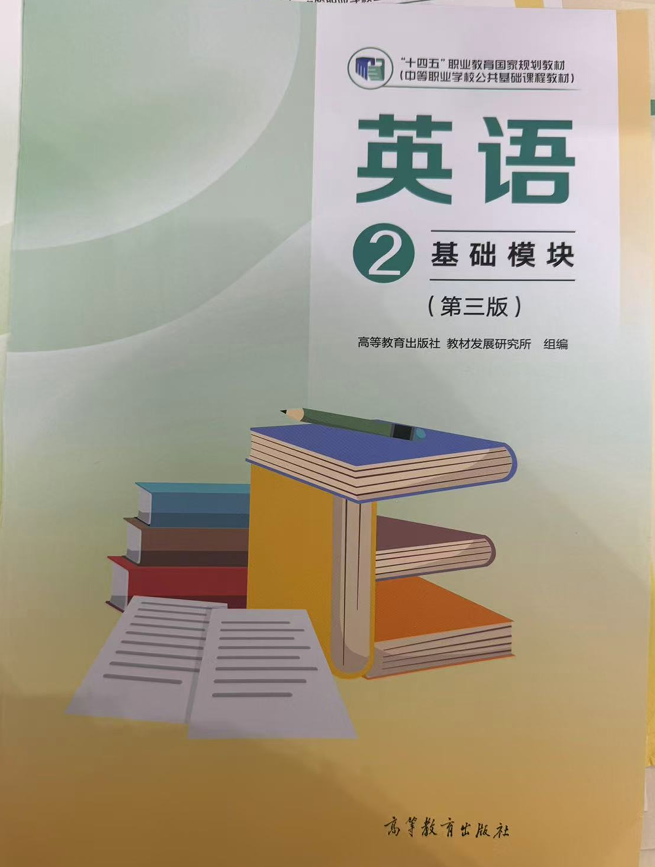
Unit 3 Internship(A卷·基础巩固)《英语 基础模块2》(高教版第三版)单元过关卷(原卷版+解析版)
2026-09-08
|
2份
|
16页
|
35人阅读
|
0人下载
内容正文:
编写说明:本套试卷紧扣《英语 基础模块2》(高教版第三版)教材,以教材单元为基准精准覆盖核心考点。每个单元设置AB卷,A卷为基础巩固卷,侧重基础考点训练,帮助学生扎实掌握知识要点;B卷为能力提升卷,注重知识整合与全面检测,引导学生构建知识网络。全书设计4份综合测试卷,模拟实战情境,聚焦解题能力突破,全面提升应试能力与知识应用水平。
《英语 基础模块2》(高教版第三版)《单元过关卷》
Unit 3 Internship
A卷·基础巩固
考试时间:60分钟 满分:100分
班级_____姓名_____学号_____成绩_____
第Ⅰ卷 客观题(共80分)
Ⅰ. 完形填空(1—10题,每题2分,共20分)
阅读下面短文,掌握大意,然后从每题所给的四个选项中选出最佳选项。
A vocational college can help students prepare for ____1____. Its courses do not only explain ideas in books. They also give students ____2____ to practise real tasks. In one college, students learn how to ____3____ and test machines with an instructor. Such training helps them understand each step and use tools ____4____ every day.
Many colleges work with companies. The companies share equipment, offer practice places, and tell teachers what skills are ____5____. Some colleges run special classes with one company. Students in these classes study at school and learn about a real job at the same time. This plan helps students see a ____6____ path from study to work.
Practical courses are ____7____ for students who like doing things. A student may learn basic machine repair, robot care, or new-energy technology. These skills are important ____8____ factories and service companies need trained workers. Practice also teaches students to check details, ____9____ small problems, and work with others.
Choosing a vocational course is not a second-best choice. It can be a practical way to build skills and find a suitable job. When students know what they like and work hard, practice can open a door to the ____10____.
1.A.sleep
B.work
C.swim
D.shout
2.A.money
B.time
C.space
D.food
3.A.install
B.hide
C.carry
D.sell
4.A.loudly
B.early
C.safely
D.suddenly
5.A.lost
B.broken
C.forgotten
D.needed
6.A.dark
B.heavy
C.clear
D.famous
7.A.rare
B.private
C.harmful
D.useful
8.A.because
B.although
C.unless
D.while
9.A.close
B.copy
C.forget
D.solve
10.A.past
B.noise
C.future
D.color
Ⅱ. 语法填空(11—20题,每题1.5分,共15分)
阅读下面短文,从方框中选择适当的词填空,使短文完整通顺。每个词限用一次。
A. was
B. when
C. her
D. and E. to
Bai Yaxin is a 28-year-old hairdresser from Shanxi province. She left her hometown ____11____ she was 15 and moved to Hangzhou. There she studied hairdressing at a vocational school. Her first job was a color technician. While she ____12____ working in a busy salon, she practiced cutting hair through daily tests. She hoped ____13____ become a real stylist one day, and she kept going even when things were hard. Working hard brought her a better career ____14____ more confidence. Now many customers come for ____15____ advice, and she feels proud of her job.
阅读下面短文,在空白处填入1个适当单词或括号内单词的正确形式。
Last month, many college students were busy preparing for their internship applications. While they ____16____ (write) emails to companies, some of them made common mistakes. They often forgot to use proper greetings or clear subject lines. Many of them treated emails ____17____ instant messages. A university teacher noticed this problem. He said that a good email reflects professional skills. He also said that students should ____18____ (check) every email carefully ____19____ sending it. After a few weeks of practice, their emails ____20____ (become) much clearer and more polite.
Ⅲ. 阅读理解(21—32题,每题2.5分,共30分)
阅读下面三篇短文,从每题所给的四个选项中选出最佳选项。
Passage A
Finding an internship takes planning. This guide gives four steps for international students in China.
Step 1: Clarify your career plan. Think about your major, interests, and long-term goals. Ask which industries fit you and whether the internship can help with future employment or entrepreneurship.
Step 2: Read job descriptions carefully. Check company size, industry, nationality rules, required length, and start date. Large companies may have clearer application steps, while smaller firms may offer faster growth. Internet, new media, and international trade are common choices because they value bilingual and cross-cultural skills.
Step 3: Apply broadly and attend interviews. An interview helps a company learn about you, and it helps you decide whether the position fits your strengths.
Step 4: Review and sign the internship agreement before work. Ask experienced classmates or teachers for advice and follow official notices. Stay safe: be careful with offers promising high pay for little work, never pay an unexplained fee, protect personal details, and check a company’s record before accepting a post.
21. What should students do first when looking for an internship?
A.Buy a train ticket.
B.Clarify their career plan.
C.Sign an agreement.
D.Attend a job fair.
22. What should students check in a job description?
A.The weather and food.
B.The company logo only.
C.The required length and start date.
D.The color of the office.
23. Why are interviews useful to students?
A.They can learn about the role and judge the fit.
B.They always get a high salary.
C.They can skip the agreement.
D.They can avoid all competition.
24. What does “Be careful with” mean in the last paragraph?
A.Pay for quickly.
B.Share widely.
C.Stay away from all jobs.
D.Watch out for.
Passage B
Order classes connect vocational colleges with companies. A company needs workers with certain skills, so the college and the company design a course together. Company experts may help teach it, while teachers explain basic knowledge. Students then practise with real equipment, company projects, and work data.
At Inner Mongolia Electronic Information Vocational Technical College, training centers copy real work scenes. In the Hikvision Spark Plan, about 200 students get internship positions at the company each year, and over 60 percent later receive full-time offers. The plan links study with work.
Other programs use the same idea. Southwest Petroleum University built a 200-kilowatt photovoltaic station on a library roof with Tongwei Solar. Students learn from equipment and real data, and engineers guide them. Jimei University’s navigation program combines three years of theory with a fourth-year internship on ships. Two captains guide each student.
Practice helps students understand how knowledge works in real situations, improve problem-solving skills, and learn what employers expect. Companies meet students who know their technology and work style.
25. What do order classes mainly connect?
A.Libraries and museums.
B.Students and travel agencies.
C.Vocational colleges and companies.
D.Hospitals and farms.
26. How many students get internship positions each year in the Hikvision Spark Plan?
A.About 20.
B.About 200.
C.About 600.
D.About 2,000.
27. What do students practise with in the training centers?
A.Real equipment and company projects.
B.Only paper tests.
C.Foreign languages only.
D.Sports rules.
28. What can be inferred from the last paragraph?
A.Practice is unrelated to jobs.
B.Companies do not need trained students.
C.Theory should be stopped.
D.Practice helps both students and companies.
Passage C
I wanted to work in China’s technology field, but it was not easy. I was from Indonesia and had finished my studies at Shanghai Jiao Tong University. I first tried small companies. Then two friends helped me get an internship at RedNote. Their help showed me that friends can be useful when looking for work.
Later, I got an internship at ByteDance. Work in China was very fast, so I had to get used to it. At first, this was hard. I kept sending applications, learning, and asking people for advice. I also joined the Indonesian Student Association in Shanghai, where I became president. This helped me meet more people and get more referrals.
For a legal internship, I needed an internship visa. I learned that a certificate was useful, but real skills were more important. At ByteDance, I learned how to set goals and manage projects. I now use these skills in my business. They later helped me run SEEK Tours, a travel company that helps Indonesians explore China with trips, guides, and ticket services.
I found that getting an internship may take many tries. Student groups can bring useful contacts, and friends may share new chances. So I did not stop after one failed application.
Looking back, every internship was a step toward my goal of starting a company. I learned three lessons: start small to gain experience, keep trying when applications fail, and decide what you want to learn before you apply.
29. How did the writer get the internship at RedNote?
A.Two friends helped her get it.
B.A teacher sent her there.
C.She won a school prize.
D.She bought the position.
30. What was a challenge for the writer in China?
A.The high cost of tickets.
B.The fast-paced work culture.
C.The cold winter weather.
D.The long trip to school.
31. What did the writer need for a legal internship?
A.A travel guide.
B.A company uniform.
C.An internship visa.
D.A driving license.
32. What does “referrals” most probably mean in the second paragraph?
A.Job recommendations.
B.Work problems.
C.Travel plans.
D.Visa rules.
Ⅳ. 补全对话(33—37题,每题3分,共15分)
阅读下面对话,从A—G七个选项中选出五个最佳选项,其中有两个多余选项。
A: Hi, Li Hua! You look excited today. ____33____
B: I got an internship in a hotel last week.
A: Congratulations! ____34____
B: I’ll work at the front desk and help guests check in.
A: That sounds interesting. ____35____
B: Three months. I can learn a lot from the work.
A: Yes. Practice is very important for us.
B: You’re right. ____36____
A: Of course. You should be polite and careful.
B: Thanks for your advice. ____37____
A: Good luck with your internship!
A. How long will the internship last?
B. What’s the good news?
C. What will you do there?
D. When did the hotel open?
E. Do you have any suggestions for me?
F. I’ll try my best to do a good job.
G. Why do you want to leave school?
第Ⅱ卷 主观题(共20分)
Ⅴ. 阅读下面短文,根据短文内容回答问题。(38—42题,每题4分,共20分)
Internships are not only about making coffee or copying papers. They can help students meet people, learn new skills, and understand a real workplace.
Caroline Voigt studied management and worked in Business Development at Feral Horses, a small company in London. She helped the company build partnerships with student groups. Fiona Guxholli worked in Investor Relations. She contacted possible investors, went to business events, and did research.
Both students chose the start-up because they wanted to learn in a different work place. The team had people with different backgrounds, but they worked well together. Caroline said that she became more confident. She also learned to give and use feedback in her daily work. Fiona learned about investor relations and business development. She said that good communication helped the interns feel part of the company.
Their classes had prepared them for teamwork, cooperation, and solving problems. Fiona had worked in big companies before, so she was happy to try a different place. The team members had different backgrounds, but they shared one goal and helped one another every day. The internship showed them that classroom skills can be useful in a real company.
38. What did Caroline study?
________________________________________________
39. Where did Caroline work during her internship?
________________________________________________
40. What did Fiona do during her internship?
________________________________________________
41. How did Caroline change during the internship?
________________________________________________
42. What did the internship show the two students?
________________________________________________
原创精品资源学科网独家享有版权,侵权必究!
原创精品资源学科网独家享有版权,侵权必究!
原创精品资源学科网独家享有版权,侵权必究!
学科网(北京)股份有限公司
$
编写说明:本套试卷紧扣《英语 基础模块2》(高教版第三版)教材,以教材单元为基准精准覆盖核心考点。每个单元设置AB卷,A卷为基础巩固卷,侧重基础考点训练,帮助学生扎实掌握知识要点;B卷为能力提升卷,注重知识整合与全面检测,引导学生构建知识网络。全书设计4份综合测试卷,模拟实战情境,聚焦解题能力突破,全面提升应试能力与知识应用水平。
《英语 基础模块2》(高教版第三版)《单元过关卷》
Unit 3 Internship
A卷·基础巩固
考试时间:60分钟 满分:100分
班级_____姓名_____学号_____成绩_____
第Ⅰ卷 客观题(共80分)
Ⅰ. 完形填空(1—10题,每题2分,共20分)
阅读下面短文,掌握大意,然后从每题所给的四个选项中选出最佳选项。
A vocational college can help students prepare for ____1____. Its courses do not only explain ideas in books. They also give students ____2____ to practise real tasks. In one college, students learn how to ____3____ and test machines with an instructor. Such training helps them understand each step and use tools ____4____ every day.
Many colleges work with companies. The companies share equipment, offer practice places, and tell teachers what skills are ____5____. Some colleges run special classes with one company. Students in these classes study at school and learn about a real job at the same time. This plan helps students see a ____6____ path from study to work.
Practical courses are ____7____ for students who like doing things. A student may learn basic machine repair, robot care, or new-energy technology. These skills are important ____8____ factories and service companies need trained workers. Practice also teaches students to check details, ____9____ small problems, and work with others.
Choosing a vocational course is not a second-best choice. It can be a practical way to build skills and find a suitable job. When students know what they like and work hard, practice can open a door to the ____10____.
1.A.sleep
B.work
C.swim
D.shout
2.A.money
B.time
C.space
D.food
3.A.install
B.hide
C.carry
D.sell
4.A.loudly
B.early
C.safely
D.suddenly
5.A.lost
B.broken
C.forgotten
D.needed
6.A.dark
B.heavy
C.clear
D.famous
7.A.rare
B.private
C.harmful
D.useful
8.A.because
B.although
C.unless
D.while
9.A.close
B.copy
C.forget
D.solve
10.A.past
B.noise
C.future
D.color
【答案】
1.B 2.B 3.A 4.C 5.D 6.C 7.D 8.A 9.D 10.C
【导语】
本文是一篇说明文,介绍职业院校的实践课程、校企合作及其对学生就业准备的作用。
【详解】
1.考查动词词义辨析;句意:职业院校能帮助学生为工作做好准备。sleep睡觉;work工作;swim游泳;shout喊叫。职业教育帮助就业,故选B。
2.考查名词词义辨析;句意:它们还给学生时间练习真实任务。money钱;time时间;space空间;food食物。给学生时间练习任务,选B。
3.考查动词词义辨析;句意:在一所学院,学生学习如何安装和测试机器。install安装;hide隐藏;carry携带;sell出售。机器训练需要安装和测试,选A。
4.考查副词词义辨析;句意:这样的培训帮助他们安全使用工具。loudly大声地;early早地;safely安全地;suddenly突然地。工具使用强调安全,选C。
5.考查形容词词义辨析;句意:教师会被告知企业需要哪些技能。lost丢失的;broken损坏的;forgotten忘记的;needed需要的。企业告知教师所需技能,选D。
6.考查形容词词义辨析;句意:这个计划帮助学生看到从学习到工作的清晰道路。dark黑暗的;heavy沉重的;clear清晰的;famous著名的。学习到工作的路径应清晰,选C。
7.考查形容词词义辨析;句意:实践课程对喜欢动手做事的学生很有用。rare稀少的;private私人的;harmful有害的;useful有用的。职业教育帮助就业,实践课程有用,故选D。
8.考查连词辨析;句意:这些技能很重要,因为工厂和服务公司需要受过培训的工人。 because因为;although虽然;unless除非;while当……时。工厂需要培训工人是技能重要的原因,选A。
9.考查动词词义辨析;句意:实践还教学生检查细节、解决小问题并与他人合作。close关闭;copy复制;forget忘记;solve解决。实践培养解决问题能力,选D。
10.考查名词词义辨析;句意:实践可以为未来打开一扇门。 past过去;noise噪音;future未来;color颜色。实践为未来创造机会,选C。
Ⅱ. 语法填空(11—20题,每题1.5分,共15分)
阅读下面短文,从方框中选择适当的词填空,使短文完整通顺。每个词限用一次。
A. was
B. when
C. her
D. and E. to
Bai Yaxin is a 28-year-old hairdresser from Shanxi province. She left her hometown ____11____ she was 15 and moved to Hangzhou. There she studied hairdressing at a vocational school. Her first job was a color technician. While she ____12____ working in a busy salon, she practiced cutting hair through daily tests. She hoped ____13____ become a real stylist one day, and she kept going even when things were hard. Working hard brought her a better career ____14____ more confidence. Now many customers come for ____15____ advice, and she feels proud of her job.
【答案】
11.B 12.A 13.E 14.D 15.C
【导语】
本文是一篇记叙文,讲述白雅欣 15 岁离家到杭州职校学习美发,从染发技师做起、坚持每日练习,最终成长为深受顾客欢迎的美发师的故事。
【详解】
11. 考查时间状语从句连词。句意:她 15 岁时离开家乡,搬到杭州。when 引导时间状语从句,表示“当……时”,说明离家的年龄,故选 B。
12. 考查过去进行时。句意:当她在繁忙的美发店里工作时,她通过每日考核练习剪发技巧。while 引导时间状语从句,描述过去某一时间段正在进行的动作,主语 she 为单数,用 was working,故选 A。
13. 考查非谓语动词(不定式)。句意:她希望有一天成为一名真正的美发师。固定结构 hope to do sth. 意为“希望做某事”,用不定式 to,故选 E。
14. 考查并列连词。句意:努力工作为她带来了更好的职业和更多的自信。and 连接两个并列名词短语 a better career 和 more confidence,故选 D。
15. 考查物主代词。句意:现在许多顾客来寻求她的建议。for 后接名词,此处用形容词性物主代词 her 修饰 advice,故选 C。
阅读下面短文,在空白处填入1个适当单词或括号内单词的正确形式。
Last month, many college students were busy preparing for their internship applications. While they ____16____ (write) emails to companies, some of them made common mistakes. They often forgot to use proper greetings or clear subject lines. Many of them treated emails ____17____ instant messages. A university teacher noticed this problem. He said that a good email reflects professional skills. He also said that students should ____18____ (check) every email carefully ____19____ sending it. After a few weeks of practice, their emails ____20____ (become) much clearer and more polite.
【答案】
16.were writing 17.like 18.check 19.before 20.became
【导语】
本文是一篇社会话题短文,讲述大学生在求职实习时把邮件当成即时消息、缺乏礼貌用语的问题,以及老师提醒学生规范书写邮件的做法。
【详解】
16. 考查过去进行时。句意:当他们正在给公司写邮件时,有些人犯了常见错误。while 引导时间状语从句,强调过去某一时刻正在进行的动作,主语 they 为复数,用 were writing,故填 were writing。
17. 考查介词固定搭配。句意:许多人把邮件当成即时消息来对待。固定搭配 treat...like... 意为“把……当作……”,故填 like。
18. 考查情态动词后接动词原形。句意:他还说学生们在发送邮件前应该仔细检查每一封邮件。情态动词 should 后接动词原形,故填 check。
19. 考查时间状语连词。句意:在发送邮件之前,应该仔细检查每一封。before 表示“在……之前”,引导时间状语,故填 before。
20. 考查一般过去时。句意:经过几周的练习,他们的邮件变得清晰、礼貌得多。After a few weeks 表示过去时间段,且语境为过去,用 become 的过去式 became,故填 became。
Ⅲ. 阅读理解(21—32题,每题2.5分,共30分)
阅读下面三篇短文,从每题所给的四个选项中选出最佳选项。
Passage A
Finding an internship takes planning. This guide gives four steps for international students in China.
Step 1: Clarify your career plan. Think about your major, interests, and long-term goals. Ask which industries fit you and whether the internship can help with future employment or entrepreneurship.
Step 2: Read job descriptions carefully. Check company size, industry, nationality rules, required length, and start date. Large companies may have clearer application steps, while smaller firms may offer faster growth. Internet, new media, and international trade are common choices because they value bilingual and cross-cultural skills.
Step 3: Apply broadly and attend interviews. An interview helps a company learn about you, and it helps you decide whether the position fits your strengths.
Step 4: Review and sign the internship agreement before work. Ask experienced classmates or teachers for advice and follow official notices. Stay safe: be careful with offers promising high pay for little work, never pay an unexplained fee, protect personal details, and check a company’s record before accepting a post.
21. What should students do first when looking for an internship?
A.Buy a train ticket.
B.Clarify their career plan.
C.Sign an agreement.
D.Attend a job fair.
22. What should students check in a job description?
A.The weather and food.
B.The company logo only.
C.The required length and start date.
D.The color of the office.
23. Why are interviews useful to students?
A.They can learn about the role and judge the fit.
B.They always get a high salary.
C.They can skip the agreement.
D.They can avoid all competition.
24. What does “Be careful with” mean in the last paragraph?
A.Pay for quickly.
B.Share widely.
C.Stay away from all jobs.
D.Watch out for.
【答案】
21.B 22.C 23.A 24.D
【导语】
本文是一篇应用文,介绍寻找实习的四个步骤、岗位筛选要点、面试作用、协议办理和安全注意事项。
【详解】
21.细节理解题。根据第一步“think about your career plan”可知,寻找实习时首先要明确职业规划,故选B。
22.细节理解题。原文要求查看“required length”和“start date”,即实习时长和开始日期,故选C。
23.细节理解题。原文说明面试既让公司了解学生,也让学生判断岗位是否符合自己的优势,故选A。
24.词义猜测题。后文提醒学生警惕“高薪低要求”的岗位,因此“Be careful with”意为“当心、警惕”,故选D。
Passage B
Order classes connect vocational colleges with companies. A company needs workers with certain skills, so the college and the company design a course together. Company experts may help teach it, while teachers explain basic knowledge. Students then practise with real equipment, company projects, and work data.
At Inner Mongolia Electronic Information Vocational Technical College, training centers copy real work scenes. In the Hikvision Spark Plan, about 200 students get internship positions at the company each year, and over 60 percent later receive full-time offers. The plan links study with work.
Other programs use the same idea. Southwest Petroleum University built a 200-kilowatt photovoltaic station on a library roof with Tongwei Solar. Students learn from equipment and real data, and engineers guide them. Jimei University’s navigation program combines three years of theory with a fourth-year internship on ships. Two captains guide each student.
Practice helps students understand how knowledge works in real situations, improve problem-solving skills, and learn what employers expect. Companies meet students who know their technology and work style.
25. What do order classes mainly connect?
A.Libraries and museums.
B.Students and travel agencies.
C.Vocational colleges and companies.
D.Hospitals and farms.
26. How many students get internship positions each year in the Hikvision Spark Plan?
A.About 20.
B.About 200.
C.About 600.
D.About 2,000.
27. What do students practise with in the training centers?
A.Real equipment and company projects.
B.Only paper tests.
C.Foreign languages only.
D.Sports rules.
28. What can be inferred from the last paragraph?
A.Practice is unrelated to jobs.
B.Companies do not need trained students.
C.Theory should be stopped.
D.Practice helps both students and companies.
【答案】
25.C 26.B 27.A 28.D
【导语】
本文是一篇说明文,介绍校企合作中的订单班如何共同设计课程、安排实践,并说明真实设备和项目训练对学生与企业的作用。
【详解】
25.细节理解题。首句直接说明订单班把职业院校与企业联系起来,故选C。
26.细节理解题。文中写明“about 200 students”每年获得实习岗位,故选B。
27.细节理解题。培训中心让学生使用真实设备、企业项目和工作数据进行练习,故选A。
28.推理判断题。结尾指出学生获得技能、了解雇主要求,企业也能接触熟悉其技术的学生,说明实践对双方都有帮助,故选D。
Passage C
I wanted to work in China’s technology field, but it was not easy. I was from Indonesia and had finished my studies at Shanghai Jiao Tong University. I first tried small companies. Then two friends helped me get an internship at RedNote. Their help showed me that friends can be useful when looking for work.
Later, I got an internship at ByteDance. Work in China was very fast, so I had to get used to it. At first, this was hard. I kept sending applications, learning, and asking people for advice. I also joined the Indonesian Student Association in Shanghai, where I became president. This helped me meet more people and get more referrals.
For a legal internship, I needed an internship visa. I learned that a certificate was useful, but real skills were more important. At ByteDance, I learned how to set goals and manage projects. I now use these skills in my business. They later helped me run SEEK Tours, a travel company that helps Indonesians explore China with trips, guides, and ticket services.
I found that getting an internship may take many tries. Student groups can bring useful contacts, and friends may share new chances. So I did not stop after one failed application.
Looking back, every internship was a step toward my goal of starting a company. I learned three lessons: start small to gain experience, keep trying when applications fail, and decide what you want to learn before you apply.
29. How did the writer get the internship at RedNote?
A.Two friends helped her get it.
B.A teacher sent her there.
C.She won a school prize.
D.She bought the position.
30. What was a challenge for the writer in China?
A.The high cost of tickets.
B.The fast-paced work culture.
C.The cold winter weather.
D.The long trip to school.
31. What did the writer need for a legal internship?
A.A travel guide.
B.A company uniform.
C.An internship visa.
D.A driving license.
32. What does “referrals” most probably mean in the second paragraph?
A.Job recommendations.
B.Work problems.
C.Travel plans.
D.Visa rules.
【答案】
29.A 30.B 31.C 32.A
【导语】
本文是一篇记叙文,讲述一名印度尼西亚留学生通过朋友帮助和个人努力,先后在RedNote和ByteDance实习,并在实习中学习工作技能、拓展人脉,最终创办旅游公司的经历。
【详解】
29.细节理解题。根据第一段“two friends helped me get an internship at RedNote”可知,作者通过两位朋友的帮助获得RedNote实习机会,故选A。
30.细节理解题。根据第二段“Work in China was very fast, so I had to get used to it”可知,中国很快的工作节奏是作者面临的挑战,故选B。
31.细节理解题。根据第三段“For a legal internship, I needed an internship visa”可知,合法实习需要实习签证,故选C。
32.词义猜测题。作者担任学生协会主席后,人脉扩大并带来更多referrals;结合求职语境可知,referrals指工作推荐,故选A。
Ⅳ. 补全对话(33—37题,每题3分,共15分)
阅读下面对话,从A—G七个选项中选出五个最佳选项,其中有两个多余选项。
A: Hi, Li Hua! You look excited today. ____33____
B: I got an internship in a hotel last week.
A: Congratulations! ____34____
B: I’ll work at the front desk and help guests check in.
A: That sounds interesting. ____35____
B: Three months. I can learn a lot from the work.
A: Yes. Practice is very important for us.
B: You’re right. ____36____
A: Of course. You should be polite and careful.
B: Thanks for your advice. ____37____
A: Good luck with your internship!
A. How long will the internship last?
B. What’s the good news?
C. What will you do there?
D. When did the hotel open?
E. Do you have any suggestions for me?
F. I’ll try my best to do a good job.
G. Why do you want to leave school?
【答案】
33.B 34.C 35.A 36.E 37.F
【导语】
本篇是一则校园实习情景对话。对话围绕酒店实习展开:B分享获得酒店前台实习机会的好消息,并介绍工作内容和实习时长;A给出礼貌、细心等建议,B表示会努力做好,体现同学间交流实习计划与经验的日常交际场景。
【详解】
33. 考查情景交际。句意:有什么好消息?根据上一句 “You look excited today.”,以及下文 B 说明获得酒店实习机会,此处应询问对方兴奋的原因或好消息是什么,B 选项符合问答逻辑。
34. 考查上下文逻辑衔接。句意:你在那里做什么工作?前文已点明获得酒店实习,下文 B 介绍将在前台帮助客人办理入住,说明此处询问具体工作内容,C 选项承接语境。
35. 考查情景交际。句意:实习会持续多久?下文 B 回答 “Three months.”,可知此处询问实习时长,A 选项与答语直接对应。
36. 考查情景交际。句意:你对我有什么建议吗?下文 A 给出要有礼貌、细心等建议,说明此处是在征求建议,E 选项得体自然。
37. 考查情景交际。句意:我会尽力把工作做好。前文已感谢对方建议,本句表达做好实习的决心,F 选项符合对话结尾的积极回应。
第Ⅱ卷 主观题(共20分)
Ⅴ. 阅读下面短文,根据短文内容回答问题。(38—42题,每题4分,共20分)
Internships are not only about making coffee or copying papers. They can help students meet people, learn new skills, and understand a real workplace.
Caroline Voigt studied management and worked in Business Development at Feral Horses, a small company in London. She helped the company build partnerships with student groups. Fiona Guxholli worked in Investor Relations. She contacted possible investors, went to business events, and did research.
Both students chose the start-up because they wanted to learn in a different work place. The team had people with different backgrounds, but they worked well together. Caroline said that she became more confident. She also learned to give and use feedback in her daily work. Fiona learned about investor relations and business development. She said that good communication helped the interns feel part of the company.
Their classes had prepared them for teamwork, cooperation, and solving problems. Fiona had worked in big companies before, so she was happy to try a different place. The team members had different backgrounds, but they shared one goal and helped one another every day. The internship showed them that classroom skills can be useful in a real company.
38. What did Caroline study?
________________________________________________
39. Where did Caroline work during her internship?
________________________________________________
40. What did Fiona do during her internship?
________________________________________________
41. How did Caroline change during the internship?
________________________________________________
42. What did the internship show the two students?
________________________________________________
【答案】
38. She studied management.
39. She worked in Business Development at Feral Horses.
40. She contacted possible investors, went to business events, and did research.
41. She became more confident.
42. It showed them that classroom skills can be useful in a real company.
【导语】
本文是一篇记叙文,介绍Caroline和Fiona在伦敦一家初创公司实习时的工作内容、个人成长以及课堂学习对实习的帮助。
【详解】
38.考查细节理解。根据第二段“Caroline Voigt studied management”可知,Caroline学习管理学。
39.考查细节理解。根据第二段“She worked in Business Development at Feral Horses”可知,她在Feral Horses公司负责业务拓展。
40.考查细节理解。根据第二段“She contacted possible investors, went to business events, and did research”可知,Fiona联系潜在投资者、参加商务活动并做研究。
41.考查细节理解。根据第三段“Caroline said that she became more confident”可知,她变得更加自信。
42.考查概括理解。根据最后一句“classroom skills can be useful in a real company”可知,实习让两人认识到课堂技能在真实公司中很有用。
原创精品资源学科网独家享有版权,侵权必究!
原创精品资源学科网独家享有版权,侵权必究!
原创精品资源学科网独家享有版权,侵权必究!
学科网(北京)股份有限公司
$
资源预览图

1

2

3
由于学科网是一个信息分享及获取的平台,不确保部分用户上传资料的 来源及知识产权归属。如您发现相关资料侵犯您的合法权益,请联系学科网,我们核实后将及时进行处理。