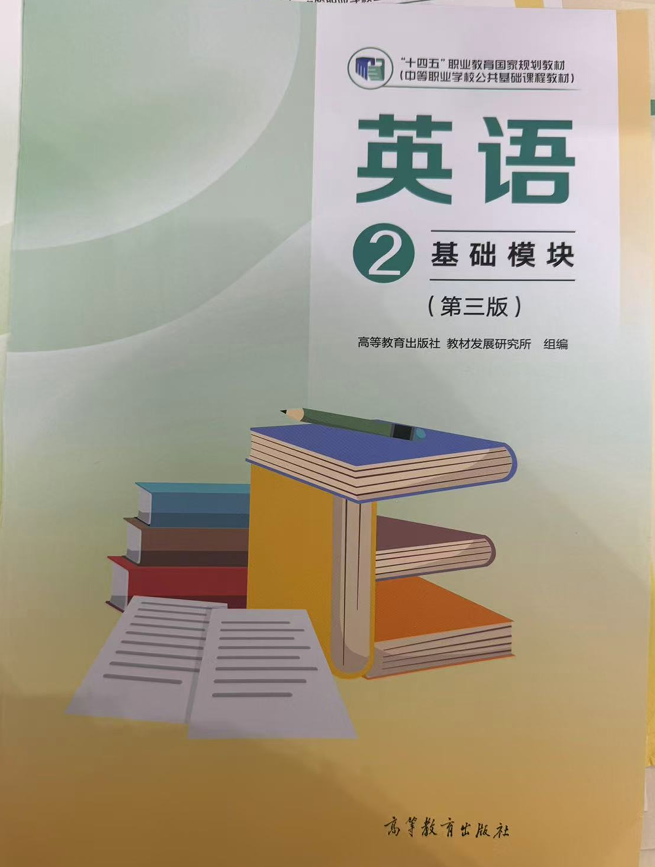
Unit 3 Internship(B卷·能力提升)《英语 基础模块2》(高教版第三版)单元过关卷(原卷版+解析版)
2026-09-08
|
2份
|
16页
|
33人阅读
|
0人下载
摘要:
**基本信息**
紧扣《英语 基础模块2》Unit 3 Internship,以职业教育实践情境为核心,通过AB卷分层设计(A卷基础巩固、B卷能力提升)及综合测试卷,全面覆盖核心考点,适配单元复习需求。
**题型特征**
|题型|题量/分值|知识覆盖|命题特色|
|----|-----------|----------|----------|
|完形填空|10题20分|词汇辨析(如path/road)、上下文理解|融入职业教育认知(课堂学习与工作实践结合),考查语言能力|
|语法填空|10题15分|时态(worked)、固定搭配(related to)|结合新职业现象(虚拟建筑师),培养学习能力|
|阅读理解|12题30分|职业教育案例(Berry实习、技术实习流程)|通过真实情境(新能源汽车课程)提升思维品质,理解理论与实践关系|
|补全对话|5题15分|职场交流用语|模拟实习沟通场景,强化语言应用能力|
|阅读回答问题|5题20分|职业选择原因分析(王慧卓案例)|聚焦真实职业决策,渗透文化意识(职业教育价值认同)|
内容正文:
编写说明:本套试卷紧扣《英语 基础模块2》(高教版第三版)教材,以教材单元为基准精准覆盖核心考点。每个单元设置AB卷,A卷为基础巩固卷,侧重基础考点训练,帮助学生扎实掌握知识要点;B卷为能力提升卷,注重知识整合与全面检测,引导学生构建知识网络。全书设计4份综合测试卷,模拟实战情境,聚焦解题能力突破,全面提升应试能力与知识应用水平。
《英语 基础模块2》(高教版第三版)《单元过关卷》
Unit 3 Internship
B卷·能力提升
考试时间:60分钟 满分:100分
班级_____姓名_____学号_____成绩_____
第Ⅰ卷 客观题(共80分)
Ⅰ. 完形填空(1—10题,每题2分,共20分)
阅读下面短文,掌握大意,然后从每题所给的四个选项中选出最佳选项。
Many young people now view vocational education differently. They do not see it only as a choice for students who miss university places. They see it as a ____1____ that joins classroom learning with ____2____ place practice. This change is clear in several Chinese provinces, where some vocational programs have admission scores above the undergraduate line.
One reason is the close link between colleges and companies. A college may work with many businesses and create an “order class”. Students in such a class study a course designed with an employer. They practise the tools used in a real workplace, and the company can meet possible ____3____ employees. The arrangement is not easy, but it gives students a ____4____ goal.
Students also care about what they will do after graduation. A program in mechanical and electronic engineering, for example, may include both ____5____ and hands-on tasks. A ____6____-energy vehicle course may teach students to understand systems and solve simple problems. These lessons help learners build ____7____ before entering a workshop or service center.
This does not mean ____8____ student should choose vocational education. The best choice ____9____ on interest, ability, and plans. However, practical learning deserves respect. If a student enjoys making things and wants useful skills, a vocational program can start a ____10____.
1.A.room
B.price
C.path
D.road
2.A.sleep
B.work
C.play
D.travel
3.A.future
B.past
C.holiday
D.weather
4.A.dark
B.heavy
C.clear
D.famous
5.A.noise
B.color
C.theory
D.speed
6.A.old
B.same
C.new
D.short
7.A.silence
B.distance
C.danger
D.confidence
8.A.few
B.every
C.none
D.another
9.A.waits
B.falls
C.depends
D.borrows
10.A.ticket
B.station
C.meal
D.career
【答案】
1.C 2.B 3.A 4.C 5.C 6.C 7.D 8.B 9.C 10.D
【导语】
本文是一篇议论性说明文,讨论职业教育受到重视的原因、实践学习的价值以及选择职业项目时应考虑的因素。
【详解】
1.考查名词词义辨析;句意:他们把它看作连接课堂学习与工作场所实践的道路。room房间;price价格;path道路、途径;road道路。职业教育被比作发展道路,选C。
2.考查名词词义辨析;句意:连接课堂学习与工作场所实践。sleep睡觉;work工作;play玩耍;travel旅行。此处强调工作场所实践,选B。
3.考查名词词义辨析;句意:公司可以接触到可能的未来员工。future未来;past过去;holiday假期;weather天气。企业希望遇见未来员工,选A。
4.考查形容词词义辨析;句意:这种安排虽不容易,但给学生一个清晰的目标。dark黑暗的;heavy沉重的;clear清晰的;famous著名的。校企合作给学生更清晰目标,选C。
5.考查名词词义辨析;句意:机械电子工程项目可能同时包括理论和实践任务。noise噪音;color颜色;theory理论;speed速度。课程同时包含理论和实践,选C。
6.考查形容词词义辨析;句意:一门新能源车课程……。old旧的;same相同的;new新的;short短的。new-energy 表示新能源,选C。
7.考查名词词义辨析;句意:这些课程能帮助学习者在进入工作场所前建立信心。silence沉默;distance距离;danger危险;confidence信心。实践课程帮助建立信心,选D。
8.考查限定词辨析;句意:这并不意味着每个学生都应该选择职业教育。few少数;every每个;none没有;another另一个。并非每个学生都应选择,every符合范围,选B。
9.考查动词词义辨析;句意:最佳选择取决于兴趣、能力和计划。waits等待;falls落下;depends取决于;borrows借入。最佳选择取决于个人情况,选C。
10.考查名词词义辨析;句意:职业项目可以成为未来职业的良好起点。ticket票;station车站;meal餐;career职业。职业项目是未来职业起点,选D。
Ⅱ. 语法填空(11—20题,每题1.5分,共15分)
阅读下面短文,从方框中选择适当的词填空,使短文完整通顺。每个词限用一次。
A. was
B. and
C. for
D. but E. liked
China has seen many new professions in recent years. Young people now try new jobs like virtual architect and pet nurse. A young man named Wang works as a virtual architect. Two years ago, while he ____11____ studying game art in college, he became deeply interested in this new field. He learned to build 3D rooms and online museums by himself. Many students ____12____ his work and hoped to join him. These new jobs are more flexible ____13____ give young people more choices. Some young people used to worry about their future, ____14____ now they feel more confident. Experts say it is important ____15____ young people to keep learning new skills.
【答案】
11.A 12.E 13.B 14.D 15.C
【导语】
本文是一篇综述性短文,介绍近年来中国涌现的大量新职业,以及年轻人投身虚拟建筑师、宠物护理员等新岗位、不断提升技能的积极态度。
【详解】
11. 考查过去进行时。句意:两年前,当他在大学学习游戏美术时,他对这个新领域产生了浓厚兴趣。while 引导时间状语从句,描述过去某段时间正在进行的动作,主语 he 为单数,用 was studying,故选 A。
12. 考查一般过去时。句意:许多学生喜欢他的作品,希望加入他的行列。全文讲述过去的经历,like 的过去式为 liked,故选 E。
13. 考查并列连词。句意:这些新工作更灵活,也给年轻人更多选择。and 连接两个并列谓语 are more flexible 和 give,故选 B。
14. 考查转折连词。句意:一些年轻人过去常为未来担忧,但现在他们更有信心。前后为转折关系,用 but 连接,故选 D。
15. 考查介词固定搭配。句意:专家说年轻人不断学习新技能很重要。固定句型 It is important for sb. to do sth. 意为“对某人来说做某事很重要”,故选 C。
阅读下面短文,在空白处填入1个适当单词或括号内单词的正确形式。
Last year, some vocational students ____16____ (work) as interns in big factories far from their schools. They ____17____ (do) simple tasks on the assembly line and worked long hours with little rest. The government noticed this problem and made new rules ____18____ students’ rights. For example, an internship should last about six months. The pay should not be lower than 80 percent of the workers’ salary. Schools, companies and students must sign a three-party agreement before the internship starts. The work should be related ____19____ the students’ majors. No one can force students to work ____20____ a certain company. These rules help students learn real skills and feel safe during their internship.
【答案】
16.were working 17.did 18.to protect 19.to 20.in
【导语】
本文是一篇政策解读短文,介绍国家为规范职校生实习出台的新规,要求实习工作与专业相关、签订三方协议,以保护实习生的合法权益。
【详解】
16. 考查过去进行时。句意:去年,一些职校学生正在离家很远的工厂里实习。描述过去某段时间持续进行的状态,主语 students 为复数,用 were working,故填 were working。
17. 考查一般过去时。句意:他们在流水线上做简单的工作,长时间劳动而很少休息。叙述过去发生的事实,用 do 的过去式 did,故填 did。
18. 考查非谓语动词(不定式)。句意:政府注意到这个问题,制定了新规则来保护学生的权益。不定式 to protect 作目的状语,故填 to protect。
19. 考查介词固定搭配。句意:实习工作应当与学生的专业相关。固定搭配 be related to 意为“与……有关”,故填 to。
20. 考查介词。句意:任何人都不能强迫学生到某一家特定的公司工作。固定表达 work in a company 意为“在公司工作”,故填 in。
Ⅲ. 阅读理解(21—32题,每题2.5分,共30分)
阅读下面三篇短文,从每题所给的四个选项中选出最佳选项。
Passage A
Berry studied Japanese at a university, but later chose a different kind of training. She entered a vocational course about nature education in Japan. The course was not only about reading books. It asked students to learn outdoors and to work with people.
Berry was used to language classes. In the course, she joined lessons in forests and parks. Teachers asked the learners to watch plants, plan safe walks, and explain facts to visitors. Berry also practised speaking clearly because a guide must help people.
The change was not easy. She had to get up early for outdoor work, and she needed to learn how to use simple tools. When she made a mistake, teachers showed her how to correct it. Step by step, she became more confident.
Berry found that her Japanese study was still useful. She could use the language when she met visitors, and she could share information in a friendly way. Her experience shows that an internship or a new course can open a door to a job that a student did not plan at first.
21. What did Berry study at university?
A.Japanese.
B.Biology.
C.Hotel service.
D.Computer science.
22. Where did Berry have some lessons in the new course?
A.In a city office.
B.In a railway station.
C.In forests and parks.
D.In a large factory.
23. Why did Berry practise speaking clearly?
A.Because she wanted to be a singer.
B.Because a guide needs to help different visitors.
C.Because her teacher disliked silence.
D.Because she planned to teach Japanese grammar.
24. What does “open a door” mean in the last sentence?
A.Close a chance.
B.Build a wooden door.
C.Leave a course early.
D.Find a way to enter a new job field.
【答案】
21.A 22.C 23.B 24.D
【导语】
本文是一篇记叙文,介绍Berry从日语专业转入自然教育职业课程,在户外课程和实习式训练中逐渐找到新职业方向的经历。
【详解】
21.细节理解题。根据第一段“Berry studied Japanese at a university”可知,Berry大学学习日语,故选A。
22.细节理解题。根据第二段“In the new course, she joined lessons in forests and parks”可知,她在森林和公园上课,故选C。
23.细节理解题。根据第二段“a guide must help people”可知,导游要帮助游客,所以她练习清晰表达,故选B。
24.词义猜测题。结合全文,Berry通过新课程获得了进入新工作领域的机会,“open a door”表示找到进入新职业领域的途径,故选D。
Passage B
People often ask whether students should spend more time in classrooms or in workplaces. The better answer is that both places matter. Classroom lessons give learners basic ideas, while workplace tasks show how those ideas are used.
For example, a student may read about safety rules before entering a workshop. The rules are important, but they become clearer when the student checks a machine and follows the steps. If a problem appears, the student must think, ask questions, and try again. This kind of practice builds care and patience.
Some people call practical courses a choice for weak students. That view is too narrow. A learner may choose practical study because he or she enjoys making things, helping customers, or solving real problems. Such study can also help a young person understand what a job is really like before making a long-term plan.
Practical learning does not replace books or teachers. It works best when schools explain the reasons behind each task and employers give safe guidance. Students then connect knowledge with action. They can see their progress, learn from mistakes, and make a wiser choice about future work. This balance gives learners a stronger start in changing workplaces.
25. What do classroom lessons give learners?
A.Free travel tickets.
B.Basic ideas.
C.A full-time job.
D.Business money.
26. What must a student do when a problem appears in the workshop?
A.Leave without telling anyone.
B.Wait for a test result.
C.Change to another school.
D.Think, ask questions, and try again.
27. Why may a learner choose practical study?
A.Because it is always shorter.
B.Because books are forbidden.
C.Because he or she enjoys real tasks.
D.Because employers give high marks.
28. What is the writer’s main idea?
A.Theory and safe practice should support each other.
B.Workplaces are more important than schools.
C.Only weak students need practice.
D.Students should plan a job without trying it.
【答案】
25.B 26.D 27.C 28.A
【导语】
本文是一篇议论文,讨论课堂理论与工作场所实践的互补作用,指出安全、有指导的实践能帮助学生理解知识并作出职业选择。
【详解】
25.细节理解题。根据第一段“Classroom lessons give learners basic ideas”可知,课堂学习给予学生基本概念,故选B。
26.细节理解题。根据第二段“If a problem appears, the student must think, ask questions, and try again”可知,遇到问题要思考、提问并再次尝试,故选D。
27.细节理解题。根据第三段“because he or she enjoys making things, helping customers, or solving real problems”可知,喜欢实际任务是选择实践学习的原因,故选C。
28.主旨理解题。末段指出实践不能替代理论,学校和雇主应共同提供支持,说明理论与安全实践应相互配合,故选A。
Passage C
A technical internship usually follows a clear path. First, a learner meets a trainer and learns the safety rules. The trainer explains the names of tools and shows how to keep a clean work area. These first lessons help prevent accidents.
Next, the learner watches a task and then does it with help. In a testing room, this may mean preparing a sample, placing it in an instrument, and writing down the result. The learner repeats the steps until the work is careful and steady. When the result is not right, the trainer asks the learner to check each step instead of giving the answer at once.
After basic practice, the learner can join a real project. Some programs arrange work during school holidays, so students can see how a laboratory or a company serves its customers. They learn to arrive on time, share tools, and report a problem.
At the end, the trainer and the learner talk about progress. The learner may receive advice about a next course or a job. In this way, an internship is more than a short visit. It is a bridge from lessons to responsible work, built through safety, repeated practice, and honest feedback. Records also help teams share results and find mistakes quickly.
29. What does a learner learn first in a technical internship?
A.Safety rules.
B.How to write an advertisement.
C.How to travel abroad.
D.A company’s history.
30. What may a learner do in a testing room?
A.Sell tickets to visitors.
B.Prepare a sample and record a result.
C.Design a school uniform.
D.Cook for customers.
31. Why do some programs arrange work during school holidays?
A.To give students a longer vacation.
B.To replace all classroom lessons.
C.To let students see real laboratory or company work.
D.To make students change their names.
32. What is the best title for the passage?
A.A Visit to a Famous City.
B.How to Win a Sports Match.
C.A History of School Uniforms.
D.A Bridge from Lessons to Work.
【答案】
29.A 30.B 31.C 32.D
【导语】
本文是一篇说明文,按步骤介绍技术类实习从安全培训、重复练习到参与真实项目和接受反馈的过程,说明实习如何帮助学生走向工作。
【详解】
29.细节理解题。根据第一段“learns the safety rules”可知,实习首先学习安全规则,故选A。
30.细节理解题。根据第二段“preparing a sample...and writing down the result”可知,学习者要准备样品并记录结果,故选B。
31.细节理解题。根据第三段可知,假期参加工作是为了让学生了解实验室或公司的真实工作,故选C。
32.主旨理解题。文章最后把实习比作从课程到负责工作的桥梁,全文围绕这一过程展开,故选D。
Ⅳ. 补全对话(33—37题,每题3分,共15分)
阅读下面对话,从A—G七个选项中选出五个最佳选项,其中有两个多余选项。
A: Hi, Tom! How is your internship going?
B: Not bad, but I’m a little nervous. ____33____
A: Take it easy. ____34____
B: You’re right. My workmates are very kind and helpful.
A: That’s great. ____35____
B: I need to answer phone calls and write simple reports.
A: Have you met any difficulties?
B: Yes. ____36____
A: Don’t worry. You can ask your teacher or workmates for help.
B: Good idea. ____37____
A: I’m sure you’ll make progress soon.
A. What exactly do you do every day?
B. It’s my first time working in a company.
C. Everyone starts with little experience.
D. Where is your company located?
E. Sometimes I don’t know how to talk with customers.
F. I’ll keep practising and learning from others.
G. Why did you give up the internship?
【答案】
33.B 34.C 35.A 36.E 37.F
【导语】
本篇是一则实习适应情景对话。对话围绕首次进入公司实习的紧张与挑战展开:B说明因初次工作而紧张,并介绍日常任务及与客户沟通的困难;A安慰并鼓励其向老师、同事求助,B表示会继续练习学习,体现实习初期互助与成长的交际场景。
【详解】
33. 考查上下文逻辑衔接。句意:这是我第一次在公司工作。前文 B 表示实习还不错但有点紧张,本句解释紧张的原因,B 选项与上文构成因果关系。
34. 考查情景交际。句意:每个人开始时都经验不足。前文 A 让对方放轻松,本句进一步安慰鼓励,C 选项符合劝慰语境。
35. 考查情景交际。句意:你每天具体做什么?下文 B 介绍接电话、写简单报告等日常工作,说明此处询问具体工作内容,A 选项与答语对应。
36. 考查上下文逻辑衔接。句意:有时我不知道如何与客户交谈。上一句 A 询问是否遇到困难,B 先肯定,本句具体说明困难所在,E 选项承接问答。
37. 考查情景交际。句意:我会继续练习并向他人学习。前文 A 建议向老师或同事求助,本句表明接受建议后的行动打算,F 选项符合积极收尾。
第Ⅱ卷 主观题(共20分)
Ⅴ. 阅读下面短文,根据短文内容回答问题。(38—42题,每题4分,共20分)
Wang Huizhuo got 571 marks in the national college exam. His mark was about 70 to 80 points above the college line, but he picked a new-energy car course at Beijing Polytechnic University. He wanted to learn from books and also work with his hands. The course was close to what he liked and what he wanted to do later.
Wang said that vocational universities paid more attention to real skills. He hoped to learn useful skills there. Some people asked if he was wasting his high mark. Wang gave a clear answer. He said it was not a waste when he studied a course he liked. If he used his mark to enter a school he did not like, he would not be happy later.
Wang was not the only one. Other high-scoring students also picked vocational courses because they wanted study to connect with future work. Beijing Polytechnic University offered many practice classes and worked with companies. Now some families care less about a school name. They care more about useful skills and a clear work plan. For Wang, the choice came from his interest, ability, and plans for the future.
38. How many points did Wang Huizhuo score in the national college entrance exam?
________________________________________________
39. Which program did Wang choose at Beijing Polytechnic University?
________________________________________________
40. What kind of learning style did Wang prefer?
________________________________________________
41. Why did Wang say his choice was not a waste?
________________________________________________
42. What do some families care more about now?
________________________________________________
【答案】
38. 571 marks. / He scored 571 marks.
39. He chose a new-energy car course.
40. He liked learning from books and working with his hands.
41. Because he liked the course and wanted to learn useful skills.
42. They care more about useful skills and a clear work plan.
【导语】
本文是一篇记叙文,介绍高考取得高分的Wang Huizhuo选择职业大学新能源车课程,并说明他重视实践技能和个人兴趣的原因。
【详解】
38.考查细节理解。根据第一段“Wang Huizhuo got 571 marks”可知,他高考取得571分。
39.考查细节理解。根据第一段“he picked a new-energy car course”可知,他选择了新能源车课程。
40.考查细节理解。根据第一段“learn from books and also work with his hands”可知,他喜欢理论学习和动手实践相结合的方式。
41.考查原因理解。根据第二段“it was not a waste when he studied a course he liked”可知,因为课程是自己喜欢的,而且能学到实用技能,所以他认为并不浪费。
42.考查信息概括。根据第三段“some families care less about a school name. They care more about useful skills and a clear work plan”可知,一些家庭现在更看重实用技能和明确的工作计划。
原创精品资源学科网独家享有版权,侵权必究!
原创精品资源学科网独家享有版权,侵权必究!
原创精品资源学科网独家享有版权,侵权必究!
学科网(北京)股份有限公司
$
编写说明:本套试卷紧扣《英语 基础模块2》(高教版第三版)教材,以教材单元为基准精准覆盖核心考点。每个单元设置AB卷,A卷为基础巩固卷,侧重基础考点训练,帮助学生扎实掌握知识要点;B卷为能力提升卷,注重知识整合与全面检测,引导学生构建知识网络。全书设计4份综合测试卷,模拟实战情境,聚焦解题能力突破,全面提升应试能力与知识应用水平。
《英语 基础模块2》(高教版第三版)《单元过关卷》
Unit 3 Internship
B卷·能力提升
考试时间:60分钟 满分:100分
班级_____姓名_____学号_____成绩_____
第Ⅰ卷 客观题(共80分)
Ⅰ. 完形填空(1—10题,每题2分,共20分)
阅读下面短文,掌握大意,然后从每题所给的四个选项中选出最佳选项。
Many young people now view vocational education differently. They do not see it only as a choice for students who miss university places. They see it as a ____1____ that joins classroom learning with ____2____ place practice. This change is clear in several Chinese provinces, where some vocational programs have admission scores above the undergraduate line.
One reason is the close link between colleges and companies. A college may work with many businesses and create an “order class”. Students in such a class study a course designed with an employer. They practise the tools used in a real workplace, and the company can meet possible ____3____ employees. The arrangement is not easy, but it gives students a ____4____ goal.
Students also care about what they will do after graduation. A program in mechanical and electronic engineering, for example, may include both ____5____ and hands-on tasks. A ____6____-energy vehicle course may teach students to understand systems and solve simple problems. These lessons help learners build ____7____ before entering a workshop or service center.
This does not mean ____8____ student should choose vocational education. The best choice ____9____ on interest, ability, and plans. However, practical learning deserves respect. If a student enjoys making things and wants useful skills, a vocational program can start a ____10____.
1.A.room
B.price
C.path
D.road
2.A.sleep
B.work
C.play
D.travel
3.A.future
B.past
C.holiday
D.weather
4.A.dark
B.heavy
C.clear
D.famous
5.A.noise
B.color
C.theory
D.speed
6.A.old
B.same
C.new
D.short
7.A.silence
B.distance
C.danger
D.confidence
8.A.few
B.every
C.none
D.another
9.A.waits
B.falls
C.depends
D.borrows
10.A.ticket
B.station
C.meal
D.career
Ⅱ. 语法填空(11—20题,每题1.5分,共15分)
阅读下面短文,从方框中选择适当的词填空,使短文完整通顺。每个词限用一次。
A. was
B. and
C. for
D. but E. liked
China has seen many new professions in recent years. Young people now try new jobs like virtual architect and pet nurse. A young man named Wang works as a virtual architect. Two years ago, while he ____11____ studying game art in college, he became deeply interested in this new field. He learned to build 3D rooms and online museums by himself. Many students ____12____ his work and hoped to join him. These new jobs are more flexible ____13____ give young people more choices. Some young people used to worry about their future, ____14____ now they feel more confident. Experts say it is important ____15____ young people to keep learning new skills.
阅读下面短文,在空白处填入1个适当单词或括号内单词的正确形式。
Last year, some vocational students ____16____ (work) as interns in big factories far from their schools. They ____17____ (do) simple tasks on the assembly line and worked long hours with little rest. The government noticed this problem and made new rules ____18____ students’ rights. For example, an internship should last about six months. The pay should not be lower than 80 percent of the workers’ salary. Schools, companies and students must sign a three-party agreement before the internship starts. The work should be related ____19____ the students’ majors. No one can force students to work ____20____ a certain company. These rules help students learn real skills and feel safe during their internship.
Ⅲ. 阅读理解(21—32题,每题2.5分,共30分)
阅读下面三篇短文,从每题所给的四个选项中选出最佳选项。
Passage A
Berry studied Japanese at a university, but later chose a different kind of training. She entered a vocational course about nature education in Japan. The course was not only about reading books. It asked students to learn outdoors and to work with people.
Berry was used to language classes. In the course, she joined lessons in forests and parks. Teachers asked the learners to watch plants, plan safe walks, and explain facts to visitors. Berry also practised speaking clearly because a guide must help people.
The change was not easy. She had to get up early for outdoor work, and she needed to learn how to use simple tools. When she made a mistake, teachers showed her how to correct it. Step by step, she became more confident.
Berry found that her Japanese study was still useful. She could use the language when she met visitors, and she could share information in a friendly way. Her experience shows that an internship or a new course can open a door to a job that a student did not plan at first.
21. What did Berry study at university?
A.Japanese.
B.Biology.
C.Hotel service.
D.Computer science.
22. Where did Berry have some lessons in the new course?
A.In a city office.
B.In a railway station.
C.In forests and parks.
D.In a large factory.
23. Why did Berry practise speaking clearly?
A.Because she wanted to be a singer.
B.Because a guide needs to help different visitors.
C.Because her teacher disliked silence.
D.Because she planned to teach Japanese grammar.
24. What does “open a door” mean in the last sentence?
A.Close a chance.
B.Build a wooden door.
C.Leave a course early.
D.Find a way to enter a new job field.
Passage B
People often ask whether students should spend more time in classrooms or in workplaces. The better answer is that both places matter. Classroom lessons give learners basic ideas, while workplace tasks show how those ideas are used.
For example, a student may read about safety rules before entering a workshop. The rules are important, but they become clearer when the student checks a machine and follows the steps. If a problem appears, the student must think, ask questions, and try again. This kind of practice builds care and patience.
Some people call practical courses a choice for weak students. That view is too narrow. A learner may choose practical study because he or she enjoys making things, helping customers, or solving real problems. Such study can also help a young person understand what a job is really like before making a long-term plan.
Practical learning does not replace books or teachers. It works best when schools explain the reasons behind each task and employers give safe guidance. Students then connect knowledge with action. They can see their progress, learn from mistakes, and make a wiser choice about future work. This balance gives learners a stronger start in changing workplaces.
25. What do classroom lessons give learners?
A.Free travel tickets.
B.Basic ideas.
C.A full-time job.
D.Business money.
26. What must a student do when a problem appears in the workshop?
A.Leave without telling anyone.
B.Wait for a test result.
C.Change to another school.
D.Think, ask questions, and try again.
27. Why may a learner choose practical study?
A.Because it is always shorter.
B.Because books are forbidden.
C.Because he or she enjoys real tasks.
D.Because employers give high marks.
28. What is the writer’s main idea?
A.Theory and safe practice should support each other.
B.Workplaces are more important than schools.
C.Only weak students need practice.
D.Students should plan a job without trying it.
Passage C
A technical internship usually follows a clear path. First, a learner meets a trainer and learns the safety rules. The trainer explains the names of tools and shows how to keep a clean work area. These first lessons help prevent accidents.
Next, the learner watches a task and then does it with help. In a testing room, this may mean preparing a sample, placing it in an instrument, and writing down the result. The learner repeats the steps until the work is careful and steady. When the result is not right, the trainer asks the learner to check each step instead of giving the answer at once.
After basic practice, the learner can join a real project. Some programs arrange work during school holidays, so students can see how a laboratory or a company serves its customers. They learn to arrive on time, share tools, and report a problem.
At the end, the trainer and the learner talk about progress. The learner may receive advice about a next course or a job. In this way, an internship is more than a short visit. It is a bridge from lessons to responsible work, built through safety, repeated practice, and honest feedback. Records also help teams share results and find mistakes quickly.
29. What does a learner learn first in a technical internship?
A.Safety rules.
B.How to write an advertisement.
C.How to travel abroad.
D.A company’s history.
30. What may a learner do in a testing room?
A.Sell tickets to visitors.
B.Prepare a sample and record a result.
C.Design a school uniform.
D.Cook for customers.
31. Why do some programs arrange work during school holidays?
A.To give students a longer vacation.
B.To replace all classroom lessons.
C.To let students see real laboratory or company work.
D.To make students change their names.
32. What is the best title for the passage?
A.A Visit to a Famous City.
B.How to Win a Sports Match.
C.A History of School Uniforms.
D.A Bridge from Lessons to Work.
Ⅳ. 补全对话(33—37题,每题3分,共15分)
阅读下面对话,从A—G七个选项中选出五个最佳选项,其中有两个多余选项。
A: Hi, Tom! How is your internship going?
B: Not bad, but I’m a little nervous. ____33____
A: Take it easy. ____34____
B: You’re right. My workmates are very kind and helpful.
A: That’s great. ____35____
B: I need to answer phone calls and write simple reports.
A: Have you met any difficulties?
B: Yes. ____36____
A: Don’t worry. You can ask your teacher or workmates for help.
B: Good idea. ____37____
A: I’m sure you’ll make progress soon.
A. What exactly do you do every day?
B. It’s my first time working in a company.
C. Everyone starts with little experience.
D. Where is your company located?
E. Sometimes I don’t know how to talk with customers.
F. I’ll keep practising and learning from others.
G. Why did you give up the internship?
第Ⅱ卷 主观题(共20分)
Ⅴ. 阅读下面短文,根据短文内容回答问题。(38—42题,每题4分,共20分)
Wang Huizhuo got 571 marks in the national college exam. His mark was about 70 to 80 points above the college line, but he picked a new-energy car course at Beijing Polytechnic University. He wanted to learn from books and also work with his hands. The course was close to what he liked and what he wanted to do later.
Wang said that vocational universities paid more attention to real skills. He hoped to learn useful skills there. Some people asked if he was wasting his high mark. Wang gave a clear answer. He said it was not a waste when he studied a course he liked. If he used his mark to enter a school he did not like, he would not be happy later.
Wang was not the only one. Other high-scoring students also picked vocational courses because they wanted study to connect with future work. Beijing Polytechnic University offered many practice classes and worked with companies. Now some families care less about a school name. They care more about useful skills and a clear work plan. For Wang, the choice came from his interest, ability, and plans for the future.
38. How many points did Wang Huizhuo score in the national college entrance exam?
________________________________________________
39. Which program did Wang choose at Beijing Polytechnic University?
________________________________________________
40. What kind of learning style did Wang prefer?
________________________________________________
41. Why did Wang say his choice was not a waste?
________________________________________________
42. What do some families care more about now?
________________________________________________
原创精品资源学科网独家享有版权,侵权必究!
原创精品资源学科网独家享有版权,侵权必究!
原创精品资源学科网独家享有版权,侵权必究!
学科网(北京)股份有限公司
$
资源预览图

1

2

3
由于学科网是一个信息分享及获取的平台,不确保部分用户上传资料的 来源及知识产权归属。如您发现相关资料侵犯您的合法权益,请联系学科网,我们核实后将及时进行处理。