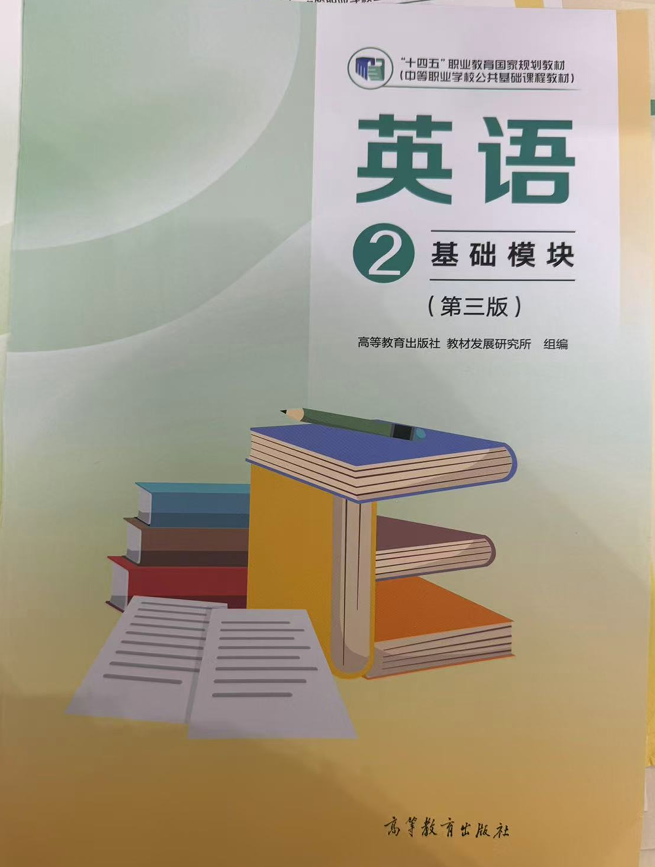
Unit 5——Unit 8 阶段测试卷(A卷·基础巩固)《英语 基础模块2》(高教版第三版)单元过关卷(原卷版+解析版)
2026-09-08
|
2份
|
17页
|
20人阅读
|
0人下载
摘要:
**基本信息**
《英语基础模块2》Unit5-8阶段测试A卷,紧扣教材核心考点,以“光盘行动”“竹编技艺”“甲骨文文化”等时代与文化情境设计试题,适配中职英语单元复习,强化语言能力与文化意识。
**题型特征**
|题型|题量/分值|知识覆盖|命题特色|
|----|-----------|----------|----------|
|完形填空|10题20分|连词、动词等基础词汇|“光盘行动”情境考查语篇理解,培养思维品质|
|语法填空|10题15分|代词、时态等语法点|博物馆AI项目素材,提升语言运用能力|
|阅读理解|12题30分|科普(科学营)、文化(竹编/莫高窟)|跨文化素材渗透文化意识,考查信息获取|
|补全对话|5题15分|环保话题交际用语|贴近生活场景,强化语言表达能力|
|阅读回答问题|5题20分|细节理解与表达|甲骨文文化营主题,融合学习能力与文化传承|
内容正文:
编写说明:本套试卷紧扣《英语 基础模块2》(高教版第三版)教材,以教材单元为基准精准覆盖核心考点。每个单元设置AB卷,A卷为基础巩固卷,侧重基础考点训练,帮助学生扎实掌握知识要点;B卷为能力提升卷,注重知识整合与全面检测,引导学生构建知识网络。全书设计4份综合测试卷,模拟实战情境,聚焦解题能力突破,全面提升应试能力与知识应用水平。
《英语 基础模块2》(高教版第三版)《单元过关卷》
Unit 5——Unit 8 阶段测试卷
A卷·基础巩固
考试时间:60分钟 满分:100分
班级_____姓名_____学号_____成绩_____
第Ⅰ卷 客观题(共80分)
Ⅰ. 完形填空(1—10题,每题2分,共20分)
阅读下面短文,掌握大意,然后从每题所给的四个选项中选出最佳选项。
Zhang Lin used to waste a lot of food at school. He often left rice and vegetables on his plate. His classmates sometimes told him to finish his meal, ____1____ he did not care.
One Monday in March 2026, the school started a "Clean Plate"(光盘行动)activity. It asked students to eat up all the food and ____2____ nothing at all. Zhang Lin thought it was just a game. He finished his rice on the first day, but he left the vegetables again.
Then he saw a poster in the dining hall. It showed that the school threw away several ____3____ of food every day. Zhang Lin was surprised and felt ____4____ for wasting food.
From that day on, Zhang Lin decided to change. He took less food and ____5____ to finish everything on his plate. His friend asked him why he became so ____6____. Zhang Lin said, "Saving food is a good habit."
After two months, Zhang Lin finished his meals and reminded his classmates to ____7____ their plates. A small change can make a big difference. He is now proud to help ____8____ food at school. His teacher said that he set a good ____9____ for other students. He hopes to see more students join the activity and treat every ____10____ with respect.
1.A.because
B.so
C.but
D.if
2.A.waste
B.buy
C.cook
D.sell
3.A.books
B.kilograms
C.minutes
D.meters
4.A.happy
B.proud
C.angry
D.sorry
5.A.forgot
B.refused
C.tried
D.stopped
6.A.lazy
B.serious
C.busy
D.quiet
7.A.clean
B.fill
C.cover
D.break
8.A.cook
B.save
C.buy
D.eat
9.A.example
B.record
C.number
D.price
10.A.meal
B.game
C.class
D.test
Ⅱ. 语法填空(11—20题,每题1.5分,共15分)
阅读下面短文,从方框中选择适当的词填空,使短文完整通顺。每个词限用一次。
A. more
B. what
C. alive
D. from E. interesting
At the Grand Canal Museum of Beijing, a new program makes history fun for children. Twelve-year-old Chen Mingxuan held an AI device to look at an ancient bronze (青铜的) treasure. The device showed him ____11____ the patterns (花纹) meant. He was excited and told his own story to the machine. His words became a special gift. “Children remember better when they tell their own stories,” said a worker. Now ____12____ and more children visit the museum. They learn a lot ____13____ the old treasures. Some children say history is ____14____ now. It is a good way to make history come ____15____ for the young.
阅读下面短文,在空白处填入1个适当单词或括号内单词的正确形式。
Two new comic books (漫画书) are popular with young readers. They ____16____ (call) “Ancient China, So Interesting!”. They are made by the National Museum of China. In the books, a cute character named Bubaichi travels back to ancient China. He ____17____ (learn) how people made stone tools and bronze vessels (青铜器). The books tell interesting stories about old treasures. The facts are correct, because experts checked ____18____ (they) carefully. The books make history fun ____19____ (with) their lively pictures. Many young readers say the books are ____20____ (interest) and want to learn more.
Ⅲ. 阅读理解(21—32题,每题2.5分,共30分)
阅读下面三篇短文,从每题所给的四个选项中选出最佳选项。
Passage A
Summer Science Camp for Young Innovators
Are you a student who loves science? Do you want to turn your ideas into real things? Our summer science camp is waiting for you!
Time: July 6 to July 17, 2026 (Monday to Friday, 9:00 a.m. — 4:00 p.m.)
Place: City Science Museum, 88 Green Street
What you will do:
● Build water rockets(水火箭)and watch them fly high.
● Make a simple robot and let it move.
● Try fun experiments with water, light and sound.
● Visit the museum's invention workshop and talk with young inventors.
Who can join:
● Students aged 12 to 18.
● You should be interested in science and good at working with others.
What we give you:
● All the tools you need are free.
● A science teacher will help you during the camp.
● Every student will get a certificate at the end of the camp.
How to join:
Please send your name, age, school and a few words about yourself to sciencecamp@citymuseum.com before June 20, 2026. Only 40 students can join, so please apply early.
For more information, please call Miss Wang at 010-5678-4321 or visit our office on the first floor of the museum.
21. When does the science camp start?
A.On June 20, 2026.
B.On July 6, 2026.
C.On July 17, 2026.
D.On August 1, 2026.
22. What can students do in the camp?
A.Cook delicious food.
B.Paint pictures.
C.Build water rockets and robots.
D.Play computer games.
23. How can students join the camp?
A.By making a phone call.
B.By writing a letter.
C.By visiting the museum.
D.By sending an email.
24. What does the underlined word "certificate" mean in Chinese?
A.证书
B.礼物
C.奖杯
D.徽章
Passage B
Bamboo weaving(竹编)is an old Chinese craft. People use thin pieces of bamboo to make beautiful things like baskets, boxes and lamps. It has a history of thousands of years.
First, workers choose bamboo that grows straight and strong. They cut the bamboo into pieces and take off the green skin with a sharp knife. Then they cut the bamboo into thin pieces of the same width.
To make the pieces strong and clean, workers wash and dry them. After that, they weave(编织)the pieces by hand. A good worker can make many different shapes.
Making bamboo things needs great patience. A simple box may take weeks to finish. Workers must be careful with every piece, because a small mistake can destroy the whole thing.
Most bamboo weaving skills are not written down. They are passed from old workers to young students by mouth. This is why the craft has kept its beauty for so long.
Today, bamboo weaving is very popular in China. More and more young people are learning it. They use this old skill to make new and useful things. The craft is not only about baskets. It is also a bridge between the past and the future.
25. What is bamboo weaving?
A.A cooking skill.
B.A kind of bamboo tree.
C.A way to make thin bamboo pieces into useful and beautiful things.
D.A kind of paper.
26. What should workers do first when making bamboo things?
A.Choose bamboo that grows straight and strong.
B.Weave the pieces at once.
C.Paint the box.
D.Dry the finished box.
27. Why is a small mistake serious in bamboo weaving?
A.Because the tools are hard to use.
B.Because the bamboo is expensive.
C.Because the worker will be tired.
D.Because it can destroy the whole thing.
28. What can we infer from the last paragraph?
A.The craft will disappear soon.
B.Young people will keep the craft alive.
C.Bamboo things are all the same.
D.Workers no longer make baskets.
Passage C
In August 2026, my family and I went to Dunhuang to see the famous Mogao Caves(莫高窟). I could hardly wait to see them.
On the first morning, we entered the caves with a guide. The guide told us about the caves. They have 735 caves with many beautiful murals(壁画). In one cave, I saw a famous picture of a deer with nine colors. It looked so real that I almost believed it could run away.
Later, we saw many flying figures in the murals. Their long ribbons seemed to move, and the colors were still bright after a thousand years. I asked the guide how people painted them so well. She said the artists worked with great care and patience.
In another cave, we saw a huge statue. It was taller than a house, and I felt very small before it.
The guide also told us that Dunhuang was an important stop on an old trade road. Traders from many countries passed through the city long ago, and their stories are hidden in the paintings.
After the visit, I kept thinking about the caves. Dunhuang is not only a place of beauty but also a book of ancient history. I hope to visit it again in the future.
29. What did the writer see in one cave?
A.A huge statue.
B.Some flying figures.
C.The famous picture of a deer with nine colors.
D.A book of history.
30. How many caves do the Mogao Caves have?
A.257.
B.45,000.
C.2,000.
D.735.
31. What does the underlined word "figures" mean in Chinese?
A.人物
B.动物
C.花朵
D.车辆
32. What can we infer from the passage?
A.The writer doesn't like history.
B.The writer had a great time in Dunhuang.
C.The murals are not well protected.
D.The writer will never come back.
Ⅳ. 补全对话(33—37题,每题3分,共15分)
阅读下面对话,从A—G七个选项中选出五个最佳选项,其中有两个多余选项。
A: Hi, Mary! The school garden looks greener than before.
B: Yes. We planted more trees last weekend. ____33____
A: That’s a good way to protect the environment.
B: You’re right. ____34____
A: I usually turn off the lights when I leave a room.
B: Nice habit! ____35____
A: Yes. I also take a cloth bag when I go shopping.
B: Perfect. What else can we do?
A: ____36____
B: I’ll try that from today.
A: Great! ____37____
B: I hope so too.
A. What do you usually do to go green?
B. If everyone takes action, the earth will be better.
C. We want to make our campus more beautiful.
D. Why do you throw bottles into the river?
E. We can sort rubbish and recycle paper at school.
F. When did the school shop open?
G. Do you also try to use less plastic?
第Ⅱ卷 主观题(共20分)
Ⅴ. 阅读下面短文,根据短文内容回答问题。(38—42题,每题4分,共20分)
The Oracle Bone Culture Camp(甲骨文文化体验营)is a popular activity at a history museum in China. The museum is famous for its oracle bone inscriptions(甲骨文), the earliest known form of Chinese characters.
The camp is held every Saturday from 9:00 a.m. to 11:30 a.m. Students can join it for free, but they need to book online first. Only 30 students can take part each time.
During the camp, students visit the museum and see real oracle bones(龟甲兽骨). They learn that people in ancient China wrote on turtle shells and animal bones more than 3,000 years ago. Then they try to write some simple ancient characters with special brushes. The most interesting part is the game. In the game, students can see how the characters changed over time.
Many students say the camp makes history interesting. Teachers also hope that the camp can help students understand the ideas of ancient Chinese people.
38. Where is the Oracle Bone Culture Camp held?
________________________________________________
39. How long does the camp last each time?
________________________________________________
40. How can students join the camp?
________________________________________________
41. What did people in ancient China write on?
________________________________________________
42. What do many students think of the camp?
________________________________________________
原创精品资源学科网独家享有版权,侵权必究!
原创精品资源学科网独家享有版权,侵权必究!
原创精品资源学科网独家享有版权,侵权必究!
学科网(北京)股份有限公司
$
编写说明:本套试卷紧扣《英语 基础模块2》(高教版第三版)教材,以教材单元为基准精准覆盖核心考点。每个单元设置AB卷,A卷为基础巩固卷,侧重基础考点训练,帮助学生扎实掌握知识要点;B卷为能力提升卷,注重知识整合与全面检测,引导学生构建知识网络。全书设计4份综合测试卷,模拟实战情境,聚焦解题能力突破,全面提升应试能力与知识应用水平。
《英语 基础模块2》(高教版第三版)《单元过关卷》
Unit 5——Unit 8 阶段测试卷
A卷·基础巩固
考试时间:60分钟 满分:100分
班级_____姓名_____学号_____成绩_____
第Ⅰ卷 客观题(共80分)
Ⅰ. 完形填空(1—10题,每题2分,共20分)
阅读下面短文,掌握大意,然后从每题所给的四个选项中选出最佳选项。
Zhang Lin used to waste a lot of food at school. He often left rice and vegetables on his plate. His classmates sometimes told him to finish his meal, ____1____ he did not care.
One Monday in March 2026, the school started a "Clean Plate"(光盘行动)activity. It asked students to eat up all the food and ____2____ nothing at all. Zhang Lin thought it was just a game. He finished his rice on the first day, but he left the vegetables again.
Then he saw a poster in the dining hall. It showed that the school threw away several ____3____ of food every day. Zhang Lin was surprised and felt ____4____ for wasting food.
From that day on, Zhang Lin decided to change. He took less food and ____5____ to finish everything on his plate. His friend asked him why he became so ____6____. Zhang Lin said, "Saving food is a good habit."
After two months, Zhang Lin finished his meals and reminded his classmates to ____7____ their plates. A small change can make a big difference. He is now proud to help ____8____ food at school. His teacher said that he set a good ____9____ for other students. He hopes to see more students join the activity and treat every ____10____ with respect.
1.A.because
B.so
C.but
D.if
2.A.waste
B.buy
C.cook
D.sell
3.A.books
B.kilograms
C.minutes
D.meters
4.A.happy
B.proud
C.angry
D.sorry
5.A.forgot
B.refused
C.tried
D.stopped
6.A.lazy
B.serious
C.busy
D.quiet
7.A.clean
B.fill
C.cover
D.break
8.A.cook
B.save
C.buy
D.eat
9.A.example
B.record
C.number
D.price
10.A.meal
B.game
C.class
D.test
【答案】
1.C 2.A 3.B 4.D 5.C 6.B 7.A 8.B 9.A 10.A
【导语】
本文是一篇记叙文,讲述学生张林以前在学校浪费食物,学校开展 "光盘行动" 后,他认识到节约粮食的重要性,逐渐养成珍惜食物好习惯的故事。
【详解】
1. 考查连词辨析;句意:他的同学有时叫他吃完盘中的饭,但他不在乎。because 因为;so 所以;but 但是;if 如果。前后为转折关系,用 but 连接,符合语境。
2. 考查动词词义辨析;句意:活动要求学生吃光所取的食物,一点也不浪费。waste 浪费;buy 购买;cook 烹饪;sell 出售。与 "光盘行动" 主题呼应,waste 正确。
3. 考查名词词义辨析;句意:海报显示学校每天倒掉好几公斤食物。books 书;kilograms 公斤;minutes 分钟;meters 米。食物以 "公斤" 计量,kilograms 正确。
4. 考查形容词词义辨析;句意:张林很惊讶,并为浪费食物感到抱歉。happy 高兴的;proud 自豪的;angry 生气的;sorry 抱歉的。看到大量食物被浪费,张林感到愧疚,sorry 符合语境。
5. 考查动词词义辨析与固定搭配;句意:他少取食物,并尽力把盘里的东西吃完。forgot 忘记;refused 拒绝;tried 尝试、尽力;stopped 停止。固定搭配 try to do 表示 "努力做某事",tried 正确。
6. 考查形容词词义辨析;句意:朋友问他为什么变得这么认真。lazy 懒惰的;serious 认真的;busy 忙碌的;quiet 安静的。张林认真对待节约粮食,serious 恰当。
7. 考查动词词义辨析与固定搭配;句意:两个月后,张林不仅自己光盘,还提醒同学清光盘中的食物。clean 使…… 干净;fill 装满;cover 覆盖;break 打破。固定搭配 clean one's plate 表示 "吃光盘中食物",clean 正确。
8. 考查动词词义辨析;句意:他现在为自己能在学校帮助节约粮食而自豪。cook 烹饪;save 节约、节省;buy 购买;eat 吃。save food 表示 "节约粮食",save 正确。
9. 考查固定搭配;句意:老师表扬他,说他为其他同学树立了好榜样。example 榜样;record 记录;number 数字;price 价格。固定搭配 set a good example 意为 "树立好榜样",example 正确。
10. 考查名词词义辨析;句意:他希望更多同学参加活动,尊重每一餐饭。meal 一餐饭;game 游戏;class 课;test 测试。treat every meal with respect 意为 "尊重每一餐",meal 正确。
Ⅱ. 语法填空(11—20题,每题1.5分,共15分)
阅读下面短文,从方框中选择适当的词填空,使短文完整通顺。每个词限用一次。
A. more
B. what
C. alive
D. from E. interesting
At the Grand Canal Museum of Beijing, a new program makes history fun for children. Twelve-year-old Chen Mingxuan held an AI device to look at an ancient bronze (青铜的) treasure. The device showed him ____11____ the patterns (花纹) meant. He was excited and told his own story to the machine. His words became a special gift. “Children remember better when they tell their own stories,” said a worker. Now ____12____ and more children visit the museum. They learn a lot ____13____ the old treasures. Some children say history is ____14____ now. It is a good way to make history come ____15____ for the young.
【答案】
11.B 12.A 13.D 14.E 15.C
【导语】
本文是一篇记叙文,讲述北京大运河博物馆的“神兽回归”项目:12 岁男孩陈明轩用 AI 设备了解商代青铜器花纹的含义、录下自己的讲解,博物馆用新技术让历史在孩子们心中“活”起来。
【详解】
11. 考查宾语从句。句意:这个设备向他展示了文物上花纹的含义。what 引导宾语从句,作 showed 的宾语,且在从句中作 meant 的宾语,故选 B。
12. 考查固定搭配。句意:现在越来越多的孩子来参观博物馆。more and more 意为“越来越多”,固定搭配,故选 A。
13. 考查介词。句意:他们能从古老的文物中学到很多。固定搭配 learn from 意为“从……学习”,故选 D。
14. 考查形容词。句意:有些孩子说现在历史很有趣。空格位于系动词 is 后,用形容词 interesting 作表语,故选 E。
15. 考查固定搭配。句意:这是一种让历史在年轻人心中活起来的好方式。固定搭配 come alive 意为“活跃起来、生动起来”,故选 C。
阅读下面短文,在空白处填入1个适当单词或括号内单词的正确形式。
Two new comic books (漫画书) are popular with young readers. They ____16____ (call) “Ancient China, So Interesting!”. They are made by the National Museum of China. In the books, a cute character named Bubaichi travels back to ancient China. He ____17____ (learn) how people made stone tools and bronze vessels (青铜器). The books tell interesting stories about old treasures. The facts are correct, because experts checked ____18____ (they) carefully. The books make history fun ____19____ (with) their lively pictures. Many young readers say the books are ____20____ (interest) and want to learn more.
【答案】
16.are called 17.learns 18.them 19.with 20.interesting
【导语】
本文是一篇说明文,介绍国家博物馆与出版社联合推出的漫画书《国家博物馆·古代中国,真有趣!》:主角“不白吃”穿越回古代,用生动图画讲述文物故事,知识经专家审核保证准确。
【详解】
16. 考查被动语态(一般现在时)。句意:它们被称为“古代中国,真有趣!”。主语 They(书)与 call 是被动关系,表示“被称作”,用一般现在时的被动语态 are called。
17. 考查动词时态(一般现在时)。句意:他了解到古人如何制作石器和青铜器。主语 He 为第三人称单数,一般现在时用 learns。
18. 考查代词。句意:专家们仔细核对了它们(书中的事实)。checked 后接宾格 them 作宾语,they 的宾格为 them。
19. 考查介词。句意:这些书用生动有趣的图画让历史变得有趣。with 表示“用……(方式)”。
20. 考查形容词。句意:许多小读者说这些书很有趣,想学到更多。be 动词后接形容词 interesting 作表语,interest 的形容词形式为 interesting。
Ⅲ. 阅读理解(21—32题,每题2.5分,共30分)
阅读下面三篇短文,从每题所给的四个选项中选出最佳选项。
Passage A
Summer Science Camp for Young Innovators
Are you a student who loves science? Do you want to turn your ideas into real things? Our summer science camp is waiting for you!
Time: July 6 to July 17, 2026 (Monday to Friday, 9:00 a.m. — 4:00 p.m.)
Place: City Science Museum, 88 Green Street
What you will do:
● Build water rockets(水火箭)and watch them fly high.
● Make a simple robot and let it move.
● Try fun experiments with water, light and sound.
● Visit the museum's invention workshop and talk with young inventors.
Who can join:
● Students aged 12 to 18.
● You should be interested in science and good at working with others.
What we give you:
● All the tools you need are free.
● A science teacher will help you during the camp.
● Every student will get a certificate at the end of the camp.
How to join:
Please send your name, age, school and a few words about yourself to sciencecamp@citymuseum.com before June 20, 2026. Only 40 students can join, so please apply early.
For more information, please call Miss Wang at 010-5678-4321 or visit our office on the first floor of the museum.
21. When does the science camp start?
A.On June 20, 2026.
B.On July 6, 2026.
C.On July 17, 2026.
D.On August 1, 2026.
22. What can students do in the camp?
A.Cook delicious food.
B.Paint pictures.
C.Build water rockets and robots.
D.Play computer games.
23. How can students join the camp?
A.By making a phone call.
B.By writing a letter.
C.By visiting the museum.
D.By sending an email.
24. What does the underlined word "certificate" mean in Chinese?
A.证书
B.礼物
C.奖杯
D.徽章
【答案】
21.B 22.C 23.D 24.A
【导语】
本文是一篇应用文,是市科技馆发布的暑期科学体验营招生通知,介绍了活动时间、地点、内容、参与要求、待遇以及报名方式等信息。
【详解】
21. 细节理解题。根据 "Time: July 6 to July 17, 2026" 可知,体验营于 2026 年 7 月 6 日开始。故选 B。
22. 细节理解题。根据 "Build water rockets and watch them fly high. Make a simple robot and let it move" 可知,营员可以制作水火箭和机器人。故选 C。
23. 细节理解题。根据 "Please send your name, age, school and a few words about yourself to sciencecamp@citymuseum.com" 可知,报名方式是发送电子邮件。故选 D。
24. 词义猜测题。根据 "Every student will get a certificate at the end of the camp" 可知,结营时每位学生获得一份证明其参加的文书。certificate 意为 "证书"。故选 A。
Passage B
Bamboo weaving(竹编)is an old Chinese craft. People use thin pieces of bamboo to make beautiful things like baskets, boxes and lamps. It has a history of thousands of years.
First, workers choose bamboo that grows straight and strong. They cut the bamboo into pieces and take off the green skin with a sharp knife. Then they cut the bamboo into thin pieces of the same width.
To make the pieces strong and clean, workers wash and dry them. After that, they weave(编织)the pieces by hand. A good worker can make many different shapes.
Making bamboo things needs great patience. A simple box may take weeks to finish. Workers must be careful with every piece, because a small mistake can destroy the whole thing.
Most bamboo weaving skills are not written down. They are passed from old workers to young students by mouth. This is why the craft has kept its beauty for so long.
Today, bamboo weaving is very popular in China. More and more young people are learning it. They use this old skill to make new and useful things. The craft is not only about baskets. It is also a bridge between the past and the future.
25. What is bamboo weaving?
A.A cooking skill.
B.A kind of bamboo tree.
C.A way to make thin bamboo pieces into useful and beautiful things.
D.A kind of paper.
26. What should workers do first when making bamboo things?
A.Choose bamboo that grows straight and strong.
B.Weave the pieces at once.
C.Paint the box.
D.Dry the finished box.
27. Why is a small mistake serious in bamboo weaving?
A.Because the tools are hard to use.
B.Because the bamboo is expensive.
C.Because the worker will be tired.
D.Because it can destroy the whole thing.
28. What can we infer from the last paragraph?
A.The craft will disappear soon.
B.Young people will keep the craft alive.
C.Bamboo things are all the same.
D.Workers no longer make baskets.
【答案】
25.C 26.A 27.D 28.B
【导语】
本文是一篇说明文,介绍了中国传统手工艺竹编,包括竹编的选材与制作工序、所需的耐心,以及技艺口传心授的传承方式和当代价值。
【详解】
25. 细节理解题。根据 "People use thin pieces of bamboo to make beautiful things like baskets, boxes and lamps" 可知,竹编是把细竹条制成实用又美观物品的手艺。故选 C。
26. 细节理解题。根据 "First, workers choose bamboo that grows straight and strong" 可知,制作竹器首先要选笔直、结实的竹子。故选 A。
27. 细节理解题。根据 "Workers must be careful with every piece, because a small mistake can destroy the whole thing" 可知,小失误会毁掉整件作品。故选 D。
28. 推理判断题。根据 "More and more young people are learning it" 可知,越来越多年轻人学习竹编,可以推断这门手艺会传承下去。故选 B。
Passage C
In August 2026, my family and I went to Dunhuang to see the famous Mogao Caves(莫高窟). I could hardly wait to see them.
On the first morning, we entered the caves with a guide. The guide told us about the caves. They have 735 caves with many beautiful murals(壁画). In one cave, I saw a famous picture of a deer with nine colors. It looked so real that I almost believed it could run away.
Later, we saw many flying figures in the murals. Their long ribbons seemed to move, and the colors were still bright after a thousand years. I asked the guide how people painted them so well. She said the artists worked with great care and patience.
In another cave, we saw a huge statue. It was taller than a house, and I felt very small before it.
The guide also told us that Dunhuang was an important stop on an old trade road. Traders from many countries passed through the city long ago, and their stories are hidden in the paintings.
After the visit, I kept thinking about the caves. Dunhuang is not only a place of beauty but also a book of ancient history. I hope to visit it again in the future.
29. What did the writer see in one cave?
A.A huge statue.
B.Some flying figures.
C.The famous picture of a deer with nine colors.
D.A book of history.
30. How many caves do the Mogao Caves have?
A.257.
B.45,000.
C.2,000.
D.735.
31. What does the underlined word "figures" mean in Chinese?
A.人物
B.动物
C.花朵
D.车辆
32. What can we infer from the passage?
A.The writer doesn't like history.
B.The writer had a great time in Dunhuang.
C.The murals are not well protected.
D.The writer will never come back.
【答案】
29.C 30.D 31.A 32.B
【导语】
本文是一篇记叙文,作者讲述 2026 年 8 月和家人游览敦煌莫高窟的经历,描写了九色鹿壁画、飞天和佛像等千年艺术,表达了惊叹与喜爱之情。
【详解】
29. 细节理解题。根据 "In one cave, I saw a famous picture of a deer with nine colors" 可知,作者在洞窟里看到了著名的九色鹿壁画。故选 C。
30. 细节理解题。根据 "They have 735 caves with many beautiful murals" 可知,莫高窟有 735 个洞窟。故选 D。
31. 词义猜测题。根据 "Later, we saw many flying figures in the murals. Their long ribbons seemed to move" 可知,壁画中有许多飘着长丝带的形象,figures 在此指 "人物形象"。故选 A。
32. 推理判断题。根据 "I kept thinking about the caves" 与 "I hope to visit it again in the future" 可知,作者非常享受敦煌之行。故选 B。
Ⅳ. 补全对话(33—37题,每题3分,共15分)
阅读下面对话,从A—G七个选项中选出五个最佳选项,其中有两个多余选项。
A: Hi, Mary! The school garden looks greener than before.
B: Yes. We planted more trees last weekend. ____33____
A: That’s a good way to protect the environment.
B: You’re right. ____34____
A: I usually turn off the lights when I leave a room.
B: Nice habit! ____35____
A: Yes. I also take a cloth bag when I go shopping.
B: Perfect. What else can we do?
A: ____36____
B: I’ll try that from today.
A: Great! ____37____
B: I hope so too.
A. What do you usually do to go green?
B. If everyone takes action, the earth will be better.
C. We want to make our campus more beautiful.
D. Why do you throw bottles into the river?
E. We can sort rubbish and recycle paper at school.
F. When did the school shop open?
G. Do you also try to use less plastic?
【答案】
33.C 34.A 35.G 36.E 37.B
【导语】
本篇是一则绿色校园环保情景对话。对话围绕周末植树展开:两人交流关灯、少用塑料、购物自带布袋、分类回收等日常环保做法,并希望人人行动让地球更好,体现践行绿色生活的日常交际场景。
【详解】
33. 考查上下文逻辑衔接。句意:我们想让校园更美丽。前文说明上周末种了更多树,本句解释行动目的,后文 A 评价这是保护环境的好办法,C 选项自然承接。
34. 考查情景交际。句意:你通常做些什么来践行环保?下文 A 回答离开房间时关灯,可知此处询问日常环保习惯,A 选项与答语对应。
35. 考查情景交际。句意:你也尽量少用塑料吗?下文 A 肯定并补充购物时带布袋,说明此处确认相关环保行为,G 选项承上启下。
36. 考查上下文逻辑衔接。句意:我们可以在学校垃圾分类并回收废纸。上一句询问还能做什么,本句给出具体建议,后文 B 表示从今天开始尝试,E 选项直接回答问句。
37. 考查情景交际。句意:如果人人都行动起来,地球会更好。前文已达成行动共识,本句表达共同愿望,后文 B 表示也希望如此,B 选项符合结尾用语。
第Ⅱ卷 主观题(共20分)
Ⅴ. 阅读下面短文,根据短文内容回答问题。(38—42题,每题4分,共20分)
The Oracle Bone Culture Camp(甲骨文文化体验营)is a popular activity at a history museum in China. The museum is famous for its oracle bone inscriptions(甲骨文), the earliest known form of Chinese characters.
The camp is held every Saturday from 9:00 a.m. to 11:30 a.m. Students can join it for free, but they need to book online first. Only 30 students can take part each time.
During the camp, students visit the museum and see real oracle bones(龟甲兽骨). They learn that people in ancient China wrote on turtle shells and animal bones more than 3,000 years ago. Then they try to write some simple ancient characters with special brushes. The most interesting part is the game. In the game, students can see how the characters changed over time.
Many students say the camp makes history interesting. Teachers also hope that the camp can help students understand the ideas of ancient Chinese people.
38. Where is the Oracle Bone Culture Camp held?
________________________________________________
39. How long does the camp last each time?
________________________________________________
40. How can students join the camp?
________________________________________________
41. What did people in ancient China write on?
________________________________________________
42. What do many students think of the camp?
________________________________________________
【答案】
38. At a history museum (in China).
39. Two and a half hours. / From 9:00 a.m. to 11:30 a.m.
40. They need to book online first.
41. On turtle shells and animal bones.
42. It makes history interesting.
【导语】
本文是一篇说明文,介绍了 "甲骨文文化体验营" 活动,包括活动地点、时间、参与方式、活动内容以及学生们的评价。
【详解】
38. 考查细节理解。句意:甲骨文文化体验营在哪里举行?根据文中 "The Oracle Bone Culture Camp is a popular activity at a history museum in China" 可知,在一家历史博物馆举行。故答 At a history museum.
39. 考查细节理解。句意:每场体验营持续多长时间?根据文中 "held every Saturday from 9:00 a.m. to 11:30 a.m." 可知,从上午 9 点到 11 点半,共两个半小时。故答 Two and a half hours.
40. 考查细节理解。句意:学生怎样才能参加体验营?根据文中 "they need to book online first" 可知,需要先在线上预约。故答 They need to book online first.
41. 考查细节理解。句意:中国古代的人们在什么上面写字?根据文中 "people in ancient China wrote on turtle shells and animal bones" 可知,写在龟甲和兽骨上。故答 On turtle shells and animal bones.
42. 考查细节理解。句意:许多学生认为这个体验营怎么样?根据文中 "Many students say the camp makes history interesting" 可知,他们认为体验营让历史变得有趣。故答 It makes history interesting.
原创精品资源学科网独家享有版权,侵权必究!
原创精品资源学科网独家享有版权,侵权必究!
原创精品资源学科网独家享有版权,侵权必究!
学科网(北京)股份有限公司
$
资源预览图

1

2

3
由于学科网是一个信息分享及获取的平台,不确保部分用户上传资料的 来源及知识产权归属。如您发现相关资料侵犯您的合法权益,请联系学科网,我们核实后将及时进行处理。