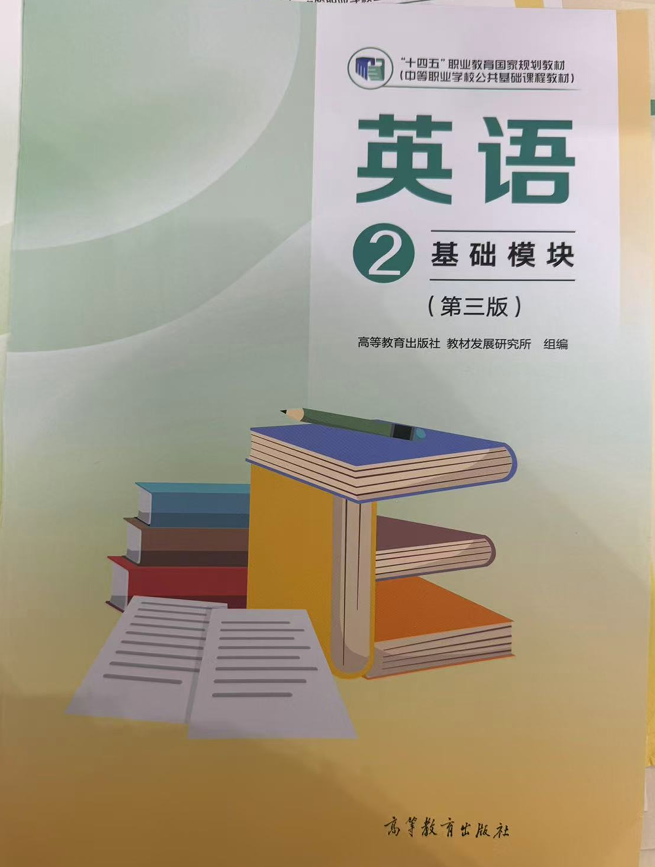
Unit 5——Unit 8 阶段测试卷(B卷·能力提升)《英语 基础模块2》(高教版第三版)单元过关卷(原卷版+解析版)
2026-09-08
|
2份
|
17页
|
19人阅读
|
0人下载
摘要:
**基本信息**
紧扣《英语 基础模块2》Unit5-8阶段测试B卷,以能力提升为目标,融合志愿者服务、传统工艺、绿色生活等时代情境与文化传承素材,适配单元复习,全面检测语言能力与跨文化思维。
**题型特征**
|题型|题量/分值|知识覆盖|命题特色|
|----|-----------|----------|----------|
|完形填空|10题/20分|介词、形容词等词汇运用|以志愿者导游成长故事为情境,考查语境理解与语言运用能力|
|语法填空|10题/15分|连词、比较级、代词等语法点|结合太阳能、低碳发明等科技话题,检测语法规则灵活运用|
|阅读理解|12题/30分|细节查找、词义猜测等阅读技能|选取剪纸学习、日常发明、绿色生活文本,渗透文化意识与问题解决思维|
|补全对话|5题/15分|交际用语与逻辑衔接|围绕发明展话题设计对话,提升实际交际与合作表达能力|
|阅读回答问题|5题/20分|信息提取与语言组织|以木雕课堂为素材,综合考查文本理解与规范表达,强化学习能力培养|
内容正文:
编写说明:本套试卷紧扣《英语 基础模块2》(高教版第三版)教材,以教材单元为基准精准覆盖核心考点。每个单元设置AB卷,A卷为基础巩固卷,侧重基础考点训练,帮助学生扎实掌握知识要点;B卷为能力提升卷,注重知识整合与全面检测,引导学生构建知识网络。全书设计4份综合测试卷,模拟实战情境,聚焦解题能力突破,全面提升应试能力与知识应用水平。
《英语 基础模块2》(高教版第三版)《单元过关卷》
Unit 5——Unit 8 阶段测试卷
B卷·能力提升
考试时间:60分钟 满分:100分
班级_____姓名_____学号_____成绩_____
第Ⅰ卷 客观题(共80分)
Ⅰ. 完形填空(1—10题,每题2分,共20分)
阅读下面短文,掌握大意,然后从每题所给的四个选项中选出最佳选项。
Li Mei is a student who loves history. In March 2026, she joined the volunteer guide team ____1____ the city museum. Every weekend, she explains ancient things to visitors. She wants to share the beauty of ancient culture with more people.
On her first day, Li Mei felt very nervous. When she started to speak, she suddenly forgot her words. Her face turned ____2____. Her hands were shaking, and her voice was very low. An old visitor came ____3____ to her and said, "Take it easy." Li Mei took a deep breath and tried again, but the tour did not go ____4____.
After that day, Li Mei decided to ____5____. She read the guide script again and again at home. She also asked an experienced guide for help. The kind guide told her some ____6____ ways to remember the key points.
The next Saturday, Li Mei gave her second tour. This time she spoke slowly and ____7____. When visitors asked questions, she answered them with a ____8____. At the end of the tour, everyone clapped for her. Li Mei felt very happy.
Now Li Mei is one of the best young guides in the museum. She says the job helps her ____9____ a lot about history and makes her more confident. She hopes more students can join the team and become ____10____ guides.
1.A.on
B.at
C.for
D.from
2.A.black
B.white
C.red
D.blue
3.A.over
B.up
C.down
D.out
4.A.fast
B.far
C.long
D.well
5.A.leave
B.improve
C.wait
D.sleep
6.A.useful
B.useless
C.strange
D.common
7.A.quietly
B.quickly
C.clearly
D.carelessly
8.A.cry
B.laugh
C.shout
D.smile
9.A.teach
B.learn
C.draw
D.sing
10.A.bad
B.new
C.good
D.young
Ⅱ. 语法填空(11—20题,每题1.5分,共15分)
阅读下面短文,从方框中选择适当的词填空,使短文完整通顺。每个词限用一次。
A. cheaper
B. and
C. even
D. it E. for
Some people think we must choose between a clean environment and a strong economy. But Erik Solheim, a former environment minister of Norway, does not agree. He says the two can go together, ____11____ they can both grow. Ten years ago, solar (太阳能的) energy was very expensive. Now it is much ____12____, so more countries use it. The Lijiang River was once very dirty. Now the water is clean, and people can ____13____ swim in it. The number of tigers in China has grown from 27 to about 70, and ____14____ shows nature is doing better. Protecting nature is good ____15____ the future.
阅读下面短文,在空白处填入1个适当单词或括号内单词的正确形式。
Nearly 10,000 young inventors from China and other countries gathered (聚集) in Zhengzhou last weekend. They came for the finals (决赛) of the Invention Convention China. Their works focus on a low-carbon (低碳的) future, sustainable (可持续的) communities and future transport. ____16____ was the young inventors’ hard work that made the event so exciting. Liu Kaiyuan is an 11-year-old boy from Shanghai. He made a light-chasing simulator (追光模拟器) for space stations. He said the invention taught ____17____ (he) a lot about science. “Scientific research has no age limits,” said a judge (评委). The young inventors showed us that everyone can be ____18____ (create) if they try. Their small ideas may ____19____ (make) big changes to the world. The results will ____20____ (announce) next week.
Ⅲ. 阅读理解(21—32题,每题2.5分,共30分)
阅读下面三篇短文,从每题所给的四个选项中选出最佳选项。
Passage A
In December 2025, Zhang Yu's school invited an old craftsman to teach the students paper cutting(剪纸). Paper cutting is one of the oldest folk arts in China.
Zhang Yu was very excited on the first day. He thought it was easy. But when he held the scissors and tried to cut a flower, he failed again and again. The red paper was broken into pieces, and he wanted to give up.
The old craftsman saw this and came to him. He said, "Young man, every art needs time. You must be patient." Then he showed Zhang Yu how to hold the scissors and where to start cutting. He also told him to start with simple shapes like circles and leaves.
Zhang Yu followed his advice. He practiced for an hour every day after he finished his homework. At first, his cuts were still rough, but he did not stop. Slowly, his hands became steadier, and his works became neater.
Two months later, Zhang Yu could cut out a beautiful phoenix(凤凰). When the craftsman saw it, he smiled and said, "You have learned well." Zhang Yu was very proud. He understood that patience and practice can turn a piece of red paper into a work of art.
21. What did Zhang Yu think of paper cutting on the first day?
A.It was easy.
B.It was very difficult.
C.It was boring.
D.It was useless.
22. What did the old craftsman tell Zhang Yu to do?
A.To give up the skill.
B.To be patient and start with simple shapes.
C.To cut flowers at once.
D.To use more red paper.
23. How long did Zhang Yu practice every day?
A.Two hours.
B.Thirty minutes.
C.One hour.
D.A whole day.
24. What does the underlined word "patient" mean in Chinese?
A.紧张的
B.骄傲的
C.幸运的
D.有耐心的
Passage B
Many people think that inventions are made by great scientists in big labs. But good ideas often come from everyday life.
Here is an example. Three high school students once faced a small problem. The eggs in their homes always went bad quickly at room temperature. They asked themselves, "Why not make the eggs stay fresh longer?" So they started to work on it.
They read books and did many experiments. Finally, they made a special coating. When they put the coating on the eggs, the eggs could stay fresh for a much longer time. The students were very happy. They said that their idea came from the problem they met every day. The coating was cheap to make, so it was easy for every family to use it.
This story tells us an important lesson. Inventions do not need to be big or expensive. A useful idea can be as simple as keeping an egg fresh. We should care about the problems around us and try our best to solve them.
So, if you have a problem in your life, do not ignore it. Maybe it is the first step to your own invention. Everyone can be an inventor. Just keep thinking and trying.
25. What do many people think about inventions?
A.They are made by great scientists in big labs.
B.They come from everyday life.
C.They are easy to make.
D.They are all about eggs.
26. What problem did the three students face?
A.Their books were lost.
B.Their eggs went bad quickly.
C.Their coating was too thick.
D.Their lab was too small.
27. How did the students make the eggs stay fresh longer?
A.By putting them in a box.
B.By cooking them first.
C.By making a special coating.
D.By putting them in water.
28. What does the writer want to tell us?
A.Only scientists can invent things.
B.Eggs are the best food in the world.
C.Experiments are a waste of time.
D.Good ideas can come from problems in daily life.
Passage C
Nowadays, more and more young people in China live a green life. They do small things every day to help the environment.
Many young people bring their own water bottles and coffee cups. They say that they can save many disposable cups and bottles in this way. When they order takeout, some of them choose not to use the disposable chopsticks.
Green travel is also popular. Many young workers who ride shared bikes to work say it is fast and cheap. Others take buses or subways instead of driving cars. This can help reduce air pollution and save energy.
Young people also save electricity and water at home. They turn off the lights when they leave a room. They try to use less water when washing or cooking. They also use bags and boxes again and again. Some of them even buy secondhand things, because reusing is better than throwing away.
Why do young people care so much about the environment? First, they want a cleaner and healthier world. Second, a green life can save money. And it also makes them feel good about themselves.
Green life is not difficult. Everyone can start with small things. As the saying goes, small acts can make a big difference.
29. What do many young people bring with them?
A.Their own water bottles and coffee cups.
B.Disposable cups.
C.Plastic bags.
D.Paper boxes.
30. How do some young workers go to work?
A.By driving cars.
B.By riding shared bikes or taking buses.
C.By taking planes.
D.By taking trains.
31. What does the underlined word "disposable" mean in Chinese?
A.可重复使用的
B.环保的
C.一次性的
D.昂贵的
32. Why do young people live a green life?
A.Because they have too much free time.
B.Because they are forced to do so.
C.Because they don't like cars.
D.Because they want a cleaner world and can save money.
Ⅳ. 补全对话(33—37题,每题3分,共15分)
阅读下面对话,从A—G七个选项中选出五个最佳选项,其中有两个多余选项。
A: Hi, Jack! Our school will hold an invention fair next month. ____33____
B: I want to make a small desk lamp that turns off by itself.
A: Interesting! ____34____
B: It can save electricity when people forget to turn it off.
A: Useful idea. Have you started building it?
B: Just a little. ____35____
A: Don’t worry. You can ask the science teacher for help.
B: Good idea. ____36____
A: Yes. New inventions often need teamwork.
B: You’re right. ____37____
A: Neither will I. Let’s prepare for the fair together.
A. I’m not sure how to connect some parts.
B. I won’t give up even if I meet difficulties.
C. Why do you want to leave the invention fair?
D. What invention will you show?
E. Who invented the first telephone?
F. How can your invention help people?
G. Maybe I should work with my classmates.
第Ⅱ卷 主观题(共20分)
Ⅴ. 阅读下面短文,根据短文内容回答问题。(38—42题,每题4分,共20分)
Wood carving(木雕)is an old Chinese craft. Now many schools are bringing it into the classroom. Students in some cities can learn it at school.
The classes are taught by master craftsmen. They usually come to the school once a week. Each class lasts about ninety minutes. More than forty students can join the class in each school. Students who are interested in it can sign up for free, but the number is limited.
In the class, students first learn the history of wood carving and how to use the tools safely. Then they practice on small pieces of wood. With the teachers' help, they cut out simple shapes like flowers, leaves and small animals.
Students enjoy the classes very much. They say that they can learn a new skill and feel the beauty of traditional culture. Some of them can already make a small wooden toy by themselves. Parents are also happy to see their children learn the old skill.
The teachers hope that more schools can open such classes. They believe that when young people know the craft, they will love it and pass it on.
38. Who teaches the wood carving classes?
________________________________________________
39. How often do the craftsmen come to the school?
________________________________________________
40. What do students learn first in the class?
________________________________________________
41. What shapes do students cut out?
________________________________________________
42. What do the teachers believe?
________________________________________________
原创精品资源学科网独家享有版权,侵权必究!
原创精品资源学科网独家享有版权,侵权必究!
原创精品资源学科网独家享有版权,侵权必究!
学科网(北京)股份有限公司
$
编写说明:本套试卷紧扣《英语 基础模块2》(高教版第三版)教材,以教材单元为基准精准覆盖核心考点。每个单元设置AB卷,A卷为基础巩固卷,侧重基础考点训练,帮助学生扎实掌握知识要点;B卷为能力提升卷,注重知识整合与全面检测,引导学生构建知识网络。全书设计4份综合测试卷,模拟实战情境,聚焦解题能力突破,全面提升应试能力与知识应用水平。
《英语 基础模块2》(高教版第三版)《单元过关卷》
Unit 5——Unit 8 阶段测试卷
B卷·能力提升
考试时间:60分钟 满分:100分
班级_____姓名_____学号_____成绩_____
第Ⅰ卷 客观题(共80分)
Ⅰ. 完形填空(1—10题,每题2分,共20分)
阅读下面短文,掌握大意,然后从每题所给的四个选项中选出最佳选项。
Li Mei is a student who loves history. In March 2026, she joined the volunteer guide team ____1____ the city museum. Every weekend, she explains ancient things to visitors. She wants to share the beauty of ancient culture with more people.
On her first day, Li Mei felt very nervous. When she started to speak, she suddenly forgot her words. Her face turned ____2____. Her hands were shaking, and her voice was very low. An old visitor came ____3____ to her and said, "Take it easy." Li Mei took a deep breath and tried again, but the tour did not go ____4____.
After that day, Li Mei decided to ____5____. She read the guide script again and again at home. She also asked an experienced guide for help. The kind guide told her some ____6____ ways to remember the key points.
The next Saturday, Li Mei gave her second tour. This time she spoke slowly and ____7____. When visitors asked questions, she answered them with a ____8____. At the end of the tour, everyone clapped for her. Li Mei felt very happy.
Now Li Mei is one of the best young guides in the museum. She says the job helps her ____9____ a lot about history and makes her more confident. She hopes more students can join the team and become ____10____ guides.
1.A.on
B.at
C.for
D.from
2.A.black
B.white
C.red
D.blue
3.A.over
B.up
C.down
D.out
4.A.fast
B.far
C.long
D.well
5.A.leave
B.improve
C.wait
D.sleep
6.A.useful
B.useless
C.strange
D.common
7.A.quietly
B.quickly
C.clearly
D.carelessly
8.A.cry
B.laugh
C.shout
D.smile
9.A.teach
B.learn
C.draw
D.sing
10.A.bad
B.new
C.good
D.young
【答案】
1.B 2.C 3.A 4.D 5.B 6.A 7.C 8.D 9.B 10.C
【导语】
本文是一篇记叙文,讲述学生李梅加入博物馆志愿讲解队,第一次讲解时紧张忘词,经过坚持练习和虚心请教,最终成长为优秀讲解员的成长故事。
【详解】
1. 考查介词固定搭配;句意:2026 年 3 月,她加入了市博物馆的志愿讲解队。on 在…… 上;at 在(某地点);for 为了;from 从。at the city museum 表示 "在市博物馆",为固定搭配。
2. 考查形容词词义辨析;句意:她的脸变红了。black 黑的;white 白的;red 红的;blue 蓝的。因紧张忘词而脸红,red 符合语境。
3. 考查动词短语固定搭配;句意:一位老游客走过来对她说:"别紧张。"over 过来;up 向上;down 向下;out 出去。come over to sb 意为 "走到某人身边",over 正确。
4. 考查副词固定搭配;句意:李梅深吸一口气又试了一次,但这次讲解进展得并不顺利。fast 快;far 远;long 长;well 好。go well 表示 "进展顺利",well 正确。
5. 考查动词词义辨析;句意:那天以后,李梅决定改进。leave 离开;improve 改进、提高;wait 等待;sleep 睡觉。improve 符合语境。
6. 考查形容词词义辨析;句意:好心的讲解员告诉她一些记住要点的好办法。useful 有用的;useless 无用的;strange 奇怪的;common 常见的。useful 恰当。
7. 考查副词词义辨析;句意:这一次她说得又慢又清楚。quietly 安静地;quickly 快地;clearly 清楚地;carelessly 粗心地。clearly 正确。
8. 考查名词词义辨析;句意:游客提问时,她面带微笑作答。cry 哭;laugh 大笑;shout 喊叫;smile 微笑。with a smile 意为 "面带微笑",smile 正确。
9. 考查动词词义辨析;句意:她说这份工作让她学到很多历史知识。teach 教;learn 学习;draw 画;sing 唱。learn a lot about history 意为 "学到很多历史知识",learn 正确。
10. 考查形容词词义辨析;句意:她希望更多学生加入队伍,成为优秀的讲解员。bad 坏的;new 新的;good 好的;young 年轻的。become good guides 意为 "成为优秀讲解员",good 正确。
Ⅱ. 语法填空(11—20题,每题1.5分,共15分)
阅读下面短文,从方框中选择适当的词填空,使短文完整通顺。每个词限用一次。
A. cheaper
B. and
C. even
D. it E. for
Some people think we must choose between a clean environment and a strong economy. But Erik Solheim, a former environment minister of Norway, does not agree. He says the two can go together, ____11____ they can both grow. Ten years ago, solar (太阳能的) energy was very expensive. Now it is much ____12____, so more countries use it. The Lijiang River was once very dirty. Now the water is clean, and people can ____13____ swim in it. The number of tigers in China has grown from 27 to about 70, and ____14____ shows nature is doing better. Protecting nature is good ____15____ the future.
【答案】
11.B 12.A 13.C 14.D 15.E
【导语】
本文是一篇议论文,作者是挪威前环境部长,论证环境保护与经济发展可以并行:清洁能源变便宜、漓江水质变清、中国东北虎数量回升,保护自然本身就是对未来的投资。
【详解】
11. 考查并列句(并列连词)。句意:他说这两者可以一起前进,而且它们都能增长。and 连接两个并列分句,表示顺承关系,故选 B。
12. 考查形容词比较级。句意:现在它便宜多了,所以更多国家使用它。much 修饰比较级,cheap 的比较级为 cheaper,故选 A。
13. 考查副词。句意:现在水很干净,人们甚至可以在里面游泳。even 意为“甚至”,加强语气,故选 C。
14. 考查代词。句意:中国老虎的数量从 27 只增长到约 70 只,这表明自然状况正在变好。it 指代上文老虎数量增长这件事,故选 D。
15. 考查介词。句意:保护自然对未来有好处。固定搭配 be good for 意为“对……有好处”,故选 E。
阅读下面短文,在空白处填入1个适当单词或括号内单词的正确形式。
Nearly 10,000 young inventors from China and other countries gathered (聚集) in Zhengzhou last weekend. They came for the finals (决赛) of the Invention Convention China. Their works focus on a low-carbon (低碳的) future, sustainable (可持续的) communities and future transport. ____16____ was the young inventors’ hard work that made the event so exciting. Liu Kaiyuan is an 11-year-old boy from Shanghai. He made a light-chasing simulator (追光模拟器) for space stations. He said the invention taught ____17____ (he) a lot about science. “Scientific research has no age limits,” said a judge (评委). The young inventors showed us that everyone can be ____18____ (create) if they try. Their small ideas may ____19____ (make) big changes to the world. The results will ____20____ (announce) next week.
【答案】
16.It 17.him 18.creative 19.make 20.be announced
【导语】
本文是一则新闻报道,介绍近万名中外小发明家在郑州参加发明大会全国总决赛:作品聚焦低碳未来、可持续社区等主题,11 岁上海选手刘凯元展示空间站追光模拟器,比赛结果下周公布。
【详解】
16. 考查强调句。句意:正是年轻发明家们的努力让这场盛会如此精彩。It was + 被强调部分 + that + 其余 是强调句型,句首缺形式主语,故填 It。
17. 考查代词宾格。句意:他说这项发明教会了他很多科学知识。teach 后接宾格 him 作宾语,he 的宾格为 him。
18. 考查形容词。句意:年轻发明家们向我们表明,只要努力,每个人都能有创造力。be 动词后接形容词 creative 作表语,create 的形容词形式为 creative。
19. 考查情态动词后动词原形。句意:他们的小想法也许会给世界带来巨大的变化。情态动词 may 后接动词原形 make。
20. 考查被动语态。句意:结果将于下周公布。主语 results 与 announce 是被动关系,一般将来时被动语态用 will be announced。
Ⅲ. 阅读理解(21—32题,每题2.5分,共30分)
阅读下面三篇短文,从每题所给的四个选项中选出最佳选项。
Passage A
In December 2025, Zhang Yu's school invited an old craftsman to teach the students paper cutting(剪纸). Paper cutting is one of the oldest folk arts in China.
Zhang Yu was very excited on the first day. He thought it was easy. But when he held the scissors and tried to cut a flower, he failed again and again. The red paper was broken into pieces, and he wanted to give up.
The old craftsman saw this and came to him. He said, "Young man, every art needs time. You must be patient." Then he showed Zhang Yu how to hold the scissors and where to start cutting. He also told him to start with simple shapes like circles and leaves.
Zhang Yu followed his advice. He practiced for an hour every day after he finished his homework. At first, his cuts were still rough, but he did not stop. Slowly, his hands became steadier, and his works became neater.
Two months later, Zhang Yu could cut out a beautiful phoenix(凤凰). When the craftsman saw it, he smiled and said, "You have learned well." Zhang Yu was very proud. He understood that patience and practice can turn a piece of red paper into a work of art.
21. What did Zhang Yu think of paper cutting on the first day?
A.It was easy.
B.It was very difficult.
C.It was boring.
D.It was useless.
22. What did the old craftsman tell Zhang Yu to do?
A.To give up the skill.
B.To be patient and start with simple shapes.
C.To cut flowers at once.
D.To use more red paper.
23. How long did Zhang Yu practice every day?
A.Two hours.
B.Thirty minutes.
C.One hour.
D.A whole day.
24. What does the underlined word "patient" mean in Chinese?
A.紧张的
B.骄傲的
C.幸运的
D.有耐心的
【答案】
21.A 22.B 23.C 24.D
【导语】
本文是一篇记叙文,讲述学生张宇跟着老匠人学习剪纸,从剪坏红纸、想要放弃,到听从劝告、坚持练习,最终剪出漂亮作品并获得成就感的故事。
【详解】
21. 细节理解题。根据 "He thought it was easy" 可知,张宇一开始觉得剪纸很简单。故选 A。
22. 细节理解题。根据 "You must be patient" 和 "He also told him to start with simple shapes like circles and leaves" 可知,老匠人让张宇要有耐心、从简单形状开始。故选 B。
23. 细节理解题。根据 "He practiced for an hour every day" 可知,张宇每天练习一小时。故选 C。
24. 词义猜测题。根据 "every art needs time. You must be patient" 可知,老匠人劝张宇要沉住气、慢慢来,patient 意为 "有耐心的"。故选 D。
Passage B
Many people think that inventions are made by great scientists in big labs. But good ideas often come from everyday life.
Here is an example. Three high school students once faced a small problem. The eggs in their homes always went bad quickly at room temperature. They asked themselves, "Why not make the eggs stay fresh longer?" So they started to work on it.
They read books and did many experiments. Finally, they made a special coating. When they put the coating on the eggs, the eggs could stay fresh for a much longer time. The students were very happy. They said that their idea came from the problem they met every day. The coating was cheap to make, so it was easy for every family to use it.
This story tells us an important lesson. Inventions do not need to be big or expensive. A useful idea can be as simple as keeping an egg fresh. We should care about the problems around us and try our best to solve them.
So, if you have a problem in your life, do not ignore it. Maybe it is the first step to your own invention. Everyone can be an inventor. Just keep thinking and trying.
25. What do many people think about inventions?
A.They are made by great scientists in big labs.
B.They come from everyday life.
C.They are easy to make.
D.They are all about eggs.
26. What problem did the three students face?
A.Their books were lost.
B.Their eggs went bad quickly.
C.Their coating was too thick.
D.Their lab was too small.
27. How did the students make the eggs stay fresh longer?
A.By putting them in a box.
B.By cooking them first.
C.By making a special coating.
D.By putting them in water.
28. What does the writer want to tell us?
A.Only scientists can invent things.
B.Eggs are the best food in the world.
C.Experiments are a waste of time.
D.Good ideas can come from problems in daily life.
【答案】
25.A 26.B 27.C 28.D
【导语】
本文是一篇议论文,作者以三名高中生发明鸡蛋保鲜涂层的例子论证 "好的创意往往来自日常生活问题",并鼓励大家关注身边的问题、敢于尝试发明。
【详解】
25. 细节理解题。根据 "Many people think that inventions are made by great scientists in big labs" 可知,很多人认为发明是伟大科学家在实验室里做出的。故选 A。
26. 细节理解题。根据 "The eggs in their homes always went bad quickly at room temperature" 可知,三名学生遇到的麻烦是家里的鸡蛋很快变质。故选 B。
27. 细节理解题。根据 "they made a special coating. When they put the coating on the eggs, the eggs could stay fresh for a much longer time" 可知,他们通过制作一种特殊涂层让鸡蛋保鲜更久。故选 C。
28. 主旨推断题。文章以鸡蛋保鲜发明为例,说明好创意来自日常生活问题,并号召大家关注身边问题、坚持尝试,故选 D。
Passage C
Nowadays, more and more young people in China live a green life. They do small things every day to help the environment.
Many young people bring their own water bottles and coffee cups. They say that they can save many disposable cups and bottles in this way. When they order takeout, some of them choose not to use the disposable chopsticks.
Green travel is also popular. Many young workers who ride shared bikes to work say it is fast and cheap. Others take buses or subways instead of driving cars. This can help reduce air pollution and save energy.
Young people also save electricity and water at home. They turn off the lights when they leave a room. They try to use less water when washing or cooking. They also use bags and boxes again and again. Some of them even buy secondhand things, because reusing is better than throwing away.
Why do young people care so much about the environment? First, they want a cleaner and healthier world. Second, a green life can save money. And it also makes them feel good about themselves.
Green life is not difficult. Everyone can start with small things. As the saying goes, small acts can make a big difference.
29. What do many young people bring with them?
A.Their own water bottles and coffee cups.
B.Disposable cups.
C.Plastic bags.
D.Paper boxes.
30. How do some young workers go to work?
A.By driving cars.
B.By riding shared bikes or taking buses.
C.By taking planes.
D.By taking trains.
31. What does the underlined word "disposable" mean in Chinese?
A.可重复使用的
B.环保的
C.一次性的
D.昂贵的
32. Why do young people live a green life?
A.Because they have too much free time.
B.Because they are forced to do so.
C.Because they don't like cars.
D.Because they want a cleaner world and can save money.
【答案】
29.A 30.B 31.C 32.D
【导语】
本文是一篇说明文,介绍了越来越多的年轻人践行绿色生活的日常做法(自带水杯、拒绝一次性用品、绿色出行、节水节电等)以及这种生活方式流行的原因。
【详解】
29. 细节理解题。根据 "Many young people bring their own water bottles and coffee cups" 可知,很多年轻人随身携带自己的水杯和咖啡杯。故选 A。
30. 细节理解题。根据 "Many young workers who ride shared bikes to work" 和 "Others take buses or subways instead of driving cars" 可知,年轻上班族骑共享单车或乘公交、地铁出行。故选 B。
31. 词义猜测题。根据 "they can save many disposable cups and bottles" 和 "choose not to use the disposable chopsticks" 可知,年轻人用自带杯替代一次性杯、不用一次性筷子,disposable 意为 "一次性的"。故选 C。
32. 细节理解题。根据 "First, they want a cleaner and healthier world. Second, a green life can save money" 可知,年轻人选择绿色生活既为了更清洁健康的世界,也能省钱。故选 D。
Ⅳ. 补全对话(33—37题,每题3分,共15分)
阅读下面对话,从A—G七个选项中选出五个最佳选项,其中有两个多余选项。
A: Hi, Jack! Our school will hold an invention fair next month. ____33____
B: I want to make a small desk lamp that turns off by itself.
A: Interesting! ____34____
B: It can save electricity when people forget to turn it off.
A: Useful idea. Have you started building it?
B: Just a little. ____35____
A: Don’t worry. You can ask the science teacher for help.
B: Good idea. ____36____
A: Yes. New inventions often need teamwork.
B: You’re right. ____37____
A: Neither will I. Let’s prepare for the fair together.
A. I’m not sure how to connect some parts.
B. I won’t give up even if I meet difficulties.
C. Why do you want to leave the invention fair?
D. What invention will you show?
E. Who invented the first telephone?
F. How can your invention help people?
G. Maybe I should work with my classmates.
【答案】
33.D 34.F 35.A 36.G 37.B
【导语】
本篇是一则校园发明展情景对话。对话围绕自动熄灭台灯的创意展开:B说明其可在人们忘记关灯时节约用电,并坦陈零件连接有困难;A建议向科学老师求助、重视团队合作,B表示即使遇到困难也不放弃,体现创新实践中互助与坚持的交际场景。
【详解】
33. 考查情景交际。句意:你将展示什么发明?前文提到下月举办发明展,下文 B 介绍自动熄灭的小台灯,此处应询问参赛作品,D 选项符合问答逻辑。
34. 考查上下文逻辑衔接。句意:你的发明怎样帮助人们?下文 B 说明可在人们忘记关灯时节约用电,可知此处询问发明的作用,F 选项承接语境。
35. 考查上下文逻辑衔接。句意:我不确定怎样连接一些零件。前文说只开始了一点点,本句解释进展有限的原因,后文因此引出求助建议,A 选项逻辑连贯。
36. 考查上下文逻辑衔接。句意:也许我应该和同学一起合作。前文 A 建议向科学老师求助,本句进一步想到团队合作;后文 A 肯定新发明常需要协作,G 选项衔接自然。
37. 考查情景交际与逻辑衔接。句意:即使遇到困难我也不会放弃。后文 A 回答 “Neither will I.”,说明本句表达坚持到底的决心,B 选项符合结尾表态。
第Ⅱ卷 主观题(共20分)
Ⅴ. 阅读下面短文,根据短文内容回答问题。(38—42题,每题4分,共20分)
Wood carving(木雕)is an old Chinese craft. Now many schools are bringing it into the classroom. Students in some cities can learn it at school.
The classes are taught by master craftsmen. They usually come to the school once a week. Each class lasts about ninety minutes. More than forty students can join the class in each school. Students who are interested in it can sign up for free, but the number is limited.
In the class, students first learn the history of wood carving and how to use the tools safely. Then they practice on small pieces of wood. With the teachers' help, they cut out simple shapes like flowers, leaves and small animals.
Students enjoy the classes very much. They say that they can learn a new skill and feel the beauty of traditional culture. Some of them can already make a small wooden toy by themselves. Parents are also happy to see their children learn the old skill.
The teachers hope that more schools can open such classes. They believe that when young people know the craft, they will love it and pass it on.
38. Who teaches the wood carving classes?
________________________________________________
39. How often do the craftsmen come to the school?
________________________________________________
40. What do students learn first in the class?
________________________________________________
41. What shapes do students cut out?
________________________________________________
42. What do the teachers believe?
________________________________________________
【答案】
38. Master craftsmen (teach the classes).
39. Once a week.
40. The history of wood carving and how to use the tools safely.
41. Flowers, leaves and small animals.
42. When young people know the craft, they will love it and pass it on.
【导语】
本文是一篇说明文,介绍了木雕非遗体验课进校园的活动,包括授课老师、上课频次、报名方式、课堂内容以及学生和家长的反馈。
【详解】
38. 考查细节理解。句意:谁来教木雕课?根据文中 "The classes are taught by master craftsmen" 可知,木雕课由匠人师傅授课。故答 Master craftsmen.
39. 考查细节理解。句意:匠人们多久来学校一次?根据文中 "They usually come to the school once a week" 可知,师傅每周来校一次。故答 Once a week.
40. 考查细节理解。句意:学生在课上先学什么?根据文中 "students first learn the history of wood carving and how to use the tools safely" 可知,学生先学习木雕历史和如何安全使用工具。故答 The history of wood carving and how to use the tools safely.
41. 考查细节理解。句意:学生刻出什么形状?根据文中 "they cut out simple shapes like flowers, leaves and small animals" 可知,学生刻出花朵、树叶和小动物等形状。故答 Flowers, leaves and small animals.
42. 考查细节理解。句意:师傅们相信什么?根据文中 "They believe that when young people know the craft, they will love it and pass it on" 可知,师傅们相信年轻人了解这门手艺后就会喜爱并传承它。故答 When young people know the craft, they will love it and pass it on.
原创精品资源学科网独家享有版权,侵权必究!
原创精品资源学科网独家享有版权,侵权必究!
原创精品资源学科网独家享有版权,侵权必究!
学科网(北京)股份有限公司
$
资源预览图

1

2

3
由于学科网是一个信息分享及获取的平台,不确保部分用户上传资料的 来源及知识产权归属。如您发现相关资料侵犯您的合法权益,请联系学科网,我们核实后将及时进行处理。