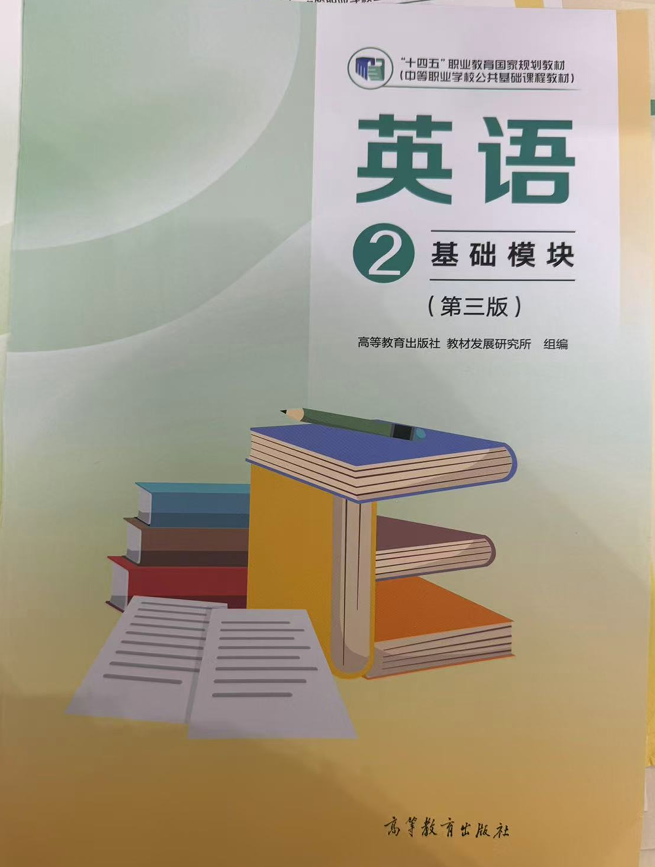
Unit 7 Invention and Innovation(B卷·能力提升)《英语 基础模块2》(高教版第三版)单元过关卷(原卷版+解析版)
2026-09-08
|
2份
|
17页
|
29人阅读
|
1人下载
摘要:
**基本信息**
紧扣《英语 基础模块2》Unit 7“发明与创新”主题,B卷聚焦能力提升,通过科技前沿与文化传承情境考查语言能力与思维品质,适配单元复习。
**题型特征**
|题型|题量/分值|知识覆盖|命题特色|
|----|-----------|----------|----------|
|完形填空|10题20分|四大发明相关词汇(如magnetic, improved)|以中国古代发明为素材,考查语境词汇运用|
|语法填空|10题15分|介词(for/by)、时态(show-built)|结合AI、智能博览会情境,检测语法应用能力|
|阅读理解|12题30分|科技成就(比亚迪汽车、嫦娥六号)、创新案例(深圳科技城)|选取中国科技前沿素材,培养信息提取与推理能力|
|补全对话|5题15分|创新项目讨论(英语学习APP)|模拟真实交际场景,提升语言表达与协作意识|
|阅读回答问题|5题20分|大学生创业计划(KAB Club)|整合细节与概括,考查综合语言运用与思维品质|
内容正文:
编写说明:本套试卷紧扣《英语 基础模块2》(高教版第三版)教材,以教材单元为基准精准覆盖核心考点。每个单元设置AB卷,A卷为基础巩固卷,侧重基础考点训练,帮助学生扎实掌握知识要点;B卷为能力提升卷,注重知识整合与全面检测,引导学生构建知识网络。全书设计4份综合测试卷,模拟实战情境,聚焦解题能力突破,全面提升应试能力与知识应用水平。
《英语 基础模块2》(高教版第三版)《单元过关卷》
Unit 7 Invention and Innovation
B卷·能力提升
考试时间:60分钟 满分:100分
班级_____姓名_____学号_____成绩_____
第Ⅰ卷 客观题(共80分)
Ⅰ. 完形填空(1—10题,每题2分,共20分)
阅读下面短文,掌握大意,然后从每题所给的四个选项中选出最佳选项。
Long before computers and smartphones, Chinese inventors had changed daily life. Four inventions are often ____1____ the Four Great Inventions: the compass, gunpowder, paper, and printing.
The compass helped travelers know ____2____. Before it appeared, explorers watched the sun, moon, and stars. Chinese people first used ____3____ stone to find north and south. Later, this idea became part of a compass, which made travel by sea ____4____.
Paper also changed the world. Early paper was made from hemp, old cloth, and fishing nets. It was ____5____ and hard to write on. In the Eastern Han Dynasty, Cai Lun ____6____ the method. He used bark, hemp, cloth, and nets to make fine white paper. Books could then be made more easily.
Printing technology made written knowledge ____7____ more people. Instead of ____8____ every book by hand, workers could press words onto paper many times. Gunpowder was first used in some early mixtures, and later it was used for ____9____ and other tools.
These inventions did not stay in China. They traveled to other places and made work, study, travel, and communication easier. They show that a useful idea can grow when people improve it and ____10____ it. Their influence can still be seen in modern life today. Their stories remind us that innovation often begins with a need and grows through work, patient testing, and open exchange of ideas.
1.A.known
B.built
C.painted
D.called
2.A.history
B.direction
C.color
D.weight
3.A.magnetic
B.wooden
C.plastic
D.paper
4.A.shorter
B.weaker
C.safer
D.slower
5.A.white
B.rough
C.sweet
D.thin
6.A.copied
B.closed
C.forgot
D.improved
7.A.reach
B.close
C.hide
D.carry
8.A.reading
B.writing
C.buying
D.selling
9.A.books
B.roads
C.farms
D.fireworks
10.A.break
B.hide
C.share
D.lose
【答案】
1.D 2.B 3.A 4.C 5.B 6.D 7.A 8.B 9.D 10.C
【导语】
本文是一篇科普说明文,介绍中国古代四大发明及其改进过程。文章说明指南针、造纸术、印刷术和火药怎样让旅行、学习与交流更加方便,并指出创新需要不断改进和分享。
【详解】
1.考查动词词义辨析与固定表达;句意:四项发明通常被称为四大发明:指南针、火药、造纸术和印刷术。 known 知道;built 建造;painted 绘画;called 称为。be called 表示‘被称为’,与 the Four Great Inventions 搭配,故选 D。
2.考查名词词义辨析;句意:指南针帮助旅行者知道方向。 history 历史;direction 方向;color 颜色;weight 重量。指南针用于辨别方向,故选 B。
3.考查形容词词义辨析;句意:中国人最初使用磁石来寻找南北方向。 magnetic 磁性的;wooden 木制的;plastic 塑料的;paper 纸制的。磁石具有磁性,magnetic stone 符合事实,故选 A。
4.考查形容词词义辨析;句意:后来,这个想法成为指南针的一部分,使海上旅行更加安全。 shorter 更短;weaker 更弱;safer 更安全;slower 更慢。指南针帮助航海辨向,因此 safer 符合因果,故选 C。
5.考查形容词词义辨析;句意:早期的纸张很粗糙,难以书写。 white 白色的;rough 粗糙的;sweet 甜的;thin 薄的。后文说 hard to write on,说明纸张表面粗糙,故选 B。
6.考查动词词义辨析;句意:东汉时期,蔡伦改进了造纸方法。 copied 复制;closed 关闭;forgot 忘记;improved 改进。Cai Lun 对原有方法作出改良,improved 合适,故选 D。
7.考查动词词义辨析;句意:印刷技术使书面知识传播到更多人那里。 reach 到达;close 关闭;hide 藏起来;carry 携带。make knowledge reach more people 表示让知识传播给更多人,故选 A。
8.考查动名词词义辨析;句意:工人不必手写每一本书,而是可以把文字多次印在纸上。 reading 阅读;writing 书写;buying 购买;selling 出售。instead of 后接动名词,结合 by hand 可知是 writing,故选 B。
9.考查名词词义辨析;句意:后来火药被用于烟花和其他工具。 books 书;roads 道路;farms 农场;fireworks 烟花。gunpowder 与 fireworks 是常见搭配,故选 D。
10.考查动词词义辨析;句意:有用的想法在人们不断改进并分享时能够发展壮大。 break 打破;hide 隐藏;share 分享;lose 失去。改进并分享想法能让其传播和发展,故选 C。
Ⅱ. 语法填空(11—20题,每题1.5分,共15分)
阅读下面短文,从方框中选择适当的词填空,使短文完整通顺。每个词限用一次。
A. for
B. their
C. by
D. but E. fast
Artificial intelligence is changing our lives. Some people worry that AI will take away their jobs. But in fact, AI will not replace you, ____11____ people who use AI well may take your place. So young people should learn to use AI actively and keep learning. They should not just wait ____12____ something to happen. AI can give you answers, but it cannot think for you. You still need to study and think ____13____ yourself. The world is changing ____14____, and new things appear every day. Young people are good at learning new things, and this is ____15____ greatest strength. We should use AI as a helper, not let it take our place.
【答案】
11.D 12.A 13.C 14.E 15.B
【导语】
本文是一篇议论文,论述 AI 时代年轻人应如何面对人工智能:AI 不会取代你,但会用 AI 的人可能取代你;要主动学用 AI,同时坚持独立思考。
【详解】
11. 考查并列句(并列连词)。句意:事实上,AI 不会取代你,但擅长使用 AI 的人可能会取代你的位置。前后分句为转折关系,用并列连词 but 连接两个并列分句,故选 D。
12. 考查介词。句意:他们不应只是等待某件事发生。固定搭配 wait for 意为“等待……”,故选 A。
13. 考查介词。句意:你仍然需要自学并独立思考。固定搭配 by yourself 意为“靠自己”,study by yourself 表示“自学”,故选 C。
14. 考查副词。句意:世界变化很快,每天都有新事物出现。fast 作副词修饰动词 changing,故选 E。
15. 考查物主代词。句意:年轻人擅长学习新事物,这是他们最大的优势。空格后是名词 strength,用形容词性物主代词 their 修饰,故选 B。
阅读下面短文,在空白处填入1个适当单词或括号内单词的正确形式。
The 2026 World Intelligence Expo opened in Tianjin. It is the biggest one ever, ____16____ the hall covers 130,000 square meters. More than 740 companies came to show their new products. About 150 kinds of robots ____17____ (show) at the expo. A “Robot Town” showed how robots help people in daily life. The robots can work in factories, and they can also help in homes. A company said it ____18____ (build) a new production line in Tianjin this September. Tianjin is becoming a smart city, and many people are excited ____19____ its future. More and more people are ____20____ (interest) in the new technology.
【答案】
16.and 17.were shown 18.will build 19.about 20.interested
【导语】
本文是一则新闻报道,介绍 2026 世界智能大会在天津开幕:创纪录的展厅面积、740 多家企业参展、约 150 种机器人亮相,以及联想宣布在津投产新生产线。
【详解】
16. 考查并列句(并列连词)。句意:它是有史以来最大的一届,而且展厅覆盖面积达 13 万平方米。前后分句为并列补充关系,用并列连词 and 连接两个并列分句。
17. 考查被动语态(一般过去时)。句意:展会上展出了大约 150 种机器人。主语 kinds of robots 与 show 是被动关系,动作发生在过去,用一般过去时的被动语态 were shown。
18. 考查一般将来时。句意:一家公司表示,将于今年 9 月在天津新建一条生产线。this September 是将来时间,用一般将来时 will build。
19. 考查介词。句意:天津正成为一座智慧城市,许多人对它的未来感到兴奋。固定搭配 be excited about 意为“对……感到兴奋”,故填 about。
20. 考查形容词。句意:越来越多的人对新科技感兴趣。固定搭配 be interested in 意为“对……感兴趣”,interest 的形容词形式为 interested。
Ⅲ. 阅读理解(21—32题,每题2.5分,共30分)
阅读下面三篇短文,从每题所给的四个选项中选出最佳选项。
Passage A
At Zhejiang University, Wang Zhenyang had a simple question: Can a computer character talk with people when they feel lonely? Wang and his group members made a project about virtual people. They can talk with users and give help and company. Wang thought this idea could help people in daily life.
In 2023, the team joined a national student contest at Chongqing University. Many teams came from different places. Wang’s team won third place. He was happy, and he learned that a small idea can grow when students work together.
The competition was very large. About 3.4 million projects were sent in, and 14.5 million students joined. They came from 4,554 colleges in 111 countries and areas. Wang learned that new ideas are not only for famous scientists. Students can find a problem, make a plan, test it, and make it better. His team hopes more people can use the computer characters.
21. Where did Wang Zhenyang study?
A.Zhejiang University.
B.Chongqing University.
C.Shanghai Jiao Tong University.
D.Beijing University.
22. What can the computer characters give users?
A.Daily weather news for users.
B.Help and company for users.
C.Simple driving lessons for users.
D.Basic sports training for users.
23. What place did Wang’s team win in the competition?
A.First place.
B.Second place.
C.Third place.
D.Fourth place.
24. What does the story mainly show?
A.Wang stopped his study after he won a prize.
B.The contest was only for famous scientists and teachers.
C.The team stopped its work after the contest ended.
D.Students can make useful ideas by working with others.
【答案】
21.A 22.B 23.C 24.D
【导语】
本文是一篇记叙文,讲述 Wang Zhenyang 和队友把虚拟人想法做成创新项目,并在大学生创新创业比赛中获奖的经历。
【详解】
21.细节理解题。原文“At Zhejiang University, Wang Zhenyang had a simple question”(在浙江大学,Wang Zhenyang 思考了一个简单的问题)直接给出学校名称,因此选 A。
22.细节理解题。原文“They can talk with users and give help and company”(它们可以和用户交谈,并给予帮助和陪伴)直接说明电脑角色能提供什么,因此选 B。
23.细节理解题。原文“Wang's team won third place”(Wang 的团队获得了第三名)直接说明名次,因此选 C。
24.主旨大意题。原文写到学生发现问题、制定计划、进行测试并不断改进,说明学生可以通过合作把想法做成有用的项目。D 项概括了故事的主要内容,因此选 D。
Passage B
An invention is a new way to do something. It is not just a new phone. It can help solve problems and make life easier.
China is making many new things. BYD has made a car that uses two kinds of power. It can travel 2,000 kilometers before charging. Huawei has made HarmonyOS, its own computer system. Chinese teams are also making robots that look like people. These examples show new technology is entering daily life.
China is also trying new work in space and science. Chang’e 6 landed on the back side of the moon. China Sky Eye, a big radio telescope, found more than 900 new stars called pulsars. A new train that runs without touching the rails is being tested. It may travel 620 kilometers an hour.
Why are new ideas important? A good idea can solve a real problem, but people must test it many times before using it. In 2023, China gave patents for 921,000 inventions. This shows many people are trying new ideas. When schools, companies, and scientists work together, new ideas can bring better products and help the country grow.
25. What can the BYD car do?
A.It can travel 2,000 kilometers before charging.
B.It can fly from Earth to the moon.
C.It can carry more than 900 stars.
D.It can run for hours under the sea.
26. Where did Chang’e 6 land?
A.On the near side of the moon.
B.On the far side of the moon.
C.On the surface of a new planet.
D.Inside a very large and famous science museum.
27. What kind of innovation is China developing more in the passage?
A.Only games on the Internet.
B.Only new phones for young people.
C.New tools for real problems.
D.Only old tools for farm work.
28. Why must new ideas be tested many times?
A.To make the idea more expensive for other people.
B.To stop other people from using the idea.
C.To make the project look bigger than it is.
D.To check the idea before people use it.
【答案】
25.A 26.B 27.C 28.D
【导语】
本文是一篇议论文,先解释创新的意义,再列举中国在汽车、操作系统、航天和磁悬浮列车等方面的进展,说明创新需要真实技术和反复测试。
【详解】
25.细节理解题。原文“It can travel 2,000 kilometers before charging”(它在充电前可以行驶 2,000 千米)直接说明汽车的能力,因此选 A。
26.细节理解题。原文“Chang'e 6 landed on the back side of the moon”(嫦娥六号登陆月球背面)直接给出地点,因此选 B。
27.细节理解题。原文“China is making many new things”和“new technology is entering daily life”(中国正在制造许多新东西,新的科技正在进入日常生活)说明发展的是解决实际问题的新工具,因此选 C。
28.推理判断题。原文“people must test it many times before using it”(人们使用前必须多次测试)说明测试是为了确认想法有效,因此选 D。
Passage C
Shenzhen is a city where people can see new technology in many places. A student from Pakistan studies there. He found that Shenzhen is not only a busy business city. It is also a place where people try new ideas.
At Shenzhen Art Museum, visitors can see digital art. Some shows use computer pictures and smart programs, so old art can meet new tools. In Shenzhen Library, robots bring books from shelves. Computer helpers can also help people find information.
Shenzhen Science and Technology Museum looks like a silver spaceship. Visitors can watch robot shows, learn about computers that work in a new way, and enter a large digital planetarium. At another museum, computer programs make old fossils move on the screen. Visitors can learn science through pictures and games.
New technology is also used in travel. Drones carry things between buildings, and driverless cars move on smart roads. At DJI, visitors can learn how drones are made and used. Huawei’s Pangu system can make pictures and answer questions. One local company uses smart computer chips to help traffic move better.
These examples show why Shenzhen is called a city of innovation. New ideas are used in museums, schools, companies, and streets, and people test them in real life.
29. What can visitors see at the Shenzhen Art Museum?
A.New digital art.
B.Only old art.
C.Sea animal pictures.
D.Indoor sports games.
30. What do robots do in Shenzhen Library?
A.They teach music to children.
B.They drive buses around the city.
C.They bring books to readers.
D.They build roads for people.
31. What does DJI make?
A.Paper books for all local schools.
B.Drones for many kinds of work.
C.Moon rockets for long space travel.
D.Food machines for large busy kitchens.
32. What is the passage mainly about?
A.The beautiful beaches and high mountains around Shenzhen.
B.A student’s school and travel life in Shenzhen.
C.The shape and design of one museum building.
D.How new technology helps life in Shenzhen.
【答案】
29.A 30.C 31.B 32.D
【导语】
本文是一篇说明文,介绍深圳博物馆、图书馆、无人机和智能道路中的科技应用,说明创新已经融入城市生活。
【详解】
29.细节理解题。原文“visitors can see digital art”(游客可以观看数字艺术)直接说明博物馆展示的内容,因此选 A。
30.细节理解题。原文“In Shenzhen Library, robots bring books from shelves”(在深圳图书馆,机器人从书架上取书)直接说明机器人的工作,因此选 C。
31.细节理解题。原文“At DJI, visitors can learn how drones are made and used”(在大疆,游客可以了解无人机的制造和使用)可知 DJI 制造无人机,因此选 B。
32.主旨大意题。文章列举博物馆、图书馆、无人机和智能道路等例子,说明新科技已经进入深圳生活的许多方面,因此选 D。
Ⅳ. 补全对话(33—37题,每题3分,共15分)
阅读下面对话,从A—G七个选项中选出五个最佳选项,其中有两个多余选项。
A: Hi, Anna! Our school will hold an innovation contest. ____33____
B: I want to make a small app for English learning.
A: Sounds great! ____34____
B: It can help students remember words through games.
A: Useful! Have you started yet?
B: Just a little. ____35____
A: Don’t worry. You can ask the computer teacher for help.
B: Good idea. ____36____
A: Yes. New ideas often come from teamwork.
B: You’re right. ____37____
A: Neither will I. Let’s prepare for it together.
A. What project will you take part in?
B. How can your app help students?
C. I’m not good at writing computer programs.
D. Who invented the first computer?
E. Maybe I should also work with my classmates.
F. I won’t give up even if I meet difficulties.
G. Why do you want to leave the contest?
【答案】
33.A 34.B 35.C 36.E 37.F
【导语】
本篇是一则校园创新比赛情景对话。对话围绕英语学习小程序项目展开:B介绍用游戏帮助记单词的创意,并坦陈编程能力不足;A建议向计算机老师求助、重视团队合作,B表示即使遇到困难也不放弃,体现创新实践中互助与坚持的交际场景。
【详解】
33. 考查情景交际。句意:你将参加什么项目?前文提到学校举办创新比赛,下文 B 说想做英语学习小程序,此处应询问参赛项目,A 选项符合问答逻辑。
34. 考查上下文逻辑衔接。句意:你的应用怎样帮助学生?下文 B 说明可通过游戏帮助记单词,可知此处询问功能与作用,B 选项承接语境。
35. 考查上下文逻辑衔接。句意:我不擅长编写计算机程序。前文说只开始了一点点,本句解释进展有限的原因,后文因此引出求助建议,C 选项逻辑连贯。
36. 考查上下文逻辑衔接。句意:也许我还应该和同学一起合作。前文 A 建议求助,本句进一步想到团队合作;后文 A 肯定新想法常来自协作,E 选项衔接自然。
37. 考查情景交际与逻辑衔接。句意:即使遇到困难我也不会放弃。后文 A 回答 “Neither will I.”,说明本句表达坚持到底的决心,F 选项符合结尾表态。
第Ⅱ卷 主观题(共20分)
Ⅴ. 阅读下面短文,根据短文内容回答问题。(38—42题,每题4分,共20分)
In 2014, KAB Club (China) started a national plan to help college students start small businesses. The plan lets young teams show their ideas and get help. Since then, 470 student projects have received money.
In 2024, 50 projects were chosen from 1,000 projects sent by students from 262 universities. They received 1.2 million yuan. Many used new technology. Others worked on farms, villages, or green business.
The plan offers more than money. It has talks, project shows, and meetings with people who may invest money. Students can explain their ideas, learn from teachers, and meet helpers.
Zhang Xueying got help from the plan. Before support in 2018, her team had an idea but did not know how to sell its products. The support helped them improve their business plan and take their digital design work to other countries. The plan shows a small idea can grow with the right help.
38. When did the KAB Club (China) start the plan?
________________________________________________
39. How many student projects have received money since the plan began?
________________________________________________
40. How much money did the 50 projects receive in 2024?
________________________________________________
41. What activities does the plan offer besides money?
________________________________________________
42. What did the support help Zhang Xueying’s team do?
________________________________________________
【答案】
38. In 2014.
39. 470 student projects.
40. 1.2 million yuan.
41. Talks, project shows, and meetings with people who may invest money.
42. It helped them improve their business plan and take their digital design work to other countries.
【导语】
本文是一篇说明文,介绍大学生微创业计划如何通过资金、讲座、项目展示和投资对接,帮助学生把创新想法发展成实际项目。
【详解】
38.细节理解题。原文“In 2014, KAB Club (China) started a national plan”(2014 年,中国 KAB 俱乐部启动了一项全国性计划)直接给出时间,因此答案是 In 2014。
39.事实提取题。原文“Since then, 470 student projects have received money”(计划开始以来,已有 470 个学生项目获得资金)直接给出数量,因此答案是 470 student projects。
40.事实提取题。原文“They received 1.2 million yuan”(这些项目共获得 120 万元)直接给出金额,因此答案是 1.2 million yuan。
41.细节理解题。原文“It has talks, project shows, and meetings with people who may invest money”(计划有讲座、项目展示和与潜在投资者的会议)列出了资金以外的活动,因此答案是 Talks, project shows, and meetings with people who may invest money。
42.细节理解题。原文“The support helped them improve their business plan and take their digital design work to other countries”(这项支持帮助他们完善商业计划,并把数字设计业务拓展到其他国家)说明了支持带来的具体帮助,因此答案是 improve their business plan and take their digital design work to other countries。
原创精品资源学科网独家享有版权,侵权必究!
原创精品资源学科网独家享有版权,侵权必究!
原创精品资源学科网独家享有版权,侵权必究!
学科网(北京)股份有限公司
$
编写说明:本套试卷紧扣《英语 基础模块2》(高教版第三版)教材,以教材单元为基准精准覆盖核心考点。每个单元设置AB卷,A卷为基础巩固卷,侧重基础考点训练,帮助学生扎实掌握知识要点;B卷为能力提升卷,注重知识整合与全面检测,引导学生构建知识网络。全书设计4份综合测试卷,模拟实战情境,聚焦解题能力突破,全面提升应试能力与知识应用水平。
《英语 基础模块2》(高教版第三版)《单元过关卷》
Unit 7 Invention and Innovation
B卷·能力提升
考试时间:60分钟 满分:100分
班级_____姓名_____学号_____成绩_____
第Ⅰ卷 客观题(共80分)
Ⅰ. 完形填空(1—10题,每题2分,共20分)
阅读下面短文,掌握大意,然后从每题所给的四个选项中选出最佳选项。
Long before computers and smartphones, Chinese inventors had changed daily life. Four inventions are often ____1____ the Four Great Inventions: the compass, gunpowder, paper, and printing.
The compass helped travelers know ____2____. Before it appeared, explorers watched the sun, moon, and stars. Chinese people first used ____3____ stone to find north and south. Later, this idea became part of a compass, which made travel by sea ____4____.
Paper also changed the world. Early paper was made from hemp, old cloth, and fishing nets. It was ____5____ and hard to write on. In the Eastern Han Dynasty, Cai Lun ____6____ the method. He used bark, hemp, cloth, and nets to make fine white paper. Books could then be made more easily.
Printing technology made written knowledge ____7____ more people. Instead of ____8____ every book by hand, workers could press words onto paper many times. Gunpowder was first used in some early mixtures, and later it was used for ____9____ and other tools.
These inventions did not stay in China. They traveled to other places and made work, study, travel, and communication easier. They show that a useful idea can grow when people improve it and ____10____ it. Their influence can still be seen in modern life today. Their stories remind us that innovation often begins with a need and grows through work, patient testing, and open exchange of ideas.
1.A.known
B.built
C.painted
D.called
2.A.history
B.direction
C.color
D.weight
3.A.magnetic
B.wooden
C.plastic
D.paper
4.A.shorter
B.weaker
C.safer
D.slower
5.A.white
B.rough
C.sweet
D.thin
6.A.copied
B.closed
C.forgot
D.improved
7.A.reach
B.close
C.hide
D.carry
8.A.reading
B.writing
C.buying
D.selling
9.A.books
B.roads
C.farms
D.fireworks
10.A.break
B.hide
C.share
D.lose
Ⅱ. 语法填空(11—20题,每题1.5分,共15分)
阅读下面短文,从方框中选择适当的词填空,使短文完整通顺。每个词限用一次。
A. for
B. their
C. by
D. but E. fast
Artificial intelligence is changing our lives. Some people worry that AI will take away their jobs. But in fact, AI will not replace you, ____11____ people who use AI well may take your place. So young people should learn to use AI actively and keep learning. They should not just wait ____12____ something to happen. AI can give you answers, but it cannot think for you. You still need to study and think ____13____ yourself. The world is changing ____14____, and new things appear every day. Young people are good at learning new things, and this is ____15____ greatest strength. We should use AI as a helper, not let it take our place.
阅读下面短文,在空白处填入1个适当单词或括号内单词的正确形式。
The 2026 World Intelligence Expo opened in Tianjin. It is the biggest one ever, ____16____ the hall covers 130,000 square meters. More than 740 companies came to show their new products. About 150 kinds of robots ____17____ (show) at the expo. A “Robot Town” showed how robots help people in daily life. The robots can work in factories, and they can also help in homes. A company said it ____18____ (build) a new production line in Tianjin this September. Tianjin is becoming a smart city, and many people are excited ____19____ its future. More and more people are ____20____ (interest) in the new technology.
Ⅲ. 阅读理解(21—32题,每题2.5分,共30分)
阅读下面三篇短文,从每题所给的四个选项中选出最佳选项。
Passage A
At Zhejiang University, Wang Zhenyang had a simple question: Can a computer character talk with people when they feel lonely? Wang and his group members made a project about virtual people. They can talk with users and give help and company. Wang thought this idea could help people in daily life.
In 2023, the team joined a national student contest at Chongqing University. Many teams came from different places. Wang’s team won third place. He was happy, and he learned that a small idea can grow when students work together.
The competition was very large. About 3.4 million projects were sent in, and 14.5 million students joined. They came from 4,554 colleges in 111 countries and areas. Wang learned that new ideas are not only for famous scientists. Students can find a problem, make a plan, test it, and make it better. His team hopes more people can use the computer characters.
21. Where did Wang Zhenyang study?
A.Zhejiang University.
B.Chongqing University.
C.Shanghai Jiao Tong University.
D.Beijing University.
22. What can the computer characters give users?
A.Daily weather news for users.
B.Help and company for users.
C.Simple driving lessons for users.
D.Basic sports training for users.
23. What place did Wang’s team win in the competition?
A.First place.
B.Second place.
C.Third place.
D.Fourth place.
24. What does the story mainly show?
A.Wang stopped his study after he won a prize.
B.The contest was only for famous scientists and teachers.
C.The team stopped its work after the contest ended.
D.Students can make useful ideas by working with others.
Passage B
An invention is a new way to do something. It is not just a new phone. It can help solve problems and make life easier.
China is making many new things. BYD has made a car that uses two kinds of power. It can travel 2,000 kilometers before charging. Huawei has made HarmonyOS, its own computer system. Chinese teams are also making robots that look like people. These examples show new technology is entering daily life.
China is also trying new work in space and science. Chang’e 6 landed on the back side of the moon. China Sky Eye, a big radio telescope, found more than 900 new stars called pulsars. A new train that runs without touching the rails is being tested. It may travel 620 kilometers an hour.
Why are new ideas important? A good idea can solve a real problem, but people must test it many times before using it. In 2023, China gave patents for 921,000 inventions. This shows many people are trying new ideas. When schools, companies, and scientists work together, new ideas can bring better products and help the country grow.
25. What can the BYD car do?
A.It can travel 2,000 kilometers before charging.
B.It can fly from Earth to the moon.
C.It can carry more than 900 stars.
D.It can run for hours under the sea.
26. Where did Chang’e 6 land?
A.On the near side of the moon.
B.On the far side of the moon.
C.On the surface of a new planet.
D.Inside a very large and famous science museum.
27. What kind of innovation is China developing more in the passage?
A.Only games on the Internet.
B.Only new phones for young people.
C.New tools for real problems.
D.Only old tools for farm work.
28. Why must new ideas be tested many times?
A.To make the idea more expensive for other people.
B.To stop other people from using the idea.
C.To make the project look bigger than it is.
D.To check the idea before people use it.
Passage C
Shenzhen is a city where people can see new technology in many places. A student from Pakistan studies there. He found that Shenzhen is not only a busy business city. It is also a place where people try new ideas.
At Shenzhen Art Museum, visitors can see digital art. Some shows use computer pictures and smart programs, so old art can meet new tools. In Shenzhen Library, robots bring books from shelves. Computer helpers can also help people find information.
Shenzhen Science and Technology Museum looks like a silver spaceship. Visitors can watch robot shows, learn about computers that work in a new way, and enter a large digital planetarium. At another museum, computer programs make old fossils move on the screen. Visitors can learn science through pictures and games.
New technology is also used in travel. Drones carry things between buildings, and driverless cars move on smart roads. At DJI, visitors can learn how drones are made and used. Huawei’s Pangu system can make pictures and answer questions. One local company uses smart computer chips to help traffic move better.
These examples show why Shenzhen is called a city of innovation. New ideas are used in museums, schools, companies, and streets, and people test them in real life.
29. What can visitors see at the Shenzhen Art Museum?
A.New digital art.
B.Only old art.
C.Sea animal pictures.
D.Indoor sports games.
30. What do robots do in Shenzhen Library?
A.They teach music to children.
B.They drive buses around the city.
C.They bring books to readers.
D.They build roads for people.
31. What does DJI make?
A.Paper books for all local schools.
B.Drones for many kinds of work.
C.Moon rockets for long space travel.
D.Food machines for large busy kitchens.
32. What is the passage mainly about?
A.The beautiful beaches and high mountains around Shenzhen.
B.A student’s school and travel life in Shenzhen.
C.The shape and design of one museum building.
D.How new technology helps life in Shenzhen.
Ⅳ. 补全对话(33—37题,每题3分,共15分)
阅读下面对话,从A—G七个选项中选出五个最佳选项,其中有两个多余选项。
A: Hi, Anna! Our school will hold an innovation contest. ____33____
B: I want to make a small app for English learning.
A: Sounds great! ____34____
B: It can help students remember words through games.
A: Useful! Have you started yet?
B: Just a little. ____35____
A: Don’t worry. You can ask the computer teacher for help.
B: Good idea. ____36____
A: Yes. New ideas often come from teamwork.
B: You’re right. ____37____
A: Neither will I. Let’s prepare for it together.
A. What project will you take part in?
B. How can your app help students?
C. I’m not good at writing computer programs.
D. Who invented the first computer?
E. Maybe I should also work with my classmates.
F. I won’t give up even if I meet difficulties.
G. Why do you want to leave the contest?
第Ⅱ卷 主观题(共20分)
Ⅴ. 阅读下面短文,根据短文内容回答问题。(38—42题,每题4分,共20分)
In 2014, KAB Club (China) started a national plan to help college students start small businesses. The plan lets young teams show their ideas and get help. Since then, 470 student projects have received money.
In 2024, 50 projects were chosen from 1,000 projects sent by students from 262 universities. They received 1.2 million yuan. Many used new technology. Others worked on farms, villages, or green business.
The plan offers more than money. It has talks, project shows, and meetings with people who may invest money. Students can explain their ideas, learn from teachers, and meet helpers.
Zhang Xueying got help from the plan. Before support in 2018, her team had an idea but did not know how to sell its products. The support helped them improve their business plan and take their digital design work to other countries. The plan shows a small idea can grow with the right help.
38. When did the KAB Club (China) start the plan?
________________________________________________
39. How many student projects have received money since the plan began?
________________________________________________
40. How much money did the 50 projects receive in 2024?
________________________________________________
41. What activities does the plan offer besides money?
________________________________________________
42. What did the support help Zhang Xueying’s team do?
________________________________________________
原创精品资源学科网独家享有版权,侵权必究!
原创精品资源学科网独家享有版权,侵权必究!
原创精品资源学科网独家享有版权,侵权必究!
学科网(北京)股份有限公司
$
资源预览图

1

2

3
由于学科网是一个信息分享及获取的平台,不确保部分用户上传资料的 来源及知识产权归属。如您发现相关资料侵犯您的合法权益,请联系学科网,我们核实后将及时进行处理。