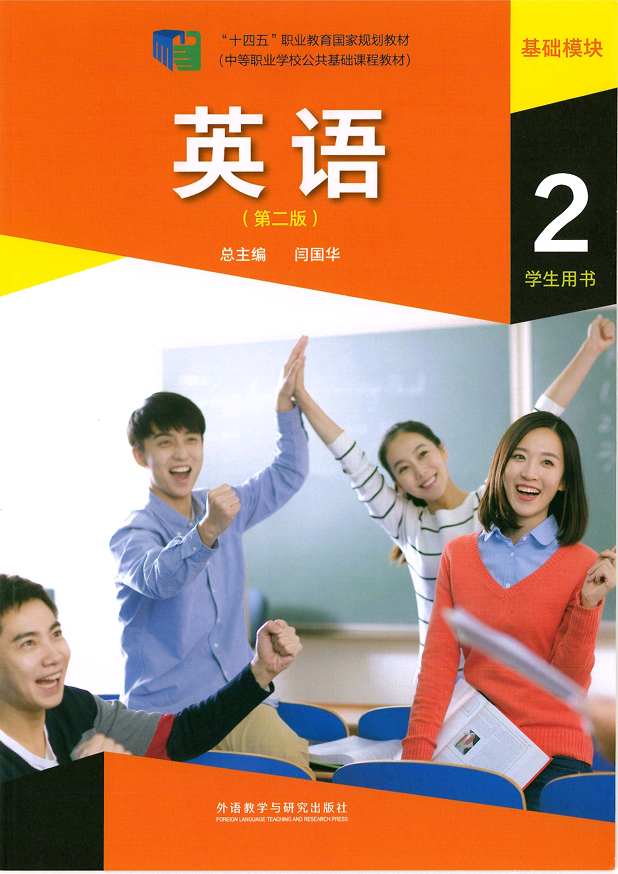
Unit 5-8 综合测试卷(2)-《英语 基础模块2》(外研版第二版)单元过关卷(原卷版+解析版)
2026-09-04
|
2份
|
25页
|
20人阅读
|
0人下载
摘要:
**基本信息**
紧扣《英语 基础模块2》外研版第二版Unit5-Unit8核心考点,设AB卷分层训练(A卷基础巩固、B卷能力提升)及综合测试卷,通过语法、阅读、写作等题型提升语言能力与思维品质。
**题型特征**
|题型|题量/分值|知识覆盖|命题特色|
|----|-----------|----------|----------|
|语言知识运用|25题/25分|if条件句、时间状语从句、强调句、复合形容词|聚焦语法基础,如if从句时态(第1-5题)、while/when用法(第6-12题),夯实语言能力|
|阅读理解|15题/30分|旅行经历、莫言文学成就、钱学森事迹|选材兼具文化传承(莫言、钱学森)与生活实践(青岛旅行),培养文化意识与信息获取能力|
|书面表达|1题/10分|上网规则建议|结合安全上网主题,引导学生分析问题并提出建议,提升思维品质与表达能力|
内容正文:
编写说明:本套试卷紧扣《英语 基础模块2》(外研版第二版)教材,以教材单元为基准精准覆盖核心考点。
每个单元设置AB卷,A卷为基础巩固卷,侧重基础考点训练,帮助学生扎实掌握知识要点;B卷为能力提升卷,注重知识整合与全面检测,引导学生构建知识网络。全书设计4份综合测试卷,模拟实战情境,聚焦解题能力突破,全面提升应试能力与知识应用水平。
《英语 基础模块2》(外研版第二版)《单元过关卷》
Unit 5 -- Unit 8综合测试卷(2)
考试时间:60分钟 满分:80分
班级 姓名 学号 成绩
第一部分:语言知识运用(共25小题,每小题1分,共25分)
1.If he ________ tomorrow, he will be late.
A.don’t start B.didn’t start C.doesn’t start D.won’t start
【答案】C
【详解】考查一般现在时。句意:如果他明天不动身的话,他将会迟到。If条件状语从句,主句用一般将来时(will be ),从句用一般现在时代替一般将来时;主语为he,第三人称单数,谓语动词也要用第三人称单数,所以动词的否定形式应为doesn’t + 动词原形(doesn’t start)。故选C。
2.If it ________ tomorrow, we will go for a picnic.
A.don’t rain B.isn’t rain C.doesn’t rain D.won’t rain
【答案】C
【详解】考查时态。句意:如果明天不下雨,我们就去野餐。分析句子可知,这是一个if引导的条件状语从句,主句“we will go for a picnic”时态是一般将来时( will go),从句“If it ... tomorrow”应用一般现在时表将来,遵循“主将从现”原则,从句主语是it,第三人称单数,所给谓语动词“rain”是实义动词,需借助助动词does构成其否定结构doesn’t,doesn’t rain符合要求。故选C。
3.We don’t know if it ________ tomorrow. If it ________, we won’t go out for a walk.
A.will rain; will rain B.rains; rains C.rain; will rain D.will rain; rains
【答案】D
【详解】考查动词的时态。句意:我们不知道明天会不会下雨。如果下雨,我们就不出去散步了。第一句中“if”表示“是否”,引导宾语从句,时间是 tomorrow,所以用一般将来时“will rain”。第二句中“if”表示“如果”,引导条件状语从句,遵循“主将从现”原则,即主句用一般将来时,从句用一般现在时,所以用“rains”。故选D。
4.If it ________ tomorrow, we ________ the sports meeting.
A.rains; will cancel B.will rain; cancel
C.rained; would cancel D.is raining; are canceling
【答案】A
【详解】句意:如果明天下雨,我们就会取消运动会。
if引导真实条件状语从句遵循“主将从现”规则,从句表将来用一般现在时,主语it为三单,谓语用rains;主句使用一般将来时will + 动词原形,故用rains; will cancel。
5.If you ________ hard, you will make progress.
A.study B.will study C.studied D.are studying
【答案】A
【详解】句意:如果你努力学习,你将会取得进步。
在if引导的条件状语从句中,遵循“主将从现”的原则,即主句使用一般将来时(will make progress),从句需要用一般现在时来表示将来。从句主语为you,谓语动词应用原形study。
6.Tom rushed into the house ________ his mother was cooking.
A.as B.before C.while D.after
【答案】C
【详解】考查连词辨析。句意:在妈妈正在做饭的时候,汤姆冲进了房子。A. as当……时(强调主从句动作的同步发生,适用于短暂或延续动作);B. before在……之前;C. while当……时候(强调从句动作进行中,主句动作发生,适用于延续动作);D. after在……之后。分析句子结构可知,这是一个主从复合句,主句动作“rushed into”是在从句动作“was cooking”进行中发生的,要用“while”。故选C。
7.I’ll let you know as soon as he ______ back tomorrow.
A.come B.will come C.comes D.came
【答案】C
【详解】考查时态和主谓一致。句意:他明天一回来我就会让你知道。此处为as soon as引导的时间状语从句,主句“I’ll let you know”是一般将来时,故从句要用一般现在时表将来,遵循“主将从现”原则。主语he是第三人称单数,故动词用三单形式comes。故选C。
8.He will show his new CD player to you as soon as he ________ his letter.
A.will finish writing B.finishes writing
C.finishes to write D.will finish to write
【答案】B
【详解】考查一般现在时和非谓语动词。句意:他一写完信就会给你看他的唱片机。分析句子可知,主句he will show是一般将来时,as soon as引导的时间状语从句应遵循“主将从现”原则,用一般现在时finishes;finish doing:做完某事。故选B。
9.I learned a lot about customer service ________ I was doing my internship last summer.
A.while B.until C.before D.so that
【答案】A
【详解】句意:去年夏天实习期间,我学到了很多关于客户服务的知识。
while当……时候;until直到;before在……之前;so that以便。空格后的从句“I was doing my internship last summer”使用了过去进行时,表示过去某段时间正在进行的动作。while引导时间状语从句时,常与进行时态连用,表示“在……期间”,while符合句意与语法要求。
10.My mother was cooking ________ I was doing my homework.
A.while B.when C.since D.because
【答案】A
【详解】句意:我做作业的时候妈妈在做饭。
while与……同时;when当……时;since自从;because因为。根据“was cooking”和“was doing”可知,此处强调两个动作同时在进行,应用while连接。
11.I was reading a book ________ my friend sent me a message.
A.when B.while C.since D.so
【答案】A
【详解】句意:我正在看书的时候,我的朋友给我发了一条信息。
when引导时间状语从句,常用结构:主句(过去进行时+when+从句(一般过去时),表示一个动作正在进行,另一个动作在此期间发生。while引导时间状语从句时,常表示“正当……期间”,从句多用延续性动词或进行时态。since自从;因为;so所以。根据“I was reading a book”可知,我正在看书的时候,朋友发了一条信息,故用when。
12.While she ________ the room, someone knocked at the door.
A.cleans B.cleaned
C.was cleaning D.is cleaning
【答案】C
【详解】考查过去进行时。句意:当她正在打扫房间时,有人敲门了。主句谓语动作knocked为过去式,主句动作“敲门”发生在从句动作“打扫房间”进行的过程中,从句需用过去进行时(was/were + 现在分词)。主语she为单数,故用was cleaning。故选C。
13.It was because of his rich experience in carbon reduction projects ________ he got the job in the environmental protection company.
A.that B.why C.how D.what
【答案】A
【详解】句意:正是因为他在减碳项目方面经验丰富,他才得到这家环保公司的工作。
本句为It was ... that ...强调句型,被强调部分是原因状语because of his rich experience in carbon reduction projects,连接词用that。
14.Every employee ________ need to follow the safety requirements to avoid accidents.
A.is B.does C.do D.has
【答案】B
【详解】句意:每位员工确实需要遵守安全要求以避免事故。
主语Every employee是第三人称单数,谓语动词need为原形,在肯定句中,使用助动词does加动词原形表示强调,意为“确实”。
15.Is it in this small village ________ the famous writer spent his childhood?
A.that B.which C.where D.when
【答案】A
【详解】句意:这位著名作家就是在这个小村庄里度过了他的童年吗?
这是强调句型的一般疑问句:Is/Was it + 被强调部分 + that/who + 其余部分?此句被强调部分是地点状语“in this small village”,需用that引导。
16.________ was it that you started to care about the green earth?
A.Where B.What C.When D.Who
【答案】C
【详解】考查强调句与疑问词辨析。句意:你是什么时候开始关心保护绿色地球的?A. Where在哪里,用于询问地点;B. What什么,用于询问事物;C. When何时,用于询问时间;D. Who谁,用于询问人物。这是一个强调句的特殊疑问句结构“疑问词+was it that...”。根据语境,句子是在询问“开始关心绿色地球”的时间,因此用When。故选C。
17.— We won the e-sports match!
— Wonderful! It was you ________ scored the final goal.
A.where B.how C.that D.whom
【答案】C
【详解】考查强调句。句意:——我们赢了电子竞技比赛!——太棒了!是你进了最后一球。分析句子可知,这是强调句型“It + is/was+ 被强调部分 + that/who + 其他成分”,本句强调的是人,用that或who都可以。故选C。
18.I ________ hope that you can come to my wedding ceremony.
A.did B.done C.do D.does
【答案】C
【详解】考查谓语的强调。句意:我真的希望你能来参加我的婚礼。根据宾语从句“that you can come to my wedding ceremony”可知,陈述的是当前的情况,为一般现在时,主句“I ... hope”也应是一般现在时;本句强调主句谓语动词hope,主语为“I”,应用“do+动词原形”来强调。故选C。
19.— It was on a windy and rainy night ______ his mother left their home.
— Yes, since then she has never come back.
A.when B.that C.which D.while
【答案】B
【详解】考查强调句。句意:—他的母亲是在一个风雨交加的夜晚离开了他们的家。—是的,从那以后她再也没有回来过。分析句子结构可知,此处为强调句,强调句的基本结构为“It is/was+被强调部分+ that/ who+其他”,本句中被强调部分是时间状语“on a windy and rainy night”,故用that。故选B。
20.Tom is _________ boy.
A.an 8-year-old B.a 8-years-old C.an 8 year old D.a 8 years old
【答案】A
【详解】考查不定冠词和复合形容词。句意:汤姆是一个八岁的男孩。分析句子可知,此处应用复合形容词作定语,在复合形容词中,单词要用单数形式,中间用连字符连接;“8”读音是以元音音素开头,所以要用不定冠词an。故选A。
21.She is a ________ writer who has published many books.
A.well-known B.well known C.wellknow D.well knows
【答案】A
【详解】考查形容词。句意:她是一位出版过很多书的知名作家。分析句子可知,此处应用形容词作定语修饰名词writer ;副词 + 过去分词构成复合形容词时,中间必须加连字符,选项中well-known是复合形容词,表“著名的、知名的”,符合语法和句意。故选A。
22.The teacher asked us to write a ________ composition within an hour.
A.five-hundred-words B.five-hundreds-word
C.five-hundreds-words D.five-hundred-word
【答案】D
【详解】考查复合形容词。句意:老师要求我们在一小时内写一篇五百字的作文。根据选项可知,空处使用复合形容词,表示“五百字的”,复合形容词中连字符前后的名词都要使用单数 ,因此“五百字的”表达方式为:five-hundred-word。故选D。
23.— Why not give your mother a DIY paper-cutting gift on Mother’s Day?
— ________. I’m sure she will like this traditional craft.
A.Not really B.Never mind C.Good idea D.You’re welcome
【答案】C
【详解】句意:——为什么不在母亲节亲手做一份剪纸礼物送给你的妈妈?——好主意。我相信她会喜欢这种传统手工艺。
Not really不见得;Never mind没关系;Good idea好主意;You’re welcome不客气。根据后文“I’m sure she will like this traditional craft.”可以看出说话人赞同这个提议,Good idea符合语境。
24.— The frequent terrible coal mine accidents killed more than 1,000 people in China last year.
— ________
A.That’s the case B.Quite OK C.Certainly D.I agree
【答案】A
【详解】句意为:——去年在中国,频繁可怕的矿难导致一千多人死亡。——情况正是如此。
That’s the case事情就是如此;Quite OK还可以;Certainly当然;I agree我同意。根据“The frequent terrible coal mine accidents killed more than 1,000 people in China last year.”可知,这是陈述客观事实,选项A用于确认陈述的事实,符合语境。
25.— Excuse me, Sir. This is a non-smoking area. You can’t smoke here.
— ________
A.I’m sorry. B.So what? C.I don’t care. D.How dare you?
【答案】A
【详解】句意:——打扰一下,先生。这里是无烟区,您不能在这里吸烟。——对不起。
I’m sorry对不起;So what那又怎样;I don’t care我不在乎;How dare you你好大胆子。根据“Excuse me, Sir. This is a non-smoking area. You can’t smoke here.”可知,别人提醒违规行为,应礼貌道歉,“I’m sorry”符合语境。
第二部分:阅读理解(共15小题,每小题2分,共30分)
第五节 在本节中,你将读到三则阅读材料,从短文后各题所给的A、B、C、D四个选项中选出可以填入空白处的最佳选项,并将答题卡上对应选项的方框涂满、涂黑。
A
A Weekend Trip to Qingdao
Last month, I went on a weekend trip to Qingdao with my best friend, Li Ming. We took a high-speed train on Saturday morning. The trip took about 3 hours. When we arrived, the weather was sunny and cool — perfect for traveling.
First, we went to the beach. The sea was blue and the sand was soft. We walked along the shore, took many photos, and even played frisbee for an hour. At noon, we ate seafood in a small restaurant near the beach. The crab and shrimp were very fresh and delicious.
In the afternoon, we visited Qingdao Beer Museum. We learned about the history of Qingdao Beer and even tried a little bit of fresh beer (only non-alcoholic for us, since we are students). The museum was interesting, and we bought some beer-themed souvenirs for our families.
On Sunday morning, we climbed Laoshan Mountain. The mountain was green, and we could see the sea from the top. It was a little tiring, but the view was worth it. In the afternoon, we took the train back home. We felt tired but very happy. It was a great weekend trip!
26.How did the writer and Li Ming go to Qingdao?
A.By bus. B.By high-speed train. C.By plane. D.By ship.
27.What was the weather like when they arrived in Qingdao?
A.Rainy and cold. B.Sunny and cool. C.Cloudy and hot. D.Windy and warm.
28.Where did they eat seafood?
A.In a big restaurant in the city center. B.Near the beach.
C.In the hotel. D.At home.
29.What did they do in Qingdao Beer Museum?
A.Drank a lot of beer. B.Learned about the museum’s history.
C.Learned about Qingdao Beer’s history. D.Played games.
30.How did they feel after the trip?
A.Tired but happy. B.Bored and tired.
C.Happy but angry. D.Sad and tired.
【答案】26.B 27.B 28.B 29.C 30.A
【导语】这是一篇记叙文。作者向我们讲述了他和朋友周末去青岛的愉快旅行,以及他们一起做的有趣的活动。
【详解】26.细节理解题。根据第一段“We took a high-speed train on Saturday morning. (我们星期六上午乘坐了高铁。)”可知,作者和李明是乘高铁去青岛的。故选B。
27.细节理解题。根据第一段“When we arrived, the weather was sunny and cool — perfect for traveling. (当我们到达时,天气晴朗凉爽,非常适合旅行。)”可知,他们到达青岛时天气晴朗凉爽。故选B。
28.细节理解题。根据第二段“we ate seafood in a small restaurant near the beach. (我们在海滩附近的一家小餐馆吃海鲜。)”可知,他们在海滩附近吃海鲜。故选B。
29.细节理解题。根据第三段“In the afternoon, we visited Qingdao Beer Museum. We learned about the history of Qingdao Beer and even tried a little bit of fresh beer (only non-alcoholic for us, since we are students). (下午,我们参观了青岛啤酒博物馆。我们了解了青岛啤酒的历史,甚至还尝试了一些新鲜啤酒(因为我们是学生,所以只给我们不含酒精的)。)”可知,他们了解青岛啤酒的历史。故选C。
30.细节理解题。根据第最后一段“We felt tired but very happy. It was a great weekend trip! (我们感到很累,但很高兴。这是一次很棒的周末旅行!)”可知,他们累并快乐着。故选A。
B
Writing a good story is not an easy task. What’s the secret? Mo Yan, the 2012 Nobel Prize winner in literature, believes his success comes from doing a lot of reading.
Mo was born into a farming family in a village in Shandong province. He grew up listening to folk stories about gods, spirits and foxes. Those stories later became the inspiration for Mo’s writing.
Mo left school at the age of 12 and started to work in the fields. Although he was tired after his daily hard work. Mo was always hungry for books. However, there were very few in the village. He read his older brother’s textbooks and even dictionaries. He also helped others with. farm work in exchange for books. “When I finished reading all the books around. I thought I was the most knowledgeable man in the world.” he told Xinhua.
After Mo left his hometown and joined the army in 1970; he began to read widely, including works by Lu Xun and many other famous writers. He studied from these writers ‘but did not copy them. Instead, he developed his own style. “I grew up in an environment filled with folk culture. It enters my novels whenever I pick up a pen. This has influenced, even decided, my style.” Mo told a group of reporters in his hometown after he won the award.
As the first Chinese person to win a Nobel Prize in literature, the organization spoke highly of his work. They said his writing is where fantasy and reality meet, bringing together historical and social perspectives(看法).
31.What inspired Mo Yan’s writing?
A.Working in the fields. B.His family members.
C.His education at school. D.Stories he heard as a child.
32.What is Paragraph 3 mainly about?
A.What Mo Yan did at school.
B.How Mo Yan tried to get books to read.
C.What types of books Mo Yan preferred to read.
D.Why Mo Yan helped others with farm work.
33.How did Mo Yan feel after reading all the books he could find?
A.He felt bored. B.He felt empty.
C.He felt proud. D.He felt puzzled.
34.What do we know about Mo’s writing style?
A.It is the only one that focuses on folk culture.
B.It is very similar to Lu Xun’s writing style.
C.His life experience in the army changed it a lot.
D.His childhood environment had a big effect on it.
35.What did the Nobel Prize organization say about Mo Yan’s writing?
A.It is focused on folk stories.
B.It mixes fantasy and reality.
C.It tries to solve social problems.
D.It is largely based on historical events.
【答案】31.D 32.B 33.C 34.D 35.B
【导语】本文是一篇记叙文,介绍了诺贝尔文学奖得主莫言的成长经历、阅读习惯,以及这些经历对他写作风格的影响。
【详解】31.细节理解题。根据第二段“Those stories later became the inspiration for Mo’s writing(那些故事后来成为莫言写作的灵感)”可知,莫言写作的灵感来自童年听的故事。故选D。
32.主旨大意题。第三段主要讲述莫言 12 岁辍学后,通过读哥哥的课本、字典,甚至帮人干农活换书来阅读的经历,即该段落主旨为莫言怎样尝试得到书来阅读。故选B。
33.推理判断题。根据第三段“When I finished reading all the books around. I thought I was the most knowledgeable man in the world(当我读完身边所有的书时,我觉得自己是世界上最博学的人。)”可知,莫言读完能找到的书后感到自豪。故选C。
34.细节理解题。根据第四段“I grew up in an environment filled with folk culture... This has influenced, even decided, my style(我成长在充满民间文化的环境中……这个已经影响,甚至决定了我的写作风格)”可知,莫言的童年环境对他的写作风格影响很大。故选D。
35.细节理解题。根据最后一段“They said his writing is where fantasy and reality meet(他们说他的写作融合了幻想和现实)”可知,诺贝尔奖组委会认为莫言的作品融合了幻想与现实。故选B。
C
Qian Xuesen was a rocket scientist. He was famous all over the world as the father of China’s space technology. He was born in 1911 and passed away at the age of 98.
Qian Xuesen graduated from Shanghai Jiaotong University in 1934. Then, he went to the United States to study. When he heard the news that China had been founded, he began to try his best to go back to his motherland. The American government tried to stop his journey. But he succeeded in going back in 1955.
Since 1958, Dr. Qian had devoted all his life to China’s space technology. He set up China’s first missile-and-rocket-research institute and this institute later helped to start China’s space program. He retired in 1991, the year before China’s manned space program was started. And his research formed the basis of the rocket that carried astronaut Yang Liwei into space in 2003.
36.Which is the right time order?
①He went to the United States to study ②He returned to China successfully.
③He started China’s space program. ④He graduated from University.
A.②①③④ B.④②①③ C.④①②③ D.③④①②
37.About Qian Xuesen, the passage doesn’t mention his ________.
A.age B.education C.achievements D.family
38.China’s manned space program was started in ________.
A.1991 B.1992 C.1993 D.2003
39.Which of the following is true according to the passage?
A.Qian Xuesen set up China’s first research institute.
B.Qian Xuesen started China’s space program.
C.Qian Xuesen started China’s manned space program.
D.Yang Liwei was sent into space by Qian Xuesen in 2003.
40.The passage is about ________.
A.Qian Xuesen’s brief lifetime B.Qian Xuesen’s love story
C.Qian Xuesen’s American life D.Qian Xuesen’s further education
【答案】36.C 37.D 38.B 39.A 40.A
【导语】本文是一篇传记文。文章主要讲述了钱学森作为中国航天技术之父的生平及其对中国航天事业的巨大贡献。
【详解】36.细节理解题。根据第二段中“Qian Xuesen graduated from Shanghai Jiaotong University in 1934. Then, he went to the United States to study. (钱学森1934年毕业于上海交通大学。然后,他去了美国学习。)”和“But he succeeded in going back in 1955. (但是他在1955年成功地回到了祖国。)”以及第三段中“Since 1958, Dr. Qian had devoted all his life to China’s space technology. (1958年以来,钱博士为中国的空间技术事业奉献了一生。)”可知,事件时间线:1934年毕业④→赴美留学①→1955年回国②→1958年启动航天计划③。故选C。
37.细节理解题。根据第一段中“He was born in 1911 and passed away at the age of 98. (他生于1911年,享年98岁。)”可知,提到了年龄;根据第二段中“Qian Xuesen graduated from Shanghai Jiaotong University in 1934. Then, he went to the United States to study. (钱学森1934年毕业于上海交通大学。然后,他去了美国学习。)”可知,提到了教育;根据第三段中“Since 1958, Dr. Qian had devoted all his life to China’s space technology. He set up China’s first missile-and-rocket-research institute and this institute later helped to start China’s space program. (1958年以来,钱博士为中国的空间技术事业奉献了一生。他建立了中国第一个导弹和火箭研究所,该研究所后来帮助启动了中国的太空计划。)”可知,提到了他的成就,但未涉及家庭信息。故选D。
38.细节理解题。根据第三段中“He retired in 1991, the year before China’s manned space program was started. (他于1991年退休,也就是中国载人航天计划启动的前一年。)”可知,1992年中国载人航天计划启动。故选B。
39.细节理解题。根据第三段中“He set up China’s first missile-and-rocket-research institute ... (他建立了中国第一个导弹和火箭研究所……)”可知,钱学森成立了中国第一个研究所。故选A。
40.主旨大意题。文章简要介绍了钱学森的一生,包括他的教育背景、回国经历及其对中国航天科技的重要贡献,属简明人物传记。故选A。
第三部分 补全对话(共5题,每题1分,共5分)
A: Have you ever ____41____ of Tu Youyou?
B: No. ____42____ is she?
A: She is a great female scientist of our country.
B: Tell me ____43____ about her.
A: She is____44____ first Chinese scientist winning a Nobel Prize.
B: For what?
A: She discovered pure artemisinin (青蒿素) .
B: What is it?
A: It’s a drug against malaria (疟疾) .
B: How did she make so great achievement?
A: Perseverance. When facing difficulties, she didn’t give ____45____ but keep going.
B: No wonder she could succeed.
41.___________42.___________43.___________44.___________45.__________
【答案】41.heard 42.Who 43.more 44.the 45.up
【导语】这是一段围绕屠呦呦展开的对话。
【详解】41.考查现在完成时及固定短语。句意:你曾听说过屠呦呦吗?根据“Have you ever…of Tu Youyou?”可知,此处要表达“你曾听说过屠呦呦吗?”,现在完成时结构“have/has + 过去分词”,听说:hear,其过去分词是heard,符合 语境。故填heard。
42.考查特殊疑问词。句意:她是谁?根据“ She is a great female scientist of our country.”可知,这里是问询问屠呦呦的身份,即“她是谁?”,用Who开启对身份的询问,句首首字母大写。故填Who。
43.考查比较级。句意:给我讲更多关于她(的事 )。根据“Tell me…about her.”可知,这里是要表达“进一步介绍”的要求, 用more符合语境,“Tell me more about…”是常用表达。故填more。
44.考查定冠词 。句意:她是首位获得诺贝尔奖的中国科学家。根据“first”是序数词,前需用the,表示“第一位”。故填the。
45.考查介词搭配 。句意:面对困难,她没有放弃,而是继续前行。根据“but keep going”可知,这里是说“面对困难,她没有放弃”,give up是固定搭配,因此填up。故填up。
第四部分 短文填空(共10题,每题1分,共10分)
Mary had lived in China for ____46____ (near) twenty years before she came here. I’ve planned to visit China next year. So I requested her to tell me the ____47____ (good) time to go there. Mary said to me, “The most comfortable time to visit China is either between March and May or between September and early November. During these months, the weather is ____48____ (particular) pleasant throughout the country, neither too hot nor too cold.”
I’m ____49____ (interest) in tasting all kinds of food all over the world. I asked her to say something about the ____50____ (China) food. “Well, Chinese food is delicious and ____51____ (reasonable) priced. What is even ____52____ (good) is that restaurants do not ask for or accept tips.” she said ____53____ (patient). “Language can be a problem in China, ____54____ (especial) for first-time visitors.” said Mary. She advised me to learn some ____55____ (base) words and phrases. Moreover, she reminded me to carry an English-Chinese pocket dictionary.
46.___________47.___________48.___________49.___________50.___________
51.___________52.___________53.___________54.___________55.___________
【答案】
46.nearly 47.best 48.particularly 49.interested 50.Chinese 51.reasonably 52.better 53.patiently 54.especially 55.basic
【导语】玛丽在中国生活近二十年,向计划来华的作者介绍了中国适宜出游的时节、美食特色,同时提醒初次来华游客会遇到语言障碍,并给出学习基础词汇、携带英汉词典的出行建议。
【详解】46.考查副词。句意:玛丽在来这儿之前已经在中国生活了将近二十年。near意为“在附近”,此处修饰数词twenty years且表示将近,需要副词nearly。
47.考查形容词最高级。句意:于是我请她告诉我去那里的最佳时节。结合后文“The most comfortable time (最舒适的时间)”可知,是询问最好的时间,用good的最高级为best。
48.考查副词。句意:全国的天气都格外宜人,不热也不冷。此处修饰形容词pleasant要用副词,particular的副词形式是particularly。
49.考查形容词。句意:我对品尝世界各地的美食很感兴趣。固定搭配be interested in意为“对……感兴趣”,修饰人用-ed形容词interested。
50.考查形容词。句意:我请她讲讲中国美食。修饰名词food需要形容词,China的形容词形式Chinese,意为“中国的”。
51.考查副词。句意:中国菜美味,价格也十分公道。修饰形容词priced用副词,reasonable的副词形式reasonably。
52.考查形容词比较级。句意:更好的一点是餐馆不会索要也不收取小费。even用来修饰比较级,good比较级为better。
53.考查副词。句意:她耐心地说道。修饰动词said要用副词,patient副词形式为patiently。
54.考查副词。句意:在中国语言会是一个难题,尤其是对第一次到访的游客。用来修饰整个句子用副词,especial副词形式是especially。
55.考查形容词。句意:她建议我学习一些基础词汇和短语。修饰名词words and phrases使用形容词,base的形容词形式是basic。
第五部分 书面表达(10分)
根据以下的上网规则,并结合自己的观点,以书信的形式给中学生们提出合理的建议。
Many children use the Internet to get useful knowledge and information, and to relax in their free time. But some of them are not using it in a good way. Here are some rules to make sure you are safe and have fun on the Internet.
Make rules for Internet use with your parents.
Don’t give your password to anyone else.
Check with your parents before giving out a credit card number.
·Never send a photo of yourself to someone unless your parents say it’s OK. Check with your parents before going into a chat room.
·Never agree to meet someone you met on the Internet without your parents’ permission.
注意:
(1)文中不得出现考生个人真实信息;
(2)词数80~120;
(3)开头和结尾已给出,不计入总词数。
Dear friends,
How are you? Nowadays, getting online for information is becoming more and more popular. Some teenagers are interested in using the Internet.
____________________________________________________________________________________________________________________________________________________________________________________________________________________________________________________________________________________
At last, as long as we use the Internet safely, we can make our daily life more colorful and more interesting.
Yours,
Tom
【答案】例文:
Dear friends,
How are you? Nowadays, getting online for information is becoming more and more popular. Some teenagers are interested in using the Internet. As we all know, we can use the Internet to get useful knowledge and information and to relax in our free time. But do you know how to use the Internet usefully and safely? Let’s share some rules.
First, make sure that your parents are aware of your Internet use. Check with your parents before giving out a credit card number. If you want to go into a chat room, you must check with them too. Then, don’t give your password to anyone else. You mustn’t send a photo of yourself to someone unless your parents say it’s OK. You shouldn’t agree to meet someone you met on the Internet without your parents’ permission either.
At last, as long as we use the Internet safely, we can make our daily life more colorful and more interesting.
Yours,
Tom
【导语】本篇书面表达属于应用文。Tom写信告知中学生们如何正确使用网络。
【详解】1.词汇积累
获得:get→ acquire
空闲的:free→ spare
确保:make sure→ ensure
许可:permission→ approval
2.句式拓展
简单句变复合句
原句:Check with your parents before giving out a credit card number.
拓展句:If you are about to give out your credit card number, check with your parents first.
【点睛】【高分句型1】First, make sure that your parents are aware of your Internet use. (运用了that引导的宾语从句)
【高分句型2】If you want to go into a chat room, you must check with them too. (运用了if引导的条件状语从句)
学科网(北京)股份有限公司 (
1
)原创精品资源学科网独家享有版权,侵权必究!
学科网(北京)股份有限公司
$
编写说明:本套试卷紧扣《英语 基础模块2》(外研版第二版)教材,以教材单元为基准精准覆盖核心考点。
每个单元设置AB卷,A卷为基础巩固卷,侧重基础考点训练,帮助学生扎实掌握知识要点;B卷为能力提升卷,注重知识整合与全面检测,引导学生构建知识网络。全书设计4份综合测试卷,模拟实战情境,聚焦解题能力突破,全面提升应试能力与知识应用水平。
《英语 基础模块2》(外研版第二版)《单元过关卷》
Unit 5 -- Unit 8综合测试卷(2)
考试时间:60分钟 满分:80分
班级 姓名 学号 成绩
第一部分:语言知识运用(共25小题,每小题1分,共25分)
1.If he ________ tomorrow, he will be late.
A.don’t start B.didn’t start C.doesn’t start D.won’t start
2.If it ________ tomorrow, we will go for a picnic.
A.don’t rain B.isn’t rain C.doesn’t rain D.won’t rain
3.We don’t know if it ________ tomorrow. If it ________, we won’t go out for a walk.
A.will rain; will rain B.rains; rains C.rain; will rain D.will rain; rains
4.If it ________ tomorrow, we ________ the sports meeting.
A.rains; will cancel B.will rain; cancel
C.rained; would cancel D.is raining; are canceling
5.If you ________ hard, you will make progress.
A.study B.will study C.studied D.are studying
6.Tom rushed into the house ________ his mother was cooking.
A.as B.before C.while D.after
7.I’ll let you know as soon as he ______ back tomorrow.
A.come B.will come C.comes D.came
8.He will show his new CD player to you as soon as he ________ his letter.
A.will finish writing B.finishes writing
C.finishes to write D.will finish to write
9.I learned a lot about customer service ________ I was doing my internship last summer.
A.while B.until C.before D.so that
10.My mother was cooking ________ I was doing my homework.
A.while B.when C.since D.because
11.I was reading a book ________ my friend sent me a message.
A.when B.while C.since D.so
12.While she ________ the room, someone knocked at the door.
A.cleans B.cleaned C.was cleaning D.is cleaning
13.It was because of his rich experience in carbon reduction projects ________ he got the job in the environmental protection company.
A.that B.why C.how D.what
14.Every employee ________ need to follow the safety requirements to avoid accidents.
A.is B.does C.do D.has
15.Is it in this small village ________ the famous writer spent his childhood?
A.that B.which C.where D.when
16.________ was it that you started to care about the green earth?
A.Where B.What C.When D.Who
17.— We won the e-sports match!
— Wonderful! It was you ________ scored the final goal.
A.where B.how C.that D.whom
18.I ________ hope that you can come to my wedding ceremony.
A.did B.done C.do D.does
19.— It was on a windy and rainy night ______ his mother left their home.
— Yes, since then she has never come back.
A.when B.that C.which D.while
20.Tom is _________ boy.
A.an 8-year-old B.a 8-years-old C.an 8 year old D.a 8 years old
21.She is a ________ writer who has published many books.
A.well-known B.well known C.wellknow D.well knows
22.The teacher asked us to write a ________ composition within an hour.
A.five-hundred-words B.five-hundreds-word
C.five-hundreds-words D.five-hundred-word
23.— Why not give your mother a DIY paper-cutting gift on Mother’s Day?
— ________. I’m sure she will like this traditional craft.
A.Not really B.Never mind C.Good idea D.You’re welcome
24.— The frequent terrible coal mine accidents killed more than 1,000 people in China last year.
— ________
A.That’s the case B.Quite OK C.Certainly D.I agree
25.— Excuse me, Sir. This is a non-smoking area. You can’t smoke here.
— ________
A.I’m sorry. B.So what? C.I don’t care. D.How dare you?
第二部分:阅读理解(共15小题,每小题2分,共30分)
第五节 在本节中,你将读到三则阅读材料,从短文后各题所给的A、B、C、D四个选项中选出可以填入空白处的最佳选项,并将答题卡上对应选项的方框涂满、涂黑。
A
A Weekend Trip to Qingdao
Last month, I went on a weekend trip to Qingdao with my best friend, Li Ming. We took a high-speed train on Saturday morning. The trip took about 3 hours. When we arrived, the weather was sunny and cool — perfect for traveling.
First, we went to the beach. The sea was blue and the sand was soft. We walked along the shore, took many photos, and even played frisbee for an hour. At noon, we ate seafood in a small restaurant near the beach. The crab and shrimp were very fresh and delicious.
In the afternoon, we visited Qingdao Beer Museum. We learned about the history of Qingdao Beer and even tried a little bit of fresh beer (only non-alcoholic for us, since we are students). The museum was interesting, and we bought some beer-themed souvenirs for our families.
On Sunday morning, we climbed Laoshan Mountain. The mountain was green, and we could see the sea from the top. It was a little tiring, but the view was worth it. In the afternoon, we took the train back home. We felt tired but very happy. It was a great weekend trip!
26.How did the writer and Li Ming go to Qingdao?
A.By bus. B.By high-speed train. C.By plane. D.By ship.
27.What was the weather like when they arrived in Qingdao?
A.Rainy and cold. B.Sunny and cool.
C.Cloudy and hot. D.Windy and warm.
28.Where did they eat seafood?
A.In a big restaurant in the city center. B.Near the beach.
C.In the hotel. D.At home.
29.What did they do in Qingdao Beer Museum?
A.Drank a lot of beer. B.Learned about the museum’s history.
C.Learned about Qingdao Beer’s history. D.Played games.
30.How did they feel after the trip?
A.Tired but happy. B.Bored and tired.
C.Happy but angry. D.Sad and tired.
B
Writing a good story is not an easy task. What’s the secret? Mo Yan, the 2012 Nobel Prize winner in literature, believes his success comes from doing a lot of reading.
Mo was born into a farming family in a village in Shandong province. He grew up listening to folk stories about gods, spirits and foxes. Those stories later became the inspiration for Mo’s writing.
Mo left school at the age of 12 and started to work in the fields. Although he was tired after his daily hard work. Mo was always hungry for books. However, there were very few in the village. He read his older brother’s textbooks and even dictionaries. He also helped others with. farm work in exchange for books. “When I finished reading all the books around. I thought I was the most knowledgeable man in the world.” he told Xinhua.
After Mo left his hometown and joined the army in 1970; he began to read widely, including works by Lu Xun and many other famous writers. He studied from these writers ‘but did not copy them. Instead, he developed his own style. “I grew up in an environment filled with folk culture. It enters my novels whenever I pick up a pen. This has influenced, even decided, my style.” Mo told a group of reporters in his hometown after he won the award.
As the first Chinese person to win a Nobel Prize in literature, the organization spoke highly of his work. They said his writing is where fantasy and reality meet, bringing together historical and social perspectives(看法).
31.What inspired Mo Yan’s writing?
A.Working in the fields. B.His family members.
C.His education at school. D.Stories he heard as a child.
32.What is Paragraph 3 mainly about?
A.What Mo Yan did at school.
B.How Mo Yan tried to get books to read.
C.What types of books Mo Yan preferred to read.
D.Why Mo Yan helped others with farm work.
33.How did Mo Yan feel after reading all the books he could find?
A.He felt bored. B.He felt empty.
C.He felt proud. D.He felt puzzled.
34.What do we know about Mo’s writing style?
A.It is the only one that focuses on folk culture.
B.It is very similar to Lu Xun’s writing style.
C.His life experience in the army changed it a lot.
D.His childhood environment had a big effect on it.
35.What did the Nobel Prize organization say about Mo Yan’s writing?
A.It is focused on folk stories.
B.It mixes fantasy and reality.
C.It tries to solve social problems.
D.It is largely based on historical events.
C
Qian Xuesen was a rocket scientist. He was famous all over the world as the father of China’s space technology. He was born in 1911 and passed away at the age of 98.
Qian Xuesen graduated from Shanghai Jiaotong University in 1934. Then, he went to the United States to study. When he heard the news that China had been founded, he began to try his best to go back to his motherland. The American government tried to stop his journey. But he succeeded in going back in 1955.
Since 1958, Dr. Qian had devoted all his life to China’s space technology. He set up China’s first missile-and-rocket-research institute and this institute later helped to start China’s space program. He retired in 1991, the year before China’s manned space program was started. And his research formed the basis of the rocket that carried astronaut Yang Liwei into space in 2003.
36.Which is the right time order?
①He went to the United States to study ②He returned to China successfully.
③He started China’s space program. ④He graduated from University.
A.②①③④ B.④②①③ C.④①②③ D.③④①②
37.About Qian Xuesen, the passage doesn’t mention his ________.
A.age B.education C.achievements D.family
38.China’s manned space program was started in ________.
A.1991 B.1992 C.1993 D.2003
39.Which of the following is true according to the passage?
A.Qian Xuesen set up China’s first research institute.
B.Qian Xuesen started China’s space program.
C.Qian Xuesen started China’s manned space program.
D.Yang Liwei was sent into space by Qian Xuesen in 2003.
40.The passage is about ________.
A.Qian Xuesen’s brief lifetime B.Qian Xuesen’s love story
C.Qian Xuesen’s American life D.Qian Xuesen’s further education
第三部分 补全对话(共5题,每题1分,共5分)
A: Have you ever ____41____ of Tu Youyou?
B: No. ____42____ is she?
A: She is a great female scientist of our country.
B: Tell me ____43____ about her.
A: She is____44____ first Chinese scientist winning a Nobel Prize.
B: For what?
A: She discovered pure artemisinin (青蒿素) .
B: What is it?
A: It’s a drug against malaria (疟疾) .
B: How did she make so great achievement?
A: Perseverance. When facing difficulties, she didn’t give ____45____ but keep going.
B: No wonder she could succeed.
41.___________42.___________43.___________44.___________45.___________
第四部分 短文填空(共10题,每题1分,共10分)
Mary had lived in China for ____46____ (near) twenty years before she came here. I’ve planned to visit China next year. So I requested her to tell me the ____47____ (good) time to go there. Mary said to me, “The most comfortable time to visit China is either between March and May or between September and early November. During these months, the weather is ____48____ (particular) pleasant throughout the country, neither too hot nor too cold.”
I’m ____49____ (interest) in tasting all kinds of food all over the world. I asked her to say something about the ____50____ (China) food. “Well, Chinese food is delicious and ____51____ (reasonable) priced. What is even ____52____ (good) is that restaurants do not ask for or accept tips.” she said ____53____ (patient). “Language can be a problem in China, ____54____ (especial) for first-time visitors.” said Mary. She advised me to learn some ____55____ (base) words and phrases. Moreover, she reminded me to carry an English-Chinese pocket dictionary.
46.___________47.___________48.___________49.___________50.___________
51.___________52.___________53.___________54.___________55.___________
第五部分 书面表达(10分)
56.根据以下的上网规则,并结合自己的观点,以书信的形式给中学生们提出合理的建议。
Many children use the Internet to get useful knowledge and information, and to relax in their free time. But some of them are not using it in a good way. Here are some rules to make sure you are safe and have fun on the Internet.
Make rules for Internet use with your parents.
Don’t give your password to anyone else.
Check with your parents before giving out a credit card number.
·Never send a photo of yourself to someone unless your parents say it’s OK. Check with your parents before going into a chat room.
·Never agree to meet someone you met on the Internet without your parents’ permission.
注意:
(1)文中不得出现考生个人真实信息;
(2)词数80~120;
(3)开头和结尾已给出,不计入总词数。
Dear friends,
How are you? Nowadays, getting online for information is becoming more and more popular. Some teenagers are interested in using the Internet.
____________________________________________________________________________________________________________________________________________________________________________________________________________________________________________________________________________________
At last, as long as we use the Internet safely, we can make our daily life more colorful and more interesting.
Yours,
Tom
学科网(北京)股份有限公司 (
1
)原创精品资源学科网独家享有版权,侵权必究!
学科网(北京)股份有限公司
$
资源预览图

1

2

3
由于学科网是一个信息分享及获取的平台,不确保部分用户上传资料的 来源及知识产权归属。如您发现相关资料侵犯您的合法权益,请联系学科网,我们核实后将及时进行处理。