Unit 3 Smart Learning 第二课时 2a-2d 课件 2026-2027学年英语人教版九年级上册
2026-09-02
|
13页
|
2795人阅读
|
17人下载
普通
摘要:
该初中英语课件围绕“英语学习方法与问题解决”展开,课堂导入从复习已学内容切入,通过“What do you find difficult about learning English?”引导学生思考,搭建“问题呈现-策略提供-实践应用”的学习支架,衔接听力、阅读、角色扮演等活动,帮助学生梳理前后知识脉络。
其亮点在于融合语言能力与学习能力培养,听力活动(2b)通过表格记录不同学生的学习方法及原因,提升信息提取与分析能力,角色扮演(2d)运用建议句型增强语言表达;结合思维品质,引导学生对应问题与策略(如“记学习日记克服遗忘”),培养解决问题思维。学生能掌握实用策略提升自主学习能力,教师可借助结构化活动设计高效开展教学。
内容正文:
Review
Review
Review
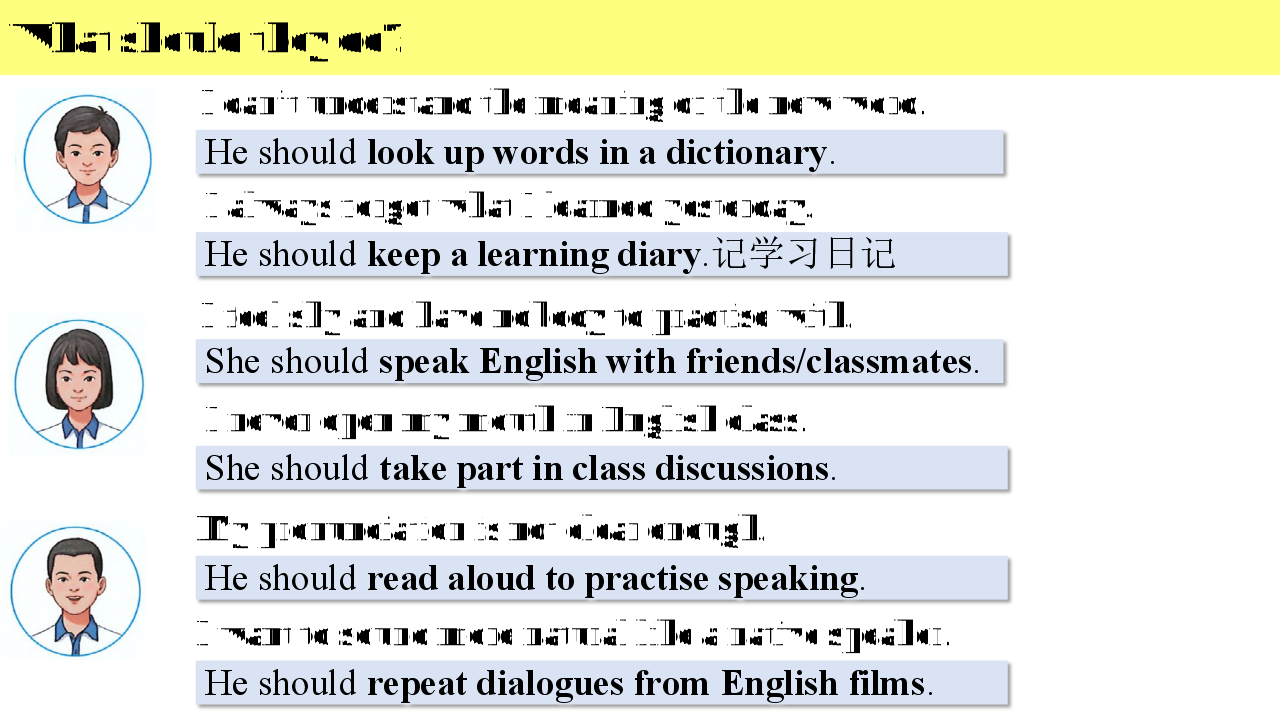
What should they do?
I can’t understand the meaning of the new word.
He should look up words in a dictionary.
I always forget what I learned yesterday.
He should keep a learning diary.记学习日记
I feel shy and have nobody to practise with.
She should speak English with friends/classmates.
I never open my mouth in English class.
She should take part in class discussions.
My pronunciation is not clear enough.
He should read aloud to practise speaking.
I want to sound more natural like a native speaker.
He should repeat dialogues from English films.
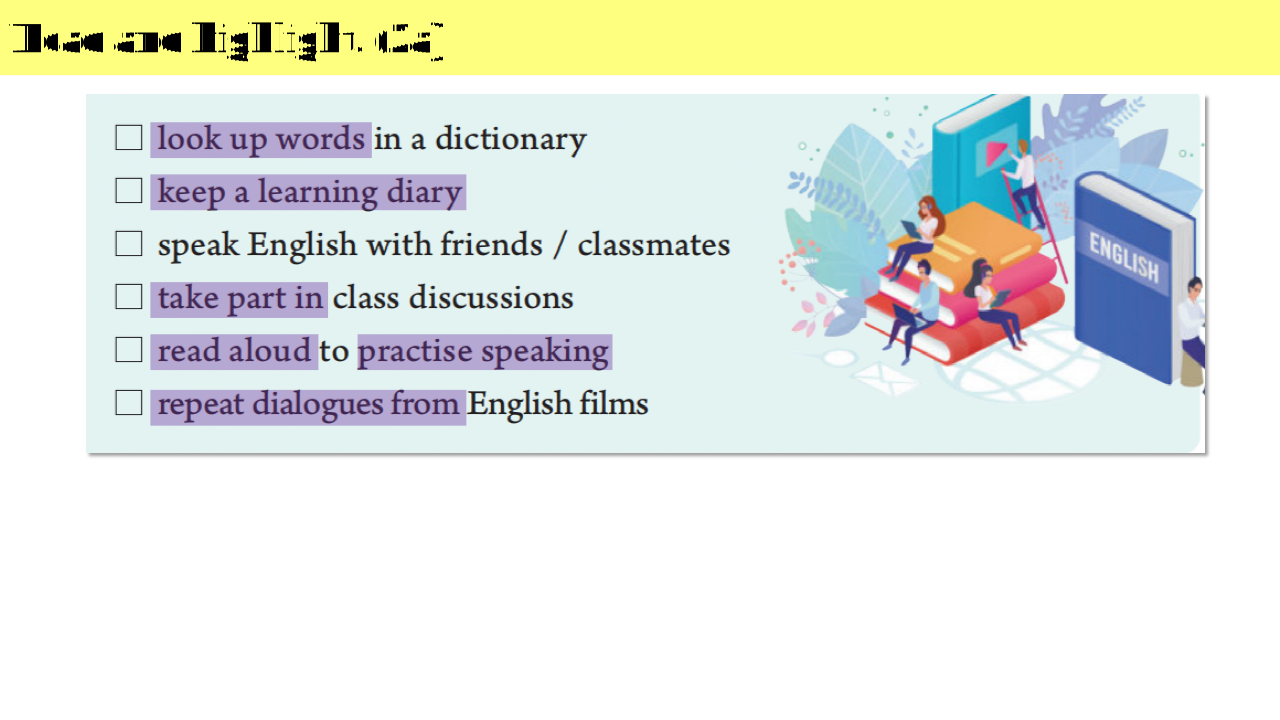
Read and highlight. (2a)
Listen and complete the chart. (2b)
What are some good ways to learn English?
using flashcards
note down
word groups
read English books
Listen and complete the table. Paper ready.
Who What they do Why
Fu Xing learn new words by using flashcards flashcards are easy to _____________ and let you ________ the words
Teng Fei note down useful expressions and word groups it’s ______ to put words into _________ groups
Yaming read a lot, both in English and Chinese reading is important for learning in ________
Meimei likes reading (but can’t read very fast)
Advice to Meimei read books that ______ your English level
choose something interesting and ___________
read something every day and read ________
the more you read, the __________________ you’ll become
carry around
review
helpful
meaningful
general
suit
easy to read
widely
faster and better
总的来说
广泛阅读
随身携带
Choose the tips mentioned in the listening. (2c)
√
√
√
√
√
Role play the conversation. (P97)
What do you find difficult about learning English?
A: What do you find difficult about learning English?
B: I can’t do very well / I have trouble doing...
A: I see. Maybe you could do / Why not do? / What about doing? / Have you tried doing?
B: That sounds like a good idea. I’ll give it a try.
A: It helps you do / It’s a good way to do / The more you do, the -er you’ll become.
B: Thanks. What about you? What do you find difficult?
A: I’m afraid of doing / I find it difficult to do...
B: Maybe you could do / Why not do? / What about doing? / Have you tried doing? It helps you do...
A: That’s helpful. I’ll try that.
B: Great! Let’s work on it together.
What are some ways to overcome these problems?
What are some ways to overcome these problems?
I can’t read quickly.
Read something every day and read widely. Choose books that suit your level.
I’m afraid of making mistakes.
Don’t be afraid. Everyone makes mistakes. Practice speaking with friends.
I can’t remember new words.
Use flashcards to review words every day. Put words into meaningful groups.
I find it difficult to follow conversations.
Repeat dialogues from English films to practise.
I can’t use grammar rules correctly.
Write down grammar rules and example sentences in your learning diary.
每天读点东西,并且广泛阅读。选择适合你水平的书。
别害怕。每个人都会犯错。和朋友一起练习口语。
每天用闪卡复习单词。把单词放在有意义的词组中。
跟读英语电影中的对话来练习。
在学习日记里记下语法规则和例句。
null
75023.18
$
资源预览图

1

2

3

4
5
6
相关资源
示范课
由于学科网是一个信息分享及获取的平台,不确保部分用户上传资料的 来源及知识产权归属。如您发现相关资料侵犯您的合法权益,请联系学科网,我们核实后将及时进行处理。