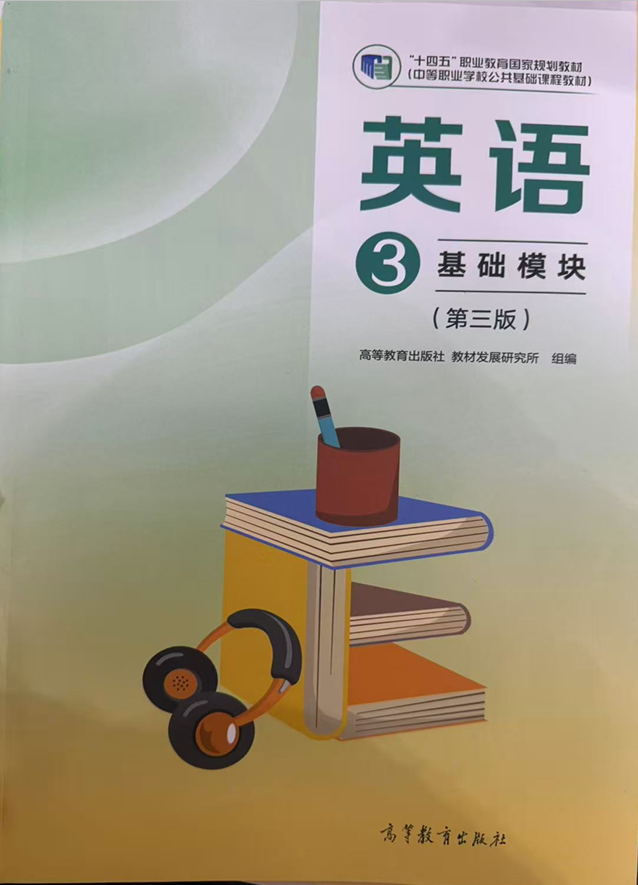
Unit 6 Living History of Culture(B卷·能力提升)《英语 基础模块3》(高教版第三版)单元过关卷(原卷版+解析版)
2026-08-31
|
2份
|
22页
|
34人阅读
|
0人下载
内容正文:
编写说明:本套试卷紧扣《英语 基础模块3》(高教版第三版)教材,以教材单元为基准精准覆盖核心考点。
每个单元设置AB卷,A卷为基础巩固卷,侧重基础考点训练,帮助学生扎实掌握知识要点;B卷为能力提升卷,注重知识整合与全面检测,引导学生构建知识网络。全书设计4份综合测试卷,模拟实战情境,聚焦解题能力突破,全面提升应试能力与知识应用水平。
《英语 基础模块3》(高教版第三版)《单元过关卷》
Unit 6 Living History of Culture
B卷·能力提升
考试时间:120分钟 满分:120分
班级__________ 姓名__________ 学号__________ 成绩__________
第一部分 英语知识运用(共四节,满分55分)
第一节 语音辨音(共5小题;每小题1分,满分5分)
从A、B、C、D四个选项中选出画线部分读音不同的一项。
1.history
silk
visit
site
2.court
group
four
thought
3.those
through
three
think
4.now
row
show
know
5.stretched
washed
opened
watched
【答案】1.D 2.B 3.A 4.A 5.C
【详解】
1.考查字母读音。site中i读/aɪ/,其余三项均读/ɪ/,故选D。
2.考查字母组合读音。group中ou读/uː/,其余三项均读/ɔː/,故选B。
3.考查字母组合读音。those中th读/ð/,其余三项均读/θ/,故选A。
4.考查字母组合读音。now中ow读/aʊ/,其余三项均读/əʊ/,故选A。
5.考查词尾读音。opened中-ed读/d/,其余三项均读/t/,故选C。
第二节 单项选择(共25小题;每小题1分,满分25分)
从A、B、C、D四个选项中选出可以填入空白处的最佳选项。
6.The museum presents the ______ development of the ancient capital.
A.natural
B.medical
C.personal
D.cultural
【答案】D
【详解】博物馆展示古都文化发展,cultural合适,故选D。
7.Experts study each warrior’s expression and clothing in great ______.
A.distance
B.detail
C.danger
D.silence
【答案】B
【详解】in great detail表示非常详细地,故选B。
8.The palace is a brilliant example of traditional ______.
A.transportation
B.architecture
C.application
D.efficiency
【答案】B
【详解】宫殿是传统建筑范例,architecture合适,故选B。
9.The city wall has survived because generations have ______ it carefully.
A.forecast
B.refunded
C.preserved
D.scanned
【答案】C
【详解】城墙得以留存因精心保护,preserve合适,故选C。
10.The exhibition allows visitors to ______ history through objects and stories.
A.deliver
B.reduce
C.experience
D.charge
【答案】C
【详解】通过物品与故事体验历史,experience合适,故选C。
11.The two monuments differ greatly in material and ______.
A.purpose
B.receipt
C.facility
D.risk
【答案】A
【详解】比较材料与用途,purpose合适,故选A。
12.The restored colors show how the warriors may have ______ appeared.
A.suddenly
B.nearly
C.politely
D.originally
【答案】D
【详解】复原色对应最初样貌,originally合适,故选D。
13.Peking Opera ______ in the eighteenth century and later opened to the public.
A.located
B.stretched
C.originated
D.ranged
【答案】C
【详解】京剧起源于十八世纪,originate in合适,故选C。
14.The craft has been passed ______ from one generation to the next.
A.out
B.down
C.away
D.off
【答案】B
【详解】pass down表示代代相传,故选B。
15.The temple is on the edge ______ the old town.
A.at
B.with
C.of
D.by
【答案】C
【详解】on the edge of表示在……边缘,故选C。
16.The guide had us ______ the differences between the two constructions.
A.comparing
B.to compare
C.compare
D.compared
【答案】C
【详解】have sb. do sth.,用compare,故选C。
17.Visitors should avoid ______ flash near painted objects.
A.using
B.use
C.to use
D.used
【答案】A
【详解】avoid doing,用using,故选A。
18.The records ______ by archaeologists provide important evidence.
A.writing
B.write
C.to write
D.written
【答案】D
【详解】records被写,用written作定语,故选D。
19.The year 1974 was the time ______ local farmers discovered the first figures.
A.which
B.where
C.when
D.why
【答案】C
【详解】先行词time表时间,用when,故选C。
20.The museum is the place ______ the restored chariots are displayed.
A.when
B.where
C.why
D.which
【答案】B
【详解】先行词place表地点,用where,故选B。
21.The need to protect the colors is the reason ______ photography is limited.
A.when
B.why
C.where
D.which
【答案】B
【详解】先行词reason后用why,故选B。
22.No sooner ______ the main hall than the guide began the introduction.
A.we entered
B.we had entered
C.did entered we
D.had we entered
【答案】D
【详解】No sooner置于句首用部分倒装,had we entered,故选D。
23.Only after comparing the two sites ______ their different purposes.
A.we understood
B.we understand
C.did we understand
D.understood we
【答案】C
【详解】Only+状语置于句首,主句倒装,用did we understand,故选C。
24.The pyramid is older than the Terracotta Army, ______ both are wonders of construction.
A.because
B.although
C.unless
D.so that
【答案】B
【详解】前后为让步关系,用although,故选B。
25.Had the colors been exposed to stronger light, they ______ faster.
A.would have faded
B.would fade
C.will fade
D.had faded
【答案】A
【详解】对过去虚拟,主句用would have faded,故选A。
26.The curator explained how the objects ______ before display.
A.restore
B.are restoring
C.had been restored
D.will restore
【答案】C
【详解】修复在展出前且为被动,用had been restored,故选C。
27.What visitors learn is ______ culture lives through both objects and people.
A.that
B.what
C.where
D.who
【答案】A
【详解】表语从句成分完整,用that,故选A。
28.—What makes the Terracotta Army fantastic? —______
A.It is beside a river.
B.Each life-sized figure has a different face and expression.
C.The shop closes early.
D.I bought a postcard.
【答案】B
【详解】问奇妙之处,应说明陶俑面部各不相同,B合适,故选B。
29.—How is the pyramid different from the underground army? —______
A.The pyramid rises above ground, while the army was placed underground.
B.Both are in Xi’an.
C.They were built in the same year.
D.Neither is made by humans.
【答案】A
【详解】问两者不同,应比较地上与地下位置,A合适,故选A。
30.—Why should traditional arts be recorded? —______
A.Because tickets are expensive.
B.The wall is very wide.
C.It opened last month.
D.So that their skills and meanings can be passed on.
【答案】D
【详解】问为何记录传统艺术,应说明传承技艺与含义,D合适,故选D。
第三节 完形填空(共10小题;每小题1.5分,满分15分)
阅读下面短文,从每题所给的A、B、C、D四个选项中选出最佳选项。
A vocational school worked with a local museum to create a digital guide for an old city wall. Students first believed the task was mainly about taking attractive photographs. The curator asked them to begin with historical ____31____ instead.
The group compared repair records, old maps and interviews with residents. They discovered that one gate had been rebuilt several times, so its present appearance did not come from a single ____32____. They marked confirmed facts separately from local stories.
When writing the guide, students avoided long lists of dates. They used a timeline to show when important changes occurred and added short recordings from craftspeople who had ____33____ the wall. However, every recording required permission, and speakers could decide whether their names were shown.
A visitor test revealed another issue. Some technical words were too hard to ____34____. Students revised them, added audio for people who struggled with small screens, and marked areas closed for protection.
The final guide combined reliable research with easy use. Students learned that digital tools help people approach the site with better ____35____. A story should never be created by ____36____ uncertain information. Residents' memories gave the wall social ____37____. Checking sources made the guide slower but more ____38____. Used carefully, technology keeps the past ____39____ without turning history into simple ____40____. The guide was tested at the gate, where an elderly visitor found each button clear, useful and friendly immediately.
31.A.tickets
B.evidence
C.colors
D.prices
32.A.visitor
B.expression
C.future
D.period
33.A.repaired
B.ignored
C.closed
D.copied
34.A.construct
B.remind
C.stretch
D.understand
35.A.distance
B.understanding
C.payment
D.silence
36.A.checking
B.recording
C.sharing
D.inventing
37.A.width
B.height
C.meaning
D.cost
38.A.trustworthy
B.regular
C.ancient
D.gray
39.A.hidden
B.underground
C.silent
D.accessible
40.A.evidence
B.construction
C.protection
D.entertainment
【答案】31.B 32.D 33.A 34.D 35.B 36.D 37.C 38.A 39.D 40.D
【导语】记叙文。职校生为古城墙制作数字导览,以证据区分事实与传闻,并让历史可接近而非娱乐化。
【详解】
31.名词辨析。维修记录、旧地图与访谈属历史证据,evidence合适,故选B。
32.名词辨析。城门多次重建,外观非单一时期,period合适,故选D。
33.动词辨析。录音来自曾维修城墙的工匠,repaired合适,故选A。
34.动词辨析。技术词太难理解,understand合适,故选D。
35.名词辨析。数字工具帮助更好理解遗址,understanding合适,故选B。
36.动词辨析。不确定信息不可编造成故事,inventing合适,故选D。
37.名词辨析。居民记忆赋予城墙社会意义,meaning合适,故选C。
38.形容词辨析。核查来源使指南更可信,trustworthy合适,故选A。
39.形容词辨析。技术让过去可接近,accessible合适,故选D。
40.名词辨析。历史不应沦为单纯娱乐,entertainment合适,故选D。
第四节 短文填空(共5小题;每小题2分,满分10分)
阅读下面短文,在空白处填入括号内单词的正确形式。
At a workshop beside the old city wall, students learned how a repair team makes decisions. Historical sites need both physical ____41____ (protect) and accurate interpretation. Records ____42____ (write) by engineers explain earlier repairs and changes in materials. Digital maps make this information more ____43____ (access) to visitors, including people who cannot climb the wall. However, uncertain claims should not ____44____ (present) as facts. The team compares old photos, residents' memories and test results before adding a note. Workers also number each new brick and record its source. Responsible communication keeps culture ____45____ (live) for future generations. Before leaving, the students tried the guide on two phones and reported one unclear button. Their simple test showed that careful technology can connect honest research with a safe, useful visit during every future repair and public visit.
【答案】41.protection 42.written 43.accessible 44.be presented 45.alive
【导语】短文填空。城墙修缮需实体保护与准确阐释,不确定说法不可当作事实。
【详解】
41.physical后接名词protection。
42.Records被工程师撰写,用written作定语。
43.作宾补,access变为accessible。
44.claims被呈现,should后用be presented。
45.keep culture alive表示保持文化活力。
第二部分 阅读理解(共两节,满分50分)
第一节 阅读理解(共15小题;每小题2.5分,满分37.5分)
阅读下列短文,从每题所给的A、B、C、D四个选项中选出最佳选项。
A
Source
Amount
What it records
Update rule
Photo archive
12,400 images
Photos show cracks, colors and repairs on each part of the old wall. Staff compare new pictures with earlier ones.
The collection is updated carefully every month after a field check.
Oral history
86 interviews
Residents describe work, festivals and family memories connected with the wall. Speakers choose whether their names appear.
Permission is checked before any recording is published.
Repair record
312 files
Each file lists dates, workers, old materials and new materials used during one repair.
An expert checks every entry before it enters the guide.
Visitor survey
1,050 replies
Questions measure whether signs, routes and digital pages are clear and useful for different visitors.
Results are reviewed once a year.
46.Which source contains 86 interviews?
A.Oral history.
B.Photo archive.
C.Repair record.
D.Visitor survey.
47.Which source records materials and dates and is expert checked?
A.Oral history.
B.Repair record.
C.Photo archive.
D.Visitor survey.
48.Which source is reviewed annually?
A.Visitor survey.
B.Photo archive.
C.Oral history.
D.Repair record.
【答案】46.A 47.B 48.A
【导语】应用文。表格对比照片档案、口述史、维修记录与游客调查的数量、内容与更新规则。
【详解】
46.细节理解。口述史一行对应86次访谈,故选A。
47.细节理解。维修记录列出材料与日期且经专家核查,故选B。
48.细节理解。游客调查每年审查一次,故选A。
B
Craft teacher Han Mei visited paper-cutting artist Grandma Liu in a small studio above a market. For her first video, Han Mei placed one camera beside the table. She recorded only the artist's hands and several finished patterns. The picture was clear, and students could copy a few simple movements. Yet they did not understand why Grandma Liu chose a fish, a flower or a round character for a certain festival.
Han Mei returned with a microphone and a list of questions. The artist explained the good wishes behind each symbol and how meanings differed across regions. She described learning the skill from her mother during winter evenings. This time, Han Mei kept the parts where the paper tore or a line went wrong.
Grandma Liu showed how she corrected each mistake and changed the design. Students later said these moments helped them understand the pressure of the scissors and the order of the cuts. The second video was longer, but it preserved more than hand movements. It recorded the choices, memories and family relationships that gave the craft meaning.
49.What did Han Mei include in her first video?
A.Festival use and regional meanings.
B.The artist’s mother’s full story.
C.Only finished patterns and the artist’s hands.
D.Students’ mistakes and corrections.
50.Why was the first video not enough for students?
A.They could not see the artist’s hands.
B.They already knew every regional meaning.
C.They did not understand why symbols were chosen.
D.They refused to copy any movement.
51.What did Han Mei add in the second recording?
A.Only a shorter finished pattern.
B.Meanings, learning history, mistakes and corrections.
C.Ticket prices for the festival.
D.A list of unrelated crafts.
52.Why was the new video more valuable?
A.It removed all spoken explanation.
B.It made the craft easier to sell.
C.It showed only hand movements.
D.It preserved decisions and relationships behind the craft.
【答案】49.C 50.C 51.B 52.D
【导语】记叙文。韩梅两次拍摄剪纸艺人,第二次补入寓意、学艺经历与纠错,使技艺含义更完整。
【详解】
49.细节理解。第一个视频只拍手部与成品图案,故选C。
50.细节理解。学生不懂为何选择特定符号,故选C。
51.细节理解。第二次加入寓意、学艺经历与纠错过程,故选B。
52.细节理解。新视频保存了技艺背后的选择与关系,故选D。
C
Repairing an old city wall is not the same as making it look new. Replacing every worn brick may produce a neat surface, but it can remove original material and signs of earlier building methods. Leaving every crack untreated is also unwise because water may enter and weaken the wall. Conservation teams begin by studying the structure, weather, earlier repairs and historical records.
They map damaged areas and test whether a crack is still moving. Only then do they choose an action. A loose brick may be fixed in place, while a dangerous part may need limited replacement. New material should be compatible with the old brick and mortar. It should not trap water or cause a stronger section to press against a weaker one.
Workers record the date, location, material and reason for each change. Future teams can then understand what was done and judge how the repair performed. Good conservation does not freeze a site at one perfect moment. It manages necessary change while protecting physical evidence, safety and the wall's long history for workers in coming decades.
53.What problem can replacing every old brick cause?
A.It always makes the wall collapse.
B.It leaves all damage untreated.
C.It may remove original material.
D.It hides all repair records.
54.What do experts study before choosing a conservation action?
A.Only the wall’s color.
B.Structure, weather, repairs and historical records.
C.Visitor ticket prices.
D.Local legends without evidence.
55.What is required of new repair materials?
A.They should replace every old brick.
B.They should be compatible with old materials.
C.They should remain unrecorded.
D.They should look brighter than the wall.
56.What is good conservation according to the passage?
A.Managing change while protecting evidence.
B.Freezing a site without any decision.
C.Leaving all damage untreated.
D.Making every wall look completely new.
【答案】53.C 54.B 55.B 56.A
【导语】说明文。古城墙修缮须兼顾安全与原真材料,良好保护是管理变化并保全证据。
【详解】
53.细节理解。全部换砖可能移除原始材料,故选C。
54.细节理解。行动前先研究结构、天气、维修与历史记录,故选B。
55.细节理解。新材料须与旧砖灰兼容,故选B。
56.主旨理解。良好保护是在保护证据的同时管理必要变化,故选A。
D
Popular stories make history easy to remember. A guide may repeat a tale about a secret tunnel, a lost treasure or a famous visitor. Residents may feel that the story belongs to the place. Repetition, however, does not turn a story into fact. Museums face a difficult choice when a local legend attracts visitors but has little supporting evidence. Presenting it as confirmed history misleads the public. Simply removing it can also be a mistake because the legend may express community memory and explain how people understood the site in a later period.
A better approach is to show both meaning and limits. The museum can label the account clearly as a legend, say when it was first recorded and compare it with maps, objects or written records. If versions of the tale differ, the display can explain that too.
Visitors are then invited to ask what evidence supports each claim and why the story remained popular. This method does not make the exhibition dull. Original voices, short audio and maps can keep the story vivid without calling it fact. Visitors can value the legend as part of local culture while learning to distinguish evidence from tradition. Honest labels protect trust and allow both history and memory to be heard.
57.What does the writer say about repeated popular stories?
A.They always have strong evidence.
B.They should all be removed.
C.Repetition does not make a story factual.
D.They are the same as historical records.
58.Why is simply removing a local legend also a problem?
A.It may ignore community memory.
B.It proves the legend is true.
C.It creates stronger evidence.
D.It records when the legend appeared.
59.How should a museum present a legend without strong evidence?
A.Label it as a legend and compare it with records.
B.Present it as confirmed history.
C.Hide all available records.
D.Repeat it until it becomes factual.
60.What can visitors gain from this approach?
A.They will believe every legend is a fact.
B.They will forget community memory.
C.They will stop visiting museums.
D.They can value the story while distinguishing evidence from tradition.
【答案】57.C 58.A 59.A 60.D
【导语】议论文。地方传说不宜当确证史实,也不宜简单删除;应标注并引导区分证据与传统。
【详解】
57.细节理解。重复并不能使故事成为事实,故选C。
58.细节理解。直接删除传说可能忽视社区记忆,故选A。
59.细节理解。应标注为传说并与记录对照,故选A。
60.主旨理解。游客可重视传说并区分证据与传统,故选D。
第二节 补全对话(共5小题;每小题2.5分,满分12.5分)
根据对话内容,从方框内A、B、C、D、E五个选项中选出能填入空白处的最佳选项。
Visitor: These paper cuts are beautiful. ____61____
Salesperson: They are traditional decorations with a long history.
Visitor: What do the patterns mean?
Salesperson: ____62____
Visitor: Are they still made by hand?
Salesperson: ____63____ Artists fold or cut paper with great care.
Visitor: How can this skill be protected?
Salesperson: ____64____
Visitor: I’d like to choose one for my family.
Salesperson: ____65____
A.This design means happiness and would make a meaningful gift.
B.Yes. Many works are still handmade.
C.Flowers, animals and characters often express good wishes.
D.Recording techniques and teaching young learners are both important.
E.Could you tell me more about this art?
【答案】61.E 62.C 63.B 64.D 65.A
【导语】对话。游客咨询剪纸寓意、手工制作与技艺保护,并挑选寓意幸福的礼物。
【详解】
61.面对剪纸,E项请求多介绍该艺术,故选E。
62.问图案含义,C项说明常表美好祝愿,故选C。
63.问是否手工制作,B项肯定并衔接下句,故选B。
64.问如何保护技艺,D项提记录与教学,故选D。
65.要为家人挑选,A项推荐寓意幸福的图案,故选A。
第三部分 书面表达(满分15分)
66.假设你是学校传统文化社负责人李华,请为“Chinese Cultural Treasures”活动写一封邀请邮件。内容包括:1. 活动时间地点;2. 介绍一种文化产品及其历史、特点;3. 邀请对方参与的环节。词数不少于80。
________________________________________________________________________
________________________________________________________________________
________________________________________________________________________
【参考范文】
Dear Ms Brown,
Our Chinese Cultural Treasures event will be held in the school hall from 2:00 to 5:00 p.m. next Friday. I would like to introduce Chinese embroidery. It dates back to the Shang Dynasty and has four main styles: Su Xiu, Xiang Xiu, Yue Xiu and Shu Xiu. Its careful stitches turn traditional patterns into beautiful works of art.
We hope you can join the culture-sharing corner and introduce a traditional craft from your country. Your participation will help students compare cultures and understand why traditional skills should be passed on. We look forward to seeing you.
Yours sincerely,
Li Hua
【词汇积累】historical site历史遗址;life-sized真人大小的;remind sb. of使某人想起;cultural treasure文化瑰宝;pass on传承。
【句式拓展】The visit showed me why... 该句用宾语从句说明参观带来的认识。
【点睛】范文逐项覆盖任务信息,以具体事实支撑推荐或感受,表达完整且符合交际语气。
原创精品资源学科网独家享有版权,侵权必究!
原创精品资源学科网独家享有版权,侵权必究!
原创精品资源学科网独家享有版权,侵权必究!
学科网(北京)股份有限公司
$
编写说明:本套试卷紧扣《英语 基础模块3》(高教版第三版)教材,以教材单元为基准精准覆盖核心考点。
每个单元设置AB卷,A卷为基础巩固卷,侧重基础考点训练,帮助学生扎实掌握知识要点;B卷为能力提升卷,注重知识整合与全面检测,引导学生构建知识网络。全书设计4份综合测试卷,模拟实战情境,聚焦解题能力突破,全面提升应试能力与知识应用水平。
《英语 基础模块3》(高教版第三版)《单元过关卷》
Unit 6 Living History of Culture
B卷·能力提升
考试时间:120分钟 满分:120分
班级__________ 姓名__________ 学号__________ 成绩__________
第一部分 英语知识运用(共四节,满分55分)
第一节 语音辨音(共5小题;每小题1分,满分5分)
从A、B、C、D四个选项中选出画线部分读音不同的一项。
1.history
silk
visit
site
2.court
group
four
thought
3.those
through
three
think
4.now
row
show
know
5.stretched
washed
opened
watched
第二节 单项选择(共25小题;每小题1分,满分25分)
从A、B、C、D四个选项中选出可以填入空白处的最佳选项。
6.The museum presents the ______ development of the ancient capital.
A.natural
B.medical
C.personal
D.cultural
7.Experts study each warrior’s expression and clothing in great ______.
A.distance
B.detail
C.danger
D.silence
8.The palace is a brilliant example of traditional ______.
A.transportation
B.architecture
C.application
D.efficiency
9.The city wall has survived because generations have ______ it carefully.
A.forecast
B.refunded
C.preserved
D.scanned
10.The exhibition allows visitors to ______ history through objects and stories.
A.deliver
B.reduce
C.experience
D.charge
11.The two monuments differ greatly in material and ______.
A.purpose
B.receipt
C.facility
D.risk
12.The restored colors show how the warriors may have ______ appeared.
A.suddenly
B.nearly
C.politely
D.originally
13.Peking Opera ______ in the eighteenth century and later opened to the public.
A.located
B.stretched
C.originated
D.ranged
14.The craft has been passed ______ from one generation to the next.
A.out
B.down
C.away
D.off
15.The temple is on the edge ______ the old town.
A.at
B.with
C.of
D.by
16.The guide had us ______ the differences between the two constructions.
A.comparing
B.to compare
C.compare
D.compared
17.Visitors should avoid ______ flash near painted objects.
A.using
B.use
C.to use
D.used
18.The records ______ by archaeologists provide important evidence.
A.writing
B.write
C.to write
D.written
19.The year 1974 was the time ______ local farmers discovered the first figures.
A.which
B.where
C.when
D.why
20.The museum is the place ______ the restored chariots are displayed.
A.when
B.where
C.why
D.which
21.The need to protect the colors is the reason ______ photography is limited.
A.when
B.why
C.where
D.which
22.No sooner ______ the main hall than the guide began the introduction.
A.we entered
B.we had entered
C.did entered we
D.had we entered
23.Only after comparing the two sites ______ their different purposes.
A.we understood
B.we understand
C.did we understand
D.understood we
24.The pyramid is older than the Terracotta Army, ______ both are wonders of construction.
A.because
B.although
C.unless
D.so that
25.Had the colors been exposed to stronger light, they ______ faster.
A.would have faded
B.would fade
C.will fade
D.had faded
26.The curator explained how the objects ______ before display.
A.restore
B.are restoring
C.had been restored
D.will restore
27.What visitors learn is ______ culture lives through both objects and people.
A.that
B.what
C.where
D.who
28.—What makes the Terracotta Army fantastic? —______
A.It is beside a river.
B.Each life-sized figure has a different face and expression.
C.The shop closes early.
D.I bought a postcard.
29.—How is the pyramid different from the underground army? —______
A.The pyramid rises above ground, while the army was placed underground.
B.Both are in Xi’an.
C.They were built in the same year.
D.Neither is made by humans.
30.—Why should traditional arts be recorded? —______
A.Because tickets are expensive.
B.The wall is very wide.
C.It opened last month.
D.So that their skills and meanings can be passed on.
第三节 完形填空(共10小题;每小题1.5分,满分15分)
阅读下面短文,从每题所给的A、B、C、D四个选项中选出最佳选项。
A vocational school worked with a local museum to create a digital guide for an old city wall. Students first believed the task was mainly about taking attractive photographs. The curator asked them to begin with historical ____31____ instead.
The group compared repair records, old maps and interviews with residents. They discovered that one gate had been rebuilt several times, so its present appearance did not come from a single ____32____. They marked confirmed facts separately from local stories.
When writing the guide, students avoided long lists of dates. They used a timeline to show when important changes occurred and added short recordings from craftspeople who had ____33____ the wall. However, every recording required permission, and speakers could decide whether their names were shown.
A visitor test revealed another issue. Some technical words were too hard to ____34____. Students revised them, added audio for people who struggled with small screens, and marked areas closed for protection.
The final guide combined reliable research with easy use. Students learned that digital tools help people approach the site with better ____35____. A story should never be created by ____36____ uncertain information. Residents' memories gave the wall social ____37____. Checking sources made the guide slower but more ____38____. Used carefully, technology keeps the past ____39____ without turning history into simple ____40____. The guide was tested at the gate, where an elderly visitor found each button clear, useful and friendly immediately.
31.A.tickets
B.evidence
C.colors
D.prices
32.A.visitor
B.expression
C.future
D.period
33.A.repaired
B.ignored
C.closed
D.copied
34.A.construct
B.remind
C.stretch
D.understand
35.A.distance
B.understanding
C.payment
D.silence
36.A.checking
B.recording
C.sharing
D.inventing
37.A.width
B.height
C.meaning
D.cost
38.A.trustworthy
B.regular
C.ancient
D.gray
39.A.hidden
B.underground
C.silent
D.accessible
40.A.evidence
B.construction
C.protection
D.entertainment
第四节 短文填空(共5小题;每小题2分,满分10分)
阅读下面短文,在空白处填入括号内单词的正确形式。
At a workshop beside the old city wall, students learned how a repair team makes decisions. Historical sites need both physical ____41____ (protect) and accurate interpretation. Records ____42____ (write) by engineers explain earlier repairs and changes in materials. Digital maps make this information more ____43____ (access) to visitors, including people who cannot climb the wall. However, uncertain claims should not ____44____ (present) as facts. The team compares old photos, residents' memories and test results before adding a note. Workers also number each new brick and record its source. Responsible communication keeps culture ____45____ (live) for future generations. Before leaving, the students tried the guide on two phones and reported one unclear button. Their simple test showed that careful technology can connect honest research with a safe, useful visit during every future repair and public visit.
第二部分 阅读理解(共两节,满分50分)
第一节 阅读理解(共15小题;每小题2.5分,满分37.5分)
阅读下列短文,从每题所给的A、B、C、D四个选项中选出最佳选项。
A
Source
Amount
What it records
Update rule
Photo archive
12,400 images
Photos show cracks, colors and repairs on each part of the old wall. Staff compare new pictures with earlier ones.
The collection is updated carefully every month after a field check.
Oral history
86 interviews
Residents describe work, festivals and family memories connected with the wall. Speakers choose whether their names appear.
Permission is checked before any recording is published.
Repair record
312 files
Each file lists dates, workers, old materials and new materials used during one repair.
An expert checks every entry before it enters the guide.
Visitor survey
1,050 replies
Questions measure whether signs, routes and digital pages are clear and useful for different visitors.
Results are reviewed once a year.
46.Which source contains 86 interviews?
A.Oral history.
B.Photo archive.
C.Repair record.
D.Visitor survey.
47.Which source records materials and dates and is expert checked?
A.Oral history.
B.Repair record.
C.Photo archive.
D.Visitor survey.
48.Which source is reviewed annually?
A.Visitor survey.
B.Photo archive.
C.Oral history.
D.Repair record.
B
Craft teacher Han Mei visited paper-cutting artist Grandma Liu in a small studio above a market. For her first video, Han Mei placed one camera beside the table. She recorded only the artist's hands and several finished patterns. The picture was clear, and students could copy a few simple movements. Yet they did not understand why Grandma Liu chose a fish, a flower or a round character for a certain festival.
Han Mei returned with a microphone and a list of questions. The artist explained the good wishes behind each symbol and how meanings differed across regions. She described learning the skill from her mother during winter evenings. This time, Han Mei kept the parts where the paper tore or a line went wrong.
Grandma Liu showed how she corrected each mistake and changed the design. Students later said these moments helped them understand the pressure of the scissors and the order of the cuts. The second video was longer, but it preserved more than hand movements. It recorded the choices, memories and family relationships that gave the craft meaning.
49.What did Han Mei include in her first video?
A.Festival use and regional meanings.
B.The artist’s mother’s full story.
C.Only finished patterns and the artist’s hands.
D.Students’ mistakes and corrections.
50.Why was the first video not enough for students?
A.They could not see the artist’s hands.
B.They already knew every regional meaning.
C.They did not understand why symbols were chosen.
D.They refused to copy any movement.
51.What did Han Mei add in the second recording?
A.Only a shorter finished pattern.
B.Meanings, learning history, mistakes and corrections.
C.Ticket prices for the festival.
D.A list of unrelated crafts.
52.Why was the new video more valuable?
A.It removed all spoken explanation.
B.It made the craft easier to sell.
C.It showed only hand movements.
D.It preserved decisions and relationships behind the craft.
C
Repairing an old city wall is not the same as making it look new. Replacing every worn brick may produce a neat surface, but it can remove original material and signs of earlier building methods. Leaving every crack untreated is also unwise because water may enter and weaken the wall. Conservation teams begin by studying the structure, weather, earlier repairs and historical records.
They map damaged areas and test whether a crack is still moving. Only then do they choose an action. A loose brick may be fixed in place, while a dangerous part may need limited replacement. New material should be compatible with the old brick and mortar. It should not trap water or cause a stronger section to press against a weaker one.
Workers record the date, location, material and reason for each change. Future teams can then understand what was done and judge how the repair performed. Good conservation does not freeze a site at one perfect moment. It manages necessary change while protecting physical evidence, safety and the wall's long history for workers in coming decades.
53.What problem can replacing every old brick cause?
A.It always makes the wall collapse.
B.It leaves all damage untreated.
C.It may remove original material.
D.It hides all repair records.
54.What do experts study before choosing a conservation action?
A.Only the wall’s color.
B.Structure, weather, repairs and historical records.
C.Visitor ticket prices.
D.Local legends without evidence.
55.What is required of new repair materials?
A.They should replace every old brick.
B.They should be compatible with old materials.
C.They should remain unrecorded.
D.They should look brighter than the wall.
56.What is good conservation according to the passage?
A.Managing change while protecting evidence.
B.Freezing a site without any decision.
C.Leaving all damage untreated.
D.Making every wall look completely new.
D
Popular stories make history easy to remember. A guide may repeat a tale about a secret tunnel, a lost treasure or a famous visitor. Residents may feel that the story belongs to the place. Repetition, however, does not turn a story into fact. Museums face a difficult choice when a local legend attracts visitors but has little supporting evidence. Presenting it as confirmed history misleads the public. Simply removing it can also be a mistake because the legend may express community memory and explain how people understood the site in a later period.
A better approach is to show both meaning and limits. The museum can label the account clearly as a legend, say when it was first recorded and compare it with maps, objects or written records. If versions of the tale differ, the display can explain that too.
Visitors are then invited to ask what evidence supports each claim and why the story remained popular. This method does not make the exhibition dull. Original voices, short audio and maps can keep the story vivid without calling it fact. Visitors can value the legend as part of local culture while learning to distinguish evidence from tradition. Honest labels protect trust and allow both history and memory to be heard.
57.What does the writer say about repeated popular stories?
A.They always have strong evidence.
B.They should all be removed.
C.Repetition does not make a story factual.
D.They are the same as historical records.
58.Why is simply removing a local legend also a problem?
A.It may ignore community memory.
B.It proves the legend is true.
C.It creates stronger evidence.
D.It records when the legend appeared.
59.How should a museum present a legend without strong evidence?
A.Label it as a legend and compare it with records.
B.Present it as confirmed history.
C.Hide all available records.
D.Repeat it until it becomes factual.
60.What can visitors gain from this approach?
A.They will believe every legend is a fact.
B.They will forget community memory.
C.They will stop visiting museums.
D.They can value the story while distinguishing evidence from tradition.
第二节 补全对话(共5小题;每小题2.5分,满分12.5分)
根据对话内容,从方框内A、B、C、D、E五个选项中选出能填入空白处的最佳选项。
Visitor: These paper cuts are beautiful. ____61____
Salesperson: They are traditional decorations with a long history.
Visitor: What do the patterns mean?
Salesperson: ____62____
Visitor: Are they still made by hand?
Salesperson: ____63____ Artists fold or cut paper with great care.
Visitor: How can this skill be protected?
Salesperson: ____64____
Visitor: I’d like to choose one for my family.
Salesperson: ____65____
A.This design means happiness and would make a meaningful gift.
B.Yes. Many works are still handmade.
C.Flowers, animals and characters often express good wishes.
D.Recording techniques and teaching young learners are both important.
E.Could you tell me more about this art?
第三部分 书面表达(满分15分)
66.假设你是学校传统文化社负责人李华,请为“Chinese Cultural Treasures”活动写一封邀请邮件。内容包括:1. 活动时间地点;2. 介绍一种文化产品及其历史、特点;3. 邀请对方参与的环节。词数不少于80。
________________________________________________________________________
________________________________________________________________________
________________________________________________________________________
原创精品资源学科网独家享有版权,侵权必究!
原创精品资源学科网独家享有版权,侵权必究!
原创精品资源学科网独家享有版权,侵权必究!
学科网(北京)股份有限公司
$
资源预览图

1

2

3
由于学科网是一个信息分享及获取的平台,不确保部分用户上传资料的 来源及知识产权归属。如您发现相关资料侵犯您的合法权益,请联系学科网,我们核实后将及时进行处理。