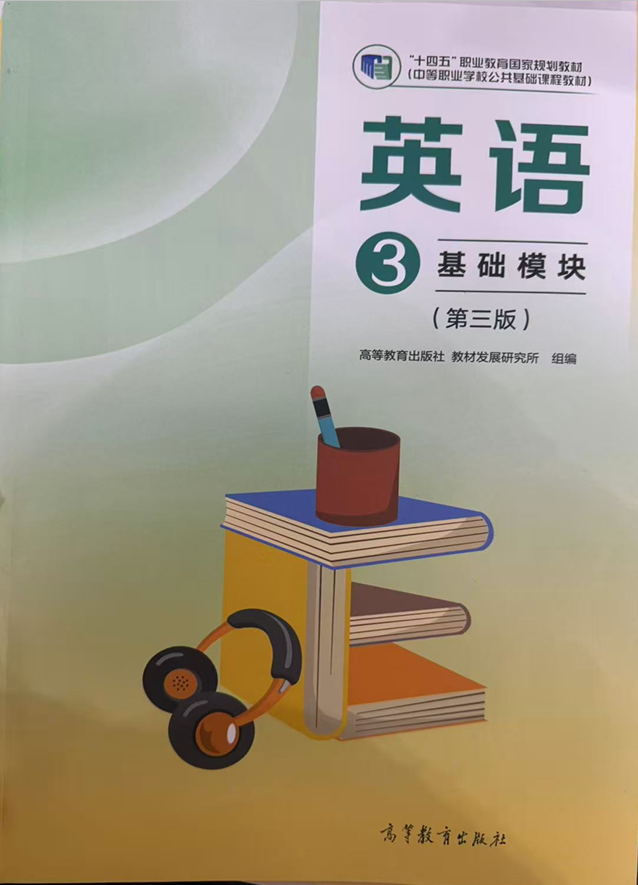
Unit 3 Artificial Intelligence(B卷·能力提升)《英语 基础模块3》(高教版第三版)单元过关卷(原卷版+解析版)
2026-08-31
|
2份
|
22页
|
32人阅读
|
0人下载
内容正文:
编写说明:本套试卷紧扣《英语 基础模块3》(高教版第三版)教材,以教材单元为基准精准覆盖核心考点。
每个单元设置AB卷,A卷为基础巩固卷,侧重基础考点训练,帮助学生扎实掌握知识要点;B卷为能力提升卷,注重知识整合与全面检测,引导学生构建知识网络。全书设计4份综合测试卷,模拟实战情境,聚焦解题能力突破,全面提升应试能力与知识应用水平。
《英语 基础模块3》(高教版第三版)《单元过关卷》
Unit 3 Artificial Intelligence
B卷·能力提升
考试时间:120分钟 满分:120分
班级__________ 姓名__________ 学号__________ 成绩__________
第一部分 英语知识运用(共四节,满分55分)
第一节 语音辨音(共5小题;每小题1分,满分5分)
从A、B、C、D四个选项中选出画线部分读音不同的一项。
1.scan
hand
plan
harm
2.food
good
school
tool
3.application
question
education
information
4.risks
tasks
fields
costs
5.improved
applied
wanted
served
第二节 单项选择(共25小题;每小题1分,满分25分)
从A、B、C、D四个选项中选出可以填入空白处的最佳选项。
6.Doctors use intelligent systems to ______ medical images quickly.
A.refund
B.locate
C.decorate
D.scan
7.Automation can lower costs while keeping product ______ stable.
A.quality
B.district
C.receipt
D.path
8.The final decision must remain under human ______.
A.loss
B.service
C.location
D.control
9.False information produced by AI may cause real ______.
A.harm
B.benefits
C.efficiency
D.practice
10.The factory introduced robots to ______ repeated tasks.
A.mention
B.exchange
C.perform
D.recommend
11.Engineers are responsible for testing whether the system works ______.
A.properly
B.lately
C.nearly
D.politely
12.Users should not ______ private data to unknown applications.
A.serve
B.deliver
C.compare
D.feed
13.The company needs clear rules to prevent the technology from falling into the wrong ______.
A.hands
B.fields
C.pages
D.lines
14.In terms ______ speed, the new system performs better.
A.of
B.to
C.for
D.with
15.The team is ______ the same page about protecting user privacy.
A.at
B.in
C.on
D.by
16.The program learns by ______ large amounts of data.
A.study
B.studied
C.studying
D.to studied
17.The manager had the results ______ by two engineers.
A.check
B.checking
C.to check
D.checked
18.The warning ______ on the screen should not be ignored.
A.appear
B.appeared
C.to appeared
D.appearing
19.The data ______ from customers must be kept safe.
A.collecting
B.collect
C.collected
D.to collect
20.To avoid mistakes, the system requires every result ______ by a person.
A.review
B.to be reviewed
C.reviewing
D.to review
21.AI cannot explain every choice as clearly as a trained worker ______.
A.does
B.is
C.has
D.can be
22.Only after the test ______ the team put the robot into service.
A.the team did
B.did the team
C.could the team
D.the team could
23.Not until a problem appeared ______ the need for human checking.
A.they realized
B.did they realize
C.they had realized
D.had realized they
24.The tool saves time; ______, its answers still need checking.
A.therefore
B.however
C.besides
D.for example
25.______ convenient the tool is, users should protect their own judgment.
A.Whatever
B.Whenever
C.However
D.Wherever
26.If the developer had tested more cases, the error ______ earlier.
A.found
B.would have been found
C.would find
D.has found
27.The question is not whether to use AI, but ______ to use it responsibly.
A.what
B.which
C.how
D.who
28.—AI should make every important decision. —______
A.I’m afraid I disagree. Human judgment is still necessary.
B.Exactly.
C.That sounds cheap.
D.Here is the map.
29.—What is the greatest benefit of this robot?
—______
A.It was built beside the gate.
B.Its receipt is missing.
C.The office opens at nine.
D.It improves accuracy in dangerous work.
30.—So we should test the system before using it widely.
—______
A.That’s beside the point.
B.Please be patient.
C.I have no receipt.
D.We are on the same page.
第三节 完形填空(共10小题;每小题1.5分,满分15分)
阅读下面短文,从每题所给的A、B、C、D四个选项中选出最佳选项。
A small factory tested an AI camera to find defects in products. During the first week, the system worked faster than human inspectors and missed very ____31____ obvious problems. Managers considered using it on the whole assembly line.
Engineer Chen asked them to wait. The camera had learned from old images, and most of those images showed products made in bright light. When the evening workshop became darker, the system made ____32____ mistakes. Chen therefore created a test that included different lighting, materials and product sizes.
The results showed another weakness: the system sometimes marked unusual but safe products as defective. If every result had been accepted, good products would have been ____33____. The factory kept trained workers in charge of final decisions and added new examples to the system. It also recorded why a worker ____34____ an AI result.
Three months later, accuracy improved and waste fell. The camera handled repeated checking, while workers focused on difficult cases. The project succeeded because the factory treated AI as a ____35____ rather than an unquestioned judge. Speed was valuable, but testing was ____36____. The managers also learned that performance in one setting does not ____37____ success everywhere. Technology needs suitable data, clear responsibility and continued ____38____. When problems appear, people must explain and correct them. This approach helps organizations gain the ____39____ of AI while controlling its ____40____. The engineer saved all test results for later review.
31.A.many
B.few
C.all
D.no
32.A.more
B.fewer
C.same
D.easy
33.A.sold
B.wasted
C.improved
D.served
34.A.rejected
B.accepted
C.reviewed
D.changed
35.A.risk
B.disaster
C.tool
D.worker
36.A.unnecessary
B.essential
C.impossible
D.brief
37.A.promise
B.reduce
C.cause
D.perform
38.A.payment
B.delivery
C.monitoring
D.celebration
39.A.costs
B.complaints
C.orders
D.benefits
40.A.fields
B.screens
C.risks
D.locations
第四节 短文填空(共5小题;每小题2分,满分10分)
阅读下面短文,在空白处填入括号内单词的正确形式。
The system was designed ____41____ (recognize) damaged parts. During testing, engineers found several ____42____ (expect) errors. Data ____43____ (collect) in different conditions improved its performance. By keeping humans in control, the factory has ____44____ (reduce) waste without becoming fully ____45____ (depend) on machines. The engineer checks each result before the next shift. A clear notice tells workers when human help is available. The team records unusual defects and reviews them during training. Workers test the system in the real factory before regular use. Workers compare results under different conditions and record every change. People can report a wrong result without completing a long form. The team updates the system only after checking the new information. Human workers handle private data, sensitive questions and safety concerns. A short review meeting compares speed, accuracy and user experience.
第二部分 阅读理解(共两节,满分50分)
第一节 阅读理解(共15小题;每小题2.5分,满分37.5分)
阅读下列短文,从每题所给的A、B、C、D四个选项中选出最佳选项。
A
Item
Place/Volume
Service/Result
Note/Action
Visual Test
1,200 products/hour
94%
Needs bright light. Workers review unusual results. It checks repeated items quickly, but a worker records doubtful items for later training each day.
Human Team
260 products/hour
98%
Handles unusual cases. Staff decide when a product is safe. Staff compare images, ask questions, and check labels or broken boxes during the afternoon shift for delivery.
Combined Process
1,000 products/hour
99%
Human final review. Workers check warnings before delivery. The camera handles routine items, while trained workers explain warnings and sign the final record.
Old Process
220 products/hour
96%
High training cost. Workers inspect every item by hand. It needs more workers at busy times, so mistakes are harder to find after inspection.
46.Which process has the highest accuracy?
A.The visual test.
B.The combined process.
C.The human team.
D.The old process.
47.Which method checks the largest number of products per hour?
A.The human team.
B.The visual test.
C.The combined process.
D.The old process.
48.Which method is especially able to handle unusual cases?
A.The old process.
B.The visual test.
C.The combined process.
D.The human team.
B
A bank tested a chatbot for customer questions. It answered opening-hour and card-activation questions well, so managers allowed it to discuss more complex payment problems.
One evening, the bot advised a customer to repeat a transfer that appeared to have failed. In fact, the first transfer was only delayed, and the customer paid twice. The bank returned the money and reviewed the conversation. It limited the bot to low-risk topics and sent uncertain cases to trained staff.
The event showed that a helpful answer can still be dangerous when a system cannot understand financial consequences. Clear limits are part of good design. A clear notice tells customers when human help is available. The team records unusual cases and reviews them during training. Customers test the chatbot in the real bank before regular use. The final decision remains with trained people when the risk is high. Managers explain what information the chatbot uses and why it is needed. The service keeps a simple log so later problems can be traced. People can report a wrong result without completing a long form.
49.Which questions did the bank chatbot answer well at first?
A.Opening hours and card activation.
B.Loan approval and investment risk.
C.Every complex payment problem.
D.Private questions about workers.
50.Why did a customer pay twice?
A.The bank closed the account.
B.The customer forgot the card number.
C.A worker changed the payment record.
D.The bot advised repeating a transfer that was only delayed.
51.How did the bank change the chatbot service?
A.It deleted the conversation and kept the same settings.
B.It allowed the bot to handle every complaint.
C.It limited the bot to low-risk topics and sent uncertain cases to staff.
D.It stopped answering opening-hour questions.
52.What lesson does the event show?
A.A quick answer is always safe.
B.Financial systems never need limits.
C.Customers should solve payment problems alone.
D.A helpful answer can be dangerous without understanding consequences.
C
AI models learn patterns from examples. If the examples leave out certain voices, lighting conditions or types of users, performance may fall for those missing situations. More data alone does not solve the problem if it repeats the same imbalance.
Teams should examine where data comes from, test separate user groups and invite people affected by the system to report problems. Results should also be monitored after launch because real conditions change.
Fairness is therefore an ongoing process of testing, listening and correction, not a box checked once. The tester checks each dataset before the next launch. A clear notice tells users when human help is available. The team records unusual results and reviews them during training. Users test the model in the real laboratory before regular use. Workers compare results under different conditions and record every change. People can report a wrong result without completing a long form. The team updates the model only after checking the new information. Human workers handle private data, sensitive questions and safety concerns. A short review meeting compares speed, accuracy and user experience.
53.When may an AI model perform less well?
A.When examples leave out some voices, lighting or user types.
B.When every example is checked by several teams.
C.When the system receives no new task.
D.When a company prints the rules clearly.
54.What should teams do to examine possible unfairness?
A.Use one test group only.
B.Add more data without checking its balance.
C.Ignore people affected by the system.
D.Check data sources, test user groups and invite reports.
55.Why should results be monitored after launch?
A.Real conditions may change.
B.Users never report problems.
C.The system must stop learning.
D.More data always removes every error.
56.Which title best fits the text?
A.Technology Needs No Correction
B.Fairness Is an Ongoing Process
C.More Data Always Solves Bias
D.One Test Is Enough
D
Some companies measure AI success mainly by the time it saves. Speed matters, but it is an incomplete measure. A fast system that produces costly mistakes or frustrates customers may reduce total efficiency.
Evaluation should include accuracy, safety, user understanding and the time humans spend correcting errors. Workers should be able to question results without being treated as obstacles to progress.
Responsible adoption asks not only “Can this task be automated?” but also “What happens when the system is wrong, and who can fix it?” The manager checks each report before the next meeting. A clear notice tells workers when human help is available. The team records unusual errors and reviews them during training. Workers test the system in the real company before regular use. Workers compare results under different conditions and record every change. The final decision remains with trained people when the risk is high. Managers explain what information the system uses and why it is needed. People can report a wrong result without completing a long form. Human workers handle private data, sensitive questions and safety concerns. A short review meeting compares speed, accuracy and user experience. New workers try each step and describe any confusing instruction. The manager assigns one person to check the promised improvement.
57.What measure of AI success does the writer say is incomplete?
A.The number of workers in a company.
B.The color of a screen.
C.The time it saves.
D.The size of a training room.
58.What should a wider evaluation include?
A.Only speed and sales.
B.Only the cost of new equipment.
C.The number of advertisements online.
D.Accuracy, safety, user understanding and correction time.
59.How should workers be treated when they question an AI result?
A.As obstacles to progress.
B.As responsible reviewers whose concerns matter.
C.As people who should leave the project.
D.As users who must accept every result.
60.What is the main advice of the text?
A.Automate every task as soon as possible.
B.Hide mistakes to protect the project.
C.Judge responsible adoption by what happens when the system is wrong.
D.Measure success only by saved time.
第二节 补全对话(共5小题;每小题2.5分,满分12.5分)
根据对话内容,从方框内A、B、C、D、E五个选项中选出能填入空白处的最佳选项。
Manager: The AI camera is fast, but yesterday it missed two defects.
Engineer: ____61____ The evening light was different from the training data.
Manager: Should we stop using it?
Engineer: ____62____ We can improve testing and keep human review.
Manager: How can we reduce the risk?
Engineer: ____63____
Manager: And we should record every changed result.
Engineer: ____64____ That will help us find patterns.
Manager: Let’s revise the process today.
Engineer: ____65____
A.I don’t think that is necessary.
B.I’ll prepare the new checklist.
C.Test it under more conditions before wider use.
D.I agree with you.
E.I checked the records and found a possible cause.
第三部分 书面表达(满分15分)
66.假设你是职业学校实训车间学生负责人,请就引入“AI视觉检测系统”给负责人写一封建议邮件。内容包括:1. 可能的优势;2. 潜在风险;3. 测试与人工复核建议。词数不少于80。
________________________________________________________________________
________________________________________________________________________
________________________________________________________________________
原创精品资源学科网独家享有版权,侵权必究!
原创精品资源学科网独家享有版权,侵权必究!
原创精品资源学科网独家享有版权,侵权必究!
学科网(北京)股份有限公司
$
编写说明:本套试卷紧扣《英语 基础模块3》(高教版第三版)教材,以教材单元为基准精准覆盖核心考点。
每个单元设置AB卷,A卷为基础巩固卷,侧重基础考点训练,帮助学生扎实掌握知识要点;B卷为能力提升卷,注重知识整合与全面检测,引导学生构建知识网络。全书设计4份综合测试卷,模拟实战情境,聚焦解题能力突破,全面提升应试能力与知识应用水平。
《英语 基础模块3》(高教版第三版)《单元过关卷》
Unit 3 Artificial Intelligence
B卷·能力提升
考试时间:120分钟 满分:120分
班级__________ 姓名__________ 学号__________ 成绩__________
第一部分 英语知识运用(共四节,满分55分)
第一节 语音辨音(共5小题;每小题1分,满分5分)
从A、B、C、D四个选项中选出画线部分读音不同的一项。
1.scan
hand
plan
harm
2.food
good
school
tool
3.application
question
education
information
4.risks
tasks
fields
costs
5.improved
applied
wanted
served
【答案】1.D 2.B 3.B 4.C 5.C
【详解】
1.考查字母组合读音。harm中ar读/ɑː/,其余三项a均读/æ/,故选D。
2.考查字母组合读音。good中oo读/ʊ/,其余三项均读/uː/,故选B。
3.考查字母组合读音。question中-tion读/tʃən/,其余三项均读/ʃən/,故选B。
4.考查词尾读音。fields中-s读/z/,其余三项均读/s/,故选C。
5.考查词尾读音。wanted中-ed读/ɪd/,其余三项均读/d/,故选C。
第二节 单项选择(共25小题;每小题1分,满分25分)
从A、B、C、D四个选项中选出可以填入空白处的最佳选项。
6.Doctors use intelligent systems to ______ medical images quickly.
A.refund
B.locate
C.decorate
D.scan
【答案】D
【详解】医生用智能系统快速扫描医学影像,scan合适,故选D。
7.Automation can lower costs while keeping product ______ stable.
A.quality
B.district
C.receipt
D.path
【答案】A
【详解】自动化降本同时保持产品质量稳定,quality合适,故选A。
8.The final decision must remain under human ______.
A.loss
B.service
C.location
D.control
【答案】D
【详解】最终决定须处于人工控制之下,under human control,故选D。
9.False information produced by AI may cause real ______.
A.harm
B.benefits
C.efficiency
D.practice
【答案】A
【详解】AI虚假信息可能造成真实伤害,harm合适,故选A。
10.The factory introduced robots to ______ repeated tasks.
A.mention
B.exchange
C.perform
D.recommend
【答案】C
【详解】引入机器人执行重复任务,perform tasks,故选C。
11.Engineers are responsible for testing whether the system works ______.
A.properly
B.lately
C.nearly
D.politely
【答案】A
【详解】测试系统是否正常运行,works properly,故选A。
12.Users should not ______ private data to unknown applications.
A.serve
B.deliver
C.compare
D.feed
【答案】D
【详解】不应向不明应用输入隐私数据,feed...to合适,故选D。
13.The company needs clear rules to prevent the technology from falling into the wrong ______.
A.hands
B.fields
C.pages
D.lines
【答案】A
【详解】fall into the wrong hands表示“落入坏人之手”,故选A。
14.In terms ______ speed, the new system performs better.
A.of
B.to
C.for
D.with
【答案】A
【详解】in terms of表示“就……而言”,故选A。
15.The team is ______ the same page about protecting user privacy.
A.at
B.in
C.on
D.by
【答案】C
【详解】on the same page表示“看法一致”,故选C。
16.The program learns by ______ large amounts of data.
A.study
B.studied
C.studying
D.to studied
【答案】C
【详解】by doing表示方式,填studying,故选C。
17.The manager had the results ______ by two engineers.
A.check
B.checking
C.to check
D.checked
【答案】D
【详解】have the results checked表示请人核查结果,故选D。
18.The warning ______ on the screen should not be ignored.
A.appear
B.appeared
C.to appeared
D.appearing
【答案】D
【详解】warning与appear为主动关系,用appearing作定语,故选D。
19.The data ______ from customers must be kept safe.
A.collecting
B.collect
C.collected
D.to collect
【答案】C
【详解】data与collect为被动关系,用collected作定语,故选C。
20.To avoid mistakes, the system requires every result ______ by a person.
A.review
B.to be reviewed
C.reviewing
D.to review
【答案】B
【详解】require every result to be reviewed,故选B。
21.AI cannot explain every choice as clearly as a trained worker ______.
A.does
B.is
C.has
D.can be
【答案】A
【详解】as clearly as a trained worker does,用does替代explain,故选A。
22.Only after the test ______ the team put the robot into service.
A.the team did
B.did the team
C.could the team
D.the team could
【答案】C
【详解】Only after...置于句首,主句部分倒装,用could the team,故选C。
23.Not until a problem appeared ______ the need for human checking.
A.they realized
B.did they realize
C.they had realized
D.had realized they
【答案】B
【详解】Not until...置于句首,主句用did they realize,故选B。
24.The tool saves time; ______, its answers still need checking.
A.therefore
B.however
C.besides
D.for example
【答案】B
【详解】省时与仍需核查构成转折,用however,故选B。
25.______ convenient the tool is, users should protect their own judgment.
A.Whatever
B.Whenever
C.However
D.Wherever
【答案】C
【详解】However convenient...表示“无论多方便”,故选C。
26.If the developer had tested more cases, the error ______ earlier.
A.found
B.would have been found
C.would find
D.has found
【答案】B
【详解】与过去事实相反,主句用would have been found,故选B。
27.The question is not whether to use AI, but ______ to use it responsibly.
A.what
B.which
C.how
D.who
【答案】C
【详解】不是是否使用,而是如何负责任地使用,how to use,故选C。
28.—AI should make every important decision. —______
A.I’m afraid I disagree. Human judgment is still necessary.
B.Exactly.
C.That sounds cheap.
D.Here is the map.
【答案】A
【详解】对方主张AI做一切重要决定,应用礼貌反对并强调仍需人的判断,故选A。
29.—What is the greatest benefit of this robot?
—______
A.It was built beside the gate.
B.Its receipt is missing.
C.The office opens at nine.
D.It improves accuracy in dangerous work.
【答案】D
【详解】问最大益处,D项指出提高危险工作中的准确性,故选D。
30.—So we should test the system before using it widely.
—______
A.That’s beside the point.
B.Please be patient.
C.I have no receipt.
D.We are on the same page.
【答案】D
【详解】对方建议广泛使用前先测试,用We are on the same page.表示同意,故选D。
第三节 完形填空(共10小题;每小题1.5分,满分15分)
阅读下面短文,从每题所给的A、B、C、D四个选项中选出最佳选项。
A small factory tested an AI camera to find defects in products. During the first week, the system worked faster than human inspectors and missed very ____31____ obvious problems. Managers considered using it on the whole assembly line.
Engineer Chen asked them to wait. The camera had learned from old images, and most of those images showed products made in bright light. When the evening workshop became darker, the system made ____32____ mistakes. Chen therefore created a test that included different lighting, materials and product sizes.
The results showed another weakness: the system sometimes marked unusual but safe products as defective. If every result had been accepted, good products would have been ____33____. The factory kept trained workers in charge of final decisions and added new examples to the system. It also recorded why a worker ____34____ an AI result.
Three months later, accuracy improved and waste fell. The camera handled repeated checking, while workers focused on difficult cases. The project succeeded because the factory treated AI as a ____35____ rather than an unquestioned judge. Speed was valuable, but testing was ____36____. The managers also learned that performance in one setting does not ____37____ success everywhere. Technology needs suitable data, clear responsibility and continued ____38____. When problems appear, people must explain and correct them. This approach helps organizations gain the ____39____ of AI while controlling its ____40____. The engineer saved all test results for later review.
31.A.many
B.few
C.all
D.no
32.A.more
B.fewer
C.same
D.easy
33.A.sold
B.wasted
C.improved
D.served
34.A.rejected
B.accepted
C.reviewed
D.changed
35.A.risk
B.disaster
C.tool
D.worker
36.A.unnecessary
B.essential
C.impossible
D.brief
37.A.promise
B.reduce
C.cause
D.perform
38.A.payment
B.delivery
C.monitoring
D.celebration
39.A.costs
B.complaints
C.orders
D.benefits
40.A.fields
B.screens
C.risks
D.locations
【答案】31.B 32.A 33.B 34.A 35.C 36.B 37.A 38.C 39.D 40.C
【导语】记叙文。工厂试用AI视觉检测:先快后露弱点,经多条件测试与人工终审后提升准确率。
【详解】
31.限定词辨析。首周漏检很少,missed very few obvious problems,故选B。
32.形容词辨析。光线变暗后错误更多,made more mistakes,故选A。
33.动词辨析。若全盘接受结果,合格品会被浪费,been wasted,故选B。
34.动词辨析。记录工人为何否定AI结果,rejected合适,故选A。
35.名词辨析。把AI当工具而非不容质疑的裁决者,tool合适,故选C。
36.形容词辨析。速度重要,但测试必不可少,essential,故选B。
37.动词辨析。一种场景下的表现不能保证处处成功,does not promise success,故选A。
38.名词辨析。技术需要持续监测,continued monitoring,故选C。
39.名词辨析。获得AI的益处,gain the benefits,故选D。
40.名词辨析。同时控制其风险,controlling its risks,故选C。
第四节 短文填空(共5小题;每小题2分,满分10分)
阅读下面短文,在空白处填入括号内单词的正确形式。
The system was designed ____41____ (recognize) damaged parts. During testing, engineers found several ____42____ (expect) errors. Data ____43____ (collect) in different conditions improved its performance. By keeping humans in control, the factory has ____44____ (reduce) waste without becoming fully ____45____ (depend) on machines. The engineer checks each result before the next shift. A clear notice tells workers when human help is available. The team records unusual defects and reviews them during training. Workers test the system in the real factory before regular use. Workers compare results under different conditions and record every change. People can report a wrong result without completing a long form. The team updates the system only after checking the new information. Human workers handle private data, sensitive questions and safety concerns. A short review meeting compares speed, accuracy and user experience.
【答案】41.to recognize 42.unexpected 43.collected 44.reduced 45.dependent
【导语】说明AI系统设计、测试与使用中的语法形式,强调不可盲目依赖。
【详解】
41.be designed to do,填to recognize。
42.修饰errors,表示“意外的”,填unexpected。
43.Data与collect为被动,过去分词collected作后置定语。
44.has后接过去分词,填reduced。
45.be dependent on,填dependent。
第二部分 阅读理解(共两节,满分50分)
第一节 阅读理解(共15小题;每小题2.5分,满分37.5分)
阅读下列短文,从每题所给的A、B、C、D四个选项中选出最佳选项。
A
Item
Place/Volume
Service/Result
Note/Action
Visual Test
1,200 products/hour
94%
Needs bright light. Workers review unusual results. It checks repeated items quickly, but a worker records doubtful items for later training each day.
Human Team
260 products/hour
98%
Handles unusual cases. Staff decide when a product is safe. Staff compare images, ask questions, and check labels or broken boxes during the afternoon shift for delivery.
Combined Process
1,000 products/hour
99%
Human final review. Workers check warnings before delivery. The camera handles routine items, while trained workers explain warnings and sign the final record.
Old Process
220 products/hour
96%
High training cost. Workers inspect every item by hand. It needs more workers at busy times, so mistakes are harder to find after inspection.
46.Which process has the highest accuracy?
A.The visual test.
B.The combined process.
C.The human team.
D.The old process.
47.Which method checks the largest number of products per hour?
A.The human team.
B.The visual test.
C.The combined process.
D.The old process.
48.Which method is especially able to handle unusual cases?
A.The old process.
B.The visual test.
C.The combined process.
D.The human team.
【答案】46.B 47.B 48.D
【导语】应用文。表格比较视觉检测、人工团队、组合流程与旧流程的速度、准确率与特点。
【详解】
46.细节理解。Combined Process准确率99%,高于其他方式,故选B。
47.细节理解。Visual Test每小时1200件,检测量最大,故选B。
48.细节理解。Human Team说明可处理异常情况,故选D。
B
A bank tested a chatbot for customer questions. It answered opening-hour and card-activation questions well, so managers allowed it to discuss more complex payment problems.
One evening, the bot advised a customer to repeat a transfer that appeared to have failed. In fact, the first transfer was only delayed, and the customer paid twice. The bank returned the money and reviewed the conversation. It limited the bot to low-risk topics and sent uncertain cases to trained staff.
The event showed that a helpful answer can still be dangerous when a system cannot understand financial consequences. Clear limits are part of good design. A clear notice tells customers when human help is available. The team records unusual cases and reviews them during training. Customers test the chatbot in the real bank before regular use. The final decision remains with trained people when the risk is high. Managers explain what information the chatbot uses and why it is needed. The service keeps a simple log so later problems can be traced. People can report a wrong result without completing a long form.
49.Which questions did the bank chatbot answer well at first?
A.Opening hours and card activation.
B.Loan approval and investment risk.
C.Every complex payment problem.
D.Private questions about workers.
50.Why did a customer pay twice?
A.The bank closed the account.
B.The customer forgot the card number.
C.A worker changed the payment record.
D.The bot advised repeating a transfer that was only delayed.
51.How did the bank change the chatbot service?
A.It deleted the conversation and kept the same settings.
B.It allowed the bot to handle every complaint.
C.It limited the bot to low-risk topics and sent uncertain cases to staff.
D.It stopped answering opening-hour questions.
52.What lesson does the event show?
A.A quick answer is always safe.
B.Financial systems never need limits.
C.Customers should solve payment problems alone.
D.A helpful answer can be dangerous without understanding consequences.
【答案】49.A 50.D 51.C 52.D
【导语】记叙文。银行聊天机器人处理支付咨询出错,说明看似有用的回答仍可能带来金融风险。
【详解】
49.细节理解。首段写聊天机器人先能较好回答营业时间与卡片激活问题,故选A。
50.细节理解。首次转账仅延迟,机器人却建议再转一次,导致付了两次,故选D。
51.细节理解。银行把机器人限在低风险话题,并把不确定情况转给工作人员,C项正确,故选C。
52.推理判断。事件说明看似有用的回答在不理解金融后果时仍可能危险,D项正确,故选D。
C
AI models learn patterns from examples. If the examples leave out certain voices, lighting conditions or types of users, performance may fall for those missing situations. More data alone does not solve the problem if it repeats the same imbalance.
Teams should examine where data comes from, test separate user groups and invite people affected by the system to report problems. Results should also be monitored after launch because real conditions change.
Fairness is therefore an ongoing process of testing, listening and correction, not a box checked once. The tester checks each dataset before the next launch. A clear notice tells users when human help is available. The team records unusual results and reviews them during training. Users test the model in the real laboratory before regular use. Workers compare results under different conditions and record every change. People can report a wrong result without completing a long form. The team updates the model only after checking the new information. Human workers handle private data, sensitive questions and safety concerns. A short review meeting compares speed, accuracy and user experience.
53.When may an AI model perform less well?
A.When examples leave out some voices, lighting or user types.
B.When every example is checked by several teams.
C.When the system receives no new task.
D.When a company prints the rules clearly.
54.What should teams do to examine possible unfairness?
A.Use one test group only.
B.Add more data without checking its balance.
C.Ignore people affected by the system.
D.Check data sources, test user groups and invite reports.
55.Why should results be monitored after launch?
A.Real conditions may change.
B.Users never report problems.
C.The system must stop learning.
D.More data always removes every error.
56.Which title best fits the text?
A.Technology Needs No Correction
B.Fairness Is an Ongoing Process
C.More Data Always Solves Bias
D.One Test Is Enough
【答案】53.A 54.D 55.A 56.B
【导语】说明文。讨论训练数据偏差与公平性,强调公平是持续测试、倾听与修正的过程。
【详解】
53.细节理解。训练样本缺少某些声音、光线或用户类型时,表现可能下降,故选A。
54.细节理解。应检查数据来源、分组测试并邀请受影响者反馈,故选D。
55.细节理解。上线后仍需监测,因为真实条件会变化,A项正确,故选A。
56.主旨理解。公平是持续测试、倾听与修正的过程,标题选B,故选B。
D
Some companies measure AI success mainly by the time it saves. Speed matters, but it is an incomplete measure. A fast system that produces costly mistakes or frustrates customers may reduce total efficiency.
Evaluation should include accuracy, safety, user understanding and the time humans spend correcting errors. Workers should be able to question results without being treated as obstacles to progress.
Responsible adoption asks not only “Can this task be automated?” but also “What happens when the system is wrong, and who can fix it?” The manager checks each report before the next meeting. A clear notice tells workers when human help is available. The team records unusual errors and reviews them during training. Workers test the system in the real company before regular use. Workers compare results under different conditions and record every change. The final decision remains with trained people when the risk is high. Managers explain what information the system uses and why it is needed. People can report a wrong result without completing a long form. Human workers handle private data, sensitive questions and safety concerns. A short review meeting compares speed, accuracy and user experience. New workers try each step and describe any confusing instruction. The manager assigns one person to check the promised improvement.
57.What measure of AI success does the writer say is incomplete?
A.The number of workers in a company.
B.The color of a screen.
C.The time it saves.
D.The size of a training room.
58.What should a wider evaluation include?
A.Only speed and sales.
B.Only the cost of new equipment.
C.The number of advertisements online.
D.Accuracy, safety, user understanding and correction time.
59.How should workers be treated when they question an AI result?
A.As obstacles to progress.
B.As responsible reviewers whose concerns matter.
C.As people who should leave the project.
D.As users who must accept every result.
60.What is the main advice of the text?
A.Automate every task as soon as possible.
B.Hide mistakes to protect the project.
C.Judge responsible adoption by what happens when the system is wrong.
D.Measure success only by saved time.
【答案】57.C 58.D 59.B 60.C
【导语】议论文。批评仅以省时衡量AI成效,主张评估准确性、安全与出错后的责任。
【详解】
57.细节理解。首段指出仅以节省时间衡量AI成效并不完整,故选C。
58.细节理解。更全面的评估应包括准确性、安全性、用户理解与纠错时间,故选D。
59.细节理解。工作人员应能质疑结果,并被当作负责任的复核者,故选B。
60.主旨理解。负责任的采用要问系统出错会怎样、谁能修正,C项正确,故选C。
第二节 补全对话(共5小题;每小题2.5分,满分12.5分)
根据对话内容,从方框内A、B、C、D、E五个选项中选出能填入空白处的最佳选项。
Manager: The AI camera is fast, but yesterday it missed two defects.
Engineer: ____61____ The evening light was different from the training data.
Manager: Should we stop using it?
Engineer: ____62____ We can improve testing and keep human review.
Manager: How can we reduce the risk?
Engineer: ____63____
Manager: And we should record every changed result.
Engineer: ____64____ That will help us find patterns.
Manager: Let’s revise the process today.
Engineer: ____65____
A.I don’t think that is necessary.
B.I’ll prepare the new checklist.
C.Test it under more conditions before wider use.
D.I agree with you.
E.I checked the records and found a possible cause.
【答案】61.E 62.A 63.C 64.D 65.B
【导语】经理与工程师讨论AI相机漏检:原因、是否停用、如何降风险并修订流程。
【详解】
61.经理说相机漏检,工程师说明已查记录并发现可能原因(晚间光线不同),E项合适,故选E。
62.经理问是否停用,工程师认为不必,可加强测试并保留人工复核,A项合适,故选A。
63.问如何降风险,C项建议更广条件下测试后再扩大使用,故选C。
64.经理提出记录每次改判结果,工程师表示同意,D项合适,故选D。
65.经理决定今天修订流程,工程师表示准备新清单,B项合适,故选B。
第三部分 书面表达(满分15分)
66.假设你是职业学校实训车间学生负责人,请就引入“AI视觉检测系统”给负责人写一封建议邮件。内容包括:1. 可能的优势;2. 潜在风险;3. 测试与人工复核建议。词数不少于80。
________________________________________________________________________
________________________________________________________________________
________________________________________________________________________
【参考范文】
Dear Manager,
The AI visual inspection system may check products faster and free workers from repeated tasks. It could also record defects for later analysis. However, its accuracy may fall when lighting or materials change, and an incorrect result could waste good products or miss a dangerous defect.
I suggest testing the system under different working conditions before using it on the whole line. Trained workers should review unusual or high-risk cases, and every disagreement should be recorded. In this way, we can gain the benefits of AI while keeping clear human responsibility.
Yours sincerely,
Li Hua
【词汇积累】improve efficiency提高效率;human review人工复核;reliable source可靠来源;be dependent on依赖;use...properly正确使用……。
【句式拓展】Used properly, AI can... while... 过去分词短语作条件状语,while连接对比信息,使观点更完整。
【点睛】范文覆盖全部要点,结构按“背景/问题—具体信息或方案—礼貌收束”展开,语气符合相应交际场景。
原创精品资源学科网独家享有版权,侵权必究!
原创精品资源学科网独家享有版权,侵权必究!
原创精品资源学科网独家享有版权,侵权必究!
学科网(北京)股份有限公司
$
资源预览图

1

2

3
由于学科网是一个信息分享及获取的平台,不确保部分用户上传资料的 来源及知识产权归属。如您发现相关资料侵犯您的合法权益,请联系学科网,我们核实后将及时进行处理。