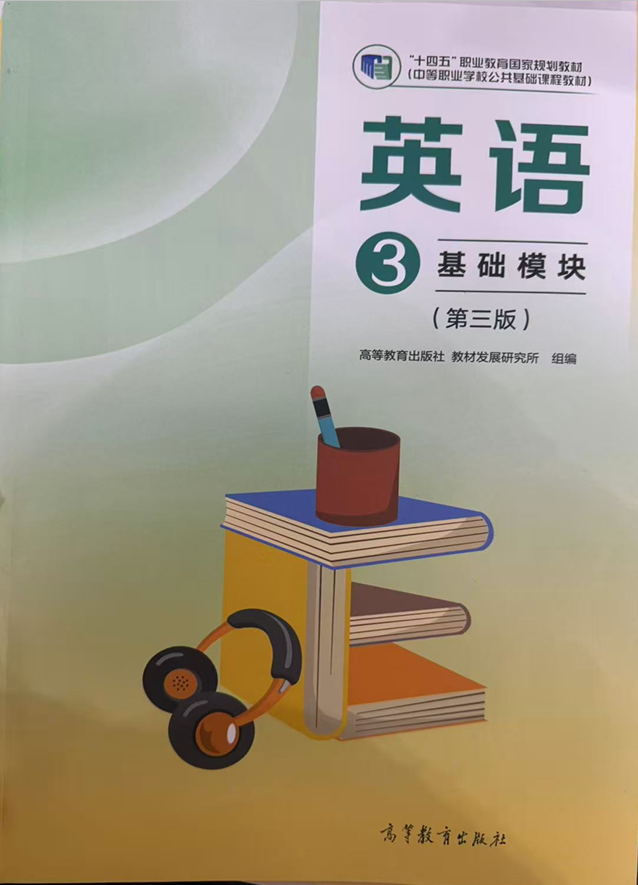
Unit 3 Artificial Intelligence(A卷·基础巩固)《英语 基础模块3》(高教版第三版)单元过关卷(原卷版+解析版)
2026-08-31
|
2份
|
21页
|
40人阅读
|
1人下载
摘要:
**基本信息**
本试卷为《英语 基础模块3》Unit 3 Artificial Intelligence A卷基础巩固卷,紧扣教材核心考点,通过AI主题情境设计,全面覆盖语音、词汇、语法及语用能力,适配单元复习,助力学生扎实掌握基础知识点。
**题型特征**
|题型|题量/分值|知识覆盖|命题特色|
|----|-----------|----------|----------|
|语音辨音|5题/5分|元音、辅音发音规则|基础辨音训练,巩固发音准确性|
|单项选择|25题/25分|AI相关词汇(如application)、语法(时态、语态等)|结合机器人服务、人脸识别等真实场景,考查语言运用能力|
|完形填空|10题/15分|语篇逻辑、词汇搭配|以服务机器人应用为情境,考查上下文理解与思维连贯性|
|阅读理解|15题/37.5分|信息筛选、推理判断|选取图书馆导览机器人、医疗AI等多场景语篇,培养信息处理与批判性思维|
|书面表达|1题/15分|写作结构与观点表达|以“Using AI Wisely”为题,引导学生分析利弊并提出建议,提升语言输出与思维品质|
内容正文:
编写说明:本套试卷紧扣《英语 基础模块3》(高教版第三版)教材,以教材单元为基准精准覆盖核心考点。
每个单元设置AB卷,A卷为基础巩固卷,侧重基础考点训练,帮助学生扎实掌握知识要点;B卷为能力提升卷,注重知识整合与全面检测,引导学生构建知识网络。全书设计4份综合测试卷,模拟实战情境,聚焦解题能力突破,全面提升应试能力与知识应用水平。
《英语 基础模块3》(高教版第三版)《单元过关卷》
Unit 3 Artificial Intelligence
A卷·基础巩固
考试时间:120分钟 满分:120分
班级__________ 姓名__________ 学号__________ 成绩__________
第一部分 英语知识运用(共四节,满分55分)
第一节 语音辨音(共5小题;每小题1分,满分5分)
从A、B、C、D四个选项中选出画线部分读音不同的一项。
1.make
safe
name
machine
2.robot
mobile
cost
job
3.field
piece
believe
friend
4.needed
wanted
visited
used
5.thanks
think
those
through
第二节 单项选择(共25小题;每小题1分,满分25分)
从A、B、C、D四个选项中选出可以填入空白处的最佳选项。
6.Robots can ______ dishes and communicate with customers.
A.search
B.refund
C.explore
D.serve
7.New software has greatly improved our work ______.
A.attitude
B.efficiency
C.disaster
D.practice
8.Face recognition is one ______ of AI in daily life.
A.application
B.complaint
C.location
D.delivery
9.AI can ______ workers from heavy and dangerous labor.
A.free
B.charge
C.compare
D.delay
10.Many students ______ from online learning tools.
A.cause
B.benefit
C.risk
D.perform
11.People should use intelligent systems ______.
A.properly
B.suddenly
C.hardly
D.widely enough
12.We must reduce the ______ of personal information being stolen.
A.risk
B.benefit
C.service
D.purpose
13.Most workers hold a positive ______ toward helpful technology.
A.screen
B.part
C.attitude
D.cost
14.Robots are used ______ many fields, including factories and hospitals.
A.at
B.on
C.in
D.to
15.Thanks ______ computer science, smart homes are developing quickly.
A.to
B.for
C.with
D.of
16.Some people may become dependent ______ machines.
A.by
B.with
C.on
D.from
17.The robot was designed ______ dangerous tasks.
A.to perform
B.perform
C.performing
D.performed
18.Using AI carelessly may ______ serious problems.
A.cause
B.causes
C.caused
D.causing
19.The dishes ______ by robot chefs taste delicious.
A.cook
B.cooking
C.cooked
D.to cook
20.The robot ______ at the front desk can answer simple questions.
A.working
B.work
C.worked
D.to worked
21.AI ______ to medical practice in recent years.
A.applies
B.applied
C.is applying
D.has been applied
22.Mobile payment makes shopping much ______.
A.easy
B.easiest
C.the easiest
D.easier
23.It is humans ______ design and control robots.
A.which
B.that
C.where
D.whose
24.If AI ______ wisely, it will bring more benefits.
A.is used
B.uses
C.used
D.will use
25.There is fear ______ machines may replace some workers.
A.what
B.that
C.who
D.where
26.Neither the machine nor its users ______ always correct.
A.is
B.was
C.are
D.be
27.The system is so simple ______ older people can use it easily.
A.but
B.because
C.that
D.although
28.—Robots make delivery faster. —______
A.Please check it.
B.No trouble at all.
C.That is a receipt.
D.I agree with you.
29.—Humans may not be needed at work. —______
A.We are on the same page.
B.That’s a good price.
C.It is under guarantee.
D.I don’t think so. People still design machines.
30.—What do you think of AI? —______
A.It has pros and cons.
B.It was repaired.
C.Turn left.
D.At nine o’clock.
第三节 完形填空(共10小题;每小题1.5分,满分15分)
阅读下面短文,从每题所给的A、B、C、D四个选项中选出最佳选项。
Our training center introduced a service robot last term. At first, many students gathered around it because they were ____31____. The robot could welcome visitors, show room locations and answer common questions.
During busy mornings, it saved the receptionist a great deal of ____32____. Visitors received directions quickly, and staff had more time for difficult problems. However, the robot sometimes failed to understand people who spoke too ____33____. It also gave an old room number because its information had not been ____34____.
The center did not remove the robot. Instead, students helped test it and reported every mistake. A teacher checked the answers before new information was added. Clear signs also told visitors when to ask a human for ____35____. After several weeks, the service became more ____36____.
We learned that technology can bring real ____37____, but it needs correct data and human control. A machine should perform suitable tasks, while people deal with new or sensitive situations. If users depend on it without thinking, small errors may cause greater ____38____. Used properly, the robot improves efficiency without ____39____ human service. The key is not simply having smart technology, but using it ____40____. The receptionist kept a short record so visitors could find the correct room.
31.A.curious
B.angry
C.lonely
D.absent
32.A.money
B.food
C.space
D.time
33.A.quickly
B.slowly
C.clearly
D.politely
34.A.painted
B.updated
C.hidden
D.sold
35.A.payment
B.risk
C.help
D.travel
36.A.dangerous
B.reliable
C.expensive
D.traditional
37.A.complaints
B.disasters
C.losses
D.benefits
38.A.problems
B.gardens
C.festivals
D.discounts
39.A.charging
B.scanning
C.moving
D.replacing
40.A.rarely
B.suddenly
C.wisely
D.abroad
第四节 短文填空(共5小题;每小题2分,满分10分)
阅读下面短文,在空白处填入括号内单词的正确形式。
AI is ____41____ (increase) used in work and education. Robots can perform tasks ____42____ (quick), while smart tools help students find information. However, every result should ____43____ (check) carefully. People remain responsible for ____44____ (make) important decisions and for using technology ____45____ (proper). The teacher checks each result before the next lesson. A clear notice tells students when human help is available. The team records unusual answers and reviews them during training. Students test the tool in the real classroom before regular use. Workers compare results under different conditions and record every change. People can report a wrong result without completing a long form. The team updates the tool only after checking the new information. Human workers handle private data, sensitive questions and safety concerns.
第二部分 阅读理解(共两节,满分50分)
第一节 阅读理解(共15小题;每小题2.5分,满分37.5分)
阅读下列短文,从每题所给的A、B、C、D四个选项中选出最佳选项。
A
Item
Place
Service
Note
Guide Robot
Library Hall
Find books and rooms
Ask staff about accounts. It shows room directions. It uses a screen and gives short directions to visitors.
Delivery Robot
Buildings A-D
Carry small parcels
Keep its path clear. It stops when someone crosses the path and moves slowly.
Study Assistant
Learning App
Practice and feedback
Check important answers with a teacher or book. It records practice time and suggests another exercise after mistakes.
Health Kiosk
Sports Center
Basic measurements
Not a doctor. Ask a nurse about unusual results. It also shows height, weight, pulse, and body temperature.
46.Which tool can help a visitor find a reading room?
A.The delivery robot.
B.The study assistant.
C.The guide robot.
D.The health kiosk.
47.Which note belongs to the health kiosk?
A.Check important answers.
B.Do not block its path.
C.Ask staff for account issues.
D.It is not a doctor.
48.What should users do with important answers from the study assistant?
A.Pay for them.
B.Check them.
C.Delete them.
D.Send them to the robot.
B
At a smart restaurant, trainee Wu Fan noticed that an elderly customer could not use the screen to order. The robot waiter repeated the same instruction, but the customer became more worried.
Wu Fan came over, explained the menu and entered the order. He then told the manager that the screen letters were too small and that the robot had no “ask a person” option. The restaurant added larger text and a clear help button the next week.
Wu Fan learned that efficient technology should leave room for human support. A system is successful only when different customers can use it comfortably. A clear notice tells customers when human help is available. Customers test the screen in the real restaurant before regular use. The final decision remains with trained people when the risk is high. Managers explain what information the screen uses and why it is needed. The service keeps a simple log so later problems can be traced. People can report a wrong result without completing a long form.
49.What difficulty did the elderly customer have at the restaurant?
A.He could not use the ordering screen.
B.He lost his wallet near the door.
C.He did not understand the menu price.
D.He wanted to repair the robot.
50.What did Wu Fan do when he saw the problem?
A.He turned off the restaurant lights.
B.He explained the menu and entered the order.
C.He asked the customer to leave.
D.He changed the robot data alone.
51.What change did the restaurant make the next week?
A.It removed all robots.
B.It offered free meals to every guest.
C.It moved the customer to another restaurant.
D.It added larger letters and a help button.
52.What lesson does Wu Fan learn?
A.Fast machines never need people.
B.Customers should learn every new system alone.
C.A small screen is useful for older customers.
D.Efficient technology should still allow human support.
C
In hospitals, AI can compare medical images and point out areas that need attention. It works quickly and can help doctors manage large amounts of information.
But an AI result is not a final diagnosis. Images may be unclear, patient histories differ, and a system can repeat weaknesses in its training data. Doctors must consider the full situation and explain choices to patients.
The safest model combines machine speed with professional knowledge, responsibility and communication. The doctor checks each image before the next round. A clear notice tells patients when human help is available. The team records unusual cases and reviews them during training. Patients test the system in the real hospital before regular use. Workers compare results under different conditions and record every change. The final decision remains with trained people when the risk is high. Managers explain what information the system uses and why it is needed. People can report a wrong result without completing a long form. Human workers handle private data, sensitive questions and safety concerns. A short review meeting compares speed, accuracy and user experience.
53.What can AI do with medical images according to the text?
A.Replace every doctor in a hospital.
B.Compare them and point out areas needing attention.
C.Explain a patient history without records.
D.Decide which treatment a patient must accept.
54.Why is an AI result not a final diagnosis?
A.Doctors do not use medical images.
B.AI works only in small hospitals.
C.Images, patient histories and training data may have limits.
D.Patients always refuse computer help.
55.What must doctors do after receiving an AI result?
A.Copy the result without discussion.
B.Delete the image immediately.
C.Consider the full situation and explain choices to patients.
D.Ask patients to train the system.
56.Which title best fits the text?
A.A Hospital Without Doctors
B.The Cheapest Way to Treat Patients
C.Machine Speed with Professional Judgment
D.Why Medical Images Are Unclear
D
Students often use AI tools to organize ideas or explain difficult words. These uses can save time and provide another way to practice.
Problems arise when learners copy answers without checking them. The information may be wrong, and the learner loses a chance to think. Personal or workplace data should never be entered carelessly.
A useful rule is: ask, check and learn. Use the tool for support, compare its answer with reliable sources, and explain the final work in your own words. The teacher checks each answer before the next lesson. A clear notice tells students when human help is available. The team records unusual responses and reviews them during training. Students test the assistant in the real classroom before regular use. Workers compare results under different conditions and record every change. The final decision remains with trained people when the risk is high. Managers explain what information the assistant uses and why it is needed. The service keeps a simple log so later problems can be traced. People can report a wrong result without completing a long form. The team updates the assistant only after checking the new information. Human workers handle private data, sensitive questions and safety concerns.
57.Which use of an AI tool does the writer mention as helpful for students?
A.Copying a complete answer without checking.
B.Entering workplace data for fun.
C.Organizing ideas or explaining difficult words.
D.Avoiding every form of practice.
58.What problem may arise when learners copy AI answers without checking?
A.The tool becomes unable to open.
B.The information may be wrong and thinking may be lost.
C.The lesson always becomes longer.
D.Teachers cannot use any books.
59.What does the writer say about personal or workplace data?
A.It should be entered as often as possible.
B.It should not be entered carelessly.
C.It should be shared only with classmates.
D.It should replace reliable sources.
60.What rule does the writer recommend for using AI?
A.Ask, check and learn.
B.Ask the tool to do all final work.
C.Learn only from copied text.
D.Check nothing if the answer is quick.
第二节 补全对话(共5小题;每小题2.5分,满分12.5分)
根据对话内容,从方框内A、B、C、D、E五个选项中选出能填入空白处的最佳选项。
Li Mei: I used a delivery robot today. It was very convenient.
Tom: ____61____ It can save workers a lot of time.
Li Mei: Do you think robots will replace all delivery workers?
Tom: ____62____ People still handle unusual situations.
Li Mei: That’s true. The robot could not enter my building.
Tom: ____63____
Li Mei: So technology has both advantages and problems.
Tom: ____64____ We should use it properly.
Li Mei: Thanks for sharing your view.
Tom: ____65____
A.I agree with you.
B.We are on the same page.
C.You’re welcome.
D.I don’t think so.
E.That is when human help is needed.
第三部分 书面表达(满分15分)
66.你校英语角将讨论“AI学习助手是否有益”。请以“Using AI Wisely”为题写一篇短文,内容包括:1. 一项益处;2. 一项风险;3. 两条合理使用建议。词数不少于80。
________________________________________________________________________
________________________________________________________________________
________________________________________________________________________
原创精品资源学科网独家享有版权,侵权必究!
原创精品资源学科网独家享有版权,侵权必究!
原创精品资源学科网独家享有版权,侵权必究!
学科网(北京)股份有限公司
$
编写说明:本套试卷紧扣《英语 基础模块3》(高教版第三版)教材,以教材单元为基准精准覆盖核心考点。
每个单元设置AB卷,A卷为基础巩固卷,侧重基础考点训练,帮助学生扎实掌握知识要点;B卷为能力提升卷,注重知识整合与全面检测,引导学生构建知识网络。全书设计4份综合测试卷,模拟实战情境,聚焦解题能力突破,全面提升应试能力与知识应用水平。
《英语 基础模块3》(高教版第三版)《单元过关卷》
Unit 3 Artificial Intelligence
A卷·基础巩固
考试时间:120分钟 满分:120分
班级__________ 姓名__________ 学号__________ 成绩__________
第一部分 英语知识运用(共四节,满分55分)
第一节 语音辨音(共5小题;每小题1分,满分5分)
从A、B、C、D四个选项中选出画线部分读音不同的一项。
1.make
safe
name
machine
2.robot
mobile
cost
job
3.field
piece
believe
friend
4.needed
wanted
visited
used
5.thanks
think
those
through
【答案】1.D 2.B 3.D 4.D 5.C
【详解】
1.考查字母读音。machine中a读/ə/,其余三项均读/eɪ/,故选D。
2.考查字母读音。mobile中o读/əʊ/,其余三项均读/ɒ/,故选B。
3.考查字母组合读音。friend中ie读/e/,其余三项均读/iː/,故选D。
4.考查词尾读音。used中-ed读/d/,其余三项均读/ɪd/,故选D。
5.考查字母组合读音。those中th读/ð/,其余三项均读/θ/,故选C。
第二节 单项选择(共25小题;每小题1分,满分25分)
从A、B、C、D四个选项中选出可以填入空白处的最佳选项。
6.Robots can ______ dishes and communicate with customers.
A.search
B.refund
C.explore
D.serve
【答案】D
【详解】与customers搭配,serve dishes表示“上菜”,search、refund、explore不符,故选D。
7.New software has greatly improved our work ______.
A.attitude
B.efficiency
C.disaster
D.practice
【答案】B
【详解】新软件提高工作效率,efficiency合适;attitude、disaster、practice不符,故选B。
8.Face recognition is one ______ of AI in daily life.
A.application
B.complaint
C.location
D.delivery
【答案】A
【详解】人脸识别是AI在日常生活中的一种应用,application合适,故选A。
9.AI can ______ workers from heavy and dangerous labor.
A.free
B.charge
C.compare
D.delay
【答案】A
【详解】free sb. from...表示“使某人摆脱……”,AI可让工人摆脱繁重危险劳动,故选A。
10.Many students ______ from online learning tools.
A.cause
B.benefit
C.risk
D.perform
【答案】B
【详解】benefit from表示“从……受益”,学生受益于在线学习工具,故选B。
11.People should use intelligent systems ______.
A.properly
B.suddenly
C.hardly
D.widely enough
【答案】A
【详解】应正确使用智能系统,properly合适,故选A。
12.We must reduce the ______ of personal information being stolen.
A.risk
B.benefit
C.service
D.purpose
【答案】A
【详解】需降低个人信息被盗的风险,risk合适,故选A。
13.Most workers hold a positive ______ toward helpful technology.
A.screen
B.part
C.attitude
D.cost
【答案】C
【详解】hold a positive attitude toward表示“对……持积极态度”,故选C。
14.Robots are used ______ many fields, including factories and hospitals.
A.at
B.on
C.in
D.to
【答案】C
【详解】in many fields表示“在许多领域”,故选C。
15.Thanks ______ computer science, smart homes are developing quickly.
A.to
B.for
C.with
D.of
【答案】A
【详解】thanks to表示“多亏;由于”,故选A。
16.Some people may become dependent ______ machines.
A.by
B.with
C.on
D.from
【答案】C
【详解】be dependent on表示“依赖”,故选C。
17.The robot was designed ______ dangerous tasks.
A.to perform
B.perform
C.performing
D.performed
【答案】A
【详解】be designed to do表示设计目的,用to perform,故选A。
18.Using AI carelessly may ______ serious problems.
A.cause
B.causes
C.caused
D.causing
【答案】A
【详解】may后接动词原形cause,故选A。
19.The dishes ______ by robot chefs taste delicious.
A.cook
B.cooking
C.cooked
D.to cook
【答案】C
【详解】dishes与cook为被动关系,用过去分词cooked作后置定语,故选C。
20.The robot ______ at the front desk can answer simple questions.
A.working
B.work
C.worked
D.to worked
【答案】A
【详解】robot与work为主动进行关系,用working作后置定语,故选A。
21.AI ______ to medical practice in recent years.
A.applies
B.applied
C.is applying
D.has been applied
【答案】D
【详解】in recent years提示现在完成时,AI与apply为被动,用has been applied,故选D。
22.Mobile payment makes shopping much ______.
A.easy
B.easiest
C.the easiest
D.easier
【答案】D
【详解】make shopping much easier,much修饰比较级easier,故选D。
23.It is humans ______ design and control robots.
A.which
B.that
C.where
D.whose
【答案】B
【详解】It is...that...强调主语humans,故选B。
24.If AI ______ wisely, it will bring more benefits.
A.is used
B.uses
C.used
D.will use
【答案】A
【详解】If从句中AI与use为被动,用is used,故选A。
25.There is fear ______ machines may replace some workers.
A.what
B.that
C.who
D.where
【答案】B
【详解】fear后同位语从句用that引导,说明担忧内容,故选B。
26.Neither the machine nor its users ______ always correct.
A.is
B.was
C.are
D.be
【答案】C
【详解】neither...nor...谓语与靠近的主语users一致,用are,故选C。
27.The system is so simple ______ older people can use it easily.
A.but
B.because
C.that
D.although
【答案】C
【详解】so...that...引导结果状语从句,故选C。
28.—Robots make delivery faster. —______
A.Please check it.
B.No trouble at all.
C.That is a receipt.
D.I agree with you.
【答案】D
【详解】对方肯定机器人送货更快,应用I agree with you.表示赞同,故选D。
29.—Humans may not be needed at work. —______
A.We are on the same page.
B.That’s a good price.
C.It is under guarantee.
D.I don’t think so. People still design machines.
【答案】D
【详解】对方说工作可能不需要人,应反驳并说明人仍设计机器,D项合适,故选D。
30.—What do you think of AI? —______
A.It has pros and cons.
B.It was repaired.
C.Turn left.
D.At nine o’clock.
【答案】A
【详解】问对AI的看法,A项指出有利有弊;其余答非所问,故选A。
第三节 完形填空(共10小题;每小题1.5分,满分15分)
阅读下面短文,从每题所给的A、B、C、D四个选项中选出最佳选项。
Our training center introduced a service robot last term. At first, many students gathered around it because they were ____31____. The robot could welcome visitors, show room locations and answer common questions.
During busy mornings, it saved the receptionist a great deal of ____32____. Visitors received directions quickly, and staff had more time for difficult problems. However, the robot sometimes failed to understand people who spoke too ____33____. It also gave an old room number because its information had not been ____34____.
The center did not remove the robot. Instead, students helped test it and reported every mistake. A teacher checked the answers before new information was added. Clear signs also told visitors when to ask a human for ____35____. After several weeks, the service became more ____36____.
We learned that technology can bring real ____37____, but it needs correct data and human control. A machine should perform suitable tasks, while people deal with new or sensitive situations. If users depend on it without thinking, small errors may cause greater ____38____. Used properly, the robot improves efficiency without ____39____ human service. The key is not simply having smart technology, but using it ____40____. The receptionist kept a short record so visitors could find the correct room.
31.A.curious
B.angry
C.lonely
D.absent
32.A.money
B.food
C.space
D.time
33.A.quickly
B.slowly
C.clearly
D.politely
34.A.painted
B.updated
C.hidden
D.sold
35.A.payment
B.risk
C.help
D.travel
36.A.dangerous
B.reliable
C.expensive
D.traditional
37.A.complaints
B.disasters
C.losses
D.benefits
38.A.problems
B.gardens
C.festivals
D.discounts
39.A.charging
B.scanning
C.moving
D.replacing
40.A.rarely
B.suddenly
C.wisely
D.abroad
【答案】31.A 32.D 33.A 34.B 35.C 36.B 37.D 38.A 39.D 40.C
【导语】记叙文。培训中心引入服务机器人:先受欢迎,后暴露识别与信息更新问题,最终在人工配合下更可靠。
【详解】
31.形容词辨析。学生们围过来是因为好奇,curious合适;angry、lonely、absent不符,故选A。
32.名词辨析。机器人帮前台节省许多时间,a great deal of time合适,故选D。
33.副词辨析。机器人听不懂语速过快的人,spoke too quickly,故选A。
34.动词辨析。给出旧房间号是因为信息未更新,had not been updated,故选B。
35.名词辨析。标识提示何时向人工求助,ask...for help,故选C。
36.形容词辨析。几周后服务更可靠,more reliable,故选B。
37.名词辨析。技术能带来真正益处,bring real benefits,故选D。
38.名词辨析。不假思索依赖机器,小错可能引发更大问题,cause greater problems,故选A。
39.动词辨析。提高效率而不取代人工服务,without replacing,故选D。
40.副词辨析。关键在于明智使用技术,using it wisely,故选C。
第四节 短文填空(共5小题;每小题2分,满分10分)
阅读下面短文,在空白处填入括号内单词的正确形式。
AI is ____41____ (increase) used in work and education. Robots can perform tasks ____42____ (quick), while smart tools help students find information. However, every result should ____43____ (check) carefully. People remain responsible for ____44____ (make) important decisions and for using technology ____45____ (proper). The teacher checks each result before the next lesson. A clear notice tells students when human help is available. The team records unusual answers and reviews them during training. Students test the tool in the real classroom before regular use. Workers compare results under different conditions and record every change. People can report a wrong result without completing a long form. The team updates the tool only after checking the new information. Human workers handle private data, sensitive questions and safety concerns.
【答案】41.increasingly 42.quickly 43.be checked 44.making 45.properly
【导语】说明AI在工作与学习中的使用,强调结果需核查、人仍负责重要决定。
【详解】
41.修饰used用副词,increase→increasingly,表示“越来越多地被使用”。
42.修饰perform用副词quickly。
43.result与check为被动,should后用be checked。
44.be responsible for doing,填making。
45.修饰using用副词properly。
第二部分 阅读理解(共两节,满分50分)
第一节 阅读理解(共15小题;每小题2.5分,满分37.5分)
阅读下列短文,从每题所给的A、B、C、D四个选项中选出最佳选项。
A
Item
Place
Service
Note
Guide Robot
Library Hall
Find books and rooms
Ask staff about accounts. It shows room directions. It uses a screen and gives short directions to visitors.
Delivery Robot
Buildings A-D
Carry small parcels
Keep its path clear. It stops when someone crosses the path and moves slowly.
Study Assistant
Learning App
Practice and feedback
Check important answers with a teacher or book. It records practice time and suggests another exercise after mistakes.
Health Kiosk
Sports Center
Basic measurements
Not a doctor. Ask a nurse about unusual results. It also shows height, weight, pulse, and body temperature.
46.Which tool can help a visitor find a reading room?
A.The delivery robot.
B.The study assistant.
C.The guide robot.
D.The health kiosk.
47.Which note belongs to the health kiosk?
A.Check important answers.
B.Do not block its path.
C.Ask staff for account issues.
D.It is not a doctor.
48.What should users do with important answers from the study assistant?
A.Pay for them.
B.Check them.
C.Delete them.
D.Send them to the robot.
【答案】46.C 47.D 48.B
【导语】应用文。表格介绍导览机器人、配送机器人、学习助手和健康终端的服务与注意事项。
【详解】
46.细节理解。Guide Robot服务为查找图书与房间,可帮访客找阅览室,故选C。
47.细节理解。Health Kiosk备注写明Not a doctor,故选D。
48.细节理解。Study Assistant提示重要答案需与教师等核对,故选B。
B
At a smart restaurant, trainee Wu Fan noticed that an elderly customer could not use the screen to order. The robot waiter repeated the same instruction, but the customer became more worried.
Wu Fan came over, explained the menu and entered the order. He then told the manager that the screen letters were too small and that the robot had no “ask a person” option. The restaurant added larger text and a clear help button the next week.
Wu Fan learned that efficient technology should leave room for human support. A system is successful only when different customers can use it comfortably. A clear notice tells customers when human help is available. Customers test the screen in the real restaurant before regular use. The final decision remains with trained people when the risk is high. Managers explain what information the screen uses and why it is needed. The service keeps a simple log so later problems can be traced. People can report a wrong result without completing a long form.
49.What difficulty did the elderly customer have at the restaurant?
A.He could not use the ordering screen.
B.He lost his wallet near the door.
C.He did not understand the menu price.
D.He wanted to repair the robot.
50.What did Wu Fan do when he saw the problem?
A.He turned off the restaurant lights.
B.He explained the menu and entered the order.
C.He asked the customer to leave.
D.He changed the robot data alone.
51.What change did the restaurant make the next week?
A.It removed all robots.
B.It offered free meals to every guest.
C.It moved the customer to another restaurant.
D.It added larger letters and a help button.
52.What lesson does Wu Fan learn?
A.Fast machines never need people.
B.Customers should learn every new system alone.
C.A small screen is useful for older customers.
D.Efficient technology should still allow human support.
【答案】49.A 50.B 51.D 52.D
【导语】记叙文。学员吴凡在智能餐厅帮助不会用点餐屏的老人,说明技术仍需保留人工支持。
【详解】
49.细节理解。首段写老人不会用点餐屏幕,故选A。
50.细节理解。Wu Fan解释菜单并替老人下单,故选B。
51.细节理解。次周餐厅加大字号并增加求助按钮,故选D。
52.推理判断。文中写高效技术仍应保留人工支持,D项正确,故选D。
C
In hospitals, AI can compare medical images and point out areas that need attention. It works quickly and can help doctors manage large amounts of information.
But an AI result is not a final diagnosis. Images may be unclear, patient histories differ, and a system can repeat weaknesses in its training data. Doctors must consider the full situation and explain choices to patients.
The safest model combines machine speed with professional knowledge, responsibility and communication. The doctor checks each image before the next round. A clear notice tells patients when human help is available. The team records unusual cases and reviews them during training. Patients test the system in the real hospital before regular use. Workers compare results under different conditions and record every change. The final decision remains with trained people when the risk is high. Managers explain what information the system uses and why it is needed. People can report a wrong result without completing a long form. Human workers handle private data, sensitive questions and safety concerns. A short review meeting compares speed, accuracy and user experience.
53.What can AI do with medical images according to the text?
A.Replace every doctor in a hospital.
B.Compare them and point out areas needing attention.
C.Explain a patient history without records.
D.Decide which treatment a patient must accept.
54.Why is an AI result not a final diagnosis?
A.Doctors do not use medical images.
B.AI works only in small hospitals.
C.Images, patient histories and training data may have limits.
D.Patients always refuse computer help.
55.What must doctors do after receiving an AI result?
A.Copy the result without discussion.
B.Delete the image immediately.
C.Consider the full situation and explain choices to patients.
D.Ask patients to train the system.
56.Which title best fits the text?
A.A Hospital Without Doctors
B.The Cheapest Way to Treat Patients
C.Machine Speed with Professional Judgment
D.Why Medical Images Are Unclear
【答案】53.B 54.C 55.C 56.C
【导语】说明文。介绍医院中AI辅助读片的作用与局限,强调须与医生专业判断结合。
【详解】
53.细节理解。首段写AI可比较医学影像并标出需关注区域,故选B。
54.细节理解。影像不清、病史差异、训练数据局限等使AI结果不能作为最终诊断,故选C。
55.细节理解。医生须结合完整情况判断并向患者解释,C项正确,故选C。
56.主旨理解。全文强调机器速度与专业判断结合,标题选C,故选C。
D
Students often use AI tools to organize ideas or explain difficult words. These uses can save time and provide another way to practice.
Problems arise when learners copy answers without checking them. The information may be wrong, and the learner loses a chance to think. Personal or workplace data should never be entered carelessly.
A useful rule is: ask, check and learn. Use the tool for support, compare its answer with reliable sources, and explain the final work in your own words. The teacher checks each answer before the next lesson. A clear notice tells students when human help is available. The team records unusual responses and reviews them during training. Students test the assistant in the real classroom before regular use. Workers compare results under different conditions and record every change. The final decision remains with trained people when the risk is high. Managers explain what information the assistant uses and why it is needed. The service keeps a simple log so later problems can be traced. People can report a wrong result without completing a long form. The team updates the assistant only after checking the new information. Human workers handle private data, sensitive questions and safety concerns.
57.Which use of an AI tool does the writer mention as helpful for students?
A.Copying a complete answer without checking.
B.Entering workplace data for fun.
C.Organizing ideas or explaining difficult words.
D.Avoiding every form of practice.
58.What problem may arise when learners copy AI answers without checking?
A.The tool becomes unable to open.
B.The information may be wrong and thinking may be lost.
C.The lesson always becomes longer.
D.Teachers cannot use any books.
59.What does the writer say about personal or workplace data?
A.It should be entered as often as possible.
B.It should not be entered carelessly.
C.It should be shared only with classmates.
D.It should replace reliable sources.
60.What rule does the writer recommend for using AI?
A.Ask, check and learn.
B.Ask the tool to do all final work.
C.Learn only from copied text.
D.Check nothing if the answer is quick.
【答案】57.C 58.B 59.B 60.A
【导语】议论文。讨论学生使用AI工具的益处与风险,提出“提问—核查—学习”的使用原则。
【详解】
57.细节理解。首段写AI可帮整理思路或解释难词,故选C。
58.细节理解。不核对就抄袭可能导致信息错误并失去思考机会,故选B。
59.细节理解。文中提醒个人或工作数据不可随意输入,故选B。
60.主旨理解。作者推荐的规则是ask, check and learn,A项正确,故选A。
第二节 补全对话(共5小题;每小题2.5分,满分12.5分)
根据对话内容,从方框内A、B、C、D、E五个选项中选出能填入空白处的最佳选项。
Li Mei: I used a delivery robot today. It was very convenient.
Tom: ____61____ It can save workers a lot of time.
Li Mei: Do you think robots will replace all delivery workers?
Tom: ____62____ People still handle unusual situations.
Li Mei: That’s true. The robot could not enter my building.
Tom: ____63____
Li Mei: So technology has both advantages and problems.
Tom: ____64____ We should use it properly.
Li Mei: Thanks for sharing your view.
Tom: ____65____
A.I agree with you.
B.We are on the same page.
C.You’re welcome.
D.I don’t think so.
E.That is when human help is needed.
【答案】61.A 62.D 63.E 64.B 65.C
【导语】两人讨论配送机器人:是否取代人工、何时需要人、如何正确使用技术。
【详解】
61.上文说配送机器人很方便,Tom赞同并补充省时,用I agree with you.,故选A。
62.问机器人会否取代全部快递员,Tom否定并说人仍处理异常情况,用I don’t think so.,故选D。
63.上文说机器人进不了楼,正说明此时需要人工帮助,E项合适,故选E。
64.对方总结技术有利有弊,Tom表示看法一致,We are on the same page.,故选B。
65.上文致谢,回应用You’re welcome.,故选C。
第三部分 书面表达(满分15分)
66.你校英语角将讨论“AI学习助手是否有益”。请以“Using AI Wisely”为题写一篇短文,内容包括:1. 一项益处;2. 一项风险;3. 两条合理使用建议。词数不少于80。
________________________________________________________________________
________________________________________________________________________
________________________________________________________________________
【参考范文】
Using AI Wisely
AI learning assistants can explain difficult words quickly and provide extra practice, so they may improve study efficiency. However, their answers are not always correct. If students copy them without thinking, they may become dependent on the tool and lose a chance to learn.
We should use AI as an assistant, not as a replacement for our own judgment. Important information should be checked with reliable sources, and private data should never be entered carelessly. Used properly, AI can support learning while we remain responsible for the final work.
【词汇积累】improve efficiency提高效率;human review人工复核;reliable source可靠来源;be dependent on依赖;use...properly正确使用……。
【句式拓展】Used properly, AI can... while... 过去分词短语作条件状语,while连接对比信息,使观点更完整。
【点睛】范文覆盖全部要点,结构按“背景/问题—具体信息或方案—礼貌收束”展开,语气符合相应交际场景。
原创精品资源学科网独家享有版权,侵权必究!
原创精品资源学科网独家享有版权,侵权必究!
原创精品资源学科网独家享有版权,侵权必究!
学科网(北京)股份有限公司
$
资源预览图

1

2

3
由于学科网是一个信息分享及获取的平台,不确保部分用户上传资料的 来源及知识产权归属。如您发现相关资料侵犯您的合法权益,请联系学科网,我们核实后将及时进行处理。