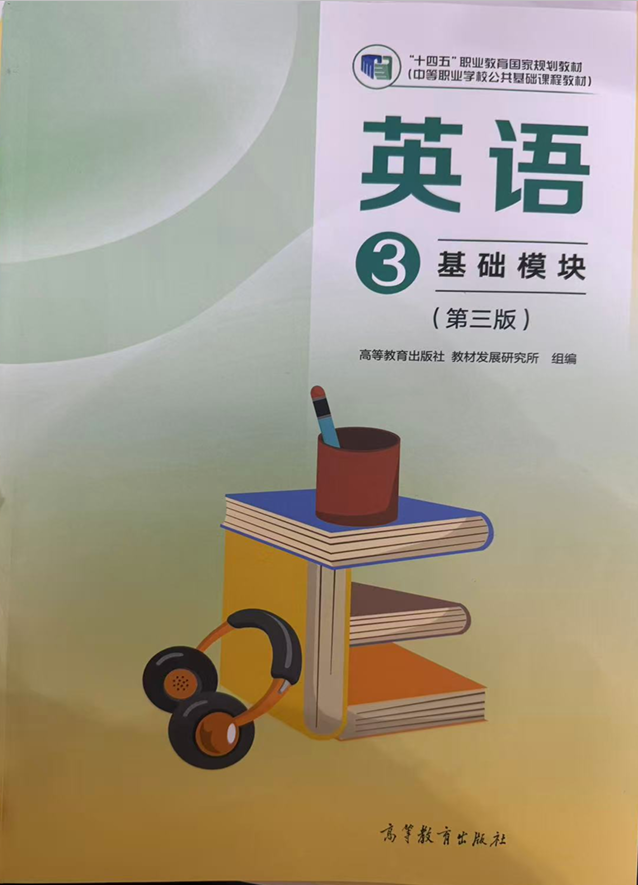
3.2 Artificial Intelligence(Reading and Writing 1)-《英语 基础模块3》(高教版第三版)《一课一练》(原卷版+解析版)
2026-08-27
|
2份
|
8页
|
36人阅读
|
0人下载
摘要:
**基本信息**
聚焦中职学情,以“课前预习+课堂检测”分层设计,通过词汇→短语→翻译→单选→阅读的递进路径,夯实语言基础并提升语篇理解能力,适配课前预习与课中巩固需求,助力语言能力与学习能力培养。
**分层设计**
|层次|知识覆盖|设计特色|
|----|----------|----------|
|课前预习|核心词汇、重点短语、课文难句|通过词汇拼写、短语匹配、句子翻译夯实基础,对接课文核心语言点|
|课堂检测|词汇应用、语篇理解|以单选考查词汇辨析,以阅读理解深化对AI主题语篇的分析,衔接预习内容实现能力进阶|
内容正文:
编写说明:基于中职学生英语基础薄弱、学习内驱力不足的学情特点,为提升学习效率,落实课前、课中、课后教学闭环,本专辑依据最新《中等职业学校英语课程标准》,打造贵州专用《英语 基础模块3》(高教版第三版)《一课一练》,专辑共40练,完全对接贵州高职分类考试考法。
本卷为《英语 基础模块3》(高教版第三版)Unit 3 Artificial Intelligence(Reading and Writing 1)的课前预习与课堂检测。
Unit 3 Artificial Intelligence
一课一练(2) Reading and Writing 1
【课前预习】
一、核心词汇检测
1. n. 优势____
2. v. 依靠____
3. v. 应用____
4. n. 实践____
5. n. 教育____
6. n. 态度____
7. adj. 明显的____
8. n. 益处____
【答案】1.advantage 2.depend 3.apply 4.practice 5.education 6.attitude 7.obvious 8.benefit
二、课文重点短语
1. 多亏____
2. 依靠____
3. 智能餐厅____
4. 机器人服务员____
5. 准备食物____
6. 与顾客互动____
7. 降低成本____
8. 提高效率____
【答案】1.thanks to 2.be dependent on 3.smart restaurant 4.robot waiter 5.prepare food 6.interact with customers 7.lower costs 8.improve efficiency
三、课文难句翻译
1. 原句:The restaurant offered visitors a chance to see how robots worked in a real service setting.
译文:这家餐厅让游客有机会了解机器人如何在真实服务场景中工作。
2. 原句:A worker standing near the machine explained what to do when a robot made a mistake.
译文:站在机器旁的工作人员说明了机器人出错时应该怎样处理。
3. 原句:The visit helped Chen understand that useful technology still needs careful human control.
译文:这次参观让陈明白,有用的技术仍然需要人类认真控制。
【课堂检测】
一、词汇单选(10题)
1. One ________ of robot workers is that they do not get tired.
A. accident
B. answer
C. address
D. advantage
【答案】D
【详解】考察名词词义辨析。句子翻译:机器人工作者的一个优势是它们不会感到疲劳。A.accident 事故;B.answer 答案;C.address 地址;D.advantage 优势。不会疲劳是机器人的有利之处,one advantage of...意为“……的一个优势”,故选D。
2. People should not ________ fully on AI tools.
A. decide
B. depend
C. develop
D. describe
【答案】B
【详解】考察动词词义辨析。句子翻译:人们不应该完全依赖人工智能工具。A.decide 决定;B.depend 依靠;C.develop 发展;D.describe 描述。depend on是固定搭配,意为“依靠;依赖”,故选B。
3. The factory will ________ the new system next week.
A. apply
B. appear
C. agree
D. arrive
【答案】A
【详解】考察动词词义辨析。句子翻译:工厂将在下周应用新系统。A.apply 应用;B.appear 出现;C.agree 同意;D.arrive 到达。apply the new system意为“应用新系统”,符合工厂采用技术的语境,故选A。
4. Students need real ________ as well as book knowledge.
A. price
B. place
C. practice
D. plan
【答案】C
【详解】考察名词词义辨析。句子翻译:学生既需要书本知识,也需要实际实践。A.price 价格;B.place 地方;C.practice 实践;D.plan 计划。as well as连接两种学习内容,与book knowledge相对应的是real practice,故选C。
5. AI is changing both work and ________.
A. exercise
B. education
C. entrance
D. event
【答案】B
【详解】考察名词词义辨析。句子翻译:人工智能正在改变工作和教育。A.exercise 锻炼;B.education 教育;C.entrance 入口;D.event 事件;活动。AI可以影响工作方式和教育方式,education符合句意,故选B。
6. She has a careful ________ toward new technology.
A. action
B. attention
C. answer
D. attitude
【答案】D
【详解】考察名词词义辨析。句子翻译:她对新技术持谨慎态度。A.action 行动;B.attention 注意;C.answer 答案;D.attitude 态度。attitude toward...是固定搭配,意为“对……的态度”,故选D。
7. The time saved by the robot is ________.
A. obvious
B. ordinary
C. open
D. outside
【答案】A
【详解】考察形容词词义辨析。句子翻译:机器人节省的时间是明显的。A.obvious 明显的;B.ordinary 普通的;C.open 开放的;D.outside 外部的。be动词后需要形容词作表语,obvious表示节省时间的效果清楚可见,故选A。
8. The new tool brings a clear ________ to the workers.
A. border
B. bottom
C. benefit
D. business
【答案】C
【详解】考察名词词义辨析。句子翻译:新工具给工人们带来了明显的益处。A.border 边界;B.bottom 底部;C.benefit 益处;D.business 商业。bring a benefit to sb.意为“给某人带来益处”,与new tool的积极作用一致,故选C。
9. The restaurant uses robots to ________ food and drinks.
A. prevent
B. prepare
C. promise
D. provide
【答案】B
【详解】考察动词词义辨析。句子翻译:这家餐厅使用机器人准备食物和饮料。A.prevent 阻止;B.prepare 准备;C.promise 承诺;D.provide 提供。prepare food and drinks意为“准备食物和饮料”,符合餐厅场景,故选B。
10. A worker controls the robot when it makes a ________.
A. mistake
B. meal
C. message
D. mark
【答案】A
【详解】考察名词词义辨析。句子翻译:机器人出错时,工作人员会控制它。A.mistake 错误;B.meal 一餐;C.message 信息;D.mark 标记。make a mistake是固定搭配,意为“犯错;出错”,故选A。
二、阅读理解(5题)
Chen Yu visited a robot-themed restaurant with his cousin. At the entrance, a robot welcomed them and showed them to a table. Another robot brought drinks, while a robot arm made pancakes behind a glass wall. Chen had seen robot videos online, but watching the machines work in a real restaurant felt different.
The robots were quick, but they did not work alone. A worker standing near the kitchen checked every order. When a serving robot stopped because a chair blocked its way, she moved the chair and started it again. She explained that people planned the robots' work, checked food safety and helped customers with special needs.
Before leaving, Chen spoke with the restaurant manager. The manager said robots could do the same simple tasks many times and help lower costs. However, workers were still needed to solve new problems and communicate with guests. Chen enjoyed the visit because it showed both the ability and the limits of robots. He decided to learn more about how people design and control them.
11. What did the robot at the entrance do?
A. It welcomed Chen and showed him to a table.
B. It made pancakes behind a wall.
C. It checked food safety.
D. It moved a chair.
12. Why did the serving robot stop?
A. Its battery was empty.
B. The order was wrong.
C. A chair blocked its way.
D. A guest touched it.
13. What did the worker do near the kitchen?
A. She sold robot videos.
B. She checked orders and helped when needed.
C. She cooked all the food.
D. She asked guests to leave.
14. According to the manager, what are workers still needed to do?
A. Repeat simple tasks all day.
B. Make every drink by hand.
C. Lower the price of every meal.
D. Solve new problems and talk with guests.
15. What did Chen learn from the visit?
A. Robots have abilities as well as limits.
B. Restaurants should use robots only.
C. Online videos are better than real visits.
D. Human workers are no longer useful.
【答案】11.A 12.C 13.B 14.D 15.A
【导语】本文是一篇人物体验故事,讲述陈宇参观智能餐厅并观察机器人与工作人员共同完成服务的过程,说明机器人有明显优势,也有需要人类解决的局限。
【详解】11.细节理解题。题目翻译:入口处的机器人做了什么?A.It welcomed Chen and showed him to a table. 它迎接陈宇并把他带到餐桌旁;B.It made pancakes behind a wall. 它在墙后制作煎饼;C.It checked food safety. 它检查食品安全;D.It moved a chair. 它移动了一把椅子。根据第一段“At the entrance, a robot welcomed them and showed them to a table.”可知,入口机器人负责迎宾并带位,故选A。
12.细节理解题。题目翻译:送餐机器人为什么停了下来?A.Its battery was empty. 它的电池没电了;B.The order was wrong. 订单错了;C.A chair blocked its way. 一把椅子挡住了它的路;D.A guest touched it. 一位客人碰了它。根据第二段“a serving robot stopped because a chair blocked its way”可知,椅子挡路导致机器人停止,故选C。
13.细节理解题。题目翻译:厨房附近的工作人员做了什么?A.She sold robot videos. 她出售机器人视频;B.She checked orders and helped when needed. 她检查订单并在需要时提供帮助;C.She cooked all the food. 她烹制所有食物;D.She asked guests to leave. 她让客人离开。根据第二段“checked every order”以及她移开椅子并重启机器人可知,她检查订单并及时协助,故选B。
14.细节理解题。题目翻译:根据经理的说法,仍然需要工作人员做什么?A.Repeat simple tasks all day. 整天重复简单任务;B.Make every drink by hand. 手工制作每杯饮料;C.Lower the price of every meal. 降低每顿饭的价格;D.Solve new problems and talk with guests. 解决新问题并与客人交谈。根据第三段“workers were still needed to solve new problems and communicate with guests”可知,工作人员仍需处理新问题并沟通,故选D。
15.主旨大意题。题目翻译:陈宇从这次参观中学到了什么?A.Robots have abilities as well as limits. 机器人既有能力也有局限;B.Restaurants should use robots only. 餐厅应该只使用机器人;C.Online videos are better than real visits. 网络视频比实地参观更好;D.Human workers are no longer useful. 人类工作人员不再有用。全文既写机器人快速完成简单任务,也写其遇到障碍需要人类帮助,说明机器人既有能力也有局限,故选A。
原创精品资源学科网独家享有版权,侵权必究!
原创精品资源学科网独家享有版权,侵权必究!
原创精品资源学科网独家享有版权,侵权必究!
学科网(北京)股份有限公司
$
编写说明:基于中职学生英语基础薄弱、学习内驱力不足的学情特点,为提升学习效率,落实课前、课中、课后教学闭环,本专辑依据最新《中等职业学校英语课程标准》,打造贵州专用《英语 基础模块3》(高教版第三版)《一课一练》,专辑共40练,完全对接贵州高职分类考试考法。
本卷为《英语 基础模块3》(高教版第三版)Unit 3 Artificial Intelligence(Reading and Writing 1)的课前预习与课堂检测。
Unit 3 Artificial Intelligence
一课一练(2) Reading and Writing 1
【课前预习】
一、核心词汇检测
1. n. 优势____
2. v. 依靠____
3. v. 应用____
4. n. 实践____
5. n. 教育____
6. n. 态度____
7. adj. 明显的____
8. n. 益处____
二、课文重点短语
1. 多亏____
2. 依靠____
3. 智能餐厅____
4. 机器人服务员____
5. 准备食物____
6. 与顾客互动____
7. 降低成本____
8. 提高效率____
三、课文难句翻译
1. 原句:The restaurant offered visitors a chance to see how robots worked in a real service setting.
2. 原句:A worker standing near the machine explained what to do when a robot made a mistake.
3. 原句:The visit helped Chen understand that useful technology still needs careful human control.
【课堂检测】
一、词汇单选(10题)
1. One ________ of robot workers is that they do not get tired.
A. accident
B. answer
C. address
D. advantage
2. People should not ________ fully on AI tools.
A. decide
B. depend
C. develop
D. describe
3. The factory will ________ the new system next week.
A. apply
B. appear
C. agree
D. arrive
4. Students need real ________ as well as book knowledge.
A. price
B. place
C. practice
D. plan
5. AI is changing both work and ________.
A. exercise
B. education
C. entrance
D. event
6. She has a careful ________ toward new technology.
A. action
B. attention
C. answer
D. attitude
7. The time saved by the robot is ________.
A. obvious
B. ordinary
C. open
D. outside
8. The new tool brings a clear ________ to the workers.
A. border
B. bottom
C. benefit
D. business
9. The restaurant uses robots to ________ food and drinks.
A. prevent
B. prepare
C. promise
D. provide
10. A worker controls the robot when it makes a ________.
A. mistake
B. meal
C. message
D. mark
二、阅读理解(5题)
Chen Yu visited a robot-themed restaurant with his cousin. At the entrance, a robot welcomed them and showed them to a table. Another robot brought drinks, while a robot arm made pancakes behind a glass wall. Chen had seen robot videos online, but watching the machines work in a real restaurant felt different.
The robots were quick, but they did not work alone. A worker standing near the kitchen checked every order. When a serving robot stopped because a chair blocked its way, she moved the chair and started it again. She explained that people planned the robots' work, checked food safety and helped customers with special needs.
Before leaving, Chen spoke with the restaurant manager. The manager said robots could do the same simple tasks many times and help lower costs. However, workers were still needed to solve new problems and communicate with guests. Chen enjoyed the visit because it showed both the ability and the limits of robots. He decided to learn more about how people design and control them.
11. What did the robot at the entrance do?
A. It welcomed Chen and showed him to a table.
B. It made pancakes behind a wall.
C. It checked food safety.
D. It moved a chair.
12. Why did the serving robot stop?
A. Its battery was empty.
B. The order was wrong.
C. A chair blocked its way.
D. A guest touched it.
13. What did the worker do near the kitchen?
A. She sold robot videos.
B. She checked orders and helped when needed.
C. She cooked all the food.
D. She asked guests to leave.
14. According to the manager, what are workers still needed to do?
A. Repeat simple tasks all day.
B. Make every drink by hand.
C. Lower the price of every meal.
D. Solve new problems and talk with guests.
15. What did Chen learn from the visit?
A. Robots have abilities as well as limits.
B. Restaurants should use robots only.
C. Online videos are better than real visits.
D. Human workers are no longer useful.
原创精品资源学科网独家享有版权,侵权必究!
原创精品资源学科网独家享有版权,侵权必究!
原创精品资源学科网独家享有版权,侵权必究!
学科网(北京)股份有限公司
$
资源预览图

1
由于学科网是一个信息分享及获取的平台,不确保部分用户上传资料的 来源及知识产权归属。如您发现相关资料侵犯您的合法权益,请联系学科网,我们核实后将及时进行处理。