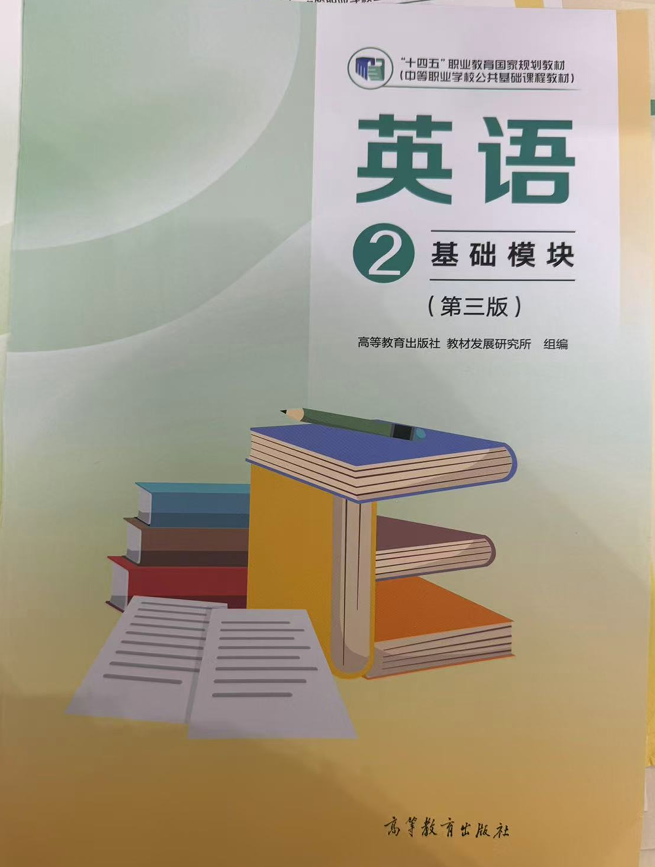
Unit 5—Unit 8(A卷·基础巩固)《英语 基础模块2》(高教版第三版)单元过关卷(原卷版+解析版)
2026-08-25
|
2份
|
12页
|
31人阅读
|
0人下载
摘要:
**基本信息**
紧扣《英语 基础模块2》Unit5-Unit8核心考点,A卷基础巩固卷60分钟/80分,通过语音、语法、阅读等题型夯实基础,适配单元复习,提升语言能力与学习能力。
**题型特征**
|题型|题量/分值|知识覆盖|命题特色|
|----|-----------|----------|----------|
|语音辨析题|5/10|元音辅音发音规则(如empire画线部分)|聚焦基础语音,强化发音准确性|
|选择填空题|15/30|词汇(protect)、语法(被动语态、感叹句)|考点全面,适配教材基础知识点|
|完形填空题|10/20|上下文理解、连词(so that)、介词(to)|环保情境(可重复午餐盒),培养思维品质|
|阅读理解题|10/20|信息提取(陶瓷修复订单)、推理(太阳能柜故障处理)|融合文化传承与科技前沿素材,提升语言应用能力|
内容正文:
编写说明:本套试卷紧扣《英语 基础模块2》(高教版第三版)教材,以教材单元为基准精准覆盖核心考点。
每个单元设置AB卷,A卷为基础巩固卷,侧重基础考点训练,帮助学生扎实掌握知识要点;B卷为能力提升卷,注重知识整合与全面检测,引导学生构建知识网络。全书设计4份综合测试卷,模拟实战情境,聚焦解题能力突破,全面提升应试能力与知识应用水平。
《英语 基础模块2》(高教版第三版)《单元过关卷》
Unit 5—Unit 8 阶段测试
A卷·基础巩固
考试时间:60分钟 满分:80分
班级_____姓名_____学号_____成绩_____
一、语音辨析题(本题有5小题,每小题2分,共10分)
从A、B、C、D四个选项中找出与所给单词画线部分读音相同的选项。
1. empire
A. gift
B. line
C. visit
D. fit
【答案】B
【详解】empire /ˈempaɪə(r)/与line /laɪn/中的i均发/aɪ/;其余发/ɪ/。故选B。
2. ancient
A. name
B. hand
C. father
D. want
【答案】A
【详解】ancient /ˈeɪnʃənt/与name /neɪm/中的a均发/eɪ/;其余分别发/æ/、/ɑː/和/ɒ/。故选A。
3. stone
A. job
B. do
C. home
D. love
【答案】C
【详解】stone /stəʊn/与home /həʊm/中的o均发/əʊ/;其余读音不同。故选C。
4. culture
A. rule
B. put
C. full
D. bus
【答案】D
【详解】culture /ˈkʌltʃə(r)/与bus /bʌs/中的u均发/ʌ/;其余读音不同。故选D。
5. silk
A. bike
B. gift
C. line
D. ride
【答案】B
【详解】silk /sɪlk/与gift /ɡɪft/中的i均发/ɪ/;其余发/aɪ/。故选B。
二、选择填空题(本题有15小题,每小题2分,共30分)
从A、B、C、D四个选项中选出最佳答案。
6. The museum uses soft light to ____ the old silk painting.
A. produce
B. borrow
C. protect
D. translate
【答案】C
【考点】动词词义辨析
【详解】句意:博物馆使用柔和灯光保护古代丝绸画。A. produce生产;B. borrow借入;C. protect保护;D. translate翻译。。故选C。
7. The stone gate ____ more than six hundred years ago.
A. was built
B. builds
C. is building
D. has built
【答案】A
【考点】一般过去时的被动语态
【详解】句意:这座石门建于六百多年前。A. was built被建造(过去时);B. builds建造(三单);C. is building正在建造;D. has built已经建造(主动)。。故选A。
8. ____ useful map of the ancient town it is!
A. How
B. What a
C. What
D. How a
【答案】B
【考点】What引导的感叹句
【详解】句意:这是一张多么有用的古城地图啊!A. How多么(修饰形容词);B. What a多么一张;C. What多么;D. How a错误结构。。故选B。
9. The trade road ran ____ the mountain town to the river port.
A. among
B. during
C. without
D. from
【答案】D
【考点】介词搭配
【详解】句意:这条贸易道路从山城延伸到河港。A. among在……之间(三者以上);B. during在……期间;C. without没有;D. from从。。故选D。
10. The village is ____ for its ancient paper-making method.
A. known
B. knowing
C. knows
D. to know
【答案】A
【考点】固定搭配
【详解】句意:这个村庄以古老造纸法闻名。A. known闻名的;B. knowing知道(现在分词);C. knows知道(三单);D. to know去知道。。故选A。
11. The carpenter measured the shelf twice ____ cutting the wood.
A. after
B. during
C. without
D. before
【答案】D
【考点】时间介词
【详解】句意:木匠在切木料前把架子量了两遍。A. after在……之后;B. during在……期间;C. without没有;D. before在……之前。。故选D。
12. This copper bowl was shaped ____ hand.
A. with
B. at
C. by
D. from
【答案】C
【考点】介词搭配
【详解】句意:这个铜碗是手工塑形的。A. with和;用;B. at在;C. by通过;D. from从。。故选C。
13. An apprentice should be responsible ____ every tool he uses.
A. from
B. for
C. at
D. over
【答案】B
【考点】介词搭配
【详解】句意:学徒应对自己使用的每件工具负责。A. from从;B. for对……负责;C. at在;D. over越过。。故选B。
14. The maker rejected the cup because its surface did not meet the ____.
A. standard
B. journey
C. battery
D. empire
【答案】A
【考点】名词词义辨析
【详解】句意:制作者淘汰了这个杯子,因为其表面不符合标准。A. standard标准;B. journey旅程;C. battery电池;D. empire帝国。。故选A。
15. Repairing the tiny lock requires skill and ____.
A. patient
B. patiently
C. patience
D. patients
【答案】C
【考点】词性辨析
【详解】句意:修理这个微型锁需要技能和耐心。A. patient耐心的;B. patiently耐心地;C. patience耐心(名词);D. patients病人(复数)。。故选C。
16. The engineer ____ a low-cost alarm for fruit stores.
A. delivered
B. recorded
C. recycled
D. invented
【答案】D
【考点】动词词义辨析
【详解】句意:工程师为水果店发明了一种低成本警报器。A. delivered递送;B. recorded记录;C. recycled回收;D. invented发明。。故选D。
17. The new app allows drivers ____ empty parking spaces.
A. found
B. to find
C. finding
D. finds
【答案】B
【考点】非谓语动词
【详解】句意:这款新应用让司机能够找到空车位。A. found找到(过去式);B. to find去寻找(不定式);C. finding寻找(动名词);D. finds寻找(三单)。。故选B。
18. This sensor is used ____ checking the temperature of fruit boxes.
A. for
B. from
C. at
D. with
【答案】A
【考点】介词搭配
【详解】句意:这个传感器用于检测水果箱温度。A. for用于;B. from从;C. at在;D. with和。。故选A。
19. The first model was cheap, ____ its screen was hard to read.
A. so
B. or
C. but
D. because
【答案】C
【考点】转折连词
【详解】句意:第一代型号价格便宜,但屏幕难以读取。A. so所以;B. or或者;C. but但是;D. because因为。。故选C。
20. The device ____ sends an alert is fixed above the door.
A. whose
B. where
C. when
D. which
【答案】D
【考点】定语从句
【详解】句意:发送警报的设备固定在门上方。A. whose谁的;B. where在哪里;C. when当……时;D. which指物并作主语。。故选D。
三、完形填空题(本题有10小题,每小题2分,共20分)
阅读下面短文,从A、B、C、D四个选项中选出最佳答案。
A Guiyang shop used reusable lunch boxes. Customers got their deposit back when they ____21____ a box. Some boxes had no number, ____22____ staff could not match them with orders. The owner added a label ____23____ each box. Workers scanned it before delivery and after return. A box with a cracked lid was kept ____24____ and sent for repair.
Returned boxes were washed at a set temperature ____25____ they could be reused. It was this process ____26____ reduced missing boxes. Less packaging became ____27____. The owner checked cleaning costs ____28____ claiming success. Good recycling needs both a useful product ____29____ careful records. Green actions work when people ____30____ details.
21. A. lost
B. bought
C. returned
D. opened
22. A. and
B. or
C. for
D. so
23. A. to
B. from
C. with
D. at
24. A. clean
B. separate
C. full
D. warm
25. A. although
B. because
C. so that
D. unless
26. A. what
B. where
C. when
D. that
27. A. waste
B. information
C. service
D. light
28. A. after
B. before
C. during
D. without
29. A. and
B. or
C. but
D. so
30. A. ignore
B. remove
C. check
D. hide
【答案】21. C 22. D 23. A 24. B 25. C 26. D 27. A 28. B 29. A 30. C
【导语】本文讲述餐饮店通过押金、编号、扫描、隔离维修和成本核算建立可重复餐盒回收流程。
【详解】
21. 考查一般过去时与动词词义。句意:顾客归还餐盒时可以拿回押金。A. lost丢失;B. bought购买;C. returned归还;D. opened打开。押金返还的条件是returned a box。故选C。
22. 考查结果连词。句意:有些盒子没有编号,所以工作人员无法与订单匹配。A. and并且;B. or或者;C. for因为;D. so所以。前因后果用so。故选D。
23. 考查介词搭配。句意:店主给每个餐盒加了耐热标签。A. to到;给;B. from从;C. with和;D. at在。add...to...意为‘给……添加……’,正确词to位于A。故选A。
24. 考查形容词词义。句意:破盖餐盒与干净餐盒分开放置并送修。A. clean干净的;B. separate分开的;C. full满的;D. warm温暖的。破损物品需要separate。故选B。
25. 考查目的状语从句。句意:商店按规定温度清洗餐盒,以便安全重复使用。A. although尽管;B. because因为;C. so that以便;D. unless除非。清洗的目的用so that。故选C。
26. 考查强调句型。句意:正是这一清晰流程减少了餐盒丢失。A. what什么;B. where在哪里;C. when当……时;D. that强调句连接词。It was+被强调部分+that+其他。故选D。
27. 考查名词词义。句意:回收率提高,成为垃圾的包装更少。A. waste垃圾;B. information信息;C. service服务;D. light灯光。废弃包装成为waste。故选A。
28. 考查时间介词。句意:店主在宣称成功前核对了水费和清洗成本。A. after在……之后;B. before在……之前;C. during在……期间;D. without没有。先核算成本再得出结论,用before,正确词位于B。故选B。
29. 考查both...and结构。句意:良好回收既需要实用产品,也需要细致记录。A. and和;B. or或者;C. but但是;D. so所以。both...and...为固定结构,正确词and位于A。故选A。
30. 考查动词词义。句意:人们核对细节时,小型绿色行动才会有效。A. ignore忽略;B. remove移除;C. check核对;D. hide隐藏。保证流程有效需要check details,正确词位于C。故选C。
四、阅读理解题(本题有10小题,每小题2分,共20分)
阅读下面两篇材料,从A、B、C、D四个选项中选出最佳答案。
Passage A
A ceramic studio lists five repair orders for its apprentices. Each order shows the object, damage, assigned process, deadline and final check. Fragile pieces stay in padded trays.
Object
Damage
Process
Deadline
Final check
Tea cup
small chip
fill and polish
Tue
edge
Vase
loose base
reset base
Wed
balance
Plate
two cracks
join pieces
Thu
surface
Lamp
faded color
match paint
Fri
color
Bowl
rough foot
smooth foot
Sat
height
31. Which object needs its base reset?
A. The tea cup.
B. The plate.
C. The lamp.
D. The vase.
32. What is the final check for the lamp?
A. Balance.
B. Color.
C. Height.
D. Surface.
33. When is the plate due?
A. On Thursday.
B. On Tuesday.
C. On Wednesday.
D. On Saturday.
34. What damage does the bowl have?
A. A small chip.
B. A loose base.
C. A rough foot.
D. Faded color.
35. Which set of details is fully matched?
A. Vase—two cracks—surface.
B. Tea cup—small chip—edge.
C. Lamp—rough foot—height.
D. Plate—loose base—balance.
【答案】31. D 32. B 33. A 34. C 35. B
【导语】本文是一份陶瓷工作室修复订单表,包含器物、损坏情况、处理工序、期限和终检项目。
【详解】
31. 细节理解题。根据表格Vase一行的Process“reset base”可知,需要重新固定底座的是花瓶。故选D。
32. 细节理解题。根据Lamp一行的Final check“color”可知,灯具终检项目是颜色。故选B。
33. 细节理解题。根据Plate一行的Deadline“Thu”可知,盘子的期限是周四。故选A。
34. 细节理解题。根据Bowl一行的Damage“rough foot”可知,碗的问题是底足粗糙。故选C。
35. 细节理解题。根据Tea cup同一行的“small chip—edge”可知,B项全部匹配;其余选项跨字段组合。故选B。
Passage B
A village post office tested a solar parcel locker beside its entrance. The locker sent pickup codes and showed parcel numbers on a large screen. During the first week, it worked well on sunny days. After two cloudy days, however, the backup battery became too weak by late afternoon.
The postmaster did not leave customers to wait. Staff used printed backup lists, checked names against parcel labels and handed over parcels at the counter. They recorded each collection so the locker system could be updated later.
Technician Wu Jie examined the power record. The door locks used little energy, but the bright screen stayed on all day. He added a smaller low-power screen for parcel numbers and set the large screen to wake only when someone touched a button. The team also kept the paper list in a locked drawer for emergencies.
The next cloudy-week test produced enough power for codes, locks and the small screen until closing time. The post office did not claim that solar power would work without limits. Its report included weather, battery level and customer numbers. The trial showed that innovation needs careful testing and a backup method when conditions change.
36. What problem occurred on the first trial afternoon?
A. A locker door was broken.
B. All customers lost their codes.
C. The solar panel was stolen.
D. Cloudy weather left the backup battery too weak.
37. How did the post office identify parcels during the power problem?
A. By using printed backup lists and parcel labels.
B. By asking customers to open lockers.
C. By moving every parcel indoors.
D. By calling the locker maker.
38. Why was a smaller screen added?
A. To show advertisements.
B. To replace all paper labels.
C. To use less power for basic information.
D. To make the locker taller.
39. What did the second test show?
A. The battery was unnecessary.
B. Essential functions lasted through the evening.
C. Customers preferred no screen.
D. The cloudy weather disappeared.
40. What is the main lesson?
A. New technology should remove every manual method.
B. Solar panels work equally well in all weather.
C. Parcel lockers need no local checks.
D. A useful innovation needs testing and a practical backup plan.
【答案】36. D 37. A 38. C 39. B 40. D
【导语】本文讲述乡村邮局测试太阳能智能快递柜,在阴天电量不足后调整功能优先级并保留人工备用流程。
【详解】
36. 细节理解题。根据首段“After two cloudy days...the backup battery became too weak”可知,连续阴天使备用电池下午电量不足。故选D。
37. 细节理解题。根据第二段“printed backup lists, checked names against parcel labels”可知,工作人员用备用清单和包裹标签核验。故选A。
38. 细节理解题。根据第三段小屏幕为low-power screen可知,增加小屏是为了低功耗显示基本信息。故选C。
39. 细节理解题。根据末段可知,第二次阴天测试中,取件码、门锁和小屏一直工作到关门。故选B。
40. 主旨理解题。根据末句可知,创新需要充分测试,也需要条件变化时可执行的备用办法。故选D。
原创精品资源学科网独家享有版权,侵权必究!
原创精品资源学科网独家享有版权,侵权必究!
原创精品资源学科网独家享有版权,侵权必究!
学科网(北京)股份有限公司
$
编写说明:本套试卷紧扣《英语 基础模块2》(高教版第三版)教材,以教材单元为基准精准覆盖核心考点。
每个单元设置AB卷,A卷为基础巩固卷,侧重基础考点训练,帮助学生扎实掌握知识要点;B卷为能力提升卷,注重知识整合与全面检测,引导学生构建知识网络。全书设计4份综合测试卷,模拟实战情境,聚焦解题能力突破,全面提升应试能力与知识应用水平。
《英语 基础模块2》(高教版第三版)《单元过关卷》
Unit 5—Unit 8 阶段测试
A卷·基础巩固
考试时间:60分钟 满分:80分
班级_____姓名_____学号_____成绩_____
一、语音辨析题(本题有5小题,每小题2分,共10分)
从A、B、C、D四个选项中找出与所给单词画线部分读音相同的选项。
1. empire
A. gift
B. line
C. visit
D. fit
2. ancient
A. name
B. hand
C. father
D. want
3. stone
A. job
B. do
C. home
D. love
4. culture
A. rule
B. put
C. full
D. bus
5. silk
A. bike
B. gift
C. line
D. ride
二、选择填空题(本题有15小题,每小题2分,共30分)
从A、B、C、D四个选项中选出最佳答案。
6. The museum uses soft light to ____ the old silk painting.
A. produce
B. borrow
C. protect
D. translate
7. The stone gate ____ more than six hundred years ago.
A. was built
B. builds
C. is building
D. has built
8. ____ useful map of the ancient town it is!
A. How
B. What a
C. What
D. How a
9. The trade road ran ____ the mountain town to the river port.
A. among
B. during
C. without
D. from
10. The village is ____ for its ancient paper-making method.
A. known
B. knowing
C. knows
D. to know
11. The carpenter measured the shelf twice ____ cutting the wood.
A. after
B. during
C. without
D. before
12. This copper bowl was shaped ____ hand.
A. with
B. at
C. by
D. from
13. An apprentice should be responsible ____ every tool he uses.
A. from
B. for
C. at
D. over
14. The maker rejected the cup because its surface did not meet the ____.
A. standard
B. journey
C. battery
D. empire
15. Repairing the tiny lock requires skill and ____.
A. patient
B. patiently
C. patience
D. patients
16. The engineer ____ a low-cost alarm for fruit stores.
A. delivered
B. recorded
C. recycled
D. invented
17. The new app allows drivers ____ empty parking spaces.
A. found
B. to find
C. finding
D. finds
18. This sensor is used ____ checking the temperature of fruit boxes.
A. for
B. from
C. at
D. with
19. The first model was cheap, ____ its screen was hard to read.
A. so
B. or
C. but
D. because
20. The device ____ sends an alert is fixed above the door.
A. whose
B. where
C. when
D. which
三、完形填空题(本题有10小题,每小题2分,共20分)
阅读下面短文,从A、B、C、D四个选项中选出最佳答案。
A Guiyang shop used reusable lunch boxes. Customers got their deposit back when they ____21____ a box. Some boxes had no number, ____22____ staff could not match them with orders. The owner added a label ____23____ each box. Workers scanned it before delivery and after return. A box with a cracked lid was kept ____24____ and sent for repair.
Returned boxes were washed at a set temperature ____25____ they could be reused. It was this process ____26____ reduced missing boxes. Less packaging became ____27____. The owner checked cleaning costs ____28____ claiming success. Good recycling needs both a useful product ____29____ careful records. Green actions work when people ____30____ details.
21. A. lost
B. bought
C. returned
D. opened
22. A. and
B. or
C. for
D. so
23. A. to
B. from
C. with
D. at
24. A. clean
B. separate
C. full
D. warm
25. A. although
B. because
C. so that
D. unless
26. A. what
B. where
C. when
D. that
27. A. waste
B. information
C. service
D. light
28. A. after
B. before
C. during
D. without
29. A. and
B. or
C. but
D. so
30. A. ignore
B. remove
C. check
D. hide
四、阅读理解题(本题有10小题,每小题2分,共20分)
阅读下面两篇材料,从A、B、C、D四个选项中选出最佳答案。
Passage A
A ceramic studio lists five repair orders for its apprentices. Each order shows the object, damage, assigned process, deadline and final check. Fragile pieces stay in padded trays.
Object
Damage
Process
Deadline
Final check
Tea cup
small chip
fill and polish
Tue
edge
Vase
loose base
reset base
Wed
balance
Plate
two cracks
join pieces
Thu
surface
Lamp
faded color
match paint
Fri
color
Bowl
rough foot
smooth foot
Sat
height
31. Which object needs its base reset?
A. The tea cup.
B. The plate.
C. The lamp.
D. The vase.
32. What is the final check for the lamp?
A. Balance.
B. Color.
C. Height.
D. Surface.
33. When is the plate due?
A. On Thursday.
B. On Tuesday.
C. On Wednesday.
D. On Saturday.
34. What damage does the bowl have?
A. A small chip.
B. A loose base.
C. A rough foot.
D. Faded color.
35. Which set of details is fully matched?
A. Vase—two cracks—surface.
B. Tea cup—small chip—edge.
C. Lamp—rough foot—height.
D. Plate—loose base—balance.
Passage B
A village post office tested a solar parcel locker beside its entrance. The locker sent pickup codes and showed parcel numbers on a large screen. During the first week, it worked well on sunny days. After two cloudy days, however, the backup battery became too weak by late afternoon.
The postmaster did not leave customers to wait. Staff used printed backup lists, checked names against parcel labels and handed over parcels at the counter. They recorded each collection so the locker system could be updated later.
Technician Wu Jie examined the power record. The door locks used little energy, but the bright screen stayed on all day. He added a smaller low-power screen for parcel numbers and set the large screen to wake only when someone touched a button. The team also kept the paper list in a locked drawer for emergencies.
The next cloudy-week test produced enough power for codes, locks and the small screen until closing time. The post office did not claim that solar power would work without limits. Its report included weather, battery level and customer numbers. The trial showed that innovation needs careful testing and a backup method when conditions change.
36. What problem occurred on the first trial afternoon?
A. A locker door was broken.
B. All customers lost their codes.
C. The solar panel was stolen.
D. Cloudy weather left the backup battery too weak.
37. How did the post office identify parcels during the power problem?
A. By using printed backup lists and parcel labels.
B. By asking customers to open lockers.
C. By moving every parcel indoors.
D. By calling the locker maker.
38. Why was a smaller screen added?
A. To show advertisements.
B. To replace all paper labels.
C. To use less power for basic information.
D. To make the locker taller.
39. What did the second test show?
A. The battery was unnecessary.
B. Essential functions lasted through the evening.
C. Customers preferred no screen.
D. The cloudy weather disappeared.
40. What is the main lesson?
A. New technology should remove every manual method.
B. Solar panels work equally well in all weather.
C. Parcel lockers need no local checks.
D. A useful innovation needs testing and a practical backup plan.
原创精品资源学科网独家享有版权,侵权必究!
原创精品资源学科网独家享有版权,侵权必究!
原创精品资源学科网独家享有版权,侵权必究!
学科网(北京)股份有限公司
$
资源预览图

1

2
由于学科网是一个信息分享及获取的平台,不确保部分用户上传资料的 来源及知识产权归属。如您发现相关资料侵犯您的合法权益,请联系学科网,我们核实后将及时进行处理。