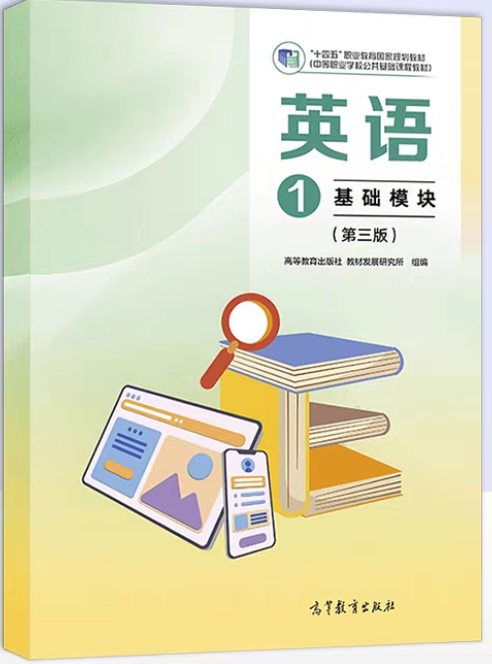
Unit 8 People and Events(B卷·能力提升)《英语 基础模块1》(高教版第三版)单元过关卷(原卷版+解析版)
2026-08-25
|
2份
|
14页
|
23人阅读
|
0人下载
摘要:
**基本信息**
《英语 基础模块1》(高教版第三版)Unit 8 People and Events B卷·能力提升,紧扣教材核心考点,通过传统工艺与现代科技融合情境,提升语言综合应用能力,适配单元复习需求。
**题型特征**
|题型|题量/分值|知识覆盖|命题特色|
|----|-----------|----------|----------|
|语音辨析题|5/10|字母组合发音(如create中"a")|考查基础语音辨析,夯实语言能力|
|选择填空题|15/30|情态动词(can't/must)、固定搭配(succeed in)、时态(for+时间段)|结合工作场景考查语法应用,培养思维品质|
|完形填空题|10/20|语篇逻辑(so表因果)、动词(record/understand)|创设传统纸坊情境,渗透文化传承,提升语言综合运用|
|阅读理解题|10/20|信息查找(人物成就)、推理判断(科技与传统关系)|选取蔡伦造纸等文化素材,强化文化意识与问题解决能力|
内容正文:
编写说明:本套试卷紧扣《英语 基础模块1》(高教版第三版)教材,以教材单元为基准精准覆盖核心考点。
每个单元设置AB卷,A卷为基础巩固卷,侧重基础考点训练,帮助学生扎实掌握知识要点;B卷为能力提升卷,注重知识整合与全面检测,引导学生构建知识网络。全书设计4份综合测试卷,模拟实战情境,聚焦解题能力突破,全面提升应试能力与知识应用水平。
《英语 基础模块1》(高教版第三版)《单元过关卷》
Unit 8 People and Events
B卷·能力提升
考试时间:60分钟 满分:80分
班级_____姓名_____学号_____成绩_____
一、语音辨析题(本题有5小题,每小题2分,共10分)
从A、B、C、D四个选项中找出与所给单词画线部分读音相同的选项。
1. create
A. have
B. name
C. water
D. father
2. design
A. sit
B. police
C. machine
D. bike
3. improve
A. move
B. love
C. above
D. come
4. hunger
A. rule
B. put
C. sun
D. full
5. schedule
A. scheme
B. she
C. chief
D. machine
二、选择填空题(本题有15小题,每小题2分,共30分)
从A、B、C、D四个选项中选出最佳答案。
6. That ____ be Pan Mei. She is working in another town today.
A. must
B. can't
C. should
D. may
7. When she was young, Pan ____ make paper without a machine.
A. can
B. must
C. may
D. could
8. Workers ____ check the water amount before making each batch.
A. must
B. might
C. could
D. may
9. You ____ bring a camera; the workshop provides one.
A. mustn't
B. can't
C. don't have to
D. shouldn't
10. The old tool ____ still be useful, but we need to test it first.
A. must
B. might
C. can't
D. shouldn't
11. The technician used a camera to ____ every step.
A. record
B. reduce
C. stretch
D. return
12. The new guide helped ____ waste in the workshop.
A. invent
B. believe
C. connect
D. reduce
13. Pan Mei succeeded ____ teaching the method to new workers.
A. at
B. in
C. by
D. for
14. The subtitles made the steps easier to ____.
A. overcome
B. complete
C. understand
D. invent
15. The team checked the names ____ publishing the video.
A. although
B. unless
C. because
D. before
16. The guide is a useful ____ for training new workers.
A. hunger
B. province
C. record
D. bulb
17. —Why is this invention important?
—____
A. It makes knowledge easier to share.
B. It is in Guangdong Province.
C. It opened at nine.
D. It is beside the camera.
18. The files ____ in two places for safety.
A. store
B. stored
C. are storing
D. are stored
19. Could you tell me ____ to use the paper frame? I need the steps.
A. who
B. how
C. where
D. when
20. Pan Mei has worked here ____ more than twenty years.
A. since
B. at
C. for
D. during
三、完形填空题(本题有10小题,每小题2分,共20分)
阅读下面短文,从A、B、C、D四个选项中选出最佳答案。
A media trainee visits a paper workshop in Danzhai. Before filming, she ____21____ ask the craft worker for permission. The room is quiet, so she hears each ____22____ clearly. Workers cook bark and beat it ____23____ soft fibers. The trainee takes notes instead of ____24____ all the time. A visitor reaches toward wet paper.
The guide says, “You ____25____ touch it yet.” The sheet may break. Sunlight is too strong, ____26____ the team moves a frame indoors. The trainee checks names and dates ____27____ publishing the video. She adds subtitles to make the method easier to ____28____. Records help young people ____29____ old skills. Modern media can ____30____ tradition.
21. A. might
B. could
C. may
D. must
22. A. price
B. step
C. password
D. route
23. A. into
B. without
C. during
D. across
24. A. sleeping
B. shopping
C. filming
D. driving
25. A. may
B. mustn't
C. can
D. should
26. A. but
B. or
C. so
D. because
27. A. before
B. unless
C. although
D. because
28. A. borrow
B. hide
C. understand
D. waste
29. A. cancel
B. miss
C. forget
D. learn
30. A. break
B. support
C. refuse
D. lose
四、阅读理解题(本题有10小题,每小题2分,共20分)
阅读下面两篇材料,从A、B、C、D四个选项中选出最佳答案。
Passage A
A local history website lists four people and their achievements. The year shows when each listed achievement was completed or first used.
Person
Field
Year
Achievement
Result
Cai Lun
Paper-making
105
Improved method
Ideas spread more easily
Florence Nightingale
Nursing
1860
Opened training center
Modern nursing grew
Zhan Tianyou
Railway
1909
Completed Jingzhang Railway
Finished ahead of schedule
Yuan Longping
Farming
1973
Developed hybrid rice
More rice was produced
31. Who worked in nursing?
A. Cai Lun.
B. Florence Nightingale.
C. Zhan Tianyou.
D. Yuan Longping.
32. When was the Jingzhang Railway completed?
A. In 105.
B. In 1860.
C. In 1973.
D. In 1909.
33. What resulted from Cai Lun's achievement?
A. Ideas spread more easily.
B. Modern nursing grew.
C. More rice was produced.
D. A railway opened early.
34. Which achievement is related to producing more food?
A. Improving paper-making.
B. Opening a nursing center.
C. Developing hybrid rice.
D. Completing a railway.
35. Which information belongs to one person?
A. Cai Lun—Nursing—1860.
B. Zhan Tianyou—Railway—1909.
C. Nightingale—Farming—1973.
D. Yuan Longping—Paper-making—105.
Passage B
In Danzhai, craft worker Pan Mei has made traditional paper for more than twenty years. She once kept most steps in her memory. New workers sometimes missed a washing time or used too much water. Pan decided to create a simple workshop record. She worked with media technician Luo Chen. First, they photographed the bark, tools and paper frames.
Pan explained each step while Luo recorded short videos. They added the amount of water and working time to every video. During the first test, bright sunlight made the wet fibers hard to see. Luo moved the camera and used a white cloth to soften the light. Pan then checked every subtitle. She corrected two local tool names that the computer had written wrongly.
The finished guide was stored on a workshop tablet. New workers could watch one step and practice it at once. Three months later, they made fewer mistakes and wasted less material. Pan also printed key pages for workers who preferred paper notes. She said technology should support a skill, not replace the hands that perform it. Luo agreed and kept a second copy of all files. Their careful record brought an old method into daily training without changing its character.
36. Why did Pan Mei decide to create a workshop record?
A. She wanted to replace all workers.
B. The workshop had no paper frames.
C. A shop owner asked for a railway map.
D. New workers sometimes missed key details.
37. What information did they add to every video?
A. The amount of water and working time.
B. The paper price and buyer name.
C. The weather and train speed.
D. The camera password and file size.
38. How did Luo solve the bright-light problem?
A. He stopped filming for three months.
B. He used more water on the paper.
C. He moved the camera and softened the light.
D. He deleted all the subtitles.
39. What changed after new workers used the guide?
A. They made fewer mistakes and wasted less material.
B. They stopped using paper notes.
C. They replaced Pan Mei's hands.
D. They moved the workshop to another town.
40. What does Pan Mei mean by “support a skill, not replace the hands”?
A. Machines should perform every step alone.
B. Old methods should never be recorded.
C. Only printed notes can protect a craft.
D. Technology should help workers learn while keeping hand practice.
原创精品资源学科网独家享有版权,侵权必究!
原创精品资源学科网独家享有版权,侵权必究!
原创精品资源学科网独家享有版权,侵权必究!
学科网(北京)股份有限公司
$
编写说明:本套试卷紧扣《英语 基础模块1》(高教版第三版)教材,以教材单元为基准精准覆盖核心考点。
每个单元设置AB卷,A卷为基础巩固卷,侧重基础考点训练,帮助学生扎实掌握知识要点;B卷为能力提升卷,注重知识整合与全面检测,引导学生构建知识网络。全书设计4份综合测试卷,模拟实战情境,聚焦解题能力突破,全面提升应试能力与知识应用水平。
《英语 基础模块1》(高教版第三版)《单元过关卷》
Unit 8 People and Events
B卷·能力提升
考试时间:60分钟 满分:80分
班级_____姓名_____学号_____成绩_____
一、语音辨析题(本题有5小题,每小题2分,共10分)
从A、B、C、D四个选项中找出与所给单词画线部分读音相同的选项。
1. create
A. have
B. name
C. water
D. father
【答案】B
【详解】create /kriˈeɪt/与name /neɪm/中的a均发/eɪ/;have、water、father中的a分别发/æ/、/ɔː/、/ɑː/。故选B。
2. design
A. sit
B. police
C. machine
D. bike
【答案】D
【详解】design /dɪˈzaɪn/与bike /baɪk/中的i均发/aɪ/;sit、police、machine中的i分别发/ɪ/、/iː/、/iː/。故选D。
3. improve
A. move
B. love
C. above
D. come
【答案】A
【详解】improve /ɪmˈpruːv/与move /muːv/中的o均发/uː/;love、above、come中的o均发/ʌ/。故选A。
4. hunger
A. rule
B. put
C. sun
D. full
【答案】C
【详解】hunger /ˈhʌŋɡə/与sun /sʌn/中的u均发/ʌ/;rule、put、full中的u分别发/uː/、/ʊ/、/ʊ/。故选C。
5. schedule
A. scheme
B. she
C. chief
D. machine
【答案】A
【详解】schedule /ˈskedʒuːl/与scheme /skiːm/中的sch均发/sk/;she、chief、machine中的画线部分分别发/ʃ/、/tʃ/、/ʃ/。故选A。
二、选择填空题(本题有15小题,每小题2分,共30分)
从A、B、C、D四个选项中选出最佳答案。
6. That ____ be Pan Mei. She is working in another town today.
A. must
B. can't
C. should
D. may
【答案】B
【考点】情态动词—否定推测
【详解】句意:那不可能是潘梅,她今天正在另一个城镇工作。A. must一定;必须;B. can't不可能,表示否定推测;C. should应该;D. may可能。她在另一个城镇,说明眼前的人不可能是她,用can't。故选B。
7. When she was young, Pan ____ make paper without a machine.
A. can
B. must
C. may
D. could
【答案】D
【考点】情态动词—过去能力
【详解】句意:潘梅年轻时就能不用机器造纸。A. can能够,表示现在能力;B. must必须;C. may可以;可能;D. could能够,表示过去能力。When she was young提示过去时间,表示过去能力用could。故选D。
8. Workers ____ check the water amount before making each batch.
A. must
B. might
C. could
D. may
【答案】A
【考点】情态动词—义务
【详解】句意:工人制作每批纸前必须核对用水量。A. must必须;B. might可能;C. could能够;可以;D. may可以;可能。用水量直接影响工艺,句子表达必要操作,用must。故选A。
9. You ____ bring a camera; the workshop provides one.
A. mustn't
B. can't
C. don't have to
D. shouldn't
【答案】C
【考点】情态动词—不必
【详解】句意:你不必带相机,作坊会提供一台。A. mustn't禁止;B. can't不能;C. don't have to不必;D. shouldn't不应该。the workshop provides one说明没有携带义务,用don't have to,而非禁止。故选C。
10. The old tool ____ still be useful, but we need to test it first.
A. must
B. might
C. can't
D. shouldn't
【答案】B
【考点】情态动词—可能性
【详解】句意:这件旧工具可能仍有用,但我们需要先测试。A. must一定;必须;B. might可能;C. can't不可能;D. shouldn't不应该。need to test it first说明结果尚不确定,用might表示可能。故选B。
11. The technician used a camera to ____ every step.
A. record
B. reduce
C. stretch
D. return
【答案】A
【考点】动词词义
【详解】句意:技术员用相机记录每一个步骤。A. record记录;B. reduce减少;C. stretch延伸;D. return返回。camera用于记录步骤,record与every step搭配。故选A。
12. The new guide helped ____ waste in the workshop.
A. invent
B. believe
C. connect
D. reduce
【答案】D
【考点】动词词义
【详解】句意:新指南帮助减少了作坊中的浪费。A. invent发明;B. believe相信;C. connect连接;D. reduce减少。guide规范操作后能够减少浪费,help后接原形reduce。故选D。
13. Pan Mei succeeded ____ teaching the method to new workers.
A. at
B. in
C. by
D. for
【答案】B
【考点】固定搭配
【详解】句意:潘梅成功地把这一方法教给了新工人。A. at在;B. in在……方面;与succeed构成成功做某事;C. by通过;D. for为了。succeed in doing sth是固定结构。故选B。
14. The subtitles made the steps easier to ____.
A. overcome
B. complete
C. understand
D. invent
【答案】C
【考点】动词词义
【详解】句意:字幕使这些步骤更容易理解。A. overcome克服;B. complete完成;C. understand理解;D. invent发明。字幕解释内容,因此使步骤更易understand。故选C。
15. The team checked the names ____ publishing the video.
A. although
B. unless
C. because
D. before
【答案】D
【考点】连词
【详解】句意:团队在发布视频前核对了名称。A. although尽管;B. unless除非;C. because因为;D. before在……之前。工作流程是先核对、后发布,用before。故选D。
16. The guide is a useful ____ for training new workers.
A. hunger
B. province
C. record
D. bulb
【答案】C
【考点】名词词义
【详解】句意:这份指南是培训新工人的有用记录。A. hunger饥饿;B. province省;C. record记录;D. bulb电灯泡。guide保存工艺信息,是useful record。故选C。
17. —Why is this invention important?
—____
A. It makes knowledge easier to share.
B. It is in Guangdong Province.
C. It opened at nine.
D. It is beside the camera.
【答案】A
【考点】情景交际
【详解】句意:——这项发明为什么重要?——它让知识更容易分享。A. It makes knowledge easier to share.它让知识更容易分享;B. It is in Guangdong Province.它在广东省;C. It opened at nine.它九点开放;D. It is beside the camera.它在相机旁边。Why询问重要性原因,只有“让知识更易分享”回答其意义。故选A。
18. The files ____ in two places for safety.
A. store
B. stored
C. are storing
D. are stored
【答案】D
【考点】一般现在时被动语态
【详解】句意:为了安全,这些文件被保存在两个地方。A. store保存(原形);B. stored保存了(过去式);C. are storing正在保存(主动进行时);D. are stored被保存(一般现在时被动)。files是store动作的承受者,描述常规做法,用are stored。故选D。
19. Could you tell me ____ to use the paper frame? I need the steps.
A. who
B. how
C. where
D. when
【答案】B
【考点】宾语从句
【详解】句意:你能告诉我怎样使用纸帘吗?我需要操作步骤。A. who谁;B. how怎样;如何;C. where在哪里;D. when什么时候。后句I need the steps明确询问操作方法,因此应用how;其余选项分别询问人物、地点或时间。故选B。
20. Pan Mei has worked here ____ more than twenty years.
A. since
B. at
C. for
D. during
【答案】C
【考点】介词与现在完成时
【详解】句意:潘梅已经在这里工作二十多年。A. since自从,后接时间点;B. at在;C. for达;持续一段时间;D. during在……期间。more than twenty years是时间段,完成时中用for。故选C。
三、完形填空题(本题有10小题,每小题2分,共20分)
阅读下面短文,从A、B、C、D四个选项中选出最佳答案。
A media trainee visits a paper workshop in Danzhai. Before filming, she ____21____ ask the craft worker for permission. The room is quiet, so she hears each ____22____ clearly. Workers cook bark and beat it ____23____ soft fibers. The trainee takes notes instead of ____24____ all the time. A visitor reaches toward wet paper.
The guide says, “You ____25____ touch it yet.” The sheet may break. Sunlight is too strong, ____26____ the team moves a frame indoors. The trainee checks names and dates ____27____ publishing the video. She adds subtitles to make the method easier to ____28____. Records help young people ____29____ old skills. Modern media can ____30____ tradition.
21. A. might
B. could
C. may
D. must
22. A. price
B. step
C. password
D. route
23. A. into
B. without
C. during
D. across
24. A. sleeping
B. shopping
C. filming
D. driving
25. A. may
B. mustn't
C. can
D. should
26. A. but
B. or
C. so
D. because
27. A. before
B. unless
C. although
D. because
28. A. borrow
B. hide
C. understand
D. waste
29. A. cancel
B. miss
C. forget
D. learn
30. A. break
B. support
C. refuse
D. lose
【答案】21. D 22. B 23. A 24. C 25. B 26. C 27. A 28. C 29. D 30. B
【导语】本文讲述媒体实习生在丹寨传统纸坊记录造纸工艺,围绕拍摄许可、工序记录、保护湿纸和信息核对展开,考查情态动词、非谓语、连词及语境词义。
【详解】
21. 考查情态动词。句意:拍摄前,她必须征得工艺师的许可。A. might可能;B. could能够;可以;C. may可以;可能;D. must必须。拍摄他人工作前征得许可是必要步骤,用must。故选D。
22. 考查名词词义。句意:房间很安静,所以她能清楚听到每一步讲解。A. price价格;B. step步骤;C. password密码;D. route路线。全文介绍造纸流程,each step对应每个工艺步骤。故选B。
23. 考查介词。句意:然后工人把树皮打成柔软纤维。A. into成为;进入;B. without没有;C. during在……期间;D. across穿过。beat A into B表示“把A加工成B”。故选A。
24. 考查非谓语动词。句意:实习生记笔记,而不是每分钟都拍摄。A. sleeping睡觉;B. shopping购物;C. filming拍摄(动名词);D. driving驾驶。instead of后接动名词,且媒体记录场景对应filming。故选C。
25. 考查情态动词。句意:导游提醒访客暂时禁止触摸湿纸。A. may可以;可能;B. mustn't禁止;一定不要;C. can能够;D. should应该。后句说明湿纸容易破,故此时禁止触摸,用mustn't。故选B。
26. 考查连词。句意:阳光变得太强,所以团队把纸框移到室内。A. but但是;B. or或者;C. so所以;D. because因为。前句是原因,后句是处理结果,用so。故选C。
27. 考查连词。句意:发布视频前,她核对每个人名和日期。A. before在……之前;B. unless除非;C. although尽管;D. because因为。核对信息应发生在发布之前,用before。故选A。
28. 考查动词词义。句意:她添加字幕,使工艺方法更容易理解。A. borrow借入;B. hide隐藏;C. understand理解;D. waste浪费。字幕用于帮助观众理解方法,easy to understand搭配自然。故选C。
29. 考查动词词义。句意:记录能帮助年轻人学习古老技艺。A. cancel取消;B. miss错过;C. forget忘记;D. learn学习。保存工艺记录的目的在于帮助年轻人学习,help sb do用learn原形。故选D。
30. 考查动词词义。句意:现代媒体能够支持传统技艺传承。A. break打破;B. support支持;C. refuse拒绝;D. lose丢失。全文展示媒体记录服务传统工艺,can后用support概括关系。故选B。
四、阅读理解题(本题有10小题,每小题2分,共20分)
阅读下面两篇材料,从A、B、C、D四个选项中选出最佳答案。
Passage A
A local history website lists four people and their achievements. The year shows when each listed achievement was completed or first used.
Person
Field
Year
Achievement
Result
Cai Lun
Paper-making
105
Improved method
Ideas spread more easily
Florence Nightingale
Nursing
1860
Opened training center
Modern nursing grew
Zhan Tianyou
Railway
1909
Completed Jingzhang Railway
Finished ahead of schedule
Yuan Longping
Farming
1973
Developed hybrid rice
More rice was produced
31. Who worked in nursing?
A. Cai Lun.
B. Florence Nightingale.
C. Zhan Tianyou.
D. Yuan Longping.
32. When was the Jingzhang Railway completed?
A. In 105.
B. In 1860.
C. In 1973.
D. In 1909.
33. What resulted from Cai Lun's achievement?
A. Ideas spread more easily.
B. Modern nursing grew.
C. More rice was produced.
D. A railway opened early.
34. Which achievement is related to producing more food?
A. Improving paper-making.
B. Opening a nursing center.
C. Developing hybrid rice.
D. Completing a railway.
35. Which information belongs to one person?
A. Cai Lun—Nursing—1860.
B. Zhan Tianyou—Railway—1909.
C. Nightingale—Farming—1973.
D. Yuan Longping—Paper-making—105.
【答案】31. B 32. D 33. A 34. C 35. B
【导语】本文是一张人物成就资料表,呈现人物、领域、年份、主要成就及影响,考查信息定位、因果对应和跨字段组合。
【详解】
31. 细节理解题。根据Field为“Nursing”的一行,其Person为“Florence Nightingale”。故选B。
32. 细节理解题。根据Zhan Tianyou一行的Year“1909”可知,京张铁路于1909年完成。故选D。
33. 细节理解题。根据Cai Lun一行的Result“Ideas spread more easily”可知,其改进使思想知识更易传播。故选A。
34. 跨字段理解题。根据Yuan Longping一行,Achievement为“Developed hybrid rice”,Result为“More rice was produced”,可知该成就与增加粮食产量相关。故选C。
35. 细节理解题。根据Zhan Tianyou一行可知“Railway—1909”属于同一人物;其余选项均跨行组合。故选B。
Passage B
In Danzhai, craft worker Pan Mei has made traditional paper for more than twenty years. She once kept most steps in her memory. New workers sometimes missed a washing time or used too much water. Pan decided to create a simple workshop record. She worked with media technician Luo Chen. First, they photographed the bark, tools and paper frames.
Pan explained each step while Luo recorded short videos. They added the amount of water and working time to every video. During the first test, bright sunlight made the wet fibers hard to see. Luo moved the camera and used a white cloth to soften the light. Pan then checked every subtitle. She corrected two local tool names that the computer had written wrongly.
The finished guide was stored on a workshop tablet. New workers could watch one step and practice it at once. Three months later, they made fewer mistakes and wasted less material. Pan also printed key pages for workers who preferred paper notes. She said technology should support a skill, not replace the hands that perform it. Luo agreed and kept a second copy of all files. Their careful record brought an old method into daily training without changing its character.
36. Why did Pan Mei decide to create a workshop record?
A. She wanted to replace all workers.
B. The workshop had no paper frames.
C. A shop owner asked for a railway map.
D. New workers sometimes missed key details.
37. What information did they add to every video?
A. The amount of water and working time.
B. The paper price and buyer name.
C. The weather and train speed.
D. The camera password and file size.
38. How did Luo solve the bright-light problem?
A. He stopped filming for three months.
B. He used more water on the paper.
C. He moved the camera and softened the light.
D. He deleted all the subtitles.
39. What changed after new workers used the guide?
A. They made fewer mistakes and wasted less material.
B. They stopped using paper notes.
C. They replaced Pan Mei's hands.
D. They moved the workshop to another town.
40. What does Pan Mei mean by “support a skill, not replace the hands”?
A. Machines should perform every step alone.
B. Old methods should never be recorded.
C. Only printed notes can protect a craft.
D. Technology should help workers learn while keeping hand practice.
【答案】36. D 37. A 38. C 39. A 40. D
【导语】本文讲述丹寨传统造纸工艺师与媒体技术员共同制作数字操作指南,通过准确记录改善培训,同时坚持技术服务于手工实践。
【详解】
36. 细节理解题。根据“New workers sometimes missed a washing time or used too much water”可知,新工人会漏掉关键细节,因此潘梅决定制作记录。故选D。
37. 细节理解题。根据“They added the amount of water and the working time to every video”可知,每段视频加入用水量和工作时间。故选A。
38. 细节理解题。根据“Luo moved the camera and used a white cloth to soften the light”可知,他调整相机并用白布柔化光线。故选C。
39. 细节理解题。根据“they made fewer mistakes and wasted less material”可知,使用指南后错误和材料浪费都减少了。故选A。
40. 简单推理题。结合视频用于学习、随后立即动手练习以及她保留手工操作的观点可知,技术应辅助学习而不是取代人的实践。故选D。
原创精品资源学科网独家享有版权,侵权必究!
原创精品资源学科网独家享有版权,侵权必究!
原创精品资源学科网独家享有版权,侵权必究!
学科网(北京)股份有限公司
$
资源预览图

1

2
由于学科网是一个信息分享及获取的平台,不确保部分用户上传资料的 来源及知识产权归属。如您发现相关资料侵犯您的合法权益,请联系学科网,我们核实后将及时进行处理。