Unit 3 Section A (3a-3e) 知识清单(默写版)+ 同步练习 2026-2027学年人教版英语九年级上册
2026-08-24
|
6页
|
91人阅读
|
1人下载
摘要:
**基本信息**
本练习以“基础巩固-能力进阶-综合应用”分层,通过词汇、句型到语篇的递进设计,强化语言能力与学习能力培养。
**分层设计**
|层次|知识覆盖|设计特色|
|----|----------|----------|
|基础层|重点单词、核心短语|单词拼写(音标提示)、单项选择(教材原词搭配)|
|进阶层|语法应用、句型转换|单词适当形式填空(固定搭配)、句型转换(划线提问/否定)|
|综合应用层|语篇理解、策略迁移|阅读理解(信息提取表格)、语法填空(情境化语篇)|
内容正文:
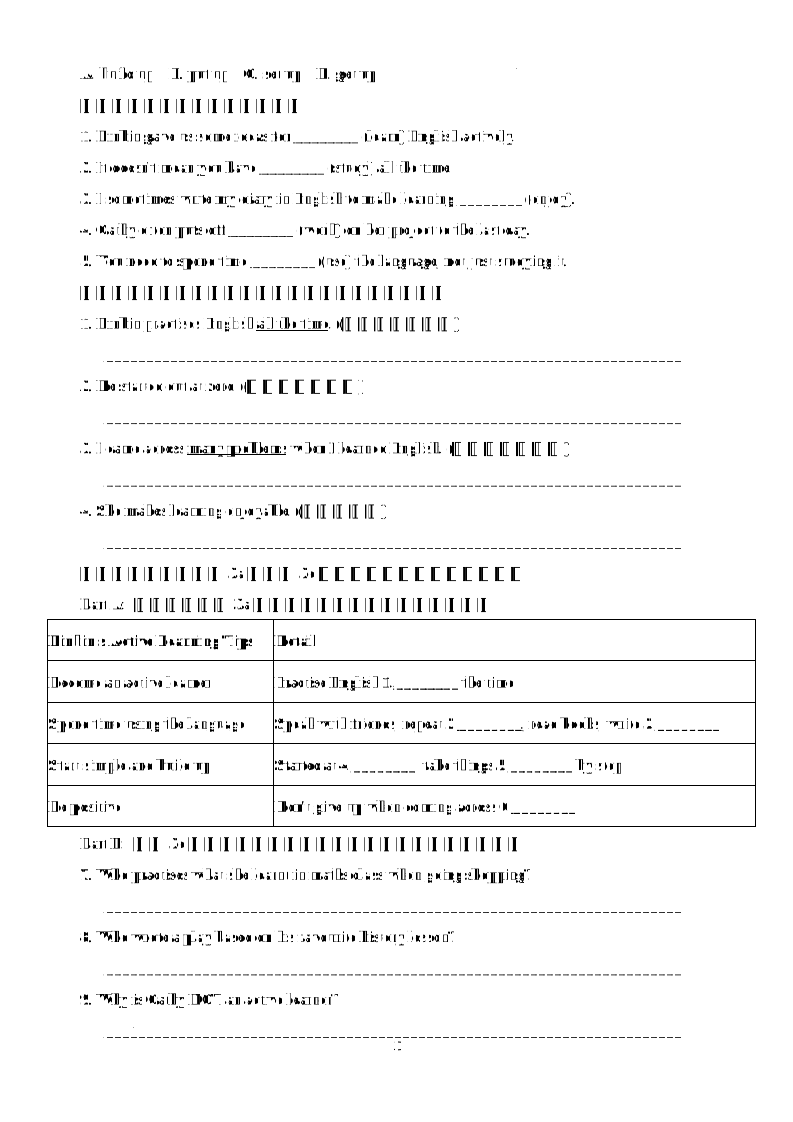
Unit 3 Section A (3a-3e) 知识清单(默写版)+ 同步练习2026-2027学年九年级上册人教版 【知识清单(默写版)】 一、重点单词(根据音标和词性写出英文单词及中文意思) 1. / p dk st/ n. ( ) 2. / z r / num. ( ) 3. / kt vli/ adv. ( ) 4. / n d bl/ adj. ( ) 5. / str t d i/ n. ( ) 二、核心短语(根据中文写出英文) 1. 播客访谈 2. 成为一名积极主动的学习者 3. 你的意思是……? 4. 一直练习英语 5. 花费时间使用这门语言 6. 从零开始 7. (偶然)遇见;发现问题 8. 逐步地;循序渐进地 9. 从简单开始并逐步积累/加强 10. 使学习变得有乐趣 11. 制定你自己的学习策略 12. 推迟;拖延 13. 积极学习英语的顶级技巧 14. 遇到困难时保持积极 15. 把英语日记写进日记本 16. 基于她最喜欢的历史课写一部戏剧 三、核心句型与语法(根据中文提示完成句子,注意时态与搭配) 1. 他说他打算给我们一些学习英语的建议。 He said he us some ideas for learning English. 2. 你想成为一名积极主动的学习者。 You need to . 3. "你这么说是什么意思?" "Well, because I want to speak English well, I practise English all the time." —What do you ? —, because I want to speak English well, I practise English all the time. 4. 这并不意味着你必须一直学习。 It doesn't you study all the time. 5. 我开始时是零基础,并且遇到了问题。 I started out and problems. 6. 你必须循序渐进地处理事情。 You just have to . 7. 从简单的开始,逐步积累。 Start simple and . 8. 珍妮在购物时练习她在数学课上学到的东西。 Jenny she learnt in maths class when going shopping. 【同步练习(原创)】 一、单词拼写(根据首字母或中文提示写出单词) 1. You can listen to this English (播客) to improve your listening. 2. When I first started learning English, I was at (零基础). 3. She always studies (积极地) in class and asks questions. 4. Learning English can be (有乐趣的) if you use good methods. 5. Making a study plan is a useful learning (策略). 二、单项选择(紧扣阅读文本词汇与搭配) 1. —What do you mean that? —I mean we should practise English every day. A. by B. with C. for D. of 2. I started out zero when I began to learn French. A. at B. in C. on D. with 3. Don't working on your project to the last day. It's a bad habit. A. put off B. put on C. put up D. put down 4. You should take things and not try to do everything at once. A. step by step B. day by day C. one by one D. side by side 5. Start simple and your knowledge little by little. A. build up B. put up C. set up D. get up 三、用所给单词的适当形式填空 1. Binbin gave us some ideas for (learn) English actively. 2. It doesn't mean you have (study) all the time. 3. I sometimes write my diary in English to make learning (enjoy). 4. Cathy often puts off (work) on her project to the last day. 5. You need to spend time (use) the language, not just studying it. 四、句型转换(基于阅读文本,每题给出完整答案) 1. Binbin practises English all the time. (对划线部分提问) 2. He started out at zero. (改为一般疑问句) 3. I came across many problems when I learned English. (对划线部分提问) 4. She makes learning enjoyable. (改为否定句) 五、阅读理解(基于3a语篇与3c活动,完成表格并回答问题) Part A: 完成表格(从3a语篇中找出对应信息填入空白处) Binbin's Active Learning Tips Detail Become an active learner Practise English 1. the time Spend time using the language Speak with friends, repeat 2., read books, write 3. Start simple and build up Started at 4., take things 5. by step Be positive Don't give up when coming across 6. Part B: 根据3c描述,判断谁是积极主动的学习者(回答姓名) 7. Who practises what she learnt in maths class when going shopping? 8. Who wrote a play based on his favourite history lesson? 9. Why is Cathy NOT an active learner? 六、语法填空 Ella invited Binbin to her English podcast. Binbin thinks we need to become 1. (act) learners. He said he 2. (practise) English all the time because he wants to speak it well. He doesn't mean we have to study all the time. We need 3. (spend) time using the language. For example, we can speak English with friends, repeat dialogues from films, read English books, or keep 4. learning diary. Binbin started out 5. zero and came 6. many problems. But he took things 7. by step. He started simple and built 8. his knowledge. He also said we should develop our own 9. (strategy) and never 10. (put) off our work. 参考答案 【知识清单(默写版)参考答案】 一、重点单词 1. podcast (播客) 2. zero (零;最低程度) 3. actively (积极地) 4. enjoyable (有乐趣的;使人快乐的) 5. strategy (策略) 二、核心短语 1. a podcast interview 2. become an active learner 3. What do you mean by that? 4. practise English all the time 5. spend time using the language 6. start out at zero 7. come across problems 8. step by step 9. start simple and build up 10. make learning enjoyable 11. develop your own learning strategies 12. put off 13. top tips for learning English actively 14. be positive when you have difficulties 15. write one's diary in English 16. write a play based on one's favourite history lesson 三、核心句型与语法 1. was going to give 2. become an active learner 3. mean by that; Well 4. mean; have to 5. at zero; came across 6. take things step by step 7. build up 8. practises what 【同步练习参考答案】 一、单词拼写 1. podcast 2. zero 3. actively 4. enjoyable 5. strategy 二、单项选择 1-5: AAACA • 第1题解析:What do you mean by that? 为固定句型,意为"你这么说是什么意思?",教材3a原句。 • 第2题解析:start out at zero 从零开始,教材原句"I started out at zero"。 • 第3题解析:put off 推迟;拖延,教材词汇表原词。put on 穿上;put up 张贴;put down 放下。 • 第4题解析:take things step by step 循序渐进,教材原句。 • 第5题解析:build up 增加;加强;创建,与"little by little"对应,教材原句"Start simple and build up"。 三、用所给单词的适当形式填空 1. learning (for是介词,后接动名词) 2. to study (have to do sth.) 3. enjoyable (make + 宾语 + adj.) 4. working (put off doing sth.) 5. using (spend time doing sth.) 四、句型转换(完整答案) 1. How often does Binbin practise English? 2. Did he start out at zero? 3. What did you come across when you learned English? 4. She doesn't make learning enjoyable. 五、阅读理解 Part A: 1. all 2. dialogues / films 3. diaries / in English 4. zero 5. step 6. problems Part B: 7. Jenny. 8. Tony. 9. Because she often puts off working on her project to the last day. / Because she procrastinates. 六、语法填空 1. active (active learners 积极主动的学习者) 2. practises (一般现在时,主语he) 3. to spend (need to do sth.) 4. a (keep a diary 记日记) 5. at (start out at zero) 6. across (come across 遇到) 7. step (step by step 逐步地) 8. up (build up 积累) 9. strategies (develop one's own strategies 制定自己的策略) 10. put (and连接并列结构,与develop并列,用动词原形) 1 学科网(北京)股份有限公司 $
资源预览图

1

2
3

相关资源
示范课
由于学科网是一个信息分享及获取的平台,不确保部分用户上传资料的 来源及知识产权归属。如您发现相关资料侵犯您的合法权益,请联系学科网,我们核实后将及时进行处理。