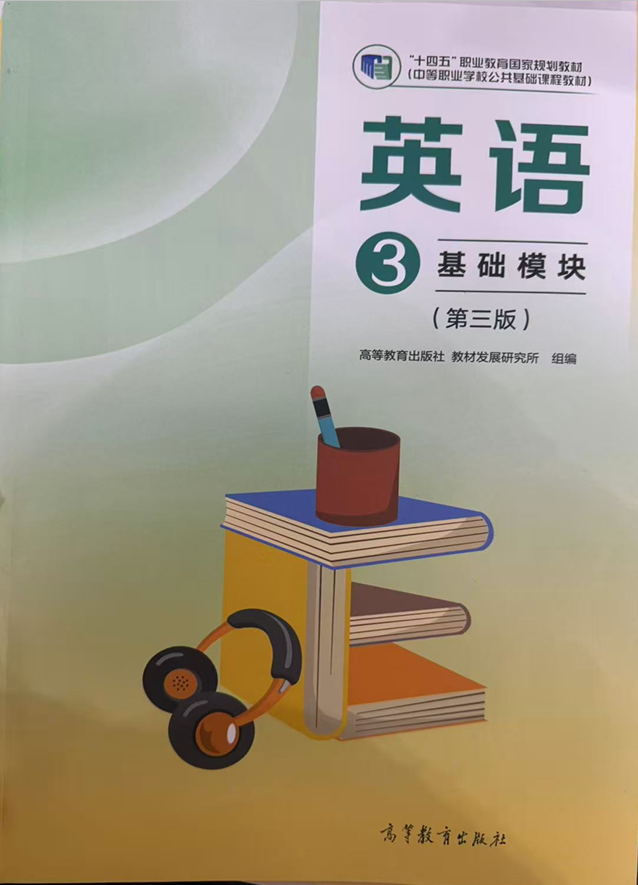
Unit 6 Living History of Culture(B卷·能力提升)-《英语 基础模块3》(高教版第三版)单元过关卷(原卷版+解析版)
2026-08-20
|
2份
|
22页
|
29人阅读
|
0人下载
摘要:
**基本信息**
本试卷为《英语 基础模块3》Unit 6 B卷能力提升卷,紧扣教材核心考点,通过词汇语法、情景交际等题型整合历史文化素材,适配单元复习,提升语言应用与文化意识。
**题型特征**
|题型|题量/分值|知识覆盖|命题特色|
|----|-----------|----------|----------|
|词汇与语法|25/25|单词辨音、词义选择(如“heritage”)、定语从句等语法|基础巩固,聚焦单元核心词汇语法|
|情景交际|15/30|景点问路、拍照等对话,补全北京游览交流|贴近真实文化场景,提升语言交际能力|
|阅读理解|10/20|长城、故宫历史文化,考查细节与主旨|融入文化传承素材,培养信息提取与思维品质|
|英汉互译|5/15|文化遗产相关句子(如“listed as World Heritage”)|强化语言转换能力,落实语言能力目标|
|应用写作|1/10|介绍兵马俑(位置、特色、地位)|整合单元知识,提升书面表达与文化传播能力|
内容正文:
编写说明:本套试卷紧扣《英语 基础模块3》(高教版第三版)教材,以教材单元为基准精准覆盖核心考点。
每个单元设置AB卷,A卷为基础巩固卷,侧重基础考点训练,帮助学生扎实掌握知识要点;B卷为能力提升卷,注重知识整合与全面检测,引导学生构建知识网络。全书设计4份综合测试卷,模拟实战情境,聚焦解题能力突破,全面提升应试能力与知识应用水平。
《英语 基础模块3》(高教版第三版)《单元过关卷》
Unit 6 Living History of Culture
B卷·能力提升
考试时间:70分钟 满分:100分
班级_____姓名_____学号_____成绩_____
综合卷Ⅰ(75分)
一、词汇与语法(共25小题,每小题1分,满分25分)
(一)单词辨音
从下列各题的A、B、C三个选项中选出画线部分发音不同的一项。
1.report
A.form B.top C.north
【答案】B
【详解】考查字母 o 的发音。report /rɪˈpɔːt/、form /fɔːm/、north /nɔːθ/ 中字母 o 发 /ɔː/;top /tɒp/ 中字母 o 发 /ɒ/,发音不同。故选 B。
2.expression
A.friend B.fresh C.these
【答案】C
【详解】考查字母 e 的发音。expression /ɪkˈspreʃn/、fresh /freʃ/、friend /frend/ 中划线 e 发 /e/;these /ðiːz/ 中字母 e 发 /iː/,发音不同。故选 C。
3.especially
A.drive B.climb C.brick
【答案】C
【详解】考查字母 i 的发音。especially、drive、climb 中 i 发 /aɪ/,brick 中 i 发 /ɪ/,发音不同。故选 C。
4.exactly
A.help B.decide C.begin
【答案】A
【详解】考查字母 e 的发音。exactly、decide、begin 中 e 发 /ɪ/,help 中 e 发 /e/,发音不同。故选 A。
5.fantastic
A.catch B.page C.match
【答案】B
【详解】考查字母 a 的发音。fantastic、catch、match 中 a 发 /æ/,page 中 a 发 /eɪ/,发音不同。故选 B。
(二)词义选择
从下列各题的A、B、C三个选项中选出与画线单词意思最接近的选项。
6.The ancient people constructed the pyramid with stone blocks.
A. 庆祝 B. 建造 C. 日历
【答案】B
【详解】考查词义。"construct"在句中表示"建造"。庆祝和日历与句意不符,无法替换画线词。故选B。
7.The figures were originally painted in bright colors.
A. 最初地 B. 期待 C. 表达
【答案】A
【详解】考查词义。"originally"在句中表示"最初地"。表达和期待与句意不符,无法替换画线词。故选A。
8.We regularly visit historical museums.
A. 定期地 B. 标志 C. 收获
【答案】A
【详解】考查词义。"regularly"在句中表示"定期地"。标志和收获与句意不符,无法替换画线词。故选A。
9.The figures are so lifelike that they look real.
A. 装饰 B. 庆祝 C. 栩栩如生的
【答案】C
【详解】考查词义。"lifelike"在句中表示"栩栩如生的"。庆祝和装饰与句意不符,无法替换画线词。故选C。
10.It is an underground kingdom of the emperor.
A. 地下的 B. 传统的 C. 典型的
【答案】A
【详解】考查词义。"underground"在句中表示"地下的"。典型的和传统的与句意不符,无法替换画线词。故选A。
11.Qinshihuang was the first emperor of China.
A. 欣赏 B. 装饰 C. 皇帝
【答案】C
【详解】考查词义。"emperor"在句中表示"皇帝"。欣赏和装饰与句意不符,无法替换画线词。故选C。
12.The palace was built in the Ming Dynasty.
A. 朝代 B. 相似的 C. 典型的
【答案】A
【详解】考查词义。"dynasty"在句中表示"朝代"。相似的和典型的与句意不符,无法替换画线词。故选A。
13.World heritage belongs to all mankind.
A. 装饰 B. 期待 C. 遗产
【答案】C
【详解】考查词义。"heritage"在句中表示"遗产"。期待和装饰与句意不符,无法替换画线词。故选C。
14.It is a great piece of ancient construction.
A. 建筑 B. 相似的 C. 典型的
【答案】A
【详解】考查词义。"construction"在句中表示"建筑"。典型的和相似的与句意不符,无法替换画线词。故选A。
15.It was listed as a World Heritage Site.
A. 庆祝 B. 表达 C. 列入
【答案】C
【详解】考查词义。"list"在句中表示"列入"。表达和庆祝与句意不符,无法替换画线词。故选C。
(三)语法运用
从下列各题的A、B、C三个选项中选出一个最佳选项。
16.This is the village ______ I grew up and went to school.
A. that B. which C. where
【答案】C
【详解】考查定语从句关系副词where。先行词village表地点,从句中有grew up和went to school两个动作,缺地点状语,用where。which/that只能作主语或宾语,无法同时充当两个动作的地点状语。
17.I still remember the afternoon ______ we visited the Shaanxi History Museum together.
A. where B. when C. which
【答案】B
【详解】考查定语从句关系副词when。先行词afternoon表时间,visited后缺时间状语,用when引导。where表地点、which作宾语但visited后已有together,不需要宾语而需时间状语。
18.Could you tell me the reason ______ he refused to visit the Summer Palace?
A. when B. why C. that
【答案】B
【详解】考查定语从句关系副词why。先行词reason后接从句解释原因,用why引导定语从句。that可接受但why更贴合reason的搭配习惯;when表时间不合逻辑。
19.The library is a quiet place ______ students can read and study peacefully.
A. which B. where C. when
【答案】B
【详解】考查定语从句关系副词where。先行词place表地点,从句read and study后缺地点状语,用where。which作主语或宾语、when表时间均不符合语境需求。
20.There are moments in life ______ we realize how important history is to us.
A. where B. when C. why
【答案】B
【详解】考查定语从句关系副词when。先行词moments表时间,从句realize后需时间状语限定,用when。where表地点、why表原因均无法修饰moments这一时间概念。
21.The Terracotta Army is regarded as ______ wonder of human construction.
A. / B. the C. a
【答案】C
【详解】考查冠词用法。wonder在此处泛指"奇迹之一",首次提及用不定冠词a。the表特指、零冠语不符合语法规范。
22.Each terracotta figure has ______ own facial expression and appearance.
A. its B. their C. his
【答案】A
【详解】考查代词each的搭配。each后接单数名词,用its指代每个塑像自己的特征。his指人、their指复数,均与each的单数语义冲突。
23.By the time we arrived at the museum, the exhibition ______ already ______.
A. has closed B. had closed C. was closing
【答案】B
【详解】考查过去完成时。by the time+过去时主句用过去完成时,表示"到达之前展览已经关闭"。has closed是现在完成时、was closing是过去进行时,均不符合"过去的过去"时序要求。
24.The guide suggested that we ______ early to avoid the crowds.
A. (should) start B. started C. starting
【答案】A
【详解】考查虚拟语气。suggest后的宾语从句用虚拟语气should+动词原形,should可省略。started是陈述语气、starting是非谓语形式,均不符合suggest的虚拟语气规则。
25.It was not until 1987 ______ the Terracotta Army was listed as a World Heritage Site.
A. when B. that C. before
【答案】B
【详解】考查强调句型not until...that。It is/was not until...that...是固定强调结构,强调时间状语。when和before都不能构成此强调句型。
二、情景交际(共15小题,每小题2分,共30分)
(一)简短对话
从下列各题的A、B、C三个选项中选出一个能回答或承接所给对话的最佳选项。
26.Speaker A: Excuse me, is this the way to the Palace Museum?
Speaker B: ________.
A. No, I am fine. B. Thanks a lot. C. Yes, go straight ahead.
【答案】C
【详解】考查问路交际应答。Speaker A 询问去故宫的路,应指路或说明。C 项“Yes, go straight ahead.”确认方向并指示直行,是标准的问路回应。A 项“No, I am fine.”用于谢绝帮助,与问路无关;B 项“Thanks a lot.”表示感谢,答非所问。故选 C。
27.Speaker A: I forgot to bring my ticket.
Speaker B: ________.
A. Do not worry. Use the app. B. Well done. That is great. C. Have a nice meal today.
【答案】A
【详解】考查困难回应交际应答。Speaker A 说忘带门票,应提供解决方案。A 项“Do not worry. Use the app.”安慰对方并建议使用手机应用,是实用的解决方案。B 项“Well done. That is great.”称赞做得好,与忘带门票的困境矛盾;C 项“Have a nice meal today.”祝愿用餐愉快,答非所问。故选 A。
28.Speaker A: How long did you stay in Beijing?
Speaker B: ________.
A. At the gate. B. For three days. C. By subway.
【答案】B
【详解】考查时间长度询问交际应答。Speaker A 用 how long 询问在北京待了多久,应给出时长。B 项“For three days.”直接回答了三天,符合 how long 问句的语用功能。A 项“At the gate.”回答地点,答非所问;C 项“By subway.”回答交通方式,与停留时间无关。故选 B。
29.Speaker A: Shall we take some photos here?
Speaker B: ________.
A. It does not matter. B. You are welcome. C. Sure, but no flash.
【答案】C
【详解】考查建议回应交际应答。Speaker A 提议拍照,应表示同意并可能附加提醒。C 项“Sure, but no flash.”同意拍照但提醒不要用闪光灯,是博物馆等场所的自然回应。A 项“It does not matter.”表示无所谓,态度消极;B 项“You are welcome.”用于回应感谢,语境不符。故选 C。
30.Speaker A: What makes the Great Wall famous?
Speaker B: ________.
A. Its long history. B. This morning. C. A cup of tea.
【答案】A
【详解】考查特色询问交际应答。Speaker A 询问长城因何闻名,应指出其特色。A 项“Its long history.”指出悠久的历史,是长城闻名的核心原因。B 项“This morning.”回答时间,答非所问;C 项“A cup of tea.”说一杯茶,与长城无关。故选 A。
31.Speaker A: Could you help me read this sign?
Speaker B: ________.
A. Goodbye, see you. B. Of course, let me see. C. Never mind, thanks.
【答案】B
【详解】考查请求帮助交际应答。Speaker A 请求帮忙看标识,应同意并行动。B 项“Of course, let me see.”同意帮忙并表示来看看,是自然的请求回应。A 项“Goodbye, see you.”用于道别,与请求帮助无关;C 项“Never mind, thanks.”表示没关系,暗示不需要帮助,与请求矛盾。故选 B。
32.Speaker A: I really enjoyed the exhibition.
Speaker B: ________.
A. So did I. B. No, not today. C. Yes, it is mine.
【答案】A
【详解】考查感受分享交际应答。Speaker A 分享对展览的喜爱,应表示同感或回应。A 项“So did I.”表示也一样喜欢,用倒装句表示赞同,是自然的同感回应。B 项“No, not today.”拒绝,与分享感受的语境不符;C 项“Yes, it is mine.”说是自己的,答非所问。故选 A。
33.Speaker A: Why should we protect old buildings?
Speaker B: ________.
A. Because we are late. B. Because they are cold. C. Because they show our culture.
【答案】C
【详解】考查原因询问交际应答。Speaker A 用 why 询问为何应保护古建筑,应给出保护理由。C 项“Because they show our culture.”指出古建筑展示文化,是保护古建筑的核心理由。A 项“Because we are late.”说迟到了,与保护古建筑无关;B 项“Because they are cold.”说它们很冷,不是保护的理由。故选 C。
34.Speaker A: Would you mind taking a picture for us?
Speaker B: ________.
A. I am sorry to hear that. B. Not at all, I can help. C. That is all right.
【答案】B
【详解】考查请求应答交际用语。Speaker A 询问是否介意帮忙拍照,应表示不介意并愿意帮忙。B 项“Not at all, I can help.”表示不介意并愿意帮忙,是标准的 would you mind 回应。A 项“I am sorry to hear that.”用于听到坏消息,语境不符;C 项“That is all right.”用于回应道歉,与拍照请求无关。故选 B。
35.Speaker A: What is the best season to visit Beijing?
Speaker B: ________.
A. Spring or autumn. B. About five hours. C. The Palace Museum.
【答案】A
【详解】考查季节询问交际应答。Speaker A 询问去北京旅游的最佳季节,应给出季节建议。A 项“Spring or autumn.”推荐春季或秋季,是北京旅游的最佳季节。B 项“About five hours.”回答时长,答非所问;C 项“The Palace Museum.”回答景点,与季节问题无关。故选 A。
(二)补全对话
阅读下面的对话,从对话后所给的A—G七个选项中选出五个能填入空白处的最佳选项。
Mary: Hi, Tom. You visited Beijing, right?
Tom: 36. ______
Mary: What place did you like best?
Tom: 37. ______
Mary: Why did you like it?
Tom: 38. ______
Mary: Is it very large?
Tom: 39. ______
Mary: When should I go?
Tom: 40. ______
Mary: Thanks. I will plan a trip there.
A. The Forbidden City.
B. Yes, I went last week.
C. It is full of history.
D. Spring is a good time.
E. Did you buy a map?
F. Yes, it has many rooms.
G. I stayed at home.
【答案】
36. B 37. A 38. C 39. F 40. D
【解析】
36.B 上文确认Tom是否去过北京,B项回答上周去了,直接承接问句。E项转问买地图,G项说待在家,与“visited Beijing”不符。
37.A 上文问最喜欢哪个地方,A项回答故宫,明确给出景点名称。C项说明原因,D项说明时间,都不能回答“what place”。
38.C 上文问为什么喜欢故宫,C项说它充满历史,给出喜欢的理由。A项只是地点名称,F项只是规模信息。
39.F 上文问故宫是否很大,F项说有很多房间,能够回应规模问题。C项谈历史,D项谈季节,均与面积大小不直接对应。
40.D 上文问什么时候去合适,D项回答春天是好时间,符合时间询问。B项是过去经历,E项是地图问题。
三、阅读理解(共10小题,每小题2分,共20分)
阅读下列两篇短文,根据短文内容从每题所给的A、B、C三个选项中选出一个最佳选项。
A
Beijing, the capital of China, has a history of more than 3,000 years. It is one of the most attractive cities in the world. Among all the historical sites in Beijing, the Great Wall is probably the most famous one. The Great Wall stretches across mountains and deserts in northern China. It was originally built for military defense over two thousand years ago. The wall is so long that it can even be seen from space. Every year, millions of travelers come to walk on this amazing construction. It is truly a great place to learn about Chinese history, especially the Ming Dynasty when most of the existing wall was built. In 1987, the Great Wall was listed as a UNESCO World Heritage Site and became a symbol of China.
41.How long is Beijing's history?
A. Less than 1,000 years.
B. About 500 years.
C. More than 3,000 years.
42.What does the word "stretches" mean in the passage?
A. Extends across a long area.
B. Stops at one small place.
C. Falls down quickly.
43.Which dynasty saw most of the existing Great Wall built?
A. The Tang Dynasty.
B. The Ming Dynasty.
C. The Qing Dynasty.
44.What can be inferred about the Great Wall?
A. It is only a new tourist road.
B. It was built by foreign visitors.
C. It has both historical and cultural value.
45.What is the main idea of the passage?
A. Travelers enjoy walking in deserts.
B. Beijing has many modern buildings.
C. The Great Wall is a famous symbol of China.
【答案】41.C 42.A 43.B 44.C 45.C
【导语】本文介绍了中国北京的历史地位、长城的地理位置与军事功能、明代建造背景、世界遗产地位以及其作为中国象征的文化意义,是一篇集历史与文化遗产介绍为一体的说明文。
【详解】
41.细节理解题。原文“history of more than 3,000 years”明确北京有3000多年历史。
42.词义猜测题。根据后文“across mountains and deserts”可知,stretches表示长城“延伸、横跨”山脉和沙漠。
43.细节理解题。原文“especially the Ming Dynasty when most of the existing wall was built”说明现存长城主要建于明朝。
44.推理判断题。文章既写长城最初用于军事防御,又写其成为世界遗产和中国象征,可推断它兼具历史与文化价值。
45.主旨大意题。全文围绕长城的历史、用途、建造背景、世界遗产地位和中国象征意义展开。
B
The Forbidden City, also known as the Palace Museum, lies in the center of Beijing. It was the home of emperors for nearly 500 years during the Ming and Qing Dynasties. The palace has about 9,000 rooms and covers an area of 720,000 square meters. It is the largest and best-preserved ancient wooden structure in the world today. Visitors can see many treasures inside, including beautiful paintings, valuable vases and ancient clocks. The brilliant design of the palace shows the great wisdom of Chinese architects and workers. Nowadays, millions of people from all over the world come to visit this amazing place every year to learn about Chinese history and culture.
46.Where is the Forbidden City located?
A. In the west of Shanghai.
B. On a mountain in Tibet.
C. In the center of Beijing.
47.What does the word "preserved" probably mean?
A. Built in a hurry.
B. Kept in good condition.
C. Moved to another city.
48.What can visitors see inside the palace?
A. Paintings, vases and clocks.
B. Modern cars and planes.
C. Only empty rooms.
49.What can be inferred from the brilliant design?
A. The palace has no cultural meaning.
B. Chinese architects and workers were wise.
C. The palace was built by machines.
50.Which is the best title for the passage?
A. How to Buy Vases in Beijing
B. A Modern City Park in Beijing
C. The Forbidden City: A Window into Chinese History
【答案】46.C 47.B 48.A 49.B 50.C
【导语】本文介绍了北京故宫的地理位置、帝王居所历史、规模数据、木质建筑特点、内部珍藏品以及其作为中华文化窗口的世界影响力,是一篇人文历史类说明文。
【详解】
46.细节理解题。原文“lies in the center of Beijing”明确故宫位于北京市中心。
47.词义猜测题。根据“largest and best-preserved ancient wooden structure”可知,此处强调古木结构保存良好。
48.细节理解题。原文列举“paintings, valuable vases and ancient clocks”,说明游客能看到绘画、花瓶和古钟。
49.推理判断题。原文说宫殿辉煌设计展示中国建筑师和工匠智慧,由此推断他们技艺高超、富有智慧。
50.主旨大意题。全文介绍故宫的位置、历史、规模、建筑特色、文物和文化学习价值,最佳标题应突出故宫与中国历史文化。
综合卷Ⅱ(25分)
四、英汉互译(共5小题,每小题3分,满分15分)
51.The Great Pyramid was built as a tomb for King Khufu.(英译汉)
______________________________
【答案】大金字塔是作为胡夫国王的陵墓而建造的。
【详解】考查翻译能力。本题需准确传达原句含义,注意关键词汇(如The Great Pyramid wa...)的准确对应及目标语言的表达习惯。
52.The Forbidden City was the home of emperors for hundreds of years.(英译汉)
______________________________
【答案】故宫是几百年来皇帝的居所。
【详解】考查翻译能力。本题需准确传达原句含义,注意关键词汇(如The Forbidden City w...)的准确对应及目标语言的表达习惯。
53.It is listed as a UNESCO World Heritage Site.(英译汉)
______________________________
【答案】它被列入联合国教科文组织世界遗产名录。
【详解】考查翻译能力。本题需准确传达原句含义,注意关键词汇(如It is listed as a UN...)的准确对应及目标语言的表达习惯。
54.这座宫殿展示了中国建筑师的智慧。(show)(中译英)
______________________________
【答案】This palace shows the great wisdom of Chinese architects.
【详解】考查翻译能力。本题需准确传达原句含义,注意关键词汇(如这座宫殿展示了中国建筑师的智慧。(sho...)的准确对应及目标语言的表达习惯。
55.每年有成千上万的游客参观这个博物馆。(millions of)(中译英)
______________________________
【答案】Millions of visitors visit this museum every year.
【详解】考查翻译能力。本题需准确传达原句含义,注意关键词汇(如每年有成千上万的游客参观这个博物馆。(m...)的准确对应及目标语言的表达习惯。
五、应用写作(满分10分)
56.假如你是李华,你的英国笔友Tom来信想了解中国的名胜古迹。请你根据以下提示给他回信,介绍秦始皇兵马俑。
1. 位置:陕西省西安市;
2. 特色:8000多尊塑像,无一相同;
3. 地位:被誉为"世界第八大奇迹"。
注意:词数80左右。
_____________________________________________________________________________________________________________________________________________________________________________________________________________________________________________________【答案】
Dear Tom,
I am glad to hear from you. You asked about historical sites in China, and I would like to tell you about the Terracotta Army.
The Terracotta Army lies in Xi'an, Shaanxi Province. It was built over 2,000 years ago as the underground kingdom of Emperor Qinshihuang. The museum covers an area of 14,000 square meters. There are over 8,000 terracotta figures and horses on display. Amazingly, no two figures are exactly the same — each face has its own expression. They were originally painted in bright colors.
Today, it is listed as "The Eighth Wonder of the World" and attracts millions of visitors every year. It is truly a must-see place!
Yours,
Li Hua
【词汇积累】
lie in 位于 / underground kingdom 地下王国 / on display 展出 / originally 最初地 / must-see 必看的 / be listed as 被列为
【句式拓展】
介绍位置→规模→特色→地位→游客评价,五层递进,符合景点介绍的规范结构与逻辑顺序。
【点睛】
用Amazingly置于句首增强表现力;no two...exactly the same为描写独特性的经典句式,值得模仿运用。
原创精品资源学科网独家享有版权,侵权必究!
学科网(北京)股份有限公司
$
编写说明:本套试卷紧扣《英语 基础模块3》(高教版第三版)教材,以教材单元为基准精准覆盖核心考点。
每个单元设置AB卷,A卷为基础巩固卷,侧重基础考点训练,帮助学生扎实掌握知识要点;B卷为能力提升卷,注重知识整合与全面检测,引导学生构建知识网络。全书设计4份综合测试卷,模拟实战情境,聚焦解题能力突破,全面提升应试能力与知识应用水平。
《英语 基础模块3》(高教版第三版)《单元过关卷》
Unit 6 Living History of Culture
B卷·能力提升
考试时间:70分钟 满分:100分
班级_____姓名_____学号_____成绩_____
综合卷Ⅰ(75分)
一、词汇与语法(共25小题,每小题1分,满分25分)
(一)单词辨音
从下列各题的A、B、C三个选项中选出画线部分发音不同的一项。
1.report
A.form B.top C.north
2.expression
A.friend B.fresh C.these
3.especially
A.drive B.climb C.brick
4.exactly
A.help B.decide C.begin
5.fantastic
A.catch B.page C.match
(二)词义选择
从下列各题的A、B、C三个选项中选出与画线单词意思最接近的选项。
6.The ancient people constructed the pyramid with stone blocks.
A. 庆祝 B. 建造 C. 日历
7.The figures were originally painted in bright colors.
A. 最初地 B. 期待 C. 表达
8.We regularly visit historical museums.
A. 定期地 B. 标志 C. 收获
9.The figures are so lifelike that they look real.
A. 装饰 B. 庆祝 C. 栩栩如生的
10.It is an underground kingdom of the emperor.
A. 地下的 B. 传统的 C. 典型的
11.Qinshihuang was the first emperor of China.
A. 欣赏 B. 装饰 C. 皇帝
12.The palace was built in the Ming Dynasty.
A. 朝代 B. 相似的 C. 典型的
13.World heritage belongs to all mankind.
A. 装饰 B. 期待 C. 遗产
14.It is a great piece of ancient construction.
A. 建筑 B. 相似的 C. 典型的
15.It was listed as a World Heritage Site.
A. 庆祝 B. 表达 C. 列入
(三)语法运用
从下列各题的A、B、C三个选项中选出一个最佳选项。
16.This is the village ______ I grew up and went to school.
A. that B. which C. where
17.I still remember the afternoon ______ we visited the Shaanxi History Museum together.
A. where B. when C. which
18.Could you tell me the reason ______ he refused to visit the Summer Palace?
A. when B. why C. that
19.The library is a quiet place ______ students can read and study peacefully.
A. which B. where C. when
20.There are moments in life ______ we realize how important history is to us.
A. where B. when C. why
21.The Terracotta Army is regarded as ______ wonder of human construction.
A. / B. the C. a
22.Each terracotta figure has ______ own facial expression and appearance.
A. its B. their C. his
23.By the time we arrived at the museum, the exhibition ______ already ______.
A. has closed B. had closed C. was closing
24.The guide suggested that we ______ early to avoid the crowds.
A. (should) start B. started C. starting
25.It was not until 1987 ______ the Terracotta Army was listed as a World Heritage Site.
A. when B. that C. before
二、情景交际(共15小题,每小题2分,共30分)
(一)简短对话
从下列各题的A、B、C三个选项中选出一个能回答或承接所给对话的最佳选项。
26.Speaker A: Excuse me, is this the way to the Palace Museum?
Speaker B: ________.
A. No, I am fine. B. Thanks a lot. C. Yes, go straight ahead.
27.Speaker A: I forgot to bring my ticket.
Speaker B: ________.
A. Do not worry. Use the app. B. Well done. That is great. C. Have a nice meal today.
28.Speaker A: How long did you stay in Beijing?
Speaker B: ________.
A. At the gate. B. For three days. C. By subway.
29.Speaker A: Shall we take some photos here?
Speaker B: ________.
A. It does not matter. B. You are welcome. C. Sure, but no flash.
30.Speaker A: What makes the Great Wall famous?
Speaker B: ________.
A. Its long history. B. This morning. C. A cup of tea.
31.Speaker A: Could you help me read this sign?
Speaker B: ________.
A. Goodbye, see you. B. Of course, let me see. C. Never mind, thanks.
32.Speaker A: I really enjoyed the exhibition.
Speaker B: ________.
A. So did I. B. No, not today. C. Yes, it is mine.
33.Speaker A: Why should we protect old buildings?
Speaker B: ________.
A. Because we are late. B. Because they are cold. C. Because they show our culture.
34.Speaker A: Would you mind taking a picture for us?
Speaker B: ________.
A. I am sorry to hear that. B. Not at all, I can help. C. That is all right.
35.Speaker A: What is the best season to visit Beijing?
Speaker B: ________.
A. Spring or autumn. B. About five hours. C. The Palace Museum.
(二)补全对话
阅读下面的对话,从对话后所给的A—G七个选项中选出五个能填入空白处的最佳选项。
Mary: Hi, Tom. You visited Beijing, right?
Tom: 36. ______
Mary: What place did you like best?
Tom: 37. ______
Mary: Why did you like it?
Tom: 38. ______
Mary: Is it very large?
Tom: 39. ______
Mary: When should I go?
Tom: 40. ______
Mary: Thanks. I will plan a trip there.
A. The Forbidden City.
B. Yes, I went last week.
C. It is full of history.
D. Spring is a good time.
E. Did you buy a map?
F. Yes, it has many rooms.
G. I stayed at home.
三、阅读理解(共10小题,每小题2分,共20分)
阅读下列两篇短文,根据短文内容从每题所给的A、B、C三个选项中选出一个最佳选项。
A
Beijing, the capital of China, has a history of more than 3,000 years. It is one of the most attractive cities in the world. Among all the historical sites in Beijing, the Great Wall is probably the most famous one. The Great Wall stretches across mountains and deserts in northern China. It was originally built for military defense over two thousand years ago. The wall is so long that it can even be seen from space. Every year, millions of travelers come to walk on this amazing construction. It is truly a great place to learn about Chinese history, especially the Ming Dynasty when most of the existing wall was built. In 1987, the Great Wall was listed as a UNESCO World Heritage Site and became a symbol of China.
41.How long is Beijing's history?
A. Less than 1,000 years.
B. About 500 years.
C. More than 3,000 years.
42.What does the word "stretches" mean in the passage?
A. Extends across a long area.
B. Stops at one small place.
C. Falls down quickly.
43.Which dynasty saw most of the existing Great Wall built?
A. The Tang Dynasty.
B. The Ming Dynasty.
C. The Qing Dynasty.
44.What can be inferred about the Great Wall?
A. It is only a new tourist road.
B. It was built by foreign visitors.
C. It has both historical and cultural value.
45.What is the main idea of the passage?
A. Travelers enjoy walking in deserts.
B. Beijing has many modern buildings.
C. The Great Wall is a famous symbol of China.
B
The Forbidden City, also known as the Palace Museum, lies in the center of Beijing. It was the home of emperors for nearly 500 years during the Ming and Qing Dynasties. The palace has about 9,000 rooms and covers an area of 720,000 square meters. It is the largest and best-preserved ancient wooden structure in the world today. Visitors can see many treasures inside, including beautiful paintings, valuable vases and ancient clocks. The brilliant design of the palace shows the great wisdom of Chinese architects and workers. Nowadays, millions of people from all over the world come to visit this amazing place every year to learn about Chinese history and culture.
46.Where is the Forbidden City located?
A. In the west of Shanghai.
B. On a mountain in Tibet.
C. In the center of Beijing.
47.What does the word "preserved" probably mean?
A. Built in a hurry.
B. Kept in good condition.
C. Moved to another city.
48.What can visitors see inside the palace?
A. Paintings, vases and clocks.
B. Modern cars and planes.
C. Only empty rooms.
49.What can be inferred from the brilliant design?
A. The palace has no cultural meaning.
B. Chinese architects and workers were wise.
C. The palace was built by machines.
50.Which is the best title for the passage?
A. How to Buy Vases in Beijing
B. A Modern City Park in Beijing
C. The Forbidden City: A Window into Chinese History
综合卷Ⅱ(25分)
四、英汉互译(共5小题,每小题3分,满分15分)
51.The Great Pyramid was built as a tomb for King Khufu.(英译汉)
______________________________
52.The Forbidden City was the home of emperors for hundreds of years.(英译汉)
______________________________
53.It is listed as a UNESCO World Heritage Site.(英译汉)
______________________________
54.这座宫殿展示了中国建筑师的智慧。(show)(中译英)
______________________________
55.每年有成千上万的游客参观这个博物馆。(millions of)(中译英)
______________________________
五、应用写作(满分10分)
56.假如你是李华,你的英国笔友Tom来信想了解中国的名胜古迹。请你根据以下提示给他回信,介绍秦始皇兵马俑。
1. 位置:陕西省西安市;
2. 特色:8000多尊塑像,无一相同;
3. 地位:被誉为"世界第八大奇迹"。
注意:词数80左右。
_____________________________________________________________________________________________________________________________________________________________________________________________________________________________________________________
原创精品资源学科网独家享有版权,侵权必究!
学科网(北京)股份有限公司
$
资源预览图

1

2

3
由于学科网是一个信息分享及获取的平台,不确保部分用户上传资料的 来源及知识产权归属。如您发现相关资料侵犯您的合法权益,请联系学科网,我们核实后将及时进行处理。