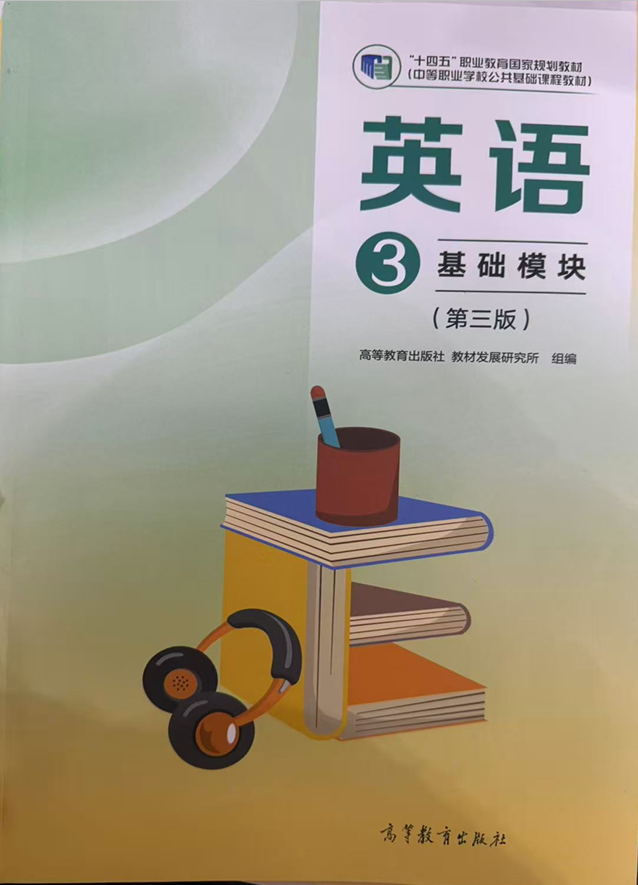
Unit 3 Artificial Intelligence(A卷·基础巩固)-《英语 基础模块3》(高教版第三版)单元过关卷(原卷版+解析版)
2026-08-20
|
2份
|
25页
|
52人阅读
|
0人下载
摘要:
**基本信息**
紧扣《英语 基础模块3》Unit 3人工智能主题,A卷基础巩固卷精准覆盖核心考点,通过分层设计(AB卷+综合卷)适配单元复习需求,强化语言能力与知识应用。
**题型特征**
|题型|题量/分值|知识覆盖|命题特色|
|----|-----------|----------|----------|
|词汇与语法|25题/25分|单词辨音(如advantage)、词义选择(如serve)、语法(现在完成时等)|聚焦基础语言能力,考点与单元主题高度契合|
|情景交际|15题/30分|AI观点讨论、应用场景对话(如机器人餐厅)|创设真实交际情境,提升跨文化沟通能力|
|阅读理解|10题/20分|AI应用领域、机器人服务利弊分析|培养信息获取与批判性思维品质|
|英汉互译|5题/15分|AI应用句(如“人脸识别助安全通行”)|强化语言转换与知识迁移能力|
|应用写作|1题/10分|AI技术介绍填空(应用、益处等)|结合单元核心词汇,提升语言输出与学习能力|
内容正文:
编写说明:本套试卷紧扣《英语 基础模块3》(高教版第三版)教材,以教材单元为基准精准覆盖核心考点。
每个单元设置AB卷,A卷为基础巩固卷,侧重基础考点训练,帮助学生扎实掌握知识要点;B卷为能力提升卷,注重知识整合与全面检测,引导学生构建知识网络。全书设计4份综合测试卷,模拟实战情境,聚焦解题能力突破,全面提升应试能力与知识应用水平。
《英语 基础模块3》(高教版第三版)《单元过关卷》
Unit 3 Artificial Intelligence
A卷·基础巩固
考试时间:70分钟 满分:100分
班级_____姓名_____学号_____成绩_____
综合卷Ⅰ(75分)
一、词汇与语法(共25小题,每小题1分,满分25分)
(一)单词辨音
从下列各小题的A、B、C三个选项中选出一个画线部分发音与所给单词画线部分发音不同的选项。(共5小题,每小题1分,共5分)
1.advantage
A.travel B.lake C.stand
【答案】B
【详解】考查字母 a 的发音。advantage、travel、stand 中 a 发 /æ/,lake 中 a 发 /eɪ/,发音不同。故选 B。
2.increasing
A.meat B.peace C.head
【答案】C
【详解】考查字母组合 ea 的发音。increasing、meat、peace 中 ea 发 /iː/,head 中 ea 发 /e/,发音不同。故选 C。
3.attitude
A.nice B.milk C.swim
【答案】A
【详解】考查字母 i 的发音。attitude、milk、swim 中 i 发 /ɪ/,nice 中 i 发 /aɪ/,发音不同。故选 A。
4.nice
A.life B.rice C.sit
【答案】C
【详解】考查字母 i 的发音。nice、life、rice 中 i 发 /aɪ/,sit 中 i 发 /ɪ/,发音不同。故选 C。
5.application
A.practice B.make C.camera
【答案】B
【详解】考查字母 a 的发音。application、practice、camera 中 a 发 /æ/,make 中 a 发 /eɪ/,发音不同。故选 B。
(二)词义选择
从下列各小题的A、B、C三个选项中选出一个与句子中画线的英文单词或短语含义相符的中文选项。(共10小题,每小题1分,共10分)
6.Robots can serve customers in smart restaurants.
A. 扫描 B. 应用 C. 服务
【答案】C
【详解】考查词义。serve 在句中表示"服务"。故选 C。
7.AI has been applied to many fields like education.
A. 应用;申请 B. 扫描 C. 服务
【答案】A
【详解】考查词义。applied 在句中表示"应用;申请"。故选 A。
8.The use of robots improves efficiency in factories.
A. 风险 B. 利益 C. 效率
【答案】C
【详解】考查词义。efficiency 在句中表示"效率"。故选 C。
9.Most people hold a welcoming attitude toward AI.
A. 态度 B. 教育 C. 实践
【答案】A
【详解】考查词义。attitude 在句中表示"态度"。故选 A。
10.AI brings obvious benefits to our daily life.
A. 益处 B. 灾难 C. 风险
【答案】A
【详解】考查词义。benefits 在句中表示"益处"。故选 A。
11.Humans may become dependent on machines.
A. 由于 B. 扫描 C. 依靠
【答案】C
【详解】考查词义。dependent on 在句中表示"依靠"。故选 C。
12.Robots can perform dangerous tasks for humans.
A. 服务 B. 执行;进行 C. 改善
【答案】B
【详解】考查词义。perform 在句中表示"执行;进行"。故选 B。
13.AI can increase the risk of harm if not used properly.
A. 益处 B. 效率 C. 风险
【答案】C
【详解】考查词义。risk 在句中表示"风险"。故选 C。
14.Thanks to technology, our life is getting easier.
A. 依靠 B. 多亏;由于 C. 扫描
【答案】B
【详解】考查词义。Thanks to 在句中表示"多亏;由于"。故选 B。
15.Like anything else, AI has its pros and cons.
A. 态度 B. 利和弊 C. 实践
【答案】B
【详解】考查词义。pros and cons 在句中表示"利和弊"。故选 B。
(三)语法运用
从下列各小题的A、B、C三个选项中选出一个最佳选项填入空白处完成句子。(共10小题,每小题1分,共10分)
16.AI ______ to many fields in recent years.
A. has been applied B. applies C. is applied
【答案】A
【详解】考查现在完成时。in recent years 提示从过去持续到现在,用 has been done。has been applied 表示"已经被应用"。applies 是一般现在时,is applied 仅表被动不带完成义。故选 A。
17.Robots ______ humans in many dangerous tasks so far.
A. replace B. replaced C. have replaced
【答案】C
【详解】考查现在完成时。so far 提示至今为止,用 have done。have replaced 表示"已经替代"。replace 和 replaced 时态不符。故选 C。
18.They ______ a smart restaurant in our city recently.
A. open B. opened C. have opened
【答案】C
【详解】考查现在完成时。recently 提示最近发生的事,用 have done。have opened 强调对现在有影响。opened 仅表过去不强调结果。故选 C。
19.Face recognition ______ people enter buildings safely since last year.
A. helps B. has helped C. helped
【答案】B
【详解】考查现在完成时。since last year 从去年起至今,用 has done。helped 是一般过去时不与 since 连用。故选 B。
20.I ______ a robot receptionist before. It was amazing.
A. have seen B. see C. saw
【答案】A
【详解】考查现在完成时。before 表示曾经有过该经历,用 have done。saw 是一般过去时强调具体时间点。故选 A。
21.Robots ______ cars in this factory every day.
A. assembled B. assemble C. assembling
【答案】B
【详解】考查一般现在时。every day 提示习惯性动作,主语 robots 复数用 assemble。assembled 是过去式,不对。故选 B。
22.The new robot is ______ than the old one in speed.
A. fast B. fastest C. faster
【答案】C
【详解】考查比较级。than 提示比较,fast 比较级为 faster。原级和最高级不能与 than 搭配。故选 C。
23.______ amazing the AI technology is!
A. What B. How C. What a
【答案】B
【详解】考查感叹句。How + adj. + 主语 + 谓语结构。What 修饰名词,此处 technology 是主语而非被修饰对象。故选 B。
24.You ______ be careful when using AI tools online.
A. should B. can C. must
【答案】A
【详解】考查情态动词。should 表建议"应当"。can 表能力,must 过于绝对。故选 A。
25.More robots ______ in factories next year.
A. use B. used C. will be used
【答案】C
【详解】考查被动语态。next year 将来时,主语 robots 是动作承受者,用 will be done。故选 C。
二、情景交际(共15小题,每小题2分,共30分)
(一)简短对话
从下列各小题的A、B、C三个选项中选出一个最佳选项完成对话。(共10小题,每小题2分,共20分)
26.Speaker A: What do you think of AI technology?
Speaker B: ________.
A. I dislike all machines. B. It brings many benefits. C. Never heard of it.
【答案】B
【详解】考查观点表达。Speaker A 问对 AI 技术的看法,应表达个人观点。B 项“It brings many benefits”表示 AI 带来很多好处,是积极正面的观点。A 项“I dislike all machines”过于消极,否定了所有机器;C 项“Never heard of it”表示没听说过,回避了问题。故选 B。
27.Speaker A: Can robots really cook food?
Speaker B: ________.
A. Yes, some already do. B. No, they only sing. C. Robots can fly indeed.
【答案】A
【详解】考查事实确认。Speaker A 问机器人能不能做饭,应基于事实回答。A 项“Yes, some already do”肯定回答并指出已有应用,符合事实。B 项“No, they only sing”否认了机器人的烹饪能力,与事实不符;C 项“Robots can fly indeed”说机器人能飞,与问题无关。故选 A。
28.Speaker A: How does AI help in education?
Speaker B: ________.
A. It makes students lazy. B. AI only helps factories. C. It provides learning tools.
【答案】C
【详解】考查 AI 教育应用。Speaker A 问 AI 如何助力教育,应说明具体帮助。C 项“It provides learning tools”指提供学习工具,是 AI 在教育中的实际应用。A 项“It makes students lazy”说让学生变懒,片面负面;B 项“AI only helps factories”说只帮工厂,否认了教育应用。故选 C。
29.Speaker A: What is face recognition used for?
Speaker B: ________.
A. Cooking dinner at home. B. Payment and security checks. C. Flying to the moon.
【答案】B
【详解】考查技术应用。Speaker A 问人脸识别用于什么,应回答其应用领域。B 项“Payment and security checks”指支付和安检,是人脸识别的主要应用。A 项“Cooking dinner at home”做饭,超出了该技术能力范围;C 项“Flying to the moon”飞往月球,与人脸识别无关。故选 B。
30.Speaker A: Are you worried about AI taking jobs?
Speaker B: ________.
A. A little, but it creates jobs. B. No, I want all gone. C. AI will destroy everything.
【答案】A
【详解】考查平衡观点。Speaker A 问是否担心 AI 夺走工作,应给出平衡回答。A 项“A little, but it creates jobs”承认担心但指出 AI 也创造新岗位,观点平衡。B 项“No, I want all gone”说希望工作都消失,不合理;C 项“AI will destroy everything”说 AI 会毁灭一切,过于极端。故选 A。
31.Speaker A: What do you think of smart restaurants?
Speaker B: ________.
A. I hate all technology. B. Robots are better than people. C. They are efficient.
【答案】C
【详解】考查辨证评价。Speaker A 问对智能餐厅的看法,应给出客观评价。C 项“They are efficient”指智能餐厅效率高,是客观正面的评价,符合语境。A 项“I hate all technology”表示讨厌所有技术,过于偏激;B 项“Robots are better than people”说机器人比人更好,过于绝对化,不够客观。故选 C。
32.Speaker A: How can we use AI wisely?
Speaker B: ________.
A. Never use any AI. B. Use it as a tool. C. Let AI control everything.
【答案】B
【详解】考查使用建议。Speaker A 问如何明智地使用 AI,应给出合理建议。B 项“Use it as a tool”指将其作为工具使用,是明智的做法。A 项“Never use any AI”从不使用,走向极端;C 项“Let AI control everything”让 AI 控制一切,也走向极端。故选 B。
33.Speaker A: What benefit does AI bring to factories?
Speaker B: ________.
A. It improves efficiency. B. It makes workers lazy. C. It closes all factories.
【答案】A
【详解】考查工业应用。Speaker A 问 AI 给工厂带来什么好处,应回答具体益处。A 项“It improves efficiency”指提升效率,是 AI 在工厂中的核心价值。B 项“It makes workers lazy”说让工人变懒,不符合事实;C 项“It closes all factories”说关闭所有工厂,夸大其辞。故选 A。
34.Speaker A: Does AI have disadvantages?
Speaker B: ________.
A. No, it is perfect. B. AI has no effect. C. Yes, like job losses.
【答案】C
【详解】考查辨证思考。Speaker A 问 AI 有没有缺点,应客观回答。C 项“Yes, like job losses”承认有缺点并举例失业,观点客观。A 项“No, it is perfect”说完美,否认了客观事实;B 项“AI has no effect”说没有影响,也不正确。故选 C。
35.Speaker A: What should we keep in mind?
Speaker B: ________.
A. Trust AI with everything. B. Never touch devices. C. Use it properly always.
【答案】C
【详解】考查使用原则。Speaker A 问使用 AI 时应记住什么,应给出合理建议。C 项“Use it properly always”指始终正确使用,是明智的使用原则。A 项“Trust AI with everything”完全信任,过于极端;B 项“Never touch devices”从不碰设备,也走向极端。故选 C。
(二)补全对话
根据对话内容,从方框中所给的A、B、C、D、E、F、G七个选项中选出五个最佳选项补全对话。(共5小题,每小题2分,共10分)
Lily: It was amazing! We saw robots putting parts together at the factory.
Lin Yang: 36. ________
Lily: Robots are used in many different fields nowadays.
Lin Yang: 37. ________ Look! Robots are even working as waiters in this restaurant!
Lily: That’s true. The food made by robots tastes as good as that by real chefs.
Lin Yang: 38. ________
Lily: I don’t think so. Humans design and control all the robots.
Lin Yang: You are quite right. 39. ________
Lily: Anyway, robots can help cut costs and work more efficiently.
Lin Yang: 40. ________
Lily: Glad we agree on that!
A. I agree. Our life is getting easier.
B. Humans may not be needed in the future.
C. To be honest, I prefer communicating with people.
D. Well, on costs we are on the same page.
E. I want to become a chef now.
F. But to be honest, I still like talking to real people.
G. The weather is very nice today.
【答案】
36. C 37. A 38. B 39. F 40. D
【解析】
36. C。Lily 讲述参观工厂见到机器人作业,Lin Yang 说出自己更偏爱与人交流,引出对机器人的话题讨论。
37. A。Lily 说明机器人应用广泛,Lin Yang 表示认同,感慨生活越来越便利,接着举例餐厅机器人,衔接下文。
38. B。听到机器人厨艺媲美厨师,Lin Yang 产生顾虑:未来人类或许会被取代。正好承接 Lily 的反驳。
39. F。Lin Yang 认可人类主导机器人这一观点,随即转折,表明自己依旧喜欢和真人沟通。
40. D。Lily 谈到机器人降本增效的优势,Lin Yang 表示在成本方面二人观点一致,呼应结尾的对话。
三、阅读理解(共10小题,每小题2分,共20分)
阅读下列两篇短文,根据短文内容从每题所给的A、B、C三个选项中选出一个最佳选项。
A
Thanks to computer science, AI has been applied to many fields like self-driving, medical practices, smart homes and education. It is changing our life and work in every way, but is it good or bad?
Most people welcome AI. It makes life more enjoyable and convenient. For example, face recognition helps with mobile payment and security. AI also works in factories, freeing people from heavy labor and performing dangerous tasks.
However, AI could cause job losses as machines replace human workers. Humans may become too dependent on machines. If AI is not used properly, it can even increase the risk of harm.
Like any technology, AI has its pros and cons. Whether it is good depends on how people use it.
41.What fields has AI been applied to?
A. Only cooking and cleaning.
B. Self-driving, medicine and education.
C. Only music and arts.
42.How does AI help in factories?
A. It makes workers sleep. B. It closes the factory. C. It frees people from heavy labor.
43.What is one benefit of face recognition?
A. It makes coffee. B. It helps with mobile payment. C. It reads books.
44.What risk does AI bring?
A. Possible job losses for workers. B. More holidays for all. C. Free food for everyone.
45.What does the passage conclude?
A. AI is completely harmful. B. AI has both good and bad sides. C. AI solves every problem.
【答案】41.B 42.C 43.B 44.A 45.B
【导语】本文辩证讨论AI的多领域应用及其利与弊,最终结论是技术的好坏取决于人类如何使用。
【详解】41.细节理解题。根据第一段"self-driving, medical practices, smart homes and education"可知应用领域。
42.细节理解题。根据第二段"freeing people from heavy labor"可知解放了重体力劳动。
43.细节理解题。根据第二段"face recognition helps with mobile payment"可知用于移动支付。
44.细节理解题。根据第三段"cause job losses as machines replace human workers"可知可能导致失业。
45.主旨大意题。根据末段"AI has its pros and cons"可知有利有弊,取决于使用方式。
B
Robot waiters are now serving in smart restaurants. They can show warm welcoming expressions, serve dishes and even communicate with customers. These robots work without getting tired and can serve many tables at once.
Robot chefs are also being used. They prepare dishes according to a pre-designed system. Since the cooking process is controlled by a computer, the flavor and quality of the dishes can be guaranteed. The food is as delicious as that made by human chefs.
However, some people still prefer traditional restaurants. They enjoy communicating with human waiters. To be honest, while robots bring efficiency, human service has its own charm. Both have their place in our world.
46.What can robot waiters do?
A. Serve dishes and talk to customers. B. Fly in the sky alone. C. Only clean tables.
47.Why can robot chefs guarantee food quality?
A. The cooking process is computer-controlled.
B. They taste every dish by hand.
C. Customers control the kitchen.
48.How is the food by robot chefs described?
A. Much worse than human food. B. Not edible at all. C. As delicious as human-made food.
49.Why do some prefer traditional restaurants?
A. They enjoy talking with human waiters.
B. Robots are too expensive.
C. Traditional food costs less.
50.What is the main idea of the passage?
A. Robots will replace all humans.
B. Traditional restaurants will close.
C. Robot and human service each have value.
【答案】46.A 47.A 48.C 49.A 50.C
【导语】本文介绍机器人服务员和厨师在智能餐厅的应用,同时指出人类服务仍有其独特魅力。
【详解】46.细节理解题。根据第一段"serve dishes and even communicate with customers"可知能上菜和与顾客交流。
47.细节理解题。根据第二段"cooking process is controlled by a computer"可知质量由计算机系统保障。
48.细节理解题。根据第二段"as delicious as that made by human chefs"可知味道与人类厨师相当。
49.细节理解题。根据第三段"They enjoy communicating with human waiters"可知喜欢与人交流。
50.主旨大意题。全文既肯定机器人效率也尊重人类服务价值,末句"Both have their place"点题。
综合卷Ⅱ(25分)
四、英汉互译(共5小题,每小题3分,满分15分)
51.AI has been applied to many fields such as education.
_____________________________________________
【答案】人工智能已经被应用到教育等多个领域。
【详解】考查英译中。has been applied 为现在完成时被动,such as 表示"例如"举例说明。
52.Face recognition helps people enter buildings safely.
_____________________________________________
【答案】人脸识别帮助人们安全地进入建筑。
【详解】考查英译中。help sb. do 结构表示"帮助做某事",enter buildings 表示"进入建筑"。
53.Robots can free people from heavy and dangerous labor.
_____________________________________________
【答案】机器人可以把人们从繁重和危险的劳动中解放出来。
【详解】考查英译中。free...from 表示"使……摆脱",heavy and dangerous 并列修饰 labor。
54.对于AI,我们应该持有欢迎但谨慎的态度。(attitude)
_____________________________________________
【答案】We should hold a welcoming but careful attitude toward AI.
【详解】考查中译英。attitude 表示"态度",hold an attitude toward 为搭配。
55.技术是福还是祸,在于我们如何使用。(blessing or curse)
_____________________________________________
【答案】Whether technology is a blessing or a curse depends on how we use it.
【详解】考查中译英。whether...or...引导主语从句,depends on 表示"取决于"。单元格言翻译。
五、应用写作(满分10分)
56.请根据下面括号内的汉语提示完成科技介绍填空,每空一词或短语。
Dear Lily,
I want to share my thoughts on AI technology. AI has been ____ (1) ____(应用) to many fields like education and medicine. It brings obvious ____ (2) ____(益处) to our daily life.
AI can ____ (3) ____(改善) efficiency in factories and help people save time. However, we should use it ____ (4) ____(恰当地) and never become too ____ (5) ____(依赖的) on machines.
Best regards,
Li Hua
【答案】(1) applied (2) benefits (3) improve (4) properly (5) dependent
【详解】
(1) 考查动词。applied 表示"应用",has been applied 为现在完成时被动语态,过去分词形式。
(2) 考查名词。benefits 表示"益处",复数形式与前文 obvious 搭配,表示多种益处。
(3) 考查动词。improve 表示"改善",情态动词 can 后接动词原形。核心词汇之一。
(4) 考查副词。properly 表示"恰当地",修饰动词 use。注意以 ly 结尾的副词形式。
(5) 考查形容词。dependent 表示"依赖的",become dependent on 表示"变得依赖……"。
原创精品资源学科网独家享有版权,侵权必究!
原创精品资源学科网独家享有版权,侵权必究!
原创精品资源学科网独家享有版权,侵权必究!
学科网(北京)股份有限公司
$
编写说明:本套试卷紧扣《英语 基础模块3》(高教版第三版)教材,以教材单元为基准精准覆盖核心考点。
每个单元设置AB卷,A卷为基础巩固卷,侧重基础考点训练,帮助学生扎实掌握知识要点;B卷为能力提升卷,注重知识整合与全面检测,引导学生构建知识网络。全书设计4份综合测试卷,模拟实战情境,聚焦解题能力突破,全面提升应试能力与知识应用水平。
《英语 基础模块3》(高教版第三版)《单元过关卷》
Unit 3 Artificial Intelligence
A卷·基础巩固
考试时间:70分钟 满分:100分
班级_____姓名_____学号_____成绩_____
综合卷Ⅰ(75分)
一、词汇与语法(共25小题,每小题1分,满分25分)
(一)单词辨音
从下列各小题的A、B、C三个选项中选出一个画线部分发音与所给单词画线部分发音不同的选项。(共5小题,每小题1分,共5分)
1.advantage
A.travel B.lake C.stand
2.increasing
A.meat B.peace C.head
3.attitude
A.nice B.milk C.swim
4.nice
A.life B.rice C.sit
5.application
A.practice B.make C.camera
(二)词义选择
从下列各小题的A、B、C三个选项中选出一个与句子中画线的英文单词或短语含义相符的中文选项。(共10小题,每小题1分,共10分)
6.Robots can serve customers in smart restaurants.
A. 扫描 B. 应用 C. 服务
7.AI has been applied to many fields like education.
A. 应用;申请 B. 扫描 C. 服务
8.The use of robots improves efficiency in factories.
A. 风险 B. 利益 C. 效率
9.Most people hold a welcoming attitude toward AI.
A. 态度 B. 教育 C. 实践
10.AI brings obvious benefits to our daily life.
A. 益处 B. 灾难 C. 风险
11.Humans may become dependent on machines.
A. 由于 B. 扫描 C. 依靠
12.Robots can perform dangerous tasks for humans.
A. 服务 B. 执行;进行 C. 改善
13.AI can increase the risk of harm if not used properly.
A. 益处 B. 效率 C. 风险
14.Thanks to technology, our life is getting easier.
A. 依靠 B. 多亏;由于 C. 扫描
15.Like anything else, AI has its pros and cons.
A. 态度 B. 利和弊 C. 实践
(三)语法运用
从下列各小题的A、B、C三个选项中选出一个最佳选项填入空白处完成句子。(共10小题,每小题1分,共10分)
16.AI ______ to many fields in recent years.
A. has been applied B. applies C. is applied
17.Robots ______ humans in many dangerous tasks so far.
A. replace B. replaced C. have replaced
18.They ______ a smart restaurant in our city recently.
A. open B. opened C. have opened
19.Face recognition ______ people enter buildings safely since last year.
A. helps B. has helped C. helped
20.I ______ a robot receptionist before. It was amazing.
A. have seen B. see C. saw
21.Robots ______ cars in this factory every day.
A. assembled B. assemble C. assembling
22.The new robot is ______ than the old one in speed.
A. fast B. fastest C. faster
23.______ amazing the AI technology is!
A. What B. How C. What a
24.You ______ be careful when using AI tools online.
A. should B. can C. must
25.More robots ______ in factories next year.
A. use B. used C. will be used
二、情景交际(共15小题,每小题2分,共30分)
(一)简短对话
从下列各小题的A、B、C三个选项中选出一个最佳选项完成对话。(共10小题,每小题2分,共20分)
26.Speaker A: What do you think of AI technology?
Speaker B: ________.
A. I dislike all machines. B. It brings many benefits. C. Never heard of it.
27.Speaker A: Can robots really cook food?
Speaker B: ________.
A. Yes, some already do. B. No, they only sing. C. Robots can fly indeed.
28.Speaker A: How does AI help in education?
Speaker B: ________.
A. It makes students lazy. B. AI only helps factories. C. It provides learning tools.
29.Speaker A: What is face recognition used for?
Speaker B: ________.
A. Cooking dinner at home. B. Payment and security checks. C. Flying to the moon.
30.Speaker A: Are you worried about AI taking jobs?
Speaker B: ________.
A. A little, but it creates jobs. B. No, I want all gone. C. AI will destroy everything.
31.Speaker A: What do you think of smart restaurants?
Speaker B: ________.
A. I hate all technology. B. Robots are better than people. C. They are efficient.
32.Speaker A: How can we use AI wisely?
Speaker B: ________.
A. Never use any AI. B. Use it as a tool. C. Let AI control everything.
33.Speaker A: What benefit does AI bring to factories?
Speaker B: ________.
A. It improves efficiency. B. It makes workers lazy. C. It closes all factories.
34.Speaker A: Does AI have disadvantages?
Speaker B: ________.
A. No, it is perfect. B. AI has no effect. C. Yes, like job losses.
35.Speaker A: What should we keep in mind?
Speaker B: ________.
A. Trust AI with everything. B. Never touch devices. C. Use it properly always.
(二)补全对话
根据对话内容,从方框中所给的A、B、C、D、E、F、G七个选项中选出五个最佳选项补全对话。(共5小题,每小题2分,共10分)
Lily: It was amazing! We saw robots putting parts together at the factory.
Lin Yang: 36. ________
Lily: Robots are used in many different fields nowadays.
Lin Yang: 37. ________ Look! Robots are even working as waiters in this restaurant!
Lily: That’s true. The food made by robots tastes as good as that by real chefs.
Lin Yang: 38. ________
Lily: I don’t think so. Humans design and control all the robots.
Lin Yang: You are quite right. 39. ________
Lily: Anyway, robots can help cut costs and work more efficiently.
Lin Yang: 40. ________
Lily: Glad we agree on that!
A. I agree. Our life is getting easier.
B. Humans may not be needed in the future.
C. To be honest, I prefer communicating with people.
D. Well, on costs we are on the same page.
E. I want to become a chef now.
F. But to be honest, I still like talking to real people.
G. The weather is very nice today.
三、阅读理解(共10小题,每小题2分,共20分)
阅读下列两篇短文,根据短文内容从每题所给的A、B、C三个选项中选出一个最佳选项。
A
Thanks to computer science, AI has been applied to many fields like self-driving, medical practices, smart homes and education. It is changing our life and work in every way, but is it good or bad?
Most people welcome AI. It makes life more enjoyable and convenient. For example, face recognition helps with mobile payment and security. AI also works in factories, freeing people from heavy labor and performing dangerous tasks.
However, AI could cause job losses as machines replace human workers. Humans may become too dependent on machines. If AI is not used properly, it can even increase the risk of harm.
Like any technology, AI has its pros and cons. Whether it is good depends on how people use it.
41.What fields has AI been applied to?
A. Only cooking and cleaning.
B. Self-driving, medicine and education.
C. Only music and arts.
42.How does AI help in factories?
A. It makes workers sleep. B. It closes the factory. C. It frees people from heavy labor.
43.What is one benefit of face recognition?
A. It makes coffee. B. It helps with mobile payment. C. It reads books.
44.What risk does AI bring?
A. Possible job losses for workers. B. More holidays for all. C. Free food for everyone.
45.What does the passage conclude?
A. AI is completely harmful. B. AI has both good and bad sides. C. AI solves every problem.
B
Robot waiters are now serving in smart restaurants. They can show warm welcoming expressions, serve dishes and even communicate with customers. These robots work without getting tired and can serve many tables at once.
Robot chefs are also being used. They prepare dishes according to a pre-designed system. Since the cooking process is controlled by a computer, the flavor and quality of the dishes can be guaranteed. The food is as delicious as that made by human chefs.
However, some people still prefer traditional restaurants. They enjoy communicating with human waiters. To be honest, while robots bring efficiency, human service has its own charm. Both have their place in our world.
46.What can robot waiters do?
A. Serve dishes and talk to customers. B. Fly in the sky alone. C. Only clean tables.
47.Why can robot chefs guarantee food quality?
A. The cooking process is computer-controlled.
B. They taste every dish by hand.
C. Customers control the kitchen.
48.How is the food by robot chefs described?
A. Much worse than human food. B. Not edible at all. C. As delicious as human-made food.
49.Why do some prefer traditional restaurants?
A. They enjoy talking with human waiters.
B. Robots are too expensive.
C. Traditional food costs less.
50.What is the main idea of the passage?
A. Robots will replace all humans.
B. Traditional restaurants will close.
C. Robot and human service each have value.
综合卷Ⅱ(25分)
四、英汉互译(共5小题,每小题3分,满分15分)
51.AI has been applied to many fields such as education.
_____________________________________________
52.Face recognition helps people enter buildings safely.
_____________________________________________
53.Robots can free people from heavy and dangerous labor.
_____________________________________________
54.对于AI,我们应该持有欢迎但谨慎的态度。(attitude)
_____________________________________________
55.技术是福还是祸,在于我们如何使用。(blessing or curse)
_____________________________________________
五、应用写作(满分10分)
56.请根据下面括号内的汉语提示完成科技介绍填空,每空一词或短语。
Dear Lily,
I want to share my thoughts on AI technology. AI has been ____ (1) ____(应用) to many fields like education and medicine. It brings obvious ____ (2) ____(益处) to our daily life.
AI can ____ (3) ____(改善) efficiency in factories and help people save time. However, we should use it ____ (4) ____(恰当地) and never become too ____ (5) ____(依赖的) on machines.
Best regards,
Li Hua
原创精品资源学科网独家享有版权,侵权必究!
原创精品资源学科网独家享有版权,侵权必究!
原创精品资源学科网独家享有版权,侵权必究!
学科网(北京)股份有限公司
$
资源预览图

1

2

3
由于学科网是一个信息分享及获取的平台,不确保部分用户上传资料的 来源及知识产权归属。如您发现相关资料侵犯您的合法权益,请联系学科网,我们核实后将及时进行处理。