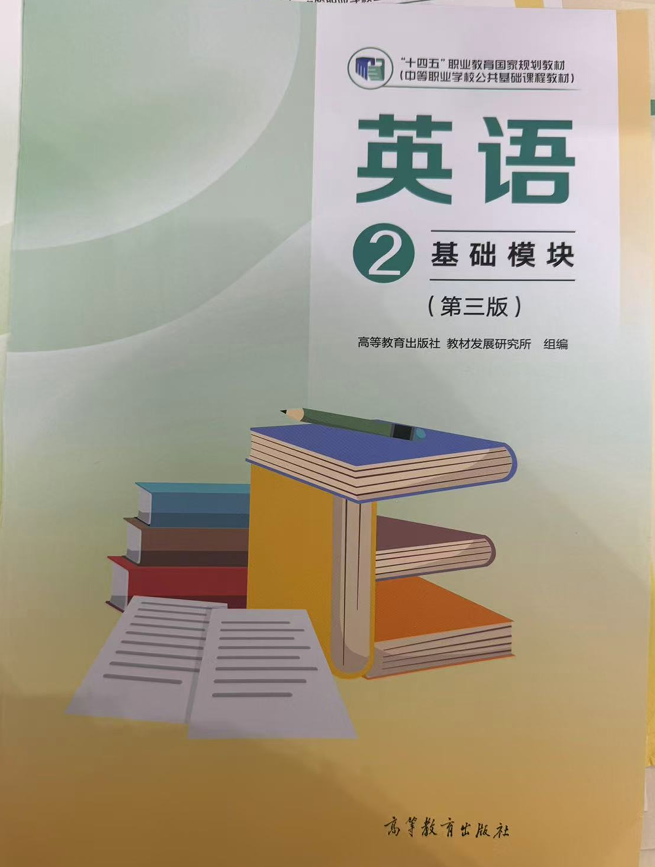
Unit 6 Craftsmanship(B卷·能力提升)-《英语 基础模块2》(高教版第三版)单元过关卷(原卷版+解析版)
2026-08-20
|
2份
|
25页
|
41人阅读
|
0人下载
内容正文:
编写说明:本套试卷紧扣《英语 基础模块2》(高教版第三版)教材,以教材单元为基准精准覆盖核心考点。
每个单元设置AB卷,A卷为基础巩固卷,侧重基础考点训练,帮助学生扎实掌握知识要点;B卷为能力提升卷,注重知识整合与全面检测,引导学生构建知识网络。全书设计4份综合测试卷,模拟实战情境,聚焦解题能力突破,全面提升应试能力与知识应用水平。
《英语 基础模块2》(高教版第三版)《单元过关卷》
Unit 6 Craftsmanship
B卷·能力提升
考试时间:70分钟 满分:100分
班级_____姓名_____学号_____成绩_____
综合卷Ⅰ(75分)
一、词汇与语法(共25小题,每小题1分,满分25分)
(一)单词辨音
从下列各小题的A、B、C三个选项中选出一个画线部分发音与所给单词画线部分发音不同的选项。(共5小题,每小题1分,共5分)
1. creative
A. head B. tea C. bread
2. impressive
A. she B. pen C. desk
3. short
A. doctor B. horse C. for
4. patience
A. cake B. cat C. map
5. outstanding
A. group B. soup C. cow
(二)词义选择
从下列各小题的A、B、C三个选项中选出一个与句子中画线的英文单词或短语含义相符的中文选项。(共10小题,每小题1分,共10分)
6.Swiss watches are connected to their impressive design and high quality.
A. 寻找 B. 与……有联系 C. 代表
7.I know what Swiss Made stands for now.
A. 集中于 B. 代表 C. 需要
8.Products made in Germany are believed to be durable.
A. 独特的 B. 标准的 C. 耐用的
9.Once upon a time, there was a craftsman named Li Wei.
A. 近来 B. 从前 C. 最后
10.The skills were passed on from generation to generation.
A. 忽略 B. 传递 C. 需要
11.He has solved more than 100 technical problems.
A. 忽略 B. 准备 C. 解决
12.Due to his great contribution, Li was awarded the title.
A. 贡献 B. 耐心 C. 产品
13.The baker kept learning and tried to make something new every day.
A. 持续;保持 B. 停止 C. 忽略
14.Practice makes perfect is an important saying.
A. 独特的 B. 完美的 C. 移动的
15.Swiss watchmakers have developed a unique tradition.
A. 工艺 B. 设计 C. 传统
(三)语法运用
从下列各小题的A、B、C三个选项中选出一个最佳选项填入空白处完成句子。(共10小题,每小题1分,共10分)
16.Quality ______ as the life of products.
A. regards B. regarded C. is regarded
17.The skills ______ from generation to generation at that time.
A. were passed on B. passed on C. passes on
18.A unique tradition ______ in Swiss watchmaking.
A. slowly develops B. already developed C. has been already developed
19.The building of another bridge ______ by the engineers.
A. carefully plans B. already planned C. is being already planned
20.Some new workshops ______ in her hometown last year.
A. were built B. builds C. built
21.By the time he retired, he ______ there for 40 years.
A. worked B. has worked C. had worked
22.He kept ______ new skills even after he became a master.
A. learning B. learn C. learned
23.He wishes he ______ more skilled when he was young.
A. was B. is C. had been
24.It was his patience ______ made him a great craftsman.
A. which B. that C. what
25.He practiced very hard ______ he could win the competition.
A. so that B. because C. although
二、情景交际(共15小题,每小题2分,共30分)
(一)简短对话
从下列各小题的A、B、C三个选项中选出一个最佳选项完成对话。(共10小题,每小题2分,共20分)
26.Speaker A: Have you read about Li's story?
Speaker B: ________.
A. Not yet B. I see C. Yes, I have
27.Speaker A: What award did Li receive?
Speaker B: ________.
A. Skills Award B. Sports medal C. Music prize
28.Speaker A: I think practice is the key to success.
Speaker B: ________.
A. I'm tired B. I agree C. Good luck
29.Speaker A: What should we learn from Butcher Ding?
Speaker B: ________.
A. Keep practicing B. Give up fast C. Stop working
30.Speaker A: John is really good at fixing machines.
Speaker B: ________.
A. I'm sorry B. That's true C. Don't worry
31.Speaker A: How long has Li worked as a welder?
Speaker B: ________.
A. One year B. Five years C. Over thirty years
32.Speaker A: What was Li Wei known for?
Speaker B: ________.
A. Craftsmanship B. Laziness C. Bad temper
33.Speaker A: What did Li Wei decide to create?
Speaker B: ________.
A. A painting B. A machine C. A wood piece
34.Speaker A: I want to master my craft like Li Wei.
Speaker B: ________.
A. I'm tired B. Good luck C. I'm busy
35.Speaker A: Hard work turned wood into art.
Speaker B: ________.
A. I agree B. I doubt it C. I'm not sure
(二)补全对话
根据对话内容,从方框中所给的A、B、C、D、E、F、G七个选项中选出五个最佳选项补全对话。(共5小题,每小题2分,共10分)
Xiao Yu: Here we are! This is my grandpa's kite shop.
Mark: Oh, all the kites are so beautiful.
Xiao Yu: Yeah. 36. ______
Mark: A great kite maker! 37. ______
Xiao Yu: Over there! Look at the butterfly by the door.
Mark: Wonderful! You are so clever.
Xiao Yu: Actually, 38. ______
Mark: Wow. 39. ______
Xiao Yu: I can show you. Shall we make a kite together?
Mark: 40. ______ Besides, what is needed to make a kite?
A. Is there a kite that was made by you, Xiao Yu?
B. I was taught to make kites when I was 3.
C. Sure! That would be great.
D. Most of them are made by my grandpa.
E. I see why you are so good at making kites!
F. I want to buy a bike.
G. I don't like bamboo.
三、阅读理解(共10小题,每小题2分,共20分)
阅读下列两篇短文,根据短文内容从每题所给的A、B、C三个选项中选出一个最佳选项。
A
Li became a welder after graduating from a vocational school in 1986. He asked experienced mentors for advice and kept studying and practicing.
He joined skill competitions and won the Chinese Skills Award. Over thirty years, he solved more than 100 technical problems.
His great contribution earned him the title Craftsman of the Nation. His work inspired many young workers in China.
41.What did Li do after graduating from vocational school?
A. He started to work as a welder.
B. He became a doctor.
C. He became a teacher.
42.How did Li learn welding skills?
A. He learned from TV. B. He asked for advice and kept practicing. C. He never practiced.
43.What award did Li win?
A. The Chinese Skills Award. B. An Olympic medal. C. A Nobel Prize.
44.How many technical problems did Li solve?
A. Less than 10. B. More than 100. C. About 5.
45.Why was Li awarded "Craftsman of the Nation"?
A. Because he was rich. B. Because he was lucky. C. Due to his great contribution.
B
Li Wei was a craftsman in a small village. He spent hours every day making furniture in his workshop.
One day, he accepted a challenge to create a work showing his village's spirit. He carefully shaped every curve and line.
Villagers admired his wooden sculpture. It turned simple wood into a symbol of village pride. His dedication and attention to detail made the work special and beyond ordinary standards. Many people learned careful work can bring pride to their village.
46.Where did Li Wei live?
A. In a small village. B. In a big city. C. In a foreign country.
47.What did Li Wei craft every day?
A. Cars. B. Food. C. Pieces of furniture.
48.What new challenge did Li Wei decide to take up?
A. Opening a big factory.
B. Creating a piece standing for the spirit of his village.
C. Moving to the city.
49.What did Li Wei turn a simple piece of wood into?
A. A toy for children. B. A symbol of the village's pride. C. A machine.
50.What does Li Wei's story tell us about craftsmanship?
A. Dedication and attention to detail can create something beyond standards.
B. Craftsmanship is about luck.
C. Hard work is not needed.
综合卷Ⅱ(25分)
四、英汉互译(共5小题,每小题3分,满分15分)
51.Products made in Germany are believed to be durable.
_____________________________________________
52.His story is still told to show the importance of continued practice.
_____________________________________________
53.Li kept on studying hard and practicing a lot to improve his skills.
_____________________________________________
54.工匠的奉献和努力是取得杰出成就的关键。(dedication)
_____________________________________________
55.她的技能如此精湛,以至于每个人都感到惊叹。(so...that)
_____________________________________________
五、应用写作(满分10分)
56.假定你是李华,请根据以下提示写一篇英文短文,介绍你心目中的一位工匠榜样。(满分10分)
提示:1. 简要介绍这位工匠的基本信息(姓名、职业等);2. 描述他/她的工作态度与技能特点;3. 说明你从他/她身上学到了什么。
要求:词数80—100词;条理清晰,语句通顺。
_____________________________________________________________________________________________________________________________________________________________________________________________________________________________________________________
原创精品资源学科网独家享有版权,侵权必究!
原创精品资源学科网独家享有版权,侵权必究!
原创精品资源学科网独家享有版权,侵权必究!
学科网(北京)股份有限公司
$
编写说明:本套试卷紧扣《英语 基础模块2》(高教版第三版)教材,以教材单元为基准精准覆盖核心考点。
每个单元设置AB卷,A卷为基础巩固卷,侧重基础考点训练,帮助学生扎实掌握知识要点;B卷为能力提升卷,注重知识整合与全面检测,引导学生构建知识网络。全书设计4份综合测试卷,模拟实战情境,聚焦解题能力突破,全面提升应试能力与知识应用水平。
《英语 基础模块2》(高教版第三版)《单元过关卷》
Unit 6 Craftsmanship
B卷·能力提升
考试时间:70分钟 满分:100分
班级_____姓名_____学号_____成绩_____
综合卷Ⅰ(75分)
一、词汇与语法(共25小题,每小题1分,满分25分)
(一)单词辨音
从下列各小题的A、B、C三个选项中选出一个画线部分发音与所给单词画线部分发音不同的选项。(共5小题,每小题1分,共5分)
1. creative
A. head B. tea C. bread
【答案】B
【详解】考查画线部分发音。creative、tea 中 ea 发 /i/ 或 /iː/,head、bread 中 ea 发 /e/。故选 B。
2. impressive
A. she B. pen C. desk
【答案】A
【详解】考查画线部分发音。impressive、pen、desk 中 e 发 /ɪ/ 或 /e/,she 中 e 发 /iː/。故选 A。
3. short
A. doctor B. horse C. for
【答案】C
【详解】考查画线部分发音。short、for、horse 中 or 发 /ɔː/,doctor 中 or 发 /ə/,发音不同。故选 A。
4. patience
A. cake B. cat C. map
【答案】A
【详解】考查画线部分发音。patience、cake 中 a 发 /eɪ/,cat、map 中 a 发 /æ/。故选 A。
5. outstanding
A. group B. soup C. cow
【答案】A
【详解】考查画线部分发音。outstanding、cow 中 ou 发 /aʊ/,group、soup 中 ou 发 /uː/。与所给词发音不同的是 group。故选 A。
(二)词义选择
从下列各小题的A、B、C三个选项中选出一个与句子中画线的英文单词或短语含义相符的中文选项。(共10小题,每小题1分,共10分)
6.Swiss watches are connected to their impressive design and high quality.
A. 寻找 B. 与……有联系 C. 代表
【答案】B
【详解】考查词义。connected to 在句中表示"与……有联系"。故选 B。
7.I know what Swiss Made stands for now.
A. 集中于 B. 代表 C. 需要
【答案】B
【详解】考查词义。stands for 在句中表示"代表"。故选 B。
8.Products made in Germany are believed to be durable.
A. 独特的 B. 标准的 C. 耐用的
【答案】C
【详解】考查词义。durable 在句中表示"耐用的"。故选 C。
9.Once upon a time, there was a craftsman named Li Wei.
A. 近来 B. 从前 C. 最后
【答案】B
【详解】考查词义。Once upon a time 在句中表示"从前"。故选 B。
10.The skills were passed on from generation to generation.
A. 忽略 B. 传递 C. 需要
【答案】B
【详解】考查词义。passed on 在句中表示"传递"。故选 B。
11.He has solved more than 100 technical problems.
A. 忽略 B. 准备 C. 解决
【答案】C
【详解】考查词义。solved 在句中表示"解决"。故选 C。
12.Due to his great contribution, Li was awarded the title.
A. 贡献 B. 耐心 C. 产品
【答案】A
【详解】考查词义。contribution 在句中表示"贡献"。故选 A。
13.The baker kept learning and tried to make something new every day.
A. 持续;保持 B. 停止 C. 忽略
【答案】A
【详解】考查词义。kept 在句中表示"持续;保持"。故选 A。
14.Practice makes perfect is an important saying.
A. 独特的 B. 完美的 C. 移动的
【答案】B
【详解】考查词义。perfect 在句中表示"完美的"。故选 B。
15.Swiss watchmakers have developed a unique tradition.
A. 工艺 B. 设计 C. 传统
【答案】C
【详解】考查词义。tradition 在句中表示"传统"。故选 C。
(三)语法运用
从下列各小题的A、B、C三个选项中选出一个最佳选项填入空白处完成句子。(共10小题,每小题1分,共10分)
16.Quality ______ as the life of products.
A. regards B. regarded C. is regarded
【答案】C
【详解】考查被动语态。主语是动作的承受者,结构为 be + 过去分词。被动语态,一般现在时单数用 is regarded。故选 C。
17.The skills ______ from generation to generation at that time.
A. were passed on B. passed on C. passes on
【答案】A
【详解】考查一般过去时。表示过去发生的动作或状态,动词需用过去式。被动语态,一般过去时复数用 were passed on。故选 A。
18.A unique tradition ______ in Swiss watchmaking.
A. slowly develops B. already developed C. has been already developed
【答案】C
【详解】考查被动语态。主语是动作的承受者,结构为 be + 过去分词。被动语态, done。故选 C。
19.The building of another bridge ______ by the engineers.
A. carefully plans B. already planned C. is being already planned
【答案】C
【详解】考查被动语态。主语是动作的承受者,结构为 be + 过去分词。被动语态,现在进行时 is being done。故选 C。
20.Some new workshops ______ in her hometown last year.
A. were built B. builds C. built
【答案】A
【详解】考查一般过去时。表示过去发生的动作或状态,动词需用过去式。被动语态,一般过去时复数用 were built。故选 A。
21.By the time he retired, he ______ there for 40 years.
A. worked B. has worked C. had worked
【答案】C
【详解】考查过去完成时。表示在过去某一时间之前已完成的动作,结构为 had + 过去分词。By the time + 过去时间,主句用 had worked。故选 C。
22.He kept ______ new skills even after he became a master.
A. learning B. learn C. learned
【答案】A
【详解】考查非谓语动词。keep doing 表示持续做某事,用动名词。故选 A。
23.He wishes he ______ more skilled when he was young.
A. was B. is C. had been
【答案】C
【详解】考查虚拟语气。与现在事实相反时,if 从句用过去式(be 用 were),主句用 would/could + 动词原形。wish + had done 表示对过去的虚拟。故选 C。
24.It was his patience ______ made him a great craftsman.
A. which B. that C. what
【答案】B
【详解】考查强调句型 It is/was + 被强调部分 + that/who...。It is/was + 被强调部分 + that...。故选 B。
25.He practiced very hard ______ he could win the competition.
A. so that B. because C. although
【答案】A
【详解】考查状语从句。so that 引导目的状语从句。故选 A。
二、情景交际(共15小题,每小题2分,共30分)
(一)简短对话
从下列各小题的A、B、C三个选项中选出一个最佳选项完成对话。(共10小题,每小题2分,共20分)
26.Speaker A: Have you read about Li's story?
Speaker B: ________.
A. Not yet B. I see C. Yes, I have
【答案】C
【详解】考查完成时态问句回答。Speaker A 问是否读过李的故事,C 项“Yes, I have”是现在完成时一般疑问句的标准肯定回答。A 项“Not yet”虽语法正确但属否定回答;B 项“I see”意为“我明白了”,不回答此问句。故选 C。
27.Speaker A: What award did Li receive?
Speaker B: ________.
A. Skills Award B. Sports medal C. Music prize
【答案】A
【详解】考查信息询问与回答。Speaker A 问李获得了什么奖,A 项“Skills Award”意为“技能大奖”,准确回答了李获得的中华技能大奖。B 项“Sports medal”意为“体育奖牌”,与技能领域不符;C 项“Music prize”意为“音乐奖”,同样不符。故选 A。
28.Speaker A: I think practice is the key to success.
Speaker B: ________.
A. I'm tired B. I agree C. Good luck
【答案】B
【详解】考查观点表达与回应。Speaker A 说练习是成功的关键,B 项“I agree”意为“我同意”,是对观点的明确赞同。A 项“I'm tired”意为“我累了”,语义不符;C 项“Good luck”是祝愿用语,不用于回应观点。故选 B。
29.Speaker A: What should we learn from Butcher Ding?
Speaker B: ________.
A. Keep practicing B. Give up fast C. Stop working
【答案】A
【详解】考查启示询问与回答。Speaker A 问应从庖丁身上学到什么,A 项“Keep practicing”意为“不断练习”,准确回答了庖丁故事的核心启示。B 项“Give up fast”意为“快点放弃”,与故事精神相反;C 项“Stop working”意为“停止工作”,同样矛盾。故选 A。
30.Speaker A: John is really good at fixing machines.
Speaker B: ________.
A. I'm sorry B. That's true C. Don't worry
【答案】B
【详解】考查评价与回应。Speaker A 说John擅长修机器,B 项“That's true”意为“确实如此”,是对评价的恰当回应。A 项“I'm sorry”常用于道歉,语义不符;C 项“Don't worry”意为“别担心”,不回应评价。故选 B。
31.Speaker A: How long has Li worked as a welder?
Speaker B: ________.
A. One year B. Five years C. Over thirty years
【答案】C
【详解】考查时间长度询问与回答。Speaker A 问李做了多久焊工,C 项“Over thirty years”意为“超过三十年”,准确回答了李的从业年限。A 项“One year”意为“一年”,时间太短;B 项“Five years”意为“五年”,同样不符合李长期从业的事实。故选 C。
32.Speaker A: What was Li Wei known for?
Speaker B: ________.
A. Craftsmanship B. Laziness C. Bad temper
【答案】A
【详解】考查信息询问与回答。Speaker A 问李伟以什么闻名,A 项“Craftsmanship”意为“工匠精神”,准确回答了李伟的品质特征。B 项“Laziness”意为“懒惰”,与工匠精神相反;C 项“Bad temper”意为“坏脾气”,不描述工匠品质。故选 A。
33.Speaker A: What did Li Wei decide to create?
Speaker B: ________.
A. A painting B. A machine C. A wood piece
【答案】C
【详解】考查信息询问与回答。Speaker A 问李伟决定创作什么,C 项“A wood piece”意为“一件木雕作品”,准确回答了李伟的创作内容。A 项“A painting”意为“一幅画”,与木雕不符;B 项“A machine”意为“一台机器”,语义无关。故选 C。
34.Speaker A: I want to master my craft like Li Wei.
Speaker B: ________.
A. I'm tired B. Good luck C. I'm busy
【答案】B
【详解】考查目标表达与回应。Speaker A 说想像李伟一样精通手艺,B 项“Good luck”意为“祝你好运”,是对对方追求技能目标的鼓励回应。A 项“I'm tired”意为“我累了”,语义不符;C 项“I'm busy”意为“我很忙”,不回应对方目标。故选 B。
35.Speaker A: Hard work turned wood into art.
Speaker B: ________.
A. I agree B. I doubt it C. I'm not sure
【答案】A
【详解】考查观点表达与回应。Speaker A 说努力把木头变成了艺术品,A 项“I agree”意为“我同意”,是对观点的明确赞同。B 项“I doubt it”意为“我怀疑”,态度消极;C 项“I'm not sure”意为“我不确定”,态度模糊不合语境。故选 A。
(二)补全对话
根据对话内容,从方框中所给的A、B、C、D、E、F、G七个选项中选出五个最佳选项补全对话。(共5小题,每小题2分,共10分)
Xiao Yu: Here we are! This is my grandpa's kite shop.
Mark: Oh, all the kites are so beautiful.
Xiao Yu: Yeah. 36. ______
Mark: A great kite maker! 37. ______
Xiao Yu: Over there! Look at the butterfly by the door.
Mark: Wonderful! You are so clever.
Xiao Yu: Actually, 38. ______
Mark: Wow. 39. ______
Xiao Yu: I can show you. Shall we make a kite together?
Mark: 40. ______ Besides, what is needed to make a kite?
A. Is there a kite that was made by you, Xiao Yu?
B. I was taught to make kites when I was 3.
C. Sure! That would be great.
D. Most of them are made by my grandpa.
E. I see why you are so good at making kites!
F. I want to buy a bike.
G. I don't like bamboo.
【答案】
36. D 37. A 38. B 39. E 40. C
【解析】
36.D 上文说风筝很漂亮,D项解释说大部分是爷爷做的。
37.A 下文说"那边!看门边的蝴蝶",A项问是否有你做的风筝。
38.B 上文说"你真聪明",B项解释3岁就学做风筝。
39.E 上文解释后,E项说理解为什么你做风筝这么好。
40.C 上文问是否一起做风筝,C项欣然同意。
三、阅读理解(共10小题,每小题2分,共20分)
阅读下列两篇短文,根据短文内容从每题所给的A、B、C三个选项中选出一个最佳选项。
A
Li became a welder after graduating from a vocational school in 1986. He asked experienced mentors for advice and kept studying and practicing.
He joined skill competitions and won the Chinese Skills Award. Over thirty years, he solved more than 100 technical problems.
His great contribution earned him the title Craftsman of the Nation. His work inspired many young workers in China.
41.What did Li do after graduating from vocational school?
A. He started to work as a welder.
B. He became a doctor.
C. He became a teacher.
42.How did Li learn welding skills?
A. He learned from TV. B. He asked for advice and kept practicing. C. He never practiced.
43.What award did Li win?
A. The Chinese Skills Award. B. An Olympic medal. C. A Nobel Prize.
44.How many technical problems did Li solve?
A. Less than 10. B. More than 100. C. About 5.
45.Why was Li awarded "Craftsman of the Nation"?
A. Because he was rich. B. Because he was lucky. C. Due to his great contribution.
【答案】41.A 42.B 43.A 44.B 45.C
【导语】本文是一篇人物介绍,讲述高铁技师李从职校毕业生成长为"大国工匠"的奋斗历程,突出坚持不懈、勤学苦练的工匠精神。
【详解】41.根据第一段"Li became a welder after graduating from a vocational school in 1986"可知,李毕业后从焊工做起。故选 A。
42.细节理解题。根据“asked experienced mentors for advice and kept studying and practicing”可知,李通过请教导师、持续学习和练习来提高焊接技能。故选 B。
43.根据第二段"won the Chinese Skills Award"可知,李获得中华技能大奖。故选 A。
44.根据第二段"he solved more than 100 technical problems"可知,李解决了百余个技术难题。故选 B。
45.细节理解题。根据“His great contribution earned him the title”可知,他因贡献突出而获得“国家工匠”称号。故选 C。
B
Li Wei was a craftsman in a small village. He spent hours every day making furniture in his workshop.
One day, he accepted a challenge to create a work showing his village's spirit. He carefully shaped every curve and line.
Villagers admired his wooden sculpture. It turned simple wood into a symbol of village pride. His dedication and attention to detail made the work special and beyond ordinary standards. Many people learned careful work can bring pride to their village.
46.Where did Li Wei live?
A. In a small village. B. In a big city. C. In a foreign country.
47.What did Li Wei craft every day?
A. Cars. B. Food. C. Pieces of furniture.
48.What new challenge did Li Wei decide to take up?
A. Opening a big factory.
B. Creating a piece standing for the spirit of his village.
C. Moving to the city.
49.What did Li Wei turn a simple piece of wood into?
A. A toy for children. B. A symbol of the village's pride. C. A machine.
50.What does Li Wei's story tell us about craftsmanship?
A. Dedication and attention to detail can create something beyond standards.
B. Craftsmanship is about luck.
C. Hard work is not needed.
【答案】46.A 47.C 48.B 49.B 50.A
【导语】本文是一则工匠故事,讲述乡村工匠李伟以专注和奉献将一个简单木块雕刻成村庄骄傲象征的过程,彰显工匠精神的价值。
【详解】46.根据第一段"in a small village"可知,李伟住在小村庄。
47.细节理解题。根据“making furniture in his workshop”可知,李伟每天制作家具。故选 C。
48.细节理解题。根据“create a work showing his village's spirit”可知,他决定创作一件代表村庄精神的作品。故选 B。
49.细节理解题。根据“turned simple wood into a symbol of village pride”可知,他把一块普通木头变成了村庄骄傲的象征。故选 B。
50.全文强调李伟的奉献与专注创造出了超越标准的作品。故选 A。
综合卷Ⅱ(25分)
四、英汉互译(共5小题,每小题3分,满分15分)
51.Products made in Germany are believed to be durable.
_____________________________________________
【答案】人们相信德国制造的产品是耐用的。
【详解】被动语态 are believed 表示"被认为";durable 表示"耐用的"。
52.His story is still told to show the importance of continued practice.
_____________________________________________
【答案】他的故事至今仍被传颂,以说明不断练习的重要性。
【详解】被动语态 is told 表示"被讲述";importance 表示"重要性"。
53.Li kept on studying hard and practicing a lot to improve his skills.
_____________________________________________
【答案】李不断刻苦学习和大量练习以提高自己的技能。
【详解】keep on doing 表示"不断做某事";improve 表示"提高"。
54.工匠的奉献和努力是取得杰出成就的关键。(dedication)
_____________________________________________
【答案】The dedication and hard work of a craftsman are the key to outstanding achievement.
【详解】dedication 表示"奉献";outstanding achievement 表示"杰出成就"。
55.她的技能如此精湛,以至于每个人都感到惊叹。(so...that)
_____________________________________________
【答案】Her skills were so excellent that everyone was amazed.
【详解】so...that 表示"如此……以至于";amazed 表示"惊叹"。
五、应用写作(满分10分)
56.假定你是李华,请根据以下提示写一篇英文短文,介绍你心目中的一位工匠榜样。(满分10分)
提示:1. 简要介绍这位工匠的基本信息(姓名、职业等);2. 描述他/她的工作态度与技能特点;3. 说明你从他/她身上学到了什么。
要求:词数80—100词;条理清晰,语句通顺。
_____________________________________________________________________________________________________________________________________________________________________________________________________________________________________________________
A Craftsman I Admire
The craftsman I admire most is Li, a senior high-speed railway technician. After graduating from a vocational school, he started to work as a welder in 1986.
As a modest man, Li often asked experienced mentors for advice. He kept on studying hard and practicing a lot. He took part in many skill competitions and won the Chinese Skills Award. Over the past 30 years, he has solved more than 100 technical problems.
From Li's story, I have learned that a good craftsman comes from continued practice. Patience, dedication and the effort to keep improving are the keys to success. He shows that vocational school graduates can also achieve great things.
【详解】考查翻译能力。
【词汇积累】vocational school 职业学校;welder 焊工;modest 谦虚的;dedication 奉献;keep improving 不断进步。
【句式拓展】He shows that vocational school graduates can also achieve great things. 该句使用宾语从句 that...,强调职校生也能取得巨大成就,紧扣本单元工匠精神主题。
【点睛】范文按"基本信息—工作经历—学习感悟"展开,紧扣Craftsmanship单元主题,以大国工匠李的故事为例,突出不断练习和奉献的重要性。
原创精品资源学科网独家享有版权,侵权必究!
原创精品资源学科网独家享有版权,侵权必究!
原创精品资源学科网独家享有版权,侵权必究!
学科网(北京)股份有限公司
$
资源预览图

1

2

3
由于学科网是一个信息分享及获取的平台,不确保部分用户上传资料的 来源及知识产权归属。如您发现相关资料侵犯您的合法权益,请联系学科网,我们核实后将及时进行处理。