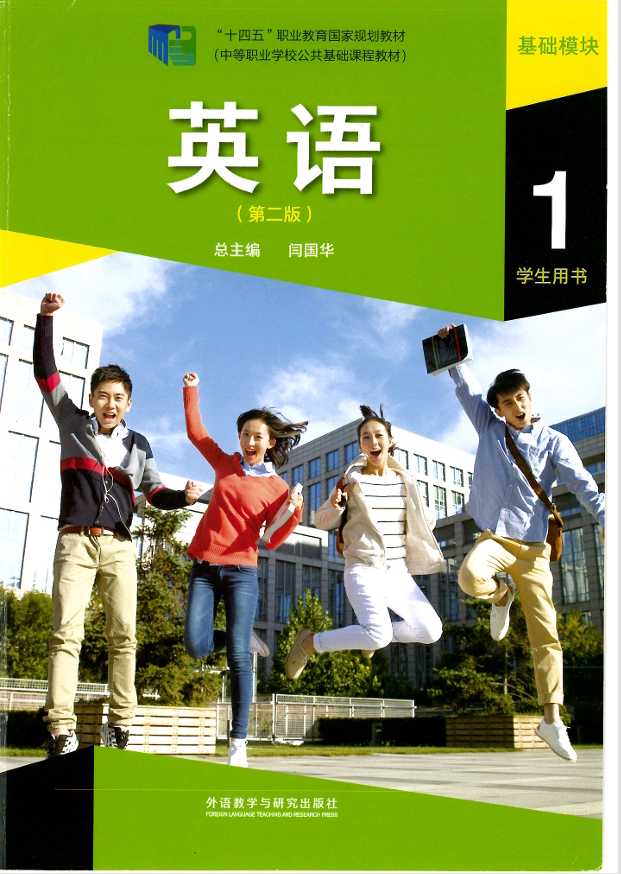
1.4 School Is Interesting-Grammar(课件)- 《英语 基础模块1》(外研版 第二版)【上好课】
2026-08-11
|
45页
|
404人阅读
|
5人下载
精品
摘要:
这是中职英语《英语 基础模块1》(外研版第二版)Unit 1的同步教学课件,围绕一般现在时和主谓一致展开,包含导入、规则讲解、师生互动、课堂练习及小结作业,提供规则梳理、例句分析、即时训练等学习支架。
资料特色在于采用“规则-例句-应用”三步教学法,结合校园情境设计互动练习,如用频度副词写校园日常短句培养语言能力,通过主谓一致原则对比提升思维品质,分层练习发展学习能力。能帮助学生降低语法畏难情绪,规范表达,也为教师提供系统教学资源,便于同步教学实施。中职学生英语基础较薄弱,对语法学习存在畏难情绪,该资料通过直观实例和情境化练习,帮助学生建立学习信心,掌握基础语法知识,为后续英语学习奠定基础。
内容正文:
Unit 1
School Is Interesting
《英语 基础模块1》
(外研版 第二版)
Grammar
教学目标:
知识目标:熟记一般现在时使用场景、动词三单变化规则、be 动词时态结构与时态频度标志词;掌握主谓一致五大基础判定规则,分清不同主语对应的谓语动词形式。
01
技能目标:能正确完成动词形式填空练习,熟练转换一般现在时肯定、否定、疑问句;可结合校园日常短句运用时态,依据主谓一致规范写出简单完整句子。
02
情感目标:降低语法畏难情绪,愿意主动完成语法基础练习;体会英语主谓匹配的语言逻辑性,树立规范使用英语表达的意识。
03
目录
01
导入
02
一般现在时+师生互动+课堂练习
03
主谓一致+师生互动+课堂练习
04
课堂小结+课后作业
Contents
3
导入
4
5
Find the rules
• Our teachers always give us lots of practical tips.
• Do you want to speak confidently in English?
• I’m really happy at this new school.
• Are you crazy about dancing?
Grammar in Use Present simple
一般现在时
7
一般现在时的用法
2. My mother is a teacher.
我的妈妈是一名老师。
1. I have long hair.
我有长头发。
表示事物或人现在的状态、特征等
一般现在时的用法
2. He often watches TV after dinner.
他经常晚饭后看电视。
1. I go to school by bike every day.
我每天骑自行车上学。
表示现在经常性、习惯性的动作或状态
一般现在时的用法
2. Guangzhou lies in the south of China.
广州位于中国的南部。
1. The Earth goes around the Sun.
地球绕着太阳转。
表示客观事实和普遍真理
一般现在时的用法
2. Two heads are better than one.
三个臭皮匠,胜过诸葛亮。
1. An apple a day keeps the doctor away.
一天一苹果,医生远离我。
格言警句
I am a student.
You are friendly.
He is from Germany.
She is 13 years old.
It is in the north of China.
当谓语是
be动词时
一般现在时的结构
肯定句:
主语+am/is/are+其他.
I am a student.
You are friendly.
He is from Germany.
She is 13 years old.
It is in the north of China.
当谓语是
be动词时
一般现在时的结构
我(I)用am
你(you)用 are
is 用于
他(he)、她(she)、它(it)
I am not a student.
You are not friendly.
He is not from Germany.
She is not 13 years old.
It is not in the north of China.
当谓语是
be动词时
一般现在时的结构
否定句:
主语+am/is/are+not+其他.
He is from Germany.
当谓语是
be动词时
一般现在时的结构
一般疑问句:
Am/Is/Are+主语+其他?
Is he from Germany?
当谓语是
be动词时
一般现在时的结构
特殊疑问句:
疑问词+am/is/are+主语+其他?
He is from Germany.
(对划线部分提问)
Where is he from?
一般
疑问句
当谓语是
实意动词时
I play the guitar.
You
We
They
He plays the guitar.
She
It goes to the park.
肯定句:
主语 + do/does +其他.
主语:第一/二人称、 第三人称复数
谓语动词:do
主语:
第三人称单数
谓语动词:does
一般现在时的结构
当谓语是
实意动词时
I do not play the guitar.
You
We
They
He does not play the guitar.
She
It does not go to the park.
否定句:
主语 + do/does+not +V原形+其他.
主语:第一/二人称、 第三人称复数
谓语动词:助动词don't + V原形
主语:
第三人称单数
谓语动词:助动词doesn't + V原形
一般现在时的结构
当谓语是
实意动词时
一般疑问句:
Do+第一/二人称、
第三人称复数+V原形+其他?
Yes, 主语+do.
No,主语+don't.
Do I
you
we
they play the guitar?
Yes, I
you
we
they do.
No, don't.
一般现在时的结构
当谓语是
实意动词时
一般疑问句:
Does+第三人称单数+V原形+其他?
Yes, 主语+does.
No,主语+doesn't.
Does he
she
it play the guitar?
go to the park?
Yes, he
she
it does.
No, doesn't.
一般现在时的结构
当谓语是
实意动词时
一般现在时的结构
I go to school by bus.
(对划线部分提问)
How do you go to school?
He gets up at 6.
(对划线部分提问)
When does he get up?
当谓语是
实意动词时
一般现在时的结构
How do you go to school?
When does he get up?
特殊疑问句:
疑问词+do/does+主语+V原形+其他?
一般
疑问句
当谓语是
实意动词时
Work out the rule
* 当主语是he/she/it时,在动词后加____或_____.
* 在问句中,如主语是 I/you/we/they ,主语前加 _____
如主语是 he/she/it,在主语前加______
-es
do
一般现在时的结构
-s
does
Be动词 实义动词
肯定式 主语+am/is/are+其他. 主语+do/does +其他.
否定式 主语+am/is/are +not+其他. 主语+don't /doesn't +V原形+其他.
一般疑问句 Am/Is/Are+主语+其他? Do/Does +主语+V原形+其他?
特殊疑问句 疑问词+ am/is/are+主语+其他? 疑问词+do/does +主语+V原形+其他?
知识总结
S1: _____ Sam ____ (go) to school by bus?
S2: No, he _______. He _____ (go) to school
on foot.
S1: ______ Sam and his friends _____ (play)
games during the morning break?
S2: Yes, they _____.
S1: What _____ Sam ____ (do) after school?
S2: He _______ (take) part in the school
band practice.
Does go
doesn't
goes
Do play
do
does do
takes
Use the information in the article on page
17 to complete the conversation below.
即时训练
1. Jim usually ________ (have) lunch at home.
2. Liu Huahua _______ (be) twenty years old.
3. How many students ________ (be) there in your class?
4. ---______ she _______ (study) hard?
---Yes, she _________.
has
is
are
Does
study
does
用所给动词的适当形式填空。
即时训练
主谓一致
27
主谓一致
主谓一致是指谓语动词在人称和数上要和主语一致。
3大基本原则
1. 就近/就远原则
2. 语法一致原则
3. 意义一致原则
考点一、就近/就远原则
就近原则
e.g
Either she or you are wrong.
=Either she or you are wrong. 要么她错要么你错了。
Neither you nor I enjoy the movie. 我们两个都不喜欢那个电影。
Not only the students but also the teacher is running on the playground. 不仅学生而且老师都在操场上跑步。
There is a book and two pens.
=There are two pens and a book.
谓语动词的数由离它最近的主语决定
either....or... 要么...要么...
neither...nor... 既不...也不...
not only...but also... 不但...而且...
There be.../Here be...的句型中,并列名词做主语时
考点一、就近/就远原则
就远原则
e.g
The little boy, as well as his parents,likes exercising.
Mr. Brown, together with the students, has gone for a picnic.
Nothing but two apples is in the fridge.
Tom, rather than his friends, is wrong.
谓语动词的数由离它最远的主语决定
as well as 和...一样
with/together with/along with 和...一起...
but/except 除了...之外.
rather than 而不是
考点二、语法一致原则
谓语动词与其主语在人称和数方面要保持一致
由and/both...and...连接并列主语时,谓语动词要用复数形式
Nina and I are good friends.
Both my father and my mother are teachers.
someone,anyone,everything,nothing等复合不定代词作主语时,谓语动词用单数形式
Everything is possible.
Something is wrong with the phone.
用each,either,neither,one,every one等+of+名词/代词复数做主语时,谓语动词用
单数形式
Each of us has a gift.
Neither of the bags is mine.
考点二、语法一致原则
谓语动词与其主语在人称和数方面要保持一致
动名词doing,不定式to do做主语时,谓语动词用单数形式
Eating too much candy is bad for your teeth.
To solve the problem is not easy.
复数名词如clothes, glasses,shoes,trousers,pants等做主语时,谓语动词用复数形式
The pants look cool.
My shoes are under the shelf.
a pair/piece/basket/glass等+名词做主语 谓语动词用单数形式
pairs/pieces/baskets/glasses等+名词做主语 谓语动词用复数形式
This pair of shoes is not yours.
Two pieces of bread make me so full.
考点二、语法一致原则
谓语动词与其主语在人称和数方面要保持一致
a number of+名词做主语时,“大量;许多” 谓语动词用复数形式
the number of+名词复数做主语时,“...的数量” 谓语动词用单数形式
A number of visitors come to China every year. 每年大量游客来到中国。
The number of students in my class is 53.我们班学生的数量是53.
a lot of/lots of/plenty of+名词
分数/百分数+of+名词
Lots of people have been to the Great Wall.
许多人都去过长城了。
做主语时,谓语动词取决于名词
About three forths of water has wasted.
大概四分之三的水被浪费了
不可数名词--谓语单数
可数名词复数--谓语复数
考点三、意义一致原则
谓语动词的单复数主要看主语表达的概念
① 集体名词做主语 如:class family group等.
指一个不可分割的集体时-------谓语单数
强调集体中的每一个成员时-------谓语复数
My family is a happy one and my family are watching TV now.
我的家是个幸福的家,现在我的每一个家人都在看电视。
② 集体名词做主语
如people, police等,形单意复---谓语复数
news,physics,maths,works(工厂)等形复意单-----谓语单数
The people here are friendly.这里的人们很友好。
Maths is my favorite subject. 数学是我最喜爱的科目。
考点三、意义一致原则
谓语动词的单复数主要看主语表达的概念
③ 表示度量、时间、价格等名词复数或词组做主语时,做一个整体,谓语动词----单数形式
Six dollars is enough.六美元足够了。
Five years is a long time. 五年是一段很长的时间。
④ 从句做主语,看作一个整体 谓语动词-----单数形式
What she said is good for you.她说的话都是为了你好。
考点三、意义一致原则
谓语动词的单复数主要看主语表达的概念
⑤ “the+形容词”表示一类人,做主语,谓语动词----复数
The old here live a happy life. 这里的老人们过着幸福的生活。
The poor are working hard for a better life.穷人为更好的生活而努力奋斗。
⑥ 乘法/加法算式做主语----谓语动词可单数可复数
除法/减法算式做主语---谓语必须单数
Three times four is/are twelve.三乘四得十二。
Ten minus five is five.十减掉五等于五。
Eight divided two is four.八除以二得四。
练 习
1. Neither Linda nor I (be)interested in P. E.
2. Either he or you (have)to finish it.
3. Here (be) three bananas and an orange.
4. Not only she but also I (walk)to school every day.
5. There (be) a student and two teachers in the office.
6. Either my father or I (do) the housework every day.
7. Neither you nor Lucy (run)faster than Jane.
am
have
are
walk
is
do
runs
用所给词的正确形式填空
练 习
单项选择
1. Henry, as well as his parents, tired of cooking now.
A. was B. were C. is D. are
2. Not only my sister but also I good at dancing. Both of us dancers.
A. are; are B. am; are C. is; is D. are; is
3. All the students, except Lary, to school by bus.
A. comes B. come C. reach D. reaches
4. I, together with my mom, model plane every Sunday.
A. made B. make C. makes
课堂练习
39
Complete the sentences with the proper form of the words in brackets.
(1) I __________________ (live) in the dormitory
(2) __________________ (be) everybody ready to start?
(3) ________________ Lisa _______________ (get) up at seven every day? (4) It __________________ (take) me half an hour to get to school.
(5) Sun Tao __________________ (walk) his dog every morning.
(6) I __________________ (like) running, but I like swimming.
(7) This __________________ (be) my book. That is mine.
(8) A happy life __________________ (come) from hard work.
For more practice
live
Grammar in Use Present simple
get
takes
Is
walks
Does
don’t like
is
comes
Complete the sentences with the proper form of the words in brackets.
(1) She __________________ (be) a law student now.
(2) Lisa always __________________ (go) to the park after dinner.
(3) All the buildings in our school __________________(face) south.
(4) Every student __________________(follow) the rules of the school.
(5) Helping others __________________ (make) you happy.
(6) Three days __________________ (be) enough for us to finish the task.
(7) My family __________________ (like) watching CCTV news every night.
(8) Young people ________________ (be) filled with greater optimism and enterprise.
For more practice
is
Grammar in Use Agreement I
follows
is
makes
face
goes
like
are
课堂小结+课后作业
42
1. 核心词汇:回顾并巩固本课一般现在时、主谓一致相关语法词汇与时态标志词(often, always, usually, sometimes)、语法常用短语(change into, turn into),以及 “客观真理”“频度副词” 等拓展词汇,梳理动词第三人称单数词形变化规律、be 动词搭配及主谓一致用法搭配。 2. 重点句型:梳理文本与练习中的核心句型,包括描述日常习惯的 “I often do.../ He always does...”、句式转换的 “Do/Does sb. do...?”“主语 + don’t/doesn’t + 动词原形”、be 动词句型 “Am/Is/Are + 主语 + 表语?”,以及主谓一致典型句式 “Every
student has.../ All students have...”。 3. 语用知识:总结本课 “辨
析语境 — 判断时态 — 匹配主谓” 的语法解题方法,明确日常
作息、校园生活、客观真理三类实用表达语境,回顾主谓一致
判定技巧,夯实英语基础语法框架,引导学生针对动词变形、
特殊主语用法自主查漏补缺。
课堂小结
43
1. 完成教材课后剩余动词填空练习题;
2. 运用一般现在时撰写 6 句个人校园日常短句;
3. 背诵动词三单变化规则、主谓一致核心要点。
课后作业
44
SEE YOU NEXT TIME!
45
$
资源预览图

1

2

3

4

5

6
由于学科网是一个信息分享及获取的平台,不确保部分用户上传资料的 来源及知识产权归属。如您发现相关资料侵犯您的合法权益,请联系学科网,我们核实后将及时进行处理。