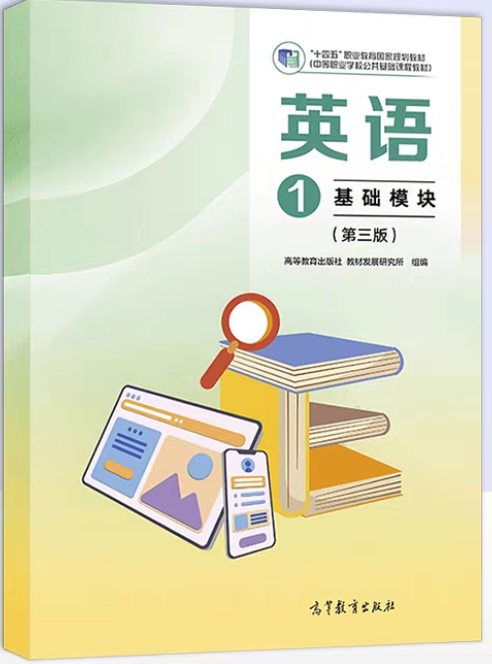
Unit 8 People and Events(B卷·能力提升)《英语 基础模块1》(高教版第三版)单元过关卷(原卷版+解析版)
2026-08-07
|
2份
|
28页
|
53人阅读
|
1人下载
摘要:
**基本信息**
本试卷为《英语 基础模块1》(高教版第三版)Unit 8 People and Events B卷能力提升卷,聚焦知识整合与能力检测,通过科技、社会事件等真实情境,提升学生语言运用与思维品质,适配单元复习需求。
**题型特征**
|题型|题量/分值|知识覆盖|命题特色|
|----|-----------|----------|----------|
|英语知识运用|55分|语音辨音(5题)、词汇语法(25题,如method/connected/情态动词)、完形填空(10题,语篇理解)、短文填空(5题,语法应用)|结合自行车改造、京张铁路等真实事件,考查基础与综合运用|
|阅读|50分|阅读理解(15题,科技展览/铁路发展等)、补全对话(5题,交际能力)|通过问题卡、对比分析等设计,培养信息获取与逻辑推理能力|
|书面表达|15分|事件介绍(人物/事件名称、成就、品质)|以科技周为情境,融合文化意识与语言输出,提升综合表达|
内容正文:
编写说明:本套试卷紧扣《英语 基础模块1》(高教版第三版)教材,以教材单元为基准精准覆盖核心考点。
每个单元设置AB卷,A卷为基础巩固卷,侧重基础考点训练,帮助学生扎实掌握知识要点;B卷为能力提升卷,注重知识整合与全面检测,引导学生构建知识网络。全书设计4份综合测试卷,模拟实战情境,聚焦解题能力突破,全面提升应试能力与知识应用水平。
《英语 基础模块1》(高教版第三版)《单元过关卷》
Unit 8 People and Events
B卷·能力提升
考试时间:120分钟 满分:120分
班级_____姓名_____学号_____成绩_____
第一部分 英语知识运用(共四节,满分55分)
第一节 语音辨音(共5小题;每小题1分,满分5分)
从下面每题A、B、C、D四个选项中选出划线部分读音与其他三个单词划线部分读音不同的一项。
1. A. food B. good C. moon D. school
2. A. bulb B. public C. use D. bus
3. A. work B. born C. short D. morning
4. A. think B. through C. these D. method
5. A. designed B. completed C. improved D. returned
【答案】1. B 2. C 3. A 4. C 5. B
【解析】1. good /ɡʊd/ 中 oo 发 /ʊ/,其余三项发 /uː/。
2. use /juːz/ 中 u 发 /juː/,其余三项发 /ʌ/。
3. work /wɜːk/ 中 or 发 /ɜː/,其余三项发 /ɔː/。
4. these /ðiːz/ 中 th 发 /ð/,其余三项发 /θ/。
5. completed /kəmˈpliːtɪd/ 中 ed 发 /ɪd/,其余三项发 /d/。
第二节 单项选择(共25小题;每小题1分,满分25分)
从 A、B、C、D 四个选项中选出可以填入空白处的最佳选项。
6.The young technician used a new __________ to save energy in the workshop.
A. bulb|
B. hunger |
C. province |
D. method
B. hunger |
C. province |
D. method
【答案】D
【解析】method表示“方法”,符合节能语境。
7.A smartphone can keep people __________ even when they live far away.
A. modern |
B. connected |
C. brilliant |
D. chief
B. connected |
C. brilliant |
D. chief
【答案】B
【解析】connected表示“相连的,保持联系的”。
8.The railway __________ from the old town to the port.
A. records |
B. reduces |
C. stretches |
D. invents
B. reduces |
C. stretches |
D. invents
【答案】C
【解析】stretch from...to...表示“从……延伸到……”。
9.The project is difficult, but the team believes it can __________ all problems.
A. design |
B. record |
C. overcome |
D. return
B. record |
C. overcome |
D. return
【答案】C
【解析】overcome problems表示“克服问题”。
10.The guide asked visitors to __________ the key facts in their notebooks.
A. reduce |
B. record |
C. invent |
D. stretch
B. record |
C. invent |
D. stretch
【答案】B
【解析】record facts表示“记录事实”。
11.The new bridge was completed ahead __________ schedule.
A. on |
B. for |
C. of |
D. with
B. for |
C. of |
D. with
【答案】C
【解析】ahead of schedule为固定搭配。
12.The old engineer is well known __________ his careful designs.
A. as |
B. from |
C. with |
D. for
B. from |
C. with |
D. for
【答案】D
【解析】be well known for表示“因……而闻名”。
13.More people can share ideas because paper is cheap __________ make.
A. to |
B. for |
C. with |
D. at
B. for |
C. with |
D. at
【答案】A
【解析】be + adj. + to do结构,to make符合。
14.The invention helps farmers __________ hunger in poor areas.
A. reduce |
B. return |
C. stretch |
D. record
B. return |
C. stretch |
D. record
【答案】A
【解析】reduce hunger表示“减少饥饿”。
15.The student will __________ to the reading room after lunch.
A. create |
B. complete |
C. return |
D. believe
B. complete |
C. return |
D. believe
【答案】C
【解析】return to表示“回到”。
16.—May I take photos here?
—No, you __________. The objects are old.
A. may |
B. mustn't |
C. should |
D. can
B. mustn't |
C. should |
D. can
【答案】B
【解析】No和old objects提示禁止拍照。
17.Workers __________ wear helmets when they enter the tunnel.
A. must |
B. might |
C. could |
D. may
B. might |
C. could |
D. may
【答案】A
【解析】must表示必须,符合安全规定。
18.The girl over there __________ be Anna. She has gone to Beijing.
A. should |
B. must |
C. can't |
D. may
B. must |
C. can't |
D. may
【答案】C
【解析】has gone to Beijing说明不可能是Anna。
19.You __________ finish the poster today. We still have two days.
A. mustn't |
B. don't have to |
C. can't |
D. shouldn't
B. don't have to |
C. can't |
D. shouldn't
【答案】B
【解析】still have two days说明不必今天完成。
20.Could you __________ me more about the invention?
A. tells |
B. telling |
C. told |
D. tell
B. telling |
C. told |
D. tell
【答案】D
【解析】情态动词Could后接动词原形。
21.The workers __________ the tunnel safely after many tests.
A. complete |
B. completed |
C. will complete |
D. are completing
B. completed |
C. will complete |
D. are completing
【答案】B
【解析】after many tests表示过去完成的动作。
22.A museum is a place __________ people can learn from old objects.
A. where |
B. who |
C. which |
D. when
B. who |
C. which |
D. when
【答案】A
【解析】先行词place表示地点,从句缺地点状语。
23.The report __________ by the students includes facts about two railways.
A. write |
B. wrote |
C. written |
D. writing
B. wrote |
C. written |
D. writing
【答案】C
【解析】report与write为被动关系,written作后置定语。
24.It is careful planning __________ makes a hard task possible.
A. who |
B. where |
C. what |
D. that
B. where |
C. what |
D. that
【答案】D
【解析】强调句结构It is...that...。
25.Only when the data is clear __________ we choose the best route.
A. can |
B. are |
C. we |
D. do
B. are |
C. we |
D. do
【答案】A
【解析】Only置于句首,主句部分倒装;can表示能够。
26.The train runs __________ more quietly than the old one.
A. much |
B. many |
C. more |
D. most
B. many |
C. more |
D. most
【答案】A
【解析】much可修饰比较级more quietly。
27.If people keep testing ideas, they __________ better solutions.
A. found |
B. find |
C. will find |
D. are finding
B. find |
C. will find |
D. are finding
【答案】C
【解析】if条件从句遵循主将从现。
28.__________ the problem, the team compared three different plans.
A. Solving |
B. Solved |
C. Solve |
D. To solve
B. Solved |
C. Solve |
D. To solve
【答案】D
【解析】To solve表示目的。
29.The story shows __________ knowledge and courage can change a difficult situation.
A. that |
B. who |
C. where |
D. when
B. who |
C. where |
D. when
【答案】A
【解析】that引导宾语从句。
30.—Why do you like the plane?
—__________
A. No, I don't.
B. Because it connects faraway places quickly.
C. It runs on the railway.
D. I went there by plane yesterday.
【答案】B
【解析】问句询问原因,A项用Because回答。
第三节 完形填空(共10小题;每小题1.5分,满分15分)
阅读下面短文,从每题所给的A、B、C、D四个选项中选出最佳选项。
Inside a riverside repair center, old bicycles waited for reuse. Collected from local families, these bikes would be turned into reading carts for the nearby community library.
Workers prepared empty baskets and wrote down repair steps. The work called for great 31____, for each cart must hold books securely. The team had to 32____ worn‑out parts before fitting new shelves. Broken wheels, loose seats and rusty chains needed careful treatment. Though tiring, the job felt highly 33____: these carts would bring books to elderly residents far from the library.
In early tests, the first cart moved 34____ on riverside paths. The group started to gather useful 35____ from readers about local road conditions. One experienced volunteer offered practical advice for wider wheels. The team adjusted their design 36____ the riverside path often turned wet after rain. After fitting new wheels, the cart performed much better.
From this project, workers learned a key 37____. Any creation can serve people well only when it meets real‑life 38____. This small repair project brought warm 39____ to the whole neighborhood, and left every member a deep 40____.
31.A.patience B.courage C.power D.pride
32.A.hide B.check C.borrow D.miss
33.A.noisy B.empty C.careless D.meaningful
34.A.brightly B.cheaply C.slowly D.angrily
35.A.meals B.tickets C.information D.machines
36.A.until B.because C.before D.unless
37.A.secret B.truth C.excuse D.mistake
38.A.dangers B.rules C.needs D.plans
39.A.memory B.pleasure C.pity D.fear
40.A.lesson B.dream C.task D.wish
【答案】31.A 32.B 33.D 34.C 35.C 36.B 37.B 38.C 39.A 40.A
【导语】本文讲述河边维修中心将居民闲置旧自行车改造为社区流动图书推车。工作人员检修零部件,根据读者反馈与路况不断改良车辆。这次实践让大家领悟:一切创造,只有满足现实需要,才能真正发挥价值。
【详解】
31. 名词词义辨析,这份工作需要十足耐心,保证推车能够稳妥承载图书;patience 耐心;courage 勇气、power 力量、pride 骄傲,故选 A;
32. 动词词义辨析,加装书架之前团队必须检查磨损损坏的零部件;check 检查;hide 隐藏、borrow 借用、miss 错过,故选 B;
33. 形容词词义辨析,虽然辛苦,但这份工作非常有意义,可以给老人送去图书;meaningful 有意义的;noisy 吵闹的、empty 空的、careless 粗心的,故选 D;
34. 副词词义辨析,早期测试时第一台推车在河边道路行驶缓慢;slowly 缓慢地;brightly 明亮地、cheaply 廉价地、angrily 生气地,故选 C;
35. 名词词义辨析,团队收集读者关于路况的有用信息;information 信息;meals 饭菜、tickets 票据、machines 机器,故选 C;
36. 连词转化为语境词义辨析,团队修改设计,是因为河边小路雨后经常潮湿湿滑;because 因为;until 直到、before 在…… 之前、unless 除非,故选 B;
37. 名词词义辨析,从项目中工作人员明白了一条重要事实;truth 事实;secret 秘密、excuse 借口、mistake 错误,故选 B;
38. 名词词义辨析,创造只有满足现实的需求,才能很好服务于人;needs 需求;dangers 危险、rules 规则、plans 计划,故选 C;
39. 名词词义辨析,小小的维修改造项目,给整个社区留下温暖的回忆;memory 回忆;pleasure 愉悦、pity 惋惜、fear 恐惧,故选 A;
40. 名词词义辨析,也给每一位参与者留下深刻启示;lesson 启示、经验;dream 梦想、task 任务、wish 愿望,故选 A。
第四节 短文填空(共5小题;每小题2分,满分10分)
The Jingzhang Railway is remembered because it was designed and built by Chinese engineers. Zhan Tianyou showed an interest in machines at an early age. After he returned to China, he worked ____41____ (hard) on the railway project. The route went through hills and mountains, so the work was full of ____42____ (difficulty).
The railway was ____43____ (complete) in 1909. Today, high-speed trains run much ____44____ (fast) and connect many cities. These changes remind us ____45____ (learn) from history and keep improving.
【答案】41.hard 42.difficulties 43.completed 44.faster 45.to learn
【导语】本文是一篇说明文,介绍京张铁路建设的困难、完成时间和现代高铁发展,强调从历史中学习并持续改进。
【详解】41.work hard表示“努力工作”。42.full of后接名词,difficulty作可数意义时用复数。43.was completed为一般过去时被动语态。44.much修饰比较级,fast变faster。45.remind sb. to do sth.表示“提醒某人做某事”。
第二部分 阅读(共两节,满分50分)
第一节 阅读理解(共15小题;每小题2.5分,满分37.5分)
阅读下列短文,从每题所给的A、B、C、D四个选项中选出最佳选项。
A
Visit
Time & Place
Task
Cost & Rule
Innovation Roadshow
Monday 14:00-15:40, Makers' Hall
Compare the plane, the light bulb and the tablet.
Free; finish one chart.
Railway Data Corner
Wednesday 15:00-16:30, Reading Room
Read facts about old and modern railways.
8 yuan for materials.
Engineer Story Studio
Friday 13:40-15:20, Media Room
Record a two-minute story about a great engineer.
Work in groups of three.
Community Tool Lab
Saturday 09:30-11:00, Service Center
Improve a small daily tool for older residents.
Bring one safe tool idea.
46.Which visit asks students to finish one chart for free?
A. Railway Data Corner |
B. Innovation Roadshow
C. Engineer Story Studio |
D. Community Tool Lab
47.What should students do in Engineer Story Studio?
A. Repair bicycles. |
B. Buy train tickets.
C. Record a two-minute story. |
D. Cook for workers.
48.How much should one student pay for Railway Data Corner?
A. 8 yuan |
B. 0 yuan |
C. 3 yuan |
D. 15 yuan
B. 0 yuan |
C. 3 yuan |
D. 15 yuan
【答案】46.B 47.C 48.A
【导语】本文是一篇应用文,表格呈现创新路演、铁路资料角、工程师故事录制和社区工具实验四项活动。
【详解】46.Innovation Roadshow规则为Free; finish one chart。
47.Engineer Story Studio任务是Record a two-minute story。
48.Railway Data Corner费用为8 yuan。
B
In a busy hospital storehouse, a nurse found an old box of paper forms. Each form recorded how much medicine had been used and where the next delivery should go. The forms looked ordinary, but they kept the hospital running in order before computers became common.
A training guide used the box to teach new workers. He asked them to compare paper records with tablet records. Paper could be carried easily and read without electricity. A tablet could search information quickly and reduce repeated writing. The guide did not ask workers to choose only one tool. He wanted them to see that different inventions answer different needs.
The discussion became practical when a power cut stopped several computers. Workers used printed lists to check medicine first, and then updated the tablet system when power returned. The process was not perfect, but it kept patients safe. The case showed that improvement often means combining old experience with new methods.
After the training, one worker wrote a short note: 'A useful tool is not useful because it is new. It is useful because it helps people solve a real problem.' The note was later placed beside the old box of forms.
49.What did the old paper forms record?
A. Medicine use and delivery places. |
B. Names of railway stations.
C. Rules for a sports meeting. |
D. Stories about mountain villages.
50.Why did the guide compare paper records with tablet records?
A. To show only tablets are useful. |
B. To help workers see different needs.
C. To throw away all paper forms. |
D. To stop hospital training.
51.What did workers do during the power cut?
A. They closed the storehouse. |
B. They used printed lists first.
C. They refused to check medicine. |
D. They bought new computers.
52.What is the best title for the passage?
A. Old Forms and New Tablets |
B. A Train Across Mountains
C. A Festival in a Museum |
D. How to Design a Poster
【答案】49.A 50.B 51.B 52.A
【导语】本文是一篇职场案例类记叙文,讲述医院库房通过纸质表格和电子平板的对比培训,让新员工理解发明工具的价值取决于实际问题。
【详解】49.第一段说明表格记录medicine used和delivery place。
50.第二段说明不同工具满足不同需要。
51.第三段写Workers used printed lists。
52.全文围绕旧表格与新平板展开。
C
A coastal technology center keeps a small room called the Room of Useful Ideas. The room displays a compass model, a printing plate, a light bulb and a model plane. None of the objects is large, but each one changed how people moved, learned or worked.
Visitors do not walk through the room silently. At the entrance, they receive problem cards. One card asks how a fishing boat can find direction in fog. Another asks how a village can share notices quickly. A third asks how a family can study after sunset. The cards lead visitors from daily problems to inventions.
A group of trainees once tried to arrange the objects by date. A guide suggested another way: arrange them by the needs they solved. The compass answered direction, printing answered sharing, the light bulb answered darkness, and the plane answered distance. The trainees found that this order made the room easier to understand.
The last wall shows new questions instead of old answers. How can people travel with less pollution? How can knowledge reach places with weak Internet? The center hopes visitors will leave with curiosity. Great events are not just memories behind glass; they can become starting points for the next useful idea.
53.What can visitors see in the Room of Useful Ideas?
A. A compass model and a light bulb. |
B. Only expensive paintings.
C. A cooking machine only. |
D. A list of family names.
54.What do the problem cards lead visitors to understand?
A. Daily problems can lead to inventions. |
B. Fog is never dangerous.
C. Dates are the only way to learn history. |
D. All notices should be hidden.
55.Why did the guide suggest arranging objects by needs?
A. It made the room easier to understand. |
B. It made objects heavier.
C. It reduced visitor numbers. |
D. It stopped questions.
56.What does the last wall mainly encourage visitors to do?
A. Forget old inventions. |
B. Keep curiosity and think of new ideas.
C. Stay away from technology centers. |
D. Use only one invention.
【答案】53.A 54.A 55.A 56.B
【导语】本文是一篇人文说明类记叙文,介绍海边科技中心“有用想法之屋”如何通过问题卡和展品排序,引导参观者从真实需要理解发明意义。
【详解】53.第一段列出compass model和light bulb。
54.第二段说明问题卡把日常问题引向发明。
55.第三段写这种排序更易理解。
56.最后一段强调带着curiosity离开。
D
A great event is often remembered by a date, but a date alone cannot explain its value. When people talk about an important railway, a new method of paper-making or the first passenger train, they are really talking about changes in life. Dates help us place events in order; reasons help us understand why they matter.
To study an event well, students can ask three questions. What problem existed before it? What method helped people solve the problem? What new change appeared after it? These questions turn a long passage into a clear line of thinking. They also stop learners from memorizing facts mechanically.
Take railway development as an example. A railway may shorten travel time, connect markets and bring people to jobs. But it also asks engineers to face mountains, rivers and safety problems. When a team completes such a task, the result is not only a line on a map. It is a sign of planning, courage and public service.
Inventions follow a similar rule. Paper, lights and digital tools look different, but all of them reduce difficulty in daily life. The best way to respect inventors is not empty praise. It is to notice real needs around us and improve something step by step.
Therefore, learning about people and events is also learning how to think. It teaches students to connect facts with reasons, achievements with effort, and history with future action.
57.Why can't a date alone explain the value of a great event?
A. Because value comes from changes in life. |
B. Because dates are always wrong.
C. Because students dislike numbers. |
D. Because events have no order.
58.Which question is suggested for studying an event?
A. What problem existed before it? |
B. Who can draw the biggest poster?
C. How can we avoid all facts? |
D. Which date should be deleted?
59.What does a completed railway show according to Paragraph 3?
A. Only a line on a map. |
B. Planning, courage and public service.
C. A reason to stop travel. |
D. A tool for empty praise.
60.What is the passage mainly about?
A. How to connect facts, reasons and future action when learning events.
B. Why students should memorize dates only.
C. How to repair every digital tool.
D. Why inventions should never improve.
【答案】57.A 58.A 59.B 60.A
【导语】本文是一篇观点说理文,说明学习重要人物与事件不能只记日期,应通过问题、原因、变化和行动理解成就背后的价值。
【详解】57.第一段说明重要的是changes in life。
58.第二段列出What problem existed before it?。
59.第三段说明铁路完成体现planning, courage and public service。
60.全文强调把事实、原因和未来行动联系起来。
第二节 补全对话(共5小题;每小题2.5分,满分12.5分)
根据对话内容,从方框内A、B、C、D、E五个选项中选出能填入空白处的最佳选项。
A: I am making a comparison chart about two railways. ____61____
B: Sure. What information do you need?
A: First, what should I compare?
B: ____62____ Length, speed, power and opening time are useful.
A: Should I only write numbers?
B: ____63____ You should also explain what problems the railways solved.
A: Can I mention tunnels and the zigzag railway?
B: ____64____ They show how engineers overcame mountains in different ways.
A: Thanks. I will make the chart clearer.
B: ____65____
A. You are welcome. |
B. Could you give me some advice?
C. No, numbers are not enough. |
D. You can compare key facts.
E.Yes, that is a good idea.
【答案】61.B 62.D 63.C 64.E 65.A
【导语】这是一段围绕铁路信息图制作展开的对话。双方讨论比较维度、数字与解释的关系,以及如何呈现不同工程方法。
【详解】61.下文Sure回应请求。
62.后文列举length、speed等key facts。
63.后句说明还需解释问题,故否定只写数字。
64.上文询问能否提到工程方法,E项肯定。
65.前文Thanks后用You are welcome回应。
第三部分 书面表达(满分15分)
66.假设你是李华,你校科技周正在征集英文短文。请以“The Story Behind a Great Event”为题,介绍一个你了解的重要人物或事件。内容包括:1. 人物或事件名称;2. 主要成就;3. 你从中学到的品质。词数不少于80。
The Story Behind a Great Event
_____________________________________________________________________________________________________________________________________________________________________________________________________________________________________________
【参考范文】
The Story Behind a Great Event
I want to introduce the Jingzhang Railway. It is an important railway in Chinese railway history. It was designed and built by Chinese engineers, and Zhan Tianyou was the chief engineer.
The railway had to go through hills and mountains, so the work was very difficult. Many people once believed it was impossible, but the team made careful plans and overcame many problems. The railway was completed in 1909, two years ahead of schedule.
From this event, I learn that knowledge, courage and teamwork are important. When we meet difficulties, we should study the problem carefully and keep trying.
【词汇积累】chief engineer总工程师;go through穿过;overcome problems克服问题;ahead of schedule提前于计划;teamwork团队合作。
【句式拓展】When we meet difficulties, we should study the problem carefully and keep trying. 该句使用When引导时间状语从句,并用should提出建议。
【点睛】范文按“事件名称—主要成就—品质启发”展开,结构清晰,重点突出工程困难与正向品质。
原创精品资源学科网独家享有版权,侵权必究!
学科网(北京)股份有限公司
$
编写说明:本套试卷紧扣《英语 基础模块1》(高教版第三版)教材,以教材单元为基准精准覆盖核心考点。
每个单元设置AB卷,A卷为基础巩固卷,侧重基础考点训练,帮助学生扎实掌握知识要点;B卷为能力提升卷,注重知识整合与全面检测,引导学生构建知识网络。全书设计4份综合测试卷,模拟实战情境,聚焦解题能力突破,全面提升应试能力与知识应用水平。
《英语 基础模块1》(高教版第三版)《单元过关卷》
Unit 8 People and Events
B卷·能力提升
考试时间:120分钟 满分:120分
班级_____姓名_____学号_____成绩_____
第一部分 英语知识运用(共四节,满分55分)
第一节 语音辨音(共5小题;每小题1分,满分5分)
从下面每题A、B、C、D四个选项中选出划线部分读音与其他三个单词划线部分读音不同的一项。
1. A. food B. good C. moon D. school
2. A. bulb B. public C. use D. bus
3. A. work B. born C. short D. morning
4. A. think B. through C. these D. method
5. A. designed B. completed C. improved D. returned
第二节 单项选择(共25小题;每小题1分,满分25分)
从 A、B、C、D 四个选项中选出可以填入空白处的最佳选项。
6.The young technician used a new __________ to save energy in the workshop.
A. bulb|
B. hunger |
C. province |
D. method
B. hunger |
C. province |
D. method
7.A smartphone can keep people __________ even when they live far away.
A. modern |
B. connected |
C. brilliant |
D. chief
B. connected |
C. brilliant |
D. chief
8.The railway __________ from the old town to the port.
A. records |
B. reduces |
C. stretches |
D. invents
B. reduces |
C. stretches |
D. invents
9.The project is difficult, but the team believes it can __________ all problems.
A. design |
B. record |
C. overcome |
D. return
B. record |
C. overcome |
D. return
10.The guide asked visitors to __________ the key facts in their notebooks.
A. reduce |
B. record |
C. invent |
D. stretch
B. record |
C. invent |
D. stretch
11.The new bridge was completed ahead __________ schedule.
A. on |
B. for |
C. of |
D. with
B. for |
C. of |
D. with
12.The old engineer is well known __________ his careful designs.
A. as |
B. from |
C. with |
D. for
B. from |
C. with |
D. for
13.More people can share ideas because paper is cheap __________ make.
A. to |
B. for |
C. with |
D. at
B. for |
C. with |
D. at
14.The invention helps farmers __________ hunger in poor areas.
A. reduce |
B. return |
C. stretch |
D. record
B. return |
C. stretch |
D. record
15.The student will __________ to the reading room after lunch.
A. create |
B. complete |
C. return |
D. believe
B. complete |
C. return |
D. believe
16.—May I take photos here?
—No, you __________. The objects are old.
A. may |
B. mustn't |
C. should |
D. can
B. mustn't |
C. should |
D. can
17.Workers __________ wear helmets when they enter the tunnel.
A. must |
B. might |
C. could |
D. may
B. might |
C. could |
D. may
18.The girl over there __________ be Anna. She has gone to Beijing.
A. should |
B. must |
C. can't |
D. may
B. must |
C. can't |
D. may
19.You __________ finish the poster today. We still have two days.
A. mustn't |
B. don't have to |
C. can't |
D. shouldn't
B. don't have to |
C. can't |
D. shouldn't
20.Could you __________ me more about the invention?
A. tells |
B. telling |
C. told |
D. tell
B. telling |
C. told |
D. tell
21.The workers __________ the tunnel safely after many tests.
A. complete |
B. completed |
C. will complete |
D. are completing
B. completed |
C. will complete |
D. are completing
22.A museum is a place __________ people can learn from old objects.
A. where |
B. who |
C. which |
D. when
B. who |
C. which |
D. when
23.The report __________ by the students includes facts about two railways.
A. write |
B. wrote |
C. written |
D. writing
B. wrote |
C. written |
D. writing
24.It is careful planning __________ makes a hard task possible.
A. who |
B. where |
C. what |
D. that
B. where |
C. what |
D. that
25.Only when the data is clear __________ we choose the best route.
A. can |
B. are |
C. we |
D. do
B. are |
C. we |
D. do
26.The train runs __________ more quietly than the old one.
A. much |
B. many |
C. more |
D. most
B. many |
C. more |
D. most
27.If people keep testing ideas, they __________ better solutions.
A. found |
B. find |
C. will find |
D. are finding
B. find |
C. will find |
D. are finding
28.__________ the problem, the team compared three different plans.
A. Solving |
B. Solved |
C. Solve |
D. To solve
B. Solved |
C. Solve |
D. To solve
29.The story shows __________ knowledge and courage can change a difficult situation.
A. that |
B. who |
C. where |
D. when
B. who |
C. where |
D. when
30.—Why do you like the plane?
—__________
A. No, I don't.
B. Because it connects faraway places quickly.
C. It runs on the railway.
D. I went there by plane yesterday.
第三节 完形填空(共10小题;每小题1.5分,满分15分)
阅读下面短文,从每题所给的A、B、C、D四个选项中选出最佳选项。
Inside a riverside repair center, old bicycles waited for reuse. Collected from local families, these bikes would be turned into reading carts for the nearby community library.
Workers prepared empty baskets and wrote down repair steps. The work called for great 31____, for each cart must hold books securely. The team had to 32____ worn‑out parts before fitting new shelves. Broken wheels, loose seats and rusty chains needed careful treatment. Though tiring, the job felt highly 33____: these carts would bring books to elderly residents far from the library.
In early tests, the first cart moved 34____ on riverside paths. The group started to gather useful 35____ from readers about local road conditions. One experienced volunteer offered practical advice for wider wheels. The team adjusted their design 36____ the riverside path often turned wet after rain. After fitting new wheels, the cart performed much better.
From this project, workers learned a key 37____. Any creation can serve people well only when it meets real‑life 38____. This small repair project brought warm 39____ to the whole neighborhood, and left every member a deep 40____.
31.A.patience B.courage C.power D.pride
32.A.hide B.check C.borrow D.miss
33.A.noisy B.empty C.careless D.meaningful
34.A.brightly B.cheaply C.slowly D.angrily
35.A.meals B.tickets C.information D.machines
36.A.until B.because C.before D.unless
37.A.secret B.truth C.excuse D.mistake
38.A.dangers B.rules C.needs D.plans
39.A.memory B.pleasure C.pity D.fear
40.A.lesson B.dream C.task D.wish
第四节 短文填空(共5小题;每小题2分,满分10分)
The Jingzhang Railway is remembered because it was designed and built by Chinese engineers. Zhan Tianyou showed an interest in machines at an early age. After he returned to China, he worked ____41____ (hard) on the railway project. The route went through hills and mountains, so the work was full of ____42____ (difficulty).
The railway was ____43____ (complete) in 1909. Today, high-speed trains run much ____44____ (fast) and connect many cities. These changes remind us ____45____ (learn) from history and keep improving.
第二部分 阅读(共两节,满分50分)
第一节 阅读理解(共15小题;每小题2.5分,满分37.5分)
阅读下列短文,从每题所给的A、B、C、D四个选项中选出最佳选项。
A
Visit
Time & Place
Task
Cost & Rule
Innovation Roadshow
Monday 14:00-15:40, Makers' Hall
Compare the plane, the light bulb and the tablet.
Free; finish one chart.
Railway Data Corner
Wednesday 15:00-16:30, Reading Room
Read facts about old and modern railways.
8 yuan for materials.
Engineer Story Studio
Friday 13:40-15:20, Media Room
Record a two-minute story about a great engineer.
Work in groups of three.
Community Tool Lab
Saturday 09:30-11:00, Service Center
Improve a small daily tool for older residents.
Bring one safe tool idea.
46.Which visit asks students to finish one chart for free?
A. Railway Data Corner |
B. Innovation Roadshow
C. Engineer Story Studio |
D. Community Tool Lab
47.What should students do in Engineer Story Studio?
A. Repair bicycles. |
B. Buy train tickets.
C. Record a two-minute story. |
D. Cook for workers.
48.How much should one student pay for Railway Data Corner?
A. 8 yuan |
B. 0 yuan |
C. 3 yuan |
D. 15 yuan
B. 0 yuan |
C. 3 yuan |
D. 15 yuan
B
In a busy hospital storehouse, a nurse found an old box of paper forms. Each form recorded how much medicine had been used and where the next delivery should go. The forms looked ordinary, but they kept the hospital running in order before computers became common.
A training guide used the box to teach new workers. He asked them to compare paper records with tablet records. Paper could be carried easily and read without electricity. A tablet could search information quickly and reduce repeated writing. The guide did not ask workers to choose only one tool. He wanted them to see that different inventions answer different needs.
The discussion became practical when a power cut stopped several computers. Workers used printed lists to check medicine first, and then updated the tablet system when power returned. The process was not perfect, but it kept patients safe. The case showed that improvement often means combining old experience with new methods.
After the training, one worker wrote a short note: 'A useful tool is not useful because it is new. It is useful because it helps people solve a real problem.' The note was later placed beside the old box of forms.
49.What did the old paper forms record?
A. Medicine use and delivery places. |
B. Names of railway stations.
C. Rules for a sports meeting. |
D. Stories about mountain villages.
50.Why did the guide compare paper records with tablet records?
A. To show only tablets are useful. |
B. To help workers see different needs.
C. To throw away all paper forms. |
D. To stop hospital training.
51.What did workers do during the power cut?
A. They closed the storehouse. |
B. They used printed lists first.
C. They refused to check medicine. |
D. They bought new computers.
52.What is the best title for the passage?
A. Old Forms and New Tablets |
B. A Train Across Mountains
C. A Festival in a Museum |
D. How to Design a Poster
C
A coastal technology center keeps a small room called the Room of Useful Ideas. The room displays a compass model, a printing plate, a light bulb and a model plane. None of the objects is large, but each one changed how people moved, learned or worked.
Visitors do not walk through the room silently. At the entrance, they receive problem cards. One card asks how a fishing boat can find direction in fog. Another asks how a village can share notices quickly. A third asks how a family can study after sunset. The cards lead visitors from daily problems to inventions.
A group of trainees once tried to arrange the objects by date. A guide suggested another way: arrange them by the needs they solved. The compass answered direction, printing answered sharing, the light bulb answered darkness, and the plane answered distance. The trainees found that this order made the room easier to understand.
The last wall shows new questions instead of old answers. How can people travel with less pollution? How can knowledge reach places with weak Internet? The center hopes visitors will leave with curiosity. Great events are not just memories behind glass; they can become starting points for the next useful idea.
53.What can visitors see in the Room of Useful Ideas?
A. A compass model and a light bulb. |
B. Only expensive paintings.
C. A cooking machine only. |
D. A list of family names.
54.What do the problem cards lead visitors to understand?
A. Daily problems can lead to inventions. |
B. Fog is never dangerous.
C. Dates are the only way to learn history. |
D. All notices should be hidden.
55.Why did the guide suggest arranging objects by needs?
A. It made the room easier to understand. |
B. It made objects heavier.
C. It reduced visitor numbers. |
D. It stopped questions.
56.What does the last wall mainly encourage visitors to do?
A. Forget old inventions. |
B. Keep curiosity and think of new ideas.
C. Stay away from technology centers. |
D. Use only one invention.
D
A great event is often remembered by a date, but a date alone cannot explain its value. When people talk about an important railway, a new method of paper-making or the first passenger train, they are really talking about changes in life. Dates help us place events in order; reasons help us understand why they matter.
To study an event well, students can ask three questions. What problem existed before it? What method helped people solve the problem? What new change appeared after it? These questions turn a long passage into a clear line of thinking. They also stop learners from memorizing facts mechanically.
Take railway development as an example. A railway may shorten travel time, connect markets and bring people to jobs. But it also asks engineers to face mountains, rivers and safety problems. When a team completes such a task, the result is not only a line on a map. It is a sign of planning, courage and public service.
Inventions follow a similar rule. Paper, lights and digital tools look different, but all of them reduce difficulty in daily life. The best way to respect inventors is not empty praise. It is to notice real needs around us and improve something step by step.
Therefore, learning about people and events is also learning how to think. It teaches students to connect facts with reasons, achievements with effort, and history with future action.
57.Why can't a date alone explain the value of a great event?
A. Because value comes from changes in life. |
B. Because dates are always wrong.
C. Because students dislike numbers. |
D. Because events have no order.
58.Which question is suggested for studying an event?
A. What problem existed before it? |
B. Who can draw the biggest poster?
C. How can we avoid all facts? |
D. Which date should be deleted?
59.What does a completed railway show according to Paragraph 3?
A. Only a line on a map. |
B. Planning, courage and public service.
C. A reason to stop travel. |
D. A tool for empty praise.
60.What is the passage mainly about?
A. How to connect facts, reasons and future action when learning events.
B. Why students should memorize dates only.
C. How to repair every digital tool.
D. Why inventions should never improve.
第二节 补全对话(共5小题;每小题2.5分,满分12.5分)
根据对话内容,从方框内A、B、C、D、E五个选项中选出能填入空白处的最佳选项。
A: I am making a comparison chart about two railways. ____61____
B: Sure. What information do you need?
A: First, what should I compare?
B: ____62____ Length, speed, power and opening time are useful.
A: Should I only write numbers?
B: ____63____ You should also explain what problems the railways solved.
A: Can I mention tunnels and the zigzag railway?
B: ____64____ They show how engineers overcame mountains in different ways.
A: Thanks. I will make the chart clearer.
B: ____65____
A. You are welcome. |
B. Could you give me some advice?
C. No, numbers are not enough. |
D. You can compare key facts.
E.Yes, that is a good idea.
第三部分 书面表达(满分15分)
66.假设你是李华,你校科技周正在征集英文短文。请以“The Story Behind a Great Event”为题,介绍一个你了解的重要人物或事件。内容包括:1. 人物或事件名称;2. 主要成就;3. 你从中学到的品质。词数不少于80。
The Story Behind a Great Event
_____________________________________________________________________________________________________________________________________________________________________________________________________________________________________________
原创精品资源学科网独家享有版权,侵权必究!
学科网(北京)股份有限公司
$
资源预览图

1

2

3
由于学科网是一个信息分享及获取的平台,不确保部分用户上传资料的 来源及知识产权归属。如您发现相关资料侵犯您的合法权益,请联系学科网,我们核实后将及时进行处理。