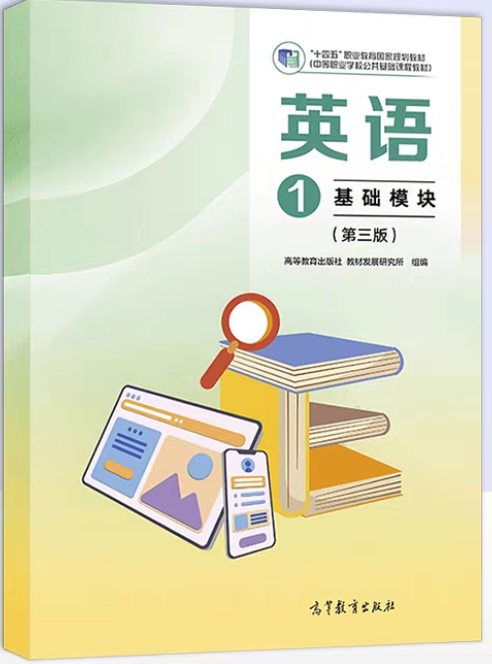
Unit 7 The Smartphone and the Internet(B卷·能力提升)《英语 基础模块1》(高教版第三版)单元过关卷(原卷版+解析版)
2026-08-07
|
2份
|
22页
|
57人阅读
|
0人下载
内容正文:
编写说明:本套试卷紧扣《英语 基础模块1》(高教版第三版)教材,以教材单元为基准精准覆盖核心考点。
每个单元设置AB卷,A卷为基础巩固卷,侧重基础考点训练,帮助学生扎实掌握知识要点;B卷为能力提升卷,注重知识整合与全面检测,引导学生构建知识网络。全书设计4份综合测试卷,模拟实战情境,聚焦解题能力突破,全面提升应试能力与知识应用水平。
《英语 基础模块1》(高教版第三版)《单元过关卷》
Unit 7 The Smartphone and the Internet
B卷·能力提升
考试时间:120分钟 满分:120分
班级_____姓名_____学号_____成绩_____
第一部分 英语知识运用(共四节,满分55分)
第一节 语音辨音(共5小题;每小题1分,满分5分)
从下面每题A、B、C、D四个选项中选出划线部分读音与其他三个单词划线部分读音不同的一项。
1.A.mobile B.fine C.time D.wise
2.A.feature B.teacher C.break D.please
3.A.network B.word C.world D.short
4.A.school B.chat C.ache D.technology
5.A.used B.wanted C.needed D.visited
【答案】1.A 2.C 3.D 4.B 5.A
【解析】1.A. mobile /ˈməʊbaɪl/;B. fine /faɪn/;C. time /taɪm/;D. wise /waɪz/。A项画线字母在非重读音节中弱读,其他三项发/aɪ/。
2.A. feature /ˈfiːtʃə(r)/;B. teacher /ˈtiːtʃə(r)/;C. break /breɪk/;D. please /pliːz/。C项画线字母组合发/eɪ/,其余三项发/iː/。
3.A. network /ˈnetwɜːk/;B. word /wɜːd/;C. world /wɜːld/;D. short /ʃɔːt/。D项画线字母组合发/ɔː/,其余三项发/ɜː/。
4.A. school /skuːl/;B. chat /tʃæt/;C. ache /eɪk/;D. technology /tekˈnɒlədʒi/。B项画线字母组合发/tʃ/,其余三项含/k/音。
5.A. used /juːzd/;B. wanted /ˈwɒntɪd/;C. needed /ˈniːdɪd/;D. visited /ˈvɪzɪtɪd/。A项-ed发/d/,其余三项发/ɪd/。
第二节 单项选择(共25小题;每小题1分,满分25分)
从 A、B、C、D 四个选项中选出可以填入空白处的最佳选项。
6.The new smartphone has a better camera and larger __________ for videos.
A.storage
B.survey
C.takeout
D.alarm
【答案】A
【解析】storage表示“存储空间”,符合保存视频语境。
7.The phone is in my desired price __________, so I may buy it.
A.screen
B.range
C.network
D.battery
【答案】B
【解析】price range表示“价格范围”。
8.Online gaming may __________ students' sleep if they play too late.
A.unlock
B.spare
C.affect
D.tap
【答案】C
【解析】affect表示“影响”。
9.The survey asks students to record their __________ online activities.
A.broken
B.slow
C.expensive
D.typical
【答案】D
【解析】typical表示“典型的,有代表性的”。
10.Please __________ the app with your phone number first.
A.log in to
B.stay up
C.go over
D.focus on
【答案】A
【解析】log in to表示“登录进入”。
11.The teacher told us not to __________ late watching short videos.
A.look for
B.stay up
C.turn on
D.take off
【答案】B
【解析】stay up late表示“熬夜”。
12.The phone alarm is useful because it can __________ us of class time.
A.imagine
B.unlock
C.remind
D.affect
【答案】C
【解析】remind sb. of sth.表示“提醒某人某事”。
13.Students need to __________ learning when they have online classes.
A.chat with
B.listen to
C.order
D.focus on
【答案】D
【解析】focus on表示“专注于”。
14.Could you __________ a few minutes to answer our questions?
A.spare
B.ring
C.unlock
D.imagine
【答案】A
【解析】spare a few minutes表示“抽出几分钟”。
15.Many students use phones to __________ with friends after school.
A.stay
B.chat
C.ring
D.focus
【答案】B
【解析】chat with friends表示“与朋友聊天”。
16.A bike-sharing app helps people __________ a shared bike quickly.
A.break
B.miss
C.unlock
D.forget
【答案】C
【解析】unlock表示“解锁”。
17.Before the test, students should __________ the notes on the learning app.
A.turn off
B.stay up
C.give up
D.go over
【答案】D
【解析】go over表示“复习”。
18.Listen! Someone __________ at the doorbell through the smart system.
A.is ringing
B.rings
C.rang
D.has rung
【答案】A
【解析】Listen提示正在发生的动作,用现在进行时。
19.At this moment, our group __________ an interview about online habits.
A.does
B.is doing
C.did
D.has done
【答案】B
【解析】At this moment提示现在进行时。
20.John usually __________ online games for half an hour after dinner.
A.is playing
B.played
C.plays
D.play
【答案】C
【解析】usually提示一般现在时,主语John用plays。
21.I __________ this app is helpful for English listening.
A.am thinking
B.think
C.thought
D.will thinking
【答案】B
【解析】think表示观点时通常不用进行时,主语I用think。
22.They __________ a screen-time report now, so please wait.
A.write
B.wrote
C.are writing
D.writes
【答案】C
【解析】now提示现在进行时。
23.If students use phones wisely, they __________ more from online resources.
A.learned
B.will learn
C.learning
D.learns
【答案】B
【解析】if条件句主将从现,主句用will learn。
24.It is the clear time plan __________ helps her control phone use.
A.who
B.where
C.that
D.when
【答案】C
【解析】It is...that...为强调句结构。
25.The app __________ I use every morning offers short listening tasks.
A.where
B.when
C.who
D.which
【答案】D
【解析】先行词app指物,关系代词which作宾语。
26.—What feature do you consider first?
—__________
A.Long battery life.
B.At the weekend.
C.I am studying.
D.Almost every day.
【答案】A
【解析】询问手机特性,A项符合。
27.—Does playing games affect your life? —__________
A.A large screen.
B.Yes, it sometimes makes me stay up late.
C.I can unlock it.
D.The price is low.
【答案】B
【解析】询问是否影响生活,B项说明熬夜影响。
28.—What are you doing now?
—__________
A.I often read news.
B.I am sending homework by email.
C.I played music yesterday.
D.I will buy takeout.
【答案】B
【解析】问句为现在进行时,B项符合。
29.—How can we avoid long screen time?
—__________
A.By setting time limits.
B.By watching videos all night.
C.By ignoring homework.
D.By playing more games.
【答案】A
【解析】设置时间限制可避免长时间看屏幕。
30.—Why is a survey useful?
—__________
A.Because it has no questions.
B.Because it helps us learn real habits.
C.Because it unlocks every phone.
D.Because it stops all classes.
【答案】B
【解析】调查能帮助了解真实习惯。
第三节 完形填空(共10小题;每小题1.5分,满分15分)
阅读下面短文,从每题所给的A、B、C、D四个选项中选出最佳选项。
To spread healthy Internet ideas, a media platform invited young creator Chen Rui to do research for the article Smart Online Life. He studied people’s phone-using habits and explored how smartphones influence daily work and growth. He intended to guide wise phone use instead of simply advising people to stay away from digital devices.
In interviews, an office worker got pleasure from short videos, yet the videos ate up much spare time. He lacked the 31____ to stop browsing in time. However, a self-disciplined freelancer improved job skills through online courses. Focused study made her far more 32____ in her field.
Chen Rui found smartphones bring convenience, but without self‑control they may 33____ personal progress. He finished his article with practical tips. Since publication, lots of readers have paid close 34____ to their screen time. Chen Rui learns an important 35____: technology serves people only with proper use. Now he creates posts and 36____ more users to build good online habits.
The research turned out harder than expected, yet it was his 37____ experience among all projects. He hopes the positive trend will carry 38____ into the future. For him, this creation offers a valuable 39____ for thinking about self‑management. It becomes one unforgettable 40____ from his career practice.
31.A.battery B.screen C.network D.will
32.A.careless B.confident C.lazy D.worse
33.A.remind B.unlock C.affect D.spare
34.A.attention B.doubt C.fear D.pity
35.A.message B.range C.truth D.screen
36.A.warns B.encourages C.forbids D.punishes
37.A.poorest B.best C.worst D.saddest
38.A.suddenly B.carelessly C.clearly D.well
39.A.chance B.mistake C.seat D.excuse
40.A.secret B.memory C.lesson D.excuse
【答案】31.D 32.B 33.C 34.A 35.C 36.B 37.B 38.D 39.A 40.C
【导语】本文讲述青年创作者陈瑞围绕理性上网开展社会调研。通过采访不同人群,他认识到手机本身利弊并存,关键在于使用者的自控力。他完成科普文章,倡导健康上网,本次调研也成为他职业路上宝贵的收获。
【详解】
31. 名词词义辨析,他缺少及时停止刷手机的意志力;will 意志力;battery 电池、screen 屏幕、network 网络,故选 D;
32. 形容词词义辨析,持续专注学习,让她在职场更加自信;confident 自信的;careless 粗心的、lazy 懒惰的、worse 更差,故选 B;
33. 动词词义辨析,如果缺少自控力,手机会影响个人进步;affect 影响;remind 提醒、unlock 解锁、spare 抽出,故选 C;
34. 名词词义辨析,文章发布之后许多读者开始留意自己的屏幕使用时长;attention 注意;doubt 怀疑、fear 恐惧、pity 惋惜,故选 A;
35. 名词词义辨析,他明白了一条重要事实:技术要合理使用才能为人服务;truth 事实;message 信息、range 范围、screen 屏幕,故选 C;
36. 动词词义辨析,他创作内容,鼓励更多人养成健康网络习惯;encourages 鼓励;warns 警告、forbids 禁止、punishes 惩罚,故选 B;
37. 形容词最高级词义辨析,这是他所有项目当中最好的一次经历;best 最好的;poorest 最差、worst 最坏、saddest 最难过,故选 B;
38. 副词词义辨析,他希望这种积极的风尚可以一直延续到未来;well 长久地;suddenly 突然、carelessly 马虎地、clearly 清晰地,故选 D;
39. 名词词义辨析,这次创作给他提供思考自我管理的宝贵机会;chance 机会;mistake 错误、seat 座位、excuse 借口,故选 A;
40. 名词词义辨析,这件事成为他职业实践中难忘的经验;lesson 经验、启示;secret 秘密、memory 回忆、excuse 借口,故选 C;
第四节 短文填空(共5小题;每小题2分,满分10分)
阅读下面短文,用括号内所给单词的适当形式填空。
Our group 41_____ (prepare) a phone use guide since Monday. We are interviewing classmates and studying daily online activities. At the moment, Zhang Wei 42_____ (make) a chart about screen time, and Liu Fang is writing examples of wise habits. We found some students 43_____ (spend) too much time on videos last month, so their sleep turned worse. We also found students with time-setting alarms controlled their time 44_____ (well) than others. The guide advises keeping phones away for homework and encourages students 45_____ (choose) useful learning apps. Before publication, we will ask our teacher for checks. We hope the guide helps students make good use of smartphones for study and health.
【答案】41.has prepared 42.is making 43.spent 44.better 45.to choose
【导语】本文是一篇说明文,介绍学生小组编写智能手机使用建议书的过程,并说明控制屏幕时间和选择有用应用的重要性。
【详解】
41.考查现在完成时。since Monday 为现在完成时标志;our group 视作整体,故填 has prepared。
42.考查现在进行时。At the moment 表示此刻,主语 Zhang Wei 为单数,填 is making。
43.考查一般过去时。last month 为过去时间,spend 过去式为 spent。
44.考查副词比较级。than 提示比较,well 的比较级为 better。
45.考查非谓语动词。固定搭配 encourage sb. to do sth.“鼓励某人做某事”,填 to choose。
第二部分 阅读(共两节,满分50分)
第一节 阅读理解(共15小题;每小题2.5分,满分37.5分)
阅读下列短文,从每题所给的A、B、C、D四个选项中选出最佳选项。
A
A customer shops for a new smartphone in-store. His old device runs slowly and often breaks down during online classes. The salesperson asks about his budget, style and practical functions. He refuses high-end models and wants a phone for study and daily communication.
Item
Customer's Need
Price Range
2,001-3,000 yuan
Screen Size
Large screen for online classes
Color
Blue or black
Functions
Large storage; fast network; long battery life
Main Use
Online classes, emails, learning apps and music
The salesperson suggests a mid‑range phone. Its big screen suits online courses. Long battery supports full-day school use. Ample storage holds files and class videos, and fast network makes lessons run smoothly.
The customer learns to choose phones based on real needs. Fancy features such as an excellent camera are unnecessary for him. Comparing practical functions instead of following ads helps save money and avoid post‑purchase regret.
46.What price range does the customer consider?
A.1,000-2,000 yuan.
B.2,001-3,000 yuan.
C.3,001-5,000 yuan.
D.More than 5,000 yuan.
47.Which function is NOT selected?
A.Large storage.
B.Fast network.
C.Excellent camera.
D.Long battery life.
48.Why does the customer need the phone mainly?
A.For online classes and daily study.
B.Only for taking photos.
C.Only for playing games.
D.For selling old phones.
【答案】46.B 47.C 48.A
【导语】本文是一张手机购买需求信息卡,呈现顾客的预算、屏幕、颜色、功能需求和主要用途。
【详解】46.细节理解题。价格范围为2,001-3,000元。
47.细节理解题。未选择优秀相机功能。
48.细节理解题。顾客主要为网课和日常学习购买手机。
B
A screen time report shows more than total hours. It tells if students go online for study, communication, entertainment or news reading. Long screen time is not always bad, nor is short time always good. The key lies in online activities and whether they serve real-life needs.
A class monitor collected weekly reports from thirty classmates. Students with clear plans used learning apps and online courses purposefully. They opened apps, finished tasks and closed them. Some spent over two hours daily, yet most time was spent on learning goals.
Another group spent less time online but mainly on games and short videos. They picked up phones out of boredom. Notifications disturbed homework, and some stayed up late gaming. Their trouble was not just time length, but loss of self-control.
Based on the reports, the class set practical rules: keep phones away during homework and turn off useless notifications. Alarms reminded them to rest. The teacher advised more sports, reading and in-person communication.
A screen-time report works only when it drives real action. It helps students reflect on habits and make small improvements for healthier online learning. Wise Internet use starts with true records and practical choices.
49.What is the key question about screen time?
A.How expensive the phone is.
B.What students do online and whether it supports real life.
C.What color the screen is.
D.How many phones a class has.
50.What did students with clear plans often do?
A.They logged in, finished one task and closed the app.
B.They played games all night.
C.They ignored learning apps.
D.They bought new phones every week.
51.What was the problem of the entertainment group?
A.They had no phones.
B.They read too many books.
C.They lost control of phone use.
D.They never watched videos.
52.When is a screen-time report useful?
A.When it leads to action.
B.When it is hidden from students.
C.When it has no numbers.
D.When it stops all online classes.
【答案】49.B 50.A 51.C 52.A
【导语】本文是一篇说明文,介绍屏幕时间报告的意义,强调应关注上网目的、使用控制和后续行动。
【详解】49.细节理解题。关键是学生上网做什么以及是否支持现实生活。
50.细节理解题。有明确计划的学生会完成任务后关闭应用。
51.细节理解题。娱乐组的问题是手机使用失控。
52.细节理解题。屏幕时间报告带来行动时才有用。
C
Mobile payment is widely used nowadays. People pay for food, transport and daily services via phones. Though simple-looking, it involves key steps: download a payment app, create an account, log in and link a bank card. Then users scan merchants’ codes or present their own to complete payment.
For customers, it brings great convenience. There is no need for plenty of cash, and payment records can be reviewed later. Students can finish payments for breakfast, takeout and shared bikes on one smartphone, making mobile Internet services part of daily life.
Still, convenience calls for safety awareness. Keep passwords safe and never show payment codes to strangers. While scanning codes, check the store name and exact amount. Avoid payments under unsafe network conditions, as carelessness may cause losses.
Besides, mobile payment helps manage personal spending. Since phone-based payment is effortless, some people spend too fast. It is sensible to check records and set a budget. Weekly records of takeout, transport and entertainment help students see their spending patterns.
Technology reshapes lifestyles, yet good habits matter. Mobile payment brings efficiency only when used safely. Users should enjoy its convenience, guard private information and spend based on real needs.
53.What should users do before using a payment app?
A.Download the app, create an account and connect a bank card.
B.Throw away all records.
C.Show passwords to strangers.
D.Avoid checking the amount.
54.Why is mobile payment convenient?
A.Because it needs much cash.
B.Because it only works at home.
C.Because many daily payments can be finished with a phone.
D.Because it has no records.
55.What should users check when scanning a code?
A.The weather.
B.The store name and amount of money.
C.The student's homework.
D.The phone color.
56.What can help students understand spending habits?
A.Clear payment records.
B.Longer gaming time.
C.Unsafe networks.
D.No budget.
【答案】53.A 54.C 55.B 56.A
【导语】本文是一篇说明文,介绍移动支付的基本步骤、便利性、安全注意事项和消费管理建议。
【详解】53.细节理解题。使用支付应用前需下载应用、创建账户并绑定银行卡。
54.细节理解题。许多日常支付都可以用手机完成。
55.细节理解题。扫码时应核对店名和金额。
56.细节理解题。清楚的支付记录有助于了解消费习惯。
D
Smartphones are often described as powerful tools, but younger users need rules to use them safely. A phone can open the door to learning resources, maps, music and communication. It can also bring risks, such as false information, online arguments, privacy problems and unhealthy screen time. Digital responsibility means using technology in a way that protects both oneself and others.
The first responsibility is to protect personal information. Students should not share home addresses, passwords, payment codes or private photos online. They should be careful when a stranger asks for information. Even a friendly message may not always come from a real friend. If students feel unsure, they should ask parents or teachers before replying.
The second responsibility is to communicate politely. Online words can hurt people as much as face-to-face words. Before sending a message, students should think about whether it is true, necessary and kind. They should not forward rumors or laugh at others in group chats. A respectful Internet environment needs every user to act carefully.
The third responsibility is to manage time. Long screen time can affect sleep, eyes and study. Students can set phone-free times, such as during meals, homework and the hour before bedtime. They can also choose outdoor activities, reading or family talks to replace unnecessary scrolling. These habits make real life richer.
Being responsible online does not mean being afraid of technology. It means using smartphones with knowledge, self-control and respect. When students protect privacy, speak politely and manage time, they can enjoy the Internet while growing into careful and confident digital citizens.
57.What does digital responsibility mean?
A.Using technology to protect oneself and others.
B.Sharing passwords with strangers.
C.Staying online all night.
D.Forwarding every rumor.
58.What information should students avoid sharing online?
A.Public weather news.
B.Home addresses and passwords.
C.General study tips.
D.Names of common apps.
59.What should students think about before sending a message?
A.Whether it is true, necessary and kind.
B.Whether it is the longest sentence.
C.Whether it can start an argument.
D.Whether it hides homework.
60.Which is a phone-free time suggested in the passage?
A.During online classes only.
B.During meals or homework.
C.When checking payment records.
D.When asking teachers for help.
【答案】57.A 58.B 59.A 60.B
【导语】本文是一篇议论文,围绕数字责任展开,说明学生应保护个人信息、礼貌沟通并管理屏幕时间。
【详解】57.细节理解题。数字责任指用保护自己和他人的方式使用技术。
58.细节理解题。家庭地址和密码等信息不应在网上分享。
59.细节理解题。发送消息前应考虑是否真实、必要和友善。
60.细节理解题。吃饭和做作业时可设为无手机时间。
第二节 补全对话(共5小题;每小题2.5分,满分12.5分)
根据对话内容,从方框内A、B、C、D、E五个选项中选出能填入空白处的最佳选项。
A: Good morning. I am comparing phones for my online classes.
B: OK. ____61____
A: I need a large screen and a fast network.
B: What price range are you considering?
A: ____62____
B: This model may suit you. It has large storage too.
A: Great. ____63____
B: Yes, the battery can last more than a day.
A: I often use my phone for learning. ____64____
B: You can set study time and take breaks from the screen.
A: Good idea. ____65____
A.Does it have a long battery life?
B.Thank you for your advice.
C.What features do you need most?
D.How can I use it wisely?
E.About 2,001 to 3,000 yuan.
【答案】61.C 62.E 63.A 64.D 65.B
【导语】这是一段购买手机并咨询合理使用建议的对话,内容涉及屏幕、网络、价格范围、存储、电池续航和使用习惯。
61.下文回答需要大屏幕和快速网络,C项询问需要哪些功能。
62.前文询问价格范围,E项给出价格范围。
63.下文回答电池可持续一天以上,A项询问电池续航。
64.下文给出合理使用建议,D项询问如何明智使用。
65.对方给出建议后,B项表达感谢。
第三部分 书面表达(满分15分)
66.假设你是李华,请给学生会写一封英文建议信,说明同学们使用智能手机时存在的问题,并提出改进建议。内容包括:1. 常见问题;2. 至少两条建议;3. 表达希望。词数不少于80。
Advice on Wise Smartphone Use
_____________________________________________________________________________________________________________________________________________________________________________________________________________________________________________
【参考范文】
Advice on Wise Smartphone Use
Dear Student Union,
I am writing to share my advice on wise smartphone use. Smartphones help us have online classes, send emails, read news and keep in touch with friends. However, some students use them unwisely. They play games for too long, watch short videos late at night and check messages when they should focus on homework. These habits may affect their study, sleep and eyes.
I think we can make some changes. First, students should set a clear time limit for entertainment apps. Second, phones should be put away during homework and class time. Third, we can encourage students to use learning apps and take breaks from screens. It is also helpful to do more sports after school.
I hope more students can make smartphones useful tools instead of problems.
Yours,
Li Hua
【词汇积累】student union学生会;wise smartphone use合理使用智能手机;keep in touch保持联系;time limit时间限制;entertainment apps娱乐应用;take breaks from screens远离屏幕休息。
【句式拓展】They check messages when they should focus on homework. 该句使用when引导时间状语从句,突出不当使用手机的具体情境。
【点睛】范文采用建议信格式,先说明手机用途与问题,再提出可执行建议,最后表达希望,内容完整。
原创精品资源学科网独家享有版权,侵权必究!
学科网(北京)股份有限公司
$
编写说明:本套试卷紧扣《英语 基础模块1》(高教版第三版)教材,以教材单元为基准精准覆盖核心考点。
每个单元设置AB卷,A卷为基础巩固卷,侧重基础考点训练,帮助学生扎实掌握知识要点;B卷为能力提升卷,注重知识整合与全面检测,引导学生构建知识网络。全书设计4份综合测试卷,模拟实战情境,聚焦解题能力突破,全面提升应试能力与知识应用水平。
《英语 基础模块1》(高教版第三版)《单元过关卷》
Unit 7 The Smartphone and the Internet
B卷·能力提升
考试时间:120分钟 满分:120分
班级_____姓名_____学号_____成绩_____
第一部分 英语知识运用(共四节,满分55分)
第一节 语音辨音(共5小题;每小题1分,满分5分)
从下面每题A、B、C、D四个选项中选出划线部分读音与其他三个单词划线部分读音不同的一项。
1.A.mobile B.fine C.time D.wise
2.A.feature B.teacher C.break D.please
3.A.network B.word C.world D.short
4.A.school B.chat C.ache D.technology
5.A.used B.wanted C.needed D.visited
第二节 单项选择(共25小题;每小题1分,满分25分)
从 A、B、C、D 四个选项中选出可以填入空白处的最佳选项。
6.The new smartphone has a better camera and larger __________ for videos.
A.storage
B.survey
C.takeout
D.alarm
7.The phone is in my desired price __________, so I may buy it.
A.screen
B.range
C.network
D.battery
8.Online gaming may __________ students' sleep if they play too late.
A.unlock
B.spare
C.affect
D.tap
9.The survey asks students to record their __________ online activities.
A.broken
B.slow
C.expensive
D.typical
10.Please __________ the app with your phone number first.
A.log in to
B.stay up
C.go over
D.focus on
11.The teacher told us not to __________ late watching short videos.
A.look for
B.stay up
C.turn on
D.take off
12.The phone alarm is useful because it can __________ us of class time.
A.imagine
B.unlock
C.remind
D.affect
13.Students need to __________ learning when they have online classes.
A.chat with
B.listen to
C.order
D.focus on
14.Could you __________ a few minutes to answer our questions?
A.spare
B.ring
C.unlock
D.imagine
15.Many students use phones to __________ with friends after school.
A.stay
B.chat
C.ring
D.focus
16.A bike-sharing app helps people __________ a shared bike quickly.
A.break
B.miss
C.unlock
D.forget
17.Before the test, students should __________ the notes on the learning app.
A.turn off
B.stay up
C.give up
D.go over
18.Listen! Someone __________ at the doorbell through the smart system.
A.is ringing
B.rings
C.rang
D.has rung
19.At this moment, our group __________ an interview about online habits.
A.does
B.is doing
C.did
D.has done
20.John usually __________ online games for half an hour after dinner.
A.is playing
B.played
C.plays
D.play
21.I __________ this app is helpful for English listening.
A.am thinking
B.think
C.thought
D.will thinking
22.They __________ a screen-time report now, so please wait.
A.write
B.wrote
C.are writing
D.writes
23.If students use phones wisely, they __________ more from online resources.
A.learned
B.will learn
C.learning
D.learns
24.It is the clear time plan __________ helps her control phone use.
A.who
B.where
C.that
D.when
25.The app __________ I use every morning offers short listening tasks.
A.where
B.when
C.who
D.which
26.—What feature do you consider first?
—__________
A.Long battery life.
B.At the weekend.
C.I am studying.
D.Almost every day.
27.—Does playing games affect your life? —__________
A.A large screen.
B.Yes, it sometimes makes me stay up late.
C.I can unlock it.
D.The price is low.
28.—What are you doing now?
—__________
A.I often read news.
B.I am sending homework by email.
C.I played music yesterday.
D.I will buy takeout.
29.—How can we avoid long screen time?
—__________
A.By setting time limits.
B.By watching videos all night.
C.By ignoring homework.
D.By playing more games.
30.—Why is a survey useful?
—__________
A.Because it has no questions.
B.Because it helps us learn real habits.
C.Because it unlocks every phone.
D.Because it stops all classes.
第三节 完形填空(共10小题;每小题1.5分,满分15分)
阅读下面短文,从每题所给的A、B、C、D四个选项中选出最佳选项。
To spread healthy Internet ideas, a media platform invited young creator Chen Rui to do research for the article Smart Online Life. He studied people’s phone-using habits and explored how smartphones influence daily work and growth. He intended to guide wise phone use instead of simply advising people to stay away from digital devices.
In interviews, an office worker got pleasure from short videos, yet the videos ate up much spare time. He lacked the 31____ to stop browsing in time. However, a self-disciplined freelancer improved job skills through online courses. Focused study made her far more 32____ in her field.
Chen Rui found smartphones bring convenience, but without self‑control they may 33____ personal progress. He finished his article with practical tips. Since publication, lots of readers have paid close 34____ to their screen time. Chen Rui learns an important 35____: technology serves people only with proper use. Now he creates posts and 36____ more users to build good online habits.
The research turned out harder than expected, yet it was his 37____ experience among all projects. He hopes the positive trend will carry 38____ into the future. For him, this creation offers a valuable 39____ for thinking about self‑management. It becomes one unforgettable 40____ from his career practice.
31.A.battery B.screen C.network D.will
32.A.careless B.confident C.lazy D.worse
33.A.remind B.unlock C.affect D.spare
34.A.attention B.doubt C.fear D.pity
35.A.message B.range C.truth D.screen
36.A.warns B.encourages C.forbids D.punishes
37.A.poorest B.best C.worst D.saddest
38.A.suddenly B.carelessly C.clearly D.well
39.A.chance B.mistake C.seat D.excuse
40.A.secret B.memory C.lesson D.excuse
第四节 短文填空(共5小题;每小题2分,满分10分)
阅读下面短文,用括号内所给单词的适当形式填空。
Our group 41_____ (prepare) a phone use guide since Monday. We are interviewing classmates and studying daily online activities. At the moment, Zhang Wei 42_____ (make) a chart about screen time, and Liu Fang is writing examples of wise habits. We found some students 43_____ (spend) too much time on videos last month, so their sleep turned worse. We also found students with time-setting alarms controlled their time 44_____ (well) than others. The guide advises keeping phones away for homework and encourages students 45_____ (choose) useful learning apps. Before publication, we will ask our teacher for checks. We hope the guide helps students make good use of smartphones for study and health.
第二部分 阅读(共两节,满分50分)
第一节 阅读理解(共15小题;每小题2.5分,满分37.5分)
阅读下列短文,从每题所给的A、B、C、D四个选项中选出最佳选项。
A
A customer shops for a new smartphone in-store. His old device runs slowly and often breaks down during online classes. The salesperson asks about his budget, style and practical functions. He refuses high-end models and wants a phone for study and daily communication.
Item
Customer's Need
Price Range
2,001-3,000 yuan
Screen Size
Large screen for online classes
Color
Blue or black
Functions
Large storage; fast network; long battery life
Main Use
Online classes, emails, learning apps and music
The salesperson suggests a mid‑range phone. Its big screen suits online courses. Long battery supports full-day school use. Ample storage holds files and class videos, and fast network makes lessons run smoothly.
The customer learns to choose phones based on real needs. Fancy features such as an excellent camera are unnecessary for him. Comparing practical functions instead of following ads helps save money and avoid post‑purchase regret.
46.What price range does the customer consider?
A.1,000-2,000 yuan.
B.2,001-3,000 yuan.
C.3,001-5,000 yuan.
D.More than 5,000 yuan.
47.Which function is NOT selected?
A.Large storage.
B.Fast network.
C.Excellent camera.
D.Long battery life.
48.Why does the customer need the phone mainly?
A.For online classes and daily study.
B.Only for taking photos.
C.Only for playing games.
D.For selling old phones.
B
A screen time report shows more than total hours. It tells if students go online for study, communication, entertainment or news reading. Long screen time is not always bad, nor is short time always good. The key lies in online activities and whether they serve real-life needs.
A class monitor collected weekly reports from thirty classmates. Students with clear plans used learning apps and online courses purposefully. They opened apps, finished tasks and closed them. Some spent over two hours daily, yet most time was spent on learning goals.
Another group spent less time online but mainly on games and short videos. They picked up phones out of boredom. Notifications disturbed homework, and some stayed up late gaming. Their trouble was not just time length, but loss of self-control.
Based on the reports, the class set practical rules: keep phones away during homework and turn off useless notifications. Alarms reminded them to rest. The teacher advised more sports, reading and in-person communication.
A screen-time report works only when it drives real action. It helps students reflect on habits and make small improvements for healthier online learning. Wise Internet use starts with true records and practical choices.
49.What is the key question about screen time?
A.How expensive the phone is.
B.What students do online and whether it supports real life.
C.What color the screen is.
D.How many phones a class has.
50.What did students with clear plans often do?
A.They logged in, finished one task and closed the app.
B.They played games all night.
C.They ignored learning apps.
D.They bought new phones every week.
51.What was the problem of the entertainment group?
A.They had no phones.
B.They read too many books.
C.They lost control of phone use.
D.They never watched videos.
52.When is a screen-time report useful?
A.When it leads to action.
B.When it is hidden from students.
C.When it has no numbers.
D.When it stops all online classes.
C
Mobile payment is widely used nowadays. People pay for food, transport and daily services via phones. Though simple-looking, it involves key steps: download a payment app, create an account, log in and link a bank card. Then users scan merchants’ codes or present their own to complete payment.
For customers, it brings great convenience. There is no need for plenty of cash, and payment records can be reviewed later. Students can finish payments for breakfast, takeout and shared bikes on one smartphone, making mobile Internet services part of daily life.
Still, convenience calls for safety awareness. Keep passwords safe and never show payment codes to strangers. While scanning codes, check the store name and exact amount. Avoid payments under unsafe network conditions, as carelessness may cause losses.
Besides, mobile payment helps manage personal spending. Since phone-based payment is effortless, some people spend too fast. It is sensible to check records and set a budget. Weekly records of takeout, transport and entertainment help students see their spending patterns.
Technology reshapes lifestyles, yet good habits matter. Mobile payment brings efficiency only when used safely. Users should enjoy its convenience, guard private information and spend based on real needs.
53.What should users do before using a payment app?
A.Download the app, create an account and connect a bank card.
B.Throw away all records.
C.Show passwords to strangers.
D.Avoid checking the amount.
54.Why is mobile payment convenient?
A.Because it needs much cash.
B.Because it only works at home.
C.Because many daily payments can be finished with a phone.
D.Because it has no records.
55.What should users check when scanning a code?
A.The weather.
B.The store name and amount of money.
C.The student's homework.
D.The phone color.
56.What can help students understand spending habits?
A.Clear payment records.
B.Longer gaming time.
C.Unsafe networks.
D.No budget.
D
Smartphones are often described as powerful tools, but younger users need rules to use them safely. A phone can open the door to learning resources, maps, music and communication. It can also bring risks, such as false information, online arguments, privacy problems and unhealthy screen time. Digital responsibility means using technology in a way that protects both oneself and others.
The first responsibility is to protect personal information. Students should not share home addresses, passwords, payment codes or private photos online. They should be careful when a stranger asks for information. Even a friendly message may not always come from a real friend. If students feel unsure, they should ask parents or teachers before replying.
The second responsibility is to communicate politely. Online words can hurt people as much as face-to-face words. Before sending a message, students should think about whether it is true, necessary and kind. They should not forward rumors or laugh at others in group chats. A respectful Internet environment needs every user to act carefully.
The third responsibility is to manage time. Long screen time can affect sleep, eyes and study. Students can set phone-free times, such as during meals, homework and the hour before bedtime. They can also choose outdoor activities, reading or family talks to replace unnecessary scrolling. These habits make real life richer.
Being responsible online does not mean being afraid of technology. It means using smartphones with knowledge, self-control and respect. When students protect privacy, speak politely and manage time, they can enjoy the Internet while growing into careful and confident digital citizens.
57.What does digital responsibility mean?
A.Using technology to protect oneself and others.
B.Sharing passwords with strangers.
C.Staying online all night.
D.Forwarding every rumor.
58.What information should students avoid sharing online?
A.Public weather news.
B.Home addresses and passwords.
C.General study tips.
D.Names of common apps.
59.What should students think about before sending a message?
A.Whether it is true, necessary and kind.
B.Whether it is the longest sentence.
C.Whether it can start an argument.
D.Whether it hides homework.
60.Which is a phone-free time suggested in the passage?
A.During online classes only.
B.During meals or homework.
C.When checking payment records.
D.When asking teachers for help.
第二节 补全对话(共5小题;每小题2.5分,满分12.5分)
根据对话内容,从方框内A、B、C、D、E五个选项中选出能填入空白处的最佳选项。
A: Good morning. I am comparing phones for my online classes.
B: OK. ____61____
A: I need a large screen and a fast network.
B: What price range are you considering?
A: ____62____
B: This model may suit you. It has large storage too.
A: Great. ____63____
B: Yes, the battery can last more than a day.
A: I often use my phone for learning. ____64____
B: You can set study time and take breaks from the screen.
A: Good idea. ____65____
A.Does it have a long battery life?
B.Thank you for your advice.
C.What features do you need most?
D.How can I use it wisely?
E.About 2,001 to 3,000 yuan.
第三部分 书面表达(满分15分)
66.假设你是李华,请给学生会写一封英文建议信,说明同学们使用智能手机时存在的问题,并提出改进建议。内容包括:1. 常见问题;2. 至少两条建议;3. 表达希望。词数不少于80。
Advice on Wise Smartphone Use
_____________________________________________________________________________________________________________________________________________________________________________________________________________________________________________
原创精品资源学科网独家享有版权,侵权必究!
学科网(北京)股份有限公司
$
资源预览图

1

2

3
由于学科网是一个信息分享及获取的平台,不确保部分用户上传资料的 来源及知识产权归属。如您发现相关资料侵犯您的合法权益,请联系学科网,我们核实后将及时进行处理。