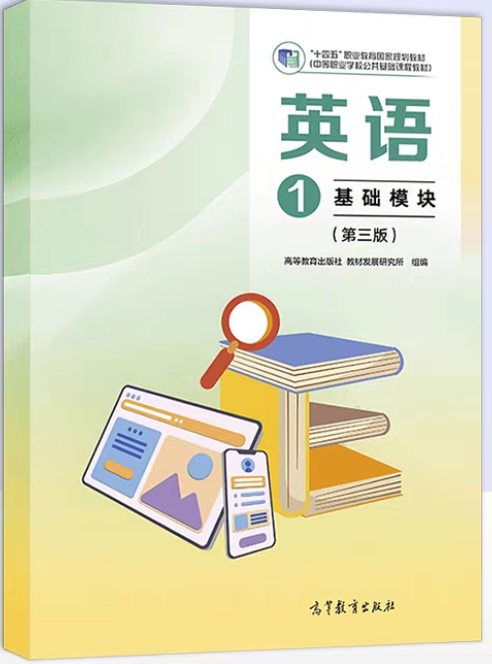
Unit 5——Unit 8 阶段测试卷(A卷·基础巩固)《英语 基础模块1》(高教版第三版)单元过关卷(原卷版+解析版)
2026-08-07
|
2份
|
28页
|
57人阅读
|
0人下载
摘要:
**基本信息**
紧扣《英语 基础模块1》(高教版第三版)Unit5-Unit8核心考点,A卷侧重基础巩固,120分钟120分,适配单元复习,强化语言能力与思维品质。
**题型特征**
|题型|题量/分值|知识覆盖|命题特色|
|----|-----------|----------|----------|
|语音辨音|5题5分|字母发音规则|基础语音辨析|
|单项选择|25题25分|词汇(如ceremony)、语法(时态/从句)|情境化词汇运用|
|完形填空|10题15分|语篇理解、虚词运用|宴会筹备情境,考查连贯思维|
|短文填空|5题10分|词形变化(如little→less)|餐厅菜单改良,贴近生活|
|阅读理解|15题37.5分|信息提取、推理判断|涵盖文化传承(博物馆)、社会热点(手机使用)|
|补全对话|5题12.5分|日常交际用语|调查情境,强化实用表达|
|书面表达|1题15分|内容组织、语言表达|“敬佩的人/发明”主题,提升思维与表达能力|
内容正文:
编写说明:本套试卷紧扣《英语 基础模块1》(高教版第三版)教材,以教材单元为基准精准覆盖核心考点。
每个单元设置AB卷,A卷为基础巩固卷,侧重基础考点训练,帮助学生扎实掌握知识要点;B卷为能力提升卷,注重知识整合与全面检测,引导学生构建知识网络。全书设计4份综合测试卷,模拟实战情境,聚焦解题能力突破,全面提升应试能力与知识应用水平。
《英语 基础模块1》(高教版第三版)《单元过关卷》
Unit 5——Unit 8阶段测试卷
A卷·基础巩固
考试时间:120分钟 满分:120分
班级_____姓名_____学号_____成绩_____
第一部分 英语知识运用(共四节,满分55分)
第一节 语音辨音(共5小题;每小题1分,满分5分)
从下面每题A、B、C、D四个选项中选出划线部分读音与其他三个单词画线部分读音不同的一项。
1.A.event B.prepare C.evening D.guest
2.A.take B.place C.map D.name
3.A.phone B.code C.home D.cost
4.A.chat B.school C.choose D.lunch
5.A.ring B.long C.change D.morning
第二节 单项选择(共25小题;每小题1分,满分25分)
从 A、B、C、D 四个选项中选出可以填入空白处的最佳选项。
6.The company will hold an opening _________ next Friday.
A. province
B. storage
C. dessert
D. ceremony
7.Could you help me _________ whether the guests can attend the banquet?
A. reduce
B. confirm
C. unlock
D. invent
8.The tomato soup tastes a little _________, but many customers like it.
A. connected
B. modern
C. sour
D. brilliant
9.The restaurant offers _________ prices, so workers often choose it for lunch.
A. spicy
B. formal
C. crowded
D. reasonable
10.The new phone has a large screen and fast _________.
A. network
B. banquet
C. attendance
D. hunger
11.Please _________ to the learning app before the online class begins.
A. look forward
B. log in
C. take place
D. show interest
12.Zhan Tianyou _________ many difficulties when building the railway.
A. ordered
B. overcame
C. tapped
D. recommended
13.The museum uses old paper to help visitors _________ ancient ideas.
A. attend
B. destroy
C. taste
D. record
14.We _________ enough drinks for the welcome party already.
A. prepared
B. prepare
C. are preparing
D. have prepared
15.How long _________ the volunteers _________ for the food festival?
A. do; prepare
B. have; prepared
C. are; preparing
D. will; prepare
16.Look! The service robot _________ dishes to the table.
A. sent
B. sends
C. is sending
D. has sent
17.Some students often _________ up late to watch short videos, but it is unhealthy.
A. stayed
B. are staying
C. has stayed
D. stay
18.There _________ some mushroom soup and two salads on the menu.
A. be
B. was
C. are
D. is
19.May I _________ your tablet to take notes during the talk?
A. using
B. use
C. used
D. to use
20.You _________ waste food at a business dinner.
A. need
B. can
C. mustn't
D. may
21.The invention _________ helps students draw and read is the tablet.
A. who
B. where
C. when
D. that
22._________ with care, the invitation email sounds polite and clear.
A. Written
B. Writing
C. Write
D. Writes
23.It is teamwork _________ makes a celebration successful.
A. where
B. that
C. when
D. who
24.The restaurant is not only clean _________ also quiet.
A. and
B. or
C. but
D. so
25.Only after checking the schedule _________ we send the invitation.
A. we can
B. we do
C. we are
D. can
26.More people choose mobile payment _________ it saves time.
A. because
B. unless
C. although
D. before
27.The cook added _________ salt, so the soup tasted right.
A. a few
B. many
C. a little
D. a
28.The old bridge _________ the village to the railway station.
A. focuses
B. offers
C. connects
D. orders
29.—Would you like some dessert?
—_________
A. Yes, I am.
B. It's a survey.
C. At 7 p.m.
D. No, thanks.
30.—Could you spare a few minutes for a survey?
—_________
A. Sure, I'd be happy to help.
B. It tastes salty.
C. Ahead of schedule.
D. A roast chicken.
第三节 完形填空(共10小题;每小题1.5分,满分15分)
阅读下面短文,从每题所给的A、B、C、D四个选项中选出最佳选项。
At a riverside culture center, volunteers were preparing a welcome banquet for exchange visitors. The task changed every hour: first they checked the guest list, then they tested the sound system, and soon they had to answer questions from cooks, performers and drivers.
Young volunteers carried 31_______ notebook and stood 32_______ the main desk. The busy hall made 33_______ worried at first, because every group needed different information. The kitchen team asked when the dishes should be served. The music team wanted to know which song had a strong 34_______. A guest from abroad needed help reading the invitation email. The volunteer listened carefully and gave each person a 35_______ reply.
When a rainstorm changed the outdoor plan, the team moved the bianlian performance into a small theater and sent messages to all guests. The volunteer spoke 36_______ on the phone and checked every name on the list. Useful 37_______ from the guests helped the team arrange seats for elderly visitors. The banquet 38_______ had seemed difficult became warm and orderly. People smiled because the celebration worked 39_______ everyone solved the new problems together. The volunteer learned that a real celebration is a task 40_______ people show support through careful action.
31.A.an B.the C.a D./
32.A.from B.by C.under D.with
33.A.him B.her C.it D.them
34.A.price B.beat C.screen D.method
35.A.salty B.empty C.clear D.spicy
36.A.heavily B.angrily C.cheaply D.clearly
37.A.suggestions B.machines C.tickets D.desserts
38.A.where B.which C.who D.when
39.A.unless B.before C.because D.until
40.A.what B.who C.when D.where
第四节 短文填空(共5小题;每小题2分,满分10分)
A small restaurant near a factory has changed its lunch menu. Workers can choose soup, vegetables and one main dish. The manager asks cooks to use ____41____ (little) salt and oil than before. She also reminds customers ____42____ (save) food and take unfinished meals away.
The restaurant now offers ____43____ (variety) dishes from different cuisines. Many workers say the service is ____44____ (good) than before because the waiters listen carefully. Good food and clear rules help everyone enjoy ____45____ (they) meal.
第二部分 阅读(共两节,满分50分)
第一节 阅读理解(共15小题;每小题2.5分,满分37.5分)
阅读下列短文,从每题所给的A、B、C、D四个选项中选出最佳选项。
A
Restaurant
Food and Flavor
Distance
Cost
Environment
River Taste
Huaiyang Cuisine; light and mild
2 km
¥60 each
Quiet rooms for business talks
Bright Noodles
Beef noodles; salty and fresh
1.5 km
¥40 each
★★★★★; fast service
Green Spoon
Vegetable salad and mushroom soup
0.8 km
¥45 each
Cozy but small
Old Bridge Café
Coffee, apple pie and sandwiches
3 km
¥55 each
Good for afternoon meetings
46.Which place is the closest to the company?
A.River Taste
B.Bright Noodles
C.Green Spoon
D.Old Bridge Café
47.How much should two people pay at Bright Noodles?
A.¥70.
B.¥80.
C.¥90.
D.¥120.
48.Which information is TRUE according to the table?
A.River Taste offers spicy food.
B.Green Spoon is noisy at lunch.
C.Old Bridge Café is the cheapest.
D.Bright Noodles has a five-star rating.
B
A community theater received a difficult phone call two days before its lantern celebration. The outdoor stage near the river could not be used because workers had to repair the lights. The organizer did not cancel the event. She changed the plan into a walking celebration inside three small halls.
The first hall became an invitation corner. Visitors read a formal email and checked the time, place and purpose of the event. The second hall had a game called “Things in Common”. People from different jobs talked about music, food and hobbies. In the last hall, an old artist showed bianlian and explained why performances can help people understand local culture.
The celebration was not as large as the original plan, but it worked better for many older visitors. They could sit down often and hear the host clearly. The organizer wrote down the new process because it solved a real problem. A celebration, she learned, is not only about bright lights. It is about making guests feel welcomed when conditions change.
49.Why could the outdoor stage not be used?
A.The guests arrived late.
B.The lights needed repair.
C.The hall was too small.
D.The artist missed the call.
50.What did visitors do in the invitation corner?
A.They tasted food.
B.They played music.
C.They checked key information.
D.They repaired the stage.
51.What can we learn about the changed plan?
A.It helped older visitors enjoy the event.
B.It made the event much noisier.
C.It removed all performances.
D.It asked guests to leave early.
52.What is the best title for the passage?
A.A Quiet Restaurant
B.A Phone Survey
C.A Celebration That Changed
D.A New Smartphone
C
In a paper-making museum beside an old canal, visitors often stop before a narrow bamboo screen. The guide says the screen is not beautiful at first sight, but it once helped workers turn wet paper pulp into thin sheets. Without patient hands and simple tools like this, ideas might have traveled much more slowly.
The museum designed a task for young visitors. They had to follow four stations: collecting plant fibers, mixing them with water, lifting the screen, and drying a sheet under warm light. At each station, a worker asked a question instead of giving a long speech. Why must the fibers be even? Why should the screen move steadily? Why does a thin sheet need time to dry? The questions made visitors notice the method behind the invention.
A railway engineer visiting the museum said the task reminded him of building bridges. A small mistake in a method can change the result. He wrote on the message wall that old inventions are not silent history. They teach modern workers to test, improve and overcome difficulties. The guide kept the note because it connected paper-making with today's work spirit.
Months after the activity began, teachers brought more students to the museum. Many students expected to see old objects only, but they left with a different idea: an invention matters when it helps people record, share and improve life.
53.What did the bamboo screen help workers do?
A.Build a bridge.
B.Turn pulp into paper sheets.
C.Cook plant fibers.
D.Repair a railway.
54.Why did workers ask questions at each station?
A.To make visitors leave quickly.
B.To test the guide's memory.
C.To help visitors notice the method.
D.To sell museum tickets.
55.What does the underlined word “steadily” probably mean?
A.Quickly.
B.Calmly and evenly.
C.Noisily.
D.Carelessly.
56.What lesson did many students learn?
A.Old objects are useless.
B.Every tool should be modern.
C.Inventions matter when they improve life.
D.Museums should be silent.
D
Smartphones are often blamed for taking attention away from study, but the problem is not the tool itself. A phone can remind a student of an online class, help him log in to a learning platform, send homework by email and read news on the way home. The same phone can also keep him watching videos for hours. The difference lies in purpose and control.
Good users usually make three decisions before unlocking the screen. First, they know the purpose. Are they checking a message, reviewing a lesson, or ordering takeout? Second, they set a time range. A clear limit protects the eyes and leaves space for sports, sleep and face-to-face talks. Third, they put the phone away when the task is finished. This small action stops a useful tool from becoming a habit that steals time.
Schools and families can help, but they should not simply say “phones are bad”. Better guidance is to ask students to record daily online activities and discuss the results. If a student spends four hours on games and ten minutes on reading, the chart speaks louder than blame. It helps the student see the pattern and make a plan.
Wise use of smartphones is therefore a life skill. It asks people to focus on real goals, choose proper apps and take breaks from screens. When users control the phone, mobile technology can support learning, work and daily life. When the phone controls users, even excellent storage and fast network cannot bring real progress.
57.According to Paragraph 1, what decides whether a phone is helpful?
A.Its color and price.
B.Purpose and control.
C.The screen size only.
D.The number of apps.
58.What can we infer from Paragraph 2?
A.Users should keep phones unlocked.
B.Every task needs a long time.
C.Time limits help protect daily life.
D.Ordering takeout is always wrong.
59.What does the underlined word “pattern” in Paragraph 3 mean?
A.A repeated way or habit.
B.A phone payment code.
C.A kind of dessert.
D.A railway line.
60.What is the writer's main purpose?
A.To compare phone brands.
B.To introduce restaurant apps.
C.To explain how to use phones wisely.
D.To sell a new smartphone.
第二节 补全对话(共5小题;每小题2.5分,满分12.5分)
根据对话内容,从方框内A、B、C、D、E五个选项中选出能填入空白处的最佳选项。
A: Hello! I'm doing a survey about smartphone use. ____61____
B: Sure. I can answer them now.
A: How often do you use your phone to study?
B: ____62____ I log in to a learning app after dinner.
A: Do you play online games?
B: Sometimes. But I set a time limit. ____63____
A: That's a good habit. What else do you do with your phone?
B: ____64____ It helps me arrive at the classroom on time.
A: Thanks for your answers.
B: ____65____
A. I use it almost every day.
B. You're welcome.
C. Could you spare a few minutes?
D. I don't want games to affect my study.
E.I set an alarm every morning.
第三部分 书面表达(满分15分)
66.某英文网站正在征集主题为“A Person or an Invention I Admire”的短文。请你写一篇英文短文,内容包括:1. 你敬佩的人物或发明;2. 主要事迹或用途;3. 它给你学习或生活带来的启发。词数不少于80。
________________________________________________________________________________________________________________________________________________________________________________________________________________________________________________________________________________________________________________________________________
原创精品资源学科网独家享有版权,侵权必究!
学科网(北京)股份有限公司
$
编写说明:本套试卷紧扣《英语 基础模块1》(高教版第三版)教材,以教材单元为基准精准覆盖核心考点。
每个单元设置AB卷,A卷为基础巩固卷,侧重基础考点训练,帮助学生扎实掌握知识要点;B卷为能力提升卷,注重知识整合与全面检测,引导学生构建知识网络。全书设计4份综合测试卷,模拟实战情境,聚焦解题能力突破,全面提升应试能力与知识应用水平。
《英语 基础模块1》(高教版第三版)《单元过关卷》
Unit 5——Unit 8阶段测试卷
A卷·基础巩固
考试时间:120分钟 满分:120分
班级_____姓名_____学号_____成绩_____
第一部分 英语知识运用(共四节,满分55分)
第一节 语音辨音(共5小题;每小题1分,满分5分)
从下面每题A、B、C、D四个选项中选出划线部分读音与其他三个单词画线部分读音不同的一项。
1.A.event B.prepare C.evening D.guest
2.A.take B.place C.map D.name
3.A.phone B.code C.home D.cost
4.A.chat B.school C.choose D.lunch
5.A.ring B.long C.change D.morning
【答案】1.C 2.C 3.D 4.B 5.C
【解析】1.A、B、D项画线字母e读/e/,C项读/i:/。
2.A、B、D项画线字母a读/eɪ/,C项读/æ/。
3.A、B、C项画线字母o读/əʊ/,D项读/ɒ/。
4.A、C、D项画线字母组合ch读/tʃ/,B项读/k/。
5.A、B、D项画线字母组合ng读/ŋ/,C项读/ndʒ/。
第二节 单项选择(共25小题;每小题1分,满分25分)
从 A、B、C、D 四个选项中选出可以填入空白处的最佳选项。
6.The company will hold an opening _________ next Friday.
A. province
B. storage
C. dessert
D. ceremony
【答案】D
【解析】opening ceremony 为固定搭配,意为 “开业典礼”,契合公司举办活动的语境。
7.Could you help me _________ whether the guests can attend the banquet?
A. reduce
B. confirm
C. unlock
D. invent
【答案】B
【解析】confirm 意为 “确认”,句中指确认宾客能否出席宴会,语义匹配。
8.The tomato soup tastes a little _________, but many customers like it.
A. connected
B. modern
C. sour
D. brilliant
【答案】C
【解析】sour 意为 “酸的”,用来描述汤的口味,符合语境。
9.The restaurant offers _________ prices, so workers often choose it for lunch.
A. spicy
B. formal
C. crowded
D. reasonable
【答案】D
【解析】reasonable prices 表示 “价格实惠 / 合理”,解释上班族常来就餐的原因。
10.The new phone has a large screen and fast _________.
A. network
B. banquet
C. attendance
D. hunger
【答案】A
【解析】fast network 意为 “流畅的网络”,属于手机相关特征。
11.Please _________ to the learning app before the online class begins.
A. look forward
B. log in
C. take place
D. show interest
【答案】B
【解析】log in 是固定短语,意为 “登录”,搭配学习软件。
12.Zhan Tianyou _________ many difficulties when building the railway.
A. ordered
B. overcame
C. tapped
D. recommended
【答案】B
【解析】overcame(overcome 过去式)意为 “克服”,overcome difficulties 表示 “克服困难”。
13.The museum uses old paper to help visitors _________ ancient ideas.
A. attend
B. destroy
C. taste
D. record
【答案】D
【解析】record 意为 “记录”,纸张可以用来记录古老思想。
14.We _________ enough drinks for the welcome party already.
A. prepared
B. prepare
C. are preparing
D. have prepared
【答案】D
【解析】already 是现在完成时标志词,表示动作已经完成,故选 have prepared。
15.How long _________ the volunteers _________ for the food festival?
A. do; prepare
B. have; prepared
C. are; preparing
D. will; prepare
【答案】B
【解析】How long 提问持续时长,常与现在完成时连用,询问志愿者准备活动持续多久。
16.Look! The service robot _________ dishes to the table.
A. sent
B. sends
C. is sending
D. has sent
【答案】C
【解析】Look! 是现在进行时提示词,表示此刻正在发生的动作,用 is sending。
17.Some students often _________ up late to watch short videos, but it is unhealthy.
A. stayed
B. are staying
C. has stayed
D. stay
【答案】D
【解析】often 表示经常性、习惯性动作,使用一般现在时;主语 students 为复数,用动词原形 stay。
18.There _________ some mushroom soup and two salads on the menu.
A. be
B. was
C. are
D. is
【答案】D
【解析】there be 遵循就近原则,靠近 be 动词的 some mushroom soup 为不可数名词,用 is。
19.May I _________ your tablet to take notes during the talk?
A. using
B. use
C. used
D. to use
【答案】B
【解析】情态动词 May 后面必须接动词原形,因此填 use。
20.You _________ waste food at a business dinner.
A. need
B. can
C. mustn't
D. may
【答案】C
【解析】mustn't 意为 “禁止,不可以”,表达商务用餐不能浪费食物。
21.The invention _________ helps students draw and read is the tablet.
A. who
B. where
C. when
D. that
【答案】D
【解析】先行词 the invention 是事物,关系代词 that 在定语从句中作主语。
22._________ with care, the invitation email sounds polite and clear.
A. Written
B. Writing
C. Write
D. Writes
【答案】A
【解析】email 和 write 之间是被动关系,用过去分词 Written 作状语,表示 “精心撰写的邮件”。
23.It is teamwork _________ makes a celebration successful.
A. where
B. that
C. when
D. who
【答案】B
【解析】本句是 It is…that… 强调句型,用来强调主语 teamwork。
24.The restaurant is not only clean _________ also quiet.
A. and
B. or
C. but
D. so
【答案】C
【解析】固定搭配 not only…but also…,意思是 “不仅…… 而且……”。
25.Only after checking the schedule _________ we send the invitation.
A. we can
B. we do
C. we are
D. can
【答案】D
【解析】Only + 状语置于句首,主句需要部分倒装,结构为 can we。
26.More people choose mobile payment _________ it saves time.
A. because
B. unless
C. although
D. before
【答案】A
【解析】后半句解释选择移动支付的原因,用 because 引导原因状语从句。
27.The cook added _________ salt, so the soup tasted right.
A. a few
B. many
C. a little
D. a
【答案】C
【解析】salt 是不可数名词,a little 修饰不可数名词,表示 “一点儿”;a few 和 many 修饰可数名词。
28.The old bridge _________ the village to the railway station.
A. focuses
B. offers
C. connects
D. orders
【答案】C
【解析】固定搭配 connect…to…,意为 “把…… 和…… 相连”。
29.—Would you like some dessert?
—_________
A. Yes, I am.
B. It's a survey.
C. At 7 p.m.
D. No, thanks.
【答案】D
【解析】Would you like…? 礼貌拒绝的标准回答为 No, thanks.
30.—Could you spare a few minutes for a survey?
—_________
A. Sure, I'd be happy to help.
B. It tastes salty.
C. Ahead of schedule.
D. A roast chicken.
【答案】A
【解析】问句请求对方配合调查,Sure, I'd be happy to help. 是得体肯定答复。
第三节 完形填空(共10小题;每小题1.5分,满分15分)
阅读下面短文,从每题所给的A、B、C、D四个选项中选出最佳选项。
At a riverside culture center, volunteers were preparing a welcome banquet for exchange visitors. The task changed every hour: first they checked the guest list, then they tested the sound system, and soon they had to answer questions from cooks, performers and drivers.
Young volunteers carried 31_______ notebook and stood 32_______ the main desk. The busy hall made 33_______ worried at first, because every group needed different information. The kitchen team asked when the dishes should be served. The music team wanted to know which song had a strong 34_______. A guest from abroad needed help reading the invitation email. The volunteer listened carefully and gave each person a 35_______ reply.
When a rainstorm changed the outdoor plan, the team moved the bianlian performance into a small theater and sent messages to all guests. The volunteer spoke 36_______ on the phone and checked every name on the list. Useful 37_______ from the guests helped the team arrange seats for elderly visitors. The banquet 38_______ had seemed difficult became warm and orderly. People smiled because the celebration worked 39_______ everyone solved the new problems together. The volunteer learned that a real celebration is a task 40_______ people show support through careful action.
31.A.an B.the C.a D./
32.A.from B.by C.under D.with
33.A.him B.her C.it D.them
34.A.price B.beat C.screen D.method
35.A.salty B.empty C.clear D.spicy
36.A.heavily B.angrily C.cheaply D.clearly
37.A.suggestions B.machines C.tickets D.desserts
38.A.where B.which C.who D.when
39.A.unless B.before C.because D.until
40.A.what B.who C.when D.where
【答案】31.C 32.B 33.D 34.B 35.C 36.D 37.A 38.B 39.C 40.D
【导语】本文为记叙文,讲述河畔文化中心的志愿者们筹备外宾欢迎宴会,面对繁杂工作与暴雨突发变故,凭借耐心沟通、听取建议、团队协作化解难题,圆满完成宴会筹备,诠释了庆典的核心是彼此支持与用心付出。
【详解】31. C 考查冠词。notebook 为辅音音素开头的单数可数名词,a notebook 表示泛指“一本笔记本”,an用于元音音素开头单词,the表特指,均不符合语境。
32. B 考查介词。by 表示“在……旁边”,stand by the main desk 意为“站在主服务台旁”,贴合志愿者值守的场景。
33. D 考查人称代词。前文主语为复数 Young volunteers,此处用宾格 them 指代这群志愿者,作made的宾语,语法逻辑严谨通顺。
34. B 考查名词辨析。beat 意为“节拍、节奏”,strong beat 是音乐常用搭配,契合乐队询问歌曲节奏的语境;price价格、screen屏幕、method方法均与音乐无关。
35. C 考查形容词辨析。clear 意为“清晰的、明确的”,clear reply 表示“清晰的答复”,符合志愿者耐心解答各类问题的场景;salty咸的、spicy辣的、empty空的均不符合语义。
36. D 考查副词辨析。clearly 意为“清晰地”,指志愿者在电话中清晰告知宾客场地变更事宜;heavily沉重地、angrily生气地、cheaply廉价地均不符合语境。
37. A 考查名词辨析。suggestions 意为“建议”,宾客提出的合理建议,帮助团队为老人妥善安排座位,贴合文意;machines机器、tickets门票、desserts甜点均不匹配。
38. B 考查定语从句关系词。先行词为 banquet(宴会,指物),关系词在从句中作主语,用 which 引导;who指代人,where、when为关系副词,无法充当主语。
39. C 考查连词。前后句为因果关系,宴会顺利圆满是因为所有人共同解决突发问题,because 引导原因状语从句;unless除非、before在……之前、until直到均不符合逻辑。
40. D 考查定语从句关系词。先行词 task 表抽象场景,意为“事务、工作”,从句主谓宾完整,缺少地点状语,where 相当于 in which,表示“在这项工作中”,符合语境。
第四节 短文填空(共5小题;每小题2分,满分10分)
A small restaurant near a factory has changed its lunch menu. Workers can choose soup, vegetables and one main dish. The manager asks cooks to use ____41____ (little) salt and oil than before. She also reminds customers ____42____ (save) food and take unfinished meals away.
The restaurant now offers ____43____ (variety) dishes from different cuisines. Many workers say the service is ____44____ (good) than before because the waiters listen carefully. Good food and clear rules help everyone enjoy ____45____ (they) meal.
【答案】41.less 42.to save 43.various 44.better 45.their
【导语】本文介绍一家工厂附近餐馆改进午餐菜单、减少油盐并提醒顾客节约食物,展现健康饮食和文明用餐意识。
【详解】
41.考查形容词比较级。than before提示比较,little修饰不可数名词salt and oil,比较级用less。
42.考查非谓语动词。remind sb. to do sth.表示“提醒某人做某事”。
43.考查形容词。修饰名词dishes用形容词various。
44.考查副词/形容词比较级。than before提示比较,good变为better。
45.考查形容词性物主代词。修饰meal用their。
第二部分 阅读(共两节,满分50分)
第一节 阅读理解(共15小题;每小题2.5分,满分37.5分)
阅读下列短文,从每题所给的A、B、C、D四个选项中选出最佳选项。
A
Restaurant
Food and Flavor
Distance
Cost
Environment
River Taste
Huaiyang Cuisine; light and mild
2 km
¥60 each
Quiet rooms for business talks
Bright Noodles
Beef noodles; salty and fresh
1.5 km
¥40 each
★★★★★; fast service
Green Spoon
Vegetable salad and mushroom soup
0.8 km
¥45 each
Cozy but small
Old Bridge Café
Coffee, apple pie and sandwiches
3 km
¥55 each
Good for afternoon meetings
46.Which place is the closest to the company?
A.River Taste
B.Bright Noodles
C.Green Spoon
D.Old Bridge Café
47.How much should two people pay at Bright Noodles?
A.¥70.
B.¥80.
C.¥90.
D.¥120.
48.Which information is TRUE according to the table?
A.River Taste offers spicy food.
B.Green Spoon is noisy at lunch.
C.Old Bridge Café is the cheapest.
D.Bright Noodles has a five-star rating.
【答案】46.C 47.B 48.D
【导语】本文是一篇应用文,以表格形式呈现四家餐馆的距离、菜品、价格和环境信息,考查信息筛选与费用计算能力。
【详解】
46.细节理解题。Green Spoon距离公司0.8 km,是四家餐馆中最近的。
47.细节计算题。Bright Noodles每人¥40,两人共¥80。
48.细节理解题。Bright Noodles评分为★★★★★,D项正确。
B
A community theater received a difficult phone call two days before its lantern celebration. The outdoor stage near the river could not be used because workers had to repair the lights. The organizer did not cancel the event. She changed the plan into a walking celebration inside three small halls.
The first hall became an invitation corner. Visitors read a formal email and checked the time, place and purpose of the event. The second hall had a game called “Things in Common”. People from different jobs talked about music, food and hobbies. In the last hall, an old artist showed bianlian and explained why performances can help people understand local culture.
The celebration was not as large as the original plan, but it worked better for many older visitors. They could sit down often and hear the host clearly. The organizer wrote down the new process because it solved a real problem. A celebration, she learned, is not only about bright lights. It is about making guests feel welcomed when conditions change.
49.Why could the outdoor stage not be used?
A.The guests arrived late.
B.The lights needed repair.
C.The hall was too small.
D.The artist missed the call.
50.What did visitors do in the invitation corner?
A.They tasted food.
B.They played music.
C.They checked key information.
D.They repaired the stage.
51.What can we learn about the changed plan?
A.It helped older visitors enjoy the event.
B.It made the event much noisier.
C.It removed all performances.
D.It asked guests to leave early.
52.What is the best title for the passage?
A.A Quiet Restaurant
B.A Phone Survey
C.A Celebration That Changed
D.A New Smartphone
【答案】49.B 50.C 51.A 52.C
【导语】本文是一篇生活化记叙文,讲述社区剧场因场地问题调整灯会庆祝方案,通过重新设计流程让宾客尤其是老年访客获得更好的体验。
【详解】
49.细节理解题。第一段说明工人需要repair the lights,因此户外舞台无法使用。
50.细节理解题。第二段写访客在invitation corner核对活动时间、地点和目的。
51.推理判断题。最后一段说明新方案让老年访客可以常坐下并听清主持人,体验更好。
52.标题归纳题。全文围绕庆祝活动因问题而调整并取得更好效果展开。
C
In a paper-making museum beside an old canal, visitors often stop before a narrow bamboo screen. The guide says the screen is not beautiful at first sight, but it once helped workers turn wet paper pulp into thin sheets. Without patient hands and simple tools like this, ideas might have traveled much more slowly.
The museum designed a task for young visitors. They had to follow four stations: collecting plant fibers, mixing them with water, lifting the screen, and drying a sheet under warm light. At each station, a worker asked a question instead of giving a long speech. Why must the fibers be even? Why should the screen move steadily? Why does a thin sheet need time to dry? The questions made visitors notice the method behind the invention.
A railway engineer visiting the museum said the task reminded him of building bridges. A small mistake in a method can change the result. He wrote on the message wall that old inventions are not silent history. They teach modern workers to test, improve and overcome difficulties. The guide kept the note because it connected paper-making with today's work spirit.
Months after the activity began, teachers brought more students to the museum. Many students expected to see old objects only, but they left with a different idea: an invention matters when it helps people record, share and improve life.
53.What did the bamboo screen help workers do?
A.Build a bridge.
B.Turn pulp into paper sheets.
C.Cook plant fibers.
D.Repair a railway.
54.Why did workers ask questions at each station?
A.To make visitors leave quickly.
B.To test the guide's memory.
C.To help visitors notice the method.
D.To sell museum tickets.
55.What does the underlined word “steadily” probably mean?
A.Quickly.
B.Calmly and evenly.
C.Noisily.
D.Carelessly.
56.What lesson did many students learn?
A.Old objects are useless.
B.Every tool should be modern.
C.Inventions matter when they improve life.
D.Museums should be silent.
【答案】53.B 54.C 55.B 56.C
【导语】本文是一篇人文叙事类记叙文,讲述造纸博物馆通过任务式体验帮助参观者理解发明背后的方法、耐心和改进精神。
【详解】
53.细节理解题。第一段指出bamboo screen帮助把wet paper pulp变成thin sheets。
54.细节理解题。第二段说明提问让参观者notice the method behind the invention。
55.词义猜测题。结合前后文可知筛网移动需要稳定均匀,steadily意为“平稳地”。
56.主旨推理题。最后一段表明发明在帮助人们记录、分享和改善生活时才有意义。
D
Smartphones are often blamed for taking attention away from study, but the problem is not the tool itself. A phone can remind a student of an online class, help him log in to a learning platform, send homework by email and read news on the way home. The same phone can also keep him watching videos for hours. The difference lies in purpose and control.
Good users usually make three decisions before unlocking the screen. First, they know the purpose. Are they checking a message, reviewing a lesson, or ordering takeout? Second, they set a time range. A clear limit protects the eyes and leaves space for sports, sleep and face-to-face talks. Third, they put the phone away when the task is finished. This small action stops a useful tool from becoming a habit that steals time.
Schools and families can help, but they should not simply say “phones are bad”. Better guidance is to ask students to record daily online activities and discuss the results. If a student spends four hours on games and ten minutes on reading, the chart speaks louder than blame. It helps the student see the pattern and make a plan.
Wise use of smartphones is therefore a life skill. It asks people to focus on real goals, choose proper apps and take breaks from screens. When users control the phone, mobile technology can support learning, work and daily life. When the phone controls users, even excellent storage and fast network cannot bring real progress.
57.According to Paragraph 1, what decides whether a phone is helpful?
A.Its color and price.
B.Purpose and control.
C.The screen size only.
D.The number of apps.
58.What can we infer from Paragraph 2?
A.Users should keep phones unlocked.
B.Every task needs a long time.
C.Time limits help protect daily life.
D.Ordering takeout is always wrong.
59.What does the underlined word “pattern” in Paragraph 3 mean?
A.A repeated way or habit.
B.A phone payment code.
C.A kind of dessert.
D.A railway line.
60.What is the writer's main purpose?
A.To compare phone brands.
B.To introduce restaurant apps.
C.To explain how to use phones wisely.
D.To sell a new smartphone.
【答案】57.B 58.C 59.A 60.C
【导语】本文是一篇观点说明文,分析智能手机既可能辅助学习也可能浪费时间,强调明确目的、限定时间和完成任务后放下手机的重要性。
【详解】
57.细节理解题。第一段最后一句指出差异在于purpose and control。
58.推理判断题。第二段说明明确时间范围能保护眼睛并给运动、睡眠和交流留下空间。
59.词义猜测题。根据记录活动和讨论结果可知pattern指反复出现的使用习惯。
60.写作目的题。全文围绕如何明智使用智能手机展开。
第二节 补全对话(共5小题;每小题2.5分,满分12.5分)
根据对话内容,从方框内A、B、C、D、E五个选项中选出能填入空白处的最佳选项。
A: Hello! I'm doing a survey about smartphone use. ____61____
B: Sure. I can answer them now.
A: How often do you use your phone to study?
B: ____62____ I log in to a learning app after dinner.
A: Do you play online games?
B: Sometimes. But I set a time limit. ____63____
A: That's a good habit. What else do you do with your phone?
B: ____64____ It helps me arrive at the classroom on time.
A: Thanks for your answers.
B: ____65____
A. I use it almost every day.
B. You're welcome.
C. Could you spare a few minutes?
D. I don't want games to affect my study.
E.I set an alarm every morning.
【答案】61.C 62.A 63.D 64.E 65.B
【导语】这是一段围绕手机使用调查展开的对话,考查请求、回答、说明原因和礼貌回应。
【详解】
61.下文Sure表示同意接受调查,C项提出请求。
62.上文询问频率,A项回答almost every day。
63.前文说设置时间限制,D项说明原因。
64.上文询问手机其他用途,E项说明设置闹铃。
65.上文表示感谢,B项礼貌回应。
第三部分 书面表达(满分15分)
66.某英文网站正在征集主题为“A Person or an Invention I Admire”的短文。请你写一篇英文短文,内容包括:1. 你敬佩的人物或发明;2. 主要事迹或用途;3. 它给你学习或生活带来的启发。词数不少于80。
________________________________________________________________________________________________________________________________________________________________________________________________________________________________________________________________________________________________________________________________________
【参考范文】
A Person I Admire
The person I admire is Zhan Tianyou. He was a great engineer in Chinese railway history. When he worked on the Jingzhang Railway, many people believed the task was too difficult. However, he and his team overcame many problems and completed the railway ahead of schedule.
His story teaches me that a useful dream needs knowledge, courage and hard work. As a student, I should focus on my study, take notes carefully and try to solve problems instead of giving up. I hope I can become a skilled worker in the future and do something helpful for my country.
【解析】参考范文围绕人物、主要成就和个人启发展开,使用一般过去时描述事迹,使用一般现在时表达启发,结构完整,语言符合题目要求。
原创精品资源学科网独家享有版权,侵权必究!
学科网(北京)股份有限公司
$
资源预览图

1

2

3
由于学科网是一个信息分享及获取的平台,不确保部分用户上传资料的 来源及知识产权归属。如您发现相关资料侵犯您的合法权益,请联系学科网,我们核实后将及时进行处理。