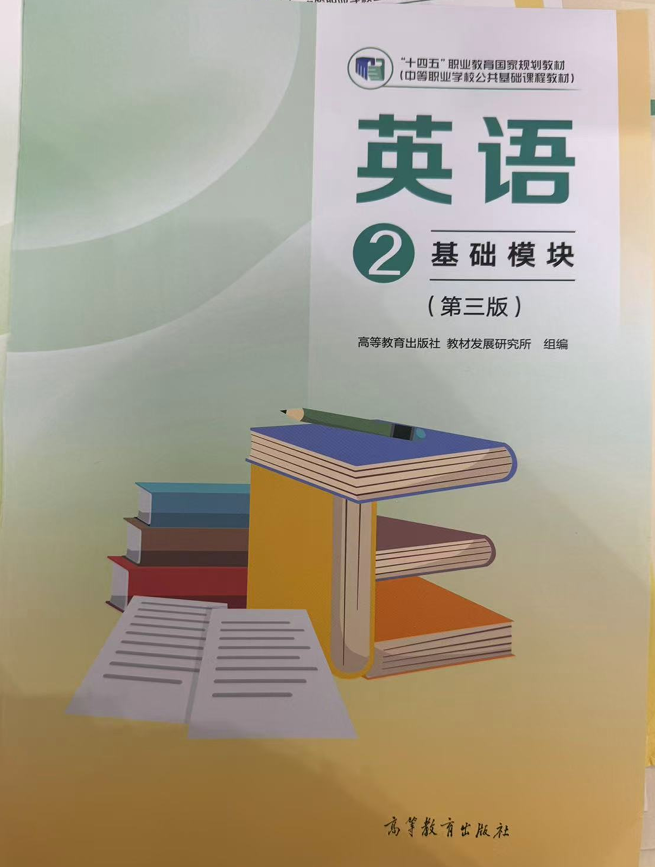
Unit 6 Craftsmanship(B卷·能力提升)《英语 基础模块2》(高教版第三版)单元过关卷(原卷版+解析版)
2026-07-27
|
2份
|
23页
|
42人阅读
|
0人下载
摘要:
**基本信息**
紧扣《英语 基础模块2》Unit 6“Craftsmanship”主题,以A/B卷分层设计实现基础巩固与能力提升,通过真实情境与文化素材融合考查语言能力与思维品质。
**题型特征**
|题型|题量/分值|知识覆盖|命题特色|
|----|-----------|----------|----------|
|情景交际|10小题/20分|日常对话及工匠精神表达|真实对话情境(如询问工匠品质),考查语言运用能力|
|选词填空|10小题/15分|词汇运用及传统工艺(风筝制作)|传统工艺语篇,考查词汇辨析与语法应用,体现文化意识|
|阅读理解|20小题/40分|应用文(技能日通知)、记叙文(张梅设计故事)、议论文(工匠精神)|多体裁融合职业场景与文化传承,考查信息获取与思维分析|
|完形填空|10小题/10分|语法(时态、语态)及词汇运用|工匠故事语篇,考查语法应用与语篇理解,培养学习能力|
|书面表达|1题/15分|发言稿写作及工匠精神描述|结合分享活动情境,要求介绍敬佩的工匠,综合考查语言表达与思维品质|
内容正文:
编写说明:本套试卷紧扣《英语 基础模块2》(高教版第三版)教材,以教材单元为基准精准覆盖核心考点。
每个单元设置AB卷,A卷为基础巩固卷,侧重基础考点训练,帮助学生扎实掌握知识要点;B卷为能力提升卷,注重知识整合与全面检测,引导学生构建知识网络。全书设计4份综合测试卷,模拟实战情境,聚焦解题能力突破,全面提升应试能力与知识应用水平。
《英语 基础模块2》(高教版第三版)《单元过关卷》
Unit 6 Craftsmanship
B卷·能力提升
考试时间:120分钟 满分:100分
班级_____姓名_____学号_____成绩_____
第一部分 情景交际(共10小题,每小题2分,共20分。)
阅读下列简短对话,从A、B、C、D四个选项中选出最佳选项,将对话补全。
1. — What do you think a good welder should be like?
— ________. Safety always comes first.
A. He is twenty-five
B. He is very tall
C. He likes music
D. He should be careful and skilled
【答案】D
【详解】句意:询问好焊工应具备什么品质,后句强调安全第一,D项回答careful and skilled,符合语境。
2. — How was your visit to the watchmaking workshop?
— ________. I was really impressed by the watchmakers' patience.
A. It was boring
B. It was amazing
C. I didn't go
D. It was too short
【答案】B
【详解】句意:询问参观制表工坊的感受,后句说对制表师的耐心印象深刻,说明体验很好,It was amazing正确。
3. — I heard Li won the Chinese Skills Award.
— ________. He has worked hard for over thirty years.
A. I am sorry
B. That's not true
C. That's great news
D. I don't know him
【答案】C
【详解】句意:听说李获得中国技能大奖,后句说他努力了三十多年,说明应表达祝贺,That's great news正确。
4. — Would you like to join the woodcarving club?
— ________, but I need to check my schedule first.
A. No, I won't
B. I'd love to
C. It is impossible
D. You are welcome
【答案】B
【详解】句意:邀请加入木雕社团,but后说明需要查看时间表,表明愿意参加,I'd love to正确。
5. — What does the Chinese idiom "熟能生巧" mean?
— ________. It means practice makes perfect.
A. It means practice makes perfect
B. It is a product name
C. It is very expensive
D. I have no idea
【答案】A
【详解】句意:询问熟能生巧的含义,后句直接给出英文解释practice makes perfect,A项正确。
6. — I am afraid I can't finish this woodcarving on time.
— ________. Let me help you.
A. You must leave
B. That's terrible
C. Don't worry
D. I don't agree
【答案】C
【详解】句意:对方担心无法按时完成木雕,后句提出帮助,应先安慰Don't worry。
7. — Could you show me how to use this carving tool?
— ________. Let me demonstrate it for you.
A. Of course
B. I don't know
C. No smoking
D. Goodbye
【答案】A
【详解】句意:请求演示雕刻工具用法,后句说让我演示,Of course表示乐意帮助。
8. — I think every product should meet high standards.
— ________. Quality is the life of products.
A. I disagree
B. I don't think so
C. It doesn't matter
D. I completely agree
【答案】D
【详解】句意:对方认为产品应达到高标准,后句补充质量是产品的生命,说明完全认同,I completely agree正确。
9. — How much did you spend on this handmade watch?
— ________. It was a gift from my grandfather.
A. 500 yuan
B. I don't like it
C. It was free
D. It is broken
【答案】C
【详解】句意:询问手表价格,后句说是祖父的礼物,说明没有花钱,It was free符合语境。
10. — Why do you want to become a hairdresser?
— ________. I enjoy creating beautiful hairstyles for people.
A. Because I like making people look good
B. Because it pays well
C. Because I have no choice
D. Because my friend told me to
【答案】A
【详解】句意:询问想成为美发师的原因,后句说喜欢为人们创造美丽发型,A项回答因为喜欢让人变美,符合语境。
第二部分 选词填空(共10小题,每小题1.5分,共15分。)
阅读下列短文,从各题所给的A、B、C、D四个选项中选出最佳选项,填入相应的空格处。
Kite-Making
Kite-making is a traditional Chinese craft. It has a history of more than 2,000 ____11____. In ancient China, kites were first used for military (军事的) purposes, but later they became a popular activity for ____12____. People flew kites to wish for good luck and health during spring festivals. They also believed that flying kites could help remove bad luck and bring happiness to their families.
Making a kite ____13____ patience, skill and creativity. First, the craftsman chooses the right bamboo and cuts it into thin strips (条). Then, the strips are ____14____ together to form the frame (框架). The frame must be strong ____15____ light, so that the kite can fly high in the sky. If the frame is too heavy, the kite will not stay in the air for long. The craftsman must also make sure the frame is balanced on both sides so that the kite can fly steadily.
After the frame is ready, paper or silk is ____16____ on it. The craftsman paints beautiful pictures on the surface. Some kites have butterflies, birds or dragons on them. Each painting should be ____17____ and full of life. A well-painted kite is not only a toy but also a piece of art that people love to display at home.
Today, kite-making is still ____18____ in Weifang, a city in Shandong Province. Every year, a kite festival is ____19____ there, and people from all over the world come to see the amazing kites. Through kite-making, traditional Chinese culture can be ____20____ to more people, and the spirit of craftsmanship lives on.
11. A. days B. minutes C. hours D. years
12. A. workers B. children C. soldiers D. farmers
13. A. wastes B. costs C. requires D. loses
14. A. tied B. thrown C. hidden D. broken
15. A. because B. or C. so D. but
16. A. put B. covered C. removed D. forgotten
17. A. boring B. dull C. colourful D. empty
18. A. expensive B. unknown C. rare D. popular
19. A. held B. cancelled C. refused D. forgotten
20. A. hidden B. introduced C. compared D. reduced
【答案】11. D 12. B 13. C 14. A 15. D 16. B 17. C 18. D 19. A 20. B
【导语】本文是一篇说明文,介绍中国传统手工艺——风筝制作的历史、制作工序(选竹、扎架、糊纸、绘画)、当代山东潍坊风筝节,以及风筝制作在传承中国传统文化和工匠精神方面的意义。
11.考查名词词义辨析。句意:它有两千多年的历史。days天;years年;hours小时;minutes分钟。风筝制作有超过2000年的历史,用years。
12.考查名词词义辨析。句意:后来它们成为孩子们喜爱的活动。children孩子;workers工人;soldiers士兵;farmers农民。风筝后来成为大众活动,尤受孩子欢迎,children符合语境。
13.考查动词词义辨析。句意:制作风筝需要耐心、技巧和创造力。wastes浪费;costs花费;requires需要;loses失去。制作风筝需要耐心等品质,requires符合语境。
14.考查动词词义辨析。句意:然后,竹条被绑在一起形成框架。tied绑;thrown扔;hidden藏;broken折断。制作风筝框架需要将竹条绑在一起,tied符合语境。
15.考查连词词义辨析。句意:框架必须坚固但轻便。but但是;or或者;so所以;because因为。坚固和轻便是转折关系,用but连接。
16.考查动词词义辨析。句意:框架准备好后,纸或丝绸被覆盖在上面。put放;covered覆盖;removed移除;forgotten忘记。纸或丝绸覆盖在框架上,covered符合语境。
17.考查形容词词义辨析。句意:每幅画都应该色彩丰富并充满生机。boring无聊的;dull暗淡的;colourful色彩丰富的;empty空的。风筝上的画应该色彩丰富,colourful符合语境。
18.考查形容词词义辨析。句意:如今,风筝制作在山东潍坊仍然很受欢迎。popular受欢迎的;unknown不知名的;rare稀少的;expensive昂贵的。潍坊以风筝闻名,风筝制作在当地受欢迎,popular符合语境。
19.考查动词词义辨析。句意:每年那里都会举办风筝节。held举办;cancelled取消;refused拒绝;forgotten忘记。风筝节在那里举办,held符合语境。
20.考查动词词义辨析。句意:通过风筝制作,中国传统文化可以被介绍给更多人。introduced介绍;hidden隐藏;compared比较;reduced减少。通过风筝制作让更多人了解中国文化,introduced符合语境。
第三部分 阅读理解(共两节)
第一节(共15小题,每小题2分,共30分。)
阅读下列短文,从各题所给的A、B、C、D四个选项中选出最佳选项。
Text 1
Vocational Skills Day at Our School
Time: Saturday, November 15th, 2026, 9:00 a.m. -- 4:00 p.m.
Place: School square and training rooms
Who can join: All students and their family members. Free tickets are available at the school gate. Each ticket allows one person to enter all the activity areas. Children under ten are welcome but must be accompanied by an adult.
Morning programme: Students show their skills in welding, woodcarving, cooking and clothes designing. Visitors can try some simple crafts with the help of student guides. Each training room will have a senior craftsman to answer questions and give advice. There will also be a tool display area where visitors can see different kinds of professional tools used in each craft. Some of these tools have been used by master craftsmen for decades, and they have their own unique stories to tell. Visitors can also take photos with the tools and the finished products on display.
Afternoon programme: Three short talks about craftsmanship will be given in the lecture hall. A welding master will share his 30-year working experience and the challenges he faced along the way. A young designer will talk about how creativity helps her work and show some of her latest designs. A retired watchmaker will show how to fix a small watch part using only simple hand tools. All talks will be in both Chinese and English so that everyone can understand.
Notes: Wear comfortable clothes. Do not touch machines without permission. Lunch is provided for all visitors in the school canteen. If you want to join, register at the school gate before November 10th. For more information, call 0771-556-7830 or visit our website.
21. When will Vocational Skills Day be held?
A. On Saturday, November 15th.
B. On Sunday, November 16th.
C. On Monday, November 10th.
D. On Friday, November 14th.
22. Where will the short talks be given?
A. In the school square.
B. In the training rooms.
C. At the school gate.
D. In the lecture hall.
23. Who will share 30-year working experience?
A. A young designer.
B. A welding master.
C. A retired watchmaker.
D. A student guide.
24. What should visitors NOT do?
A. Wear comfortable clothes.
B. Try some simple crafts.
C. Touch machines without permission.
D. Register at the school gate.
25. Which of the following is TRUE?
A. Lunch is not provided.
B. Only teachers can join.
C. The activity is on a weekday.
D. Visitors should register before November 10th.
【答案】21. A 22. D 23. B 24. C 25. D
【导语】本文是一则校园职业技能日活动通知,介绍活动时间、地点、参与对象、上下半场活动内容及注意事项,侧重考查学生快速定位文本细节信息的阅读理解能力。
21.细节理解题根据原文可知,根据"Time: Saturday, November 15th, 2026"可知,活动在11月15日周六举行。
22.细节理解题根据原文可知,根据"Three short talks about craftsmanship will be given in the lecture hall."可知,演讲在报告厅举行。
23.细节理解题根据原文可知,根据"A welding master will share his 30-year working experience."可知,一位焊接大师将分享30年工作经验。
24.细节理解题根据原文可知,根据"Do not touch machines without permission."可知,未经允许不得触摸机器。
25.细节理解题根据原文可知,根据"If you want to join, register at the school gate before November 10th."可知,参观者应在11月10日前登记。
Text 2
Zhang Mei, a seventeen-year-old vocational school student in Liuzhou, always dreamed of becoming a fashion designer. When she was a child, she watched her grandmother make clothes by hand. The old woman could turn a simple piece of cloth into a beautiful dress without any pattern. Zhang Mei was amazed by those skilled hands and decided that she would learn this craft one day.
At the vocational school, Zhang Mei chose clothes designing as her major. In the first year, she found it more difficult than she had expected. She made many mistakes when cutting cloth. Sometimes the sleeves were too long, and sometimes the colours did not match. Her teacher, Ms. Zhao, told her, "Designing is not just about drawing pictures. You need patience to examine every detail."
Zhang Mei started to slow down. She spent extra hours in the workshop after class. She practised cutting and sewing again and again. She also learned to focus on each step instead of rushing to the finish. Slowly, her works became better and better. Her classmates began to admire her designs and often asked her for advice.
Last month, Zhang Mei joined a city-wide design competition. Her work -- a dress with traditional Chinese patterns -- won the first prize. The judges said her design was both creative and well-made. Zhang Mei smiled and said, "I still have a long way to go, but I know that patience and practice will take me there." She believed that craftsmanship was not just a skill, but a way to make her dreams come true.
26. What did Zhang Mei's grandmother do?
A. She was a teacher.
B. She was a cook.
C. She made clothes by hand.
D. She welded steel.
27. What problem did Zhang Mei have in the first year?
A. She could not draw pictures.
B. She failed all her exams.
C. She could not use a sewing machine.
D. She made many mistakes when cutting cloth.
28. What does the underlined word "examine" mean?
A. 忽略
B. 检查
C. 购买
D. 装饰
29. What won the first prize in the competition?
A. A dress with traditional Chinese patterns.
B. A pair of shoes.
C. A wooden sculpture.
D. A metal frame.
30. What can we learn from the passage?
A. Zhang Mei gave up designing.
B. Zhang Mei believed patience and practice would help her succeed.
C. Zhang Mei changed her major to welding.
D. Zhang Mei thought designing was easy.
【答案】26. C 27. D 28. B 29. A 30. B
【导语】本文是一篇记叙文,讲述职校学生张梅从零基础学习服装设计、经历困难后在老师指导下成长、最终在比赛中获奖的故事,诠释了耐心和练习对于工匠精神的重要性。
26.细节理解题根据原文可知,根据第一段"she watched her grandmother make clothes by hand"可知,她的祖母用手做衣服。
27.细节理解题根据原文可知,根据第二段"She made many mistakes when cutting cloth."可知,她在裁布时常犯错。
28.词义猜测题根据原文可知,根据上下文,老师说设计需要耐心去检查每个细节,examine意为"检查"。
29.细节理解题根据原文可知,根据第四段"a dress with traditional Chinese patterns -- won the first prize"可知,她设计的带有中国传统图案的连衣裙获一等奖。
30.推理判断题根据原文可知,根据最后一句"I know that patience and practice will take me there"可知,张梅相信耐心和练习能帮她实现梦想。
Text 3
In today's fast-changing world, some people may wonder whether traditional craftsmanship still has a place. The answer is yes. Craftsmanship is not only about making old-style products; it is about an attitude that values quality, patience and continuous improvement. This attitude is needed in every field, from cooking to high-speed railway engineering.
First, craftsmanship means taking responsibility for quality. A craftsman does not just finish a task -- he tries to make it as good as possible. He checks every detail, fixes every small problem, and never says "good enough" when he can do better. Products made in Germany are believed to be durable because German workers have long valued this principle. They treat quality as the life of their products.
Second, craftsmanship requires lifelong learning. A good craftsman is always curious about new methods and tools. Li, a senior high-speed railway technician, started as a welder in 1986. Over the past 30 years, he kept studying hard and practising a lot. He solved more than 100 technical problems and was awarded the title "Craftsman of the Nation." His story shows that skills grow through years of effort, not overnight.
Third, craftsmanship connects tradition with innovation. Traditional techniques can be valuable in modern production if they are combined with new technology. Some modern factories invite old masters to train young workers, so that the skills which were passed down through generations are not lost. At the same time, young workers bring fresh ideas and help improve traditional methods.
In conclusion, craftsmanship is far more than a skill. It is a spirit that connects the past and the future, tradition and innovation. Whether you are a student, a worker or a designer, the spirit of doing one thing well can make a real difference in your life and career.
31. What is craftsmanship mainly about according to Paragraph 1?
A. Making old-style products only.
B. A type of machine.
C. A way to make money quickly.
D. An attitude that values quality, patience and continuous improvement.
32. Why are products made in Germany believed to be durable?
A. Because German workers value quality as the life of products.
B. Because they are cheap.
C. Because they use only machines.
D. Because they are made very fast.
33. What does the underlined word "innovation" mean?
A. 传统
B. 价格
C. 创新
D. 速度
34. What did Li achieve over the past 30 years?
A. He became a teacher.
B. He solved more than 100 technical problems and was awarded "Craftsman of the Nation."
C. He left his job.
D. He moved to another country.
35. What is the best title for the passage?
A. The Spirit of Craftsmanship in Modern Times
B. How to Make German Products
C. A History of High-Speed Railways
D. Rules for Using Machines
【答案】31. D 32. A 33. C 34. B 35. A
【导语】本文是一篇说明文,从工匠精神的态度、终身学习和传统与创新结合三方面阐述工匠精神在当代的价值和意义,重点考查学生细节定位、词义猜测、主旨概括和简单推断能力。
31.细节理解题根据原文可知,根据第一段"it is about an attitude that values quality, patience and continuous improvement"可知,工匠精神是一种重视质量、耐心和持续改进的态度。
32.细节理解题根据原文可知,根据第二段"They treat quality as the life of their products."可知,德国工人将质量视为产品的生命。
33.词义猜测题根据原文可知,根据第四段"Traditional techniques can be valuable in modern production if they are combined with new technology"可知,传统与新技术结合,innovation意为"创新"。
34.细节理解题根据原文可知,根据第三段"He solved more than 100 technical problems and was awarded the title 'Craftsman of the Nation.'"可知,李解决了100多个技术问题并获"大国工匠"称号。
35.主旨大意题根据原文可知,全文从工匠精神的态度、终身学习、传统与创新结合三方面阐述其当代价值,A项最适合作标题。
第二节(共5小题,每小题2分,共10分。)
阅读下列短文,从短文后的选项中选出最佳选项,并填入空白处。
Learning to Make a Kite
Last Sunday, I visited my grandfather's kite shop with my friend Mark. My grandfather is known for his excellent kite-making skills. ____36____. When we arrived, he was cutting bamboo strips carefully. The shop was filled with colourful kites of all shapes and sizes, hanging from the ceiling like a beautiful sky.
Mark was curious about how kites are made. He asked, "What is needed to make a kite?" ____37____. He said, "Besides bamboo and paper, creativity and patience are also very important. A good kite maker must be willing to spend hours on a single piece." Mark listened with great interest and took out his notebook to write down the steps.
Then my grandfather showed us the whole process. First, he tied the bamboo strips together to make a frame. ____38____. After that, he painted a beautiful butterfly on it. Every step was done with great care and precision. We watched in silence, not wanting to distract him from his focused work.
____39____. My grandfather taught me to make kites when I was three years old. Now I can make simple kites by myself. Mark was amazed and said he wanted to learn too, so my grandfather promised to teach him next time we visit.
____40____. It is not only a skill but also a way to pass down traditional Chinese culture. I feel lucky to have grown up around these beautiful kites and the wonderful stories behind them.
A. I was taught to make kites when I was young
B. My grandfather smiled and answered the question
C. Making kites is a meaningful craft
D. His kites are so beautiful that many people come to buy them
E. Then he covered the frame with thin paper
【答案】36. D 37. B 38. E 39. A 40. C
【导语】本文是一篇记叙文,以时间顺序记述作者带朋友参观祖父风筝店、了解风筝制作过程并学习制作风筝的经历,展现了传统手工艺的魅力和传承意义,侧重考查上下文逻辑衔接与语篇整体理解能力。
36.空处需要承接上下文并保持事件发展连贯。选项D「His kites are so beautiful that many people come to buy them」与前后句在人称、时间顺序或核心词复现方面一致,故选D。
37.空处需要承接上下文并保持事件发展连贯。选项B「My grandfather smiled and answered the question」与前后句在人称、时间顺序或核心词复现方面一致,故选B。
38.空处需要承接上下文并保持事件发展连贯。选项E「Then he covered the frame with thin paper」与前后句在人称、时间顺序或核心词复现方面一致,故选E。
39.空处需要承接上下文并保持事件发展连贯。选项A「I was taught to make kites when I was young」与前后句在人称、时间顺序或核心词复现方面一致,故选A。
40.空处需要承接上下文并保持事件发展连贯。选项C「Making kites is a meaningful craft」与前后句在人称、时间顺序或核心词复现方面一致,故选C。
第四部分 完形填空(共10小题,每小题1分,共10分。)
阅读下列短文,在空格处填入适当的词或用括号里的词的正确形式填空。
A Master's Legacy
Master Chen is a woodcarver who ____41____ (work) in a small workshop for over forty years. Every morning, he arrives at the workshop early and ____42____ (begin) his work with great focus. His neighbours say they can always hear the sound of his carving knife before the sun rises. He never takes a day off because he believes that missing one day of practice will slow down his hands.
His carving knife ____43____ (use) for more than twenty years, but it is still very sharp. Master Chen takes good care of his tools because he believes they are part of his craft. He cleans and sharpens them after every use, treating them with the same respect as a good friend. He once told his students that a craftsman who does not respect his tools will never create truly great works.
Last year, Master Chen ____44____ (invite) to teach at a vocational school. He was happy to share his skills with young students. In his classes, students learn how ____45____ (carve) wood step by step. Master Chen always tells them, "You need ____46____ (patient) and creativity to make good works. A true craftsman never hurries through a piece of work."
His students are ____47____ (interest) in the traditional craft and practise hard. Some of ____48____ (they) have already won prizes in craft competitions. Master Chen is proud of his students and hopes that the traditional techniques will be passed ____49____ to future generations. He believes that as long as young people keep practising, the spirit of craftsmanship will never ____50____ (die).
【答案】41. has worked 42. begins 43. has been used 44. was invited 45. to carve 46. patience 47. interested 48. them 49. down 50. die
【导语】本文是一篇记叙文,讲述木雕大师陈师傅四十余年的工作经历及受邀在职校授课、传承木雕技艺的故事。短文围绕工匠精神与传统技艺传承话题,考查现在完成时、一般现在时、被动语态、非谓语动词、名词、形容词、代词宾格、介词等语法知识。
41.考查动词时态。句意:陈师傅是在小工坊工作了四十多年的木雕师。for over forty years表示从过去持续到现在的动作,用现在完成时has worked。
42.考查动词时态。句意:每天早上他早早到达工坊并开始专注工作。Every morning表示经常性动作,主语he为第三人称单数,谓语用begins。
43.考查动词时态与被动语态。句意:他的雕刻刀已经用了二十多年,但仍然很锋利。for more than twenty years表示持续到现在,主语knife与use为被动关系,用现在完成时的被动语态has been used。
44.考查被动语态。句意:去年,陈师傅被邀请到一所职校任教。主语he与invite为被动关系,叙述过去事件,用was invited。
45.考查非谓语动词。句意:学生们学习如何一步步雕刻木头。how后接不定式作宾语,填to carve。
46.考查名词。句意:你需要耐心和创造力来做出好作品。need后接名词作宾语,patient的名词形式为patience。
47.考查形容词。句意:他的学生对传统手工艺感兴趣。be interested in为固定搭配,表示「对……感兴趣」,填interested。
48.考查代词。句意:他们中的一些人已在手工艺比赛中获奖。介词of后接人称代词宾格,they的宾格为them。
49.考查介词。句意:他希望传统技艺能传承给后代。pass down为固定搭配,意为「传承」,填down。
50.考查动词。句意:只要年轻人坚持练习,工匠精神就永远不会消亡。情态动词will never后接动词原形die。
第五部分 书面表达(共15分。)
51. 假设你是李明,你的学校下周将举办"我心中的工匠精神"英语分享活动。请根据以下要点,写一篇发言稿,介绍一位你敬佩的工匠。具体内容和要求如下:
1. 词数70—80个;
2. 文中不可出现真实人名和校名;
3. 开头、结尾已给出,不计入总词数;
4. 相关内容及词汇仅供参考,可酌情选用。
主要内容
参考信息
参考词汇及短语
人物信息
说明他/她的身份和职业
craftsman, welder, designer, technician, woodcarver
品质特点
描述他/她的工匠精神和品质
patient, creative, focused, hardworking, skilled
你的感悟
表达你从他/她身上学到什么
learn from, never give up, focus on details, keep practising
Good morning, everyone,
I would like to share a story about a craftsman I admire.
____________________________________________________________________________________________________
That is all. Thank you for listening.
【答案】例文:
Good morning, everyone,
I would like to share a story about a craftsman I admire.
The person I admire is my uncle, who is a skilled welder. He has worked in a factory for over twenty years. He is known for his patience and focus. Every day, he checks his work carefully to make sure every weld is perfect. He once told me, "A small mistake can cause a big problem, so I must focus on every detail." I was deeply moved by his words. He also keeps learning new skills even though he is already very experienced. I have learned from him that craftsmanship is about doing one thing well for a lifetime. I hope I can be as dedicated as him in my future career.
That is all. Thank you for listening.
【导语】本篇书面表达属于发言稿,要求介绍一位敬佩的工匠,内容应包括人物身份、职业品质以及个人感悟。
【词汇积累】
敬佩:admire -> respect
熟练的:skilled -> expert
深刻的:deeply -> greatly
专注的:focused -> concentrated
【句式拓展】
原句:原句:He checks his work carefully to make sure every weld is perfect.
拓展句:拓展句:He checks his work carefully because he knows that a small mistake can cause a big problem.
【点睛】
He once told me, "A small mistake can cause a big problem, so I must focus on every detail." (运用了直接引语和因果关系)
I have learned from him that craftsmanship is about doing one thing well for a lifetime. (运用了宾语从句和现在完成时)
原创精品资源学科网独家享有版权,侵权必究!
学科网(北京)股份有限公司
$
编写说明:本套试卷紧扣《英语 基础模块2》(高教版第三版)教材,以教材单元为基准精准覆盖核心考点。
每个单元设置AB卷,A卷为基础巩固卷,侧重基础考点训练,帮助学生扎实掌握知识要点;B卷为能力提升卷,注重知识整合与全面检测,引导学生构建知识网络。全书设计4份综合测试卷,模拟实战情境,聚焦解题能力突破,全面提升应试能力与知识应用水平。
《英语 基础模块2》(高教版第三版)《单元过关卷》
Unit 6 Craftsmanship
B卷·能力提升
考试时间:120分钟 满分:100分
班级_____姓名_____学号_____成绩_____
第一部分 情景交际(共10小题,每小题2分,共20分。)
阅读下列简短对话,从A、B、C、D四个选项中选出最佳选项,将对话补全。
1. — What do you think a good welder should be like?
— ________. Safety always comes first.
A. He is twenty-five
B. He is very tall
C. He likes music
D. He should be careful and skilled
2. — How was your visit to the watchmaking workshop?
— ________. I was really impressed by the watchmakers' patience.
A. It was boring
B. It was amazing
C. I didn't go
D. It was too short
3. — I heard Li won the Chinese Skills Award.
— ________. He has worked hard for over thirty years.
A. I am sorry
B. That's not true
C. That's great news
D. I don't know him
4. — Would you like to join the woodcarving club?
— ________, but I need to check my schedule first.
A. No, I won't
B. I'd love to
C. It is impossible
D. You are welcome
5. — What does the Chinese idiom "熟能生巧" mean?
— ________. It means practice makes perfect.
A. It means practice makes perfect
B. It is a product name
C. It is very expensive
D. I have no idea
6. — I am afraid I can't finish this woodcarving on time.
— ________. Let me help you.
A. You must leave
B. That's terrible
C. Don't worry
D. I don't agree
7. — Could you show me how to use this carving tool?
— ________. Let me demonstrate it for you.
A. Of course
B. I don't know
C. No smoking
D. Goodbye
8. — I think every product should meet high standards.
— ________. Quality is the life of products.
A. I disagree
B. I don't think so
C. It doesn't matter
D. I completely agree
9. — How much did you spend on this handmade watch?
— ________. It was a gift from my grandfather.
A. 500 yuan
B. I don't like it
C. It was free
D. It is broken
10. — Why do you want to become a hairdresser?
— ________. I enjoy creating beautiful hairstyles for people.
A. Because I like making people look good
B. Because it pays well
C. Because I have no choice
D. Because my friend told me to
第二部分 选词填空(共10小题,每小题1.5分,共15分。)
阅读下列短文,从各题所给的A、B、C、D四个选项中选出最佳选项,填入相应的空格处。
Kite-Making
Kite-making is a traditional Chinese craft. It has a history of more than 2,000 ____11____. In ancient China, kites were first used for military (军事的) purposes, but later they became a popular activity for ____12____. People flew kites to wish for good luck and health during spring festivals. They also believed that flying kites could help remove bad luck and bring happiness to their families.
Making a kite ____13____ patience, skill and creativity. First, the craftsman chooses the right bamboo and cuts it into thin strips (条). Then, the strips are ____14____ together to form the frame (框架). The frame must be strong ____15____ light, so that the kite can fly high in the sky. If the frame is too heavy, the kite will not stay in the air for long. The craftsman must also make sure the frame is balanced on both sides so that the kite can fly steadily.
After the frame is ready, paper or silk is ____16____ on it. The craftsman paints beautiful pictures on the surface. Some kites have butterflies, birds or dragons on them. Each painting should be ____17____ and full of life. A well-painted kite is not only a toy but also a piece of art that people love to display at home.
Today, kite-making is still ____18____ in Weifang, a city in Shandong Province. Every year, a kite festival is ____19____ there, and people from all over the world come to see the amazing kites. Through kite-making, traditional Chinese culture can be ____20____ to more people, and the spirit of craftsmanship lives on.
11. A. days B. minutes C. hours D. years
12. A. workers B. children C. soldiers D. farmers
13. A. wastes B. costs C. requires D. loses
14. A. tied B. thrown C. hidden D. broken
15. A. because B. or C. so D. but
16. A. put B. covered C. removed D. forgotten
17. A. boring B. dull C. colourful D. empty
18. A. expensive B. unknown C. rare D. popular
19. A. held B. cancelled C. refused D. forgotten
20. A. hidden B. introduced C. compared D. reduced
第三部分 阅读理解(共两节)
第一节(共15小题,每小题2分,共30分。)
阅读下列短文,从各题所给的A、B、C、D四个选项中选出最佳选项。
Text 1
Vocational Skills Day at Our School
Time: Saturday, November 15th, 2026, 9:00 a.m. -- 4:00 p.m.
Place: School square and training rooms
Who can join: All students and their family members. Free tickets are available at the school gate. Each ticket allows one person to enter all the activity areas. Children under ten are welcome but must be accompanied by an adult.
Morning programme: Students show their skills in welding, woodcarving, cooking and clothes designing. Visitors can try some simple crafts with the help of student guides. Each training room will have a senior craftsman to answer questions and give advice. There will also be a tool display area where visitors can see different kinds of professional tools used in each craft. Some of these tools have been used by master craftsmen for decades, and they have their own unique stories to tell. Visitors can also take photos with the tools and the finished products on display.
Afternoon programme: Three short talks about craftsmanship will be given in the lecture hall. A welding master will share his 30-year working experience and the challenges he faced along the way. A young designer will talk about how creativity helps her work and show some of her latest designs. A retired watchmaker will show how to fix a small watch part using only simple hand tools. All talks will be in both Chinese and English so that everyone can understand.
Notes: Wear comfortable clothes. Do not touch machines without permission. Lunch is provided for all visitors in the school canteen. If you want to join, register at the school gate before November 10th. For more information, call 0771-556-7830 or visit our website.
21. When will Vocational Skills Day be held?
A. On Saturday, November 15th.
B. On Sunday, November 16th.
C. On Monday, November 10th.
D. On Friday, November 14th.
22. Where will the short talks be given?
A. In the school square.
B. In the training rooms.
C. At the school gate.
D. In the lecture hall.
23. Who will share 30-year working experience?
A. A young designer.
B. A welding master.
C. A retired watchmaker.
D. A student guide.
24. What should visitors NOT do?
A. Wear comfortable clothes.
B. Try some simple crafts.
C. Touch machines without permission.
D. Register at the school gate.
25. Which of the following is TRUE?
A. Lunch is not provided.
B. Only teachers can join.
C. The activity is on a weekday.
D. Visitors should register before November 10th.
Text 2
Zhang Mei, a seventeen-year-old vocational school student in Liuzhou, always dreamed of becoming a fashion designer. When she was a child, she watched her grandmother make clothes by hand. The old woman could turn a simple piece of cloth into a beautiful dress without any pattern. Zhang Mei was amazed by those skilled hands and decided that she would learn this craft one day.
At the vocational school, Zhang Mei chose clothes designing as her major. In the first year, she found it more difficult than she had expected. She made many mistakes when cutting cloth. Sometimes the sleeves were too long, and sometimes the colours did not match. Her teacher, Ms. Zhao, told her, "Designing is not just about drawing pictures. You need patience to examine every detail."
Zhang Mei started to slow down. She spent extra hours in the workshop after class. She practised cutting and sewing again and again. She also learned to focus on each step instead of rushing to the finish. Slowly, her works became better and better. Her classmates began to admire her designs and often asked her for advice.
Last month, Zhang Mei joined a city-wide design competition. Her work -- a dress with traditional Chinese patterns -- won the first prize. The judges said her design was both creative and well-made. Zhang Mei smiled and said, "I still have a long way to go, but I know that patience and practice will take me there." She believed that craftsmanship was not just a skill, but a way to make her dreams come true.
26. What did Zhang Mei's grandmother do?
A. She was a teacher.
B. She was a cook.
C. She made clothes by hand.
D. She welded steel.
27. What problem did Zhang Mei have in the first year?
A. She could not draw pictures.
B. She failed all her exams.
C. She could not use a sewing machine.
D. She made many mistakes when cutting cloth.
28. What does the underlined word "examine" mean?
A. 忽略
B. 检查
C. 购买
D. 装饰
29. What won the first prize in the competition?
A. A dress with traditional Chinese patterns.
B. A pair of shoes.
C. A wooden sculpture.
D. A metal frame.
30. What can we learn from the passage?
A. Zhang Mei gave up designing.
B. Zhang Mei believed patience and practice would help her succeed.
C. Zhang Mei changed her major to welding.
D. Zhang Mei thought designing was easy.
Text 3
In today's fast-changing world, some people may wonder whether traditional craftsmanship still has a place. The answer is yes. Craftsmanship is not only about making old-style products; it is about an attitude that values quality, patience and continuous improvement. This attitude is needed in every field, from cooking to high-speed railway engineering.
First, craftsmanship means taking responsibility for quality. A craftsman does not just finish a task -- he tries to make it as good as possible. He checks every detail, fixes every small problem, and never says "good enough" when he can do better. Products made in Germany are believed to be durable because German workers have long valued this principle. They treat quality as the life of their products.
Second, craftsmanship requires lifelong learning. A good craftsman is always curious about new methods and tools. Li, a senior high-speed railway technician, started as a welder in 1986. Over the past 30 years, he kept studying hard and practising a lot. He solved more than 100 technical problems and was awarded the title "Craftsman of the Nation." His story shows that skills grow through years of effort, not overnight.
Third, craftsmanship connects tradition with innovation. Traditional techniques can be valuable in modern production if they are combined with new technology. Some modern factories invite old masters to train young workers, so that the skills which were passed down through generations are not lost. At the same time, young workers bring fresh ideas and help improve traditional methods.
In conclusion, craftsmanship is far more than a skill. It is a spirit that connects the past and the future, tradition and innovation. Whether you are a student, a worker or a designer, the spirit of doing one thing well can make a real difference in your life and career.
31. What is craftsmanship mainly about according to Paragraph 1?
A. Making old-style products only.
B. A type of machine.
C. A way to make money quickly.
D. An attitude that values quality, patience and continuous improvement.
32. Why are products made in Germany believed to be durable?
A. Because German workers value quality as the life of products.
B. Because they are cheap.
C. Because they use only machines.
D. Because they are made very fast.
33. What does the underlined word "innovation" mean?
A. 传统
B. 价格
C. 创新
D. 速度
34. What did Li achieve over the past 30 years?
A. He became a teacher.
B. He solved more than 100 technical problems and was awarded "Craftsman of the Nation."
C. He left his job.
D. He moved to another country.
35. What is the best title for the passage?
A. The Spirit of Craftsmanship in Modern Times
B. How to Make German Products
C. A History of High-Speed Railways
D. Rules for Using Machines
第二节(共5小题,每小题2分,共10分。)
阅读下列短文,从短文后的选项中选出最佳选项,并填入空白处。
Learning to Make a Kite
Last Sunday, I visited my grandfather's kite shop with my friend Mark. My grandfather is known for his excellent kite-making skills. ____36____. When we arrived, he was cutting bamboo strips carefully. The shop was filled with colourful kites of all shapes and sizes, hanging from the ceiling like a beautiful sky.
Mark was curious about how kites are made. He asked, "What is needed to make a kite?" ____37____. He said, "Besides bamboo and paper, creativity and patience are also very important. A good kite maker must be willing to spend hours on a single piece." Mark listened with great interest and took out his notebook to write down the steps.
Then my grandfather showed us the whole process. First, he tied the bamboo strips together to make a frame. ____38____. After that, he painted a beautiful butterfly on it. Every step was done with great care and precision. We watched in silence, not wanting to distract him from his focused work.
____39____. My grandfather taught me to make kites when I was three years old. Now I can make simple kites by myself. Mark was amazed and said he wanted to learn too, so my grandfather promised to teach him next time we visit.
____40____. It is not only a skill but also a way to pass down traditional Chinese culture. I feel lucky to have grown up around these beautiful kites and the wonderful stories behind them.
A. I was taught to make kites when I was young
B. My grandfather smiled and answered the question
C. Making kites is a meaningful craft
D. His kites are so beautiful that many people come to buy them
E. Then he covered the frame with thin paper
第四部分 完形填空(共10小题,每小题1分,共10分。)
阅读下列短文,在空格处填入适当的词或用括号里的词的正确形式填空。
A Master's Legacy
Master Chen is a woodcarver who ____41____ (work) in a small workshop for over forty years. Every morning, he arrives at the workshop early and ____42____ (begin) his work with great focus. His neighbours say they can always hear the sound of his carving knife before the sun rises. He never takes a day off because he believes that missing one day of practice will slow down his hands.
His carving knife ____43____ (use) for more than twenty years, but it is still very sharp. Master Chen takes good care of his tools because he believes they are part of his craft. He cleans and sharpens them after every use, treating them with the same respect as a good friend. He once told his students that a craftsman who does not respect his tools will never create truly great works.
Last year, Master Chen ____44____ (invite) to teach at a vocational school. He was happy to share his skills with young students. In his classes, students learn how ____45____ (carve) wood step by step. Master Chen always tells them, "You need ____46____ (patient) and creativity to make good works. A true craftsman never hurries through a piece of work."
His students are ____47____ (interest) in the traditional craft and practise hard. Some of ____48____ (they) have already won prizes in craft competitions. Master Chen is proud of his students and hopes that the traditional techniques will be passed ____49____ to future generations. He believes that as long as young people keep practising, the spirit of craftsmanship will never ____50____ (die).
第五部分 书面表达(共15分。)
51. 假设你是李明,你的学校下周将举办"我心中的工匠精神"英语分享活动。请根据以下要点,写一篇发言稿,介绍一位你敬佩的工匠。具体内容和要求如下:
1. 词数70—80个;
2. 文中不可出现真实人名和校名;
3. 开头、结尾已给出,不计入总词数;
4. 相关内容及词汇仅供参考,可酌情选用。
主要内容
参考信息
参考词汇及短语
人物信息
说明他/她的身份和职业
craftsman, welder, designer, technician, woodcarver
品质特点
描述他/她的工匠精神和品质
patient, creative, focused, hardworking, skilled
你的感悟
表达你从他/她身上学到什么
learn from, never give up, focus on details, keep practising
Good morning, everyone,
I would like to share a story about a craftsman I admire.
____________________________________________________________________________________________________
That is all. Thank you for listening.
原创精品资源学科网独家享有版权,侵权必究!
学科网(北京)股份有限公司
$
资源预览图

1

2

3
由于学科网是一个信息分享及获取的平台,不确保部分用户上传资料的 来源及知识产权归属。如您发现相关资料侵犯您的合法权益,请联系学科网,我们核实后将及时进行处理。