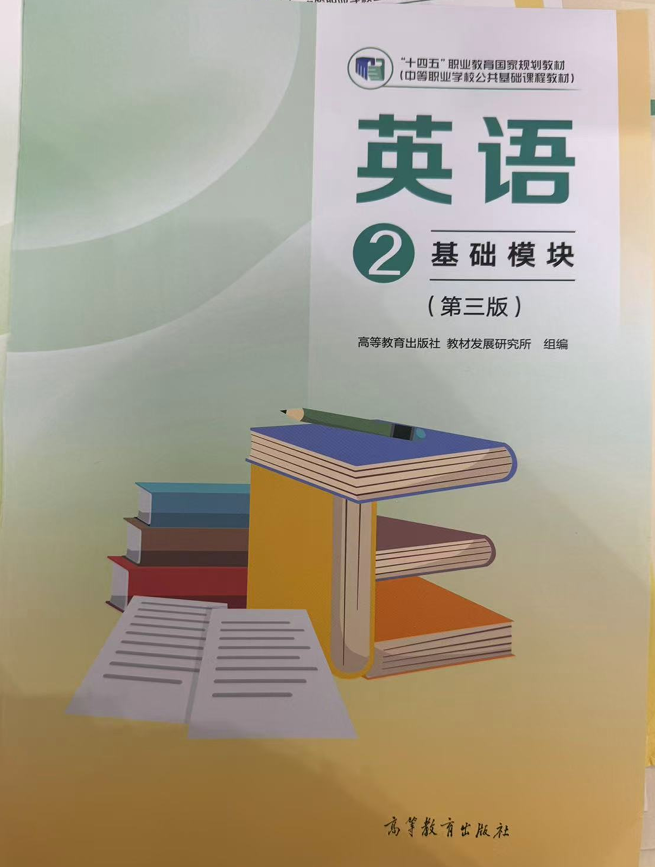
Unit 5 Ancient Civilization(B卷·能力提升)《英语 基础模块2》(高教版第三版)单元过关卷(原卷版+解析版)
2026-07-27
|
2份
|
21页
|
46人阅读
|
0人下载
内容正文:
编写说明:本套试卷紧扣《英语 基础模块2》(高教版第三版)教材,以教材单元为基准精准覆盖核心考点。
每个单元设置AB卷,A卷为基础巩固卷,侧重基础考点训练,帮助学生扎实掌握知识要点;B卷为能力提升卷,注重知识整合与全面检测,引导学生构建知识网络。全书设计4份综合测试卷,模拟实战情境,聚焦解题能力突破,全面提升应试能力与知识应用水平。
《英语 基础模块2》(高教版第三版)《单元过关卷》
Unit 5 Ancient Civilization
B卷·能力提升
考试时间:120分钟 满分:100分
班级_____姓名_____学号_____成绩_____
第一部分 情景交际(共10小题,每小题2分,共20分。)
阅读下列简短对话,从A、B、C、D四个选项中选出最佳选项,将对话补全。
1. — I heard your group will introduce ancient Greek art tomorrow.
— ________. We have prepared pictures and notes.
A. Yes, we will
B. No, thanks
C. It is my coat
D. Turn right
2. — Could you explain why the Mogao Caves are so important?
— ________. They keep rich art treasures and history.
A. Good night
B. Of course
C. I am lost
D. No smoking
3. — The volunteer's English introduction was really clear.
— ________. Many visitors understood the exhibits better.
A. I don't mind
B. It is too late
C. I agree
D. Close the window
4. — May I take photos of this ancient coin?
— ________. Please look at the sign. It says no photos.
A. I'm afraid not
B. Have a good trip
C. It sounds fresh
D. You are welcome
5. — What does this old map show?
— ________. It shows trade routes between the East and the West.
A. I am hungry
B. It is a route map
C. No, I can't
D. See you
6. — I'm not sure how to pronounce the word “civilization”.
— ________. Listen and repeat after me.
A. That is private
B. Don't touch it
C. Let me help you
D. I dislike it
7. — We will visit the exhibition hall this afternoon.
— ________. Remember to bring your learning card.
A. It is broken
B. I am sorry
C. No way
D. Enjoy your visit
8. — Do you know whether paper-making reached Europe through ancient routes?
— ________. I read it in a history article.
A. Never mind
B. Yes, I do
C. Here you are
D. It is raining
9. — The wall painting looks attractive, but I cannot understand its meaning.
— ________. The guide will explain it soon.
A. I won't listen
B. That's impossible
C. Go away
D. Don't worry
10. — Thank you for sharing your notes about the Maritime Silk Road.
— ________. I hope they are useful.
A. I forgot it
B. It is dangerous
C. You are welcome
D. No, I don't
第二部分 选词填空(共10小题,每小题1.5分,共15分。)
阅读下列短文,从各题所给的A、B、C、D四个选项中选出最佳选项,填入相应的空格处。
Mogao Caves and Cultural Exchanges
The Mogao Caves are famous ancient art treasures in Dunhuang. They are near an important city on the ancient Silk Road. For many centuries, artists created wall paintings and sculptures there, leaving a rich record of cultural ____11____.
When visitors enter the caves, they may be deeply ____12____ by the colors and stories. The paintings show people, music, clothes and travel in different times. Some pictures even help researchers understand ____13____ life along the route. These works are not silent stones; they tell how people ____14____ ideas across long distances.
Today, new ____15____ makes protection work better. Experts take digital photos and build online exhibitions, so more people can see the treasures ____16____. Students can also search for information and make reports. If they explain the pictures ____17____, younger visitors will understand them more easily. The caves are ____18____ because they link art with history. They remind us that every civilization can learn from another ____19____ contribute to the world. Protecting them is a(n) ____20____ job for all of us.
11. A. mistake B. weather C. price D. exchange
12. A. impressed B. changed C. hidden D. refused
13. A. actual B. empty C. noisy D. private
14. A. forgot B. locked C. shared D. broke
15. A. medicine B. homework C. traffic D. technology
16. A. badly B. clearly C. angrily D. alone
17. A. loudly B. carelessly C. suddenly D. patiently
18. A. valuable B. late C. weak D. simple
19. A. but B. and C. or D. because
20. A. dangerous B. ordinary C. meaningful D. lonely
第三部分 阅读理解(共两节)
第一节(共15小题,每小题2分,共30分。)
阅读下列短文,从各题所给的A、B、C、D四个选项中选出最佳选项。
Text 1
Museum Guide Training Notice
To prepare for the Ancient Art Exhibition, Guangxi Youth Museum will offer a guide training program for vocational school students. The program will last for three afternoons, from June 3rd to June 5th. It is designed for students who are interested in English communication, tourism service or cultural protection. Students will not only learn basic facts about ancient civilizations, but also practise how to ask for and give information politely.
On the first afternoon, a reporter will show students how to interview visitors. Students will learn to ask short questions, listen carefully and write down key words. On the second afternoon, a museum worker will introduce paintings, sculptures and ancient routes. Students will practise explaining why a work is attractive and what story it may tell. On the third afternoon, each student will give a two-minute English introduction beside one exhibit. Teachers will give comments on pronunciation, eye contact and logical order.
The museum will choose thirty students for the program. Applicants should fill in a form online before May 28th and upload a short self-introduction in English. During the training, students must wear their school uniforms and keep their phones silent. Those who finish the program may work as volunteers during the summer exhibition. They will help visitors find halls, read signs and understand simple stories behind the treasures. If you need more information, call 0771-398-2217 or visit the museum service desk. The final name list will be posted on the club board two days later.
21. Who is the guide training program designed for?
A. Children who cannot read museum signs.
B. Only professional painters from foreign countries.
C. Workers who want to sell old coins.
D. Students interested in communication, service or cultural protection.
22. What will students do on the second afternoon?
A. Learn about paintings, sculptures and ancient routes.
B. Upload a self-introduction.
C. Buy postcards at the service desk.
D. Clean all the glass cases.
23. How many students will the museum choose?
A. Thirteen.
B. Twenty-eight.
C. Thirty.
D. Forty.
24. What should applicants upload before May 28th?
A. A museum map.
B. A short self-introduction in English.
C. A family photo.
D. A ticket for the summer exhibition.
25. What may trained students do during the summer exhibition?
A. Interview teachers at home.
B. Repair old sculptures alone.
C. Change the museum rules.
D. Work as volunteers.
Text 2
An Old Lock with a New Lesson
A wooden Lu Ban lock looks simple, but it can be difficult to put together. It is made of several pieces of wood, and each piece must fit the others exactly. During a traditional craft activity, students tried to build the lock without nails or glue. At the beginning, many of them only looked at one piece and pushed hard. The pieces did not move into the right place. Soon they realized that strength alone could not solve the problem.
The instructor asked them to stop and observe the structure. She explained that ancient craftsmen often used careful design to make objects strong and useful. The students then compared the shapes and searched for hidden links among the pieces. One group found that a small part had to slide in first before another part could turn. Another group drew a simple map of the steps. When the first lock was finally completed, everyone clapped because the solution came from patience and cooperation.
After the activity, the instructor connected the craft with modern vocational skills. She said a good technician should not only use hands, but also use eyes and mind. A hotel worker, a nurse or a machine operator also needs to understand the whole task before acting. The Lu Ban lock taught students that ancient wisdom can still contribute to modern training. It also showed that teamwork is not shouting answers quickly. It is listening, testing ideas and finding the right order together. Many students later used this method in other practical training tasks.
26. Why was the Lu Ban lock difficult to put together?
A. It needed expensive glue.
B. Its pieces had to fit exactly.
C. It was made of glass.
D. It could only be built by artists.
27. What did students realize at the beginning?
A. The instructor disliked teamwork.
B. The activity was about cooking.
C. Wooden pieces were not allowed.
D. Strength alone could not solve the problem.
28. What does the underlined word “structure” mean?
A. 价格
B. 结构
C. 颜色
D. 声音
29. What did the first completed lock show?
A. Patience and cooperation helped find the solution.
B. Students should use nails every time.
C. Ancient crafts are too old to learn.
D. Drawing maps is useless.
30. What is the main lesson of the passage?
A. Old objects should never be touched.
B. Modern jobs need no thinking.
C. Ancient wisdom and teamwork are useful today.
D. Students should work as quickly as possible.
Text 3
Cultural Confidence through Clear Introduction
Introducing ancient civilization in English is not just translating difficult names. It is a way to help people from different backgrounds understand why a cultural object matters. When students talk about the Silk Road, the Mogao Caves or traditional crafts, they need to choose clear information. If they only list years and places, listeners may soon forget. If they connect the object with trade, art, technology and human wishes, the introduction becomes easier to follow.
A good introduction usually has three parts. The first part tells what the object or place is. The second part explains one or two important features, such as a route linking different areas or a painting showing lively daily life. The third part gives a simple opinion. For example, a student may say that the Silk Road contributed to friendship because it allowed people to exchange goods and ideas. This structure is useful for museum volunteers, tour guides and students who join English speaking activities.
Clear introduction also requires respect. Students should avoid saying one civilization is always better than another. The old saying “harmony but not uniformity” reminds people that different cultures can be valuable in different ways. When students learn to explain Chinese culture politely, they build cultural confidence. This confidence is not loud pride. It is the ability to tell true stories, answer questions patiently and learn from others. In future workplaces, such ability may help them serve visitors, work with partners and share local culture with the world. It also supports friendly communication in daily service work.
31. What should students avoid when introducing ancient civilization?
A. Using clear information.
B. Connecting objects with human wishes.
C. Only listing years and places.
D. Giving a simple opinion.
32. How many parts does a good introduction usually have?
A. Three.
B. Two.
C. Four.
D. Five.
33. Why did the Silk Road contribute to friendship in the example?
A. Because it had no art or technology.
B. Because it stopped all travel.
C. Because it made every city the same.
D. Because it allowed people to exchange goods and ideas.
34. What does the saying “harmony but not uniformity” suggest?
A. Ancient objects have no stories.
B. All cultures must become the same.
C. Students should avoid learning English.
D. Different cultures can have their own value.
35. Which ability may help students in future workplaces?
A. Telling true stories and answering questions patiently.
B. Laughing at visitors' questions.
C. Hiding local culture from partners.
D. Speaking fast without structure.
第二节(共5小题,每小题2分,共10分。)
阅读下列短文,从短文后的选项中选出最佳选项,并填入空白处。
Learning from an Exhibition Interview
A student reporter team planned to make an audio program about an ancient art exhibition. Before the visit, they listed the people they wanted to interview: a museum worker, a volunteer and two visitors. ____36____. The questions were short because they wanted the speakers to answer clearly.
At the exhibition, the team first interviewed the museum worker. She explained that many paintings were valuable because they showed exchanges between different cultures. ____37____. The students wrote down key words such as route, treasure and technology. They also asked whether young people could help protect cultural objects.
Next, they talked with a volunteer beside a silk model. The volunteer said that a good guide should be patient and accurate. ____38____. If a guide guessed an answer, visitors might get wrong information. The student reporters realized that speaking English well was not enough; responsibility was also important.
After returning, the team edited the program carefully. They put the interviews in a clear order: background, exhibit stories and student opinions. ____39____. Their teacher said the program sounded natural and useful. It helped classmates understand the exhibition even if they had not visited it in person.
The activity changed the students' idea of reporting. ____40____. They learned to prepare questions, listen for details, check facts and respect every speaker. They also understood that a useful program should guide listeners through facts, examples and clear voices. This experience made them more careful when sharing cultural information in later activities. It also encouraged them to introduce local culture more confidently.
A. They prepared eight questions in English
B. She also said cultural protection needed modern technology
C. He should check facts before answering difficult questions
D. It was not only speaking into a microphone
E. They added soft music between different parts
第四部分 完形填空(共10小题,每小题1分,共10分。)
阅读下列短文,在空格处填入适当的词或用括号里的词的正确形式填空。
Ancient Art in a Modern Museum
Ancient art is often kept in museums, but it can still speak to modern people. When an exhibition ____41____ (open) last month, many visitors came to see paintings, sculptures and old maps. The hall was designed ____42____ (help) people follow the route of cultural exchanges.
At the entrance, a short video showed ____43____ people traveled along the Silk Road. Some goods were carried by camel, and some ____44____ (send) by ship. The video made visitors ____45____ (curious) about the stories behind each object. Then they walked to a wall painting area and listened to the guide ____46____ (careful).
The guide said that every treasure had ____47____ own story. She also explained that cultures became richer because people learned ____48____ one another. Many young visitors wrote notes so that they could share the exhibition with friends. In the end, the museum encouraged everyone ____49____ (protect) old objects. It reminded people that ancient civilization is not far from ____50____ (they) daily life.
第五部分 书面表达(共15分。)
51. 假设你是李华,你们班将举办“An Ancient Chinese Treasure”英语分享活动。请根据以下要点,写一篇发言稿,介绍一种你感兴趣的中国古代文化珍品。具体内容和要求如下:
1. 词数70—80个;
2. 文中不可出现真实人名和校名;
3. 开头、结尾已给出,不计入总词数;
4. 相关内容及词汇仅供参考,可酌情选用。
主要内容
参考信息
参考词汇及短语
珍品名称
选择一种中国古代文化珍品
bronze drum, paper-cut work, wall painting, ancient map
特点与意义
说明外观、用途或文化价值
lively, attractive, treasure, show history, cultural exchange
个人感受
表达学习或保护传统文化的想法
be interested in, learn from, protect, introduce to others
Good morning, everyone,
I would like to introduce an ancient Chinese treasure.
_____________________________________________________________________________________________________________________________________________________________________________________________________________________________________________________________________________________________________________________________________________________________________________________________________________________
That is all. Thank you for listening.
原创精品资源学科网独家享有版权,侵权必究!
学科网(北京)股份有限公司
$
编写说明:本套试卷紧扣《英语 基础模块2》(高教版第三版)教材,以教材单元为基准精准覆盖核心考点。
每个单元设置AB卷,A卷为基础巩固卷,侧重基础考点训练,帮助学生扎实掌握知识要点;B卷为能力提升卷,注重知识整合与全面检测,引导学生构建知识网络。全书设计4份综合测试卷,模拟实战情境,聚焦解题能力突破,全面提升应试能力与知识应用水平。
《英语 基础模块2》(高教版第三版)《单元过关卷》
Unit 5 Ancient Civilization
B卷·能力提升
考试时间:120分钟 满分:100分
班级_____姓名_____学号_____成绩_____
第一部分 情景交际(共10小题,每小题2分,共20分。)
阅读下列简短对话,从A、B、C、D四个选项中选出最佳选项,将对话补全。
1. — I heard your group will introduce ancient Greek art tomorrow.
— ________. We have prepared pictures and notes.
A. Yes, we will
B. No, thanks
C. It is my coat
D. Turn right
【答案】A
【详解】上句询问小组明天是否介绍古希腊艺术,后句说明已准备图片和笔记,因此应肯定回答。
2. — Could you explain why the Mogao Caves are so important?
— ________. They keep rich art treasures and history.
A. Good night
B. Of course
C. I am lost
D. No smoking
【答案】B
【详解】Could you explain...?是请求说明,Of course表示愿意解释,后句给出原因。
3. — The volunteer's English introduction was really clear.
— ________. Many visitors understood the exhibits better.
A. I don't mind
B. It is too late
C. I agree
D. Close the window
【答案】C
【详解】后句补充游客更好理解展品,说明答话人赞同对方评价。
4. — May I take photos of this ancient coin?
— ________. Please look at the sign. It says no photos.
A. I'm afraid not
B. Have a good trip
C. It sounds fresh
D. You are welcome
【答案】A
【详解】标识写着禁止拍照,因此应礼貌拒绝拍照请求。
5. — What does this old map show?
— ________. It shows trade routes between the East and the West.
A. I am hungry
B. It is a route map
C. No, I can't
D. See you
【答案】B
【详解】问题询问旧地图展示内容,B项先概括为路线图,后句继续说明贸易路线。
6. — I'm not sure how to pronounce the word “civilization”.
— ________. Listen and repeat after me.
A. That is private
B. Don't touch it
C. Let me help you
D. I dislike it
【答案】C
【详解】对方不确定发音,后句要求跟读,说明说话人愿意提供帮助。
7. — We will visit the exhibition hall this afternoon.
— ________. Remember to bring your learning card.
A. It is broken
B. I am sorry
C. No way
D. Enjoy your visit
【答案】D
【详解】对方将参观展厅,应表达祝愿并提醒携带学习卡。
8. — Do you know whether paper-making reached Europe through ancient routes?
— ________. I read it in a history article.
A. Never mind
B. Yes, I do
C. Here you are
D. It is raining
【答案】B
【详解】Do you know whether...?询问是否知道,后句说读到过,因此肯定回答。
9. — The wall painting looks attractive, but I cannot understand its meaning.
— ________. The guide will explain it soon.
A. I won't listen
B. That's impossible
C. Go away
D. Don't worry
【答案】D
【详解】对方看不懂含义,后句说明导游会解释,应先安慰。
10. — Thank you for sharing your notes about the Maritime Silk Road.
— ________. I hope they are useful.
A. I forgot it
B. It is dangerous
C. You are welcome
D. No, I don't
【答案】C
【详解】对感谢的回应使用You are welcome,后句补充希望笔记有用。
第二部分 选词填空(共10小题,每小题1.5分,共15分。)
阅读下列短文,从各题所给的A、B、C、D四个选项中选出最佳选项,填入相应的空格处。
Mogao Caves and Cultural Exchanges
The Mogao Caves are famous ancient art treasures in Dunhuang. They are near an important city on the ancient Silk Road. For many centuries, artists created wall paintings and sculptures there, leaving a rich record of cultural ____11____.
When visitors enter the caves, they may be deeply ____12____ by the colors and stories. The paintings show people, music, clothes and travel in different times. Some pictures even help researchers understand ____13____ life along the route. These works are not silent stones; they tell how people ____14____ ideas across long distances.
Today, new ____15____ makes protection work better. Experts take digital photos and build online exhibitions, so more people can see the treasures ____16____. Students can also search for information and make reports. If they explain the pictures ____17____, younger visitors will understand them more easily. The caves are ____18____ because they link art with history. They remind us that every civilization can learn from another ____19____ contribute to the world. Protecting them is a(n) ____20____ job for all of us.
11. A. mistake B. weather C. price D. exchange
12. A. impressed B. changed C. hidden D. refused
13. A. actual B. empty C. noisy D. private
14. A. forgot B. locked C. shared D. broke
15. A. medicine B. homework C. traffic D. technology
16. A. badly B. clearly C. angrily D. alone
17. A. loudly B. carelessly C. suddenly D. patiently
18. A. valuable B. late C. weak D. simple
19. A. but B. and C. or D. because
20. A. dangerous B. ordinary C. meaningful D. lonely
【答案】11. D 12. A 13. A 14. C 15. D 16. B 17. D 18. A 19. B 20. C
【导语】本文是一篇说明文,介绍莫高窟作为古代艺术珍品承载文化交流记录,并说明现代技术保护与学生讲解活动的意义。
【详解】11. D cultural exchange表示文化交流,符合莫高窟记录多元文化往来的语境。
12. A be impressed by表示被……打动,游客会被色彩和故事打动。
13. A actual life表示真实生活,指画面帮助研究者了解路线沿线的真实生活。
14. C share ideas表示分享思想,符合跨地域文化交流。
15. D digital photos和online exhibitions提示此处为technology。
16. B 在线展览让人们更清楚地看到珍品,clearly修饰see。
17. D 给年轻游客讲解需要耐心,patiently符合服务与讲解语境。
18. A 后文说明它们连接艺术与历史,因此valuable符合价值判断。
19. B learn from another与contribute to the world为并列关系,用and。
20. C 保护文化遗产是有意义的工作,meaningful符合正向语境。
第三部分 阅读理解(共两节)
第一节(共15小题,每小题2分,共30分。)
阅读下列短文,从各题所给的A、B、C、D四个选项中选出最佳选项。
Text 1
Museum Guide Training Notice
To prepare for the Ancient Art Exhibition, Guangxi Youth Museum will offer a guide training program for vocational school students. The program will last for three afternoons, from June 3rd to June 5th. It is designed for students who are interested in English communication, tourism service or cultural protection. Students will not only learn basic facts about ancient civilizations, but also practise how to ask for and give information politely.
On the first afternoon, a reporter will show students how to interview visitors. Students will learn to ask short questions, listen carefully and write down key words. On the second afternoon, a museum worker will introduce paintings, sculptures and ancient routes. Students will practise explaining why a work is attractive and what story it may tell. On the third afternoon, each student will give a two-minute English introduction beside one exhibit. Teachers will give comments on pronunciation, eye contact and logical order.
The museum will choose thirty students for the program. Applicants should fill in a form online before May 28th and upload a short self-introduction in English. During the training, students must wear their school uniforms and keep their phones silent. Those who finish the program may work as volunteers during the summer exhibition. They will help visitors find halls, read signs and understand simple stories behind the treasures. If you need more information, call 0771-398-2217 or visit the museum service desk. The final name list will be posted on the club board two days later.
21. Who is the guide training program designed for?
A. Children who cannot read museum signs.
B. Only professional painters from foreign countries.
C. Workers who want to sell old coins.
D. Students interested in communication, service or cultural protection.
22. What will students do on the second afternoon?
A. Learn about paintings, sculptures and ancient routes.
B. Upload a self-introduction.
C. Buy postcards at the service desk.
D. Clean all the glass cases.
23. How many students will the museum choose?
A. Thirteen.
B. Twenty-eight.
C. Thirty.
D. Forty.
24. What should applicants upload before May 28th?
A. A museum map.
B. A short self-introduction in English.
C. A family photo.
D. A ticket for the summer exhibition.
25. What may trained students do during the summer exhibition?
A. Interview teachers at home.
B. Repair old sculptures alone.
C. Change the museum rules.
D. Work as volunteers.
【答案】21. D 22. A 23. C 24. B 25. D
【导语】本文是一则博物馆英文讲解员培训通知,介绍培训对象、三天课程安排、报名要求以及志愿服务机会。
【详解】21. 根据第一段“It is designed for students who are interested in English communication, tourism service or cultural protection.”可知答案。
22. 第二段说明第二天下午馆员会介绍paintings, sculptures and ancient routes。
23. 根据第三段“The museum will choose thirty students”可知,名额为30人。
24. 根据第三段“upload a short self-introduction in English”可知答案。
25. 根据第三段“may work as volunteers during the summer exhibition”可知答案。
Text 2
An Old Lock with a New Lesson
A wooden Lu Ban lock looks simple, but it can be difficult to put together. It is made of several pieces of wood, and each piece must fit the others exactly. During a traditional craft activity, students tried to build the lock without nails or glue. At the beginning, many of them only looked at one piece and pushed hard. The pieces did not move into the right place. Soon they realized that strength alone could not solve the problem.
The instructor asked them to stop and observe the structure. She explained that ancient craftsmen often used careful design to make objects strong and useful. The students then compared the shapes and searched for hidden links among the pieces. One group found that a small part had to slide in first before another part could turn. Another group drew a simple map of the steps. When the first lock was finally completed, everyone clapped because the solution came from patience and cooperation.
After the activity, the instructor connected the craft with modern vocational skills. She said a good technician should not only use hands, but also use eyes and mind. A hotel worker, a nurse or a machine operator also needs to understand the whole task before acting. The Lu Ban lock taught students that ancient wisdom can still contribute to modern training. It also showed that teamwork is not shouting answers quickly. It is listening, testing ideas and finding the right order together. Many students later used this method in other practical training tasks.
26. Why was the Lu Ban lock difficult to put together?
A. It needed expensive glue.
B. Its pieces had to fit exactly.
C. It was made of glass.
D. It could only be built by artists.
27. What did students realize at the beginning?
A. The instructor disliked teamwork.
B. The activity was about cooking.
C. Wooden pieces were not allowed.
D. Strength alone could not solve the problem.
28. What does the underlined word “structure” mean?
A. 价格
B. 结构
C. 颜色
D. 声音
29. What did the first completed lock show?
A. Patience and cooperation helped find the solution.
B. Students should use nails every time.
C. Ancient crafts are too old to learn.
D. Drawing maps is useless.
30. What is the main lesson of the passage?
A. Old objects should never be touched.
B. Modern jobs need no thinking.
C. Ancient wisdom and teamwork are useful today.
D. Students should work as quickly as possible.
【答案】26. B 27. D 28. B 29. A 30. C
【导语】本文是一篇记叙文,讲述学生体验鲁班锁传统工艺,在观察结构和合作探究中理解古代智慧与现代职业素养的联系。
【详解】26. 根据第一段“each piece must fit the others exactly”可知,鲁班锁难在每个部件必须准确契合。
27. 第一段末句说明学生意识到仅靠力气不能解决问题。
28. 后文比较形状、寻找部件联系,说明structure指物体结构。
29. 根据第二段最后一句,成功来自耐心与合作。
30. 全文通过鲁班锁活动说明古代智慧、观察顺序和团队合作对现代职业训练有启发。
Text 3
Cultural Confidence through Clear Introduction
Introducing ancient civilization in English is not just translating difficult names. It is a way to help people from different backgrounds understand why a cultural object matters. When students talk about the Silk Road, the Mogao Caves or traditional crafts, they need to choose clear information. If they only list years and places, listeners may soon forget. If they connect the object with trade, art, technology and human wishes, the introduction becomes easier to follow.
A good introduction usually has three parts. The first part tells what the object or place is. The second part explains one or two important features, such as a route linking different areas or a painting showing lively daily life. The third part gives a simple opinion. For example, a student may say that the Silk Road contributed to friendship because it allowed people to exchange goods and ideas. This structure is useful for museum volunteers, tour guides and students who join English speaking activities.
Clear introduction also requires respect. Students should avoid saying one civilization is always better than another. The old saying “harmony but not uniformity” reminds people that different cultures can be valuable in different ways. When students learn to explain Chinese culture politely, they build cultural confidence. This confidence is not loud pride. It is the ability to tell true stories, answer questions patiently and learn from others. In future workplaces, such ability may help them serve visitors, work with partners and share local culture with the world. It also supports friendly communication in daily service work.
31. What should students avoid when introducing ancient civilization?
A. Using clear information.
B. Connecting objects with human wishes.
C. Only listing years and places.
D. Giving a simple opinion.
32. How many parts does a good introduction usually have?
A. Three.
B. Two.
C. Four.
D. Five.
33. Why did the Silk Road contribute to friendship in the example?
A. Because it had no art or technology.
B. Because it stopped all travel.
C. Because it made every city the same.
D. Because it allowed people to exchange goods and ideas.
34. What does the saying “harmony but not uniformity” suggest?
A. Ancient objects have no stories.
B. All cultures must become the same.
C. Students should avoid learning English.
D. Different cultures can have their own value.
35. Which ability may help students in future workplaces?
A. Telling true stories and answering questions patiently.
B. Laughing at visitors' questions.
C. Hiding local culture from partners.
D. Speaking fast without structure.
【答案】31. C 32. A 33. D 34. D 35. A
【导语】本文是一篇说明文,阐述用英语清晰介绍古代文明的方法、结构与尊重原则,并说明文化自信对未来职场交流的意义。
【详解】31. 根据第一段“If they only list years and places, listeners may soon forget.”可知,应避免只罗列时间和地点。
32. 第二段第一句明确说明A good introduction usually has three parts。
33. 第二段示例说明丝绸之路让人们交换商品与思想,因此有助于友谊。
34. 第三段指出不同文化可以以不同方式具有价值,这与“和而不同”相符。
35. 最后两句说明耐心回答、讲述真实故事、分享文化等能力有助于未来职场。
第二节(共5小题,每小题2分,共10分。)
阅读下列短文,从短文后的选项中选出最佳选项,并填入空白处。
Learning from an Exhibition Interview
A student reporter team planned to make an audio program about an ancient art exhibition. Before the visit, they listed the people they wanted to interview: a museum worker, a volunteer and two visitors. ____36____. The questions were short because they wanted the speakers to answer clearly.
At the exhibition, the team first interviewed the museum worker. She explained that many paintings were valuable because they showed exchanges between different cultures. ____37____. The students wrote down key words such as route, treasure and technology. They also asked whether young people could help protect cultural objects.
Next, they talked with a volunteer beside a silk model. The volunteer said that a good guide should be patient and accurate. ____38____. If a guide guessed an answer, visitors might get wrong information. The student reporters realized that speaking English well was not enough; responsibility was also important.
After returning, the team edited the program carefully. They put the interviews in a clear order: background, exhibit stories and student opinions. ____39____. Their teacher said the program sounded natural and useful. It helped classmates understand the exhibition even if they had not visited it in person.
The activity changed the students' idea of reporting. ____40____. They learned to prepare questions, listen for details, check facts and respect every speaker. They also understood that a useful program should guide listeners through facts, examples and clear voices. This experience made them more careful when sharing cultural information in later activities. It also encouraged them to introduce local culture more confidently.
A. They prepared eight questions in English
B. She also said cultural protection needed modern technology
C. He should check facts before answering difficult questions
D. It was not only speaking into a microphone
E. They added soft music between different parts
【答案】36. A 37. B 38. C 39. E 40. D
【导语】本文是一篇记叙文,讲述学生记者团队采访古代艺术展相关人员、整理录音节目并理解报道责任的过程。
【详解】36. A 前句列出采访对象,后句说明问题简短,A项“准备八个英文问题”衔接自然。
37. B 前句介绍展品价值,后句学生记下technology等关键词,B项提到现代技术保护,形成关键词复现。
38. C 前句讲好导游要有耐心和准确性,后句说明猜测会导致错误信息,C项强调查证事实。
39. E 前句描述编辑节目顺序,E项补充不同部分之间加入轻音乐,属于编辑过程。
40. D 前句说活动改变了学生对报道的理解,后句列举准备、倾听、核查、尊重,D项说明报道不只是对着麦克风说话。
第四部分 完形填空(共10小题,每小题1分,共10分。)
阅读下列短文,在空格处填入适当的词或用括号里的词的正确形式填空。
Ancient Art in a Modern Museum
Ancient art is often kept in museums, but it can still speak to modern people. When an exhibition ____41____ (open) last month, many visitors came to see paintings, sculptures and old maps. The hall was designed ____42____ (help) people follow the route of cultural exchanges.
At the entrance, a short video showed ____43____ people traveled along the Silk Road. Some goods were carried by camel, and some ____44____ (send) by ship. The video made visitors ____45____ (curious) about the stories behind each object. Then they walked to a wall painting area and listened to the guide ____46____ (careful).
The guide said that every treasure had ____47____ own story. She also explained that cultures became richer because people learned ____48____ one another. Many young visitors wrote notes so that they could share the exhibition with friends. In the end, the museum encouraged everyone ____49____ (protect) old objects. It reminded people that ancient civilization is not far from ____50____ (they) daily life.
【答案】41. opened 42. to help 43. how 44. were sent 45. curious 46. carefully 47. its 48. from 49. to protect 50. their
【导语】本文是一篇说明文,介绍现代博物馆中的古代艺术展如何通过视频、地图、讲解和参观活动帮助人们理解文化交流与文物保护。
【详解】【41题详解】考查动词时态。last month提示一般过去时,open变为opened。
【42题详解】考查非谓语动词。be designed to do sth.表示“被设计用来做某事”,故填to help。
【43题详解】考查宾语从句连接词。视频展示人们如何沿丝绸之路旅行,how符合语义。
【44题详解】考查被动语态。goods与send之间为被动关系,叙述过去情况且主语为复数,用were sent。
【45题详解】考查形容词。make sb. + adj.表示使某人处于某种状态,curious作宾补。
【46题详解】考查副词。修饰动词listened应用副词,careful变为carefully。
【47题详解】考查形容词性物主代词。修饰名词story应用形容词性物主代词,treasure对应its。
【48题详解】考查介词。learn from one another表示相互学习,from为固定搭配。
【49题详解】考查动词不定式。encourage sb. to do sth.表示鼓励某人做某事。
【50题详解】考查形容词性物主代词。修饰daily life应用形容词性物主代词,they变为their。
第五部分 书面表达(共15分。)
51. 假设你是李华,你们班将举办“An Ancient Chinese Treasure”英语分享活动。请根据以下要点,写一篇发言稿,介绍一种你感兴趣的中国古代文化珍品。具体内容和要求如下:
1. 词数70—80个;
2. 文中不可出现真实人名和校名;
3. 开头、结尾已给出,不计入总词数;
4. 相关内容及词汇仅供参考,可酌情选用。
主要内容
参考信息
参考词汇及短语
珍品名称
选择一种中国古代文化珍品
bronze drum, paper-cut work, wall painting, ancient map
特点与意义
说明外观、用途或文化价值
lively, attractive, treasure, show history, cultural exchange
个人感受
表达学习或保护传统文化的想法
be interested in, learn from, protect, introduce to others
Good morning, everyone,
I would like to introduce an ancient Chinese treasure.
_____________________________________________________________________________________________________________________________________________________________________________________________________________________________________________________________________________________________________________________________________________________________________________________________________________________
That is all. Thank you for listening.
【答案】例文:
Good morning, everyone,
I would like to introduce an ancient Chinese treasure.
My favourite treasure is the bronze drum. It has a round shape and beautiful patterns. Some patterns show birds, boats and people’s daily life. In ancient times, people used bronze drums during festivals and important meetings. Today, they help us understand local history and cultural exchanges. I think bronze drums are attractive because they link music, art and life together. We should protect them carefully and introduce their stories to more people in English.
That is all. Thank you for listening.
【导语】本篇书面表达属于发言稿,要求介绍一种中国古代文化珍品,内容应包括名称、特点意义和个人感受。
【词汇积累】treasure珍品 -> valuable thing有价值的东西;beautiful美丽的 -> attractive有魅力的;protect保护 -> keep safe妥善保存;introduce介绍 -> present展示
【句式拓展】原句:It has a round shape and beautiful patterns.
拓展句:It has a round shape and beautiful patterns, which make it special.
【点睛】Some patterns show birds, boats and people’s daily life.(运用了并列名词列举)
I think bronze drums are attractive because they link music, art and life together.(运用了because引导原因状语从句)
原创精品资源学科网独家享有版权,侵权必究!
学科网(北京)股份有限公司
$
资源预览图

1

2

3
由于学科网是一个信息分享及获取的平台,不确保部分用户上传资料的 来源及知识产权归属。如您发现相关资料侵犯您的合法权益,请联系学科网,我们核实后将及时进行处理。