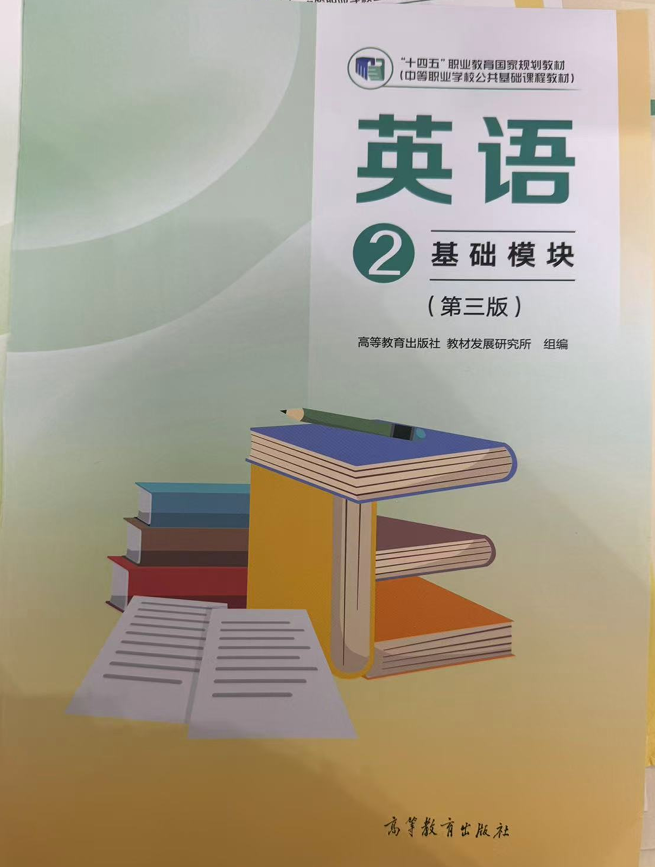
Unit 3 Internship(B卷·能力提升)《英语 基础模块2》(高教版第三版)单元过关卷(原卷版+解析版)
2026-07-27
|
2份
|
22页
|
49人阅读
|
0人下载
摘要:
**基本信息**
紧扣《英语 基础模块2》Unit 3 Internship,设A/B卷分层训练,B卷聚焦能力提升,通过真实职业情境整合语言知识,适配单元复习,助力学生构建实习相关知识网络。
**题型特征**
|题型|题量/分值|知识覆盖|命题特色|
|----|-----------|----------|----------|
|情景交际|10题/20分|实习对话(培训安排、求助等)|创设职场互动情境,考查语言理解与表达能力|
|选词填空|10题/15分|铁路服务流程(安全规则、团队协作)|围绕职业场景设空,强化词汇在实践中的应用|
|阅读理解|20题/40分|实习招聘会、茶工坊文化、反馈重要性|选用真实素材,培养信息提取与跨文化理解能力|
|完形填空|10题/10分|酒店前台问题解决(系统操作、沟通技巧)|通过叙事考查语法应用与问题解决思维|
|书面表达|1题/15分|实习简报(岗位、经历、收获)|整合语言输出与反思能力,体现学习能力培养|
内容正文:
编写说明:本套试卷紧扣《英语 基础模块2》(高教版第三版)教材,以教材单元为基准精准覆盖核心考点。
每个单元设置AB卷,A卷为基础巩固卷,侧重基础考点训练,帮助学生扎实掌握知识要点;B卷为能力提升卷,注重知识整合与全面检测,引导学生构建知识网络。
全书设计4份综合测试卷,模拟实战情境,聚焦解题能力突破,全面提升应试能力与知识应用水平。
《英语 基础模块2》(高教版第三版)《单元过关卷》
Unit 3 Internship
B卷·能力提升
考试时间:120分钟 满分:100分
班级_____姓名_____学号_____成绩_____
第一部分 情景交际(共10小题,每小题2分,共20分。)
阅读下列简短对话,从A、B、C、D四个选项中选出最佳选项,将对话补全。
1. — The company mentor has changed the training schedule.
— ________. I will tell the trainees in our group.
A. Good night
B. I cannot read it
C. No, it is a desk
D. Thanks for letting me know
2. — Could you please show me how to deal with this customer record?
— ________. Let us check the procedure together.
A. It is far away
B. Sure
C. I like green
D. Never mind
3. — I am sorry that I sent the report to the wrong section.
— ________. Please send the correct one before lunch.
A. Good luck
B. No smoking
C. It doesn't matter
D. You are welcome
4. — The workshop director praised your careful performance.
— ________. I will keep trying.
A. That is impossible
B. Please hurry
C. I disagree
D. Thank you
5. — What should I prepare before the pre-service training?
— ________ your insurance form and student card.
A. Bring
B. Lose
C. Paint
D. Cook
6. — May I ask the mentor for advice after work?
— ________. Mentors are there to help trainees.
A. No way
B. Of course
C. Be quiet
D. I am busy
7. — A guest is waiting at the reception desk, but I cannot find his record.
— ________ first. Do not guess the answer.
A. Leave the building
B. Close your notebook
C. Buy a ticket
D. Ask your colleague for help
8. — Would you like to share your internship reflection at the meeting?
— ________, but I need to organize my notes first.
A. I would love to
B. It is a river
C. No, I never learn
D. Turn right
9. — How can we make sure the job description is true to work experience?
— ________.
A. By singing a song
B. By checking it with the manager and mentor
C. By closing all windows
D. By forgetting the task
10. — I failed to answer a customer's question clearly today.
— ________. Review the key words and try again tomorrow.
A. That's a good price
B. You must stop learning
C. Don't be discouraged
D. It is under the chair
第二部分 选词填空(共10小题,每小题1.5分,共15分。)
阅读下列短文,从各题所给的A、B、C、D四个选项中选出最佳选项,填入相应的空格处。
Training for a Railway Service Internship
A railway service internship can teach trainees how to work with both speed and care. Before entering the station, trainees should understand the service ____11____ and remember the rules for passenger safety. Good preparation makes them more ____12____ when real tasks begin.
During pre-service training, trainees practise checking tickets, giving directions and recording lost items. They learn to ____13____ passengers politely, especially when someone feels worried. If a machine cannot read a ticket, the trainee should follow the ____14____ and ask a colleague for help. Guessing may bring new ____15____, so clear reporting is necessary.
The internship also develops teamwork. Trainees need to work ____16____ with station workers and keep track of every task. At the end of each day, they write a brief ____17____ about their service. Mentors read it and give useful ____18____. Through repeated practice, trainees improve their ____19____ and learn that small details can make public service ____20____.
11. A. noise B. procedure C. holiday D. photo
12. A. private B. careless C. ancient D. confident
13. A. avoid B. forget C. receive D. guide
14. A. song B. deal C. plan D. direction
15. A. colors B. meals C. flowers D. problems
16. A. closely B. sadly C. nearly D. secretly
17. A. report B. ticket C. desk D. map
18. A. weather B. advice C. music D. food
19. A. price B. river C. performance D. gift
20. A. noisier B. safer C. smaller D. colder
第三部分 阅读理解(共两节)
第一节(共15小题,每小题2分,共30分。)
阅读下列短文,从各题所给的A、B、C、D四个选项中选出最佳选项。
Text 1
Guangxi Youth Internship Fair
Date: May 16th, 2026. Time: 9:00 a.m.--3:30 p.m.
Place: Nanning Vocational Skills Center, Hall B.
Who can join: Grade Two vocational school students who plan to take an internship this summer.
Zones: Hotel Service Zone, E-Commerce Zone, Smart Workshop Zone and Cultural Tourism Zone.
Activities: Students can talk with company mentors, read job descriptions and join a twenty-minute interview practice. A short talk on three-party agreements will begin at 10:30 a.m.
Notes: Bring your student card and two copies of your resume. Lunch is not provided, so students should prepare water. Scan the code before May 10th. For more information, call 0771-508-6176.
21. Where will the internship fair be held?
A. In Hall B of Nanning Vocational Skills Center.
B. At a railway station.
C. In a shopping street.
D. At a hotel front desk.
22. Who can join the fair?
A. All primary school pupils.
B. Retired company managers.
C. Grade Two vocational school students.
D. Only foreign teachers.
23. When will the talk on three-party agreements begin?
A. At 9:00 a.m.
B. At 10:30 a.m.
C. At 3:30 p.m.
D. Before May 10th.
24. What should students bring?
A. Food and drinks.
B. A camera and a map.
C. A gift for mentors.
D. A student card and two copies of a resume.
25. Which zone is NOT mentioned in the notice?
A. E-Commerce Zone.
B. Smart Workshop Zone.
C. Cooking Competition Zone.
D. Cultural Tourism Zone.
Text 2
Learning from a Tea Workshop
During a cultural tourism internship in Guilin, a group of trainees visited a tea workshop beside the Li River. The workshop received visitors from different places, so trainees needed to learn both service skills and local culture. At first, some trainees thought the work was only about pouring tea.
The mentor showed them the full process. They had to clean cups, introduce the tea leaves, answer visitors' questions and record the number of products sold. One trainee made a mistake when he used a wrong word to describe the tea smell. The mentor did not laugh at him. Instead, she asked everyone to smell the leaves again and choose clearer words together.
In the afternoon, the trainees tried to introduce the workshop in simple English. They spoke about the clean river, careful tea making and friendly service. Several visitors listened with interest and bought small tea bags as gifts. At the end of the day, the trainees wrote reflections. One student wrote that every greeting, question and product record had a clear purpose. They realized that an internship could connect skills with culture. They also learned that good service grows from careful practice and respect for local traditions.
26. What did some trainees think at first?
A. The work was only about pouring tea.
B. The workshop had no visitors.
C. The mentor disliked tea.
D. The river was far away.
27. What did the trainees need to record?
A. The color of the river.
B. The weather in Guilin.
C. The number of products sold.
D. The names of all hotels.
28. How did the mentor deal with the trainee's mistake?
A. She sent him away.
B. She laughed loudly.
C. She stopped the internship.
D. She guided everyone to choose clearer words.
29. What does the underlined word “reflections” mean?
A. 票据
B. 反思
C. 工具
D. 路线
30. What can we learn from the passage?
A. Internships can connect skills with culture.
B. Tea workshops only need silent workers.
C. Visitors cannot buy tea bags.
D. Local traditions are not useful in service.
Text 3
Why Feedback Matters in Internship
Feedback is an important part of internship training. It is not simply a list of mistakes. Useful feedback tells trainees what they did well, what should be improved and how they can take the next step. When feedback is given clearly, trainees are more willing to review their performance and try again. It also helps mentors know whether instructions have been understood and used in daily work.
There are three common kinds of feedback. The first kind is task feedback. It may focus on whether a trainee filled in a form correctly or followed a procedure in the right order. The second kind is communication feedback. A mentor may remind a trainee to speak more slowly, listen before answering, or choose polite words when a customer is worried. The third kind is growth feedback, which encourages trainees to connect one day's work with their future career goals.
Good feedback should be specific and timely. Saying “be careful” is too general, but saying “check the room number before printing the card” gives a clear action. Trainees also need to respond properly. They should write down key points, ask questions if they do not understand, and show improvement in the next task. In this way, feedback becomes a bridge between training and real work. It helps trainees build confidence without hiding their weaknesses.
31. What does useful feedback tell trainees?
A. Only how many days they can rest.
B. What they did well and how to improve.
C. Why they must leave the company.
D. Where to buy gifts for mentors.
32. Which kind of feedback focuses on forms or procedures?
A. Communication feedback.
B. Growth feedback.
C. Task feedback.
D. Weather feedback.
33. What may a mentor advise in communication feedback?
A. Speak more slowly.
B. Hide all questions.
C. Forget polite words.
D. Print cards quickly without checking.
34. What does the underlined word “specific” mean?
A. 昂贵的
B. 模糊的
C. 具体的
D. 安静的
35. What is the purpose of the passage?
A. To explain how feedback helps internship training.
B. To introduce tourist places in Guangxi.
C. To ask trainees to avoid mentors.
D. To compare different hotel rooms.
第二节(共5小题,每小题2分,共10分。)
阅读下列短文,从短文后的选项中选出最佳选项,并填入空白处。
From Training to Real Work
A training room is different from a real workplace. In training, trainees can stop and ask questions at any time. ____36____. They must listen, think and act more quickly.
Before the internship, mentors often teach basic procedures. They show how to greet guests, check information and write short records. ____37____. Without practice, clear rules may still be hard to use.
When real work begins, trainees may meet unexpected problems. A guest may ask a new question, or a machine may stop suddenly. ____38____. Reporting is safer than guessing.
Daily reflection is also useful. After work, trainees can write down what happened and what they learned. ____39____. The next day, they can avoid the same mistake.
Training and real work support each other. ____40____. Step by step, trainees become more confident and responsible.
A. This habit helps them find weak points.
B. But they also need repeated practice.
C. Training gives rules, while real work tests the rules.
D. In real work, things may move faster.
E. At that moment, they should ask mentors or colleagues for help.
第四部分 完形填空(共10小题,每小题1分,共10分。)
阅读下列短文,在空格处填入适当的词或用括号里的词的正确形式填空。
Solving a Reception Problem
A hotel trainee was working at the reception desk when a guest came in with a question. The guest said his room card ____41____ (not work). The trainee checked the card number ____42____ (careful) and asked the guest to wait for a moment. He knew it was important ____43____ (stay) calm.
Then he called a colleague who was good at computer systems. The colleague found that the card ____44____ (make) for the wrong date. A new card was printed in two minutes, and the problem ____45____ (solve) quickly. The trainee said sorry ____46____ the guest and explained the reason in simple words.
After work, the trainee wrote the problem in his service record. He also added some ____47____ (suggestion) for checking dates. His mentor read the record and praised ____48____ (he) for clear thinking. The trainee understood that mistakes could become useful lessons ____49____ people reviewed them honestly. He decided ____50____ (check) every detail before serving the next guest.
第五部分 书面表达(共15分。)
51. 假设你是李华,你刚完成一次职业体验活动。请根据以下要点,写一篇英文简报,介绍你的实习体验和收获。具体内容和要求如下:
1. 词数70—80个;
2. 文中不可出现真实人名和校名;
3. 开头已给出,不计入总词数;
4. 相关内容及词汇仅供参考,可酌情选用。
Brief Report on Internship
Last week, I took part in a short internship experience.
主要内容
参考信息
参考词汇及短语
实习岗位
说明实习地点或岗位职责
company, hotel, reception desk, trainee, customer service
具体经历
写出完成的任务或遇到的问题
check information, write a report, ask for help, solve a problem
个人收获
表达能力提升和态度变化
communication skill, teamwork, confidence, responsibility
_____________________________________________________________________________________________________________________________________________________________________________________________________________________________________________________________________________________________________________________________________________________________________________________________________________________
原创精品资源学科网独家享有版权,侵权必究!
学科网(北京)股份有限公司
$
编写说明:本套试卷紧扣《英语 基础模块2》(高教版第三版)教材,以教材单元为基准精准覆盖核心考点。
每个单元设置AB卷,A卷为基础巩固卷,侧重基础考点训练,帮助学生扎实掌握知识要点;B卷为能力提升卷,注重知识整合与全面检测,引导学生构建知识网络。
全书设计4份综合测试卷,模拟实战情境,聚焦解题能力突破,全面提升应试能力与知识应用水平。
《英语 基础模块2》(高教版第三版)《单元过关卷》
Unit 3 Internship
B卷·能力提升
考试时间:120分钟 满分:100分
班级_____姓名_____学号_____成绩_____
第一部分 情景交际(共10小题,每小题2分,共20分。)
阅读下列简短对话,从A、B、C、D四个选项中选出最佳选项,将对话补全。
1. — The company mentor has changed the training schedule.
— ________. I will tell the trainees in our group.
A. Good night
B. I cannot read it
C. No, it is a desk
D. Thanks for letting me know
【答案】D
【详解】上句告知培训日程已变化,答语应先感谢对方提醒,并说明会通知组员,D项符合信息回应场景。
2. — Could you please show me how to deal with this customer record?
— ________. Let us check the procedure together.
A. It is far away
B. Sure
C. I like green
D. Never mind
【答案】B
【详解】对方请求示范如何处理客户记录,Sure表示愿意帮助,后句共同核对流程进一步印证。
3. — I am sorry that I sent the report to the wrong section.
— ________. Please send the correct one before lunch.
A. Good luck
B. No smoking
C. It doesn't matter
D. You are welcome
【答案】C
【详解】对方道歉,答语先表示没关系,再提出补救要求,It doesn't matter符合道歉回应场景。
4. — The workshop director praised your careful performance.
— ________. I will keep trying.
A. That is impossible
B. Please hurry
C. I disagree
D. Thank you
【答案】D
【详解】听到表扬时应表达感谢,后句表示继续努力,Thank you符合语境。
5. — What should I prepare before the pre-service training?
— ________ your insurance form and student card.
A. Bring
B. Lose
C. Paint
D. Cook
【答案】A
【详解】问题询问培训前准备事项,Bring your insurance form and student card表示带上保险表和学生卡。
6. — May I ask the mentor for advice after work?
— ________. Mentors are there to help trainees.
A. No way
B. Of course
C. Be quiet
D. I am busy
【答案】B
【详解】May I...?请求许可,后句说明导师会帮助实习生,因此Of course表示允许。
7. — A guest is waiting at the reception desk, but I cannot find his record.
— ________ first. Do not guess the answer.
A. Leave the building
B. Close your notebook
C. Buy a ticket
D. Ask your colleague for help
【答案】D
【详解】找不到记录时不能猜测,应向同事求助,D项符合问题处理步骤。
8. — Would you like to share your internship reflection at the meeting?
— ________, but I need to organize my notes first.
A. I would love to
B. It is a river
C. No, I never learn
D. Turn right
【答案】A
【详解】Would you like to...?提出邀请,but后说明需要先整理笔记,表明愿意分享,I would love to正确。
9. — How can we make sure the job description is true to work experience?
— ________.
A. By singing a song
B. By checking it with the manager and mentor
C. By closing all windows
D. By forgetting the task
【答案】B
【详解】问题询问如何确保职位描述与工作经历一致,应与经理和导师核对,B项切题。
10. — I failed to answer a customer's question clearly today.
— ________. Review the key words and try again tomorrow.
A. That's a good price
B. You must stop learning
C. Don't be discouraged
D. It is under the chair
【答案】C
【详解】对方因服务表达不清而受挫,后句建议复习再尝试,应先鼓励Don't be discouraged。
第二部分 选词填空(共10小题,每小题1.5分,共15分。)
阅读下列短文,从各题所给的A、B、C、D四个选项中选出最佳选项,填入相应的空格处。
Training for a Railway Service Internship
A railway service internship can teach trainees how to work with both speed and care. Before entering the station, trainees should understand the service ____11____ and remember the rules for passenger safety. Good preparation makes them more ____12____ when real tasks begin.
During pre-service training, trainees practise checking tickets, giving directions and recording lost items. They learn to ____13____ passengers politely, especially when someone feels worried. If a machine cannot read a ticket, the trainee should follow the ____14____ and ask a colleague for help. Guessing may bring new ____15____, so clear reporting is necessary.
The internship also develops teamwork. Trainees need to work ____16____ with station workers and keep track of every task. At the end of each day, they write a brief ____17____ about their service. Mentors read it and give useful ____18____. Through repeated practice, trainees improve their ____19____ and learn that small details can make public service ____20____.
11. A. noise B. procedure C. holiday D. photo
12. A. private B. careless C. ancient D. confident
13. A. avoid B. forget C. receive D. guide
14. A. song B. deal C. plan D. direction
15. A. colors B. meals C. flowers D. problems
16. A. closely B. sadly C. nearly D. secretly
17. A. report B. ticket C. desk D. map
18. A. weather B. advice C. music D. food
19. A. price B. river C. performance D. gift
20. A. noisier B. safer C. smaller D. colder
【答案】11. B 12. D 13. D 14. C 15. D 16. A 17. A 18. B 19. C 20. B
【导语】本文是一篇说明文,介绍铁路服务实习中的岗前培训、服务流程、问题上报和每日反思,重点考查语境词义辨析、固定搭配、逻辑衔接和职业服务语境理解能力。
【详解】
11. B 考查名词词义辨析。service procedure表示“服务流程”,与remember the rules并列。
12. D 考查形容词词义辨析。充分准备能让实习生在真实任务开始时更自信,confident符合语义。
13. D 考查动词词义辨析。铁路服务实习需要礼貌引导乘客,guide passengers搭配自然。
14. C 考查名词词义辨析。机器读票失败时应按照计划或流程处理,follow the plan符合上下文。
15. D 考查名词词义辨析。前文说不要猜测,说明猜测可能带来新问题,problems正确。
16. A 考查副词词义辨析。work closely with sb.表示“与某人密切合作”,符合团队合作语境。
17. A 考查名词词义辨析。write a brief report表示“写一份简短报告”,与实习反思相符。
18. B 考查名词词义辨析。导师阅读报告后给出建议,advice符合语义。
19. C 考查名词词义辨析。反复实践可提升表现,performance对应工作表现。
20. B 考查形容词比较级。小细节能让公共服务更安全,safer符合全文安全服务主题。
第三部分 阅读理解(共两节)
第一节(共15小题,每小题2分,共30分。)
阅读下列短文,从各题所给的A、B、C、D四个选项中选出最佳选项。
Text 1
Guangxi Youth Internship Fair
Date: May 16th, 2026. Time: 9:00 a.m.--3:30 p.m.
Place: Nanning Vocational Skills Center, Hall B.
Who can join: Grade Two vocational school students who plan to take an internship this summer.
Zones: Hotel Service Zone, E-Commerce Zone, Smart Workshop Zone and Cultural Tourism Zone.
Activities: Students can talk with company mentors, read job descriptions and join a twenty-minute interview practice. A short talk on three-party agreements will begin at 10:30 a.m.
Notes: Bring your student card and two copies of your resume. Lunch is not provided, so students should prepare water. Scan the code before May 10th. For more information, call 0771-508-6176.
21. Where will the internship fair be held?
A. In Hall B of Nanning Vocational Skills Center.
B. At a railway station.
C. In a shopping street.
D. At a hotel front desk.
22. Who can join the fair?
A. All primary school pupils.
B. Retired company managers.
C. Grade Two vocational school students.
D. Only foreign teachers.
23. When will the talk on three-party agreements begin?
A. At 9:00 a.m.
B. At 10:30 a.m.
C. At 3:30 p.m.
D. Before May 10th.
24. What should students bring?
A. Food and drinks.
B. A camera and a map.
C. A gift for mentors.
D. A student card and two copies of a resume.
25. Which zone is NOT mentioned in the notice?
A. E-Commerce Zone.
B. Smart Workshop Zone.
C. Cooking Competition Zone.
D. Cultural Tourism Zone.
【答案】21. A 22. C 23. B 24. D 25. C
【导语】本文是一则广西青年实习招聘会通知,介绍时间地点、参加对象、分区活动、协议讲座和报名要求,主要考查学生定位时间、地点、对象和细节信息的能力。
【详解】
21.细节理解题。根据“Place: Nanning Vocational Skills Center, Hall B.”可知,地点在南宁职业技能中心B厅。故选A。
22.细节理解题。根据“Grade Two vocational school students”可知,参加对象为二年级中职学生。故选C。
23.细节理解题。根据“A short talk on three-party agreements will begin at 10:30 a.m.”可知,三方协议讲座10:30开始。故选B。
24.细节理解题。根据“Bring your student card and two copies of your resume.”可知,应携带学生卡和两份简历。故选D。
25.细节理解题。文中提到E-Commerce Zone、Smart Workshop Zone和Cultural Tourism Zone,未提到Cooking Competition Zone。故选C。
Text 2
Learning from a Tea Workshop
During a cultural tourism internship in Guilin, a group of trainees visited a tea workshop beside the Li River. The workshop received visitors from different places, so trainees needed to learn both service skills and local culture. At first, some trainees thought the work was only about pouring tea.
The mentor showed them the full process. They had to clean cups, introduce the tea leaves, answer visitors' questions and record the number of products sold. One trainee made a mistake when he used a wrong word to describe the tea smell. The mentor did not laugh at him. Instead, she asked everyone to smell the leaves again and choose clearer words together.
In the afternoon, the trainees tried to introduce the workshop in simple English. They spoke about the clean river, careful tea making and friendly service. Several visitors listened with interest and bought small tea bags as gifts. At the end of the day, the trainees wrote reflections. One student wrote that every greeting, question and product record had a clear purpose. They realized that an internship could connect skills with culture. They also learned that good service grows from careful practice and respect for local traditions.
26. What did some trainees think at first?
A. The work was only about pouring tea.
B. The workshop had no visitors.
C. The mentor disliked tea.
D. The river was far away.
27. What did the trainees need to record?
A. The color of the river.
B. The weather in Guilin.
C. The number of products sold.
D. The names of all hotels.
28. How did the mentor deal with the trainee's mistake?
A. She sent him away.
B. She laughed loudly.
C. She stopped the internship.
D. She guided everyone to choose clearer words.
29. What does the underlined word “reflections” mean?
A. 票据
B. 反思
C. 工具
D. 路线
30. What can we learn from the passage?
A. Internships can connect skills with culture.
B. Tea workshops only need silent workers.
C. Visitors cannot buy tea bags.
D. Local traditions are not useful in service.
【答案】26. A 27. C 28. D 29. B 30. A
【导语】本文是一篇记叙文,讲述实习生在桂林茶艺工坊学习服务技能和地方文化表达的经历,考查细节理解、词义猜测、人物行为和主题理解能力。
【详解】
26.细节理解题。根据第一段“some trainees thought the work was only about pouring tea”可知,一些实习生起初认为工作只是倒茶。故选A。
27.细节理解题。根据第二段“record the number of products sold”可知,他们需要记录售出产品数量。故选C。
28.细节理解题。根据第二段“asked everyone to smell the leaves again and choose clearer words together”可知,导师引导大家选择更清楚的表达。故选D。
29.词义猜测题。句中提到一天结束时写reflections,后文说明他们意识到实习意义,由此可知该词意为“反思”。故选B。
30.推理判断题。根据最后一段“They realized that an internship could connect skills with culture.”可知,实习可以把技能与文化连接起来。故选A。
Text 3
Why Feedback Matters in Internship
Feedback is an important part of internship training. It is not simply a list of mistakes. Useful feedback tells trainees what they did well, what should be improved and how they can take the next step. When feedback is given clearly, trainees are more willing to review their performance and try again. It also helps mentors know whether instructions have been understood and used in daily work.
There are three common kinds of feedback. The first kind is task feedback. It may focus on whether a trainee filled in a form correctly or followed a procedure in the right order. The second kind is communication feedback. A mentor may remind a trainee to speak more slowly, listen before answering, or choose polite words when a customer is worried. The third kind is growth feedback, which encourages trainees to connect one day's work with their future career goals.
Good feedback should be specific and timely. Saying “be careful” is too general, but saying “check the room number before printing the card” gives a clear action. Trainees also need to respond properly. They should write down key points, ask questions if they do not understand, and show improvement in the next task. In this way, feedback becomes a bridge between training and real work. It helps trainees build confidence without hiding their weaknesses.
31. What does useful feedback tell trainees?
A. Only how many days they can rest.
B. What they did well and how to improve.
C. Why they must leave the company.
D. Where to buy gifts for mentors.
32. Which kind of feedback focuses on forms or procedures?
A. Communication feedback.
B. Growth feedback.
C. Task feedback.
D. Weather feedback.
33. What may a mentor advise in communication feedback?
A. Speak more slowly.
B. Hide all questions.
C. Forget polite words.
D. Print cards quickly without checking.
34. What does the underlined word “specific” mean?
A. 昂贵的
B. 模糊的
C. 具体的
D. 安静的
35. What is the purpose of the passage?
A. To explain how feedback helps internship training.
B. To introduce tourist places in Guangxi.
C. To ask trainees to avoid mentors.
D. To compare different hotel rooms.
【答案】31. B 32. C 33. A 34. C 35. A
【导语】本文是一篇说明文,介绍实习反馈的作用、常见类型、有效反馈的特点以及实习生应如何回应反馈,重点考查细节定位、信息整合、词义猜测和写作目的判断能力。
【详解】
31.细节理解题。根据第一段“what they did well, what should be improved and how they can take the next step”可知,有用反馈会告诉实习生做得好的地方和如何改进。故选B。
32.细节理解题。根据第二段“The first kind is task feedback...filled in a form...followed a procedure”可知,关注表格和流程的是任务反馈。故选C。
33.细节理解题。根据第二段“A mentor may remind a trainee to speak more slowly...”可知,沟通反馈可能建议说慢一点。故选A。
34.词义猜测题。后文用“check the room number before printing the card”说明清楚动作,和general形成对比,因此specific意为“具体的”。故选C。
35.写作目的题。全文围绕反馈如何帮助实习培训展开,解释反馈内容、类型和回应方式。故选A。
第二节(共5小题,每小题2分,共10分。)
阅读下列短文,从短文后的选项中选出最佳选项,并填入空白处。
From Training to Real Work
A training room is different from a real workplace. In training, trainees can stop and ask questions at any time. ____36____. They must listen, think and act more quickly.
Before the internship, mentors often teach basic procedures. They show how to greet guests, check information and write short records. ____37____. Without practice, clear rules may still be hard to use.
When real work begins, trainees may meet unexpected problems. A guest may ask a new question, or a machine may stop suddenly. ____38____. Reporting is safer than guessing.
Daily reflection is also useful. After work, trainees can write down what happened and what they learned. ____39____. The next day, they can avoid the same mistake.
Training and real work support each other. ____40____. Step by step, trainees become more confident and responsible.
A. This habit helps them find weak points.
B. But they also need repeated practice.
C. Training gives rules, while real work tests the rules.
D. In real work, things may move faster.
E. At that moment, they should ask mentors or colleagues for help.
【答案】36. D 37. B 38. E 39. A 40. C
【导语】本文是一篇说明文,比较培训室学习和真实实习工作的不同,说明规则学习、问题求助和每日反思的重要性,主要考查转折、例证、指代和总结句衔接能力。
【详解】
36.空前比较training和real workplace,空后说必须更快地听、想和行动,D项“真实工作中事情可能推进更快”承接自然。故选D。
37.空前介绍导师教授基本流程,空后说明没有练习规则仍难运用,B项中的repeated practice与后文practice呼应。故选B。
38.空前列举突发问题,空后说上报比猜测更安全,E项说明应向导师或同事求助。故选E。
39.空前说写下发生的事和学到的内容,空后说第二天避免同样错误,A项说明该习惯帮助发现薄弱点。故选A。
40.空前总结培训与真实工作相互支持,C项进一步概括二者关系:培训给规则,真实工作检验规则。故选C。
第四部分 完形填空(共10小题,每小题1分,共10分。)
阅读下列短文,在空格处填入适当的词或用括号里的词的正确形式填空。
Solving a Reception Problem
A hotel trainee was working at the reception desk when a guest came in with a question. The guest said his room card ____41____ (not work). The trainee checked the card number ____42____ (careful) and asked the guest to wait for a moment. He knew it was important ____43____ (stay) calm.
Then he called a colleague who was good at computer systems. The colleague found that the card ____44____ (make) for the wrong date. A new card was printed in two minutes, and the problem ____45____ (solve) quickly. The trainee said sorry ____46____ the guest and explained the reason in simple words.
After work, the trainee wrote the problem in his service record. He also added some ____47____ (suggestion) for checking dates. His mentor read the record and praised ____48____ (he) for clear thinking. The trainee understood that mistakes could become useful lessons ____49____ people reviewed them honestly. He decided ____50____ (check) every detail before serving the next guest.
【答案】41. did not work 42. carefully 43. to stay 44. was made 45. was solved 46. to 47. suggestions 48. him 49. if 50. to check
【导语】本文是一篇记叙文,讲述酒店前台实习生处理房卡问题并进行服务反思的过程,考查一般过去时、副词、非谓语动词、被动语态、介词、名词复数、代词、连词等语法点。
【详解】
41.考查动词时态。宾语从句叙述过去发生的问题,主语room card为第三人称单数,否定形式为did not work。
42.考查副词。修饰动词checked应用副词carefully。
43.考查动词不定式。It is important to do sth.为固定句式,表示“做某事很重要”。
44.考查被动语态。card与make之间为被动关系,叙述过去情况,用was made。
45.考查被动语态。problem与solve之间为被动关系,且发生在过去,用was solved。
46.考查介词。say sorry to sb.表示“向某人道歉”。
47.考查名词复数。some后接可数名词复数,suggestion变为suggestions。
48.考查人称代词。praised为动词,后接人称代词宾格,he的宾格为him。
49.考查连词。句意:如果人们诚实复盘,错误能成为有用经验。if引导条件状语从句。
50.考查动词不定式。decide to do sth.表示“决定做某事”。
第五部分 书面表达(共15分。)
51. 假设你是李华,你刚完成一次职业体验活动。请根据以下要点,写一篇英文简报,介绍你的实习体验和收获。具体内容和要求如下:
1. 词数70—80个;
2. 文中不可出现真实人名和校名;
3. 开头已给出,不计入总词数;
4. 相关内容及词汇仅供参考,可酌情选用。
Brief Report on Internship
Last week, I took part in a short internship experience.
主要内容
参考信息
参考词汇及短语
实习岗位
说明实习地点或岗位职责
company, hotel, reception desk, trainee, customer service
具体经历
写出完成的任务或遇到的问题
check information, write a report, ask for help, solve a problem
个人收获
表达能力提升和态度变化
communication skill, teamwork, confidence, responsibility
_____________________________________________________________________________________________________________________________________________________________________________________________________________________________________________________________________________________________________________________________________________________________________________________________________________________
【答案】例文:
Brief Report on Internship
Last week, I took part in a short internship experience.
I worked as a trainee in a service company. My main duty was to help visitors fill in information cards and guide them to the right office. At first, I felt nervous because I was afraid of making mistakes. My mentor told me to check every detail and speak politely. Once, I could not answer a visitor's question, so I asked a colleague for help. This experience improved my communication skills and taught me the importance of responsibility. In conclusion, the internship was useful for my personal development.
【解析】
【导语】本篇书面表达属于实习简报,要求介绍职业体验活动,内容应包括岗位职责、具体经历和个人收获。
【词汇积累】
职责:duty -> responsibility
访客:visitor -> guest
提升:improve -> develop
有用的:useful -> helpful
【句式拓展】
原句:My mentor told me to check every detail and speak politely.
拓展句:My mentor told me to check every detail and speak politely because good service starts with small things.
【点睛】
At first, I felt nervous because I was afraid of making mistakes.(使用because引导原因状语从句)
In conclusion, the internship was useful for my personal development.(使用In conclusion总结实习简报)
原创精品资源学科网独家享有版权,侵权必究!
学科网(北京)股份有限公司
$
资源预览图

1

2

3
由于学科网是一个信息分享及获取的平台,不确保部分用户上传资料的 来源及知识产权归属。如您发现相关资料侵犯您的合法权益,请联系学科网,我们核实后将及时进行处理。