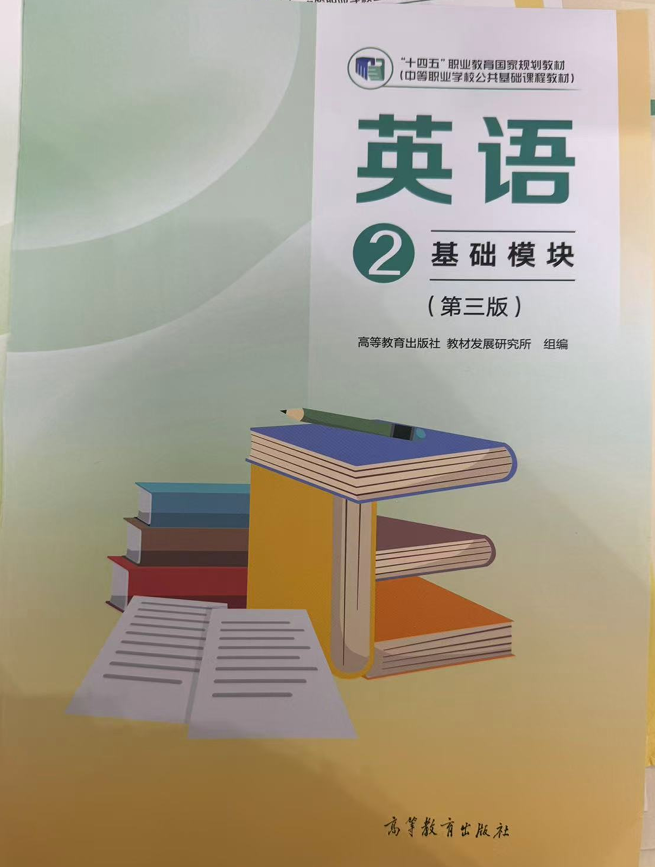
Unit 5——Unit 8 阶段测试卷(A卷·基础巩固)《英语 基础模块2》(高教版第三版)单元过关卷(原卷版+解析版)
2026-07-27
|
2份
|
19页
|
34人阅读
|
0人下载
摘要:
**基本信息**
紧扣《英语 基础模块2》Unit5-8核心考点,设A卷基础巩固,通过情境化试题提升语言应用与文化理解能力。
**题型特征**
|题型|题量/分值|知识覆盖|命题特色|
|----|-----------|----------|----------|
|情景交际|10题/20分|日常对话(丝绸之路、环保等)|情境真实,如无人机推荐、垃圾分类问答,强化语言能力|
|选词填空|10题/15分|丝绸之路主题词汇|融入文化传承素材,考查语法与篇章理解|
|阅读理解|20题/40分|工艺开放日、农业无人机、绿色购物|结合科技前沿(无人机)、社会热点(环保),提升思维品质|
|完形填空|10题/10分|手工风筝制作|注重动词时态、代词等语法,培养学习能力|
|书面表达|1题/15分|绿色生活邮件|主题贴近现实,考查语言组织与跨文化沟通能力|
内容正文:
编写说明:本套试卷紧扣《英语 基础模块2》(高教版第三版)教材,以教材单元为基准精准覆盖核心考点。
每个单元设置AB卷,A卷为基础巩固卷,侧重基础考点训练,帮助学生扎实掌握知识要点;B卷为能力提升卷,注重知识整合与全面检测,引导学生构建知识网络。全书设计4份综合测试卷,模拟实战情境,聚焦解题能力突破,全面提升应试能力与知识应用水平。
《英语 基础模块2》(高教版第三版)《单元过关卷》
Unit 5——Unit 8阶段测试卷
A卷·基础巩固
考试时间:120分钟 满分:100分
班级_____姓名_____学号_____成绩_____
第一部分 情景交际(共10小题,每小题2分,共20分。)
阅读下列简短对话,从A、B、C、D四个选项中选出最佳选项,将对话补全。
1. — Could you tell me what the Silk Road was used for?
— ________.
A. It is very cold
B. You are welcome
C. I am going home
D. It was used for trade and cultural exchange
2. — What qualities should a good craftsperson have?
— ________.
A. At seven o'clock
B. In the library
C. Patience and creativity
D. By bus
3. — I want to pick a drone for farm work. What do you recommend?
— ________. It can check crops and spray safely.
A. How about this one
B. I disagree with you
C. Never mind
D. It is too late
4. — Can used bottles be recycled in this community?
— ________. Please put them into the blue bin.
A. No, thanks
B. Good night
C. I am not sure
D. Yes, they can
5. — Which artist impressed you most at the exhibition?
— ________.
A. It is on Friday
B. I go by bike
C. Picasso impressed me most
D. Please close the door
6. — Thank you for showing me how to carve the wood carefully.
— ________.
A. My pleasure
B. I am busy
C. It is red
D. See you tomorrow
7. — Is the smart refrigerator easy for elderly people to operate?
— ________. They can give voice commands.
A. Sorry to hear that
B. It costs too much
C. Take it easy
D. Yes, it is
8. — The number of some wild animals is dropping because of global warming.
— ________. We should take action.
A. That's funny
B. That's worrying
C. No problem
D. Help yourself
9. — Let's search for more information about ancient inventions.
— ________. It will help our report.
A. Good idea
B. No way
C. I am sorry
D. That is all
10. — Could you explain how garbage sorting works here?
— ________. Different waste goes into different bins.
A. You must leave
B. I don't care
C. Sure
D. Bad luck
第二部分 选词填空(共10小题,每小题1.5分,共15分。)
阅读下列短文,从各题所给的A、B、C、D四个选项中选出最佳选项,填入相应的空格处。
A Small Silk Road Show
A small Silk Road show opened in a community museum last week. It was not large, but it helped visitors understand why the old ____11____ was important. At the entrance, maps showed how silk, glass and tea travelled between the East and the West.
The guide explained that trade also brought new ____12____ and ideas. In one corner, visitors saw model camels. They carried bags through the desert, so they needed strong bodies and patient ____13____. Another part introduced paper-making. This invention ____14____ Europe along the road and changed the way people kept records.
The show was ____15____ but clear. It told visitors that different civilizations could learn from one another. Before leaving, many people wrote notes ____16____. They said the Silk Road was not only about goods, ____17____ also about friendship. A short visit could help people ____18____ ancient history. The museum planned to ____19____ more local stories, so visitors would ____20____ to learn again.
11. A. route B. meal C. game D. price
12. A. weather B. culture C. noise D. trouble
13. A. tickets B. skills C. pockets D. jokes
14. A. left B. forgot C. reached D. watched
15. A. dangerous B. heavy C. empty D. simple
16. A. angrily B. carefully C. seldom D. loudly
17. A. so B. or C. but D. because
18. A. understand B. refuse C. hide D. waste
19. A. lose B. collect C. break D. avoid
20. A. stop B. fail C. hurry D. return
第三部分 阅读理解(共两节)
第一节(共15小题,每小题2分,共30分。)
阅读下列短文,从各题所给的A、B、C、D四个选项中选出最佳选项。
Text 1
Craft Skills Open Day
Time: Sunday, May 10th, 2026, 9:00 a.m.--3:30 p.m.
Place: City Vocational Training Centre, Room 206 and Workshop 3
Who can join: Students aged 14 to 18 and one family member
Activities: Watch a woodcarving show, try simple paper-cutting, and learn how a watch is put together. Skilled workers will explain why patience, careful work and creativity matter.
Notes: Wear comfortable shoes. Do not touch machines without permission. Bring a notebook if you want to write down useful steps.
Deadline: Sign up before May 6th. Call 0771-618-2056 for more information.
21. Where will the open day be held?
A. In a history museum.
B. In a community park.
C. In a shopping centre.
D. At City Vocational Training Centre.
22. What can students try during the activity?
A. Simple paper-cutting.
B. Long-distance running.
C. Online shopping.
D. Garbage sorting.
23. Who will explain the qualities needed for good work?
A. Young visitors.
B. Family members.
C. Skilled workers.
D. Office clerks.
24. What should visitors NOT do?
A. Wear comfortable shoes.
B. Touch machines without permission.
C. Bring a notebook.
D. Sign up before the deadline.
25. When should students sign up before?
A. May 3rd.
B. May 5th.
C. May 10th.
D. May 6th.
Text 2
A group of agriculture trainees visited a tea garden to test a farm drone. The garden was wide, and some paths were too narrow for large machines. At first, the trainees were worried. They had only watched training videos before, and this was their first real test in the field.
The trainer asked them to check the weather first. Then the group connected the drone to a phone and planned a short route over the tea trees. The drone rose slowly. It sent clear pictures back to the screen, so the trainees could see which parts of the garden needed water. When a warning sound came from the phone, they stopped the drone and changed the route. This careful step helped them avoid a tall tree near the path.
After the test, the trainees talked about what they had learned. A drone could not replace hard work, but it could help farmers make better decisions. They also understood that technology should be used safely and fairly. The visit made them more confident about learning new skills for modern farming.
26. Why did the trainees visit the tea garden?
A. To test a farm drone.
B. To buy tea leaves.
C. To repair a phone.
D. To open a shop.
27. What did the trainer ask them to do first?
A. Pick tea leaves.
B. Clean the screen.
C. Check the weather.
D. Draw a poster.
28. What does the underlined word “route” mean?
A. 价格
B. 路线
C. 礼物
D. 声音
29. Why did the trainees stop the drone?
A. Because the tea garden closed.
B. Because the battery was lost.
C. Because it began to rain heavily.
D. Because a warning sound came from the phone.
30. What can we learn from the passage?
A. Technology should be used safely and fairly.
B. Drones can do all farm work alone.
C. Training videos are useless.
D. Tea gardens do not need workers.
Text 3
Going green in daily shopping is not difficult. It begins with small choices, such as carrying a cloth bag, choosing products with less packaging and refusing things that are not really needed. These choices look simple, but they can reduce waste when many people keep doing them.
Plastic pollution is a common problem in markets and supermarkets. Some bags are used for only a few minutes, but they may stay in the environment for a very long time. If shoppers bring their own bags, fewer plastic bags will be thrown away. Shops can also help by offering clear signs and encouraging customers to reuse bags.
Another useful habit is buying only what we need. Some food is wasted because people buy too much at one time. Making a shopping list before leaving home can help families save money and protect resources. Being green is not only an environmental idea but also a practical way to live wisely. When daily habits change, a cleaner community becomes possible.
31. Which is a small green choice mentioned in Paragraph 1?
A. Driving to every shop.
B. Carrying a cloth bag.
C. Buying more plastic toys.
D. Throwing away packages.
32. Why are plastic bags a problem?
A. They are always expensive.
B. They are too heavy to carry.
C. They may stay in the environment for a long time.
D. They can make all food fresh.
33. What can help families buy only what they need?
A. Making a shopping list.
B. Using more lights.
C. Opening more shops.
D. Taking larger bags only.
34. What does the underlined word “resources” mean?
A. 票据
B. 资源
C. 广告
D. 订单
35. What is the best title for the passage?
A. The History of Supermarkets
B. How to Sell Plastic Bags
C. Green Shopping Starts with Daily Habits
D. Why People Like Big Markets
第二节(共5小题,每小题2分,共10分。)
阅读下列短文,从短文后的选项中选出最佳选项,并填入空白处。
A Visit to a Silk Road Corner
A Silk Road Corner was set up in the city library last month. ____36____. The corner was small, but it had maps, pictures and models of camels.
The first board showed the land routes and sea routes. ____37____. Visitors could see how goods moved between different places. Another board introduced paper-making and the compass. It explained that inventions travelled with traders and changed people's lives.
A short video was also played there. ____38____. After watching it, many visitors wrote down one thing they learned. Some wrote about silk, and others wrote about friendship between cultures.
Before leaving, visitors could choose a postcard. ____39____. The activity was simple and quiet. ____40____.
A. They linked China with many parts of the world
B. It helped people understand cultural exchange in an easy way
C. Each postcard had a famous place on the Silk Road
D. Many students went there during the weekend
E. It told the story of travellers who crossed deserts and seas
第四部分 完形填空(共10小题,每小题1分,共10分。)
阅读下列短文,在空格处填入适当的词或用括号里的词的正确形式填空。
A Handmade Kite Workshop
A small kite workshop ____41____ (open) near a community centre every spring. Visitors can learn ____42____ (make) simple kites there. At the beginning, the workers explain each step ____43____ (slow). They show different ____44____ (tool), such as bamboo sticks, paper and glue.
Making a kite needs patience ____45____ creativity. Visitors first draw ____46____ (they) favourite shapes on paper. Then they cut the paper and tie it to bamboo sticks. Patience ____47____ (help) people finish the small details well. If a kite is made ____48____ care, it can fly high in the wind.
Many visitors become ____49____ (good) at handwork after practice. They also understand that craftsmanship grows through careful ____50____ (learn) and repeated practice.
第五部分 书面表达(共15分。)
51. 假设你是李华,你校英语俱乐部正在开展“绿色生活”主题交流。请根据以下要点,写一封电子邮件,向外国朋友David介绍你准备采取的环保行动。具体内容和要求如下:
1. 词数70—80个;
2. 文中不可出现真实人名和校名;
3. 开头、结尾已给出,不计入总词数;
4. 相关内容及词汇仅供参考,可酌情选用。
Dear David,
_____________________________________________________________________________________________________________________________________________________________________________________________________________________________________________________________________________________________________________________________________________________________________________________________________________________
What do you usually do to protect the environment?
Yours,
Li Hua
原创精品资源学科网独家享有版权,侵权必究!
学科网(北京)股份有限公司
$
编写说明:本套试卷紧扣《英语 基础模块2》(高教版第三版)教材,以教材单元为基准精准覆盖核心考点。
每个单元设置AB卷,A卷为基础巩固卷,侧重基础考点训练,帮助学生扎实掌握知识要点;B卷为能力提升卷,注重知识整合与全面检测,引导学生构建知识网络。全书设计4份综合测试卷,模拟实战情境,聚焦解题能力突破,全面提升应试能力与知识应用水平。
《英语 基础模块2》(高教版第三版)《单元过关卷》
Unit 5——Unit 8阶段测试卷
A卷·基础巩固
考试时间:120分钟 满分:100分
班级_____姓名_____学号_____成绩_____
第一部分 情景交际(共10小题,每小题2分,共20分。)
阅读下列简短对话,从A、B、C、D四个选项中选出最佳选项,将对话补全。
1. — Could you tell me what the Silk Road was used for?
— ________.
A. It is very cold
B. You are welcome
C. I am going home
D. It was used for trade and cultural exchange
【答案】D
【详解】上句询问丝绸之路的用途,D项直接说明其用于贸易和文化交流,切合询问信息场景。
2. — What qualities should a good craftsperson have?
— ________.
A. At seven o'clock
B. In the library
C. Patience and creativity
D. By bus
【答案】C
【详解】问题询问优秀工匠应具备的品质,Patience and creativity回答品质,语义完整。
3. — I want to pick a drone for farm work. What do you recommend?
— ________. It can check crops and spray safely.
A. How about this one
B. I disagree with you
C. Never mind
D. It is too late
【答案】A
【详解】对方请求推荐产品,后句介绍功能,应使用How about this one提出建议。
4. — Can used bottles be recycled in this community?
— ________. Please put them into the blue bin.
A. No, thanks
B. Good night
C. I am not sure
D. Yes, they can
【答案】D
【详解】上句询问废瓶是否可回收,后句说明投放方式,D项肯定回答符合环保咨询语境。
5. — Which artist impressed you most at the exhibition?
— ________.
A. It is on Friday
B. I go by bike
C. Picasso impressed me most
D. Please close the door
【答案】C
【详解】问题询问哪位艺术家最令人印象深刻,C项直接回答人物和感受。
6. — Thank you for showing me how to carve the wood carefully.
— ________.
A. My pleasure
B. I am busy
C. It is red
D. See you tomorrow
【答案】A
【详解】对感谢的礼貌回应可用My pleasure,符合师傅指导后的交际场景。
7. — Is the smart refrigerator easy for elderly people to operate?
— ________. They can give voice commands.
A. Sorry to hear that
B. It costs too much
C. Take it easy
D. Yes, it is
【答案】D
【详解】上句为一般疑问句,后句说明可用语音指令,D项肯定回答并与后文一致。
8. — The number of some wild animals is dropping because of global warming.
— ________. We should take action.
A. That's funny
B. That's worrying
C. No problem
D. Help yourself
【答案】B
【详解】听到野生动物数量下降,应表达担忧,后句提出行动,B项符合情感表达。
9. — Let's search for more information about ancient inventions.
— ________. It will help our report.
A. Good idea
B. No way
C. I am sorry
D. That is all
【答案】A
【详解】对方提出搜索资料的建议,后句说明该建议有帮助,应表示赞同。
10. — Could you explain how garbage sorting works here?
— ________. Different waste goes into different bins.
A. You must leave
B. I don't care
C. Sure
D. Bad luck
【答案】C
【详解】Could you explain...?是请求解释,Sure表示愿意解释,并自然引出说明。
第二部分 选词填空(共10小题,每小题1.5分,共15分。)
阅读下列短文,从各题所给的A、B、C、D四个选项中选出最佳选项,填入相应的空格处。
A Small Silk Road Show
A small Silk Road show opened in a community museum last week. It was not large, but it helped visitors understand why the old ____11____ was important. At the entrance, maps showed how silk, glass and tea travelled between the East and the West.
The guide explained that trade also brought new ____12____ and ideas. In one corner, visitors saw model camels. They carried bags through the desert, so they needed strong bodies and patient ____13____. Another part introduced paper-making. This invention ____14____ Europe along the road and changed the way people kept records.
The show was ____15____ but clear. It told visitors that different civilizations could learn from one another. Before leaving, many people wrote notes ____16____. They said the Silk Road was not only about goods, ____17____ also about friendship. A short visit could help people ____18____ ancient history. The museum planned to ____19____ more local stories, so visitors would ____20____ to learn again.
11. A. route B. meal C. game D. price
12. A. weather B. culture C. noise D. trouble
13. A. tickets B. skills C. pockets D. jokes
14. A. left B. forgot C. reached D. watched
15. A. dangerous B. heavy C. empty D. simple
16. A. angrily B. carefully C. seldom D. loudly
17. A. so B. or C. but D. because
18. A. understand B. refuse C. hide D. waste
19. A. lose B. collect C. break D. avoid
20. A. stop B. fail C. hurry D. return
【答案】11. A 12. B 13. B 14. C 15. D 16. B 17. C 18. A 19. B 20. D
【导语】本文是一篇说明文,介绍社区博物馆中的丝绸之路小展览,说明古代贸易路线在商品流通、文化交流和历史理解中的意义。
【详解】11. A 考查名词词义辨析。句意:它帮助参观者理解这条古老路线为什么重要。route意为“路线”,与Silk Road对应。
【详解】12. B 考查名词词义辨析。trade also brought new culture and ideas表示贸易也带来文化和思想,culture符合语境。
【详解】13. B 考查名词词义辨析。骆驼穿越沙漠需要强壮身体和耐心技能,skills与前文carried bags through the desert呼应。
【详解】14. C 考查动词词义辨析。造纸术沿丝绸之路到达欧洲,reached表示“到达”,符合历史传播语境。
【详解】15. D 考查形容词词义辨析。but clear形成转折,说明展览虽简单但清楚,simple正确。
【详解】16. B 考查副词词义辨析。参观后认真写留言,carefully修饰wrote notes,体现态度认真。
【详解】17. C 考查固定搭配。not only...but also...意为“不仅……而且……”,连接goods与friendship。
【详解】18. A 考查动词词义辨析。参观展览能帮助人们理解古代历史,understand符合语义。
【详解】19. B 考查动词词义辨析。博物馆计划收集更多本地故事,collect more local stories搭配自然。
【详解】20. D 考查动词词义辨析。前文说将加入更多故事,因此参观者会再次回来学习,return符合语境。
第三部分 阅读理解(共两节)
第一节(共15小题,每小题2分,共30分。)
阅读下列短文,从各题所给的A、B、C、D四个选项中选出最佳选项。
Text 1
Craft Skills Open Day
Time: Sunday, May 10th, 2026, 9:00 a.m.--3:30 p.m.
Place: City Vocational Training Centre, Room 206 and Workshop 3
Who can join: Students aged 14 to 18 and one family member
Activities: Watch a woodcarving show, try simple paper-cutting, and learn how a watch is put together. Skilled workers will explain why patience, careful work and creativity matter.
Notes: Wear comfortable shoes. Do not touch machines without permission. Bring a notebook if you want to write down useful steps.
Deadline: Sign up before May 6th. Call 0771-618-2056 for more information.
21. Where will the open day be held?
A. In a history museum.
B. In a community park.
C. In a shopping centre.
D. At City Vocational Training Centre.
【答案】D
【详解】细节理解题。根据Place信息可知,活动地点为City Vocational Training Centre。
22. What can students try during the activity?
A. Simple paper-cutting.
B. Long-distance running.
C. Online shopping.
D. Garbage sorting.
【答案】A
【详解】细节理解题。Activities中提到try simple paper-cutting,A项符合原文。
23. Who will explain the qualities needed for good work?
A. Young visitors.
B. Family members.
C. Skilled workers.
D. Office clerks.
【答案】C
【详解】细节理解题。原文说Skilled workers will explain why patience, careful work and creativity matter。
24. What should visitors NOT do?
A. Wear comfortable shoes.
B. Touch machines without permission.
C. Bring a notebook.
D. Sign up before the deadline.
【答案】B
【详解】细节理解题。Notes中明确写到Do not touch machines without permission。
25. When should students sign up before?
A. May 3rd.
B. May 5th.
C. May 10th.
D. May 6th.
【答案】D
【详解】细节理解题。根据Deadline: Sign up before May 6th可知,报名截止时间为5月6日前。
Text 2
A group of agriculture trainees visited a tea garden to test a farm drone. The garden was wide, and some paths were too narrow for large machines. At first, the trainees were worried. They had only watched training videos before, and this was their first real test in the field.
The trainer asked them to check the weather first. Then the group connected the drone to a phone and planned a short route over the tea trees. The drone rose slowly. It sent clear pictures back to the screen, so the trainees could see which parts of the garden needed water. When a warning sound came from the phone, they stopped the drone and changed the route. This careful step helped them avoid a tall tree near the path.
After the test, the trainees talked about what they had learned. A drone could not replace hard work, but it could help farmers make better decisions. They also understood that technology should be used safely and fairly. The visit made them more confident about learning new skills for modern farming.
26. Why did the trainees visit the tea garden?
A. To test a farm drone.
B. To buy tea leaves.
C. To repair a phone.
D. To open a shop.
【答案】A
【详解】细节理解题。首句说明一组农业实训生到茶园测试农用无人机。
27. What did the trainer ask them to do first?
A. Pick tea leaves.
B. Clean the screen.
C. Check the weather.
D. Draw a poster.
【答案】C
【详解】细节理解题。第二段第一句提到The trainer asked them to check the weather first。
28. What does the underlined word “route” mean?
A. 价格
B. 路线
C. 礼物
D. 声音
【答案】B
【详解】词义猜测题。根据planned a short route over the tea trees以及changed the route可知,route指飞行路线。
29. Why did the trainees stop the drone?
A. Because the tea garden closed.
B. Because the battery was lost.
C. Because it began to rain heavily.
D. Because a warning sound came from the phone.
【答案】D
【详解】细节理解题。原文说When a warning sound came from the phone, they stopped the drone。
30. What can we learn from the passage?
A. Technology should be used safely and fairly.
B. Drones can do all farm work alone.
C. Training videos are useless.
D. Tea gardens do not need workers.
【答案】A
【详解】推理判断题。最后一段明确指出technology should be used safely and fairly,A项概括准确。
Text 3
Going green in daily shopping is not difficult. It begins with small choices, such as carrying a cloth bag, choosing products with less packaging and refusing things that are not really needed. These choices look simple, but they can reduce waste when many people keep doing them.
Plastic pollution is a common problem in markets and supermarkets. Some bags are used for only a few minutes, but they may stay in the environment for a very long time. If shoppers bring their own bags, fewer plastic bags will be thrown away. Shops can also help by offering clear signs and encouraging customers to reuse bags.
Another useful habit is buying only what we need. Some food is wasted because people buy too much at one time. Making a shopping list before leaving home can help families save money and protect resources. Being green is not only an environmental idea but also a practical way to live wisely. When daily habits change, a cleaner community becomes possible.
31. Which is a small green choice mentioned in Paragraph 1?
A. Driving to every shop.
B. Carrying a cloth bag.
C. Buying more plastic toys.
D. Throwing away packages.
【答案】B
【详解】细节理解题。第一段列举绿色购物选择,其中包括carrying a cloth bag。
32. Why are plastic bags a problem?
A. They are always expensive.
B. They are too heavy to carry.
C. They may stay in the environment for a long time.
D. They can make all food fresh.
【答案】C
【详解】细节理解题。第二段说明塑料袋可能在环境中停留很长时间,因此造成污染。
33. What can help families buy only what they need?
A. Making a shopping list.
B. Using more lights.
C. Opening more shops.
D. Taking larger bags only.
【答案】A
【详解】细节理解题。第三段提到购物前列清单能帮助家庭节省金钱并保护资源。
34. What does the underlined word “resources” mean?
A. 票据
B. 资源
C. 广告
D. 订单
【答案】B
【详解】词义猜测题。结合save money and protect resources可知,此处指保护自然或生活资源。
35. What is the best title for the passage?
A. The History of Supermarkets
B. How to Sell Plastic Bags
C. Green Shopping Starts with Daily Habits
D. Why People Like Big Markets
【答案】C
【详解】最佳标题题。全文围绕通过布袋、少包装、按需购买等日常习惯实现绿色购物展开。
第二节(共5小题,每小题2分,共10分。)
阅读下列短文,从短文后的选项中选出最佳选项,并填入空白处。
A Visit to a Silk Road Corner
A Silk Road Corner was set up in the city library last month. ____36____. The corner was small, but it had maps, pictures and models of camels.
The first board showed the land routes and sea routes. ____37____. Visitors could see how goods moved between different places. Another board introduced paper-making and the compass. It explained that inventions travelled with traders and changed people's lives.
A short video was also played there. ____38____. After watching it, many visitors wrote down one thing they learned. Some wrote about silk, and others wrote about friendship between cultures.
Before leaving, visitors could choose a postcard. ____39____. The activity was simple and quiet. ____40____.
A. They linked China with many parts of the world
B. It helped people understand cultural exchange in an easy way
C. Each postcard had a famous place on the Silk Road
D. Many students went there during the weekend
E. It told the story of travellers who crossed deserts and seas
【答案】36. D 37. A 38. E 39. C 40. B
【导语】本文是一篇活动介绍,讲述图书馆丝绸之路角的展板、视频和明信片活动,重点考查上下文衔接与信息复现。
【详解】36. D 空前介绍图书馆设置丝绸之路角,空后说明展区特点,D项补充周末有许多学生参观,承接自然。
【详解】37. A 空前提到land routes and sea routes,A项中的They指代这些路线,并说明其连接作用。
【详解】38. E 空前提到a short video,E项说明视频内容,语义衔接紧密。
【详解】39. C 空前提到choose a postcard,C项继续说明明信片内容,关键词postcard复现。
【详解】40. B 末句应总结活动意义,B项说明活动帮助人们轻松理解文化交流,符合结尾评价功能。
第四部分 完形填空(共10小题,每小题1分,共10分。)
阅读下列短文,在空格处填入适当的词或用括号里的词的正确形式填空。
A Handmade Kite Workshop
A small kite workshop ____41____ (open) near a community centre every spring. Visitors can learn ____42____ (make) simple kites there. At the beginning, the workers explain each step ____43____ (slow). They show different ____44____ (tool), such as bamboo sticks, paper and glue.
Making a kite needs patience ____45____ creativity. Visitors first draw ____46____ (they) favourite shapes on paper. Then they cut the paper and tie it to bamboo sticks. Patience ____47____ (help) people finish the small details well. If a kite is made ____48____ care, it can fly high in the wind.
Many visitors become ____49____ (good) at handwork after practice. They also understand that craftsmanship grows through careful ____50____ (learn) and repeated practice.
【答案】41. opens 42. to make 43. slowly 44. tools 45. and 46. their 47. helps 48. with 49. better 50. learning
【导语】本文是一篇说明文,介绍手工风筝工作坊的学习流程和工匠精神,考查时态、非谓语动词、副词、名词复数、连词、代词、介词和词形变化。
【详解】41. 考查动词时态。every spring表示经常性动作,主语workshop为第三人称单数,谓语用opens。
【详解】42. 考查非谓语动词。learn to do sth.意为“学习做某事”,故填to make。
【详解】43. 考查副词。修饰动词explain应用副词,slow变为slowly。
【详解】44. 考查名词复数。different后接可数名词复数,tool变为tools。
【详解】45. 考查连词。patience与creativity为并列品质,用and连接。
【详解】46. 考查形容词性物主代词。修饰favourite shapes应用形容词性物主代词their。
【详解】47. 考查动词时态。陈述一般事实用一般现在时,主语Patience为单数,谓语用helps。
【详解】48. 考查介词。with care意为“认真地、仔细地”,符合制作风筝的语境。
【详解】49. 考查比较级。become better at表示“变得更擅长”,与after practice形成语义呼应。
【详解】50. 考查非谓语动词。介词through后接动名词,learn变为learning。
第五部分 书面表达(共15分。)
51. 假设你是李华,你校英语俱乐部正在开展“绿色生活”主题交流。请根据以下要点,写一封电子邮件,向外国朋友David介绍你准备采取的环保行动。具体内容和要求如下:
1. 词数70—80个;
2. 文中不可出现真实人名和校名;
3. 开头、结尾已给出,不计入总词数;
4. 相关内容及词汇仅供参考,可酌情选用。
Dear David,
_____________________________________________________________________________________________________________________________________________________________________________________________________________________________________________________________________________________________________________________________________________________________________________________________________________________
What do you usually do to protect the environment?
Yours,
Li Hua
【答案】例文:
Dear David,
I am glad to share my green plan with you. I will carry a cloth bag when I go shopping, because it can help reduce plastic waste. I will also save water at home and turn off the lights when I leave a room. At weekends, I plan to take shared bikes instead of asking my parents to drive me. These actions are small, but I believe they can make our community cleaner if I keep doing them.
What do you usually do to protect the environment?
Yours,
Li Hua
【解析】
【导语】本篇书面表达属于应用文,要求写一封电子邮件介绍个人环保行动,内容应包括购物、用水用电和绿色出行等方面。
【词汇积累】reduce减少;plastic waste塑料垃圾;turn off关闭;shared bikes共享单车;community社区。
【句式拓展】原句:These actions are small. 拓展句:Although these actions are small, they can make our community cleaner if I keep doing them.
【点睛】I will carry a cloth bag when I go shopping. 运用了when引导的时间状语从句;because it can help reduce plastic waste说明原因,语义清楚。
原创精品资源学科网独家享有版权,侵权必究!
学科网(北京)股份有限公司
$
资源预览图

1

2

3
由于学科网是一个信息分享及获取的平台,不确保部分用户上传资料的 来源及知识产权归属。如您发现相关资料侵犯您的合法权益,请联系学科网,我们核实后将及时进行处理。