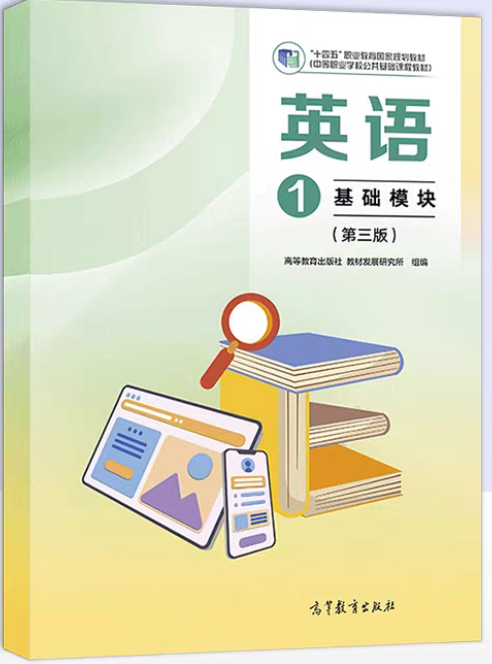
Unit 8 People and Events(B卷·能力提升)《英语 基础模块1》(高教版第三版)单元过关卷(原卷版+解析版)
2026-07-27
|
2份
|
23页
|
45人阅读
|
0人下载
摘要:
**基本信息**
本试卷为《英语 基础模块1》(高教版第三版)Unit 8 People and Events的B卷·能力提升卷,紧扣单元核心考点,通过历史人物、科技成就等真实情境设计试题,适配中职英语单元复习,全面检测语言应用与思维能力。
**题型特征**
|题型|题量/分值|知识覆盖|命题特色|
|----|-----------|----------|----------|
|情景交际|10题/20分|历史人物(詹天佑)、发明影响(指南针)|以对话形式考查交际能力,融入文化传承素材|
|选词填空|10题/15分|人物传记(George Stephenson)|通过语篇考查词汇运用,渗透奋斗精神|
|阅读理解|20题/40分|发明俱乐部招募、人物故事、中国高铁|应用文、记叙文、说明文结合,提升信息获取与推理能力|
|完形填空|10题/10分|高铁站参观经历|语法与词汇综合考查,体现科技前沿情境|
|书面表达|1题/15分|介绍中国高铁|真实交际任务,培养跨文化沟通与表达能力|
内容正文:
编写说明:本套试卷紧扣《英语 基础模块1》(高教版第三版)教材,以教材单元为基准精准覆盖核心考点。
每个单元设置AB卷,A卷为基础巩固卷,侧重基础考点训练,帮助学生扎实掌握知识要点;B卷为能力提升卷,注重知识整合与全面检测,引导学生构建知识网络。全书设计4份综合测试卷,模拟实战情境,聚焦解题能力突破,全面提升应试能力与知识应用水平。
《英语 基础模块1》(高教版第三版)《单元过关卷》
Unit 8 People and Events
B卷·能力提升
考试时间:120分钟 满分:100分
班级_____姓名_____学号_____成绩_____
第一部分 情景交际(共10小题,每小题2分,共20分。)
阅读下列简短对话,从A、B、C、D四个选项中选出最佳选项,将对话补全。
1. — Could you tell me who designed the Jingzhang Railway?
— ________. He was born in 1861 and graduated from Yale University.
A. George Stephenson
B. Cai Lun
C. Zhan Tianyou
D. Thomas Edison
【答案】C
【详解】句意:对方询问谁设计了京张铁路,后句给出出生年份和毕业院校等信息。Zhan Tianyou(詹天佑)1861年出生,毕业于耶鲁大学,是京张铁路总工程师,故选C。
2. — Why is the compass so important in history?
— ________. It helped sailors find the right direction on the sea.
A. It is very cheap
B. I do not know
C. It is too heavy
D. Because it changed the way people traveled
【答案】D
【详解】句意:对方问指南针为什么重要,后句说明它帮助水手在海上找到正确方向。Because it changed the way people traveled解释了指南针对旅行方式的改变,与后句一致,故选D。
3. — You must not run in the lab room during the science week.
— ________. I will be careful.
A. Sorry, I will not do that again
B. I do not think so
C. It does not matter
D. No problem, let us run
【答案】A
【详解】句意:对方禁止在实验室奔跑,后句表示会小心。Sorry, I will not do that again表示道歉和遵守,故选A。
4. — What do you think a good engineer should be like?
— ________. They also need to overcome all kinds of difficulties.
A. They should be lazy
B. They should be creative and brave
C. They do not need skills
D. They are always late
【答案】B
【详解】句意:对方问优秀工程师应具备什么品质,后句补充需要克服困难。creative and brave(有创造力且勇敢)与后句"overcome all kinds of difficulties"呼应,故选B。
5. — I heard your school won the first prize in the invention competition.
— ________. We worked on it for two months.
A. No, we did not
B. I have no idea
C. It is impossible
D. Yes, that is right
【答案】D
【详解】句意:对方听说学校在发明比赛中获一等奖,后句说明努力了两个月。Yes, that is right表示肯定对方说法,故选D。
6. — Would you like to visit the railway museum with me this weekend?
— ________, but I have to prepare for an exam.
A. No, I do not want to
B. I think it is boring
C. I would love to
D. It is too far
【答案】C
【详解】句意:Would you like to...?是邀请,but后说明需要备考,表示愿意但因故不能。I would love to表示愿意接受邀请,故选C。
7. — What can we learn from great inventors in history?
— ________. They never gave up when they met problems.
A. We should learn their spirit of never giving up
B. We should stop trying
C. We do not need to work hard
D. We can wait for luck
【答案】A
【详解】句意:对方问能从伟大发明家身上学到什么,后句说明他们遇到问题从不放弃。We should learn their spirit of never giving up与后句呼应,故选A。
8. — May I borrow your notes about the history of railways?
— ________. I will bring them tomorrow.
A. No, you may not
B. I lost them
C. It is not mine
D. Sure, no problem
【答案】D
【详解】句意:May I...?表示请求许可,后句说明明天带来。Sure, no problem表示同意,故选D。
9. — How did Zhan Tianyou and his team overcome the difficulties?
— ________. They succeeded in finishing the task ahead of schedule.
A. They gave up
B. They worked hard and did not give up
C. They left the project
D. They waited for help
【答案】B
【详解】句意:对方问詹天佑团队如何克服困难,后句说明他们提前完成了任务。They worked hard and did not give up与后句"succeeded in finishing"呼应,故选B。
10. — I believe China will create more great inventions in the future.
— ________. The high-speed railway is a good example.
A. I agree with you
B. I do not think so
C. That is impossible
D. I have no idea
【答案】A
【详解】句意:对方相信中国未来会创造更多伟大发明,后句以高铁为例说明。I agree with you表示认同,故选A。
第二部分 选词填空(共10小题,每小题1.5分,共15分。)
阅读下列短文,从各题所给的A、B、C、D四个选项中选出最佳选项,填入相应的空格处。
The Father of Railways — George Stephenson
George Stephenson was a British engineer. He is ____11____ as "the father of railways" because he built the world's first passenger train. The train used steam to move and could go 24 kilometers an hour. It first ran on September 27, 1825.
When Stephenson was young, his family was very poor. He started working in a coal mine at the age of fourteen. However, he did not ____12____ learning. He went to school at night and learned to read and write. Later, he became interested in machines and ____13____ to design steam engines.
Stephenson worked very hard. He ____14____ many difficulties in his early years, but he never gave up. He believed that hard work could ____15____ a difference. In 1814, he built his first steam locomotive (蒸汽机车). People were ____16____ at first, but soon they found that trains were faster and cheaper than horses.
Stephenson's invention changed the way people traveled. ____17____, trains could carry more people and goods than before. Railways connected cities and brought people ____18____. Stephenson proved that a person from a poor family could still ____19____ great things. His story still ____20____ young people to work hard and follow their dreams today.
11. A. made B. known C. called D. chosen
12. A. enjoy B. finish C. stop D. continue
13. A. refused B. hated C. forgot D. began
14. A. created B. faced C. avoided D. missed
15. A. make B. take C. get D. do
16. A. bored B. angry C. surprised D. tired
17. A. Finally B. Also C. However D. Instead
18. A. slower B. farther C. higher D. closer
19. A. achieve B. buy C. see D. hear
20. A. stops B. warns C. forces D. inspires
【答案】11. B 12. C 13. D 14. B 15. A 16. C 17. B 18. D 19. A 20. D
【导语】本文是一篇记叙文,主要介绍了"铁路之父"乔治·斯蒂芬森的生平故事,包括他出身贫寒、坚持夜校学习、设计蒸汽机车、克服困难改变世界交通的历程,重点考查学生在语境中辨析词义、理解上下文逻辑和把握人物品质的能力。
【详解】
11.考查固定搭配。句意:他被称为"铁路之父"。made被制造;known被知道;called被称为;chosen被选择。be known as为固定搭配,表示"以……而闻名/被称为",符合语境,故选B。
12.考查动词词义辨析。句意:然而,他没有停止学习。enjoy享受;finish完成;stop停止;continue继续。前文说家境贫寒14岁开始工作,后文说他上夜校学习,说明他没有停止学习,stop符合语境,故选C。
13.考查动词词义辨析。句意:后来他对机械感兴趣,开始设计蒸汽机。refused拒绝;hated讨厌;forgot忘记;began开始。结合语境,他对机械感兴趣后开始设计蒸汽机,began符合,故选D。
14.考查动词词义辨析。句意:他早年面临许多困难。created创造;faced面对;avoided避免;missed错过。结合语境,他早年出身贫寒,面对许多困难,faced符合,故选B。
15.考查固定搭配。句意:他相信努力能产生影响。make做;take拿;get得到;do做。make a difference为固定搭配,表示"产生影响",故选A。
16.考查形容词词义辨析。句意:人们起初很惊讶。bored无聊的;angry生气的;surprised惊讶的;tired疲惫的。结合语境,人们第一次见到蒸汽机车时感到惊讶,surprised符合,故选C。
17.考查副词词义辨析。句意:此外,火车还能比以前运载更多的人和货物。Finally最后;Also此外;However然而;Instead相反。前文说火车改变了出行方式,此处补充火车还能运载更多人和货物,表示递进关系,Also符合,故选B。
18.考查形容词词义辨析。句意:铁路连接了城市,让人们更亲近。slower更慢;farther更远;higher更高;closer更近。铁路连接城市,让人们之间距离缩短,closer符合,故选D。
19.考查动词词义辨析。句意:斯蒂芬森证明了出身贫寒的人也能成就伟大的事情。achieve实现/成就;buy买;see看;hear听。achieve great things表示"成就大事",符合语境,故选A。
20.考查动词词义辨析。句意:他的故事至今仍激励年轻人努力追梦。stops停止;warns警告;forces强迫;inspires激励。结合语境,斯蒂芬森的故事激励年轻人,inspires符合,故选D。
第三部分 阅读理解(共两节)
第一节(共15小题,每小题2分,共30分。)
阅读下列短文,从各题所给的A、B、C、D四个选项中选出最佳选项。
Text 1
Invention Club Recruitment
Are you interested in creating new things? Join our school Invention Club!
Time: Every Wednesday, 4:00 p.m. — 5:30 p.m.
Place: Room 305, Science Building
Who can join: Students from all grades who love science and creating
What we do:
• Learn about great inventors and their inventions
• Design and build small machines in groups
• Take part in the city invention competition in December
• Visit the science museum twice a year
Requirements: Bring your own notebook. You do not need to buy any tools. The school will provide all materials. Please come on time and do not be late.
How to join: Write your name, class and phone number on the sign-up sheet on the bulletin board before September 15th. Only 30 students can join. For questions, call Miss Wang at 0771-556-2001.
21. When does the Invention Club meet?
A. Every Wednesday, 4:00 p.m. — 5:30 p.m.
B. Every Monday morning.
C. Every Friday afternoon.
D. Every weekend.
22. Where will the club activities take place?
A. In the school library.
B. In Room 305, Science Building.
C. In the city museum.
D. In the computer room.
23. What will students do in the club?
A. Buy expensive tools.
B. Take exams every week.
C. Design and build small machines in groups.
D. Watch films all afternoon.
24. What should students do to join the club?
A. Pay 50 yuan for materials.
B. Bring their own tools.
C. Come on Friday.
D. Sign up on the bulletin board before September 15th.
25. Which of the following is TRUE?
A. The club can accept 30 students at most.
B. Only Grade One students can join.
C. Students need to buy their own tools.
D. The city competition is in November.
【答案】21. A 22. B 23. C 24. D 25. A
【导语】本文是一篇校园社团招新通知,介绍了学校发明俱乐部的活动时间、地点、参与条件、活动内容、报名方式和注意事项,主要考查学生快速定位文本细节信息和辨析正误的能力。
【详解】
21.细节理解题。根据"Time: Every Wednesday, 4:00 p.m. — 5:30 p.m."可知,俱乐部每周三下午4:00到5:30活动,故选A。
22.细节理解题。根据"Place: Room 305, Science Building"可知,活动在科学楼305室举行,故选B。
23.细节理解题。根据"Design and build small machines in groups"可知,学生在俱乐部分组设计制造小机器,故选C。
24.细节理解题。根据"Write your name...on the sign-up sheet on the bulletin board before September 15th"可知,学生应在9月15日前在公告栏报名表上登记,故选D。
25.细节理解题。根据"Only 30 students can join"可知,俱乐部最多接受30名学生,A项正确;根据"Students from all grades"可知B项错误;根据"The school will provide all materials"可知C项错误;根据"city invention competition in December"可知D项错误。
Text 2
Zhang Ming was a student at a vocational school in Liuzhou. He was not good at studying, and he often felt that he could not do anything well. His father was a worker in a small factory, and his mother sold fruit at a morning market. Life was not easy for the family.
One day, Zhang Ming's teacher showed the class a film about Zhan Tianyou. The film told the story of how Zhan Tianyou and his team built the Jingzhang Railway through an area of hills and mountains. Many people believed it was impossible, but Zhan Tianyou did not give up. He overcame all kinds of difficulties and completed the railway two years ahead of schedule.
After watching the film, Zhang Ming felt something change inside him. He thought, "If Zhan Tianyou could build a railway through mountains, maybe I can also overcome my own difficulties." He began to study harder and joined a skill competition at school. He practiced every day after class, even on weekends.
At first, Zhang Ming did not do well. He failed twice in the competition. But he remembered Zhan Tianyou's story and did not give up. The third time, he won the second prize. His teacher and classmates were proud of him. Zhang Ming smiled and said, "Great people teach us that we should never stop trying."
Now Zhang Ming is working in a factory in Nanning. He is one of the best workers there. He often tells young students, "Do not be afraid of failure. Hard work will pay off someday."
26. What was Zhang Ming like before watching the film?
A. He was confident and hard-working.
B. He felt he could not do anything well.
C. He was good at studying.
D. He was proud of himself.
27. Why did many people think building the Jingzhang Railway was impossible?
A. Because they did not have enough money.
B. Because the railway was too short.
C. Because Zhan Tianyou was too young.
D. Because the railway had to go through hills and mountains.
28. What does the underlined word "failure" mean?
A. 成功
B. 勇气
C. 失败
D. 骄傲
29. What can we learn from the passage?
A. Zhang Ming is now one of the best workers in a factory.
B. Zhang Ming gave up after failing twice.
C. Zhang Ming won the first prize at last.
D. Zhang Ming's teacher did not believe in him.
30. What is the main idea of the passage?
A. How to build a railway.
B. How a great person's story inspired a student to overcome difficulties.
C. The best way to sell fruit.
D. Why students should watch films.
【答案】26. B 27. D 28. C 29. A 30. B
【导语】本文是一篇记叙文,讲述成绩不好的学生张明在观看詹天佑的影片后受到鼓舞,坚持努力最终在技能比赛中获奖并成为优秀工人的成长故事,重点考查事件顺序、人物行为、词义猜测和主旨概括能力。
【详解】
26.细节理解题。根据第一段"He often felt that he could not do anything well"可知,张明觉得自己什么都做不好,故选B。
27.细节理解题。根据第二段"The Jingzhang Railway had to go through an area of hills and mountains. Many people believed it was impossible"可知,人们认为修建铁路不可能是因为要穿过山区,故选D。
28.词义猜测题。前文说张明失败了两次但没有放弃,后文说"Do not be afraid of failure",结合语境可知failure意为"失败",故选C。
29.细节理解题。根据最后一段"He is one of the best workers there"可知,张明现在是工厂里最优秀的工人之一,故选A。
30.主旨大意题。全文围绕伟大人物詹天佑的故事如何激励学生张明克服困难展开,B项最能概括文章主旨,故选B。
Text 3
The high-speed railway is one of China's greatest modern achievements. In just a few decades, China has built the longest and fastest high-speed railway network in the world. These trains can travel at over 350 kilometers an hour, connecting cities that used to be hours apart. For millions of people, taking a high-speed train has become a part of daily life.
The Jingzhang High-Speed Railway is a good example of China's railway development. It connects Beijing and Zhangjiakou, the same route as the old Jingzhang Railway built by Zhan Tianyou in 1909. While the old railway could only reach 35 kilometers an hour, the new one can travel at 350 kilometers an hour. This shows how far Chinese railway technology has come in over a century.
High-speed railways bring many benefits to society. First, they save time for passengers. A trip that used to take ten hours by normal train now takes only three hours. Second, they are comfortable and safe. Passengers can work, rest or enjoy meals on the train. Third, they help the economy grow by connecting big cities with small towns along the way.
However, building high-speed railways is not easy. Engineers must overcome many challenges, such as crossing rivers, going through mountains and dealing with different weather conditions. Chinese engineers have solved these problems by using advanced technology and careful planning. Their hard work has made China a leader in railway technology.
The success of high-speed railways tells us that innovation and hard work can change a country. Just like the ancient inventions of paper-making and the compass, modern high-speed railways are not only useful tools but also symbols of a nation's creativity and determination.
31. What is the passage mainly about?
A. How to build a railway station.
B. The history of paper-making.
C. China's high-speed railways and their significance.
D. The compass and its uses.
32. How fast can the Jingzhang High-Speed Railway travel?
A. 35 kilometers an hour.
B. 350 kilometers an hour.
C. 100 kilometers an hour.
D. 200 kilometers an hour.
33. How many benefits of high-speed railways are mentioned in Paragraph 3?
A. One.
B. Three.
C. Two.
D. Four.
34. What does the underlined word "challenges" mean?
A. 挑战
B. 机会
C. 方法
D. 成就
35. What is the purpose of the passage?
A. To teach people how to drive a train.
B. To ask people to travel by train.
C. To show the importance of China's high-speed railways.
D. To compare different types of trains.
【答案】31. C 32. B 33. B 34. A 35. C
【导语】本文是一篇说明文,主要介绍中国高铁的发展成就,以京张高铁为例对比新旧铁路,说明高铁对社会的好处、建设中的挑战以及创新精神的意义,重点考查信息整合、词义猜测、主旨概括和写作目的理解能力。
【详解】
31.主旨大意题。文章围绕中国高铁的发展、意义、好处和挑战展开,C项最能概括文章主旨,故选C。
32.细节理解题。根据第二段"the new one can travel at 350 kilometers an hour"可知,京张高铁时速达350公里,故选B。
33.细节理解题。根据第三段"First...Second...Third..."可知,文章提到了三个好处,故选B。
34.词义猜测题。后文举例说明工程师需要跨越河流、穿山越岭、应对不同天气,这些都是"挑战",challenges意为"挑战",故选A。
35.主旨大意题。文章通过介绍中国高铁的成就和意义,说明创新和努力能改变国家,C项"展示中国高铁的重要性"最符合写作目的,故选C。
第二节(共5小题,每小题2分,共10分。)
阅读下列短文,从短文后的选项中选出最佳选项,并填入空白处。
A Lesson from a Great Inventor
Last week, our English teacher told us a story about Thomas Edison in class. ____36____. He was a great inventor who changed the world with his inventions.
Edison was not a top student when he was young. His teacher thought he was not smart enough. ____37____. His mother believed in him and taught him at home. She told him that he could do anything if he worked hard enough.
Edison showed a strong interest in science. ____38____. Sometimes his experiments failed, but he never gave up. He believed that failure was just a step toward success.
After many years of hard work, Edison invented the light bulb. ____39____. People could finally read and work at night, and cities became brighter and safer.
____40____. I learned that I should never give up, even when things are difficult.
A. It was a story that deeply moved me
B. He spent most of his free time doing experiments
C. However, Edison did not stop learning
D. This great invention changed the way people lived
E. Edison was born in the United States in 1847
【答案】36. E 37. C 38. B 39. D 40. A
【导语】本文是一篇记叙文,以课堂听故事为引子,讲述了爱迪生从被老师认为不聪明到在母亲鼓励下坚持自学、做实验、最终发明灯泡的故事,以及作者从中获得的感悟,重点考查上下文衔接逻辑和语篇理解能力。
【详解】
36.空处需要引出爱迪生的基本信息。选项E"Edison was born in the United States in 1847"与后句"He was a great inventor"在人称和话题上衔接自然,先介绍出生信息再评述其成就,故选E。
37.空处需要承接老师认为他不聪明后的转折。选项C"However, Edison did not stop learning"与后句"His mother believed in him and taught him at home"在逻辑上构成转折递进,故选C。
38.空处需要说明爱迪生对科学兴趣的具体表现。选项B"He spent most of his free time doing experiments"与后句"Sometimes his experiments failed"在话题复现上一致,故选B。
39.空处需要衔接灯泡发明的影响。选项D"This great invention changed the way people lived"与后句"People could finally read and work at night"在因果逻辑上一致,故选D。
40.空处需要总结全文。选项A"It was a story that deeply moved me"与后句"I learned that I should never give up"在情感感悟上一致,故选A。
第四部分 完形填空(共10小题,每小题1分,共10分。)
阅读下列短文,在空格处填入适当的词或用括号里的词的正确形式填空。
A Visit to a High-Speed Railway Station
Last Saturday, our class visited a high-speed railway station in Nanning. It was one of the ____41____ (great) stations in Guangxi. When we arrived, a guide ____42____ (welcome) us warmly at the entrance.
The guide told us that China ____43____ (build) the longest high-speed railway network in the world. She also said that high-speed trains were much ____44____ (fast) than normal trains. We were surprised to hear that the trains could travel at over 350 kilometers ____45____ hour.
Then we visited the control room. The workers there ____46____ (be) very busy, but they still answered our questions. They told us that ____47____ (safe) was the most important thing for passengers. Every train was checked ____48____ (careful) before it left the station.
After the visit, I ____49____ (feel) very proud of China's railway achievements. I hope I can become an engineer and ____50____ (create) more useful things for people in the future.
【答案】41. greatest 42. welcomed 43. has built 44. faster 45. an
46. were 47. safety 48. carefully 49. felt 50. create
【导语】本文是一篇记叙文,讲述了班级参观南宁高铁站的经历,包括导游介绍高铁网络、参观控制室了解安全措施,以及参观后的自豪感受和未来志向,重点考查形容词比较级最高级、时态、副词、名词等语法知识。
【详解】
41.考查形容词最高级。句意:它是广西最大的高铁站之一。"one of the +最高级+复数名词"为固定结构,great的最高级为greatest。
42.考查动词时态。句意:导游在入口热情地欢迎了我们。本文叙述过去的事,用一般过去时,welcome的过去式为welcomed。
43.考查动词时态。句意:导游告诉我们中国已经建成了世界上最长的高铁网络。强调到说话时已完成的动作,用现在完成时,主语China为第三人称单数,故填has built。
44.考查形容词比较级。句意:高铁比普通火车快得多。much后接比较级,fast的比较级为faster。
45.考查冠词。句意:时速超过350公里。350读作three hundred and fifty,以元音音素开头,表示"每小时"用an hour。
46.考查动词时态。句意:那里的工人很忙。本文叙述过去的事,主语workers为复数,用一般过去时were。
47.考查名词。句意:安全是旅客最重要的事情。作主语用名词,safe的名词形式为safety。
48.考查副词。句意:每列火车出发前都被仔细检查。修饰动词checked用副词,careful的副词形式为carefully。
49.考查动词时态。句意:参观后,我感到非常自豪。本文叙述过去的事,feel的过去式为felt。
50.考查动词。句意:我希望成为一名工程师,未来为人们创造更多有用的东西。and连接两个并列动词,hope后用不定式,create用原形。
第五部分 书面表达(共15分。)
51. 假设你是李华,你的英国笔友David对中国的高铁很感兴趣。请根据以下要点,给他写一封电子邮件,介绍中国高铁。具体内容和要求如下:
1. 词数70—80个;
2. 文中不可出现真实人名和校名;
3. 开头、结尾已给出,不计入总词数;
4. 相关内容及词汇仅供参考,可酌情选用。
Dear David,
I am glad to hear from you. You asked about China's high-speed railways. I'd like to share something with you.
______________________________________________________________________________________________________________________________________________________
I hope you can come to China and experience it yourself!
Yours,
Li Hua
【答案】例文:
Dear David,
I am glad to hear from you. You asked about China's high-speed railways. I'd like to share something with you.
China has the longest high-speed railway network in the world. The trains can travel at over 350 kilometers an hour. They are fast, safe and comfortable. People can travel between cities in a very short time. High-speed railways bring us a lot of convenience. They connect big cities with small towns and help the economy grow. Many people choose high-speed trains because they save time and money. The tickets are not expensive, and the service is excellent.
I hope you can come to China and experience it yourself!
Yours,
Li Hua
【解析】
【导语】本篇书面表达属于应用文,要求写一封电子邮件介绍中国高铁,内容应包括高铁特点、优势和感受。
【词汇积累】
方便:convenience -> ease
快的:fast -> rapid
舒适的:comfortable -> pleasant
选择:choose -> select
【句式拓展】
原句:The trains are fast. They are also safe.
拓展句:The trains are not only fast but also safe.
【点睛】
China has the longest high-speed railway network in the world. (运用了形容词最高级介绍中国高铁地位)
Many people choose high-speed trains because they save time and money. (运用了because引导原因状语从句)
原创精品资源学科网独家享有版权,侵权必究!
学科网(北京)股份有限公司
$
编写说明:本套试卷紧扣《英语 基础模块1》(高教版第三版)教材,以教材单元为基准精准覆盖核心考点。
每个单元设置AB卷,A卷为基础巩固卷,侧重基础考点训练,帮助学生扎实掌握知识要点;B卷为能力提升卷,注重知识整合与全面检测,引导学生构建知识网络。全书设计4份综合测试卷,模拟实战情境,聚焦解题能力突破,全面提升应试能力与知识应用水平。
《英语 基础模块1》(高教版第三版)《单元过关卷》
Unit 8 People and Events
B卷·能力提升
考试时间:120分钟 满分:100分
班级_____姓名_____学号_____成绩_____
第一部分 情景交际(共10小题,每小题2分,共20分。)
阅读下列简短对话,从A、B、C、D四个选项中选出最佳选项,将对话补全。
1. — Could you tell me who designed the Jingzhang Railway?
— ________. He was born in 1861 and graduated from Yale University.
A. George Stephenson
B. Cai Lun
C. Zhan Tianyou
D. Thomas Edison
2. — Why is the compass so important in history?
— ________. It helped sailors find the right direction on the sea.
A. It is very cheap
B. I do not know
C. It is too heavy
D. Because it changed the way people traveled
3. — You must not run in the lab room during the science week.
— ________. I will be careful.
A. Sorry, I will not do that again
B. I do not think so
C. It does not matter
D. No problem, let us run
4. — What do you think a good engineer should be like?
— ________. They also need to overcome all kinds of difficulties.
A. They should be lazy
B. They should be creative and brave
C. They do not need skills
D. They are always late
5. — I heard your school won the first prize in the invention competition.
— ________. We worked on it for two months.
A. No, we did not
B. I have no idea
C. It is impossible
D. Yes, that is right
6. — Would you like to visit the railway museum with me this weekend?
— ________, but I have to prepare for an exam.
A. No, I do not want to
B. I think it is boring
C. I would love to
D. It is too far
7. — What can we learn from great inventors in history?
— ________. They never gave up when they met problems.
A. We should learn their spirit of never giving up
B. We should stop trying
C. We do not need to work hard
D. We can wait for luck
8. — May I borrow your notes about the history of railways?
— ________. I will bring them tomorrow.
A. No, you may not
B. I lost them
C. It is not mine
D. Sure, no problem
9. — How did Zhan Tianyou and his team overcome the difficulties?
— ________. They succeeded in finishing the task ahead of schedule.
A. They gave up
B. They worked hard and did not give up
C. They left the project
D. They waited for help
10. — I believe China will create more great inventions in the future.
— ________. The high-speed railway is a good example.
A. I agree with you
B. I do not think so
C. That is impossible
D. I have no idea
第二部分 选词填空(共10小题,每小题1.5分,共15分。)
阅读下列短文,从各题所给的A、B、C、D四个选项中选出最佳选项,填入相应的空格处。
The Father of Railways — George Stephenson
George Stephenson was a British engineer. He is ____11____ as "the father of railways" because he built the world's first passenger train. The train used steam to move and could go 24 kilometers an hour. It first ran on September 27, 1825.
When Stephenson was young, his family was very poor. He started working in a coal mine at the age of fourteen. However, he did not ____12____ learning. He went to school at night and learned to read and write. Later, he became interested in machines and ____13____ to design steam engines.
Stephenson worked very hard. He ____14____ many difficulties in his early years, but he never gave up. He believed that hard work could ____15____ a difference. In 1814, he built his first steam locomotive (蒸汽机车). People were ____16____ at first, but soon they found that trains were faster and cheaper than horses.
Stephenson's invention changed the way people traveled. ____17____, trains could carry more people and goods than before. Railways connected cities and brought people ____18____. Stephenson proved that a person from a poor family could still ____19____ great things. His story still ____20____ young people to work hard and follow their dreams today.
11. A. made B. known C. called D. chosen
12. A. enjoy B. finish C. stop D. continue
13. A. refused B. hated C. forgot D. began
14. A. created B. faced C. avoided D. missed
15. A. make B. take C. get D. do
16. A. bored B. angry C. surprised D. tired
17. A. Finally B. Also C. However D. Instead
18. A. slower B. farther C. higher D. closer
19. A. achieve B. buy C. see D. hear
20. A. stops B. warns C. forces D. inspires
第三部分 阅读理解(共两节)
第一节(共15小题,每小题2分,共30分。)
阅读下列短文,从各题所给的A、B、C、D四个选项中选出最佳选项。
Text 1
Invention Club Recruitment
Are you interested in creating new things? Join our school Invention Club!
Time: Every Wednesday, 4:00 p.m. — 5:30 p.m.
Place: Room 305, Science Building
Who can join: Students from all grades who love science and creating
What we do:
• Learn about great inventors and their inventions
• Design and build small machines in groups
• Take part in the city invention competition in December
• Visit the science museum twice a year
Requirements: Bring your own notebook. You do not need to buy any tools. The school will provide all materials. Please come on time and do not be late.
How to join: Write your name, class and phone number on the sign-up sheet on the bulletin board before September 15th. Only 30 students can join. For questions, call Miss Wang at 0771-556-2001.
21. When does the Invention Club meet?
A. Every Wednesday, 4:00 p.m. — 5:30 p.m.
B. Every Monday morning.
C. Every Friday afternoon.
D. Every weekend.
22. Where will the club activities take place?
A. In the school library.
B. In Room 305, Science Building.
C. In the city museum.
D. In the computer room.
23. What will students do in the club?
A. Buy expensive tools.
B. Take exams every week.
C. Design and build small machines in groups.
D. Watch films all afternoon.
24. What should students do to join the club?
A. Pay 50 yuan for materials.
B. Bring their own tools.
C. Come on Friday.
D. Sign up on the bulletin board before September 15th.
25. Which of the following is TRUE?
A. The club can accept 30 students at most.
B. Only Grade One students can join.
C. Students need to buy their own tools.
D. The city competition is in November.
Text 2
Zhang Ming was a student at a vocational school in Liuzhou. He was not good at studying, and he often felt that he could not do anything well. His father was a worker in a small factory, and his mother sold fruit at a morning market. Life was not easy for the family.
One day, Zhang Ming's teacher showed the class a film about Zhan Tianyou. The film told the story of how Zhan Tianyou and his team built the Jingzhang Railway through an area of hills and mountains. Many people believed it was impossible, but Zhan Tianyou did not give up. He overcame all kinds of difficulties and completed the railway two years ahead of schedule.
After watching the film, Zhang Ming felt something change inside him. He thought, "If Zhan Tianyou could build a railway through mountains, maybe I can also overcome my own difficulties." He began to study harder and joined a skill competition at school. He practiced every day after class, even on weekends.
At first, Zhang Ming did not do well. He failed twice in the competition. But he remembered Zhan Tianyou's story and did not give up. The third time, he won the second prize. His teacher and classmates were proud of him. Zhang Ming smiled and said, "Great people teach us that we should never stop trying."
Now Zhang Ming is working in a factory in Nanning. He is one of the best workers there. He often tells young students, "Do not be afraid of failure. Hard work will pay off someday."
26. What was Zhang Ming like before watching the film?
A. He was confident and hard-working.
B. He felt he could not do anything well.
C. He was good at studying.
D. He was proud of himself.
27. Why did many people think building the Jingzhang Railway was impossible?
A. Because they did not have enough money.
B. Because the railway was too short.
C. Because Zhan Tianyou was too young.
D. Because the railway had to go through hills and mountains.
28. What does the underlined word "failure" mean?
A. 成功
B. 勇气
C. 失败
D. 骄傲
29. What can we learn from the passage?
A. Zhang Ming is now one of the best workers in a factory.
B. Zhang Ming gave up after failing twice.
C. Zhang Ming won the first prize at last.
D. Zhang Ming's teacher did not believe in him.
30. What is the main idea of the passage?
A. How to build a railway.
B. How a great person's story inspired a student to overcome difficulties.
C. The best way to sell fruit.
D. Why students should watch films.
Text 3
The high-speed railway is one of China's greatest modern achievements. In just a few decades, China has built the longest and fastest high-speed railway network in the world. These trains can travel at over 350 kilometers an hour, connecting cities that used to be hours apart. For millions of people, taking a high-speed train has become a part of daily life.
The Jingzhang High-Speed Railway is a good example of China's railway development. It connects Beijing and Zhangjiakou, the same route as the old Jingzhang Railway built by Zhan Tianyou in 1909. While the old railway could only reach 35 kilometers an hour, the new one can travel at 350 kilometers an hour. This shows how far Chinese railway technology has come in over a century.
High-speed railways bring many benefits to society. First, they save time for passengers. A trip that used to take ten hours by normal train now takes only three hours. Second, they are comfortable and safe. Passengers can work, rest or enjoy meals on the train. Third, they help the economy grow by connecting big cities with small towns along the way.
However, building high-speed railways is not easy. Engineers must overcome many challenges, such as crossing rivers, going through mountains and dealing with different weather conditions. Chinese engineers have solved these problems by using advanced technology and careful planning. Their hard work has made China a leader in railway technology.
The success of high-speed railways tells us that innovation and hard work can change a country. Just like the ancient inventions of paper-making and the compass, modern high-speed railways are not only useful tools but also symbols of a nation's creativity and determination.
31. What is the passage mainly about?
A. How to build a railway station.
B. The history of paper-making.
C. China's high-speed railways and their significance.
D. The compass and its uses.
32. How fast can the Jingzhang High-Speed Railway travel?
A. 35 kilometers an hour.
B. 350 kilometers an hour.
C. 100 kilometers an hour.
D. 200 kilometers an hour.
33. How many benefits of high-speed railways are mentioned in Paragraph 3?
A. One.
B. Three.
C. Two.
D. Four.
34. What does the underlined word "challenges" mean?
A. 挑战
B. 机会
C. 方法
D. 成就
35. What is the purpose of the passage?
A. To teach people how to drive a train.
B. To ask people to travel by train.
C. To show the importance of China's high-speed railways.
D. To compare different types of trains.
第二节(共5小题,每小题2分,共10分。)
阅读下列短文,从短文后的选项中选出最佳选项,并填入空白处。
A Lesson from a Great Inventor
Last week, our English teacher told us a story about Thomas Edison in class. ____36____. He was a great inventor who changed the world with his inventions.
Edison was not a top student when he was young. His teacher thought he was not smart enough. ____37____. His mother believed in him and taught him at home. She told him that he could do anything if he worked hard enough.
Edison showed a strong interest in science. ____38____. Sometimes his experiments failed, but he never gave up. He believed that failure was just a step toward success.
After many years of hard work, Edison invented the light bulb. ____39____. People could finally read and work at night, and cities became brighter and safer.
____40____. I learned that I should never give up, even when things are difficult.
A. It was a story that deeply moved me
B. He spent most of his free time doing experiments
C. However, Edison did not stop learning
D. This great invention changed the way people lived
E. Edison was born in the United States in 1847
第四部分 完形填空(共10小题,每小题1分,共10分。)
阅读下列短文,在空格处填入适当的词或用括号里的词的正确形式填空。
A Visit to a High-Speed Railway Station
Last Saturday, our class visited a high-speed railway station in Nanning. It was one of the ____41____ (great) stations in Guangxi. When we arrived, a guide ____42____ (welcome) us warmly at the entrance.
The guide told us that China ____43____ (build) the longest high-speed railway network in the world. She also said that high-speed trains were much ____44____ (fast) than normal trains. We were surprised to hear that the trains could travel at over 350 kilometers ____45____ hour.
Then we visited the control room. The workers there ____46____ (be) very busy, but they still answered our questions. They told us that ____47____ (safe) was the most important thing for passengers. Every train was checked ____48____ (careful) before it left the station.
After the visit, I ____49____ (feel) very proud of China's railway achievements. I hope I can become an engineer and ____50____ (create) more useful things for people in the future.
第五部分 书面表达(共15分。)
51. 假设你是李华,你的英国笔友David对中国的高铁很感兴趣。请根据以下要点,给他写一封电子邮件,介绍中国高铁。具体内容和要求如下:
1. 词数70—80个;
2. 文中不可出现真实人名和校名;
3. 开头、结尾已给出,不计入总词数;
4. 相关内容及词汇仅供参考,可酌情选用。
Dear David,
I am glad to hear from you. You asked about China's high-speed railways. I'd like to share something with you.
______________________________________________________________________________________________________________________________________________________
I hope you can come to China and experience it yourself!
Yours,
Li Hua
原创精品资源学科网独家享有版权,侵权必究!
学科网(北京)股份有限公司
$
资源预览图

1

2

3
由于学科网是一个信息分享及获取的平台,不确保部分用户上传资料的 来源及知识产权归属。如您发现相关资料侵犯您的合法权益,请联系学科网,我们核实后将及时进行处理。