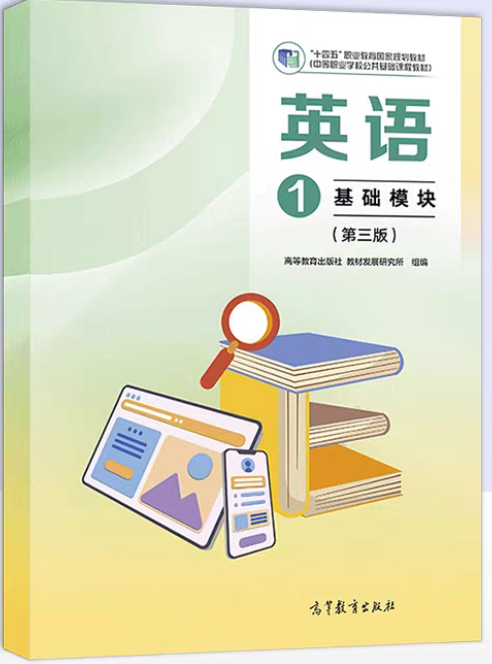
Unit 8 People and Events(A卷·基础巩固)《英语 基础模块1》(高教版第三版)单元过关卷(原卷版+解析版)
2026-07-27
|
2份
|
22页
|
48人阅读
|
0人下载
摘要:
**基本信息**
《英语 基础模块1》(高教版第三版)Unit 8 A卷紧扣教材核心考点,以“人物与事件”为主题,通过基础巩固题型实现语言能力与文化意识的融合培养,适配中职英语单元复习场景。
**题型特征**
|题型|题量/分值|知识覆盖|命题特色|
|----|-----------|----------|----------|
|情景交际|10/20|日常对话、历史人物(蔡伦、詹天佑)|以对话补全形式考查语言运用,融入中国历史人物素材,强化文化意识|
|选词填空|10/15|动词、形容词等词汇,蔡伦造纸事件|通过人物传记短文考查词汇辨析,培养文本理解与思维品质|
|阅读理解|20/40|科技活动、学生发明故事、中国发明史|选取科技周、高铁等时代素材及造纸术等文化内容,提升信息获取与推理能力|
|完形填空|10/10|语法应用、词汇变形(interest→interested)|以学生发明经历为情境,考查语法与词汇运用,渗透学习能力培养|
|书面表达|1/15|邮件写作、发明介绍|要求介绍最喜欢的发明,综合语言输出,体现语言能力与创新思维|
内容正文:
编写说明:本套试卷紧扣《英语 基础模块1》(高教版第三版)教材,以教材单元为基准精准覆盖核心考点。
每个单元设置AB卷,A卷为基础巩固卷,侧重基础考点训练,帮助学生扎实掌握知识要点;B卷为能力提升卷,注重知识整合与全面检测,引导学生构建知识网络。全书设计4份综合测试卷,模拟实战情境,聚焦解题能力突破,全面提升应试能力与知识应用水平。
《英语 基础模块1》(高教版第三版)《单元过关卷》
Unit 8 People and Events
A卷·基础巩固
考试时间:120分钟 满分:100分
班级_____姓名_____学号_____成绩_____
第一部分 情景交际(共10小题,每小题2分,共20分。)
阅读下列简短对话,从A、B、C、D四个选项中选出最佳选项,将对话补全。
1. — What is your favorite invention, Tom?
— ________. I use it to read and take notes every day.
A. The tablet
B. The bicycle
C. The radio
D. The clock
【答案】A
【详解】句意:对方询问最喜欢的发明,后句说明每天用它来阅读和做笔记。The tablet(平板电脑)符合阅读和做笔记的功能,故选A。
2. — Can you think of an important person related to paper-making?
— ________. He improved the method of paper-making.
A. Thomas Edison
B. Florence Nightingale
C. Cai Lun
D. Zhan Tianyou
【答案】C
【详解】句意:对方问与造纸相关的重要人物,后句说明他改进了造纸方法。Cai Lun(蔡伦)改进了造纸术,故选C。
3. — Who was the chief engineer of the Jingzhang Railway?
— ________.
A. George Stephenson
B. Zhan Tianyou
C. Cai Lun
D. Thomas Edison
【答案】B
【详解】句意:询问京张铁路的总工程师是谁。Zhan Tianyou(詹天佑)是京张铁路的总工程师,故选B。
4. — I think good inventions make our life better.
— ________. They bring us so much convenience.
A. I disagree
B. I do not know
C. It is impossible
D. That is true
【答案】D
【详解】句意:对方说好发明让生活更好,后句补充它们带来便利,That is true表示认同,故选D。
5. — May I use your tablet for a while?
— ________. You can find it on the desk.
A. Sorry, I cannot
B. No, you must not
C. Sure, go ahead
D. It is not mine
【答案】C
【详解】句意:May I...?表示请求许可,后句说明平板在桌上可用,Sure, go ahead表示同意,故选C。
6. — You should be careful when you use the new machine.
— ________. I will read the instructions first.
A. I will not listen
B. Thank you for your advice
C. It does not matter
D. You are wrong
【答案】B
【详解】句意:对方建议小心使用新机器,后句表示会先看说明,Thank you for your advice表示感谢和接受建议,故选B。
7. — Our class will visit the high-speed railway station tomorrow.
— ________!
A. Have a good time
B. What a pity
C. Good night
D. I am sorry
【答案】A
【详解】句意:对方说明天去参观高铁站,Have a good time表示祝玩得愉快,符合语境,故选A。
8. — Thomas Edison invented the light bulb, right?
— ________. It changed the way people live.
A. No, he did not
B. I have no idea
C. It is too dark
D. Yes, that is right
【答案】D
【详解】句意:对方确认爱迪生发明了灯泡,后句补充它改变了人们的生活方式,Yes, that is right表示肯定,故选D。
9. — What does Florence Nightingale do?
— ________. She created modern nursing.
A. She is a driver
B. She is a nurse
C. She is a cook
D. She is a farmer
【答案】B
【详解】句意:询问南丁格尔的职业,后句说她创造了现代护理。She is a nurse(护士)与护理工作对应,故选B。
10. — Why do you like the smartphone so much?
— ________. It helps me stay connected with my friends.
A. It is too heavy
B. I do not like it
C. It is very useful
D. It is broken
【答案】C
【详解】句意:对方问为什么喜欢智能手机,后句说明它能帮助保持联系。very useful(非常有用)与后句功能一致,故选C。
第二部分 选词填空(共10小题,每小题1.5分,共15分。)
阅读下列短文,从各题所给的A、B、C、D四个选项中选出最佳选项,填入相应的空格处。
A Great Inventor — Cai Lun
Cai Lun was a great inventor in ancient China. He was born in a small village and showed an interest in making things at an early age. Later, he worked in the palace and wanted to find a better way to ____11____ ideas with others.
At that time, people wrote on heavy bamboo or expensive silk. Cai Lun wanted to create a cheaper and lighter material. After many years of hard work, he ____12____ in improving the method of paper-making. He used tree bark, old cloth and fishing nets to make paper. This new ____13____ was much better than the old ones.
Cai Lun was also a ____14____ person. He did not give up when he met problems. He tried again and again to ____15____ all kinds of difficulties. His invention was so ____16____ that people could record and share knowledge more easily. It ____17____ the way people lived and studied.
Later, the method of paper-making traveled to other countries. More and more people began to use paper. Today, we still ____18____ Cai Lun for his great work. His story tells us that one person can ____19____ a big difference to the world. We should learn from his ____20____ and never give up.
11. A. share B. hide C. forget D. lose
12. A. failed B. succeeded C. stopped D. refused
13. A. problem B. game C. color D. method
14. A. lazy B. shy C. brave D. careless
15. A. overcome B. create C. avoid D. accept
16. A. boring B. expensive C. useful D. heavy
17. A. kept B. changed C. broke D. ended
18. A. forget B. blame C. leave D. thank
19. A. make B. take C. give D. have
20. A. fear B. anger C. spirit D. habit
【答案】11. A 12. B 13. D 14. C 15. A 16. C 17. B 18. D 19. A 20. C
【导语】本文是一篇记叙文,主要介绍了中国古代伟大发明家蔡伦改进造纸术的故事,包括他的动机、方法、遇到的困难以及造纸术对世界文明的深远影响,重点考查学生在语境中辨析词义和理解上下文逻辑的能力。
【详解】
11.考查动词词义辨析。句意:他后来在宫中工作,想找到更好的方法与他人分享想法。share分享;hide隐藏;forget忘记;lose丢失。结合后文"record and share knowledge"可知,蔡伦想让人们更容易地分享知识,share符合语境。
12.考查动词短语辨析。句意:经过多年努力,他成功改进了造纸方法。failed失败;succeeded成功;stopped停止;refused拒绝。succeed in doing sth.为固定搭配,表示"成功做某事",符合蔡伦改进造纸术的语境。
13.考查名词词义辨析。句意:这种新方法比旧的方法好得多。problem问题;game游戏;color颜色;method方法。前文提到"improving the method of paper-making",此处指新造纸方法,method符合语境。
14.考查形容词词义辨析。句意:蔡伦也是一个勇敢的人。lazy懒惰的;shy害羞的;brave勇敢的;careless粗心的。后文提到他遇到困难不放弃,说明他勇敢,brave符合。
15.考查动词词义辨析。句意:他一次又一次地尝试克服各种困难。overcome克服;create创造;avoid避免;accept接受。overcome difficulties为固定搭配,表示"克服困难",符合语境。
16.考查形容词词义辨析。句意:他的发明如此有用,人们可以更容易地记录和分享知识。boring无聊的;expensive昂贵的;useful有用的;heavy重的。后文说明人们可以更容易地记录和分享知识,说明发明有用,useful符合。
17.考查动词词义辨析。句意:它改变了人们生活和学习的方式。kept保持;changed改变;broke打破;ended结束。造纸术让人们更容易记录和分享知识,因此改变了人们的生活和学习方式,changed符合。
18.考查动词词义辨析。句意:今天,我们仍然感谢蔡伦的伟大工作。forget忘记;blame责备;leave离开;thank感谢。蔡伦的发明造福后人,人们应该感谢他,thank符合。
19.考查固定搭配。句意:一个人的力量可以给世界带来巨大改变。make a difference为固定搭配,表示"产生影响/做出改变",故选make。
20.考查名词词义辨析。句意:我们应该学习他的精神,永不放弃。fear恐惧;anger愤怒;spirit精神;habit习惯。蔡伦遇到困难不放弃的精神值得学习,spirit符合语境。
第三部分 阅读理解(共两节)
第一节(共15小题,每小题2分,共30分。)
阅读下列短文,从各题所给的A、B、C、D四个选项中选出最佳选项。
Text 1
Science and Technology Week
Time: Monday, November 10th — Friday, November 14th, 2025
Place: School Hall and Lab Rooms
Who can join: All students and teachers
Activities:
• Monday: A talk about great inventors in history
• Tuesday: A film about the history of railways in China
• Wednesday: Students show their own small inventions
• Thursday: A visit to the city science museum
• Friday: A competition for the best student invention
Notes: Bring your student card. Do not bring food or drinks into the lab rooms. Sign up before November 7th at the school office. For more information, call 0771-330-8220.
21. How long will the Science and Technology Week last?
A. Three days.
B. Four days.
C. Six days.
D. Five days.
22. Where will the activities take place?
A. In a city park.
B. At the School Hall and Lab Rooms.
C. At a train station.
D. In a shopping center.
23. What will students do on Wednesday?
A. Show their own inventions.
B. Watch a film.
C. Visit a museum.
D. Listen to a talk.
24. When should students sign up?
A. Before November 10th.
B. Before November 14th.
C. Before November 7th.
D. On Friday.
25. Which of the following is TRUE?
A. Students can bring food to the lab.
B. Students need to bring their student cards.
C. Only teachers can join the activities.
D. The competition is on Monday.
【答案】21. D 22. B 23. A 24. C 25. B
【导语】本文是一篇校园活动通知,介绍了学校科技周的时间、地点、参与对象、每日活动安排及注意事项,主要考查学生快速定位文本细节信息的能力。
【详解】
21.细节理解题。根据"Time: Monday, November 10th — Friday, November 14th"可知,从周一到周五共5天,故选D。
22.细节理解题。根据"Place: School Hall and Lab Rooms"可知,活动在学校大厅和实验室举行,故选B。
23.细节理解题。根据"Wednesday: Students show their own small inventions"可知,周三学生展示自己的小发明,故选A。
24.细节理解题。根据"Sign up before November 7th at the school office"可知,应在11月7日前报名,故选C。
25.细节理解题。根据"Bring your student card"可知,学生需带学生证,B项正确;根据"Do not bring food or drinks"可知A项错误;根据"All students and teachers"可知C项错误;根据"Friday: A competition"可知D项错误。
Text 2
Sixteen-year-old Li Wei was a quiet student at a vocational school in Nanning. He did not like to speak in front of people. He was interested in machines, but he was afraid to show his ideas to others.
One day, his teacher Mr. Chen asked him to join a school invention competition. At first, Li Wei wanted to refuse. He believed his ideas were not good enough. Mr. Chen smiled and said, "You can do it. Every great inventor starts with a small idea."
Li Wei decided to try. He designed a small machine that could help old people open bottles easily. He worked on it for two weeks. Sometimes he met problems, but he did not give up. He asked Mr. Chen for help and improved his design again and again.
On the competition day, Li Wei stood in front of the class and showed his invention. The students and teachers were surprised. They gave him loud applause. Li Wei won the first prize. After that day, he became more confident. He learned that hard work and courage could help him succeed.
Now Li Wei hopes to become an engineer in the future. He wants to create more useful things for people. He often says, "Do not be afraid to try. You can make a difference."
26. What was Li Wei like before the competition?
A. He was outgoing and brave.
B. He was quiet and afraid to speak.
C. He was lazy and careless.
D. He was angry with his teacher.
27. Why did Li Wei want to refuse at first?
A. He believed his ideas were not good enough.
B. He was too busy.
C. He did not like machines.
D. He wanted to leave school.
28. What does the underlined word "applause" mean?
A. 建议
B. 沉默
C. 掌声
D. 规则
29. What can we learn from the passage?
A. Li Wei gave up easily.
B. Li Wei became more confident after the competition.
C. Mr. Chen was angry with Li Wei.
D. Li Wei did not like his invention.
30. What is the best title for the passage?
A. A Quiet Boy and His Invention
B. How to Open Bottles
C. The Best Teacher in School
D. A Story About Machines
【答案】26. D 27. A 28. C 29. B 30. A
【导语】本文是一篇记叙文,讲述内向的学生李伟在老师鼓励下参加发明比赛,克服困难设计出帮助老人的小机器,最终获奖并收获自信的成长故事,重点考查事件顺序、人物行为及主旨概括能力。
【详解】
26.细节理解题。根据第一段"He did not like to speak in front of people"和"He was interested in machines, but he was afraid to show his ideas"可知,李伟性格内向、不敢发言,D项"quiet and afraid to speak"符合描述,故选D。
27.细节理解题。根据第二段"He believed his ideas were not good enough"可知,他想拒绝是因为觉得自己的想法不够好,故选A。
28.词义猜测题。同学们和老师对李伟的发明感到惊讶,然后给他loud applause,结合语境可知applause意为"掌声",故选C。
29.细节理解题。根据第四段"After that day, he became more confident"可知,比赛后李伟变得更自信,故选B。
30.主旨大意题。全文围绕内向男孩李伟和他的发明故事展开,A项"A Quiet Boy and His Invention"最能概括文章内容,故选A。
Text 3
Inventions are very important to our life. They help us work faster, travel farther and live better. Many great inventions in history have changed the way people think and act. Some of them came from China, and they made a big difference to the world.
Paper-making is one of the greatest inventions in Chinese history. Before paper was invented, people wrote on heavy bamboo or expensive silk. Cai Lun improved the method of paper-making about 2,000 years ago. He used cheap materials like tree bark and old cloth to make paper. This made books cheaper and knowledge easier to share. More people could learn to read and write because of this invention.
Another great invention is the compass (指南针). It helped sailors find the right direction on the sea. With the compass, Chinese sailors could travel far from home and trade with other countries. The compass later traveled to Europe and changed the way people explored the world.
Gunpowder (火药) was also a Chinese invention. At first, people used it to make fireworks for festivals. Later, it was used in many other ways. These inventions show that Chinese people were creative and hard-working. They were not only useful in ancient times but also helped shape the modern world.
Today, China continues to create new things. The high-speed railway is a good example. It is fast, safe and comfortable. It connects cities and brings people closer. Just like the ancient inventions, modern Chinese inventions are making life better for everyone.
31. What does the passage mainly talk about?
A. How to make paper.
B. Great Chinese inventions and their importance.
C. Why people use compasses.
D. The history of railways.
32. Why could more people learn to read and write after paper was invented?
A. Because books were heavy.
B. Because silk was popular.
C. Because paper was cheap.
D. Because bamboo was everywhere.
33. What did the compass help sailors do?
A. Make fireworks.
B. Write books.
C. Build railways.
D. Find the right direction.
34. What does the underlined word "creative" mean?
A. 有创造力的
B. 勤奋的
C. 勇敢的
D. 耐心的
35. What is the purpose of the passage?
A. To teach people how to invent things.
B. To compare old and new trains.
C. To ask people to buy paper.
D. To show the importance of Chinese inventions.
【答案】31. B 32. C 33. D 34. A 35. D
【导语】本文是一篇说明文,主要介绍中国古代三大发明(造纸术、指南针、火药)的历史意义及其对世界的影响,并提及现代中国高铁的创新,重点考查信息定位、词义猜测和主旨概括能力。
【详解】
31.主旨大意题。文章围绕中国伟大发明(造纸术、指南针、火药及高铁)及其重要性展开,B项最能概括文章主旨,故选B。
32.细节理解题。根据第二段"This made books cheaper and knowledge easier to share. More people could learn to read and write"可知,纸张便宜使书籍更便宜,更多人能学习读写,故选C。
33.细节理解题。根据第三段"It helped sailors find the right direction on the sea"可知,指南针帮助水手找到正确方向,故选D。
34.词义猜测题。前文说中国人发明了造纸术、指南针和火药,说明中国人有创造力,creative意为"有创造力的",故选A。
35.主旨大意题。文章通过介绍中国发明的意义,说明它们对世界的重要影响,D项"展示中国发明的重要性"最符合写作目的,故选D。
第二节(共5小题,每小题2分,共10分。)
阅读下列短文,从短文后的选项中选出最佳选项,并填入空白处。
A Visit to an Invention Museum
Last Sunday, our class visited the City Invention Museum. ____36____. It was a bright and sunny morning, and everyone was excited.
When we arrived, a guide welcomed us at the door. ____37____. We saw many old and interesting inventions there. The guide told us stories about each invention and why it was important.
My favorite part was the paper-making show. ____38____. The guide showed us how Cai Lun made paper from tree bark and old cloth. It was amazing to see how a simple idea could change the world.
After that, we went to the railway area. ____39____. We learned that Zhan Tianyou was the chief engineer of the Jingzhang Railway.
____40____. I hope I can visit the museum again with my family.
A. A worker showed us how to make paper by hand
B. We saw old photos of the first railways in China
C. It was a wonderful and meaningful trip
D. She led us into a big hall on the first floor
E. We went there by school bus early in the morning
【答案】36. E 37. D 38. A 39. B 40. C
【导语】本文是一篇记叙文,以时间顺序记录班级参观发明博物馆的经历,包括乘车到达、导游带领参观、观看造纸演示和铁路展览,以及最后的感悟,重点考查上下文衔接逻辑和语篇理解能力。
【详解】
36.空处需要交代出发方式。选项E"We went there by school bus early in the morning"与后句"It was a bright and sunny morning"在时间顺序和场景上一致,故选E。
37.空处需要承接导游欢迎后的动作。选项D"She led us into a big hall on the first floor"与后句"We saw many old and interesting inventions there"在人称和空间顺序上一致,故选D。
38.空处需要说明造纸演示的内容。选项A"A worker showed us how to make paper by hand"与后句"The guide showed us how Cai Lun made paper"在话题复现上一致,故选A。
39.空处需要衔接铁路展区的内容。选项B"We saw old photos of the first railways in China"与后句"We learned that Zhan Tianyou was the chief engineer"在话题上一致,故选B。
40.空处需要总结全文。选项C"It was a wonderful and meaningful trip"与后句"I hope I can visit the museum again"在情感评价上一致,故选C。
第四部分 完形填空(共10小题,每小题1分,共10分。)
阅读下列短文,在空格处填入适当的词或用括号里的词的正确形式填空。
A Young Engineer
Wang Fang is a student at a vocational school in Guilin. She is ____41____ (interest) in machines and hopes to become an engineer. Every week, she ____42____ (attend) a skill class and learns how to design small machines.
Last month, her teacher asked her to join ____43____ invention competition. Wang Fang was nervous, ____44____ she decided to try. She wanted to create a machine that could help people save water at home.
She worked on it for three weeks. Sometimes she met problems, but she did ____45____ (she) best to solve them. Her teacher helped ____46____ (she) improve the design. Finally, she ____47____ (complete) the machine and showed it to everyone.
The judges were surprised and gave ____48____ (she) the first prize. Wang Fang was very ____49____ (excite). She learned that hard work and courage could help ____50____ (we) succeed. She hopes to create more useful things for people in the future.
【答案】41. interested 42. attends 43. an 44. but 45. her
46. her 47. completed 48. her 49. excited 50. us
【导语】本文是一篇记叙文,讲述了桂林某职业学校学生王芳对机械感兴趣,在老师鼓励下参加发明比赛,克服困难设计出节水机器并获奖的成长故事,重点考查词形变化、时态、代词、连词等基础语法知识。
【详解】
41.考查形容词。句意:她对机械感兴趣,希望成为一名工程师。be interested in为固定搭配,表示"对……感兴趣",故填interested。
42.考查动词时态。句意:每周她都参加技能课。Every week表示经常性动作,用一般现在时,主语she为第三人称单数,故填attends。
43.考查冠词。句意:老师让她参加一个发明比赛。invention以元音音素开头,表示"一个"用an。
44.考查连词。句意:王芳很紧张,但她决定试一试。前后句为转折关系,用but连接。
45.考查代词。句意:她尽了最大努力解决问题。do one's best为固定搭配,主语she对应的形容词性物主代词是her。
46.考查代词。句意:她的老师帮助她改进设计。help sb. do sth.中sb.用宾格,she的宾格为her。
47.考查动词时态。句意:最后她完成了机器并展示给大家。本文叙述过去的事,用一般过去时,complete的过去式为completed。
48.考查代词。句意:评委们把一等奖给了她。give sb. sth.中sb.用宾格,she的宾格为her。
49.考查形容词。句意:王芳非常兴奋。主语Wang Fang指人,表示人的感受用excited。
50.考查代词。句意:她学到努力和勇气能帮助我们成功。help后接宾格,we的宾格为us。
第五部分 书面表达(共15分。)
51. 假设你是李明,你的外国朋友Tom对你最喜欢的发明很感兴趣。请根据以下要点,给Tom写一封电子邮件,介绍你最喜欢的发明。具体内容和要求如下:
1. 词数70—80个;
2. 文中不可出现真实人名和校名;
3. 开头、结尾已给出,不计入总词数;
4. 相关内容及词汇仅供参考,可酌情选用。
Dear Tom,
How is everything going? I am glad to hear from you. You asked about my favorite invention. I'd like to share it with you now.
______________________________________________________________________________________________________________________________________________________
It really makes our life better and more convenient!
Yours,
Li Ming
【答案】例文:
Dear Tom,
How is everything going? I am glad to hear from you. You asked about my favorite invention. I'd like to share it with you now.
My favorite invention is the smartphone. I use it every day. It helps me stay connected with my friends and family. I can also use it to take notes, read news and learn English. It is small and light, so I can carry it everywhere. I like it because it makes my life easier and more interesting. After class, I often listen to music or watch short videos on it to relax myself.
It really makes our life better and more convenient!
Yours,
Li Ming
【解析】
【导语】本篇书面表达属于应用文,要求写一封电子邮件介绍最喜欢的发明,内容应包括发明名称、使用方式、喜欢的原因和个人感受。
【词汇积累】
方便的:convenient -> easy to use
放松:relax -> rest
高兴的:glad -> happy
保持联系:stay connected -> keep in touch
【句式拓展】
原句:I use it every day. It helps me stay connected with my friends and family.
拓展句:I use it every day, and it helps me stay connected with my friends and family.
【点睛】
My favorite invention is the smartphone. I use it every day. (运用了简单句介绍发明名称和使用频率)
I like it because it makes my life easier and more interesting. (运用了because引导原因状语从句)
原创精品资源学科网独家享有版权,侵权必究!
学科网(北京)股份有限公司
$
编写说明:本套试卷紧扣《英语 基础模块1》(高教版第三版)教材,以教材单元为基准精准覆盖核心考点。
每个单元设置AB卷,A卷为基础巩固卷,侧重基础考点训练,帮助学生扎实掌握知识要点;B卷为能力提升卷,注重知识整合与全面检测,引导学生构建知识网络。全书设计4份综合测试卷,模拟实战情境,聚焦解题能力突破,全面提升应试能力与知识应用水平。
《英语 基础模块1》(高教版第三版)《单元过关卷》
Unit 8 People and Events
A卷·基础巩固
考试时间:120分钟 满分:100分
班级_____姓名_____学号_____成绩_____
第一部分 情景交际(共10小题,每小题2分,共20分。)
阅读下列简短对话,从A、B、C、D四个选项中选出最佳选项,将对话补全。
1. — What is your favorite invention, Tom?
— ________. I use it to read and take notes every day.
A. The tablet
B. The bicycle
C. The radio
D. The clock
2. — Can you think of an important person related to paper-making?
— ________. He improved the method of paper-making.
A. Thomas Edison
B. Florence Nightingale
C. Cai Lun
D. Zhan Tianyou
3. — Who was the chief engineer of the Jingzhang Railway?
— ________.
A. George Stephenson
B. Zhan Tianyou
C. Cai Lun
D. Thomas Edison
4. — I think good inventions make our life better.
— ________. They bring us so much convenience.
A. I disagree
B. I do not know
C. It is impossible
D. That is true
5. — May I use your tablet for a while?
— ________. You can find it on the desk.
A. Sorry, I cannot
B. No, you must not
C. Sure, go ahead
D. It is not mine
6. — You should be careful when you use the new machine.
— ________. I will read the instructions first.
A. I will not listen
B. Thank you for your advice
C. It does not matter
D. You are wrong
7. — Our class will visit the high-speed railway station tomorrow.
— ________!
A. Have a good time
B. What a pity
C. Good night
D. I am sorry
8. — Thomas Edison invented the light bulb, right?
— ________. It changed the way people live.
A. No, he did not
B. I have no idea
C. It is too dark
D. Yes, that is right
9. — What does Florence Nightingale do?
— ________. She created modern nursing.
A. She is a driver
B. She is a nurse
C. She is a cook
D. She is a farmer
10. — Why do you like the smartphone so much?
— ________. It helps me stay connected with my friends.
A. It is too heavy
B. I do not like it
C. It is very useful
D. It is broken
第二部分 选词填空(共10小题,每小题1.5分,共15分。)
阅读下列短文,从各题所给的A、B、C、D四个选项中选出最佳选项,填入相应的空格处。
A Great Inventor — Cai Lun
Cai Lun was a great inventor in ancient China. He was born in a small village and showed an interest in making things at an early age. Later, he worked in the palace and wanted to find a better way to ____11____ ideas with others.
At that time, people wrote on heavy bamboo or expensive silk. Cai Lun wanted to create a cheaper and lighter material. After many years of hard work, he ____12____ in improving the method of paper-making. He used tree bark, old cloth and fishing nets to make paper. This new ____13____ was much better than the old ones.
Cai Lun was also a ____14____ person. He did not give up when he met problems. He tried again and again to ____15____ all kinds of difficulties. His invention was so ____16____ that people could record and share knowledge more easily. It ____17____ the way people lived and studied.
Later, the method of paper-making traveled to other countries. More and more people began to use paper. Today, we still ____18____ Cai Lun for his great work. His story tells us that one person can ____19____ a big difference to the world. We should learn from his ____20____ and never give up.
11. A. share B. hide C. forget D. lose
12. A. failed B. succeeded C. stopped D. refused
13. A. problem B. game C. color D. method
14. A. lazy B. shy C. brave D. careless
15. A. overcome B. create C. avoid D. accept
16. A. boring B. expensive C. useful D. heavy
17. A. kept B. changed C. broke D. ended
18. A. forget B. blame C. leave D. thank
19. A. make B. take C. give D. have
20. A. fear B. anger C. spirit D. habit
第三部分 阅读理解(共两节)
第一节(共15小题,每小题2分,共30分。)
阅读下列短文,从各题所给的A、B、C、D四个选项中选出最佳选项。
Text 1
Science and Technology Week
Time: Monday, November 10th — Friday, November 14th, 2025
Place: School Hall and Lab Rooms
Who can join: All students and teachers
Activities:
• Monday: A talk about great inventors in history
• Tuesday: A film about the history of railways in China
• Wednesday: Students show their own small inventions
• Thursday: A visit to the city science museum
• Friday: A competition for the best student invention
Notes: Bring your student card. Do not bring food or drinks into the lab rooms. Sign up before November 7th at the school office. For more information, call 0771-330-8220.
21. How long will the Science and Technology Week last?
A. Three days.
B. Four days.
C. Six days.
D. Five days.
22. Where will the activities take place?
A. In a city park.
B. At the School Hall and Lab Rooms.
C. At a train station.
D. In a shopping center.
23. What will students do on Wednesday?
A. Show their own inventions.
B. Watch a film.
C. Visit a museum.
D. Listen to a talk.
24. When should students sign up?
A. Before November 10th.
B. Before November 14th.
C. Before November 7th.
D. On Friday.
25. Which of the following is TRUE?
A. Students can bring food to the lab.
B. Students need to bring their student cards.
C. Only teachers can join the activities.
D. The competition is on Monday.
Text 2
Sixteen-year-old Li Wei was a quiet student at a vocational school in Nanning. He did not like to speak in front of people. He was interested in machines, but he was afraid to show his ideas to others.
One day, his teacher Mr. Chen asked him to join a school invention competition. At first, Li Wei wanted to refuse. He believed his ideas were not good enough. Mr. Chen smiled and said, "You can do it. Every great inventor starts with a small idea."
Li Wei decided to try. He designed a small machine that could help old people open bottles easily. He worked on it for two weeks. Sometimes he met problems, but he did not give up. He asked Mr. Chen for help and improved his design again and again.
On the competition day, Li Wei stood in front of the class and showed his invention. The students and teachers were surprised. They gave him loud applause. Li Wei won the first prize. After that day, he became more confident. He learned that hard work and courage could help him succeed.
Now Li Wei hopes to become an engineer in the future. He wants to create more useful things for people. He often says, "Do not be afraid to try. You can make a difference."
26. What was Li Wei like before the competition?
A. He was outgoing and brave.
B. He was quiet and afraid to speak.
C. He was lazy and careless.
D. He was angry with his teacher.
27. Why did Li Wei want to refuse at first?
A. He believed his ideas were not good enough.
B. He was too busy.
C. He did not like machines.
D. He wanted to leave school.
28. What does the underlined word "applause" mean?
A. 建议
B. 沉默
C. 掌声
D. 规则
29. What can we learn from the passage?
A. Li Wei gave up easily.
B. Li Wei became more confident after the competition.
C. Mr. Chen was angry with Li Wei.
D. Li Wei did not like his invention.
30. What is the best title for the passage?
A. A Quiet Boy and His Invention
B. How to Open Bottles
C. The Best Teacher in School
D. A Story About Machines
Text 3
Inventions are very important to our life. They help us work faster, travel farther and live better. Many great inventions in history have changed the way people think and act. Some of them came from China, and they made a big difference to the world.
Paper-making is one of the greatest inventions in Chinese history. Before paper was invented, people wrote on heavy bamboo or expensive silk. Cai Lun improved the method of paper-making about 2,000 years ago. He used cheap materials like tree bark and old cloth to make paper. This made books cheaper and knowledge easier to share. More people could learn to read and write because of this invention.
Another great invention is the compass (指南针). It helped sailors find the right direction on the sea. With the compass, Chinese sailors could travel far from home and trade with other countries. The compass later traveled to Europe and changed the way people explored the world.
Gunpowder (火药) was also a Chinese invention. At first, people used it to make fireworks for festivals. Later, it was used in many other ways. These inventions show that Chinese people were creative and hard-working. They were not only useful in ancient times but also helped shape the modern world.
Today, China continues to create new things. The high-speed railway is a good example. It is fast, safe and comfortable. It connects cities and brings people closer. Just like the ancient inventions, modern Chinese inventions are making life better for everyone.
31. What does the passage mainly talk about?
A. How to make paper.
B. Great Chinese inventions and their importance.
C. Why people use compasses.
D. The history of railways.
32. Why could more people learn to read and write after paper was invented?
A. Because books were heavy.
B. Because silk was popular.
C. Because paper was cheap.
D. Because bamboo was everywhere.
33. What did the compass help sailors do?
A. Make fireworks.
B. Write books.
C. Build railways.
D. Find the right direction.
34. What does the underlined word "creative" mean?
A. 有创造力的
B. 勤奋的
C. 勇敢的
D. 耐心的
35. What is the purpose of the passage?
A. To teach people how to invent things.
B. To compare old and new trains.
C. To ask people to buy paper.
D. To show the importance of Chinese inventions.
第二节(共5小题,每小题2分,共10分。)
阅读下列短文,从短文后的选项中选出最佳选项,并填入空白处。
A Visit to an Invention Museum
Last Sunday, our class visited the City Invention Museum. ____36____. It was a bright and sunny morning, and everyone was excited.
When we arrived, a guide welcomed us at the door. ____37____. We saw many old and interesting inventions there. The guide told us stories about each invention and why it was important.
My favorite part was the paper-making show. ____38____. The guide showed us how Cai Lun made paper from tree bark and old cloth. It was amazing to see how a simple idea could change the world.
After that, we went to the railway area. ____39____. We learned that Zhan Tianyou was the chief engineer of the Jingzhang Railway.
____40____. I hope I can visit the museum again with my family.
A. A worker showed us how to make paper by hand
B. We saw old photos of the first railways in China
C. It was a wonderful and meaningful trip
D. She led us into a big hall on the first floor
E. We went there by school bus early in the morning
第四部分 完形填空(共10小题,每小题1分,共10分。)
阅读下列短文,在空格处填入适当的词或用括号里的词的正确形式填空。
A Young Engineer
Wang Fang is a student at a vocational school in Guilin. She is ____41____ (interest) in machines and hopes to become an engineer. Every week, she ____42____ (attend) a skill class and learns how to design small machines.
Last month, her teacher asked her to join ____43____ invention competition. Wang Fang was nervous, ____44____ she decided to try. She wanted to create a machine that could help people save water at home.
She worked on it for three weeks. Sometimes she met problems, but she did ____45____ (she) best to solve them. Her teacher helped ____46____ (she) improve the design. Finally, she ____47____ (complete) the machine and showed it to everyone.
The judges were surprised and gave ____48____ (she) the first prize. Wang Fang was very ____49____ (excite). She learned that hard work and courage could help ____50____ (we) succeed. She hopes to create more useful things for people in the future.
第五部分 书面表达(共15分。)
51. 假设你是李明,你的外国朋友Tom对你最喜欢的发明很感兴趣。请根据以下要点,给Tom写一封电子邮件,介绍你最喜欢的发明。具体内容和要求如下:
1. 词数70—80个;
2. 文中不可出现真实人名和校名;
3. 开头、结尾已给出,不计入总词数;
4. 相关内容及词汇仅供参考,可酌情选用。
Dear Tom,
How is everything going? I am glad to hear from you. You asked about my favorite invention. I'd like to share it with you now.
______________________________________________________________________________________________________________________________________________________
It really makes our life better and more convenient!
Yours,
Li Ming
原创精品资源学科网独家享有版权,侵权必究!
学科网(北京)股份有限公司
$
资源预览图

1

2

3
由于学科网是一个信息分享及获取的平台,不确保部分用户上传资料的 来源及知识产权归属。如您发现相关资料侵犯您的合法权益,请联系学科网,我们核实后将及时进行处理。