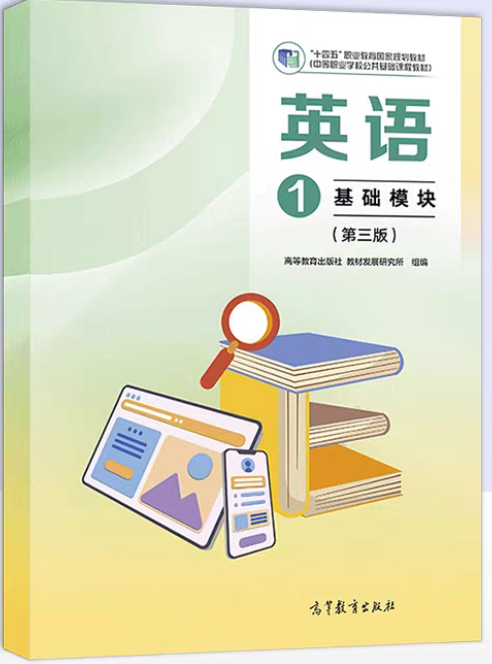
Unit 7 The Smartphone and the Internet(B卷·能力提升)《英语 基础模块1》(高教版第三版)单元过关卷(原卷版+解析版)
2026-07-27
|
2份
|
20页
|
41人阅读
|
0人下载
摘要:
**基本信息**
本试卷为《英语 基础模块1》Unit 7 B卷能力提升卷,紧扣教材核心考点,通过真实情境与梯度设计,提升学生语言运用及知识整合能力,适配单元复习。
**题型特征**
|题型|题量/分值|知识覆盖|命题特色|
|----|-----------|----------|----------|
|情景交际|10题/20分|日常对话(调查、手机选择等)|真实情境设计,提升语言运用能力(语言能力)|
|选词填空|10题/15分|网络使用研究报告词汇(survey, focus等)|语篇整合考查,强化词汇应用(学习能力)|
|阅读理解|20题/40分|移动支付、屏幕时间管理、数字技能|时代性素材,培养信息获取与思维分析(思维品质)|
|完形填空|10题/10分|数字安全海报制作语法与词汇|语篇语境中考查语法,提升语用能力(语言能力)|
|书面表达|1题/15分|手机用途与合理使用建议|主题写作,综合语言表达与问题解决(思维品质、文化意识)|
内容正文:
编写说明:本套试卷紧扣《英语 基础模块1》(高教版第三版)教材,以教材单元为基准精准覆盖核心考点。
每个单元设置AB卷,A卷为基础巩固卷,侧重基础考点训练,帮助学生扎实掌握知识要点;B卷为能力提升卷,注重知识整合与全面检测,引导学生构建知识网络。全书设计4份综合测试卷,模拟实战情境,聚焦解题能力突破,全面提升应试能力与知识应用水平。
《英语 基础模块1》(高教版第三版)《单元过关卷》
Unit 7 The Smartphone and the Internet
B卷·能力提升
考试时间:120分钟 满分:100分
班级_____姓名_____学号_____成绩_____
第一部分 情景交际(共10小题,每小题2分,共20分。)
阅读下列简短对话,从A、B、C、D四个选项中选出最佳选项,将对话补全。
1. — I am doing a survey about students' online habits. Could I ask you some questions?
— ________.
A. Sure. What would you like to know?
B. I need more storage
C. No, it is a phone case
D. The camera is excellent
2. — What feature matters most when you choose a smartphone?
— ________. I often have online classes on it.
A. The store is near my home
B. A clear screen and long battery life
C. I will order lunch
D. It rings at seven
3. — Your report says some students stay up late for games.
— ________. We should help them use phones wisely.
A. That is a real problem
B. Good morning
C. Here is your card
D. I am listening to music
4. — Would you like to join our mobile payment practice?
— ________, but I need to ask how to keep my information safe first.
A. No, I never learn
B. I'd love to
C. It is impossible
D. You are welcome
5. — I can't focus on my study because messages keep coming.
— ________.
A. The takeout is fresh
B. This is a large screen
C. I go shopping online
D. You can turn off notices during study time
6. — How long do you spend watching videos every day?
— ________.
A. In Room 206
B. With my parents
C. About forty minutes
D. By shared bike
7. — Please scan the payment code carefully before paying.
— ________.
A. OK, I will check the amount first
B. Good luck with your test
C. I am watching a film
D. No, the alarm is loud
8. — I failed to log in to the online classroom.
— ________. Let me check the network for you.
A. It sounds delicious
B. That's all right forever
C. Don't worry
D. I don't need storage
9. — What are you doing now?
— ________.
A. I often use apps on weekends
B. The camera was excellent
C. I am making a tip list for wise phone use
D. It costs 2,000 yuan
10. — Your class shared useful tips about smartphones.
— ________. We hope more students can build good habits.
A. Thank you
B. No way
C. Turn left
D. I dislike all surveys
第二部分 选词填空(共10小题,每小题1.5分,共15分。)
阅读下列短文,从各题所给的A、B、C、D四个选项中选出最佳选项,填入相应的空格处。
A Research Report on Wise Internet Use
A youth research team carried out a study about proper online behavior. Before launching the whole task, the organizer planned a 11_______ among young people of the same age group. They interviewed fifty participants and wrote down all kinds of daily online activities. Some people opened learning software to 12_______ knowledge points, while others watched short videos just for relaxation.
The collected data reflected most young people kept 13_______ online routines, yet a small number wasted plenty of spare time on the Internet. One participant shared that online games would make him 14_______ till midnight every day. Another said constant pop-up messages stopped him from being able to 15_______ his energy on daily tasks. All team members talked over these troubles 16_______ and worked out three practical tips together.
The first tip is to set a fixed time 17_______ for online entertainment. The second rule reminds people to protect eyesight and pause screens regularly. The third point warns everyone to guard payment passwords and personal private data, 18_______ personal safety online is extremely important.
The team printed all suggestions on a public notice board. Lots of young readers saw the tips and grew more 19_______ in adjusting their unhealthy online ways. All members hold the opinion that digital devices can 20_______ people’s life only if users manage screen time properly.
11. A. battery B. screen C. survey D. camera
12. A. forget B. break C. hide D. review
13. A. healthy B. empty C. noisy D. private
14. A. log in B. stay up C. tap on D. go over
15. A. ring B. unlock C. focus D. spare
16. A. sadly B. loudly C. suddenly D. carefully
17. A. network B. takeout C. range D. alarm
18. A. but B. or C. because D. unless
19. A. broken B. slow C. desired D. interested
20. A. stop B. help C. miss D. control
第三部分 阅读理解(共两节)
第一节(共15小题,每小题2分,共30分。)
阅读下列短文,从各题所给的A、B、C、D四个选项中选出最佳选项。
Text 1
Mobile Payment Practice Notice
To help students understand safe mobile payment, the Student Service Center will hold a practice activity this Friday. Date: April 10th, 2026. Time: 2:00 p.m.--4:20 p.m. Place: Room 318, Business Training Building. Students from business, tourism and computer classes may join.
Students will learn three steps: download a payment app, log in with a phone number, and scan a practice payment code. Teachers will not ask students to use real money. They will use practice cards and fake store codes. Each group will also discuss how to protect passwords and check the amount before paying.
Please bring your smartphone and student card. Do not share your password with anyone. The first 40 students can join. If you want to take part, fill in the online form before April 8th. For questions, call 0771-590-7821.
21. What is the activity about?
A. Safe mobile payment.
B. Online music.
C. Shared bikes.
D. Food delivery.
22. Where will the activity be held?
A. In the dining hall.
B. In Room 318, Business Training Building.
C. At a real store.
D. In the school library.
23. What will students use instead of real money?
A. Real bank cards.
B. Practice cards and fake store codes.
C. Their parents' money.
D. Public Wi-Fi only.
24. How many students can join at most?
A. 20.
B. 30.
C. 40.
D. 80.
25. What should students do before April 8th?
A. Buy a new phone.
B. Fill in the online form.
C. Share a password.
D. Call every teacher.
Text 2
The Interview That Changed My Screen Time
For a class survey, Liang Tao needed to interview a student about online activities. He chose his roommate Wen Jie, who was good at English but often looked tired. At first, Wen Jie smiled and said he only used his phone for study. However, when Liang Tao asked him to count every activity, the answer became different.
Wen Jie used a vocabulary app for twenty minutes, but he spent nearly two hours watching short videos and another hour playing games. He also chatted with friends after lights-out. Liang Tao did not laugh at him. He showed the record and asked, “Does this affect your study or daily life?” Wen Jie looked at the numbers and nodded. He said he had trouble focusing in morning lessons.
The two boys made a plan together. Wen Jie moved game apps away from the first screen and set an alarm for video time. He also promised to put the phone in his bag after 9:30 p.m. A week later, he could finish homework earlier and sleep better. The interview helped Liang Tao finish his report, but it helped Wen Jie more. He learned that knowing the problem clearly was the first step to changing it.
26. Why did Liang Tao interview Wen Jie?
A. To sell a phone.
B. To finish a class survey.
C. To order takeout.
D. To repair a screen.
27. What did Wen Jie spend nearly two hours doing?
A. Using a vocabulary app.
B. Sending emails.
C. Riding a shared bike.
D. Watching short videos.
28. What problem did Wen Jie have in morning lessons?
A. He could not find the classroom.
B. He had trouble focusing.
C. He forgot his phone number.
D. He disliked English words.
29. What did Wen Jie promise to do after 9:30 p.m.?
A. Play games with friends.
B. Watch longer videos.
C. Buy a new smartphone.
D. Put the phone in his bag.
30. What is the best title for the passage?
A. A Survey Interview and a Useful Change
B. A New Phone Store
C. The Fastest Network in School
D. How to Download Every App
Text 3
Digital Skills for Future Workers
In many modern jobs, digital skills are no longer special skills for computer workers only. A hotel clerk checks booking information on a system, a delivery worker follows an online map, and a shop assistant may help customers pay by scanning a code. For vocational school students, learning to use smartphones and the Internet wisely is part of preparing for real work.
Good digital skills begin with accuracy. When workers send emails, record customer information or check online orders, small mistakes may cause real trouble. They should read names, numbers and addresses carefully before tapping the final button. Good skills also include communication. If the network is slow or a payment fails, a worker should explain the problem politely instead of showing impatience.
Safety is another important part. Workers may use public devices, store apps or mobile payment tools. They must protect passwords, avoid unsafe links and never ask customers for unnecessary private information. Digital tools can make service faster and clearer, while careless use may hurt trust, money and personal information at the same time.
Students can practise these skills at school. They can send homework in the right format, do online research for projects and join surveys about healthy screen time. These small tasks look simple, but they train responsibility. A student who can use technology with purpose, care and respect will be better prepared for future service, business and technical positions.
31. What does the passage mainly discuss?
A. The price of smartphones.
B. A story about a family dinner.
C. Rules for playing games.
D. Digital skills for future workers.
32. Which job example is NOT mentioned in Paragraph 1?
A. A hotel clerk.
B. A delivery worker.
C. A shop assistant.
D. A music teacher.
33. What does the underlined word “accuracy” mean?
A. 速度
B. 准确性
C. 颜色
D. 价格
34. Why should workers avoid unsafe links?
A. To make phones slower.
B. To stop all online work.
C. To protect safety and information.
D. To change customers' names.
35. What can students practise at school according to the passage?
A. Asking customers for private information.
B. Using unsafe store apps.
C. Sending homework in the right format.
D. Ignoring online orders.
第二节(共5小题,每小题2分,共10分。)
阅读下列短文,从短文后的选项中选出最佳选项,并填入空白处。
Preparing Tips for a Phone Use Talk
Next week, our class will give a talk on using smartphones wisely. I am in charge of collecting examples. ____36____. Some students shared good habits, while others talked about problems they wanted to change.
On Wednesday, I sorted the notes into three parts. The first part was about study apps and online classes. ____37____. The second part was about entertainment, such as videos, music and games. I wrote down one clear warning: do not let fun time become all your free time.
The third part was about safety. One student told us that his grandmother almost clicked an unsafe link. ____38____. This example reminded us to protect private information and payment codes carefully.
Before the talk, our teacher checked our outline. ____39____. She also asked us to end with simple advice that every student could follow. Now our group is practising together. ____40____.
A. She said the structure was clear but needed one real example
B. I first interviewed ten classmates after school
C. We hope our talk can help classmates build better habits
D. We added it to the safety part of our talk
E. We decided to show how phones can help us review lessons
第四部分 完形填空(共10小题,每小题1分,共10分。)
阅读下列短文,在空格处填入适当的词或用括号里的词的正确形式填空。
Making a Digital Safety Poster
Our class is making a poster about digital safety this week. We ____41____ (collect) examples from classmates yesterday. Some examples were about payment codes, and others were about unsafe links. Our teacher asked ____42____ (we) to write short and clear tips.
Li Mei is good at drawing, so she ____43____ (design) the poster now. I am checking the English sentences because every word should ____44____ (use) correctly. One sentence says, “Do not share your password ____45____ strangers.” Another tells students ____46____ (check) the amount before mobile payment.
When the poster is finished, it ____47____ (put) on the classroom wall. We hope it can remind students ____48____ protect their information. If someone receives a strange message, he or she should read it ____49____ (careful) and ask a teacher for help. Digital tools make life convenient, but safety is ____50____ (important) than speed.
第五部分 书面表达(共15分。)
51. 假设你是李华,你们班将举办“How to Use Smartphones Wisely”主题班会。请根据以下要点,写一篇英文发言稿,谈谈智能手机的用途并提出合理使用建议。具体内容和要求如下:
1. 词数70—80个;
2. 文中不可出现真实人名和校名;
3. 开头、结尾已给出,不计入总词数;
4. 相关内容及词汇仅供参考,可酌情选用。
Good morning, everyone,
Today I would like to share my ideas about using smartphones wisely.
_____________________________________________________________________________________________________________________________________________________________________________________________________________________________________________________________________________________________________________________________________________________________________________________________________________________
That is all. Thank you for listening.
主要内容
参考信息
参考词汇及短语
手机用途
学习、沟通、生活服务等
online classes, study apps, send emails, mobile payment
可能问题
用时过长、影响学习或健康
stay up late, affect study, hurt eyes, lose focus
使用建议
控制时间、保护隐私、明确目的
set a time range, take breaks, protect privacy, use it wisely
原创精品资源学科网独家享有版权,侵权必究!
学科网(北京)股份有限公司
$
编写说明:本套试卷紧扣《英语 基础模块1》(高教版第三版)教材,以教材单元为基准精准覆盖核心考点。
每个单元设置AB卷,A卷为基础巩固卷,侧重基础考点训练,帮助学生扎实掌握知识要点;B卷为能力提升卷,注重知识整合与全面检测,引导学生构建知识网络。全书设计4份综合测试卷,模拟实战情境,聚焦解题能力突破,全面提升应试能力与知识应用水平。
《英语 基础模块1》(高教版第三版)《单元过关卷》
Unit 7 The Smartphone and the Internet
B卷·能力提升
考试时间:120分钟 满分:100分
班级_____姓名_____学号_____成绩_____
第一部分 情景交际(共10小题,每小题2分,共20分。)
阅读下列简短对话,从A、B、C、D四个选项中选出最佳选项,将对话补全。
1. — I am doing a survey about students' online habits. Could I ask you some questions?
— ________.
A. Sure. What would you like to know?
B. I need more storage
C. No, it is a phone case
D. The camera is excellent
【答案】A
【详解】对方礼貌请求进行调查采访,A项表示同意并询问问题内容,符合调查访谈场景。
2. — What feature matters most when you choose a smartphone?
— ________. I often have online classes on it.
A. The store is near my home
B. A clear screen and long battery life
C. I will order lunch
D. It rings at seven
【答案】B
【详解】问题询问手机功能,后句说明常用于网课,因此清晰屏幕和长续航最切题。
3. — Your report says some students stay up late for games.
— ________. We should help them use phones wisely.
A. That is a real problem
B. Good morning
C. Here is your card
D. I am listening to music
【答案】A
【详解】上句指出学生熬夜玩游戏,后句提出帮助,A项“That is a real problem”承接自然。
4. — Would you like to join our mobile payment practice?
— ________, but I need to ask how to keep my information safe first.
A. No, I never learn
B. I'd love to
C. It is impossible
D. You are welcome
【答案】B
【详解】Would you like to...?表示邀请,but后说明有安全疑问,表明愿意参加,B项正确。
5. — I can't focus on my study because messages keep coming.
— ________.
A. The takeout is fresh
B. This is a large screen
C. I go shopping online
D. You can turn off notices during study time
【答案】D
【详解】对方因消息干扰无法专注学习,应建议学习时关闭提醒,D项切合问题。
6. — How long do you spend watching videos every day?
— ________.
A. In Room 206
B. With my parents
C. About forty minutes
D. By shared bike
【答案】C
【详解】How long询问时长,About forty minutes回答时间长度。
7. — Please scan the payment code carefully before paying.
— ________.
A. OK, I will check the amount first
B. Good luck with your test
C. I am watching a film
D. No, the alarm is loud
【答案】A
【详解】上句提醒扫码支付要仔细,A项表示会先核对金额,符合安全支付场景。
8. — I failed to log in to the online classroom.
— ________. Let me check the network for you.
A. It sounds delicious
B. That's all right forever
C. Don't worry
D. I don't need storage
【答案】C
【详解】对方无法登录网课,后句提供帮助,应先安慰Don't worry。
9. — What are you doing now?
— ________.
A. I often use apps on weekends
B. The camera was excellent
C. I am making a tip list for wise phone use
D. It costs 2,000 yuan
【答案】C
【详解】What are you doing now?询问正在进行的动作,C项使用现在进行时回答。
10. — Your class shared useful tips about smartphones.
— ________. We hope more students can build good habits.
A. Thank you
B. No way
C. Turn left
D. I dislike all surveys
【答案】A
【详解】对方评价班级建议有用,应表示感谢并补充目的,Thank you符合礼貌交际。
第二部分 选词填空(共10小题,每小题1.5分,共15分。)
阅读下列短文,从各题所给的A、B、C、D四个选项中选出最佳选项,填入相应的空格处。
A Research Report on Wise Internet Use
A youth research team carried out a study about proper online behavior. Before launching the whole task, the organizer planned a 11_______ among young people of the same age group. They interviewed fifty participants and wrote down all kinds of daily online activities. Some people opened learning software to 12_______ knowledge points, while others watched short videos just for relaxation.
The collected data reflected most young people kept 13_______ online routines, yet a small number wasted plenty of spare time on the Internet. One participant shared that online games would make him 14_______ till midnight every day. Another said constant pop-up messages stopped him from being able to 15_______ his energy on daily tasks. All team members talked over these troubles 16_______ and worked out three practical tips together.
The first tip is to set a fixed time 17_______ for online entertainment. The second rule reminds people to protect eyesight and pause screens regularly. The third point warns everyone to guard payment passwords and personal private data, 18_______ personal safety online is extremely important.
The team printed all suggestions on a public notice board. Lots of young readers saw the tips and grew more 19_______ in adjusting their unhealthy online ways. All members hold the opinion that digital devices can 20_______ people’s life only if users manage screen time properly.
11. A. battery B. screen C. survey D. camera
12. A. forget B. break C. hide D. review
13. A. healthy B. empty C. noisy D. private
14. A. log in B. stay up C. tap on D. go over
15. A. ring B. unlock C. focus D. spare
16. A. sadly B. loudly C. suddenly D. carefully
17. A. network B. takeout C. range D. alarm
18. A. but B. or C. because D. unless
19. A. broken B. slow C. desired D. interested
20. A. stop B. help C. miss D. control
【答案】
11.C 12.D 13.A 14.B 15.C
16.D 17.C 18.C 19.D 20.B
【导语】
本文为说明叙事短文,以青年群体网络行为调研为主题。文章依次介绍调研开展、上网问题汇总、三条上网规范、调研成果与感悟。
【详解】
11. C 考查名词词义辨析。句意:正式开展任务前,组织者面向同龄青年开展一项调查。后文 interviewed fifty participants(采访五十名受访者)对应 survey(调查);battery 电池、screen 屏幕、camera 相机均和走访调研无关。
12. D 考查动词词义辨析。句意:部分人使用学习软件复习知识点。review lessons/knowledge points 为学习场景固定搭配,表示复习;forget 忘记、break 打破、hide 隐藏语义不符。
13. A 考查形容词词义辨析。句意:数据显示大部分青年拥有健康的上网习惯,但是少数人耗费大量时间上网。but 形成转折,healthy(健康的)与后文沉迷网络形成对比;empty 空的、noisy 吵闹的、private 私人的无法修饰上网作息。
14. B 考查动词固定短语辨析。句意:一名受访者表示网络游戏常常让他熬夜到深夜。stay up late 是固定搭配,意为熬夜;log in 登录、tap on 点击、go over 复习均不符合通宵玩游戏的语境。
15. C 考查动词固定搭配辨析。句意:不停弹出的消息让他无法专注完成日常事务。focus on sth. 表示集中注意力于某事;ring 响铃、unlock 解锁、spare 抽出,无法和 on 搭配表达专注。
16. D 考查副词词义辨析。句意:全体队员认真讨论这些网络问题,并共同制定三条实用建议。carefully(认真地)修饰团队研讨的动作;sadly 难过地、loudly 大声地、suddenly 突然地不符合理性研讨的氛围。
17. C 考查名词词义辨析。句意:第一条建议是为线上娱乐划定固定时长范围。time range 表示时间区间、时长范围;network 网络、takeout 外卖、alarm 闹钟,不能用来限定上网时长。
18. C 考查连词逻辑辨析。句意:第三点提醒大家保管支付密码与个人隐私,因为线上个人安全至关重要。前后分句为因果逻辑,because 引导原因状语;but 转折、or 选择、unless 除非,逻辑不匹配。
19. D 考查形容词固定搭配辨析。句意:许多青年看到提示,对调整不良上网习惯产生了兴趣。become interested in 为固定搭配,意为对…… 产生兴趣;broken 破损的、slow 缓慢的、desired 渴望的,无法搭配 in changing habits。
20. B 考查动词词义辨析。句意:所有队员都认为,只有使用者合理管控屏幕时间,数码设备才能为人们提供帮助。help 表示助力、带来便利;stop 阻止、miss 错过、control 控制,与全文理性使用网络的正向主旨相悖。
第三部分 阅读理解(共两节)
第一节(共15小题,每小题2分,共30分。)
阅读下列短文,从各题所给的A、B、C、D四个选项中选出最佳选项。
Text 1
Mobile Payment Practice Notice
To help students understand safe mobile payment, the Student Service Center will hold a practice activity this Friday. Date: April 10th, 2026. Time: 2:00 p.m.--4:20 p.m. Place: Room 318, Business Training Building. Students from business, tourism and computer classes may join.
Students will learn three steps: download a payment app, log in with a phone number, and scan a practice payment code. Teachers will not ask students to use real money. They will use practice cards and fake store codes. Each group will also discuss how to protect passwords and check the amount before paying.
Please bring your smartphone and student card. Do not share your password with anyone. The first 40 students can join. If you want to take part, fill in the online form before April 8th. For questions, call 0771-590-7821.
21. What is the activity about?
A. Safe mobile payment.
B. Online music.
C. Shared bikes.
D. Food delivery.
22. Where will the activity be held?
A. In the dining hall.
B. In Room 318, Business Training Building.
C. At a real store.
D. In the school library.
23. What will students use instead of real money?
A. Real bank cards.
B. Practice cards and fake store codes.
C. Their parents' money.
D. Public Wi-Fi only.
24. How many students can join at most?
A. 20.
B. 30.
C. 40.
D. 80.
25. What should students do before April 8th?
A. Buy a new phone.
B. Fill in the online form.
C. Share a password.
D. Call every teacher.
【答案】21. A 22. B 23. B 24. C 25. B
【导语】本文是一则移动支付实践活动通知,介绍活动目的、时间地点、参与对象、流程和安全提醒,考查学生信息定位能力。
【详解】21.细节理解题。根据“To help students understand safe mobile payment”可知,活动关于安全移动支付。
22.细节理解题。根据“Place: Room 318, Business Training Building.”可知地点为商务实训楼318室。
23.细节理解题。根据“They will use practice cards and fake store codes.”可知使用练习卡和模拟商店码。
24.细节理解题。根据“The first 40 students can join.”可知最多40名学生参加。
25.细节理解题。根据“fill in the online form before April 8th”可知应在4月8日前填写线上表格。
Text 2
The Interview That Changed My Screen Time
For a class survey, Liang Tao needed to interview a student about online activities. He chose his roommate Wen Jie, who was good at English but often looked tired. At first, Wen Jie smiled and said he only used his phone for study. However, when Liang Tao asked him to count every activity, the answer became different.
Wen Jie used a vocabulary app for twenty minutes, but he spent nearly two hours watching short videos and another hour playing games. He also chatted with friends after lights-out. Liang Tao did not laugh at him. He showed the record and asked, “Does this affect your study or daily life?” Wen Jie looked at the numbers and nodded. He said he had trouble focusing in morning lessons.
The two boys made a plan together. Wen Jie moved game apps away from the first screen and set an alarm for video time. He also promised to put the phone in his bag after 9:30 p.m. A week later, he could finish homework earlier and sleep better. The interview helped Liang Tao finish his report, but it helped Wen Jie more. He learned that knowing the problem clearly was the first step to changing it.
26. Why did Liang Tao interview Wen Jie?
A. To sell a phone.
B. To finish a class survey.
C. To order takeout.
D. To repair a screen.
27. What did Wen Jie spend nearly two hours doing?
A. Using a vocabulary app.
B. Sending emails.
C. Riding a shared bike.
D. Watching short videos.
28. What problem did Wen Jie have in morning lessons?
A. He could not find the classroom.
B. He had trouble focusing.
C. He forgot his phone number.
D. He disliked English words.
29. What did Wen Jie promise to do after 9:30 p.m.?
A. Play games with friends.
B. Watch longer videos.
C. Buy a new smartphone.
D. Put the phone in his bag.
30. What is the best title for the passage?
A. A Survey Interview and a Useful Change
B. A New Phone Store
C. The Fastest Network in School
D. How to Download Every App
【答案】26. B 27. D 28. B 29. D 30. A
【导语】本文是一篇记叙文,讲述梁涛通过调查采访帮助室友文杰看清手机使用时间问题,并共同制定改进计划的经历。
【详解】26.细节理解题。根据“For a class survey”可知,梁涛采访是为了完成班级调查。
27.细节理解题。根据“spent nearly two hours watching short videos”可知,他花近两小时看短视频。
28.细节理解题。根据“had trouble focusing in morning lessons”可知,他早课难以集中注意力。
29.细节理解题。根据“put the phone in his bag after 9:30 p.m.”可知,他承诺9:30后把手机放进书包。
30.最佳标题题。文章围绕一次调查采访促成有用改变展开,B项概括准确。
Text 3
Digital Skills for Future Workers
In many modern jobs, digital skills are no longer special skills for computer workers only. A hotel clerk checks booking information on a system, a delivery worker follows an online map, and a shop assistant may help customers pay by scanning a code. For vocational school students, learning to use smartphones and the Internet wisely is part of preparing for real work.
Good digital skills begin with accuracy. When workers send emails, record customer information or check online orders, small mistakes may cause real trouble. They should read names, numbers and addresses carefully before tapping the final button. Good skills also include communication. If the network is slow or a payment fails, a worker should explain the problem politely instead of showing impatience.
Safety is another important part. Workers may use public devices, store apps or mobile payment tools. They must protect passwords, avoid unsafe links and never ask customers for unnecessary private information. Digital tools can make service faster and clearer, while careless use may hurt trust, money and personal information at the same time.
Students can practise these skills at school. They can send homework in the right format, do online research for projects and join surveys about healthy screen time. These small tasks look simple, but they train responsibility. A student who can use technology with purpose, care and respect will be better prepared for future service, business and technical positions.
31. What does the passage mainly discuss?
A. The price of smartphones.
B. A story about a family dinner.
C. Rules for playing games.
D. Digital skills for future workers.
32. Which job example is NOT mentioned in Paragraph 1?
A. A hotel clerk.
B. A delivery worker.
C. A shop assistant.
D. A music teacher.
33. What does the underlined word “accuracy” mean?
A. 速度
B. 准确性
C. 颜色
D. 价格
34. Why should workers avoid unsafe links?
A. To make phones slower.
B. To stop all online work.
C. To protect safety and information.
D. To change customers' names.
35. What can students practise at school according to the passage?
A. Asking customers for private information.
B. Using unsafe store apps.
C. Sending homework in the right format.
D. Ignoring online orders.
【答案】31. D 32. D 33. B 34. C 35. C
【导语】本文是一篇说明文,介绍未来职场所需的数字技能,包括准确操作、礼貌沟通、信息安全和校园实践路径,重点考查细节理解、词义猜测和主旨概括能力。
【详解】31.主旨大意题。全文围绕未来工作者需要的数字技能展开,A项最能概括。
32.细节理解题。第一段提到hotel clerk、delivery worker和shop assistant,没有提到music teacher。
33.词义猜测题。后文强调核对姓名、数字、地址,说明accuracy指“准确性”。
34.细节理解题。根据“protect passwords, avoid unsafe links”以及保护信任、金钱和个人信息可知,应避免不安全链接。
35.细节理解题。根据“They can send homework in the right format”可知,学生可以练习按正确格式提交作业。
第二节(共5小题,每小题2分,共10分。)
阅读下列短文,从短文后的选项中选出最佳选项,并填入空白处。
Preparing Tips for a Phone Use Talk
Next week, our class will give a talk on using smartphones wisely. I am in charge of collecting examples. ____36____. Some students shared good habits, while others talked about problems they wanted to change.
On Wednesday, I sorted the notes into three parts. The first part was about study apps and online classes. ____37____. The second part was about entertainment, such as videos, music and games. I wrote down one clear warning: do not let fun time become all your free time.
The third part was about safety. One student told us that his grandmother almost clicked an unsafe link. ____38____. This example reminded us to protect private information and payment codes carefully.
Before the talk, our teacher checked our outline. ____39____. She also asked us to end with simple advice that every student could follow. Now our group is practising together. ____40____.
A. She said the structure was clear but needed one real example
B. I first interviewed ten classmates after school
C. We hope our talk can help classmates build better habits
D. We added it to the safety part of our talk
E. We decided to show how phones can help us review lessons
【答案】36. B 37. E 38. D 39. A 40. C
【导语】本文是一篇记叙文,讲述学生准备“明智使用智能手机”主题发言的过程,考查篇章结构、指代衔接和上下文逻辑。
【详解】36.空前说负责收集例子,B项“先采访十名同学”说明收集方式,与后句学生分享内容衔接。
37.空前谈学习软件和网课,E项展示手机帮助复习功课,主题一致。
38.空前举祖母险点不安全链接的例子,A项把该例加入安全部分,指代明确。
39.空前老师检查提纲,D项说明老师反馈结构清晰但需实例,承接自然。
40.空前小组正在练习,C项说明希望发言帮助同学养成好习惯,适合作结。
第四部分 完形填空(共10小题,每小题1分,共10分。)
阅读下列短文,在空格处填入适当的词或用括号里的词的正确形式填空。
Making a Digital Safety Poster
Our class is making a poster about digital safety this week. We ____41____ (collect) examples from classmates yesterday. Some examples were about payment codes, and others were about unsafe links. Our teacher asked ____42____ (we) to write short and clear tips.
Li Mei is good at drawing, so she ____43____ (design) the poster now. I am checking the English sentences because every word should ____44____ (use) correctly. One sentence says, “Do not share your password ____45____ strangers.” Another tells students ____46____ (check) the amount before mobile payment.
When the poster is finished, it ____47____ (put) on the classroom wall. We hope it can remind students ____48____ protect their information. If someone receives a strange message, he or she should read it ____49____ (careful) and ask a teacher for help. Digital tools make life convenient, but safety is ____50____ (important) than speed.
【答案】41. collected 42. us 43. is designing 44. be used 45. with 46. to check 47. will be put 48. to 49. carefully 50. more important
【导语】本文是一篇记叙文,讲述班级制作数字安全海报的过程,考查一般过去时、代词、现在进行时、被动语态、介词、不定式、副词和比较级等语法点。
【详解】41.考查一般过去时。yesterday提示过去时间,collect用过去式collected。
42.考查代词。asked后接人称代词宾格,we的宾格为us。
43.考查现在进行时。now提示正在设计,主语she为第三人称单数,填is designing。
44.考查被动语态。word与use之间是被动关系,情态动词should后用be used。
45.考查介词。share sth. with sb.表示与某人分享某物,此处是否定提醒。
46.考查动词不定式。tell sb. to do sth.为固定结构。
47.考查一般将来时的被动语态。poster与put之间为被动关系,When引导的时间状语从句表示将来语境,主句用will be put。
48.考查动词不定式。remind sb. to do sth.表示提醒某人做某事。
49.考查副词。修饰动词read应用副词carefully。
50.考查形容词比较级。than提示比较级,important为多音节形容词,填more important。
第五部分 书面表达(共15分。)
51. 假设你是李华,你们班将举办“How to Use Smartphones Wisely”主题班会。请根据以下要点,写一篇英文发言稿,谈谈智能手机的用途并提出合理使用建议。具体内容和要求如下:
1. 词数70—80个;
2. 文中不可出现真实人名和校名;
3. 开头、结尾已给出,不计入总词数;
4. 相关内容及词汇仅供参考,可酌情选用。
Good morning, everyone,
Today I would like to share my ideas about using smartphones wisely.
_____________________________________________________________________________________________________________________________________________________________________________________________________________________________________________________________________________________________________________________________________________________________________________________________________________________
That is all. Thank you for listening.
主要内容
参考信息
参考词汇及短语
手机用途
学习、沟通、生活服务等
online classes, study apps, send emails, mobile payment
可能问题
用时过长、影响学习或健康
stay up late, affect study, hurt eyes, lose focus
使用建议
控制时间、保护隐私、明确目的
set a time range, take breaks, protect privacy, use it wisely
【答案】例文:
Good morning, everyone,
Today I would like to share my ideas about using smartphones wisely.
Smartphones are useful in our daily life. We can use them to have online classes, send emails and pay for things. They also help us keep in touch with family and friends. However, we should not spend too much time on them. If we stay up late for videos or games, our study and health may be affected. In my opinion, we should set a time range, take breaks from screens and protect our private information. Let us use smartphones as helpful tools.
That is all. Thank you for listening.
【解析】
【导语】本篇书面表达属于发言稿,要求围绕“如何明智使用智能手机”说明手机用途、潜在问题并提出建议。
【词汇积累】useful有用的 -> helpful;daily life日常生活 -> everyday life;protect保护 -> keep safe;in my opinion在我看来 -> I think
【句式拓展】原句:We can use them to have online classes. 拓展句:We can use them to have online classes when we need to study at home.
【点睛】If we stay up late for videos or games, our study and health may be affected. (运用了if引导条件状语从句和被动语态);Let us use smartphones as helpful tools. (运用了祈使句提出倡议)
原创精品资源学科网独家享有版权,侵权必究!
学科网(北京)股份有限公司
$
资源预览图

1

2

3
由于学科网是一个信息分享及获取的平台,不确保部分用户上传资料的 来源及知识产权归属。如您发现相关资料侵犯您的合法权益,请联系学科网,我们核实后将及时进行处理。