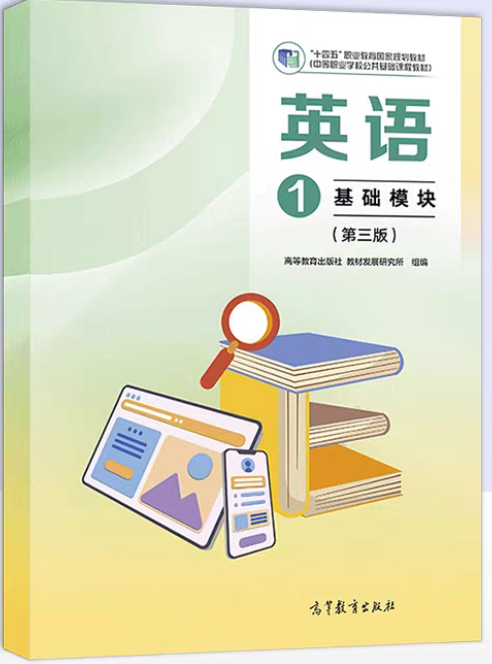
Unit 7 The Smartphone and the Internet(A卷·基础巩固)《英语 基础模块1》(高教版第三版)单元过关卷(原卷版+解析版)
2026-07-27
|
2份
|
20页
|
39人阅读
|
0人下载
摘要:
**基本信息**
紧扣《英语 基础模块1》Unit 7“智能手机与互联网”主题,A卷聚焦基础巩固,通过真实情境训练核心考点,适配单元复习,助力学生扎实掌握知识要点。
**题型特征**
|题型|题量/分值|知识覆盖|命题特色|
|----|-----------|----------|----------|
|情景交际|10题/20分|日常交际用语|创设在线学习、手机问题等真实对话情境,提升语言表达能力|
|选词填空|10题/15分|单元核心词汇(如smartphone, online, focus)|以“校园智能日”短文整合词汇,强化语言运用能力|
|阅读理解|20题/40分|信息获取、推理判断|选用智能手机帮助角、合理用机案例等素材,引导分析问题,培养思维品质|
|完形填空|10题/10分|语法(时态、代词)与词汇|结合学习APP场景考查语言知识,提升语言能力|
|书面表达|1题/15分|应用文写作|邮件介绍手机日常用途及建议,任务真实,融合语言表达与学习能力培养|
内容正文:
编写说明:本套试卷紧扣《英语 基础模块1》(高教版第三版)教材,以教材单元为基准精准覆盖核心考点。
每个单元设置AB卷,A卷为基础巩固卷,侧重基础考点训练,帮助学生扎实掌握知识要点;B卷为能力提升卷,注重知识整合与全面检测,引导学生构建知识网络。全书设计4份综合测试卷,模拟实战情境,聚焦解题能力突破,全面提升应试能力与知识应用水平。
《英语 基础模块1》(高教版第三版)《单元过关卷》
Unit 7 The Smartphone and the Internet
A卷·基础巩固
考试时间:120分钟 满分:100分
班级_____姓名_____学号_____成绩_____
第一部分 情景交际(共10小题,每小题2分,共20分。)
阅读下列简短对话,从A、B、C、D四个选项中选出最佳选项,将对话补全。
1. — My phone is slow when I have online classes.
— ________.
A. You should order takeout now
B. It is a nice song
C. You may try a phone with a faster network
D. I don't like surveys
【答案】C
【详解】上句说明上网课时手机运行慢,答语应围绕手机性能和网络提出建议,C项符合语境。
2. — Could you spare a few minutes for my survey?
— ________.
A. Sure, I'd be happy to help
B. The screen is large
C. It is too expensive
D. I am watching videos
【答案】A
【详解】Could you spare...?是礼貌请求,对方愿意配合调查时可回答Sure, I'd be happy to help。
3. — What price range are you considering?
— ________.
A. It rings loudly
B. I use it to read
C. I am doing homework
D. About 2,000 yuan
【答案】D
【详解】price range询问价格范围,About 2,000 yuan直接回答价位。
4. — What is wrong with your old smartphone?
— ________.
A. I like Guilin rice noodles
B. It is slow and the storage is small
C. You are welcome
D. Good luck
【答案】B
【详解】问题询问旧手机的问题,B项说明运行慢、存储小,切合语境。
5. — How often do you use a study app?
— ________.
A. Almost every day
B. In the playground
C. With my uncle
D. It is blue
【答案】A
【详解】How often询问频率,Almost every day表示“几乎每天”,符合问答逻辑。
6. — Thank you for answering my questions about online activities.
— ________.
A. No smoking
B. I am late
C. You're welcome
D. Turn left
【答案】C
【详解】对感谢的常用回应是You're welcome,其余选项功能不符。
7. — Please don't play online games for too long.
— ________.
A. The phone is ringing
B. I need a new camera
C. It is a payment code
D. OK. I will use my time wisely
【答案】D
【详解】上句提出劝告,答语应表示接受并承诺合理使用时间,D项符合语境。
8. — The phone is ringing. Can you answer it for me?
— ________.
A. Never mind
B. Sure. I'll get it
C. It is a survey
D. I can't focus on music
【答案】B
【详解】对方请求帮忙接电话,Sure. I'll get it表示愿意帮忙并马上行动。
9. — Let's go over the online lesson after lunch.
— ________.
A. Good idea
B. No, it is fresh
C. I don't know her name
D. This is my phone
【答案】A
【详解】Let's...提出建议,Good idea表示赞同,且符合一起复习网课的语境。
10. — Which smartphone feature is important to you?
— ________.
A. I study at home
B. At 8:50 a.m.
C. Long battery life matters most
D. I am chatting with friends
【答案】C
【详解】问题询问手机功能需求,long battery life属于手机特性,回答切题。
第二部分 选词填空(共10小题,每小题1.5分,共15分。)
阅读下列短文,从各题所给的A、B、C、D四个选项中选出最佳选项,填入相应的空格处。
A Smart Day at School
A smartphone can help students learn and live better when they use it in the right way. This morning, my ____11____ rang at 7:00 and I got up on time. After breakfast, I used it to join an ____12____ class. The teacher reminded us to ____13____ on the lesson and not to chat with friends.
At noon, I helped my teacher order ____14____ for two volunteers who were busy in the training room. The food was still ____15____ when it arrived. In the afternoon, I used a study app to ____16____ the new words and send my homework by email. My friend Li Hua checked his answers ____17____ before sending them.
After school, we talked about how to use phones ____18____. We agreed not to ____19____ late for games. A good phone and a fast ____20____ are useful, but good habits are more important.
11. A. bike B. desk C. camera D. smartphone
12. A. old B. online C. heavy D. quiet
13. A. focus B. knock C. sleep D. laugh
14. A. lessons B. emails C. takeout D. screens
15. A. slow B. dark C. busy D. fresh
16. A. go over B. turn off C. look after D. give up
17. A. loudly B. carefully C. sadly D. angrily
18. A. early B. wisely C. badly D. alone
19. A. log in B. tap on C. focus on D. stay up
20. A. alarm B. network C. takeout D. survey
【答案】11. D 12. B 13. A 14. C 15. D 16. A 17. B 18. B 19. D 20. B
【导语】本文是一篇记叙文,讲述一名学生在一天中合理使用智能手机进行上课、订餐、复习和提交作业,并认识到良好使用习惯的重要性。
【详解】11. D 考查名词词义辨析。下文多次提到手机用途,且rang at 7:00说明是手机闹铃响起,smartphone符合语境。
12. B 考查形容词词义辨析。join an online class表示参加线上课程,online与class搭配自然。
13. A 考查动词词义辨析。老师提醒学生专注课堂,focus on意为“专注于”,符合lesson语境。
14. C 考查名词词义辨析。order takeout表示点外卖,后句food arrived提供明确线索。
15. D 考查形容词词义辨析。食物送达时仍然新鲜,fresh符合食品状态描述。
16. A 考查动词短语辨析。go over the new words表示复习新单词,与study app及send homework相呼应。
17. B 考查副词词义辨析。发送答案前应仔细检查,carefully修饰checked,语义恰当。
18. B 考查副词词义辨析。全文强调合理使用手机,use phones wisely表示明智地使用手机。
19. D 考查动词短语辨析。stay up late for games意为熬夜玩游戏,是不良用机习惯。
20. B 考查名词词义辨析。fast network表示快速网络,与手机使用场景搭配自然。
第三部分 阅读理解(共两节)
第一节(共15小题,每小题2分,共30分。)
阅读下列短文,从各题所给的A、B、C、D四个选项中选出最佳选项。
Text 1
Smartphone Help Corner
Time: Friday, March 13th, 2026, 3:30 p.m.--5:00 p.m. Place: Room 206, Training Building. Who can join: Grade One students who want to use smartphones better for study.
Activities: Students can learn how to set an alarm, log in to a study app, send emails and protect their eyes. Two information technology teachers will show simple steps on the screen. Student helpers will answer questions about storage, network speed and battery life.
Notes: Bring your smartphone and student card. Do not play games during the activity. If your phone has a problem, write it on a card before March 11th. For more information, call 0771-836-2098 during school hours.
21. Where will the activity be held?
A. In the library hall.
B. In Room 206, Training Building.
C. At the school gate.
D. In a shopping center.
22. What can students learn in the activity?
A. How to cook dinner.
B. How to repair bikes.
C. How to send emails.
D. How to draw a map.
23. What should students bring?
A. A smartphone and student card.
B. A food box and umbrella.
C. A camera and a ticket.
D. A book and a bike.
24. When should students write their phone problem on a card?
A. Before March 1st.
B. Before March 10th.
C. Before March 13th.
D. Before March 11th.
25. Which of the following is TRUE?
A. Students can play games during the activity.
B. Only parents can join the activity.
C. Students may ask about network speed.
D. The activity starts at 8:00 a.m.
【答案】21. B 22. C 23. A 24. D 25. C
【导语】本文是一则校园活动通知,介绍智能手机使用帮助角的时间、地点、参与对象、活动内容和注意事项,主要考查学生定位实用信息的能力。
【详解】21.细节理解题。根据“Place: Room 206, Training Building.”可知,活动地点是实训楼206室。
22.细节理解题。根据“learn how to set an alarm, log in to a study app, send emails...”可知,学生可以学习发送电子邮件。
23.细节理解题。根据“Bring your smartphone and student card.”可知,应带智能手机和学生卡。
24.细节理解题。根据“write it on a card before March 11th”可知,应在3月11日前写下手机问题。
25.细节理解题。根据“answer questions about storage, network speed and battery life”可知,学生可以咨询网络速度问题。
Text 2
A Better Way to Use the Phone
Chen Min used to check her phone as soon as she got home from school. She watched short videos, chatted with friends and sometimes played online games. At first, she thought these activities helped her relax. Later, she found that she could not finish homework on time. Her eyes often felt tired, and she was sleepy in morning classes.
One Friday, her class did a survey about online activities. Chen Min wrote down that she spent three hours on her phone every evening. When she saw the number, she felt surprised. Her friend told her, “A phone is useful, but it should not control our life.” Their teacher asked everyone to make a simple plan for the weekend. Chen Min decided to use her phone only when necessary.
On Saturday morning, she used an app to review English words for twenty minutes. Then she put the phone on the desk and helped her mother clean the room. In the afternoon, she rode a shared bike to the park and took a walk. At night, she sent homework by email and went to bed early. Chen Min still liked her phone, but she learned to use it as a tool. She felt more focused and energetic on Monday.
26. What problem did Chen Min have later?
A. She lost her smartphone.
B. She could not order lunch.
C. She could not finish homework on time.
D. She forgot her family name.
27. How long did Chen Min spend on her phone every evening before the plan?
A. Three hours.
B. Twenty minutes.
C. One hour.
D. Five minutes.
28. What does the underlined word “control” mean?
A. 帮助
B. 提醒
C. 解锁
D. 控制
29. What did Chen Min do on Saturday afternoon?
A. She played games at home.
B. She rode a shared bike to the park.
C. She ordered takeout for friends.
D. She watched videos for three hours.
30. What can we learn from the passage?
A. Phones should be thrown away.
B. Online games are always good.
C. A wise plan can help students use phones better.
D. Students should never send emails.
【答案】26. C 27. A 28. D 29. B 30. C
【导语】本文是一篇记叙文,讲述陈敏通过班级调查意识到自己用手机时间过长,随后制定计划并学会把手机当作学习和生活工具的经历。
【详解】26.细节理解题。根据“she could not finish homework on time”可知,她后来不能按时完成作业。
27.细节理解题。根据“she spent three hours on her phone every evening”可知,她每天晚上用手机三小时。
28.词义猜测题。朋友说手机有用,但不应control our life,结合她沉迷手机影响学习可知control意为“控制”。
29.细节理解题。根据“In the afternoon, she rode a shared bike to the park”可知,她下午骑共享单车去公园。
30.主旨大意题。文章强调制定合理计划后,陈敏能更好地利用手机,C项概括准确。
Text 3
Using Smartphones Wisely
Smartphones and the Internet are now part of many students’ daily life. They help students take online classes, read news, look up words and keep in touch with family. In some vocational schools, students also use apps to check training schedules or send homework to teachers. These tools make learning more flexible, but they also require self-control.
The first rule is to have a clear purpose. Before unlocking the phone, students can ask themselves, “Am I studying, communicating or only killing time?” This question is simple, but it helps them choose the right activity. The second rule is to protect health. Looking at a screen for too long may hurt the eyes and reduce sleep time. Students should take breaks, keep the screen at a proper distance and avoid staying up late.
The third rule is to respect safety and privacy. When students use mobile payment, public Wi-Fi or social apps, they should not share passwords or private information with strangers. They should also be careful with online messages that ask for money or personal details. A smartphone can open a large world, while wise users know when to log in, when to put it away and how to keep their study, health and information safe.
31. What is the first rule mentioned in the passage?
A. Having a clear purpose.
B. Buying the newest phone.
C. Playing games every day.
D. Sharing all passwords.
32. Why should students take breaks from screens?
A. Because screens are always expensive.
B. Because looking at a screen too long may hurt the eyes.
C. Because teachers dislike all apps.
D. Because phones cannot send homework.
33. What does the underlined word “privacy” mean?
A. 价格
B. 电量
C. 隐私
D. 课程
34. Which action is safe according to the passage?
A. Sharing passwords with strangers.
B. Using public Wi-Fi for all payments.
C. Staying up late to watch videos.
D. Being careful with messages asking for money.
35. What is the main idea of the passage?
A. How to choose a phone color.
B. Why students should stop learning online.
C. Ways to use smartphones wisely and safely.
D. The history of mobile payment.
【答案】31. A 32. B 33. C 34. D 35. C
【导语】本文是一篇说明文,介绍学生合理使用智能手机的三条原则:明确目的、保护健康、重视安全和隐私,重点考查细节定位、词义猜测和主旨概括能力。
【详解】31.细节理解题。根据“The first rule is to have a clear purpose.”可知,第一条规则是要有明确目的。
32.细节理解题。根据“Looking at a screen for too long may hurt the eyes”可知,长时间看屏幕可能伤眼。
33.词义猜测题。下文提到不要分享密码和私人信息,由此可知privacy指“隐私”。
34.细节理解题。根据“be careful with online messages that ask for money or personal details”可知,应谨慎对待索要金钱的信息。
35.主旨大意题。全文围绕如何明智、安全地使用智能手机展开,C项最准确。
第二节(共5小题,每小题2分,共10分。)
阅读下列短文,从短文后的选项中选出最佳选项,并填入空白处。
Joining an Online Activity Survey
Our school wanted to learn about students’ online habits. Last Tuesday, our class took part in a small survey. ____36____. She told us that honest answers could help the school give better advice.
The survey had three parts. The first part was about study. We needed to write how often we used study apps or online classes. ____37____. I found that I used my phone to review English words almost every day.
The second part was about having fun. Some students watched videos for a long time. Some students played games late at night. ____38____. We agreed that fun activities were fine, but too much time online could affect our health.
After the survey, our teacher asked us to discuss better habits. ____39____. We also promised not to use phones during meals or before sleeping. I learned that a survey is not just a form. ____40____.
A. We also talked about reading news and listening to music
B. It can help us understand our habits and make changes
C. Each group wrote two tips for using phones wisely
D. The second part made us think about time control
E. Our monitor gave each student a question sheet
【答案】36. E 37. A 38. D 39. C 40. B
【导语】本文是一篇记叙文,讲述班级参加学生网络使用情况调查并讨论改进建议的过程,主要考查语篇衔接、关键词复现和上下文逻辑判断能力。
【详解】36.空前说参加调查,空后提到honest answers,E项“班长给每位学生一张问卷”承接自然。
37.空前讨论学习类上网活动,A项补充阅读新闻和听音乐,符合调查内容扩展。
38.空前列举娱乐活动时间过长,空后总结过度上网影响健康,D项“第二部分让我们思考时间控制”衔接恰当。
39.空前说讨论更好习惯,C项“小组写两条明智用手机建议”承接讨论任务。
40.空前说调查不只是一张表,B项说明调查能帮助了解习惯并改变,完成总结。
第四部分 完形填空(共10小题,每小题1分,共10分。)
阅读下列短文,在空格处填入适当的词或用括号里的词的正确形式填空。
A Useful Study App
Li Jun is using a study app this term. Every evening, he ____41____ (open) it after dinner. The app reminds ____42____ (he) to review ten English words. It also helps him practise listening ____43____ speaking.
Yesterday, Li Jun had an online class. His phone ____44____ (ring) at 7:50, and he logged in to the classroom on time. During the class, he was careful ____45____ (answer) questions. He did not chat with friends because he wanted ____46____ (focus) on the lesson.
Now Li Jun and his classmates are making a list of good phone habits. They write the tips ____47____ (slow) and check each sentence. One important rule is ____48____ take breaks from screens. Another rule is not to stay up late. These tips ____49____ (share) on the class board tomorrow. Li Jun believes a phone can make study ____50____ (easy) if students use it wisely.
【答案】41. opens 42. him 43. and 44. rang 45. to answer 46. to focus 47. slowly 48. to 49. will be shared 50. easier
【导语】本文是一篇记叙文,讲述李军使用学习软件复习英语、参加网课并与同学总结良好手机使用习惯的经历,考查时态、代词、连词、非谓语、副词和被动语态等基础语法。
【详解】41.考查动词时态。Every evening表示经常性动作,主语he为第三人称单数,open用opens。
42.考查代词。reminds后接人称代词宾格,he的宾格为him。
43.考查连词。listening与speaking为并列训练内容,用and连接。
44.考查一般过去时。Yesterday提示过去时间,ring的过去式为rang。
45.考查动词不定式。be careful to do sth.表示“小心/认真做某事”,填to answer。
46.考查动词不定式。want to do sth.为固定搭配,填to focus。
47.考查副词。修饰动词write应用副词,slow变为slowly。
48.考查不定式符号。rule后用不定式作表语,表示规则内容,填to。
49.考查一般将来时的被动语态。tips与share之间为被动关系,tomorrow提示将来,故填will be shared。
50.考查形容词比较级。make study easier表示“使学习更容易”,与使用前后效果形成比较。
第五部分 书面表达(共15分。)
51. 假设你是李华,你的英国朋友Tom想了解你如何使用智能手机。请根据以下要点,给他写一封电子邮件,介绍你日常使用智能手机的情况并给出一条合理使用建议。具体内容和要求如下:
1. 词数70—80个;
2. 文中不可出现真实人名和校名;
3. 开头、结尾已给出,不计入总词数;
4. 相关内容及词汇仅供参考,可酌情选用。
Dear Tom,
I am glad to tell you how I use my smartphone every day.
_____________________________________________________________________________________________________________________________________________________________________________________________________________________________________________________________________________________________________________________________________________________________________________________________________________________
What about you? I am looking forward to your reply.
Yours,
Li Hua
主要内容
参考信息
参考词汇及短语
日常用途
说明你用手机做的1—2件事
have online classes, send emails, go over lessons, listen to music
使用时间或场景
说明何时何地使用
after dinner, at home, during study time, on weekends
合理建议
给出一条明智使用手机的建议
use it wisely, take breaks, focus on study, do not stay up late
【答案】例文:
Dear Tom,
I am glad to tell you how I use my smartphone every day.
I often use my smartphone after dinner. I use it to go over English words and send homework to my teacher by email. Sometimes I listen to music for a short time to relax. My phone is useful because it helps me study anywhere. However, I do not use it for too long. I think we should focus on study first and take breaks from the screen. We should not stay up late to play games.
What about you? I am looking forward to your reply.
Yours,
Li Hua
【解析】
【导语】本篇书面表达属于应用文,要求写一封电子邮件介绍自己日常使用智能手机的情况,并提出合理使用建议。
【词汇积累】use使用 -> make use of;relax放松 -> have a rest;useful有用的 -> helpful;focus on专注于 -> pay attention to
【句式拓展】原句:I often use my smartphone after dinner. I use it to go over English words. 拓展句:I often use my smartphone after dinner because I can use it to go over English words.
【点睛】My phone is useful because it helps me study anywhere. (运用了because引导原因状语从句);I think we should focus on study first and take breaks from the screen. (运用了宾语从句)
原创精品资源学科网独家享有版权,侵权必究!
学科网(北京)股份有限公司
$
编写说明:本套试卷紧扣《英语 基础模块1》(高教版第三版)教材,以教材单元为基准精准覆盖核心考点。
每个单元设置AB卷,A卷为基础巩固卷,侧重基础考点训练,帮助学生扎实掌握知识要点;B卷为能力提升卷,注重知识整合与全面检测,引导学生构建知识网络。全书设计4份综合测试卷,模拟实战情境,聚焦解题能力突破,全面提升应试能力与知识应用水平。
《英语 基础模块1》(高教版第三版)《单元过关卷》
Unit 7 The Smartphone and the Internet
A卷·基础巩固
考试时间:120分钟 满分:100分
班级_____姓名_____学号_____成绩_____
第一部分 情景交际(共10小题,每小题2分,共20分。)
阅读下列简短对话,从A、B、C、D四个选项中选出最佳选项,将对话补全。
1. — My phone is slow when I have online classes.
— ________.
A. You should order takeout now
B. It is a nice song
C. You may try a phone with a faster network
D. I don't like surveys
2. — Could you spare a few minutes for my survey?
— ________.
A. Sure, I'd be happy to help
B. The screen is large
C. It is too expensive
D. I am watching videos
3. — What price range are you considering?
— ________.
A. It rings loudly
B. I use it to read
C. I am doing homework
D. About 2,000 yuan
4. — What is wrong with your old smartphone?
— ________.
A. I like Guilin rice noodles
B. It is slow and the storage is small
C. You are welcome
D. Good luck
5. — How often do you use a study app?
— ________.
A. Almost every day
B. In the playground
C. With my uncle
D. It is blue
6. — Thank you for answering my questions about online activities.
— ________.
A. No smoking
B. I am late
C. You're welcome
D. Turn left
7. — Please don't play online games for too long.
— ________.
A. The phone is ringing
B. I need a new camera
C. It is a payment code
D. OK. I will use my time wisely
8. — The phone is ringing. Can you answer it for me?
— ________.
A. Never mind
B. Sure. I'll get it
C. It is a survey
D. I can't focus on music
9. — Let's go over the online lesson after lunch.
— ________.
A. Good idea
B. No, it is fresh
C. I don't know her name
D. This is my phone
10. — Which smartphone feature is important to you?
— ________.
A. I study at home
B. At 8:50 a.m.
C. Long battery life matters most
D. I am chatting with friends
第二部分 选词填空(共10小题,每小题1.5分,共15分。)
阅读下列短文,从各题所给的A、B、C、D四个选项中选出最佳选项,填入相应的空格处。
A Smart Day at School
A smartphone can help students learn and live better when they use it in the right way. This morning, my ____11____ rang at 7:00 and I got up on time. After breakfast, I used it to join an ____12____ class. The teacher reminded us to ____13____ on the lesson and not to chat with friends.
At noon, I helped my teacher order ____14____ for two volunteers who were busy in the training room. The food was still ____15____ when it arrived. In the afternoon, I used a study app to ____16____ the new words and send my homework by email. My friend Li Hua checked his answers ____17____ before sending them.
After school, we talked about how to use phones ____18____. We agreed not to ____19____ late for games. A good phone and a fast ____20____ are useful, but good habits are more important.
11. A. bike B. desk C. camera D. smartphone
12. A. old B. online C. heavy D. quiet
13. A. focus B. knock C. sleep D. laugh
14. A. lessons B. emails C. takeout D. screens
15. A. slow B. dark C. busy D. fresh
16. A. go over B. turn off C. look after D. give up
17. A. loudly B. carefully C. sadly D. angrily
18. A. early B. wisely C. badly D. alone
19. A. log in B. tap on C. focus on D. stay up
20. A. alarm B. network C. takeout D. survey
第三部分 阅读理解(共两节)
第一节(共15小题,每小题2分,共30分。)
阅读下列短文,从各题所给的A、B、C、D四个选项中选出最佳选项。
Text 1
Smartphone Help Corner
Time: Friday, March 13th, 2026, 3:30 p.m.--5:00 p.m. Place: Room 206, Training Building. Who can join: Grade One students who want to use smartphones better for study.
Activities: Students can learn how to set an alarm, log in to a study app, send emails and protect their eyes. Two information technology teachers will show simple steps on the screen. Student helpers will answer questions about storage, network speed and battery life.
Notes: Bring your smartphone and student card. Do not play games during the activity. If your phone has a problem, write it on a card before March 11th. For more information, call 0771-836-2098 during school hours.
21. Where will the activity be held?
A. In the library hall.
B. In Room 206, Training Building.
C. At the school gate.
D. In a shopping center.
22. What can students learn in the activity?
A. How to cook dinner.
B. How to repair bikes.
C. How to send emails.
D. How to draw a map.
23. What should students bring?
A. A smartphone and student card.
B. A food box and umbrella.
C. A camera and a ticket.
D. A book and a bike.
24. When should students write their phone problem on a card?
A. Before March 1st.
B. Before March 10th.
C. Before March 13th.
D. Before March 11th.
25. Which of the following is TRUE?
A. Students can play games during the activity.
B. Only parents can join the activity.
C. Students may ask about network speed.
D. The activity starts at 8:00 a.m.
Text 2
A Better Way to Use the Phone
Chen Min used to check her phone as soon as she got home from school. She watched short videos, chatted with friends and sometimes played online games. At first, she thought these activities helped her relax. Later, she found that she could not finish homework on time. Her eyes often felt tired, and she was sleepy in morning classes.
One Friday, her class did a survey about online activities. Chen Min wrote down that she spent three hours on her phone every evening. When she saw the number, she felt surprised. Her friend told her, “A phone is useful, but it should not control our life.” Their teacher asked everyone to make a simple plan for the weekend. Chen Min decided to use her phone only when necessary.
On Saturday morning, she used an app to review English words for twenty minutes. Then she put the phone on the desk and helped her mother clean the room. In the afternoon, she rode a shared bike to the park and took a walk. At night, she sent homework by email and went to bed early. Chen Min still liked her phone, but she learned to use it as a tool. She felt more focused and energetic on Monday.
26. What problem did Chen Min have later?
A. She lost her smartphone.
B. She could not order lunch.
C. She could not finish homework on time.
D. She forgot her family name.
27. How long did Chen Min spend on her phone every evening before the plan?
A. Three hours.
B. Twenty minutes.
C. One hour.
D. Five minutes.
28. What does the underlined word “control” mean?
A. 帮助
B. 提醒
C. 解锁
D. 控制
29. What did Chen Min do on Saturday afternoon?
A. She played games at home.
B. She rode a shared bike to the park.
C. She ordered takeout for friends.
D. She watched videos for three hours.
30. What can we learn from the passage?
A. Phones should be thrown away.
B. Online games are always good.
C. A wise plan can help students use phones better.
D. Students should never send emails.
Text 3
Using Smartphones Wisely
Smartphones and the Internet are now part of many students’ daily life. They help students take online classes, read news, look up words and keep in touch with family. In some vocational schools, students also use apps to check training schedules or send homework to teachers. These tools make learning more flexible, but they also require self-control.
The first rule is to have a clear purpose. Before unlocking the phone, students can ask themselves, “Am I studying, communicating or only killing time?” This question is simple, but it helps them choose the right activity. The second rule is to protect health. Looking at a screen for too long may hurt the eyes and reduce sleep time. Students should take breaks, keep the screen at a proper distance and avoid staying up late.
The third rule is to respect safety and privacy. When students use mobile payment, public Wi-Fi or social apps, they should not share passwords or private information with strangers. They should also be careful with online messages that ask for money or personal details. A smartphone can open a large world, while wise users know when to log in, when to put it away and how to keep their study, health and information safe.
31. What is the first rule mentioned in the passage?
A. Having a clear purpose.
B. Buying the newest phone.
C. Playing games every day.
D. Sharing all passwords.
32. Why should students take breaks from screens?
A. Because screens are always expensive.
B. Because looking at a screen too long may hurt the eyes.
C. Because teachers dislike all apps.
D. Because phones cannot send homework.
33. What does the underlined word “privacy” mean?
A. 价格
B. 电量
C. 隐私
D. 课程
34. Which action is safe according to the passage?
A. Sharing passwords with strangers.
B. Using public Wi-Fi for all payments.
C. Staying up late to watch videos.
D. Being careful with messages asking for money.
35. What is the main idea of the passage?
A. How to choose a phone color.
B. Why students should stop learning online.
C. Ways to use smartphones wisely and safely.
D. The history of mobile payment.
第二节(共5小题,每小题2分,共10分。)
阅读下列短文,从短文后的选项中选出最佳选项,并填入空白处。
Joining an Online Activity Survey
Our school wanted to learn about students’ online habits. Last Tuesday, our class took part in a small survey. ____36____. She told us that honest answers could help the school give better advice.
The survey had three parts. The first part was about study. We needed to write how often we used study apps or online classes. ____37____. I found that I used my phone to review English words almost every day.
The second part was about having fun. Some students watched videos for a long time. Some students played games late at night. ____38____. We agreed that fun activities were fine, but too much time online could affect our health.
After the survey, our teacher asked us to discuss better habits. ____39____. We also promised not to use phones during meals or before sleeping. I learned that a survey is not just a form. ____40____.
A. We also talked about reading news and listening to music
B. It can help us understand our habits and make changes
C. Each group wrote two tips for using phones wisely
D. The second part made us think about time control
E. Our monitor gave each student a question sheet
第四部分 完形填空(共10小题,每小题1分,共10分。)
阅读下列短文,在空格处填入适当的词或用括号里的词的正确形式填空。
A Useful Study App
Li Jun is using a study app this term. Every evening, he ____41____ (open) it after dinner. The app reminds ____42____ (he) to review ten English words. It also helps him practise listening ____43____ speaking.
Yesterday, Li Jun had an online class. His phone ____44____ (ring) at 7:50, and he logged in to the classroom on time. During the class, he was careful ____45____ (answer) questions. He did not chat with friends because he wanted ____46____ (focus) on the lesson.
Now Li Jun and his classmates are making a list of good phone habits. They write the tips ____47____ (slow) and check each sentence. One important rule is ____48____ take breaks from screens. Another rule is not to stay up late. These tips ____49____ (share) on the class board tomorrow. Li Jun believes a phone can make study ____50____ (easy) if students use it wisely.
第五部分 书面表达(共15分。)
51. 假设你是李华,你的英国朋友Tom想了解你如何使用智能手机。请根据以下要点,给他写一封电子邮件,介绍你日常使用智能手机的情况并给出一条合理使用建议。具体内容和要求如下:
1. 词数70—80个;
2. 文中不可出现真实人名和校名;
3. 开头、结尾已给出,不计入总词数;
4. 相关内容及词汇仅供参考,可酌情选用。
Dear Tom,
I am glad to tell you how I use my smartphone every day.
_____________________________________________________________________________________________________________________________________________________________________________________________________________________________________________________________________________________________________________________________________________________________________________________________________________________
What about you? I am looking forward to your reply.
Yours,
Li Hua
主要内容
参考信息
参考词汇及短语
日常用途
说明你用手机做的1—2件事
have online classes, send emails, go over lessons, listen to music
使用时间或场景
说明何时何地使用
after dinner, at home, during study time, on weekends
合理建议
给出一条明智使用手机的建议
use it wisely, take breaks, focus on study, do not stay up late
原创精品资源学科网独家享有版权,侵权必究!
学科网(北京)股份有限公司
$
资源预览图

1

2

3
由于学科网是一个信息分享及获取的平台,不确保部分用户上传资料的 来源及知识产权归属。如您发现相关资料侵犯您的合法权益,请联系学科网,我们核实后将及时进行处理。