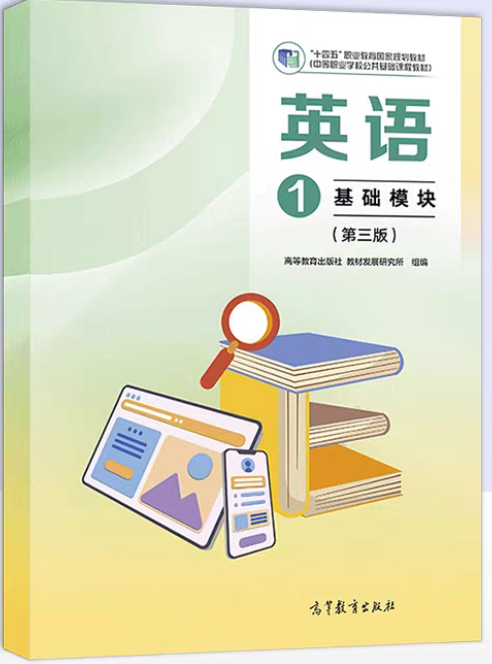
Unit 2 Transportation(A卷·基础巩固)《英语 基础模块1》(高教版第三版)单元过关卷(原卷版+解析版)
2026-07-27
|
2份
|
23页
|
45人阅读
|
0人下载
内容正文:
编写说明:本套试卷紧扣《英语 基础模块1》(高教版第三版)教材,以教材单元为基准精准覆盖核心考点。
每个单元设置AB卷,A卷为基础巩固卷,侧重基础考点训练,帮助学生扎实掌握知识要点;B卷为能力提升卷,注重知识整合与全面检测,引导学生构建知识网络。全书设计4份综合测试卷,模拟实战情境,聚焦解题能力突破,全面提升应试能力与知识应用水平。
《英语 基础模块1》(高教版第三版)《单元过关卷》
Unit 2 Transportation
A卷·基础巩固
考试时间:120分钟 满分:100分
班级_____姓名_____学号_____成绩_____
第一部分 情景交际(共10小题,每小题2分,共20分。)
阅读下列简短对话,从A、B、C、D四个选项中选出最佳选项,将对话补全。
1. — Excuse me, how can I get to the school library?
— ________.
A. It costs ten yuan
B. I like reading books
C. Go straight and turn left at the crossing
D. The library is clean
【答案】C
【详解】句意:上句询问去图书馆的路线,答语应给出方向指引。Go straight and turn left at the crossing符合问路与指路语境。
2. — Which is a green way to school for students living nearby?
— ________.
A. Walking or riding a bike
B. Taking a taxi alone
C. Driving a private car
D. Waiting at the hotel
【答案】A
【详解】句意:问题询问住得近的学生绿色上学方式,步行或骑自行车环保且符合距离条件。
3. — Is this the right bus to the train station?
— ________. You need Bus 707.
A. Yes, it is
B. It is my address
C. Have a good trip
D. No, it isn't
【答案】D
【详解】句意:后句说明需要乘坐707路公交,表明当前公交不是正确线路,应作否定回答。
4. — The subway station is over there. You can change to Line 2.
— ________.
A. I am a visitor
B. Thanks for your help
C. It is too expensive
D. Do not smoke
【答案】B
【详解】句意:对方提供换乘信息,答语应表达感谢,Thanks for your help符合交际礼貌原则。
5. — The floor is wet near the exit.
— ________. I will walk slowly.
A. Thank you for reminding me
B. I want to buy a ticket
C. It is a sunny day
D. I can sing well
【答案】A
【详解】句意:对方提醒出口附近地面湿滑,答语应感谢提醒并表示会小心行走。
6. — How long does it take from the airport to the hotel by taxi?
— ________.
A. At Gate 1
B. By subway
C. About one hour
D. In Wenhua District
【答案】C
【详解】句意:How long询问花费时间,About one hour直接回答时长,符合语境。
7. — I am worried about missing the train during rush hour.
— ________. The subway is fast and convenient.
A. That is a map app
B. You are too late forever
C. Please close the window
D. Don't worry
【答案】D
【详解】句意:对方担心赶不上火车,后句给出解决方式,因此应先安慰Don't worry。
8. — Could you tell me where the nearest bus stop is?
— ________.
A. I like green tea
B. It is on your left
C. I am a hotel guest
D. It opens at night
【答案】B
【详解】句意:问题询问最近公交站的位置,It is on your left给出方位,符合询问信息场景。
9. — Let's take the shuttle bus. It is free for hotel guests.
— ________. It can save money.
A. Good idea
B. Never mind
C. I am sorry
D. No smoking
【答案】A
【详解】句意:对方提出乘坐免费班车,后句说明能省钱,表明说话人赞同建议,Good idea正确。
10. — Please get off at Zhonghua Square Station and take Exit B.
— ________. I will remember it.
A. That is my name
B. It is an e-bike
C. You are a cook
D. OK, thank you
【答案】D
【详解】句意:对方给出下车站点和出口,答语应确认并感谢,OK, thank you符合语境。
第二部分 选词填空(共10小题,每小题1.5分,共15分。)
阅读下列短文,从各题所给的A、B、C、D四个选项中选出最佳选项,填入相应的空格处。
Nowadays, more people choose low-carbon ways to travel around the city. Heavy traffic brings pollution and wastes much time every day, so green transport becomes a popular lifestyle for citizens of all ages. Many young people living in downtown areas give up private cars and ride a 11_______ bike to go shopping or meet friends.
For people whose homes are far from the city center, public transport is a great choice. Most of them take the 12_______ to work, for it won’t get stuck in traffic jams during rush hours. The city government has printed clear traffic maps for visitors. The maps mark main streets, public parks and sports 13_______. When you follow the map, you need to walk 14_______ along the river road and turn left at the big square.
Green travel is easy for everyone. As long as we pick suitable 15_______, we can cut air pollution and protect the city environment. We must follow traffic rules 16_______ when we go out. If we notice tourists moving in the wrong 17_______, we can take time to show them the way. A warm reminder will make their trip far more 18_______. Every small choice can 19_______ a big difference to our living environment, so I will always 20_______ green travel in daily life.
11.A. private B. shared C. heavy D. broken
12.A. taxi B. e-bike C. subway D. hotel
13.A. gym B. meal C. family D. price
14.A. back B. outside C. slowly D. straight
15.A. story B. transport C. visitor D. direction
16.A. carefully B. suddenly C. loudly D. sadly
17.A. line B. address C. direction D. station
18.A. expensive B. private C. busy D. convenient
19.A. miss B. make C. change D. worry
20.A. forget B. refuse C. support D. break
【答案】
11.B 12.C 13.A 14.D 15.B
16.A 17.C 18.D 19.B 20.C
【导语】
本文是一篇说明性短文,围绕城市低碳绿色出行展开,介绍当下市民多样的环保通勤方式、城市配套导览地图的使用方法,倡导大众主动选择绿色交通、文明帮扶游客,传递低碳环保的生活理念,贴合广西对口考试社会生活类题材命题风格。
【详解】
11. B 考查形容词辨析。句意:住在市中心的年轻人放弃私家车,骑共享单车逛街、访友。文章核心主题为低碳出行,shared bike 是固定搭配 “共享单车”,契合绿色出行理念;private(私人的)私家车是文中舍弃的高碳出行方式,heavy(沉重的)、broken(损坏的)均不符合语境。
12. C 考查交通工具名词辨析。句意:大多数人乘坐地铁上班,高峰期不会堵车。前文提到家离市中心远,地铁适合远距离通勤且不受拥堵影响;taxi(出租车)碳排放高、成本高,e-bike(电动车)不适宜长途,hotel(酒店)不属于交通工具,均排除。
13. A 考查公共场所名词辨析。句意:地图标注主干道、城市公园与运动体育馆。main streets、public parks 均为城市公共地标,gym(体育馆)属于同类公共设施;meal(饭菜)、family(家庭)、price(价格)无法与城市地标并列。
14. D 考查指路副词固定搭配。句意:你沿着滨河路直走,到大广场左转。go straight 为问路指路高频短语,后文 turn left 是典型指路逻辑;back(返回)、outside(在外面)、slowly(缓慢地)不符合指路常用表达。
15. B 考查主题名词复现。句意:只要我们选择合适的出行方式,就能减少空气污染、守护城市环境。全文反复出现 green transport,transport 指代各类出行工具;story(故事)、visitor(游客)、direction(方向)无法概括交通方式。
16. A 考查副词修饰动词辨析。句意:我们外出时必须认真遵守交通规则。carefully 修饰 follow traffic rules,表示谨慎遵守交规;suddenly(突然地)、loudly(大声地)、sadly(难过地)语义搭配不通。
17. C 考查名词固定搭配。句意:如果看到游客走错方向,我们可以停下来指路。wrong direction 为常用搭配 “走错方向”,后文 show them the way 形成词汇呼应;line(队伍)、address(地址)、station(车站)不能与 wrong 搭配表示迷路。
18. D 考查形容词语境逻辑。句意:一句暖心指引会让他们的旅途更加便捷。主动为游客指路会带来便利的出行体验,convenient 意为 “便捷的”;expensive(昂贵的)、private(私人的)、busy(繁忙的)均为负面语义,不符合文意。
19. B 考查固定短语搭配。句意:每一个微小选择,都会对我们的生活环境产生巨大影响。make a difference 是中职高频固定搭配,意为 “产生影响、带来改变”;miss(错过)、change(改变)、worry(担忧)无法和 a difference 搭配。
20. C 考查动词主旨态度辨析。句意:所以在日常生活中,我会一直支持绿色出行。全文倡导低碳环保,support 表示认同、践行绿色出行;forget(忘记)、refuse(拒绝)、break(破坏)与文章中心思想完全相反。
第三部分 阅读理解(共两节)
第一节(共15小题,每小题2分,共30分。)
阅读下列短文,从各题所给的A、B、C、D四个选项中选出最佳选项。
Text 1
Green Travel Week Notice
Time: Monday, April 13th--Friday, April 17th
Place: Guangxi No. 2 Vocational School
Who can join: All Grade One students
Activities: On Monday, students watch a short video about green transportation in Room 201. On Tuesday and Wednesday, each class makes a school map and marks the library, gym, dining hall and nearest bus stop. On Thursday, student volunteers help visitors at the school gate and practise giving directions in English. On Friday, each group shares a simple transportation plan for a trip from school to Qingxiu Park.
Please remember: Wear comfortable shoes for walking practice. Bring a pen, a notebook and your student card. Groups must hand in their maps before 5:00 p.m. on Wednesday. For more information, call 0771-386-2190 during school hours.
21. Who can join Green Travel Week?
A. Only parents.
B. All Grade One students.
C. Taxi drivers only.
D. Foreign visitors only.
22. Where do students watch the video?
A. At the school gate.
B. In Qingxiu Park.
C. In Room 201.
D. At the bus stop.
23. What should each class make on Tuesday and Wednesday?
A. A school map.
B. A train ticket.
C. A hotel card.
D. A food poster.
24. When must groups hand in their maps?
A. Before Monday morning.
B. After Friday night.
C. At 8:00 a.m. on Tuesday.
D. Before 5:00 p.m. on Wednesday.
25. Which of the following is TRUE?
A. Students need to bring pets.
B. The activity lasts one day.
C. Students will practise giving directions.
D. Students call the number at midnight.
【答案】21. B 22. C 23. A 24. D 25. C
【导语】本文是一则校园绿色出行周通知,介绍活动时间、对象、每日安排、材料准备和咨询方式,主要考查学生快速定位时间、地点、对象和活动内容的能力。
【详解】21.细节理解题。根据“Who can join: All Grade One students”可知,所有一年级学生可以参加。
22.细节理解题。根据“students watch a short video...in Room 201”可知,观看视频地点是201室。
23.细节理解题。根据“each class makes a school map”可知,每个班制作校园地图。
24.细节理解题。根据“hand in their maps before 5:00 p.m. on Wednesday”可知,地图需在周三下午5点前上交。
25.细节理解题。根据“student volunteers...practise giving directions in English”可知,学生会练习用英语指路。
Text 2
Last month, our class visited Nanning Railway Station for a short service-learning activity. Before the trip, Ms. Liang taught us some useful English sentences for asking and giving directions. She also reminded us to speak slowly and smile when helping visitors.
At the station, I worked with my classmate Zhou Wei near the ticket hall. A visitor from another city wanted to find the subway entrance. I was nervous at first, but Zhou Wei pointed to the signs and said, “Go straight for about fifty metres, and you will see it on your left.” The visitor thanked us. Later, an old man asked which exit led to the bus stop. This time I answered by myself. I told him to take Exit C and turn right after going out.
During the activity, we saw many people choose public transportation. Some took the subway because it was fast. Others waited for buses because the cost was low. I learned that transportation is not only about moving from one place to another. It is also about good planning, clear signs and polite communication. When we returned to school, I felt more confident. A small service activity helped me use English in a real situation and understand the value of green travel.
26. What did Ms. Liang teach the students before the trip?
A. Sentences for asking and giving directions.
B. Ways to repair trains.
C. Rules for selling tickets.
D. Stories about family names.
27. Where did the writer work at the railway station?
A. Near the airport gate.
B. In a hotel room.
C. Beside a river.
D. Near the ticket hall.
28. What does the underlined word “entrance” mean?
A. 价格
B. 入口
C. 终点
D. 账单
29. Which exit should the old man take?
A. Exit A.
B. Exit B.
C. Exit C.
D. Exit D.
30. What did the writer learn from the activity?
A. Taxi is always the best choice.
B. Transportation needs planning and communication.
C. English is not useful outside the classroom.
D. Students should never help visitors.
【答案】26. A 27. D 28. B 29. C 30. B
【导语】本文是一篇记叙文,讲述学生参加南宁火车站服务学习活动,在真实场景中用英语为旅客指路,并理解公共交通、路线规划和礼貌沟通的重要性。
【详解】26.细节理解题。根据第一段“taught us some useful English sentences for asking and giving directions”可知,老师教了问路和指路句子。
27.细节理解题。根据第二段“I worked with my classmate Zhou Wei near the ticket hall”可知,作者在售票大厅附近服务。
28.词句猜测题。结合“find the subway entrance”和后文“Go straight...you will see it”可知,entrance指进入地铁的“入口”。
29.细节理解题。根据第二段“I told him to take Exit C”可知,老人应走C出口。
30.主旨理解题。根据最后一段“about good planning, clear signs and polite communication”可知,作者认识到交通也需要规划和沟通。
Text 3
A map app is useful when people travel in a city. It can show different ways to a place, such as walking, riding a shared bike, taking a bus or using the subway. It also tells people the time and cost of each way. For students in vocational schools, learning to read this information is a basic life skill.
However, a good transportation plan needs more than one button on a phone. First, people should check the distance. If a place is near, walking or riding a bike may be healthy and green. If the place is far and the road is busy, the subway may be faster than a taxi during rush hour. Second, people should check the time. A shuttle bus may be free, but it may not run late at night. Third, people should think about safety. When students travel with bags or at night, they should choose a safer route and tell friends their plan.
A map app may sometimes be wrong because roads can be closed, buses can be late, or phones can run out of battery. In these cases, asking a person politely is still important. Say hello first, show the address clearly, and thank the person at the end. Smart travel is not only using technology. It means comparing choices, following rules and caring about the environment. Students who practise making transportation plans can become more independent in daily life and future work.
31. What can a map app show according to Paragraph 1?
A. Only private messages.
B. Different ways, time and cost.
C. A student's family photo.
D. The price of every hotel.
32. What may be better if a place is near?
A. Walking or riding a bike.
B. Taking a taxi alone.
C. Waiting for a late bus.
D. Changing the address.
33. Why may a map app be wrong sometimes?
A. Students cannot read English.
B. Green travel is difficult.
C. Roads can be closed or buses can be late.
D. Visitors always know the way.
34. What should people do when asking for directions?
A. Ask without saying hello.
B. Show the address clearly.
C. Forget to say thank you.
D. Hide the place name.
35. What is the best title for the passage?
A. Making a Smart Transportation Plan
B. How to Sell a Map App
C. A Story about a Taxi Driver
D. Why Phones Are Always Right
【答案】31. B 32. A 33. C 34. B 35. A
【导语】本文是一篇说明文,介绍使用地图软件制定交通方案时应综合考虑距离、时间、安全、道路变化与礼貌问路,重点考查细节定位、信息整合和主旨概括能力。
【详解】31.细节理解题。根据第一段“It can show different ways...It also tells people the time and cost”可知,地图软件能显示不同方式、时间和费用。
32.细节理解题。根据第二段“If a place is near, walking or riding a bike may be healthy and green.”可知,地点较近时步行或骑车更合适。
33.细节理解题。根据第三段“roads can be closed, buses can be late, or phones can run out of battery”可知,道路封闭或公交晚点等会导致地图软件不准。
34.细节理解题。根据第三段“show the address clearly”可知,问路时应清楚展示地址。
35.最佳标题题。全文围绕如何比较交通方式、利用地图软件并礼貌问路来制定合理交通方案展开,A项最能概括全文。
第二节(共5小题,每小题2分,共10分。)
阅读下列短文,从短文后的选项中选出最佳选项,并填入空白处。
Helping a Visitor Find the Hotel
Last Sunday, I met a visitor near the bus stop. She held a hotel card and looked worried. ____36____. The card showed an address on Minzu Road.
I checked the map on my phone first. The hotel was not far from the subway station. ____37____. She listened carefully and repeated the station name. Then I walked with her to the crossing because there were many people and cars.
At the crossing, I pointed to the subway sign. ____38____. She thanked me and said she liked the clean streets in Nanning. I felt happy because I could help someone in English.
On my way home, I thought about the experience. A map app was useful, but polite words were also important. ____39____. If we speak clearly and kindly, visitors may feel safer in a new city.
____40____. I will keep practising English directions and learn more about public transportation.
A. I told her to take Line 1 and get off at Minzu Square Station
B. This small experience gave me confidence
C. She asked me how to get to Green Lake Hotel
D. Good communication can make a trip easier
E. I said, “Go straight and turn right at the entrance.”
【答案】36. C 37. A 38. E 39. D 40. B
【导语】本文是一篇记叙文,讲述作者用地图软件和英语指路帮助一名游客到达酒店,体现问路指路、公共交通和礼貌沟通在真实生活中的作用。
【详解】36.空前写游客拿着酒店卡且很着急,空后出现卡片上的地址,C项“她问我如何到达绿湖酒店”承接自然。
37.空前提到酒店离地铁站不远,空处应给出乘地铁方案,A项包含线路和下车站点,符合语境。
38.空前写作者指向地铁标志,E项继续说明“直走并在入口处右转”,属于具体指路。
39.空前说地图软件有用但礼貌用语也重要,D项概括良好沟通能让旅行更容易,与后句“speak clearly and kindly”呼应。
40.空后说作者会继续练习英语指路,B项“这次小经历给了我信心”能引出后续行动。
第四部分 完形填空(共10小题,每小题1分,共10分。)
阅读下列短文,在空格处填入适当的词或用括号里的词的正确形式填空。
A Trip Plan for the Airport
Tomorrow morning, my cousin and I will go to the airport. Our flight ____41____ (leave) at 12:30 p.m., so we need to arrive early. Tonight, we checked three plans ____42____ my phone. Plan A is the hotel shuttle bus. It is free, but the first bus ____43____ (start) at 8:30 a.m. Plan B is the subway. It is fast and ____44____ (convenient). Plan C is a taxi. It costs more, ____45____ it can carry our heavy bags.
After talking, we chose Plan B. First, we will walk to the station near ____46____ (we) hotel. Then we will get on Line 2 and change trains. My cousin wrote the steps ____47____ (careful) in his notebook. I saved the hotel address ____48____ (ask) for help if our phone has no power. Making a plan helps us ____49____ (travel) safely. I hope our trip will be ____50____ easy one.
【答案】41. leaves 42. on 43. starts 44. convenient 45. but 46. our 47. carefully 48. to ask 49. travel 50. an
【导语】本文是一篇记叙文,讲述作者和表兄为次日前往机场比较班车、地铁和出租车三种方案,最终选择较合适路线的过程,考查时态、介词、形容词、连词、代词、副词、不定式和冠词等基础语法。
【详解】41.考查动词时态。句意:我们的航班中午12:30起飞。表示按时刻表发生的将来动作,可用一般现在时,主语flight为第三人称单数,填leaves。
42.考查介词。句意:今晚,我们在手机上查看了三种交通方案。on my phone表示“在我的手机上”。
43.考查动词时态。句意:第一班车在早上8:30发车。班车时刻表用一般现在时,主语bus为单数,填starts。
44.考查形容词。句意:它又快又方便。空处与fast并列作表语,填形容词convenient。
45.考查连词。句意:它花费更多钱,但是能装下我们的重包。前后构成转折关系,填but。
46.考查形容词性物主代词。句意:我们将步行到我们酒店附近的地铁站。修饰名词hotel,应填our。
47.考查副词。句意:我表兄认真地把步骤写在笔记本上。修饰动词wrote用副词carefully。
48.考查非谓语动词。句意:我还保存了酒店地址,以便在手机没电时求助。此处表示目的,填to ask。
49.考查动词原形。句意:制订计划帮助我们安全出行。help sb. do sth.中动词用原形,填travel。
50.考查冠词。句意:我希望我们的旅行会是一次轻松的旅行。easy以元音音素开头,表示“一次”,填an。
第五部分 书面表达(共15分。)
51. 假设你是李华,你的英国朋友Tom下周要来南宁旅行,他想了解从火车站到酒店的交通方式。请根据以下要点,给他写一封电子邮件,推荐一种交通方式并说明理由。具体内容和要求如下:
1.词数70—80个;
2.文中不可出现真实人名和校名;
3.开头、结尾已给出,不计入总词数;
4.相关内容及词汇仅供参考,可酌情选用。
Dear Tom,
I am glad to know that you will visit Nanning next week. Here is my advice on getting to your hotel from the train station.
_____________________________________________________________________________________________________________________________________________________________________________________________________________________________________________________________________________________________________________________________________________________________________________________________________________________
I hope you will have a nice trip.
Yours,
Li Hua
主要内容
参考信息
参考词汇及短语
推荐交通方式
说明从火车站到酒店建议选择的方式
subway, bus, taxi, shared bike, take Line 2
具体路线
写清上车、换乘、下车、出口或步行方向
get on/off, change to, Exit B, go along, turn left
推荐理由
说明时间、费用、便利性或绿色出行优势
fast, convenient, cost, rush hour, green travel
【答案】例文:
Dear Tom,
I am glad to know that you will visit Nanning next week. Here is my advice on getting to your hotel from the train station.
I think you can take the subway. It is fast and convenient, especially during rush hour. First, get on Line 2 at the train station. Then get off at Minzu Square Station and take Exit B. After that, walk along Minzu Road for about five minutes. Your hotel is on your left. The subway does not cost much, and it is greener than taking a taxi alone. If you cannot find the way, show the hotel address and ask for help politely.
I hope you will have a nice trip.
Yours,
Li Hua
【解析】
【导语】本篇书面表达属于应用文,要求给朋友写电子邮件,说明从火车站到酒店的推荐交通方式、具体路线和推荐理由。
【词汇积累】方便的:convenient -> easy to use
花费:cost -> take
礼貌地:politely -> in a polite way
绿色的:green -> environmentally friendly
【句式拓展】原句:It is fast and convenient.
拓展句:It is fast and convenient, especially when the roads are busy during rush hour.
【点睛】First, get on Line 2 at the train station. (运用了祈使句说明路线步骤)
If you cannot find the way, show the hotel address and ask for help politely. (运用了if引导条件状语从句)
原创精品资源学科网独家享有版权,侵权必究!
学科网(北京)股份有限公司
$
编写说明:本套试卷紧扣《英语 基础模块1》(高教版第三版)教材,以教材单元为基准精准覆盖核心考点。
每个单元设置AB卷,A卷为基础巩固卷,侧重基础考点训练,帮助学生扎实掌握知识要点;B卷为能力提升卷,注重知识整合与全面检测,引导学生构建知识网络。全书设计4份综合测试卷,模拟实战情境,聚焦解题能力突破,全面提升应试能力与知识应用水平。
《英语 基础模块1》(高教版第三版)《单元过关卷》
Unit 2 Transportation
A卷·基础巩固
考试时间:120分钟 满分:100分
班级_____姓名_____学号_____成绩_____
第一部分 情景交际(共10小题,每小题2分,共20分。)
阅读下列简短对话,从A、B、C、D四个选项中选出最佳选项,将对话补全。
1. — Excuse me, how can I get to the school library?
— ________.
A. It costs ten yuan
B. I like reading books
C. Go straight and turn left at the crossing
D. The library is clean
2. — Which is a green way to school for students living nearby?
— ________.
A. Walking or riding a bike
B. Taking a taxi alone
C. Driving a private car
D. Waiting at the hotel
3. — Is this the right bus to the train station?
— ________. You need Bus 707.
A. Yes, it is
B. It is my address
C. Have a good trip
D. No, it isn't
4. — The subway station is over there. You can change to Line 2.
— ________.
A. I am a visitor
B. Thanks for your help
C. It is too expensive
D. Do not smoke
5. — The floor is wet near the exit.
— ________. I will walk slowly.
A. Thank you for reminding me
B. I want to buy a ticket
C. It is a sunny day
D. I can sing well
6. — How long does it take from the airport to the hotel by taxi?
— ________.
A. At Gate 1
B. By subway
C. About one hour
D. In Wenhua District
7. — I am worried about missing the train during rush hour.
— ________. The subway is fast and convenient.
A. That is a map app
B. You are too late forever
C. Please close the window
D. Don't worry
8. — Could you tell me where the nearest bus stop is?
— ________.
A. I like green tea
B. It is on your left
C. I am a hotel guest
D. It opens at night
9. — Let's take the shuttle bus. It is free for hotel guests.
— ________. It can save money.
A. Good idea
B. Never mind
C. I am sorry
D. No smoking
10. — Please get off at Zhonghua Square Station and take Exit B.
— ________. I will remember it.
A. That is my name
B. It is an e-bike
C. You are a cook
D. OK, thank you
第二部分 选词填空(共10小题,每小题1.5分,共15分。)
阅读下列短文,从各题所给的A、B、C、D四个选项中选出最佳选项,填入相应的空格处。
Nowadays, more people choose low-carbon ways to travel around the city. Heavy traffic brings pollution and wastes much time every day, so green transport becomes a popular lifestyle for citizens of all ages. Many young people living in downtown areas give up private cars and ride a 11_______ bike to go shopping or meet friends.
For people whose homes are far from the city center, public transport is a great choice. Most of them take the 12_______ to work, for it won’t get stuck in traffic jams during rush hours. The city government has printed clear traffic maps for visitors. The maps mark main streets, public parks and sports 13_______. When you follow the map, you need to walk 14_______ along the river road and turn left at the big square.
Green travel is easy for everyone. As long as we pick suitable 15_______, we can cut air pollution and protect the city environment. We must follow traffic rules 16_______ when we go out. If we notice tourists moving in the wrong 17_______, we can take time to show them the way. A warm reminder will make their trip far more 18_______. Every small choice can 19_______ a big difference to our living environment, so I will always 20_______ green travel in daily life.
11.A. private B. shared C. heavy D. broken
12.A. taxi B. e-bike C. subway D. hotel
13.A. gym B. meal C. family D. price
14.A. back B. outside C. slowly D. straight
15.A. story B. transport C. visitor D. direction
16.A. carefully B. suddenly C. loudly D. sadly
17.A. line B. address C. direction D. station
18.A. expensive B. private C. busy D. convenient
19.A. miss B. make C. change D. worry
20.A. forget B. refuse C. support D. break
第三部分 阅读理解(共两节)
第一节(共15小题,每小题2分,共30分。)
阅读下列短文,从各题所给的A、B、C、D四个选项中选出最佳选项。
Text 1
Green Travel Week Notice
Time: Monday, April 13th--Friday, April 17th
Place: Guangxi No. 2 Vocational School
Who can join: All Grade One students
Activities: On Monday, students watch a short video about green transportation in Room 201. On Tuesday and Wednesday, each class makes a school map and marks the library, gym, dining hall and nearest bus stop. On Thursday, student volunteers help visitors at the school gate and practise giving directions in English. On Friday, each group shares a simple transportation plan for a trip from school to Qingxiu Park.
Please remember: Wear comfortable shoes for walking practice. Bring a pen, a notebook and your student card. Groups must hand in their maps before 5:00 p.m. on Wednesday. For more information, call 0771-386-2190 during school hours.
21. Who can join Green Travel Week?
A. Only parents.
B. All Grade One students.
C. Taxi drivers only.
D. Foreign visitors only.
22. Where do students watch the video?
A. At the school gate.
B. In Qingxiu Park.
C. In Room 201.
D. At the bus stop.
23. What should each class make on Tuesday and Wednesday?
A. A school map.
B. A train ticket.
C. A hotel card.
D. A food poster.
24. When must groups hand in their maps?
A. Before Monday morning.
B. After Friday night.
C. At 8:00 a.m. on Tuesday.
D. Before 5:00 p.m. on Wednesday.
25. Which of the following is TRUE?
A. Students need to bring pets.
B. The activity lasts one day.
C. Students will practise giving directions.
D. Students call the number at midnight.
Text 2
Last month, our class visited Nanning Railway Station for a short service-learning activity. Before the trip, Ms. Liang taught us some useful English sentences for asking and giving directions. She also reminded us to speak slowly and smile when helping visitors.
At the station, I worked with my classmate Zhou Wei near the ticket hall. A visitor from another city wanted to find the subway entrance. I was nervous at first, but Zhou Wei pointed to the signs and said, “Go straight for about fifty metres, and you will see it on your left.” The visitor thanked us. Later, an old man asked which exit led to the bus stop. This time I answered by myself. I told him to take Exit C and turn right after going out.
During the activity, we saw many people choose public transportation. Some took the subway because it was fast. Others waited for buses because the cost was low. I learned that transportation is not only about moving from one place to another. It is also about good planning, clear signs and polite communication. When we returned to school, I felt more confident. A small service activity helped me use English in a real situation and understand the value of green travel.
26. What did Ms. Liang teach the students before the trip?
A. Sentences for asking and giving directions.
B. Ways to repair trains.
C. Rules for selling tickets.
D. Stories about family names.
27. Where did the writer work at the railway station?
A. Near the airport gate.
B. In a hotel room.
C. Beside a river.
D. Near the ticket hall.
28. What does the underlined word “entrance” mean?
A. 价格
B. 入口
C. 终点
D. 账单
29. Which exit should the old man take?
A. Exit A.
B. Exit B.
C. Exit C.
D. Exit D.
30. What did the writer learn from the activity?
A. Taxi is always the best choice.
B. Transportation needs planning and communication.
C. English is not useful outside the classroom.
D. Students should never help visitors.
Text 3
A map app is useful when people travel in a city. It can show different ways to a place, such as walking, riding a shared bike, taking a bus or using the subway. It also tells people the time and cost of each way. For students in vocational schools, learning to read this information is a basic life skill.
However, a good transportation plan needs more than one button on a phone. First, people should check the distance. If a place is near, walking or riding a bike may be healthy and green. If the place is far and the road is busy, the subway may be faster than a taxi during rush hour. Second, people should check the time. A shuttle bus may be free, but it may not run late at night. Third, people should think about safety. When students travel with bags or at night, they should choose a safer route and tell friends their plan.
A map app may sometimes be wrong because roads can be closed, buses can be late, or phones can run out of battery. In these cases, asking a person politely is still important. Say hello first, show the address clearly, and thank the person at the end. Smart travel is not only using technology. It means comparing choices, following rules and caring about the environment. Students who practise making transportation plans can become more independent in daily life and future work.
31. What can a map app show according to Paragraph 1?
A. Only private messages.
B. Different ways, time and cost.
C. A student's family photo.
D. The price of every hotel.
32. What may be better if a place is near?
A. Walking or riding a bike.
B. Taking a taxi alone.
C. Waiting for a late bus.
D. Changing the address.
33. Why may a map app be wrong sometimes?
A. Students cannot read English.
B. Green travel is difficult.
C. Roads can be closed or buses can be late.
D. Visitors always know the way.
34. What should people do when asking for directions?
A. Ask without saying hello.
B. Show the address clearly.
C. Forget to say thank you.
D. Hide the place name.
35. What is the best title for the passage?
A. Making a Smart Transportation Plan
B. How to Sell a Map App
C. A Story about a Taxi Driver
D. Why Phones Are Always Right
第二节(共5小题,每小题2分,共10分。)
阅读下列短文,从短文后的选项中选出最佳选项,并填入空白处。
Helping a Visitor Find the Hotel
Last Sunday, I met a visitor near the bus stop. She held a hotel card and looked worried. ____36____. The card showed an address on Minzu Road.
I checked the map on my phone first. The hotel was not far from the subway station. ____37____. She listened carefully and repeated the station name. Then I walked with her to the crossing because there were many people and cars.
At the crossing, I pointed to the subway sign. ____38____. She thanked me and said she liked the clean streets in Nanning. I felt happy because I could help someone in English.
On my way home, I thought about the experience. A map app was useful, but polite words were also important. ____39____. If we speak clearly and kindly, visitors may feel safer in a new city.
____40____. I will keep practising English directions and learn more about public transportation.
A. I told her to take Line 1 and get off at Minzu Square Station
B. This small experience gave me confidence
C. She asked me how to get to Green Lake Hotel
D. Good communication can make a trip easier
E. I said, “Go straight and turn right at the entrance.”
第四部分 完形填空(共10小题,每小题1分,共10分。)
阅读下列短文,在空格处填入适当的词或用括号里的词的正确形式填空。
A Trip Plan for the Airport
Tomorrow morning, my cousin and I will go to the airport. Our flight ____41____ (leave) at 12:30 p.m., so we need to arrive early. Tonight, we checked three plans ____42____ my phone. Plan A is the hotel shuttle bus. It is free, but the first bus ____43____ (start) at 8:30 a.m. Plan B is the subway. It is fast and ____44____ (convenient). Plan C is a taxi. It costs more, ____45____ it can carry our heavy bags.
After talking, we chose Plan B. First, we will walk to the station near ____46____ (we) hotel. Then we will get on Line 2 and change trains. My cousin wrote the steps ____47____ (careful) in his notebook. I saved the hotel address ____48____ (ask) for help if our phone has no power. Making a plan helps us ____49____ (travel) safely. I hope our trip will be ____50____ easy one.
第五部分 书面表达(共15分。)
51. 假设你是李华,你的英国朋友Tom下周要来南宁旅行,他想了解从火车站到酒店的交通方式。请根据以下要点,给他写一封电子邮件,推荐一种交通方式并说明理由。具体内容和要求如下:
1.词数70—80个;
2.文中不可出现真实人名和校名;
3.开头、结尾已给出,不计入总词数;
4.相关内容及词汇仅供参考,可酌情选用。
Dear Tom,
I am glad to know that you will visit Nanning next week. Here is my advice on getting to your hotel from the train station.
_____________________________________________________________________________________________________________________________________________________________________________________________________________________________________________________________________________________________________________________________________________________________________________________________________________________
I hope you will have a nice trip.
Yours,
Li Hua
主要内容
参考信息
参考词汇及短语
推荐交通方式
说明从火车站到酒店建议选择的方式
subway, bus, taxi, shared bike, take Line 2
具体路线
写清上车、换乘、下车、出口或步行方向
get on/off, change to, Exit B, go along, turn left
推荐理由
说明时间、费用、便利性或绿色出行优势
fast, convenient, cost, rush hour, green travel
原创精品资源学科网独家享有版权,侵权必究!
学科网(北京)股份有限公司
$
资源预览图

1

2

3
由于学科网是一个信息分享及获取的平台,不确保部分用户上传资料的 来源及知识产权归属。如您发现相关资料侵犯您的合法权益,请联系学科网,我们核实后将及时进行处理。