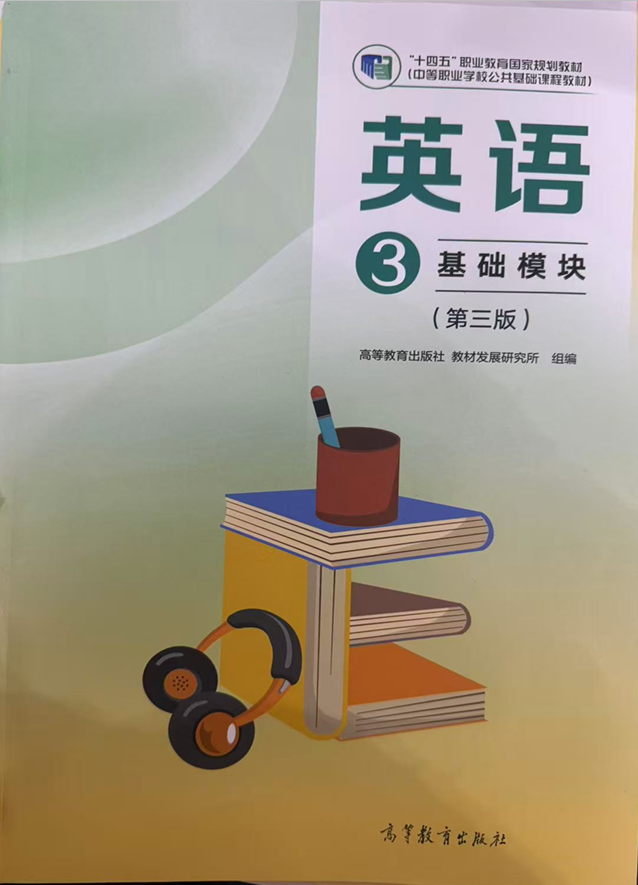
Unit 6 Living History of Culture(B卷·能力提升)《英语 基础模块3》(高教版第三版)单元过关卷(原卷版+解析版)
2026-07-24
|
2份
|
22页
|
47人阅读
|
0人下载
内容正文:
编写说明:本套试卷紧扣《英语 基础模块3》(高教版第三版)教材,以教材单元为基准精准覆盖核心考点。
每个单元设置AB卷,A卷为基础巩固卷,侧重基础考点训练,帮助学生扎实掌握知识要点;B卷为能力提升卷,注重知识整合与全面检测,引导学生构建知识网络。全书设计4份综合测试卷,模拟实战情境,聚焦解题能力突破,全面提升应试能力与知识应用水平。
《英语 基础模块3》(高教版第三版)《单元过关卷》
Unit 6 Living History of Culture
B卷·能力提升
考试时间:120分钟 满分:150分
班级_____姓名_____学号_____成绩_____
Ⅰ.补全对话(5小题,共10分)
阅读下列简短对话,从A、B、C、D中选出最佳答案,将对话补全。
1.— I have never introduced Chinese embroidery in English before.
— ________. Start with its history and main styles.
A.That's a pity. B.Forget it.
C.You're welcome. D.Take it easy.
2.— Would you mind helping me check the facts about the Great Pyramid?
— ________. I have just read an article about it.
A.No way. B.Of course not.
C.I don't agree. D.It sounds terrible.
3.— What do you think of the new exhibition on ancient buildings?
— ________. It connects history with modern design.
A.I missed the train. B.It is hard to spell.
C.It is worth visiting. D.I need a larger bag.
4.— Could you explain why the old town attracts so many visitors?
— ________. Its streets show both daily life and local history.
A.Have a safe flight. B.Sorry, I am not hungry.
C.Never mind the score. D.Sure, let me tell you.
5.— We should not write names on the ancient wall.
— ________. Everyone must protect it.
A.I am not sure. B.That's all right.
C.You must be joking. D.I couldn't agree more.
Ⅱ. 词汇(10小题,共20分)
阅读下列句子,从A、B、C、D中选出句中画线的单词或词组的意义。
6.The guide gave an exactly correct answer to the visitor's question.
A.突然地 B.精确地
C.礼貌地 D.缓慢地
7.The ancient road was the starting point of the Silk Road.
A.长城 B.故宫
C.丝绸之路 D.博物馆大厅
8.The palace looks brilliant when the morning sun shines on it.
A.空旷的 B.迟到的
C.私人的 D.灿烂的;辉煌的
9.The city square was originally a market for local people.
A.最终 B.最初;本来
C.安静地 D.定期地
10.The artist studied every expression on the terracotta figures.
A.表情 B.石块
C.旅程 D.规则
11.The old temple stands on the edge of a quiet lake.
A.在……中心 B.远离……
C.在……的边缘 D.穿过……
12.Visitors were asked to stand in regular rows before entering the hall.
A.混乱的 B.整齐的;有规律的
C.危险的 D.陌生的
13.The huge stone block was moved with the help of many workers.
A.表演 B.计划
C.票据 D.石块
14.This museum is a must-see place for people who love history.
A.免费的 B.遥远的
C.临时的 D.必看的
15.The tower attracts thousands of tourists every year.
A.提醒 B.建造
C.吸引 D.比较
Ⅲ. 完形填空(15小题,共30分)
阅读下面短文,并掌握其大意。然后从各题所给的四个选项中,选出一个最佳答案。
Standing beneath the old stone watchtower by the riverbank, Mei Lin waited for her first group of overseas visitors. As a new member of the school English 16_____ team, she had picked this little-known local site as her presentation topic. The tower was not as 17_____ as the Great Wall or the Terracotta Army, but it stood right 18_____ the edge of the water and had 19_____ the local town for centuries. Villagers once relied on it to monitor water levels and send alarm signals when storms struck. Elderly residents still recalled the bell atop the tower and the steady comfort it brought. Mei Lin wanted foreign guests to feel its 20_____, understated beauty.
Putting together the introduction had been harder than she had 21_____. At first, she gathered basic 22_____ from the town museum, 23_____ the plain lists of dates and names felt dry and easily forgotten. She realized visitors would barely remember the figures unless the content carried real warmth. Her teacher advised her to add 24_____ stories to bring the site to life. Mei Lin then interviewed an old boatman, who told her the tower had helped sailors 25_____ their way home on thick foggy nights. This tiny 26_____ made the old stone structure feel warm and 27_____ at once.
As she began her talk, Mei Lin spoke slowly and 28_____. Halfway through, a visitor asked 29_____ such a small ordinary site deserved people’s attention. She replied, “Because history is woven from countless small places just like this.” The visitor nodded and took a photo of the tower. Other guests also asked about the river, the bell and the lives of former residents. Their curiosity showed the small story had touched them. At that moment, Mei Lin understood that a good guide never just recites facts. A good guide builds a 30_____ between people and the culture behind a place.
16. A. cook B. driver C. guide D. doctor
17. A. famous B. empty C. careless D. cheap
18. A. under B. with C. from D. at
19. A. forgotten B. protected C. painted D. opened
20. A. noisy B. modern C. quiet D. wrong
21. A. visited B. expected C. borrowed D. lost
22. A. facts B. gifts C. songs D. seats
23. A. and B. but C. so D. or
24. A. human B. strange C. silent D. daily
25. A. hide B. change C. return D. find
26. A. detail B. mistake C. noise D. price
27. A. angry B. alive C. heavy D. safe
28. A. clearly B. recently C. originally D. badly
29. A. where B. when C. why D. how
30. A. bridge B. wall C. box D. test
Ⅳ. 阅读理解(15小题,共45分)
A)阅读下列短文,并做短文后的题目。然后从各题所给的四个选项中,选出能回答所提问题或完成所给句子的最佳答案。
A
In a vocational school in Guangzhou, students in the tourism class had a special task. They needed to design a one-day cultural route for foreign visitors. The route had to include a historical site, a traditional craft experience and a short English introduction. It also needed a clear schedule, safe walking directions and polite reminders for visitors. At first, many students wanted to choose famous places only, because they thought famous names were easier to introduce. They soon found that a familiar small place could be more impressive if its story was told well.
Their teacher, Ms. Huang, asked them to think deeper. 'A route is not a list of places,' she said. 'It should tell a story.' After discussion, one group chose an old city gate, a small embroidery workshop and a local museum. They connected the three places with the idea of 'hands that keep history alive'. At the workshop, visitors could watch workers make colorful patterns and try a few simple stitches.
When the students presented their plan, they used maps, photos and clear English sentences. They also reminded visitors to respect local customs and avoid touching old objects without permission. The plan won first prize in the class. More importantly, the students learned that cultural tourism needs both knowledge and careful service. A good route can help visitors see not only beautiful buildings, but also the living culture behind them.
31.What task did the tourism class need to finish?
A.To repair an old city gate. B.To design a one-day cultural route.
C.To sell museum tickets. D.To write a long history book.
32.Why did many students first want to choose famous places only?
A.They were free to enter. B.They were near the school.
C.They had no visitors. D.Famous names seemed easier to introduce.
33.What did Ms. Huang think a route should do?
A.Tell a story. B.Cost a lot of money.
C.Avoid all workshops. D.Use only Chinese.
34.What could visitors do at the embroidery workshop?
A.Drive a tour bus. B.Build a city gate.
C.Try a few simple stitches. D.Paint the museum wall.
35.What is the passage mainly about?
A.How students learned to design cultural tourism with a story. B.Why all visitors should buy embroidery online.
C.How museums choose expensive photos. D.Why English maps are difficult to draw.
B
The Great Pyramid of Giza and the Terracotta Army are in different countries, but they often make visitors ask similar questions: How could ancient people complete such amazing constructions? What ideas did they want to leave behind? These wonders are not only large in size. They also show how people in the past understood power, life and the world after death.
The Great Pyramid was built from huge stone blocks. Each block reminds visitors of the strength and patience required in ancient construction. Moving and placing them required careful planning, teamwork and long-term effort. The Terracotta Army, however, was made up of thousands of life-sized figures. It was discovered underground, so many visitors feel as if they are stepping into a hidden chapter of history. Each face has its own expression, so visitors may feel that they are looking at real people from long ago. The pyramid gives people a feeling of silent strength, while the Terracotta Army creates a sense of a great underground kingdom.
Today, both sites face the same challenge: how to welcome millions of tourists and protect fragile history at the same time. Too many visitors, strong lights or careless touching may damage cultural treasures. For this reason, modern technology is being used. Digital models, online exhibitions and controlled visiting routes allow more people to learn about the sites without putting them at risk. Students can also use these digital resources before a real visit, so they know what to observe and how to behave. When we admire ancient wonders, we should also remember our duty to protect them for the future.
36.What similar question may visitors ask about the two wonders?
A.Why are tickets always free? B.How could ancient people complete them?
C.Which site sells better food? D.When will they be moved away?
37.What does the Great Pyramid show according to Paragraph 2?
A.A noisy market. B.A modern factory.
C.A sense of silent strength. D.A group of painted horses only.
38.The underlined word fragile in Paragraph 3 probably means ________.
A.easy to damage B.hard to find
C.quick to grow D.full of humor
39.Why is modern technology used at historical sites?
A.To make visitors stay away from history. B.To replace all real cultural treasures.
C.To help people learn while reducing risks. D.To stop students from asking questions.
40.What is the writer's purpose?
A.To tell people to admire and protect ancient wonders. B.To prove that modern buildings are always better.
C.To ask tourists to touch every exhibit. D.To compare school rules in two countries.
C
Introducing Chinese culture in English is not just translating words. It is a way to help people from different backgrounds understand each other. If you want to introduce a cultural product well, you can follow several useful steps. ____41____ Without this step, your listeners may only hear unfamiliar names. They may remember the sound of a word, but they will not know why the product matters.
Next, choose simple but accurate words. Some students like to use very difficult expressions because they think difficult words sound better. In fact, clear words are often more powerful. ____42____ For example, you can say, 'Embroidery uses needles and colorful threads to create pictures on cloth.'
You should also add a short story or example. A story can make a cultural product easier to remember. ____43____ When people hear how a craft is used in festivals, families or daily life, they may understand its meaning more deeply.
Another useful step is comparison. You can compare a Chinese cultural product with something your listeners may know. ____44____ However, be careful not to say they are exactly the same. Comparison is only a bridge, not the whole explanation.
Finally, show respect and confidence. Culture is alive because people continue to learn it, use it and share it. ____45____ Your introduction may be short, but it can open a door to a rich world. You do not need to cover everything at once. A clear beginning, one vivid example and a polite ending are enough for many situations. If listeners become curious and ask more questions, your introduction has already done its job.
A.Such a sentence is easy for most visitors to understand.
B.When you speak with pride, listeners can feel your love for culture.
C.First, make sure you understand its basic history and use.
D.This helps them build a connection with new information.
E.It turns facts into something warm and meaningful.
Ⅴ. 语法填空(10小题,共20分)
阅读下面短文,在空白处填入适当的单词或括号内单词的正确形式。
A group of students from a vocational school recently made a video about Chinese embroidery. They hoped the video could be watched by visitors from different countries and by younger students at school. Before filming, they visited a workshop ____ 46 ____ local artists were working. The artists showed them several pieces that ____ 47 ____ (create) by hand many years ago. One student asked why the colors still looked so bright. An artist explained that good materials and careful work made the beauty last ____ 48 ____ a long time. She also told them that every pattern usually carries a wish for happiness, health or a better life. During the visit, students were encouraged ____ 49 ____ (try) a simple flower pattern. Although it was difficult, they worked ____ 50 ____ (patient) and helped each other. Later, the group wrote an English script. They wanted foreign viewers ____ 51 ____ (understand) not only the steps, but also the cultural meaning behind the art. The final video ____ 52 ____ (receive) many likes online last week. More importantly, it made the students ____ 53 ____ (confident) in sharing Chinese culture. They believe ____ 54 ____ young people use modern tools wisely, traditional art can reach more people around ____ 55 ____ world. The project also taught them that cultural confidence grows from careful learning and real practice. Their teacher praised the team for connecting language study with culture sharing.
Ⅵ. 完成句子(5小题,共15分)
根据所给汉语提示,完成英语句子。
56.我不知道他为什么对古建筑这么感兴趣。
I don't know ________ ________ ________ so interested in ancient buildings.
57.广州是一座很多传统艺术仍然活跃的城市。
Guangzhou is a city ________ many traditional arts are still alive.
58.这些石块太重了,工人们无法轻易移动。
These stone blocks are ________ heavy for workers ________ move easily.
59.为了吸引更多游客,他们制作了英文介绍牌。
They made English signs ________ ________ more visitors.
60.据说这座博物馆最初是一所学校。
________ ________ ________ that the museum was originally a school.
Ⅶ. 应用写作(1小题,共10分)
61.【写作内容】假如你是李华,你的外国朋友Tom想了解中国传统文化产品。请你给他写一封邮件,推荐一种文化产品,并说明推荐理由和体验建议。
【写作要求】正文约40个英文单词,文中不可出现你自己的真实姓名、学校等信息。
_____________________________________________________________________________________________________________________________________________________________________________________________________________________________________________
原创精品资源学科网独家享有版权,侵权必究!
学科网(北京)股份有限公司
$
编写说明:本套试卷紧扣《英语 基础模块3》(高教版第三版)教材,以教材单元为基准精准覆盖核心考点。
每个单元设置AB卷,A卷为基础巩固卷,侧重基础考点训练,帮助学生扎实掌握知识要点;B卷为能力提升卷,注重知识整合与全面检测,引导学生构建知识网络。全书设计4份综合测试卷,模拟实战情境,聚焦解题能力突破,全面提升应试能力与知识应用水平。
《英语 基础模块3》(高教版第三版)《单元过关卷》
Unit 6 Living History of Culture
B卷·能力提升
考试时间:120分钟 满分:150分
班级_____姓名_____学号_____成绩_____
Ⅰ.补全对话(5小题,共10分)
阅读下列简短对话,从A、B、C、D中选出最佳答案,将对话补全。
1.— I have never introduced Chinese embroidery in English before.
— ________. Start with its history and main styles.
A.That's a pity. B.Forget it.
C.You're welcome. D.Take it easy.
【答案】D
【详解】上文说明对英文介绍刺绣缺乏经验,下文给出建议,D项“别紧张”用于安慰并引导对方。
2.— Would you mind helping me check the facts about the Great Pyramid?
— ________. I have just read an article about it.
A.No way. B.Of course not.
C.I don't agree. D.It sounds terrible.
【答案】B
【详解】Would you mind...?的否定回答表示“不介意;愿意帮忙”。后句说明有相关阅读基础,B项符合语境。
3.— What do you think of the new exhibition on ancient buildings?
— ________. It connects history with modern design.
A.I missed the train. B.It is hard to spell.
C.It is worth visiting. D.I need a larger bag.
【答案】C
【详解】问句询问对展览的评价,后句说明其优点,C项“值得参观”符合评价语境。
4.— Could you explain why the old town attracts so many visitors?
— ________. Its streets show both daily life and local history.
A.Have a safe flight. B.Sorry, I am not hungry.
C.Never mind the score. D.Sure, let me tell you.
【答案】D
【详解】Could you explain...?表示请求解释,答话人随后说明原因,D项表示愿意解释。
5.— We should not write names on the ancient wall.
— ________. Everyone must protect it.
A.I am not sure. B.That's all right.
C.You must be joking. D.I couldn't agree more.
【答案】D
【详解】后句强调每个人都必须保护古墙,说明答话人完全赞同前句观点,D项符合语境。
Ⅱ. 词汇(10小题,共20分)
阅读下列句子,从A、B、C、D中选出句中画线的单词或词组的意义。
6.The guide gave an exactly correct answer to the visitor's question.
A.突然地 B.精确地
C.礼貌地 D.缓慢地
【答案】B
【详解】exactly为副词,修饰correct,表示“精确地;准确地”。
7.The ancient road was the starting point of the Silk Road.
A.长城 B.故宫
C.丝绸之路 D.博物馆大厅
【答案】C
【详解】the Silk Road为专有短语,意为“丝绸之路”,句中指古代交通与文化交流路线。
8.The palace looks brilliant when the morning sun shines on it.
A.空旷的 B.迟到的
C.私人的 D.灿烂的;辉煌的
【答案】D
【详解】brilliant为形容词,描写阳光照射下宫殿的视觉效果,意为“灿烂的;辉煌的”。
9.The city square was originally a market for local people.
A.最终 B.最初;本来
C.安静地 D.定期地
【答案】B
【详解】originally为副词,说明广场最初的用途是市场,意为“最初;本来”。
10.The artist studied every expression on the terracotta figures.
A.表情 B.石块
C.旅程 D.规则
【答案】A
【详解】expression为名词,结合on the terracotta figures可知指陶俑脸上的“表情”。
11.The old temple stands on the edge of a quiet lake.
A.在……中心 B.远离……
C.在……的边缘 D.穿过……
【答案】C
【详解】on the edge of为介词短语,表示“在……的边缘”。句中说明古庙的位置。
12.Visitors were asked to stand in regular rows before entering the hall.
A.混乱的 B.整齐的;有规律的
C.危险的 D.陌生的
【答案】B
【详解】regular修饰rows,表示队伍整齐、有规律排列。
13.The huge stone block was moved with the help of many workers.
A.表演 B.计划
C.票据 D.石块
【答案】D
【详解】block为名词,stone block表示“石块”,后文moved提示它是被搬动的物体。
14.This museum is a must-see place for people who love history.
A.免费的 B.遥远的
C.临时的 D.必看的
【答案】D
【详解】must-see为形容词性表达,表示“必看的;不容错过的”,说明该博物馆对历史爱好者很有价值。
15.The tower attracts thousands of tourists every year.
A.提醒 B.建造
C.吸引 D.比较
【答案】C
【详解】attract为动词,后接tourists,表示“吸引游客”。
Ⅲ. 完形填空(15小题,共30分)
阅读下面短文,并掌握其大意。然后从各题所给的四个选项中,选出一个最佳答案。
Standing beneath the old stone watchtower by the riverbank, Mei Lin waited for her first group of overseas visitors. As a new member of the school English 16_____ team, she had picked this little-known local site as her presentation topic. The tower was not as 17_____ as the Great Wall or the Terracotta Army, but it stood right 18_____ the edge of the water and had 19_____ the local town for centuries. Villagers once relied on it to monitor water levels and send alarm signals when storms struck. Elderly residents still recalled the bell atop the tower and the steady comfort it brought. Mei Lin wanted foreign guests to feel its 20_____, understated beauty.
Putting together the introduction had been harder than she had 21_____. At first, she gathered basic 22_____ from the town museum, 23_____ the plain lists of dates and names felt dry and easily forgotten. She realized visitors would barely remember the figures unless the content carried real warmth. Her teacher advised her to add 24_____ stories to bring the site to life. Mei Lin then interviewed an old boatman, who told her the tower had helped sailors 25_____ their way home on thick foggy nights. This tiny 26_____ made the old stone structure feel warm and 27_____ at once.
As she began her talk, Mei Lin spoke slowly and 28_____. Halfway through, a visitor asked 29_____ such a small ordinary site deserved people’s attention. She replied, “Because history is woven from countless small places just like this.” The visitor nodded and took a photo of the tower. Other guests also asked about the river, the bell and the lives of former residents. Their curiosity showed the small story had touched them. At that moment, Mei Lin understood that a good guide never just recites facts. A good guide builds a 30_____ between people and the culture behind a place.
16. A. cook B. driver C. guide D. doctor
17. A. famous B. empty C. careless D. cheap
18. A. under B. with C. from D. at
19. A. forgotten B. protected C. painted D. opened
20. A. noisy B. modern C. quiet D. wrong
21. A. visited B. expected C. borrowed D. lost
22. A. facts B. gifts C. songs D. seats
23. A. and B. but C. so D. or
24. A. human B. strange C. silent D. daily
25. A. hide B. change C. return D. find
26. A. detail B. mistake C. noise D. price
27. A. angry B. alive C. heavy D. safe
28. A. clearly B. recently C. originally D. badly
29. A. where B. when C. why D. how
30. A. bridge B. wall C. box D. test
【答案】16.C 17.A 18.D 19.B 20.C 21.B 22.A 23.B 24.A 25.D 26.A 27.B 28.A 29.C 30.A
【导语】本文采用倒叙手法,以梅林在瞭望塔下等待游客的现场场景切入,回溯她筹备英文讲解时从堆砌史实到融入人物故事的打磨过程,最终回到讲解现场的互动与感悟,点明优秀讲解员是文化与人之间的联结纽带。
【详解】16. C. guide:句意为梅林作为学校英文讲解队的新成员,选定这座小众本土古迹作为讲解主题,guide 表示讲解员、导游,契合讲解队成员的身份,cook 厨师、driver 司机、doctor 医生均不符合团队职能。
17. A. famous:句意为这座瞭望塔不像长城、兵马俑那样声名远扬,famous 著名的契合知名度对比的语境,empty 空的、careless 粗心的、cheap 便宜的均无法描述古迹的知名度。
18. D. at:stand at the edge of 为固定搭配,表示位于…… 的边缘,at 用于描述具体方位点,under 在…… 下、with 带有、from 来自均不符合该固定方位表达。
19. B. protected:根据后文监测水位、发布风暴预警的功能可知,瞭望塔数百年来守护着这座城镇,protected 保护、守护符合功能描述,forgotten 遗忘、painted 绘画、opened 打开均与安防功能无关。
20. C. quiet:前文提到这座塔知名度不高,属于小众本土古迹,有着沉静内敛的美感,quiet 安静的、内敛的契合小众古迹的气质,noisy 喧闹的、modern 现代的、wrong 错误的均不符合语境。
21. B. expected:句意为打磨一份合格的讲解稿,难度比她预想的更大,expected 预期、料想符合 “实际难度超出预期” 的语义逻辑,visited 参观、borrowed 借用、lost 丢失均不符合。
22. A. facts:根据后文日期、名称等信息可知,她最初从镇博物馆收集的是基础史实资料,facts 事实、史实契合调研内容,gifts 礼物、songs 歌曲、seats 座位均与讲解筹备无关。
23. B. but:前半句说明收集史实资料的动作,后半句指出枯燥的清单缺乏感染力、容易被遗忘,前后构成转折关系,but 但是符合逻辑,and 表并列、so 表结果、or 表选择均不符合。
24. A. human:老师建议她加入人物故事让古迹鲜活起来,human stories 即人物故事,后文采访老船夫正是对这一建议的落地,strange 奇怪的、silent 沉默的、daily 日常的均不符合语境。
25. D. find:句意为老船夫提到,瞭望塔曾帮助水手在浓雾弥漫的夜晚找到归家的路,find one's way 为固定搭配,意为找到路径,hide 隐藏、change 改变、return 返回均不符合该常用表达。
26. A. detail:雾夜指路的故事是讲解中一个鲜活的具体细节,detail 细节契合语境,mistake 错误、noise 噪音、price 价格均与故事内容无关。
27. B. alive:人物细节让原本冰冷的石塔瞬间变得温暖鲜活,alive 有生气的、鲜活的与 warm 并列,共同体现故事的感染力,angry 生气的、heavy 沉重的、safe 安全的均不符合。
28. A. clearly:句意为正式讲解时梅林语速平缓、吐字清晰,clearly 清晰地符合现场讲解的状态要求,recently 最近、originally 起初、badly 糟糕地均不符合现场讲解的描述。
29. C. why:根据后文答句解释历史由无数小地方构成可知,游客提问的是小众古迹值得关注的原因,why 为什么符合问答逻辑,where 问地点、when 问时间、how 问方式均与答句不匹配。
30. A. bridge:句意为优秀的讲解员会在人与地方文化之间搭建起一座桥梁,bridge 桥梁为比喻义,契合联结文化与人的主旨,wall 墙、box 盒子、test 测试均不符合比喻逻辑。
Ⅳ. 阅读理解(15小题,共45分)
A)阅读下列短文,并做短文后的题目。然后从各题所给的四个选项中,选出能回答所提问题或完成所给句子的最佳答案。
A
In a vocational school in Guangzhou, students in the tourism class had a special task. They needed to design a one-day cultural route for foreign visitors. The route had to include a historical site, a traditional craft experience and a short English introduction. It also needed a clear schedule, safe walking directions and polite reminders for visitors. At first, many students wanted to choose famous places only, because they thought famous names were easier to introduce. They soon found that a familiar small place could be more impressive if its story was told well.
Their teacher, Ms. Huang, asked them to think deeper. 'A route is not a list of places,' she said. 'It should tell a story.' After discussion, one group chose an old city gate, a small embroidery workshop and a local museum. They connected the three places with the idea of 'hands that keep history alive'. At the workshop, visitors could watch workers make colorful patterns and try a few simple stitches.
When the students presented their plan, they used maps, photos and clear English sentences. They also reminded visitors to respect local customs and avoid touching old objects without permission. The plan won first prize in the class. More importantly, the students learned that cultural tourism needs both knowledge and careful service. A good route can help visitors see not only beautiful buildings, but also the living culture behind them.
31.What task did the tourism class need to finish?
A.To repair an old city gate. B.To design a one-day cultural route.
C.To sell museum tickets. D.To write a long history book.
32.Why did many students first want to choose famous places only?
A.They were free to enter. B.They were near the school.
C.They had no visitors. D.Famous names seemed easier to introduce.
33.What did Ms. Huang think a route should do?
A.Tell a story. B.Cost a lot of money.
C.Avoid all workshops. D.Use only Chinese.
34.What could visitors do at the embroidery workshop?
A.Drive a tour bus. B.Build a city gate.
C.Try a few simple stitches. D.Paint the museum wall.
35.What is the passage mainly about?
A.How students learned to design cultural tourism with a story. B.Why all visitors should buy embroidery online.
C.How museums choose expensive photos. D.Why English maps are difficult to draw.
【答案】31.B 32.D 33.A 34.C 35.A
【导语】这是一篇记叙文。文章讲述广州一所职业学校旅游班学生设计一日文化路线的任务,他们从只关注知名景点转向用故事串联历史遗址、刺绣工坊和本地博物馆,理解文化旅游需要知识与细致服务。
【详解】31.细节理解题。根据第一段“They needed to design a one-day cultural route for foreign visitors.”可知,旅游班学生需要为外国游客设计一条一日文化路线。故选B。
32.细节理解题。根据第一段“At first, many students wanted to choose famous places only, because they thought famous names were easier to introduce.”可知,许多学生最初只想选择著名地点,是因为他们认为知名地点更容易介绍。故选D。
33.细节理解题。根据第二段“A route is not a list of places...It should tell a story.”可知,黄老师认为路线不应只是地点列表,而应该讲述一个故事。故选A。
34.细节理解题。根据第二段“At the workshop, visitors could watch workers make colorful patterns and try a few simple stitches.”可知,在刺绣工坊,游客可以观看工人制作彩色图案并尝试几种简单针法。故选C。
35.主旨大意题。全文围绕旅游班学生如何设计一条有故事的一日文化路线展开,重点写他们把古城门、刺绣工坊和本地博物馆用“hands that keep history alive”的主题连接起来,并理解文化旅游需要知识和服务。A项概括最准确。故选A。
B
The Great Pyramid of Giza and the Terracotta Army are in different countries, but they often make visitors ask similar questions: How could ancient people complete such amazing constructions? What ideas did they want to leave behind? These wonders are not only large in size. They also show how people in the past understood power, life and the world after death.
The Great Pyramid was built from huge stone blocks. Each block reminds visitors of the strength and patience required in ancient construction. Moving and placing them required careful planning, teamwork and long-term effort. The Terracotta Army, however, was made up of thousands of life-sized figures. It was discovered underground, so many visitors feel as if they are stepping into a hidden chapter of history. Each face has its own expression, so visitors may feel that they are looking at real people from long ago. The pyramid gives people a feeling of silent strength, while the Terracotta Army creates a sense of a great underground kingdom.
Today, both sites face the same challenge: how to welcome millions of tourists and protect fragile history at the same time. Too many visitors, strong lights or careless touching may damage cultural treasures. For this reason, modern technology is being used. Digital models, online exhibitions and controlled visiting routes allow more people to learn about the sites without putting them at risk. Students can also use these digital resources before a real visit, so they know what to observe and how to behave. When we admire ancient wonders, we should also remember our duty to protect them for the future.
36.What similar question may visitors ask about the two wonders?
A.Why are tickets always free? B.How could ancient people complete them?
C.Which site sells better food? D.When will they be moved away?
37.What does the Great Pyramid show according to Paragraph 2?
A.A noisy market. B.A modern factory.
C.A sense of silent strength. D.A group of painted horses only.
38.The underlined word fragile in Paragraph 3 probably means ________.
A.easy to damage B.hard to find
C.quick to grow D.full of humor
39.Why is modern technology used at historical sites?
A.To make visitors stay away from history. B.To replace all real cultural treasures.
C.To help people learn while reducing risks. D.To stop students from asking questions.
40.What is the writer's purpose?
A.To tell people to admire and protect ancient wonders. B.To prove that modern buildings are always better.
C.To ask tourists to touch every exhibit. D.To compare school rules in two countries.
【答案】36.B 37.C 38.A 39.C 40.A
【导语】这是一篇说明文。文章比较吉萨大金字塔和兵马俑这两处古代奇迹,说明它们体现了古人的力量、思想与世界观,同时强调现代技术可帮助人们学习历史并降低文物保护风险。
【详解】36.细节理解题。根据第一段“The Great Pyramid of Giza and the Terracotta Army are in different countries, but they often make visitors ask similar questions: How could ancient people complete such amazing constructions?”可知,游客面对这两处奇迹时常会问:古人是如何完成如此惊人的建筑或工程的。故选B。
37.细节理解题。根据第二段“The pyramid gives people a feeling of silent strength...”可知,金字塔给人一种沉默力量的感觉。故选C。
38.词义猜测题。根据第三段“Too many visitors, strong lights or careless touching may damage cultural treasures.”可知,过多游客、强光或随意触摸可能损害文化宝藏,说明fragile history指“容易受损的历史文化遗产”。fragile意为“易受损的;脆弱的”。故选A。
39.细节理解题。根据第三段“Digital models, online exhibitions and controlled visiting routes allow more people to learn about the sites without putting them at risk.”可知,现代技术能让更多人了解遗址,同时不把遗址置于风险之中,即帮助学习并降低风险。故选C。
40.写作目的题。文章前两段介绍金字塔和兵马俑的历史文化价值,第三段强调“we should also remember our duty to protect them for the future.”,可知作者的目的是提醒人们欣赏并保护古代奇迹。故选A。
C
Introducing Chinese culture in English is not just translating words. It is a way to help people from different backgrounds understand each other. If you want to introduce a cultural product well, you can follow several useful steps. ____41____ Without this step, your listeners may only hear unfamiliar names. They may remember the sound of a word, but they will not know why the product matters.
Next, choose simple but accurate words. Some students like to use very difficult expressions because they think difficult words sound better. In fact, clear words are often more powerful. ____42____ For example, you can say, 'Embroidery uses needles and colorful threads to create pictures on cloth.'
You should also add a short story or example. A story can make a cultural product easier to remember. ____43____ When people hear how a craft is used in festivals, families or daily life, they may understand its meaning more deeply.
Another useful step is comparison. You can compare a Chinese cultural product with something your listeners may know. ____44____ However, be careful not to say they are exactly the same. Comparison is only a bridge, not the whole explanation.
Finally, show respect and confidence. Culture is alive because people continue to learn it, use it and share it. ____45____ Your introduction may be short, but it can open a door to a rich world. You do not need to cover everything at once. A clear beginning, one vivid example and a polite ending are enough for many situations. If listeners become curious and ask more questions, your introduction has already done its job.
A.Such a sentence is easy for most visitors to understand.
B.When you speak with pride, listeners can feel your love for culture.
C.First, make sure you understand its basic history and use.
D.This helps them build a connection with new information.
E.It turns facts into something warm and meaningful.
【答案】41.C 42.A 43.E 44.D 45.B
【导语】这是一篇说明文。文章介绍如何用英语介绍中国文化产品,包括理解基本历史和用途、使用简单准确的语言、加入故事或例子、进行恰当比较,并以尊重和自信的态度分享文化。
【详解】41.根据空后“Without this step, your listeners may only hear unfamiliar names...but they will not know why the product matters.”可知,如果缺少这一步,听众只会听到陌生名称,却不了解文化产品为何重要。C项“First, make sure you understand its basic history and use.”说明第一步要了解其基本历史和用途,正好对应“this step”。故选C。
42.根据空前“In fact, clear words are often more powerful.”以及空后“For example, you can say, 'Embroidery uses needles and colorful threads to create pictures on cloth.'”可知,此处强调使用清楚易懂的句子介绍文化产品。A项“Such a sentence is easy for most visitors to understand.”承接后文例句,说明这样的句子便于大多数游客理解。故选A。
43.根据空前“You should also add a short story or example. A story can make a cultural product easier to remember.”可知,本段说明故事能帮助人们记住文化产品。E项“It turns facts into something warm and meaningful.”进一步解释故事能把事实变得有温度、有意义,符合语境。故选E。
44.根据空前“You can compare a Chinese cultural product with something your listeners may know.”可知,比较能把新文化产品与听众熟悉的事物联系起来。D项“This helps them build a connection with new information.”中的This指代比较这种方法,衔接自然。故选D。
45.根据本段首句“Finally, show respect and confidence.”以及空前“Culture is alive because people continue to learn it, use it and share it.”可知,本段强调以尊重和自信分享文化。B项“When you speak with pride, listeners can feel your love for culture.”中的pride和love呼应respect and confidence,符合语境。故选B。
Ⅴ. 语法填空(10小题,共20分)
阅读下面短文,在空白处填入适当的单词或括号内单词的正确形式。
A group of students from a vocational school recently made a video about Chinese embroidery. They hoped the video could be watched by visitors from different countries and by younger students at school. Before filming, they visited a workshop ____ 46 ____ local artists were working. The artists showed them several pieces that ____ 47 ____ (create) by hand many years ago. One student asked why the colors still looked so bright. An artist explained that good materials and careful work made the beauty last ____ 48 ____ a long time. She also told them that every pattern usually carries a wish for happiness, health or a better life. During the visit, students were encouraged ____ 49 ____ (try) a simple flower pattern. Although it was difficult, they worked ____ 50 ____ (patient) and helped each other. Later, the group wrote an English script. They wanted foreign viewers ____ 51 ____ (understand) not only the steps, but also the cultural meaning behind the art. The final video ____ 52 ____ (receive) many likes online last week. More importantly, it made the students ____ 53 ____ (confident) in sharing Chinese culture. They believe ____ 54 ____ young people use modern tools wisely, traditional art can reach more people around ____ 55 ____ world. The project also taught them that cultural confidence grows from careful learning and real practice. Their teacher praised the team for connecting language study with culture sharing.
【答案】46.where 47.were created 48.for 49.to try 50.patiently 51.to understand 52.received 53.more confident 54.if/when 55.the
【导语】这是一篇记叙文。文章讲述一组职业学校学生制作中国刺绣英文视频的项目经历,他们参观工坊、体验刺绣、撰写英文脚本并在网络传播中增强了分享中国文化的自信。
【详解】46.考查定语从句。句意:拍摄前,他们参观了一个当地艺术家正在工作的工坊。空处引导定语从句,先行词workshop表示地点,关系词在从句中作地点状语,应用where。故填where。
47.考查动词时态、语态和主谓一致。句意:艺术家向他们展示了几件许多年前手工创作的作品。主语pieces与create之间是被动关系;many years ago提示应用一般过去时;主语为复数,be动词用were。故填were created。
48.考查介词。句意:一位艺术家解释说,好的材料和细致的工作使美丽长久保持。for a long time为固定搭配,意为“很长时间”,空处应用for。故填for。
49.考查非谓语动词。句意:参观期间,学生们被鼓励尝试一个简单的花朵图案。be encouraged to do sth.为固定搭配,意为“被鼓励做某事”,空处应用动词不定式。故填to try。
50.考查副词。句意:虽然很难,但他们耐心地操作并互相帮助。空处修饰动词worked,应用副词;patient的副词形式为patiently。故填patiently。
51.考查非谓语动词。句意:他们希望外国观众不仅理解步骤,也理解这门艺术背后的文化意义。want sb. to do sth.为固定搭配,意为“想要某人做某事”,空处应用动词不定式。故填to understand。
52.考查动词时态。句意:最终的视频上周在网上获得了许多点赞。根据last week可知,动作发生在过去,应用一般过去时,receive变为received。故填received。
53.考查形容词比较级。句意:更重要的是,它使学生们在分享中国文化方面更加自信。make sb. + adj.表示“使某人……”,结合More importantly和语境可知,视频传播让学生比以前更自信,应用比较级more confident。故填more confident。
54.考查状语从句。句意:他们相信,如果/当年轻人明智地使用现代工具时,传统艺术就能触达世界各地更多的人。空处引导状语从句,可表示条件“如果”,也可表示时间“当……时”,因此if或when均符合语境。故填if/when。
55.考查冠词。句意:传统艺术就能触达世界各地更多的人。around the world为固定表达,意为“全世界;世界各地”,空处应用定冠词the。故填the。
Ⅵ. 完成句子(5小题,共15分)
根据所给汉语提示,完成英语句子。
56.我不知道他为什么对古建筑这么感兴趣。
I don't know ________ ________ ________ so interested in ancient buildings.
【答案】why he is
【详解】宾语从句中用陈述语序;根据主句一般现在时和语境,从句用is。
57.广州是一座很多传统艺术仍然活跃的城市。
Guangzhou is a city ________ many traditional arts are still alive.
【答案】where
【详解】先行词city表示地点,从句缺地点状语,定语从句用where引导。
58.这些石块太重了,工人们无法轻易移动。
These stone blocks are ________ heavy for workers ________ move easily.
【答案】too; to
【详解】too...to...表示“太……而不能……”,符合句意。
59.为了吸引更多游客,他们制作了英文介绍牌。
They made English signs ________ ________ more visitors.
【答案】to attract
【详解】空处表示目的,用动词不定式to attract。
60.据说这座博物馆最初是一所学校。
________ ________ ________ that the museum was originally a school.
【答案】It is said
【详解】It is said that...表示“据说……”,that引导主语从句,it为形式主语。
Ⅶ. 应用写作(1小题,共10分)
61.【写作内容】假如你是李华,你的外国朋友Tom想了解中国传统文化产品。请你给他写一封邮件,推荐一种文化产品,并说明推荐理由和体验建议。
【写作要求】正文约40个英文单词,文中不可出现你自己的真实姓名、学校等信息。
_____________________________________________________________________________________________________________________________________________________________________________________________________________________________________________
【参考范文】
Dear Tom,
I recommend Chinese embroidery to you. It has a long history and shows beautiful patterns with colorful threads. You can visit a local workshop and try making a simple flower. I believe this experience will help you understand Chinese culture better.
Yours,
Li Hua
【词汇积累】1. recommend推荐;2. colorful threads彩线;3. local workshop本地工坊;4. understand Chinese culture better更好地了解中国文化。
【句式拓展】I believe this experience will help you understand Chinese culture better. 该句使用宾语从句表达推荐理由,适合邮件写作。
【点睛】推荐邮件应包含推荐对象、理由和体验建议,语气友好自然,内容完整。
原创精品资源学科网独家享有版权,侵权必究!
学科网(北京)股份有限公司
$
资源预览图

1

2

3
由于学科网是一个信息分享及获取的平台,不确保部分用户上传资料的 来源及知识产权归属。如您发现相关资料侵犯您的合法权益,请联系学科网,我们核实后将及时进行处理。