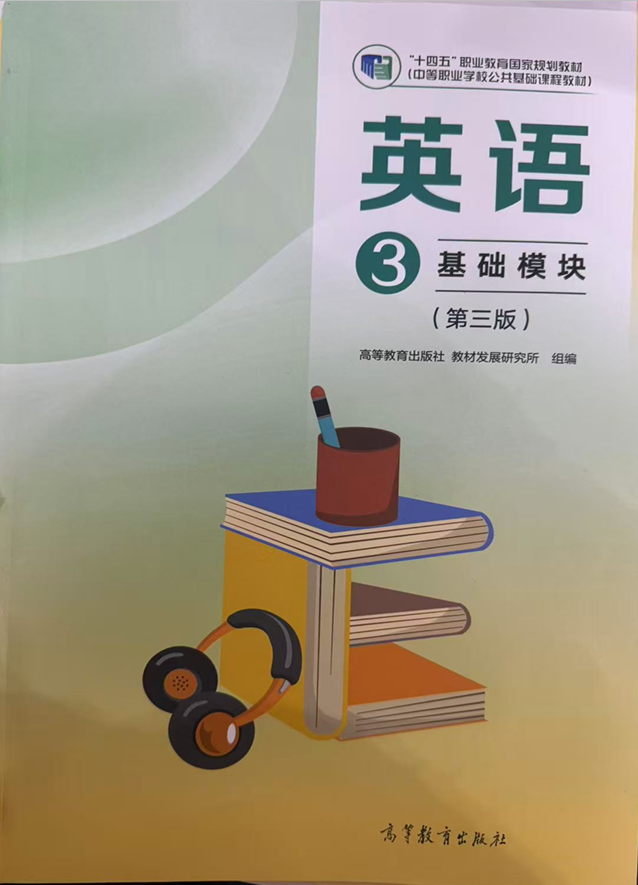
Unit 3 Artificial Intelligence(A卷·基础巩固)《英语 基础模块3》(高教版第三版)单元过关卷(原卷版+解析版)
2026-07-24
|
2份
|
20页
|
69人阅读
|
0人下载
内容正文:
编写说明:本套试卷紧扣《英语 基础模块3》(高教版第三版)教材,以教材单元为基准精准覆盖核心考点。
每个单元设置AB卷,A卷为基础巩固卷,侧重基础考点训练,帮助学生扎实掌握知识要点;B卷为能力提升卷,注重知识整合与全面检测,引导学生构建知识网络。全书设计4份综合测试卷,模拟实战情境,聚焦解题能力突破,全面提升应试能力与知识应用水平。
《英语 基础模块3》(高教版第三版)《单元过关卷》
Unit 3 Artificial Intelligence
A卷·基础巩固
考试时间:120分钟 满分:150分
班级_____姓名_____学号_____成绩_____
Ⅰ.补全对话(5小题,共10分)
阅读下列简短对话,从A、B、C、D中选出最佳答案,将对话补全。
1.— Robots can serve dishes in the new restaurant.
— ________. I saw one bring noodles to a table yesterday.
A. No way B. Never mind C. That is too bad D. I agree with you
2.— To be honest, I prefer talking with a human waiter.
— ________. Machines are helpful, but they cannot smile like people.
A. Help yourself B. We are on the same page C. Good luck D. It does not matter
3.— Mobile payment makes shopping much faster.
— ________. I no longer need to carry much cash.
A. I hope not B. That is impossible C. Exactly D. Be careful
4.— Do you think AI will replace all workers in the future?
— ________. People still design and control machines.
A. Sounds great B. With pleasure C. I am sorry D. I don’t think so
5.— Our class will discuss the pros and cons of AI this afternoon. Would you like to join us?
— ________. I have some ideas about smart homes.
A. Yes, I’d love to B. I have no idea forever C. You are late D. Don’t mention it
Ⅱ.词汇(10小题,共20分)
阅读下列句子,从A、B、C、D中选出与划线单词或短语在句中意思最接近的中文释义。
6.The robot can serve customers in the smart restaurant.
A. 比较 B. 服务 C. 隐藏 D. 修理
7.Good communication helps people understand how to use AI wisely.
A. 比赛 B. 交流 C. 费用 D. 噪声
8.The new app can improve our study efficiency.
A. 降低 B. 忘记 C. 提高 D. 取消
9.Face recognition is one common application of AI in daily life.
A. 缺点 B. 价格 C. 邀请 D. 应用
10.Online maps have an obvious advantage when we travel in a new city.
A. 优势 B. 错误 C. 风险 D. 习惯
11.Some students depend on search tools too much when doing homework.
A. 远离 B. 依靠 C. 打扫 D. 关闭
12.She wants to apply for a job in a technology company.
A. 担心 B. 赞同 C. 申请 D. 支付
13.Most students hold a positive attitude toward useful AI tools.
A. 机器 B. 路线 C. 态度 D. 菜单
14.Using unknown websites may increase the risk of losing personal information.
A. 风险 B. 礼物 C. 工厂 D. 方法
15.We should use smart devices properly in class.
A. 突然地 B. 正确地 C. 安静的 D. 昂贵的
Ⅲ.完形填空(15小题,共30分)
阅读下面短文,掌握其大意,然后从16—30各题所给的A、B、C、D四个选项中,选出最佳答案。
A new intelligent reading room opened recently. At first, many young learners felt curious about the facility, for a small service robot stood near the entrance to greet visitors. The robot could 16.________ books, answer simple questions and remind readers to keep quiet.
One learner was eager to try it out, yet another learner held a doubtful attitude toward the machine. He did not 17.________ it. He warned that heavy reliance on the device might weaken independent thinking. The opinion set the first learner 18________. During the initial week, the learner only used the robot to locate bookshelves. It saved plenty of time and allowed him to read more 19________. However, one day he turned to the robot for a summary of a story for learning tasks. The reply came instantly, yet it left out an 20.________ detail about the writer’s inner feelings.
An instructor then assigned a learning task. Students were required to read the story independently and compare their understanding with information offered by the robot. It became clear that intelligent devices could provide useful 21________, but they could never take the place of careful reading. The two learners finally reached the same 22________: technology brings advantages if used sensibly. Visitors still enjoy the intelligent reading room, yet they keep asking questions, taking notes and checking facts on their own. The robot improves reading 23.________, while independent thinking makes learning meaningful.
Later, the instructor reminded everyone to operate digital tools 24.________ care. If learners grow overly 25.________ on machines, inaccurate answers may 26.________ new troubles. Therefore, people should hold a clear 27.________ toward technological aids. When applied 28________, such tools support learning, but they cannot replace face-to-face 29________. The wisest choice is to 30.________ technological convenience and personal thinking.
16.A. break B. paint C. hide D. serve
17.A. control B. trust C. repair D. forget
18.A. sleepy B. proud C. think D. shout
19.A. carelessly B. angrily C. safely D. efficiently
20.A. empty B. important C. late D. noisy
21.A. chairs B. weather C. prices D. advice
22.A. station B. mistake C. page D. menu
23.A. risk B. efficiency C. fear D. disaster
24.A. from B. without C. about D. with
25.A. dependent B. healthy C. popular D. silent
26.A. apply B. lower C. cause D. scan
27.A. line B. attitude C. factory D. battery
28.A. properly B. early C. loudly D. simply
29.A. noise B. luck C. communication D. picture
30.A. avoid B. enjoy C. balance D. copy
Ⅳ.阅读理解(15小题,共45分)
阅读下列短文,从每题所给的A、B、C、D四个选项中选出最佳答案;C篇根据上下文将五个选项填入文中空缺处。
A
Green Hill Vocational School started an AI helper project this term. In the computer room, students can use a simple learning app to practice English pronunciation. The app listens to a student’s voice, marks difficult sounds and gives short suggestions. It also records the number of practice minutes each week.
Chen Wei, a hotel service major, used to be afraid of speaking English. He often read sentences too fast and missed endings like “-s” and “-ed”. With the app, he practiced ten minutes after lunch every day. The app did not laugh at his mistakes. It only showed him which words he needed to read again. After two weeks, Chen Wei became more confident in role-play activities.
However, the English teacher reminded the class that the app was only a tool. Students still needed to listen to each other, ask questions and learn polite expressions in real conversations. Chen Wei agreed. He said the app helped him improve efficiency, but classmates helped him communicate better. Now he uses both the app and group practice to prepare for future workplace communication.
31.What can the AI learning app help students practice?
A. English pronunciation.
B. Basketball skills.
C. Cooking Chinese food.
D. Drawing posters.
32.What problem did Chen Wei have before using the app?
A. He forgot his hotel uniform.
B. He was afraid of speaking English.
C. He could not turn on computers.
D. He disliked all role-play activities.
33.How long did Chen Wei practice with the app every day?
A. Two hours before class.
B. Five minutes at night.
C. Ten minutes after lunch.
D. Thirty minutes after dinner.
34.Why did the teacher say the app was only a tool?
A. It was too expensive for students.
B. It could not record practice minutes.
C. It made students stop reading books.
D. Students still needed real communication.
35.What is the best title for the passage?
A. A Robot in the Dining Hall
B. The History of Pronunciation
C. Learning English with AI Wisely
D. A Trip to a Hotel
B
In many factories, assembly lines are becoming smarter. At Star Auto Workshop, small robots put car parts together, scan codes and carry heavy boxes. The robots work quickly and do not feel tired. Because of them, workers spend less time on repeated tasks and more time checking quality and solving problems.
At the beginning, some workers feared that robots would take away their jobs. The workshop manager, Ms. Luo, held several training classes. She explained that robots were introduced to perform dangerous and boring work, not to make people useless. Workers learned how to control the robots, read data on screens and stop the line when something went wrong. After training, many workers found their work safer and more interesting.
There were still problems. Once, a robot arm stopped because a sensor was covered by dust. The line had to wait for twenty minutes. The experience taught everyone that smart machines need careful human management. Technology can improve efficiency, but people must use it properly. In Ms. Luo’s words, the best factory is not the one with the most robots, but the one where people and machines work well together.
36.What do robots do at Star Auto Workshop?
A. Teach children to sing.
B. Cook meals for drivers.
C. Put car parts together.
D. Sell tickets to visitors.
37.Why did some workers feel worried at first?
A. They could not find the workshop gate.
B. They had to buy robots themselves.
C. They disliked all training classes.
D. They thought robots might take away their jobs.
38.What does the underlined word “sensor” in Paragraph 3 probably mean?
A. A tool that receives information.
B. A person who paints cars.
C. A book about history.
D. A box for keeping food.
39.What can we learn from the robot arm problem?
A. Factories should stop using screens.
B. Workers should clean and manage machines carefully.
C. Robots are always more careful than people.
D. Quality checking is no longer needed.
40.What is Ms. Luo’s main idea about a good factory?
A. It should have no human workers.
B. It should use only old machines.
C. It should make workers do repeated tasks.
D. People and machines should work well together.
C
Many students enjoy using AI tools when they study. Some tools can check grammar, make mind maps or explain difficult words. ____41____ If students use them in the right way, these tools may make learning easier and more enjoyable.
However, using AI does not mean asking it to finish all tasks. ____42____ When a student copies an answer without thinking, the homework may look good, but the student learns little. Real learning happens when we read, ask why and try again.
A good way is to set a clear purpose before using AI. For example, you can first write your own paragraph. ____43____ Then you can compare the suggestions with your ideas and decide what to change. In this process, you are still the person who thinks and makes choices.
Students also need to check information carefully. AI tools may give wrong or old information. ____44____ Asking teachers, reading trusted books and comparing different sources can help reduce the risk of mistakes.
Technology will keep changing our classrooms. ____45____ If we use AI as a helper instead of a master, it can support our learning and leave more space for human thinking.
A. So we should not believe every answer at once.
B. They can also save time for repeated practice.
C. The key is not to fear it or depend on it too much.
D. After that, ask the tool to point out possible problems.
E. It should help us think better, not think for us.
Ⅴ.语法填空(10小题,共20分)
阅读下面短文,在空白处填入适当的单词或括号内单词的正确形式。
AI is changing the way people learn and work. In a smart classroom, students can use tablets 46.____ (search) for information quickly. A speaking app listens to their voices and tells them which words 47.____ (need) more practice. Last week, our teacher showed us a robot 48.____ could answer simple questions about school rules. Many students felt excited because the robot spoke 49.____ (clear). However, our teacher also reminded us 50.____ AI was only a helper. If we depend 51.____ it too much, we may lose the habit of thinking. Before using an AI tool, students should know their own purpose 52.____ check the answers carefully. In the past few years, AI has 53.____ (bring) many benefits to education. At the same time, some problems have appeared, such as wrong information and privacy risks. Therefore, using AI 54.____ (proper) is very important. A wise learner will enjoy new technology but never stop 55.____ (ask) questions.
Ⅵ.完成句子(5小题,共15分)
根据中文提示补全英文句子。
56.这款新应用能帮助我们提高学习效率。
This new app can help us ____ our study ____.
57.我认为机器人不会完全取代人类。
I don’t think robots ____ ____ humans completely.
58.人脸识别被应用于许多日常场景。
Face recognition ____ ____ to many daily situations.
59.如果我们不正确使用AI,它可能会带来风险。
AI may bring risks if we do not use it ____.
60.重要的是我们要用技术来帮助思考。
It is important for us ____ ____ technology to help thinking.
Ⅶ.应用写作(1小题,共10分)
61.假设你是李华,你们班将开展“Use AI Wisely”主题交流活动。请你写一封约40词的英文邮件,邀请外教Mr. Smith参加。内容包括:1.活动时间和地点;2.活动内容;3.表达期待。
____________________________________________________________________________________________________________________________________________________________________________________________________________________________________________________
原创精品资源学科网独家享有版权,侵权必究!
学科网(北京)股份有限公司
$
编写说明:本套试卷紧扣《英语 基础模块3》(高教版第三版)教材,以教材单元为基准精准覆盖核心考点。
每个单元设置AB卷,A卷为基础巩固卷,侧重基础考点训练,帮助学生扎实掌握知识要点;B卷为能力提升卷,注重知识整合与全面检测,引导学生构建知识网络。全书设计4份综合测试卷,模拟实战情境,聚焦解题能力突破,全面提升应试能力与知识应用水平。
《英语 基础模块3》(高教版第三版)《单元过关卷》
Unit 3 Artificial Intelligence
A卷·基础巩固
考试时间:120分钟 满分:150分
班级_____姓名_____学号_____成绩_____
Ⅰ.补全对话(5小题,共10分)
阅读下列简短对话,从A、B、C、D中选出最佳答案,将对话补全。
1.— Robots can serve dishes in the new restaurant.
— ________. I saw one bring noodles to a table yesterday.
A. No way B. Never mind C. That is too bad D. I agree with you
【答案】D
【详解】考查表示赞同的交际用语。上句说机器人能在新餐厅送菜,后句用亲眼所见进行补充,说明说话人赞同这一观点。D项“I agree with you”符合语境。A项表示否定,B项用于回应道歉或安慰,C项表示遗憾,,均不合适,故选D。
2.— To be honest, I prefer talking with a human waiter.
— ________. Machines are helpful, but they cannot smile like people.
A. Help yourself B. We are on the same page C. Good luck D. It does not matter
【答案】B
【详解】考查认同观点。上句表达更喜欢与真人服务员交流,后句说明机器有用但无法像人一样微笑,语义上表示双方意见一致。B项“We are on the same page”意为“我们意见一致”,符合语境。A、C、D项均不能表达认同,故选B。
3.— Mobile payment makes shopping much faster.
— ________. I no longer need to carry much cash.
A. I hope not B. That is impossible C. Exactly D. Be careful
【答案】C
【详解】考查赞同回应。上句认为移动支付让购物更快,后句说明自己不用带很多现金,进一步支持上句观点。C项“Exactly”意为“正是如此”,符合语境。A项表示不希望如此,B项过于否定,D项为提醒,均与语境不符,故选C。
4.— Do you think AI will replace all workers in the future?
— ________. People still design and control machines.
A. Sounds great B. With pleasure C. I am sorry D. I don’t think so
【答案】D
【详解】考查表达不同意。问句询问人工智能是否会取代所有工人,后句指出人仍然设计和控制机器,说明说话人不同意这一绝对说法。D项“I don’t think so”符合语境。A项表示赞赏,B项回应请求,C项道歉,均不合适,故选D。
5.— Our class will discuss the pros and cons of AI this afternoon. Would you like to join us?
— ________. I have some ideas about smart homes.
A. Yes, I’d love to B. I have no idea forever C. You are late D. Don’t mention it
【答案】A
【详解】考查接受邀请。问句“Would you like to join us?”发出邀请,后句“I have some ideas...”说明说话人愿意参加并准备分享观点。A项“Yes, I’d love to”是接受邀请的常用表达。B项表达生硬,C、D项与邀请无关,故选A。
Ⅱ.词汇(10小题,共20分)
阅读下列句子,从A、B、C、D中选出与划线单词或短语在句中意思最接近的中文释义。
6.The robot can serve customers in the smart restaurant.
A. 比较 B. 服务 C. 隐藏 D. 修理
【答案】B
【详解】考查动词词义。serve作动词,表示“服务;接待”。句中customers为“顾客”,robot can serve customers意为“机器人能服务顾客”,符合智能餐厅语境。A、C、D项均不能与customers构成合理语义,故选B。
7.Good communication helps people understand how to use AI wisely.
A. 比赛 B. 交流 C. 费用 D. 噪声
【答案】B
【详解】考查名词词义。communication意为“交流;沟通”。句中helps people understand说明通过信息传递帮助人们理解如何合理使用AI,因此应选“交流”。A、C、D项均不符合句意,故选B。
8.The new app can improve our study efficiency.
A. 降低 B. 忘记 C. 提高 D. 取消
【答案】C
【详解】考查动词词义。improve表示“提升;提高”。句中new app与study efficiency搭配,表示新应用能提高学习效率。A项语义相反,B、D项与效率搭配不当,故选C。
9.Face recognition is one common application of AI in daily life.
A. 缺点 B. 价格 C. 邀请 D. 应用
【答案】D
【详解】考查名词词义。application在科技语境中表示“应用”。句中face recognition是AI在日常生活中的一种具体使用方式,因此D项正确。A、B、C项均不能概括人脸识别与AI的关系,故选D。
10.Online maps have an obvious advantage when we travel in a new city.
A. 优势 B. 错误 C. 风险 D. 习惯
【答案】A
【详解】考查名词词义。advantage意为“优势;有利条件”。句中online maps在陌生城市旅行时能提供便利,因此have an obvious advantage表示“有明显优势”。B、C、D项均不能表达积极作用,故选A。
11.Some students depend on search tools too much when doing homework.
A. 远离 B. 依靠 C. 打扫 D. 关闭
【答案】B
【详解】考查动词短语。depend on表示“依靠;依赖”。句中too much提示学生过度依赖搜索工具完成作业,因此B项符合语境。A、C、D项均不能表达依赖关系,故选B。
12.She wants to apply for a job in a technology company.
A. 担心 B. 赞同 C. 申请 D. 支付
【答案】C
【详解】考查动词短语。apply for表示“申请”。句中a job为申请对象,in a technology company说明工作地点或单位,因此应理解为“申请一份工作”。A、B、D项均不符合搭配,故选C。
13.Most students hold a positive attitude toward useful AI tools.
A. 机器 B. 路线 C. 态度 D. 菜单
【答案】C
【详解】考查名词词义。attitude意为“态度;看法”。句中positive和toward useful AI tools共同说明学生对AI工具的看法,因此C项正确。A、B、D项均不是心理或评价角度,故选C。
14.Using unknown websites may increase the risk of losing personal information.
A. 风险 B. 礼物 C. 工厂 D. 方法
【答案】A
【详解】考查名词词义。risk表示“风险;危险”。句中losing personal information是不良后果,unknown websites可能增加这种风险,因此A项符合语境。B、C、D项均不能表示潜在危险,故选A。
15.We should use smart devices properly in class.
A. 突然地 B. 正确地 C. 安静的 D. 昂贵的
【答案】B
【详解】考查副词词义。properly表示“正确地;恰当地”。句中use smart devices properly指在课堂上合理、恰当地使用智能设备。A项为副词但语义不符,C、D项词性和语义均不合适,故选B。
Ⅲ.完形填空(15小题,共30分)
阅读下面短文,掌握其大意,然后从16—30各题所给的A、B、C、D四个选项中,选出最佳答案。
A new intelligent reading room opened recently. At first, many young learners felt curious about the facility, for a small service robot stood near the entrance to greet visitors. The robot could 16.________ books, answer simple questions and remind readers to keep quiet.
One learner was eager to try it out, yet another learner held a doubtful attitude toward the machine. He did not 17.________ it. He warned that heavy reliance on the device might weaken independent thinking. The opinion set the first learner 18________. During the initial week, the learner only used the robot to locate bookshelves. It saved plenty of time and allowed him to read more 19________. However, one day he turned to the robot for a summary of a story for learning tasks. The reply came instantly, yet it left out an 20.________ detail about the writer’s inner feelings.
An instructor then assigned a learning task. Students were required to read the story independently and compare their understanding with information offered by the robot. It became clear that intelligent devices could provide useful 21________, but they could never take the place of careful reading. The two learners finally reached the same 22________: technology brings advantages if used sensibly. Visitors still enjoy the intelligent reading room, yet they keep asking questions, taking notes and checking facts on their own. The robot improves reading 23.________, while independent thinking makes learning meaningful.
Later, the instructor reminded everyone to operate digital tools 24.________ care. If learners grow overly 25.________ on machines, inaccurate answers may 26.________ new troubles. Therefore, people should hold a clear 27.________ toward technological aids. When applied 28________, such tools support learning, but they cannot replace face-to-face 29________. The wisest choice is to 30.________ technological convenience and personal thinking.
16.A. break B. paint C. hide D. serve
17.A. control B. trust C. repair D. forget
18.A. sleepy B. proud C. think D. shout
19.A. carelessly B. angrily C. safely D. efficiently
20.A. empty B. important C. late D. noisy
21.A. chairs B. weather C. prices D. advice
22.A. station B. mistake C. page D. menu
23.A. risk B. efficiency C. fear D. disaster
24.A. from B. without C. about D. with
25.A. dependent B. healthy C. popular D. silent
26.A. apply B. lower C. cause D. scan
27.A. line B. attitude C. factory D. battery
28.A. properly B. early C. loudly D. simply
29.A. noise B. luck C. communication D. picture
30.A. avoid B. enjoy C. balance D. copy
【答案】16.D 17.B 18.C 19.D 20.B 21.D 22.C 23.B 24.D 25.A 26.C 27.B 28.A 29.C 30.C
【导语】本文是一篇夹叙夹议的记叙文,讲述智能阅览室内服务机器人给阅读带来便利,主人公在实践中意识到智能设备无法替代独立思考。文章探讨如何理性看待科技辅助工具,倡导在科技便利与自主思考之间寻求平衡,侧重考查依托上下文语境辨析词汇、把握篇章主旨的完形填空解题能力。
【详解】16.D serve。空后搭配图书相关服务与答疑,机器人在阅览室为读者提供协助,serve“服务;提供协助” 符合语境,paint、hide、break 均无法匹配场景动作。
【详解】17.B trust。另一名学习者担忧人们过度依赖机器人,可见他起初并不完全信任这台机器,control “控制”、repair “修理”、forget “忘记” 无法体现对智能工具的观望态度。
【详解】18.C think。同伴提出机器可能削弱独立思考,这番话促使这名学习者开始思考,sleepy、proud、shout 与后文自我反思的情节无关。
【详解】19.D efficiently。机器人帮助定位书架、节约时间,让学习者能够更加高效阅读,carelessly、angrily、safely 不能体现节省时间带来的学习优势。
【详解】20.B important。机器人快速生成故事概要,却遗漏关乎作者情感的重要细节,empty、late、noisy 不能修饰 detail,不符合文意。
【详解】21.D advice。智能设备能够提供有用的参考建议,但无法替代深度阅读,weather、prices、chairs 与阅读学习场景无关。
【详解】22.C page。reach the same page 为固定表达,表示达成共识,呼应两人从观点分歧到形成统一看法的过程,station、mistake、menu 无此用法。
【详解】23.B efficiency。机器人节约找书时间,提升阅读效率,risk、fear、disaster 都是负面词汇,与机器具备的正面作用不符。
【详解】24.D with。with care 为固定搭配,意为 “谨慎地;留心地”,老师提醒大家谨慎使用各类数字工具,from、without、about 不能构成该搭配。
【详解】25.A dependent。become dependent on 表示 “依赖……”,过度依赖机器会使学习者慢慢丧失独立思考能力,healthy、popular、silent 语义不匹配。
【详解】26.C cause。cause problems 意为 “引发问题”,错误信息会带来新的学习困扰,apply、lower、scan 难以和 problems 自然搭配。
【详解】27.B attitude。人们需要树立清晰的态度,理性看待科技辅助工具,line、factory、battery 和观点认知无关。
【详解】28.A properly。use it properly 表示 “合理、恰当地使用工具”,文章倡导理性运用科技,properly 契合全文主旨,early、loudly、simply 表意偏差。
【详解】29.C communication。智能工具可以辅助学习,但不能取代人与人面对面的交流,noise、luck、picture 和学习主题无关。
【详解】30.C balance。全文主旨:应当在科技便利与自主思考之间寻求平衡,avoid、enjoy、copy 无法概括文章核心观点。
Ⅳ.阅读理解(15小题,共45分)
阅读下列短文,从每题所给的A、B、C、D四个选项中选出最佳答案;C篇根据上下文将五个选项填入文中空缺处。
A
Green Hill Vocational School started an AI helper project this term. In the computer room, students can use a simple learning app to practice English pronunciation. The app listens to a student’s voice, marks difficult sounds and gives short suggestions. It also records the number of practice minutes each week.
Chen Wei, a hotel service major, used to be afraid of speaking English. He often read sentences too fast and missed endings like “-s” and “-ed”. With the app, he practiced ten minutes after lunch every day. The app did not laugh at his mistakes. It only showed him which words he needed to read again. After two weeks, Chen Wei became more confident in role-play activities.
However, the English teacher reminded the class that the app was only a tool. Students still needed to listen to each other, ask questions and learn polite expressions in real conversations. Chen Wei agreed. He said the app helped him improve efficiency, but classmates helped him communicate better. Now he uses both the app and group practice to prepare for future workplace communication.
31.What can the AI learning app help students practice?
A. English pronunciation.
B. Basketball skills.
C. Cooking Chinese food.
D. Drawing posters.
32.What problem did Chen Wei have before using the app?
A. He forgot his hotel uniform.
B. He was afraid of speaking English.
C. He could not turn on computers.
D. He disliked all role-play activities.
33.How long did Chen Wei practice with the app every day?
A. Two hours before class.
B. Five minutes at night.
C. Ten minutes after lunch.
D. Thirty minutes after dinner.
34.Why did the teacher say the app was only a tool?
A. It was too expensive for students.
B. It could not record practice minutes.
C. It made students stop reading books.
D. Students still needed real communication.
35.What is the best title for the passage?
A. A Robot in the Dining Hall
B. The History of Pronunciation
C. Learning English with AI Wisely
D. A Trip to a Hotel
【答案】31.A 32.B 33.C 34.D 35.C
【导语】本文介绍一所职业学校使用AI学习应用帮助学生练习英语发音的项目,并以Chen Wei为例说明AI能提升效率,但真实交流和同伴练习仍然重要。
31细节理解题。第一段第二句“students can use a simple learning app to practice English pronunciation”明确说明该应用帮助学生练习英语发音,因此选A。B、C、D项均未提及。
32细节理解题。第二段第一句“Chen Wei...used to be afraid of speaking English.”直接说明他以前害怕说英语,因此选B。其他选项均不是他的主要问题。
33细节理解题。第二段“With the app, he practiced ten minutes after lunch every day.”说明他每天午饭后练习十分钟,故选C。
34细节理解题。第三段指出学生仍需listen to each other, ask questions and learn polite expressions in real conversations,说明应用不能代替真实交流,因此选D。
35主旨大意题。全文围绕学生如何合理使用AI应用学习英语展开,既写优势也写使用边界。B项“Learning English with AI Wisely”最能概括全文,故选C。
B
In many factories, assembly lines are becoming smarter. At Star Auto Workshop, small robots put car parts together, scan codes and carry heavy boxes. The robots work quickly and do not feel tired. Because of them, workers spend less time on repeated tasks and more time checking quality and solving problems.
At the beginning, some workers feared that robots would take away their jobs. The workshop manager, Ms. Luo, held several training classes. She explained that robots were introduced to perform dangerous and boring work, not to make people useless. Workers learned how to control the robots, read data on screens and stop the line when something went wrong. After training, many workers found their work safer and more interesting.
There were still problems. Once, a robot arm stopped because a sensor was covered by dust. The line had to wait for twenty minutes. The experience taught everyone that smart machines need careful human management. Technology can improve efficiency, but people must use it properly. In Ms. Luo’s words, the best factory is not the one with the most robots, but the one where people and machines work well together.
36.What do robots do at Star Auto Workshop?
A. Teach children to sing.
B. Cook meals for drivers.
C. Put car parts together.
D. Sell tickets to visitors.
37.Why did some workers feel worried at first?
A. They could not find the workshop gate.
B. They had to buy robots themselves.
C. They disliked all training classes.
D. They thought robots might take away their jobs.
38.What does the underlined word “sensor” in Paragraph 3 probably mean?
A. A tool that receives information.
B. A person who paints cars.
C. A book about history.
D. A box for keeping food.
39.What can we learn from the robot arm problem?
A. Factories should stop using screens.
B. Workers should clean and manage machines carefully.
C. Robots are always more careful than people.
D. Quality checking is no longer needed.
40.What is Ms. Luo’s main idea about a good factory?
A. It should have no human workers.
B. It should use only old machines.
C. It should make workers do repeated tasks.
D. People and machines should work well together.
【答案】36.C 37.D 38.A 39.B 40.D
【导语】本文介绍智能生产线中的机器人应用。文章说明机器人能承担重复、危险工作并提高效率,同时强调工人培训、设备管理以及人与机器协作的重要性。
【详解】36细节理解题。第一段“At Star Auto Workshop, small robots put car parts together...”直接说明机器人组装汽车零部件,因此选C。A、B、D项均与工厂场景不符。
37细节理解题。第二段第一句“At the beginning, some workers feared that robots would take away their jobs.”说明工人担心机器人抢走工作,故选D。
38词义猜测题。第三段说robot arm stopped because a sensor was covered by dust,灰尘遮住某部件导致机器臂停止,结合机器运行逻辑可推知sensor是接收信息的装置,因此选A。
39推理判断题。第三段“The experience taught everyone that smart machines need careful human management.”说明机器故障提醒人们要认真清洁和管理设备,因此选B。
40细节理解题。末句指出最好的工厂是“where people and machines work well together”,即人与机器良好协作,故选D。
C
Many students enjoy using AI tools when they study. Some tools can check grammar, make mind maps or explain difficult words. ____41____ If students use them in the right way, these tools may make learning easier and more enjoyable.
However, using AI does not mean asking it to finish all tasks. ____42____ When a student copies an answer without thinking, the homework may look good, but the student learns little. Real learning happens when we read, ask why and try again.
A good way is to set a clear purpose before using AI. For example, you can first write your own paragraph. ____43____ Then you can compare the suggestions with your ideas and decide what to change. In this process, you are still the person who thinks and makes choices.
Students also need to check information carefully. AI tools may give wrong or old information. ____44____ Asking teachers, reading trusted books and comparing different sources can help reduce the risk of mistakes.
Technology will keep changing our classrooms. ____45____ If we use AI as a helper instead of a master, it can support our learning and leave more space for human thinking.
A. So we should not believe every answer at once.
B. They can also save time for repeated practice.
C. The key is not to fear it or depend on it too much.
D. After that, ask the tool to point out possible problems.
E. It should help us think better, not think for us.
【答案】41.B 42.E 43.D 44.A 45.C
【导语】本文围绕学生如何合理使用AI学习工具展开,说明AI能节省时间、提供建议,但不能代替思考;学生应先自主完成任务,再核查信息并保持独立判断。
【详解】41空前列举AI工具能检查语法、制作思维导图、解释难词,空后说这些工具让学习更容易,因此空处应继续说明工具优点。B项“They can also save time...”承接自然,故选B。
42空前说使用AI不等于让它完成所有任务,空后批评不思考就复制答案,因此空处应强调AI不能替我们思考。E项符合上下文逻辑,故选E。
43空前建议先写自己的段落,空后说比较建议与自己的想法,因此空处应为“再让工具指出可能的问题”。D项中的After that与前句first形成顺序衔接,故选D。
44空前说AI可能给出错误或过时信息,空后提出查阅可靠资料、比较来源,因此空处应提醒不要立即相信每个答案。A项符合因果关系,故选A。
45空前说技术会持续改变课堂,空后说把AI当助手而不是主人,因此空处应概括关键态度:既不害怕也不过度依赖。C项承上启下,故选C。
Ⅴ.语法填空(10小题,共20分)
阅读下面短文,在空白处填入适当的单词或括号内单词的正确形式。
AI is changing the way people learn and work. In a smart classroom, students can use tablets 46.____ (search) for information quickly. A speaking app listens to their voices and tells them which words 47.____ (need) more practice. Last week, our teacher showed us a robot 48.____ could answer simple questions about school rules. Many students felt excited because the robot spoke 49.____ (clear). However, our teacher also reminded us 50.____ AI was only a helper. If we depend 51.____ it too much, we may lose the habit of thinking. Before using an AI tool, students should know their own purpose 52.____ check the answers carefully. In the past few years, AI has 53.____ (bring) many benefits to education. At the same time, some problems have appeared, such as wrong information and privacy risks. Therefore, using AI 54.____ (proper) is very important. A wise learner will enjoy new technology but never stop 55.____ (ask) questions.
【答案】46.to search 47.need 48.that/which 49.clearly 50.that 51.on 52.and 53.brought 54.properly 55.asking
【详解】46考查非谓语动词。use sth. to do sth.表示“使用某物做某事”,空处作目的状语,应填to search。
47考查主谓一致。which words为复数含义,从句描述一般情况,用一般现在时,谓语动词用原形need。
48考查定语从句。先行词为a robot,空处在从句中作主语,可用that或which引导。
49考查词性转换。空处修饰动词spoke,应将形容词clear变为副词clearly。
50考查宾语从句连接词。reminded us后接完整陈述句,说明提醒内容,应用that引导宾语从句。
51考查固定搭配。depend on表示“依靠;依赖”,句意为如果过度依赖AI,可能失去思考习惯。
52考查连词。know their own purpose与check the answers carefully为并列动作,应用and连接。
53考查现在完成时。In the past few years提示现在完成时,has后用过去分词brought。
54考查词性转换。空处修饰using AI这一动作,应使用副词properly,表示“恰当地”。
55考查非谓语动词。stop doing sth.表示“停止做某事”,句中指永不停止提问,因此填asking。
Ⅵ.完成句子(5小题,共15分)
根据中文提示补全英文句子。
56.这款新应用能帮助我们提高学习效率。
This new app can help us ____ our study ____.
【答案】improve; efficiency
【详解】考查动词和名词搭配。help sb. do sth.后接动词原形improve;study efficiency表示“学习效率”。
57.我认为机器人不会完全取代人类。
I don’t think robots ____ ____ humans completely.
【答案】will replace
【详解】考查宾语从句中的时态。主句表达观点,从句谈将来可能发生的事,用will replace表示“将会取代”。
58.人脸识别被应用于许多日常场景。
Face recognition ____ ____ to many daily situations.
【答案】is applied
【详解】考查被动语态。主语Face recognition与apply之间为被动关系,描述客观事实,用一般现在时被动语态is applied。
59.如果我们不正确使用AI,它可能会带来风险。
AI may bring risks if we do not use it ____.
【答案】properly
【详解】考查条件状语从句和副词。if引导条件状语从句,空处修饰use,应填properly表示“正确地;恰当地”。
60.重要的是我们要用技术来帮助思考。
It is important for us ____ ____ technology to help thinking.
【答案】to use
【详解】考查固定句型。It is important for sb. to do sth.表示“对某人来说做某事很重要”,故填to use。
Ⅶ.应用写作(1小题,共10分)
61.假设你是李华,你们班将开展“Use AI Wisely”主题交流活动。请你写一封约40词的英文邮件,邀请外教Mr. Smith参加。内容包括:1.活动时间和地点;2.活动内容;3.表达期待。
____________________________________________________________________________________________________________________________________________________________________________________________________________________________________________________
【参考范文】Dear Mr. Smith,
Our class will hold an activity called “Use AI Wisely” in Room 302 at 3:00 p.m. this Friday. We will talk about the benefits and problems of AI and share useful learning tools. We sincerely hope you can join us and give us some advice.
Yours,
Li Hua
【词汇积累】hold an activity开展活动;benefits and problems优点和问题;learning tools学习工具;give advice提出建议。
【句式拓展】We sincerely hope you can join us and give us some advice. 可替换为:It would be great if you could come and share your ideas with us.
【点睛】邮件需交代时间、地点、活动内容和邀请目的;语言应礼貌自然,避免遗漏要点或使用真实学校名称。
原创精品资源学科网独家享有版权,侵权必究!
学科网(北京)股份有限公司
$
资源预览图

1

2

3
由于学科网是一个信息分享及获取的平台,不确保部分用户上传资料的 来源及知识产权归属。如您发现相关资料侵犯您的合法权益,请联系学科网,我们核实后将及时进行处理。