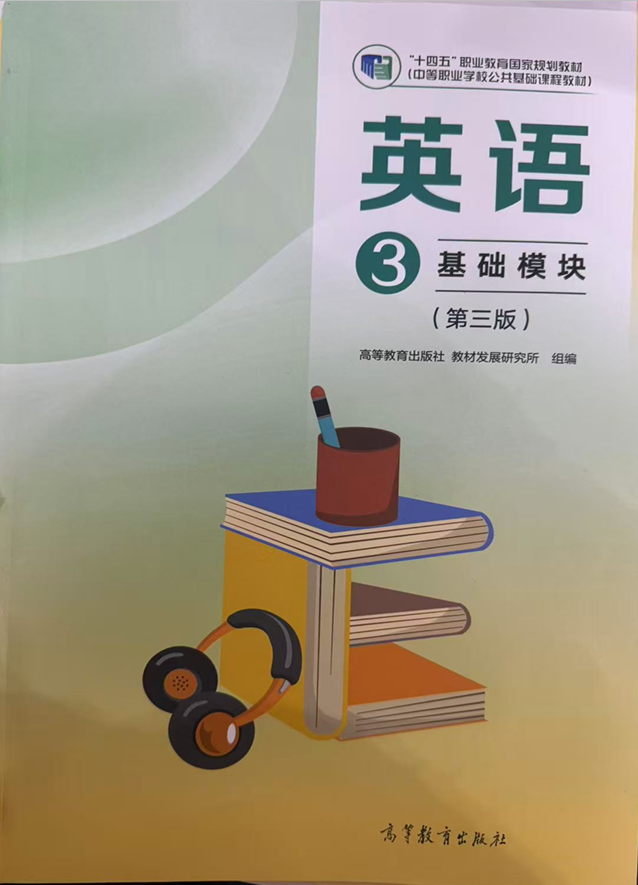
Unit 5——Unit 8阶段测试卷(B卷·能力提升)《英语 基础模块3》(高教版第三版)单元过关卷(原卷版+解析版)
2026-07-24
|
2份
|
26页
|
49人阅读
|
0人下载
内容正文:
编写说明:本套试卷紧扣《英语 基础模块3》(高教版第三版)教材,以教材单元为基准精准覆盖核心考点。
每个单元设置AB卷,A卷为基础巩固卷,侧重基础考点训练,帮助学生扎实掌握知识要点;B卷为能力提升卷,注重知识整合与全面检测,引导学生构建知识网络。全书设计4份综合测试卷,模拟实战情境,聚焦解题能力突破,全面提升应试能力与知识应用水平。
《英语 基础模块3》(高教版第三版)《单元过关卷》
Unit 5——Unit 8阶段测试卷
B卷·能力提升
考试时间:120分钟 满分:150分
班级_____姓名_____学号_____成绩_____
Ⅰ.补全对话(5小题,共10分)
阅读下列简短对话,从A、B、C、D中选出最佳答案,将对话补全。
1.— I am planning a report on how local people protect the wetland. Could you give me some advice?
— ________. You may begin with changes in plants and birds.
A. It is a pity
B. You are late
C. I hope not
D. With pleasure
【答案】D
【详解】考查回应请求。问句请求对方给建议,后句具体提出可从动植物变化入手,说明答话人愿意帮助,With pleasure符合语境。
2.— This stone carving looks simple, but it carries a long history.
— ________. We should not judge it only by its size.
A. No, thanks
B. That is a good point
C. Help yourself
D. Be careful
【答案】B
【详解】考查赞同评价。上句说明石刻虽小却承载历史,后句进一步指出不能只按大小判断,B项表示认可观点。
3.— The flood warning has been raised. What should residents do first?
— ________. Important papers and water should be prepared, too.
A. They should buy more souvenirs
B. They should watch a movie
C. They should move to a safe place
D. They should open all windows
【答案】C
【详解】考查灾害应对。洪水预警升级时,居民首先应转移到安全地点,后句继续补充准备物品,C项符合安全语境。
4.— Your story about the village doctor is moving.
— ________. I want more people to learn from her.
A. Never mind
B. What a shame
C. Thank you
D. No way
【答案】C
【详解】考查回应评价。对方肯定故事感人,答话人表示感谢并说明希望更多人学习这位医生,Thank you符合语境。
5.— Why do you keep revising the guide to the museum?
— ________. Visitors from different ages need clear and friendly language.
A. Because I dislike museums
B. Because the hall is closed
C. Because I lost my ticket
D. Because details matter
【答案】D
【详解】考查询问原因。问句问为何不断修改博物馆导览,后句强调不同年龄游客需要清晰友好的语言,说明细节重要,D项符合语境。
Ⅱ.词汇(10小题,共20分)
阅读下列句子,从A、B、C、D中选出与划线单词或短语在句中意思最接近的中文释义。
6.The guide asked visitors to stay on the path to preserve the rare plants.
A. 伤害 B. 装饰 C. 售卖 D. 保护
【答案】D
【详解】preserve意为“保护;保存”。句中rare plants需要被保护,且stay on the path是不破坏植物的做法。
7.The old town is a valuable part of our cultural heritage.
A. 广告 B. 温度 C. 订单 D. 遗产
【答案】D
【详解】heritage意为“遗产;传统”。cultural heritage表示“文化遗产”,符合老城历史文化语境。
8.People had to evacuate quickly when the river rose above the warning line.
A. 比较 B. 撤离 C. 采访 D. 发明
【答案】B
【详解】evacuate表示“撤离;疏散”。河水超过警戒线时人们需要快速转移,故选B。
9.The mechanic became a role model because he trained young workers patiently.
A. 顾客 B. 屏幕 C. 榜样 D. 菜单
【答案】C
【详解】role model意为“榜样”。because后说明其耐心培训青年工人,是成为榜样的原因。
10.The valley is surrounded by high mountains on three sides.
A. 被……取消 B. 被……订购 C. 被……比较 D. 被……包围
【答案】D
【详解】surrounded by表示“被……包围”。句中on three sides说明山谷三面环山,故选D。
11.The teacher asked us to compare the two ways of protecting old houses.
A. 隐藏 B. 取消 C. 比较 D. 邮寄
【答案】C
【详解】compare意为“比较”。the two ways说明需要比较两种保护旧房子的方式。
12.The rescue team worked through the night in a difficult situation.
A. 情况 B. 奖章 C. 餐厅 D. 节日
【答案】A
【详解】situation表示“情况;形势”。救援队整夜工作,说明处于困难情况中。
13.Her invention was small but practical for people living alone.
A. 吵闹的 B. 实用的 C. 遥远的 D. 私人的
【答案】B
【详解】practical表示“实用的;切实可行的”。后文for people living alone说明该发明有实际用途。
14.The museum uses digital screens to display the history of paper-making.
A. 预测 B. 拒绝 C. 修理 D. 展示
【答案】D
【详解】display作动词,意为“展示;陈列”。digital screens用于展示造纸历史,故选D。
15.The volunteer showed great responsibility by checking every door after the storm.
A. 责任感 B. 速度 C. 价格 D. 幽默
【答案】A
【详解】responsibility意为“责任;责任感”。风暴后检查每扇门体现认真负责,故选A。
Ⅲ.完形填空(15小题,共30分)
阅读下面短文,掌握其大意,然后从16—30各题所给的A、B、C、D四个选项中,选出最佳答案。
When a local school launched a living culture preservation project, Lin Tao joined its old house survey team. Their task was to visit families near West Lane and record the stories behind the old buildings. At first, Lin Tao thought the work would be 16______. It seemed that they only needed to take photos and write down house addresses. However, Mr. Qian, a retired craftsman with decades of repair experience, soon changed his mind. He told the team that every door and window might 17______ a unique memory of the past.
The first house on their list had a wooden gate damaged by weeks of heavy rain. The owner planned to replace it with a new metal gate, but Mr. Qian advised him to 18______ the original decorative pattern. He showed the team how to clean the wood 19______ and redraw the worn carvings before repair. Lin Tao was surprised to find that a small flower carving on the gate reflected the family’s wish for a peaceful life. During the survey, the team also learned to ask questions 20______. Some elderly residents spoke slowly, and a few could not remember exact dates. They had to listen with 21______ and cross-check information against old family photos. One afternoon, a sudden storm swept through the lane. The team helped move tools indoors and 22______ the wet floor to prevent falls. That day, the project no longer felt like a school task but something truly meaningful.
After three weeks of work, the team produced a booklet for the community reading room, with photos, street maps and collected stories inside. Mr. Qian wrote a short foreword for them: “A useful craft should 23______ people with their history.” His words left a deep impression on Lin Tao. He had once only admired modern buildings, but now he understood why old houses 24______ careful attention. A young volunteer can be 25______ when he listens to old stories and devotes himself to serving the neighborhood. Later, with Mr. Qian’s guidance, the wooden gate was successfully 26______. The owner said the project was not just about repairing old houses, but also about warm 27______. Mr. Qian added that repair work requires a 28______ method as well as a caring heart. If people learn from old buildings, they can 29______ traditional culture and carry it 30______ for future generations.
16. A. dangerous B. popular C. easy D. private
17. A. avoid B. carry C. borrow D. cancel
18. A. break B. hide C. paint D. keep
19. A. angrily B. gently C. loudly D. carelessly
20. A. suddenly B. cheaply C. politely D. heavily
21. A. speed B. patience C. noise D. money
22. A. checked B. invented C. refused D. ordered
23. A. separate B. forget C. connect D. waste
24. A. sell B. fear C. miss D. need
25. A. brave B. empty C. wrong D. cold
26. A. ignored B. repaired C. lost D. pushed
27. A. service B. secret C. weather D. price
28. A. silent B. tiny C. careless D. standard
29. A. compare B. interrupt C. protect D. translate
30. A. forward B. outside C. alone D. away
【答案】16.C 17.B 18.D 19.B 20.C 21.B 22.A 23.C 24.D 25.A 26.B 27.A 28.D 29.C 30.A
【导语】本文讲述了学生林涛参与老民居文化调研项目,在退休工匠钱师傅的指导下记录老建筑故事、参与古木门修复的经历,展现了老建筑承载的文化价值,以及年轻一代参与文化传承的意义。
【详解】16. C. easy:根据后文 “只需拍照和记录地址” 可知,林涛起初认为这项工作很简单,dangerous 危险的、popular 流行的、private 私人的均不符合初始认知的语境。
17. B. carry:句意为每一扇门窗都可能承载一段独特的过往记忆,carry 有承载、蕴含之意,avoid 避免、borrow 借用、cancel 取消均不符合语义逻辑。
18. D. keep:钱师傅建议房主保留木门原本的装饰纹样,而非直接更换金属门,keep 保留符合文物修复保护的逻辑,break 打破、hide 隐藏、paint 绘画均不符合语境。
19. B. gently:清理老旧木质构件需要动作轻柔,避免造成二次损坏,gently 轻柔地符合专业修复的操作特点,angrily 生气地、loudly 大声地、carelessly 粗心地均不符合场景。
20. C. politely:采访年长居民时需要礼貌提问,politely 礼貌地符合社交礼仪与调研场景,suddenly 突然地、cheaply 廉价地、heavily 沉重地均不符合语境。
21. B. patience:老人语速慢、记不清具体日期,需要调研者耐心倾听核对,patience 耐心符合语境,speed 速度、noise 噪音、money 金钱均与文意无关。
22. A. checked:暴雨过后团队检查湿滑地面,防止有人滑倒,checked 检查符合安全排查的动作逻辑,invent 发明、refuse 拒绝、order 命令均不符合语境。
23. C. connect:句意为一门有用的手艺应当将人与历史联结起来,connect...with... 为固定搭配,意为把…… 与…… 联系起来,separate 分离、forget 忘记、waste 浪费均不符合句意。
24. D. need:林涛从前只欣赏现代建筑,如今明白了老房子需要悉心照料,need 需要符合认知转变的逻辑,sell 售卖、fear 害怕、miss 想念均不符合文意。
25. A. brave:年轻志愿者愿意聆听历史故事、投身社区服务,是有担当、勇敢的表现,brave 勇敢的符合对志愿者的正向评价,empty 空的、wrong 错误的、cold 冰冷的均为负面含义,不符合语境。
26. B. repaired:在钱师傅的指导下,此前被雨水损坏的木门成功得到修复,repaired 修复呼应前文木门损坏的情节,ignored 忽视、lost 丢失、pushed 推动均不符合。
27. A. service:房主表示这个项目不仅是修缮老房子,更是温暖的社区服务,service 服务呼应全文的志愿调研主题,secret 秘密、weather 天气、price 价格均与文意无关。
28. D. standard:钱师傅补充说,修缮工作既需要暖心的态度,也需要规范的操作方法,standard 标准的、规范的符合专业修复的要求,silent 沉默的、tiny 微小的、careless 粗心的均不符合。
29. C. protect:句意为如果人们能从老建筑中汲取养分,就能保护传统文化并将其传递给后代,protect 保护符合文化传承的主题,compare 比较、interrupt 打断、translate 翻译均不符合语境。
30. A. forward:carry forward 为固定短语,意为传承、发扬光大,此处指将传统文化传承下去,outside 向外、alone 独自、away 离开均无法与 carry 搭配表达传承之意。
Ⅳ.阅读理解(15小题,共45分)
阅读下列短文,从每题所给的A、B、C、D四个选项中选出最佳答案;C篇根据上下文将五个选项填入文中空缺处。
A
In South Bay School, every class has a “disaster monitor”. The monitor does not replace teachers or rescue workers. Instead, he or she helps classmates notice risks before a storm, a flood or a fire. This term, Mei Lin became the monitor of Class Two. She was quiet, so some students wondered whether she could do the job well. Mei Lin did not argue. She began by reading safety books and checking the classroom carefully every Friday.
In April, the city had several days of heavy rain. Mei Lin noticed that boxes near the back door made the exit narrow. She asked classmates to move them to a storage room. She also found that two students did not know where the meeting point was. During a class meeting, she drew a simple route map and used colored arrows to explain it. The map was later put beside the door. When thunder was heard during a PE lesson, she reminded everyone to leave the playground calmly and stay away from tall trees.
The teacher praised Mei Lin not because she was loud, but because she was prepared. Her work made classmates understand that disaster prevention is built on small habits: keeping exits clear, knowing routes, checking weather reports and helping weaker classmates. Mei Lin also learned that leadership can be gentle. A careful person who gives useful reminders at the right time can protect a group.
31.What does a disaster monitor mainly help classmates do?
A. Choose sports teams.
B. Buy safety books.
C. Notice risks before disasters.
D. Replace rescue workers.
32.Why did Mei Lin move boxes near the back door?
A. They made the exit narrow.
B. They were too colorful.
C. They belonged to another school.
D. They were full of food.
33.What did Mei Lin use to explain the meeting point route?
A. A radio program.
B. A simple route map.
C. A long poem.
D. A museum ticket.
34.Where did she tell classmates not to stay during thunder?
A. In the classroom.
B. Near the library.
C. Away from windows.
D. Near tall trees.
35.What can we learn from Mei Lin?
A. Leadership must always be loud.
B. Prepared and careful actions can protect others.
C. Students should avoid all outdoor lessons.
D. Weather reports are not useful.
【答案】31.C 32.A 33.B 34.D 35.B
【导语】本文介绍班级“disaster monitor”Mei Lin通过检查出口、绘制疏散路线、提醒雷雨安全等小行动保护同学,说明防灾意识来自日常细节和沉着领导力。
【详解】31. 细节理解题。第一段说明monitor helps classmates notice risks before a storm, a flood or a fire,故选C。
32. 细节理解题。第二段提到boxes near the back door made the exit narrow,因此她要求移走,故选A。
33. 细节理解题。Mei Lin drew a simple route map并用彩色箭头说明路线,故选B。
34. 细节理解题。雷声响起时,她提醒大家stay away from tall trees,故选D。
35. 推理判断题。全文强调她准备充分、细致提醒,保护了集体,B项符合主旨。
B
A small repair shop near the bus station is famous among young workers. Its owner, Mr. Han, repairs old radios, clocks and lamps. People respect him not only because of his skill, but also because he teaches apprentices for free every Wednesday evening. He often says that a useful skill should not stop in one pair of hands. If it can help more people live better, it should be passed on carefully.
One apprentice, Jun, used to work too fast. He wanted customers to praise him for speed. Once, he changed a part in an old clock without checking the reason for the problem. The clock worked for one day and stopped again. Mr. Han did not scold him in front of others. Instead, he put the clock on the table and asked Jun to listen to its sound. Jun finally found that dust, not the part, was the main cause. Mr. Han told him, “A good worker repairs the problem, not just the surface.”
Jun remembered this lesson. Later, when a woman brought a lamp that belonged to her late father, he cleaned it slowly, tested every wire and wrote clear notes for her. The woman was moved because he treated the lamp like a family memory. Jun began to understand why Mr. Han was a role model. Real excellence is not quick praise. It is careful service, honest learning and respect for the stories behind ordinary things.
36.Why do people respect Mr. Han?
A. Only because his shop is near the station.
B. Because he sells new radios cheaply.
C. Because he has skill and teaches apprentices for free.
D. Because he repairs things only for rich people.
37.What mistake did Jun make with the old clock?
A. He worked too slowly.
B. He changed a part without checking the real cause.
C. He refused to repair it.
D. He lost the clock on the bus.
38.What was the main cause of the clock problem?
A. Dust.
B. A broken table.
C. A wrong address.
D. Cold weather.
39.How did Jun treat the woman’s lamp later?
A. He threw it away quickly.
B. He repaired it carelessly.
C. He asked her to buy a new one.
D. He cleaned and tested it carefully.
40.What is the main idea of the passage?
A. Speed is the only standard for repair work.
B. Old lamps should not be repaired.
C. A role model teaches skill, care and respect.
D. Customers always know the real problem.
【答案】36.C 37.B 38.A 39.D 40.C
【导语】本文讲述修理师傅Mr. Han免费带徒、引导Jun认识修理工作的真正标准,说明榜样不只传授技能,更教会年轻人细心服务与尊重物品背后的情感故事。
【详解】36. 细节理解题。第一段说明人们尊敬Mr. Han是因为他的skill以及免费教授apprentices,故选C。
37. 细节理解题。Jun没有检查真正原因就换零件,故选B。
38. 细节理解题。第二段明确dust, not the part, was the main cause,故选A。
39. 细节理解题。第三段写他slowly cleaned, tested every wire and wrote notes,故选D。
40. 主旨大意题。文章通过师徒故事说明榜样传递技能、关怀与尊重,C项概括恰当。
C
When students introduce a natural or cultural place, they often begin with beautiful photos. Photos are useful, but they are not enough. ____41____ A good introduction should help listeners understand why the place matters.
First, students need to give basic facts. These facts include the name, location and special features of the place. ____42____ If the order is clear, listeners can follow the talk more easily.
Second, students should explain a story behind the place. A stone bridge may show old building skills. A mountain trail may show how people respect nature. ____43____ Stories make a place more than a picture on the screen.
Third, students must talk about protection. Some visitors leave rubbish, touch old walls or walk into dangerous areas. ____44____ Clear rules can help people enjoy the place without hurting it.
Finally, students should use friendly language. They can invite questions and share personal feelings, but they should not exaggerate facts. ____45____ In this way, an introduction becomes a bridge between travel, culture and responsibility.
A. A. The facts should be arranged in a clear order.
B. B. Honest and respectful words make the talk more believable.
C. C. This is where history and human effort can be seen.
D. D. So a speaker should remind them what they should not do.
E. E. Listeners also need meaning, stories and protection ideas.
【答案】41.E 42.A 43.C 44.D 45.B
【导语】本文说明介绍自然或文化景点时不能只展示照片,还应有清晰事实、背后故事、保护规则和真诚表达,使介绍兼具旅行、文化与责任意义。
【详解】41. 空前说照片有用但不够,E项补充听众还需要意义、故事和保护想法,承接自然。
42. 空前列举基本事实,空后强调order清楚,A项“事实应按清晰顺序安排”衔接。
43. 空前举石桥、山路背后的故事,C项说明其中可见历史与人的努力,符合段落中心。
44. 空前列举游客不当行为,D项说明演讲者应提醒他们不要做什么,承上启下。
45. 空前强调语言友好、不夸大事实,B项说明诚实尊重的话更可信,符合结尾。
Ⅴ.语法填空(10小题,共20分)
阅读下面短文,在空白处填入1个适当的单词或括号内单词的正确形式。
A student invention show ____ 46 ____ (open) in our school hall yesterday. Many works were small, ____ 47 ____ they solved real problems. One group made a light that could turn on by ____ 48 ____ (it) during a power cut. Another group designed a box ____ 49 ____ (keep) emergency medicine dry. The teacher said the ideas were ____ 50 ____ (practice) because they came from daily needs.
My favorite work was a phone guide for visitors to an old street. It was created by two students ____ 51 ____ loved local culture. They recorded short stories from shop owners and added clear maps. Before ____ 52 ____ (finish) the guide, they checked every name and date twice. They also asked seniors ____ 53 ____ the words were easy to understand. I learned ____ 54 ____ good technology should not be cold. It should connect people with safety, culture ____ 55 ____ warm service.
【答案】46.opened 47.but 48.itself 49.to keep 50.practical 51.who/that 52.finishing 53.if/whether 54.that 55.and
【详解】46. 考查一般过去时。yesterday提示过去,open作不及物动词表示“开幕”,故填opened。
47. 前句说作品小,后句说能解决真实问题,前后为转折关系,故填but。
48. by itself表示“自动地;独自地”。
49. design sth. to do sth.表示“设计某物用来做某事”,故填to keep。
50. 空处作表语,应填形容词practical“实用的”。
51. 空处引导定语从句修饰students,且在从句中作主语,指人,用who或that。
52. Before为介词,后接动名词finishing。
53. ask后接宾语从句,表示“是否容易理解”,用if或whether。
54. learned后接宾语从句,从句成分完整,用that引导。
55. safety, culture and warm service为并列成分,用and连接。
Ⅵ.完成句子(5小题,共15分)
根据所给中文提示补全英文句子。
56.我们应该按时查看天气预报。
We should check the weather report _____________________.
【答案】on time
【详解】on time表示“按时”,修饰check the weather report。
57.这项活动帮助学生了解文化遗产。
This activity helps students learn about _____________________.
【答案】cultural heritage
【详解】cultural heritage表示“文化遗产”,符合句意。
58.遇到紧急情况时,请保持冷静。
Please _____________________ when you meet an emergency.
【答案】keep calm
【详解】keep calm表示“保持冷静”,用于应急提醒。
59.这位工程师把周末时间用于帮助年轻工人。
The engineer _____________________ helping young workers on weekends.
【答案】devotes his time to
【详解】devote one’s time to doing sth.表示“把时间用于做某事”;主语为单数男性,故填devotes his time to。
60.导游提醒游客不要触摸古墙。
The guide reminded visitors _____________________ the old wall.
【答案】not to touch
【详解】remind sb. not to do sth.表示“提醒某人不要做某事”。
Ⅶ.应用写作(1小题,共10分)
61.假如你是李华,你校英语社团将举办“Cultural Heritage Volunteer Day”活动。请你用英文写一则约40词的通知,内容包括:活动时间地点;主要任务;号召同学参加。
_____________________________________________________________________________________________________________________________________________________________________________________________________________________________________________
【参考范文】
Notice
Our English club will hold Cultural Heritage Volunteer Day in the school museum this Saturday morning. We will clean display cards, record short stories and make a guide poster. Students who love culture are welcome to join us. Let us protect heritage with careful hands.
【词汇积累】cultural heritage文化遗产;volunteer志愿者;display card展牌;record记录;guide poster导览海报。
【句式拓展】Our English club will hold...;We will...;Students who... are welcome to...。
【点睛】范文采用通知格式,说明活动时间地点、清理展牌、记录故事和制作导览海报等任务,并号召热爱文化的同学参加。内容完整,语言符合约40词要求。
原创精品资源学科网独家享有版权,侵权必究!
学科网(北京)股份有限公司
$
编写说明:本套试卷紧扣《英语 基础模块3》(高教版第三版)教材,以教材单元为基准精准覆盖核心考点。
每个单元设置AB卷,A卷为基础巩固卷,侧重基础考点训练,帮助学生扎实掌握知识要点;B卷为能力提升卷,注重知识整合与全面检测,引导学生构建知识网络。全书设计4份综合测试卷,模拟实战情境,聚焦解题能力突破,全面提升应试能力与知识应用水平。
《英语 基础模块3》(高教版第三版)《单元过关卷》
Unit 5——Unit 8阶段测试卷
B卷·能力提升
考试时间:120分钟 满分:150分
班级_____姓名_____学号_____成绩_____
Ⅰ.补全对话(5小题,共10分)
阅读下列简短对话,从A、B、C、D中选出最佳答案,将对话补全。
1.— I am planning a report on how local people protect the wetland. Could you give me some advice?
— ________. You may begin with changes in plants and birds.
A. It is a pity
B. You are late
C. I hope not
D. With pleasure
2.— This stone carving looks simple, but it carries a long history.
— ________. We should not judge it only by its size.
A. No, thanks
B. That is a good point
C. Help yourself
D. Be careful
3.— The flood warning has been raised. What should residents do first?
— ________. Important papers and water should be prepared, too.
A. They should buy more souvenirs
B. They should watch a movie
C. They should move to a safe place
D. They should open all windows
4.— Your story about the village doctor is moving.
— ________. I want more people to learn from her.
A. Never mind
B. What a shame
C. Thank you
D. No way
5.— Why do you keep revising the guide to the museum?
— ________. Visitors from different ages need clear and friendly language.
A. Because I dislike museums
B. Because the hall is closed
C. Because I lost my ticket
D. Because details matter
Ⅱ.词汇(10小题,共20分)
阅读下列句子,从A、B、C、D中选出与划线单词或短语在句中意思最接近的中文释义。
6.The guide asked visitors to stay on the path to preserve the rare plants.
A. 伤害 B. 装饰 C. 售卖 D. 保护
7.The old town is a valuable part of our cultural heritage.
A. 广告 B. 温度 C. 订单 D. 遗产
8.People had to evacuate quickly when the river rose above the warning line.
A. 比较 B. 撤离 C. 采访 D. 发明
9.The mechanic became a role model because he trained young workers patiently.
A. 顾客 B. 屏幕 C. 榜样 D. 菜单
10.The valley is surrounded by high mountains on three sides.
A. 被……取消 B. 被……订购 C. 被……比较 D. 被……包围
11.The teacher asked us to compare the two ways of protecting old houses.
A. 隐藏 B. 取消 C. 比较 D. 邮寄
12.The rescue team worked through the night in a difficult situation.
A. 情况 B. 奖章 C. 餐厅 D. 节日
13.Her invention was small but practical for people living alone.
A. 吵闹的 B. 实用的 C. 遥远的 D. 私人的
14.The museum uses digital screens to display the history of paper-making.
A. 预测 B. 拒绝 C. 修理 D. 展示
15.The volunteer showed great responsibility by checking every door after the storm.
A. 责任感 B. 速度 C. 价格 D. 幽默
Ⅲ.完形填空(15小题,共30分)
阅读下面短文,掌握其大意,然后从16—30各题所给的A、B、C、D四个选项中,选出最佳答案。
When a local school launched a living culture preservation project, Lin Tao joined its old house survey team. Their task was to visit families near West Lane and record the stories behind the old buildings. At first, Lin Tao thought the work would be 16______. It seemed that they only needed to take photos and write down house addresses. However, Mr. Qian, a retired craftsman with decades of repair experience, soon changed his mind. He told the team that every door and window might 17______ a unique memory of the past.
The first house on their list had a wooden gate damaged by weeks of heavy rain. The owner planned to replace it with a new metal gate, but Mr. Qian advised him to 18______ the original decorative pattern. He showed the team how to clean the wood 19______ and redraw the worn carvings before repair. Lin Tao was surprised to find that a small flower carving on the gate reflected the family’s wish for a peaceful life. During the survey, the team also learned to ask questions 20______. Some elderly residents spoke slowly, and a few could not remember exact dates. They had to listen with 21______ and cross-check information against old family photos. One afternoon, a sudden storm swept through the lane. The team helped move tools indoors and 22______ the wet floor to prevent falls. That day, the project no longer felt like a school task but something truly meaningful.
After three weeks of work, the team produced a booklet for the community reading room, with photos, street maps and collected stories inside. Mr. Qian wrote a short foreword for them: “A useful craft should 23______ people with their history.” His words left a deep impression on Lin Tao. He had once only admired modern buildings, but now he understood why old houses 24______ careful attention. A young volunteer can be 25______ when he listens to old stories and devotes himself to serving the neighborhood. Later, with Mr. Qian’s guidance, the wooden gate was successfully 26______. The owner said the project was not just about repairing old houses, but also about warm 27______. Mr. Qian added that repair work requires a 28______ method as well as a caring heart. If people learn from old buildings, they can 29______ traditional culture and carry it 30______ for future generations.
16. A. dangerous B. popular C. easy D. private
17. A. avoid B. carry C. borrow D. cancel
18. A. break B. hide C. paint D. keep
19. A. angrily B. gently C. loudly D. carelessly
20. A. suddenly B. cheaply C. politely D. heavily
21. A. speed B. patience C. noise D. money
22. A. checked B. invented C. refused D. ordered
23. A. separate B. forget C. connect D. waste
24. A. sell B. fear C. miss D. need
25. A. brave B. empty C. wrong D. cold
26. A. ignored B. repaired C. lost D. pushed
27. A. service B. secret C. weather D. price
28. A. silent B. tiny C. careless D. standard
29. A. compare B. interrupt C. protect D. translate
30. A. forward B. outside C. alone D. away
Ⅳ.阅读理解(15小题,共45分)
阅读下列短文,从每题所给的A、B、C、D四个选项中选出最佳答案;C篇根据上下文将五个选项填入文中空缺处。
A
In South Bay School, every class has a “disaster monitor”. The monitor does not replace teachers or rescue workers. Instead, he or she helps classmates notice risks before a storm, a flood or a fire. This term, Mei Lin became the monitor of Class Two. She was quiet, so some students wondered whether she could do the job well. Mei Lin did not argue. She began by reading safety books and checking the classroom carefully every Friday.
In April, the city had several days of heavy rain. Mei Lin noticed that boxes near the back door made the exit narrow. She asked classmates to move them to a storage room. She also found that two students did not know where the meeting point was. During a class meeting, she drew a simple route map and used colored arrows to explain it. The map was later put beside the door. When thunder was heard during a PE lesson, she reminded everyone to leave the playground calmly and stay away from tall trees.
The teacher praised Mei Lin not because she was loud, but because she was prepared. Her work made classmates understand that disaster prevention is built on small habits: keeping exits clear, knowing routes, checking weather reports and helping weaker classmates. Mei Lin also learned that leadership can be gentle. A careful person who gives useful reminders at the right time can protect a group.
31.What does a disaster monitor mainly help classmates do?
A. Choose sports teams.
B. Buy safety books.
C. Notice risks before disasters.
D. Replace rescue workers.
32.Why did Mei Lin move boxes near the back door?
A. They made the exit narrow.
B. They were too colorful.
C. They belonged to another school.
D. They were full of food.
33.What did Mei Lin use to explain the meeting point route?
A. A radio program.
B. A simple route map.
C. A long poem.
D. A museum ticket.
34.Where did she tell classmates not to stay during thunder?
A. In the classroom.
B. Near the library.
C. Away from windows.
D. Near tall trees.
35.What can we learn from Mei Lin?
A. Leadership must always be loud.
B. Prepared and careful actions can protect others.
C. Students should avoid all outdoor lessons.
D. Weather reports are not useful.
B
A small repair shop near the bus station is famous among young workers. Its owner, Mr. Han, repairs old radios, clocks and lamps. People respect him not only because of his skill, but also because he teaches apprentices for free every Wednesday evening. He often says that a useful skill should not stop in one pair of hands. If it can help more people live better, it should be passed on carefully.
One apprentice, Jun, used to work too fast. He wanted customers to praise him for speed. Once, he changed a part in an old clock without checking the reason for the problem. The clock worked for one day and stopped again. Mr. Han did not scold him in front of others. Instead, he put the clock on the table and asked Jun to listen to its sound. Jun finally found that dust, not the part, was the main cause. Mr. Han told him, “A good worker repairs the problem, not just the surface.”
Jun remembered this lesson. Later, when a woman brought a lamp that belonged to her late father, he cleaned it slowly, tested every wire and wrote clear notes for her. The woman was moved because he treated the lamp like a family memory. Jun began to understand why Mr. Han was a role model. Real excellence is not quick praise. It is careful service, honest learning and respect for the stories behind ordinary things.
36.Why do people respect Mr. Han?
A. Only because his shop is near the station.
B. Because he sells new radios cheaply.
C. Because he has skill and teaches apprentices for free.
D. Because he repairs things only for rich people.
37.What mistake did Jun make with the old clock?
A. He worked too slowly.
B. He changed a part without checking the real cause.
C. He refused to repair it.
D. He lost the clock on the bus.
38.What was the main cause of the clock problem?
A. Dust.
B. A broken table.
C. A wrong address.
D. Cold weather.
39.How did Jun treat the woman’s lamp later?
A. He threw it away quickly.
B. He repaired it carelessly.
C. He asked her to buy a new one.
D. He cleaned and tested it carefully.
40.What is the main idea of the passage?
A. Speed is the only standard for repair work.
B. Old lamps should not be repaired.
C. A role model teaches skill, care and respect.
D. Customers always know the real problem.
C
When students introduce a natural or cultural place, they often begin with beautiful photos. Photos are useful, but they are not enough. ____41____ A good introduction should help listeners understand why the place matters.
First, students need to give basic facts. These facts include the name, location and special features of the place. ____42____ If the order is clear, listeners can follow the talk more easily.
Second, students should explain a story behind the place. A stone bridge may show old building skills. A mountain trail may show how people respect nature. ____43____ Stories make a place more than a picture on the screen.
Third, students must talk about protection. Some visitors leave rubbish, touch old walls or walk into dangerous areas. ____44____ Clear rules can help people enjoy the place without hurting it.
Finally, students should use friendly language. They can invite questions and share personal feelings, but they should not exaggerate facts. ____45____ In this way, an introduction becomes a bridge between travel, culture and responsibility.
A. A. The facts should be arranged in a clear order.
B. B. Honest and respectful words make the talk more believable.
C. C. This is where history and human effort can be seen.
D. D. So a speaker should remind them what they should not do.
E. E. Listeners also need meaning, stories and protection ideas.
Ⅴ.语法填空(10小题,共20分)
阅读下面短文,在空白处填入1个适当的单词或括号内单词的正确形式。
A student invention show ____ 46 ____ (open) in our school hall yesterday. Many works were small, ____ 47 ____ they solved real problems. One group made a light that could turn on by ____ 48 ____ (it) during a power cut. Another group designed a box ____ 49 ____ (keep) emergency medicine dry. The teacher said the ideas were ____ 50 ____ (practice) because they came from daily needs.
My favorite work was a phone guide for visitors to an old street. It was created by two students ____ 51 ____ loved local culture. They recorded short stories from shop owners and added clear maps. Before ____ 52 ____ (finish) the guide, they checked every name and date twice. They also asked seniors ____ 53 ____ the words were easy to understand. I learned ____ 54 ____ good technology should not be cold. It should connect people with safety, culture ____ 55 ____ warm service.
Ⅵ.完成句子(5小题,共15分)
根据所给中文提示补全英文句子。
56.我们应该按时查看天气预报。
We should check the weather report _____________________.
57.这项活动帮助学生了解文化遗产。
This activity helps students learn about _____________________.
58.遇到紧急情况时,请保持冷静。
Please _____________________ when you meet an emergency.
59.这位工程师把周末时间用于帮助年轻工人。
The engineer _____________________ helping young workers on weekends.
60.导游提醒游客不要触摸古墙。
The guide reminded visitors _____________________ the old wall.
Ⅶ.应用写作(1小题,共10分)
61.假如你是李华,你校英语社团将举办“Cultural Heritage Volunteer Day”活动。请你用英文写一则约40词的通知,内容包括:活动时间地点;主要任务;号召同学参加。
_____________________________________________________________________________________________________________________________________________________________________________________________________________________________________________
原创精品资源学科网独家享有版权,侵权必究!
学科网(北京)股份有限公司
$
资源预览图

1

2

3
由于学科网是一个信息分享及获取的平台,不确保部分用户上传资料的 来源及知识产权归属。如您发现相关资料侵犯您的合法权益,请联系学科网,我们核实后将及时进行处理。