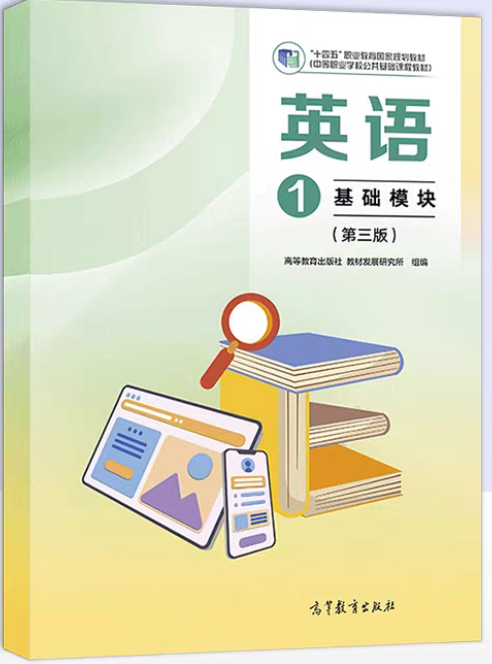
Unit 8 People and Events(A卷·基础巩固)《英语 基础模块1》(高教版第三版)单元过关卷(原卷版+解析版)
2026-07-24
|
2份
|
18页
|
49人阅读
|
2人下载
摘要:
**基本信息**
紧扣《英语 基础模块1》Unit 8,A卷基础巩固,覆盖补全对话、词汇等7类题型,以詹天佑、造纸术等文化素材为情境,适配单元复习,强化语言能力与文化意识。
**题型特征**
|题型|题量/分值|知识覆盖|命题特色|
|----|-----------|----------|----------|
|补全对话|5/10|历史人物、日常交际|情境真实,强化语言理解与表达|
|词汇|10/20|improve、record等单元核心词|突出基础巩固,匹配教材词汇表|
|完形填空|15/30|造纸术博物馆参观事件|融合事件描述与情感体验,培养思维品质|
|阅读理解|15/45|京张铁路项目、纸的价值|文本贴近生活,C篇引导从问题出发,提升信息整合能力|
|语法填空|10/20|詹天佑生平相关语法(定语从句、时态)|结合文化素材巩固语法应用|
|完成句子|5/15|减少浪费、保持联系等核心表达|强化语言输出,落实基础句型|
|应用写作|1/10|发明分享活动通知|贴近真实场景,提升语言应用与学习能力|
内容正文:
编写说明:本套试卷紧扣《英语 基础模块1》(高教版第三版)教材,以教材单元为基准精准覆盖核心考点。
每个单元设置AB卷,A卷为基础巩固卷,侧重基础考点训练,帮助学生扎实掌握知识要点;B卷为能力提升卷,注重知识整合与全面检测,引导学生构建知识网络。全书设计4份综合测试卷,模拟实战情境,聚焦解题能力突破,全面提升应试能力与知识应用水平。
《英语 基础模块1》(高教版第三版)《单元过关卷》
Unit 8 People and Events
A卷·基础巩固
考试时间:120分钟 满分:150分
班级_____姓名_____学号_____成绩_____
Ⅰ.补全对话(5小题,共10分)
阅读下列简短对话,从A、B、C、D中选出最佳答案,将对话补全。
1.— Could you tell me why paper-making was important in history?
— ________. It helped people record and share ideas.
A. Good luck B. Of course
C. Never mind D. That's too expensive
【答案】B
【详解】考查回应请求。问句Could you tell me...表示礼貌询问,后句给出原因,说明答话人愿意解释。B项Of course符合语境;A项用于祝愿,C项回应道歉,D项评价价格,均不合适。
2.— May I use your tablet to take notes during the talk?
— ________. I have another notebook with me.
A. I'm not sure B. No way
C. That's all right D. Sure. Here you are
【答案】D
【详解】考查请求许可。May I use...?表示请求使用物品,后句说明自己另有笔记本,因此应同意对方使用。D项Sure. Here you are自然得体;其余选项或拒绝或答非所问。
3.— I hope I can create something helpful someday.
— ________. Good inventions make life better.
A. Me too B. Be quiet
C. It's broken D. Go away
【答案】A
【详解】考查表达共同愿望。上句谈到希望创造有用的东西,后句肯定好发明能改善生活,空处应表示同样的想法。A项Me too符合语义和语气。
4.— Our group finished the railway poster ahead of schedule.
— ________. You worked really hard.
A. I don't care B. That's a pity
C. Congratulations D. Turn left
【答案】C
【详解】考查祝贺。上句说明小组提前完成任务,后句肯定其努力,空处应表达祝贺。C项Congratulations符合场景;其他选项语气或功能不符。
5.— Can you think of a great person related to Chinese railway history?
— ________. He designed the Jingzhang Railway.
A. Florence Nightingale B. Zhan Tianyou
C. Thomas Edison D. Cai Lun
【答案】B
【详解】考查人物与事件匹配。后句He designed the Jingzhang Railway指向设计京张铁路的人物,B项Zhan Tianyou符合信息;其他人物与该事件不对应。
Ⅱ.词汇(10小题,共20分)
阅读下列句子,从A、B、C、D中选出与划线单词或短语在句中意思最接近的中文释义。
6.The students worked together to improve the design of their infographic.
A. 发明 B. 相信 C. 记录 D. 改进
【答案】D
【详解】improve为动词,意为“改进;改善”。句中宾语为the design,表示让信息图设计更好,因此选D。A、B、C项分别表示不同动作,与design搭配后语义不符。
7.A good notebook can help us record important ideas during a lesson.
A. 记录 B. 延伸 C. 减少 D. 克服
【答案】A
【详解】record为动词,意为“记录”。句中notebook和important ideas构成做笔记语境,表示记录重要想法,因此选A。
8.New farming methods can reduce hunger in many places.
A. 完成 B. 设计 C. 减少 D. 返回
【答案】C
【详解】reduce为动词,意为“减少”。句中hunger表示饥饿,new farming methods带来的结果应是减少饥饿,因此选C。
9.Cai Lun improved the method of paper-making many years ago.
A. 省份 B. 方法 C. 日程 D. 电灯泡
【答案】B
【详解】method为名词,意为“方法”。the method of paper-making表示“造纸的方法”,故选B。
10.The light bulb is an important invention in modern life.
A. 饥饿 B. 护理 C. 毕业 D. 发明
【答案】D
【详解】invention为名词,意为“发明”。light bulb是具体发明物,an important invention表示“一项重要发明”,故选D。
11.Jane uses a tablet to read, draw and take notes.
A. 平板电脑 B. 铁路 C. 乘客 D. 蒸汽
【答案】A
【详解】tablet在学习工具语境中表示“平板电脑”。后文read, draw and take notes说明它是一种电子学习设备,因此选A。
12.Smartphones help people stay connected with friends and family.
A. 饥饿的 B. 主要的 C. 相连的 D. 杰出的
【答案】C
【详解】connected为形容词,意为“相连的;保持联系的”。stay connected with sb.表示“与某人保持联系”,因此选C。
13.Zhan Tianyou was born in Guangdong Province in 1861.
A. 护理工作 B. 省 C. 工作计划 D. 交通
【答案】B
【详解】province为名词,意为“省”。Guangdong Province表示“广东省”,故选B。
14.The team had to overcome many difficulties in the mountains.
A. 相信 B. 创造 C. 出生 D. 克服
【答案】D
【详解】overcome为动词,意为“克服”。overcome many difficulties为常见搭配,表示克服许多困难,因此选D。
15.The workers completed the bridge ahead of schedule.
A. 日程;计划 B. 饥饿 C. 电灯泡 D. 护理
【答案】A
【详解】schedule为名词,意为“日程;计划”。ahead of schedule表示“提前;早于计划”,符合句意,因此选A。
Ⅲ.完形填空(15小题,共30分)
阅读下面短文,掌握其大意,然后从16—30各题所给的A、B、C、D四个选项中,选出最佳答案。
Last month, our class visited a small paper-making museum in Guangzhou. The guide first showed us a quiet room full of old tools. She said every great change begins with a simple ____ 16 ____. Paper looked ____ 17 ____ and common, but it once changed the way people learned and worked.
At first, some students were ____ 18 ____ that old paper could be so important. The guide asked us to ____ 19 ____ our questions on cards and then try making paper by hand. ____ 20 ____ help from two workers, we put plant fibers into water, moved a screen slowly and pressed the wet sheet. The work was more ____ 21 ____ than we expected. I ____ 22 ____ a worker why Cai Lun's improvement was remembered for so long. She smiled and said the new way made paper cheaper and more ____ 23 ____, so more people could use it.
After the visit, our group chose a better ____ 24 ____ to introduce paper-making in the school exhibition. We ____ 25 ____ the poster in three days. Some classmates searched for facts, some took ____ 26 ____, and others drew pictures for younger visitors. We added a short corner to explain how paper helped people study before computers appeared. When our teacher praised the work, we felt ____ 27 ____. We also learned that inventions do not only mean new machines. They can ____ 28 ____ daily life and help knowledge travel. Our poster was finished two days ____ 29 ____ of schedule. More importantly, it made us want to ____ 30 ____ something useful in the future.
16. A. rule B. joke C. idea D. meal
17. A. old B. loud C. rich D. late
18. A. angry B. busy C. tired D. surprised
19. A. forget B. record C. sell D. break
20. A. Before B. For C. With D. About
21. A. popular B. careful C. modern D. difficult
22. A. asked B. carried C. lost D. painted
23. A. dangerous B. private C. useful D. silent
24. A. mistake B. method C. ticket D. station
25. A. missed B. left C. watched D. completed
26. A. trains B. notes C. lights D. seats
27. A. afraid B. hungry C. proud D. free
28. A. improve B. hide C. refuse D. count
29. A. inside B. outside C. because D. ahead
30. A. borrow B. create C. wash D. answer
【答案】16.C 17.A 18.D 19.B 20.C 21.D 22.A 23.C 24.B 25.D 26.B 27.C 28.A 29.D 30.B
【详解】16.空前说great change,空后围绕造纸改进展开,说明伟大变化源于简单想法,idea符合语境。rule、joke、meal均不能引出发明改进主题。
17.纸已有很长历史,与common并列,应为old“古老的”。loud、rich、late不能自然修饰paper并表达历史感。
18.学生起初没想到旧纸如此重要,因此感到surprised“惊讶的”。angry、busy、tired均不符合参观后的心理反应。
19.record questions表示“记录问题”,与on cards构成清晰搭配。forget、sell、break都不能体现参观学习中的记录动作。
20.with help from...为固定表达,意为“在……帮助下”。句中表示在工作人员帮助下做纸,故选C。
21.后句具体描述放纤维、移动筛网、压湿纸,说明实际操作比预想更difficult“困难”。popular、careful、modern不能表达难度。
22.ask sb. why...表示“问某人为什么……”。后面工人回答原因,说明这里是询问,故选asked。
23.造纸方法改进后更多人可以使用,说明纸更useful“有用的”。dangerous、private、silent与结果more people could use it不符。
24.a better method to introduce...表示“介绍……的更好方法”。空处与后文制作展览海报对应,故选method。
25.complete the poster表示“完成海报”。in three days是完成任务所用时间,因此选completed。
26.take notes表示“做笔记”。小组分工中有人查资料,有人做笔记,有人画图,逻辑完整。
27.老师表扬作品,学生自然感到proud“自豪的”。afraid、hungry、free均不能表达受到肯定后的情绪。
28.发明能improve daily life“改善日常生活”,与help knowledge travel并列,符合主题。hide、refuse、count均不合适。
29.ahead of schedule为固定短语,意为“提前;早于计划”。句中two days ahead of schedule表示提前两天完成。
30.结尾呼应发明与创造,want to create something useful表示“想创造有用的东西”。borrow、wash、answer均不能体现成长愿望。
Ⅳ.阅读理解(15小题,共45分)
阅读下列短文,从每题所给的A、B、C、D四个选项中选出最佳答案;C篇根据上下文将五个选项填入文中空缺处。
A
In a vocational school in Guangdong, Ms. Luo asked her students to prepare a display about the Jingzhang Railway for the school technology corner. Before the project, many students only knew that Zhan Tianyou was a famous engineer. They did not know why the railway was so difficult to build. Ms. Luo divided the class into groups and asked them to find key facts, draw a route map and explain the meaning of the railway in simple English.
Yu Chen's group studied the hills and mountains along the line. They learned that many people once believed no one could build a railway there. To make the problem clear, they used sand, cardboard and toy trains to show the landform. Then they added small flags to mark important places. During the preparation, Yu Chen found that Zhan Tianyou and his team overcame many difficulties and finished the task ahead of schedule. This made him admire the engineer more than before.
On the presentation day, the group did not read long notes. They asked visitors to move a toy train through the model and think about the challenge. Many students stopped to ask questions. Ms. Luo said the best part of the display was not the colorful board, but the clear thinking behind it. Yu Chen also understood that great achievements often come from careful study, brave decisions and teamwork.
31.What did Ms. Luo ask her students to prepare?
A. A nursing report. B. A cooking lesson.
C. A railway display. D. A sports meeting.
32.What did Yu Chen's group use to show the landform?
A. Sand, cardboard and toy trains. B. Flowers and photos.
C. Food boxes and cups. D. Tickets and bags.
33.Why did Yu Chen admire Zhan Tianyou more than before?
A. Zhan wrote long notes in English. B. Zhan visited their school.
C. Zhan made a colorful board. D. Zhan overcame difficulties and finished the task early.
34.What was the best part of the display according to Ms. Luo?
A. The expensive toys. B. The clear thinking behind it.
C. The loud music. D. The large classroom.
35.What can students learn from the project?
A. Every project must use computers. B. Railways are easy to build in mountains.
C. Great achievements need careful study and teamwork. D. Long notes are better than models.
【答案】31.C 32.A 33.D 34.B 35.C
【导语】本文介绍广东一所中职学校学生制作京张铁路展示项目的过程,说明学生通过模型、资料整理和讲解理解工程成就背后的认真研究、勇敢决策与团队合作。
【详解】31.细节理解题。第一段“prepare a display about the Jingzhang Railway”直接说明任务是准备铁路展示,故选C。
32.细节理解题。第二段“To make the problem clear, they used sand, cardboard and toy trains...”明确列出材料,故选A。
33.细节理解题。第二段说明Zhan Tianyou和团队克服困难并提前完成任务,这使Yu Chen更加敬佩他,故选D。
34.细节理解题。第三段“the best part...was...the clear thinking behind it”给出依据,故选B。
35.推理判断题。结尾指出great achievements often come from careful study, brave decisions and teamwork,可知项目让学生理解伟大成就需要认真研究和团队合作,故选C。
B
People often say that inventions change the world, but some changes are so common that we forget to notice them. Paper is one example. Before paper became widely used, people wrote on materials that were heavy, costly or hard to carry. Messages could not travel easily, and ordinary people had fewer chances to read or record their ideas. When the method of paper-making was improved, knowledge became easier to keep and share.
Today, students may use tablets and smartphones more often than paper notebooks. These tools are fast and convenient. A student can take photos of a blackboard, record a short talk and send notes to classmates in a few seconds. However, this does not mean paper has lost its value. Many learners still remember information better when they write by hand. Paper is also easy to use when there is no electricity or Internet connection.
The story of paper can teach us how to think about technology. A good invention is not always the newest or the most expensive one. It is a tool that solves a real problem and helps more people learn, work or communicate. Tablets and paper may look different, but both can help us record ideas. The key is not to admire a tool blindly, but to use it wisely. When we choose the right tool for the right task, technology truly makes life better.
36.What problem did people have before paper became widely used?
A. Writing materials were often heavy or costly. B. There were too many tablets.
C. People could not speak clearly. D. Schools had no teachers.
37.What can students do with tablets and smartphones according to Paragraph 2?
A. Build railways in mountains. B. Grow rice in villages.
C. Send notes quickly. D. Make paper by hand only.
38.Why does paper still have value?
A. It is always more expensive. B. It needs fast Internet.
C. It can replace every machine. D. It helps some learners remember information.
39.What does the underlined word “blindly” in Paragraph 3 probably mean?
A. 盲目地 B. 安静地
C. 准时地 D. 礼貌地
40.What is the main idea of the passage?
A. Students should stop using smartphones. B. Useful technology solves real problems when used wisely.
C. Paper can only be used in museums. D. The newest invention is always the best.
【答案】36.A 37.C 38.D 39.A 40.B
【导语】本文从纸的历史价值谈到平板电脑和智能手机等现代工具,说明真正有价值的技术应解决真实问题,并需要被明智使用。
【详解】36.细节理解题。第一段“people wrote on materials that were heavy, costly or hard to carry”说明早期书写材料又重又贵或不便携带,故选A。
37.细节理解题。第二段提到学生可以在几秒内send notes to classmates,说明可快速发送笔记,故选C。
38.细节理解题。第二段“Many learners still remember information better when they write by hand.”说明手写能帮助一些学习者更好记忆,故选D。
39.词义猜测题。空前说关键不是崇拜工具,空后强调use it wisely“明智使用”,由对比可知blindly表示“盲目地”,故选A。
40.主旨大意题。文章由纸到电子工具,强调好工具应解决真实问题且要明智使用,B项概括最准确。
C
Many students want to invent something, but they do not know where to begin. Some think an invention must be a large machine or a completely new product. ____41____ In fact, many useful ideas begin with small problems around us, especially in classrooms, families and community life.
The first step is watching daily life carefully. You may find that classmates waste paper after printing, old people have trouble reading small words, or bags fall from desks easily. ____42____ A clear problem gives an inventor a clear direction and helps the team decide what kind of tool is really needed.
The second step is learning from people who have solved similar problems. You can read stories about inventors, ask workers in different jobs, or study how common tools work. ____43____ It helps you avoid repeating the same mistakes and gives you ideas for improvement, because old methods often show why a new design should be simpler, safer or cheaper.
The third step is making a simple model. It does not have to be perfect. Use cardboard, tape or old parts to test your idea first. ____44____ If it is too heavy, too weak or too hard to use, change it and test again. Keeping notes during each test is also important, since a small detail may explain why the model works or fails.
Finally, share your work and listen to advice. A useful invention grows through real use. ____45____ When your idea helps even one person, you have already taken the first step toward creating something meaningful. This process also teaches patience, responsibility and respect for the people who will use your design.
选项:
A. Then ask classmates or family members to try it.
B. These small problems are good starting points.
C. Their suggestions can help you make it safer and better.
D. This idea may stop them before they try.
E. This kind of learning is not copying.
【答案】41.D 42.B 43.E 44.A 45.C
【导语】本文介绍学生开展小发明的基本步骤:观察生活问题、学习已有经验、制作模型并听取反馈,强调有意义的创造可以从身边小事开始。
【详解】41.空前说有些学生误以为发明必须是大型机器或全新产品,空后转折说明许多有用想法来自小问题。D项指出这种想法会阻止尝试,承上启下,故选D。
42.空前列举浪费纸张、老人看小字困难、书包掉落等小问题,B项“These small problems...”概括这些问题并引出方向,故选B。
43.空前说要向解决过类似问题的人学习,空后说明这样能避免重复错误并获得改进思路。E项说明这种学习不是抄袭,逻辑衔接自然,故选E。
44.空前说先用简单材料测试想法,空后说如果太重、太弱或难用就修改。A项让同学或家人试用,正好引出测试反馈,故选A。
45.空前说有用的发明通过真实使用成长,C项“Their suggestions...”承接advice,说明建议能让作品更安全更好,故选C。
Ⅴ.语法填空(10小题,共20分)
阅读下面短文,在空白处填入1个适当的单词或括号内单词的正确形式。
Zhan Tianyou was an engineer ____ 46 ____ is still remembered by many Chinese people. He ____ 47 ____ (bear) in Guangdong Province in 1861 and showed an interest ____ 48 ____ machines when he was young. At eleven, he went to the US ____ 49 ____ (study). After graduation, he ____ 50 ____ (return) to China because he wanted to serve his country.
In 1905, he began to build the Jingzhang Railway. The work was hard, but the team ____ 51 ____ (complete) it in 1909. People consider it ____ 52 ____ brilliant piece of work. Today, high-speed trains make travel much ____ 53 ____ (easy). When students learn about his story, they understand that ____ 54 ____ (record) key facts carefully can help them know history better. They also believe ____ 55 ____ hard work can turn a difficult dream into a real achievement.
【答案】46.who/that 47.was born 48.in 49.to study 50.returned 51.completed 52.a 53.easier 54.recording 55.that
【详解】46.考查定语从句。空处引导定语从句修饰an engineer,且在从句中作主语,指人,因此填who或that。
47.考查被动结构。be born表示“出生”,主语He为单数,时间为1861年,应用一般过去时was born。
48.考查介词搭配。show an interest in表示“对……感兴趣”,故填in。
49.考查非谓语动词。went to the US的目的是学习,应用动词不定式to study作目的状语。
50.考查一般过去时。根据After graduation及上下文可知动作发生在过去,return应用过去式returned。
51.考查一般过去时。时间状语in 1909提示用一般过去时,complete变为completed。
52.考查冠词。piece为单数可数名词,brilliant以辅音音素开头,泛指“一项杰出作品”,故填a。
53.考查形容词比较级。much常修饰比较级,句中表示旅行更容易,easy变为easier。
54.考查动名词作主语。空处与key facts构成动宾关系,并在从句中作主语,应用recording。
55.考查宾语从句连接词。believe后接宾语从句,hard work can...结构和意义完整,应用that引导。
Ⅵ.完成句子(5小题,共15分)
根据所给中文提示补全英文句子。
56.你能告诉我为什么造纸术很重要吗?
Can you tell me _____________________?
【答案】why paper-making was important
【详解】考查宾语从句。tell后接宾语从句时使用陈述语序;“为什么造纸术很重要”表达为why paper-making was important。
57.詹天佑成功地提前完成了这条铁路。
Zhan Tianyou _____________________ the railway ahead of schedule.
【答案】succeeded in completing
【详解】考查固定搭配。succeed in doing sth.表示“成功做成某事”;“完成铁路”为complete the railway,故填succeeded in completing。
58.我们应该减少浪费来保护环境。
We should _____________________ to protect the environment.
【答案】reduce waste
【详解】考查情态动词后动词原形。should后接动词原形;reduce waste表示“减少浪费”。
59.智能手机帮助我们与家人保持联系。
Smartphones help us _____________________ with our families.
【答案】stay connected
【详解】考查固定表达。stay connected with sb.表示“与某人保持联系”;help sb. do sth.后接动词原形。
60.做笔记对学习历史事实很有用。
_____________________ when we learn historical facts.
【答案】It is useful to take notes
【详解】考查It is + adj. + to do sth.结构。真正主语为to take notes,用It作形式主语,表达“做笔记很有用”。
Ⅶ.应用写作(1小题,共10分)
61.你校英语社团将举行“Great Inventions Around Us”分享活动。请你写一则英文通知,内容包括:活动时间、地点、分享内容和参加建议。正文约40词。
【参考范文】Notice
Our English club will hold a sharing activity in Room 302 at 4:00 p.m. this Friday. Students will talk about useful inventions around us and explain how they make life better. Please bring one picture or small object. Welcome to join us!
【词汇积累】sharing activity分享活动;useful invention有用的发明;make life better让生活更好;bring a picture带一张图片。
【句式拓展】Students will talk about... and explain how...可用于介绍活动内容;Please bring...可用于提出参加要求。
【点睛】范文包含时间、地点、分享内容和参加建议,语言简洁,符合通知类应用文特点。
原创精品资源学科网独家享有版权,侵权必究!
学科网(北京)股份有限公司
$
编写说明:本套试卷紧扣《英语 基础模块1》(高教版第三版)教材,以教材单元为基准精准覆盖核心考点。
每个单元设置AB卷,A卷为基础巩固卷,侧重基础考点训练,帮助学生扎实掌握知识要点;B卷为能力提升卷,注重知识整合与全面检测,引导学生构建知识网络。全书设计4份综合测试卷,模拟实战情境,聚焦解题能力突破,全面提升应试能力与知识应用水平。
《英语 基础模块1》(高教版第三版)《单元过关卷》
Unit 8 People and Events
A卷·基础巩固
考试时间:120分钟 满分:150分
班级_____姓名_____学号_____成绩_____
Ⅰ.补全对话(5小题,共10分)
阅读下列简短对话,从A、B、C、D中选出最佳答案,将对话补全。
1.— Could you tell me why paper-making was important in history?
— ________. It helped people record and share ideas.
A. Good luck B. Of course
C. Never mind D. That's too expensive
2.— May I use your tablet to take notes during the talk?
— ________. I have another notebook with me.
A. I'm not sure B. No way
C. That's all right D. Sure. Here you are
3.— I hope I can create something helpful someday.
— ________. Good inventions make life better.
A. Me too B. Be quiet
C. It's broken D. Go away
4.— Our group finished the railway poster ahead of schedule.
— ________. You worked really hard.
A. I don't care B. That's a pity
C. Congratulations D. Turn left
5.— Can you think of a great person related to Chinese railway history?
— ________. He designed the Jingzhang Railway.
A. Florence Nightingale B. Zhan Tianyou
C. Thomas Edison D. Cai Lun
Ⅱ.词汇(10小题,共20分)
阅读下列句子,从A、B、C、D中选出与划线单词或短语在句中意思最接近的中文释义。
6.The students worked together to improve the design of their infographic.
A. 发明 B. 相信 C. 记录 D. 改进
7.A good notebook can help us record important ideas during a lesson.
A. 记录 B. 延伸 C. 减少 D. 克服
8.New farming methods can reduce hunger in many places.
A. 完成 B. 设计 C. 减少 D. 返回
9.Cai Lun improved the method of paper-making many years ago.
A. 省份 B. 方法 C. 日程 D. 电灯泡
10.The light bulb is an important invention in modern life.
A. 饥饿 B. 护理 C. 毕业 D. 发明
11.Jane uses a tablet to read, draw and take notes.
A. 平板电脑 B. 铁路 C. 乘客 D. 蒸汽
12.Smartphones help people stay connected with friends and family.
A. 饥饿的 B. 主要的 C. 相连的 D. 杰出的
13.Zhan Tianyou was born in Guangdong Province in 1861.
A. 护理工作 B. 省 C. 工作计划 D. 交通
14.The team had to overcome many difficulties in the mountains.
A. 相信 B. 创造 C. 出生 D. 克服
15.The workers completed the bridge ahead of schedule.
A. 日程;计划 B. 饥饿 C. 电灯泡 D. 护理
Ⅲ.完形填空(15小题,共30分)
阅读下面短文,掌握其大意,然后从16—30各题所给的A、B、C、D四个选项中,选出最佳答案。
Last month, our class visited a small paper-making museum in Guangzhou. The guide first showed us a quiet room full of old tools. She said every great change begins with a simple ____ 16 ____. Paper looked ____ 17 ____ and common, but it once changed the way people learned and worked.
At first, some students were ____ 18 ____ that old paper could be so important. The guide asked us to ____ 19 ____ our questions on cards and then try making paper by hand. ____ 20 ____ help from two workers, we put plant fibers into water, moved a screen slowly and pressed the wet sheet. The work was more ____ 21 ____ than we expected. I ____ 22 ____ a worker why Cai Lun's improvement was remembered for so long. She smiled and said the new way made paper cheaper and more ____ 23 ____, so more people could use it.
After the visit, our group chose a better ____ 24 ____ to introduce paper-making in the school exhibition. We ____ 25 ____ the poster in three days. Some classmates searched for facts, some took ____ 26 ____, and others drew pictures for younger visitors. We added a short corner to explain how paper helped people study before computers appeared. When our teacher praised the work, we felt ____ 27 ____. We also learned that inventions do not only mean new machines. They can ____ 28 ____ daily life and help knowledge travel. Our poster was finished two days ____ 29 ____ of schedule. More importantly, it made us want to ____ 30 ____ something useful in the future.
16. A. rule B. joke C. idea D. meal
17. A. old B. loud C. rich D. late
18. A. angry B. busy C. tired D. surprised
19. A. forget B. record C. sell D. break
20. A. Before B. For C. With D. About
21. A. popular B. careful C. modern D. difficult
22. A. asked B. carried C. lost D. painted
23. A. dangerous B. private C. useful D. silent
24. A. mistake B. method C. ticket D. station
25. A. missed B. left C. watched D. completed
26. A. trains B. notes C. lights D. seats
27. A. afraid B. hungry C. proud D. free
28. A. improve B. hide C. refuse D. count
29. A. inside B. outside C. because D. ahead
30. A. borrow B. create C. wash D. answer
Ⅳ.阅读理解(15小题,共45分)
阅读下列短文,从每题所给的A、B、C、D四个选项中选出最佳答案;C篇根据上下文将五个选项填入文中空缺处。
A
In a vocational school in Guangdong, Ms. Luo asked her students to prepare a display about the Jingzhang Railway for the school technology corner. Before the project, many students only knew that Zhan Tianyou was a famous engineer. They did not know why the railway was so difficult to build. Ms. Luo divided the class into groups and asked them to find key facts, draw a route map and explain the meaning of the railway in simple English.
Yu Chen's group studied the hills and mountains along the line. They learned that many people once believed no one could build a railway there. To make the problem clear, they used sand, cardboard and toy trains to show the landform. Then they added small flags to mark important places. During the preparation, Yu Chen found that Zhan Tianyou and his team overcame many difficulties and finished the task ahead of schedule. This made him admire the engineer more than before.
On the presentation day, the group did not read long notes. They asked visitors to move a toy train through the model and think about the challenge. Many students stopped to ask questions. Ms. Luo said the best part of the display was not the colorful board, but the clear thinking behind it. Yu Chen also understood that great achievements often come from careful study, brave decisions and teamwork.
31.What did Ms. Luo ask her students to prepare?
A. A nursing report. B. A cooking lesson.
C. A railway display. D. A sports meeting.
32.What did Yu Chen's group use to show the landform?
A. Sand, cardboard and toy trains. B. Flowers and photos.
C. Food boxes and cups. D. Tickets and bags.
33.Why did Yu Chen admire Zhan Tianyou more than before?
A. Zhan wrote long notes in English. B. Zhan visited their school.
C. Zhan made a colorful board. D. Zhan overcame difficulties and finished the task early.
34.What was the best part of the display according to Ms. Luo?
A. The expensive toys. B. The clear thinking behind it.
C. The loud music. D. The large classroom.
35.What can students learn from the project?
A. Every project must use computers. B. Railways are easy to build in mountains.
C. Great achievements need careful study and teamwork. D. Long notes are better than models.
B
People often say that inventions change the world, but some changes are so common that we forget to notice them. Paper is one example. Before paper became widely used, people wrote on materials that were heavy, costly or hard to carry. Messages could not travel easily, and ordinary people had fewer chances to read or record their ideas. When the method of paper-making was improved, knowledge became easier to keep and share.
Today, students may use tablets and smartphones more often than paper notebooks. These tools are fast and convenient. A student can take photos of a blackboard, record a short talk and send notes to classmates in a few seconds. However, this does not mean paper has lost its value. Many learners still remember information better when they write by hand. Paper is also easy to use when there is no electricity or Internet connection.
The story of paper can teach us how to think about technology. A good invention is not always the newest or the most expensive one. It is a tool that solves a real problem and helps more people learn, work or communicate. Tablets and paper may look different, but both can help us record ideas. The key is not to admire a tool blindly, but to use it wisely. When we choose the right tool for the right task, technology truly makes life better.
36.What problem did people have before paper became widely used?
A. Writing materials were often heavy or costly. B. There were too many tablets.
C. People could not speak clearly. D. Schools had no teachers.
37.What can students do with tablets and smartphones according to Paragraph 2?
A. Build railways in mountains. B. Grow rice in villages.
C. Send notes quickly. D. Make paper by hand only.
38.Why does paper still have value?
A. It is always more expensive. B. It needs fast Internet.
C. It can replace every machine. D. It helps some learners remember information.
39.What does the underlined word “blindly” in Paragraph 3 probably mean?
A. 盲目地 B. 安静地
C. 准时地 D. 礼貌地
40.What is the main idea of the passage?
A. Students should stop using smartphones. B. Useful technology solves real problems when used wisely.
C. Paper can only be used in museums. D. The newest invention is always the best.
C
Many students want to invent something, but they do not know where to begin. Some think an invention must be a large machine or a completely new product. ____41____ In fact, many useful ideas begin with small problems around us, especially in classrooms, families and community life.
The first step is watching daily life carefully. You may find that classmates waste paper after printing, old people have trouble reading small words, or bags fall from desks easily. ____42____ A clear problem gives an inventor a clear direction and helps the team decide what kind of tool is really needed.
The second step is learning from people who have solved similar problems. You can read stories about inventors, ask workers in different jobs, or study how common tools work. ____43____ It helps you avoid repeating the same mistakes and gives you ideas for improvement, because old methods often show why a new design should be simpler, safer or cheaper.
The third step is making a simple model. It does not have to be perfect. Use cardboard, tape or old parts to test your idea first. ____44____ If it is too heavy, too weak or too hard to use, change it and test again. Keeping notes during each test is also important, since a small detail may explain why the model works or fails.
Finally, share your work and listen to advice. A useful invention grows through real use. ____45____ When your idea helps even one person, you have already taken the first step toward creating something meaningful. This process also teaches patience, responsibility and respect for the people who will use your design.
选项:
A. Then ask classmates or family members to try it.
B. These small problems are good starting points.
C. Their suggestions can help you make it safer and better.
D. This idea may stop them before they try.
E. This kind of learning is not copying.
Ⅴ.语法填空(10小题,共20分)
阅读下面短文,在空白处填入1个适当的单词或括号内单词的正确形式。
Zhan Tianyou was an engineer ____ 46 ____ is still remembered by many Chinese people. He ____ 47 ____ (bear) in Guangdong Province in 1861 and showed an interest ____ 48 ____ machines when he was young. At eleven, he went to the US ____ 49 ____ (study). After graduation, he ____ 50 ____ (return) to China because he wanted to serve his country.
In 1905, he began to build the Jingzhang Railway. The work was hard, but the team ____ 51 ____ (complete) it in 1909. People consider it ____ 52 ____ brilliant piece of work. Today, high-speed trains make travel much ____ 53 ____ (easy). When students learn about his story, they understand that ____ 54 ____ (record) key facts carefully can help them know history better. They also believe ____ 55 ____ hard work can turn a difficult dream into a real achievement.
Ⅵ.完成句子(5小题,共15分)
根据所给中文提示补全英文句子。
56.你能告诉我为什么造纸术很重要吗?
Can you tell me _____________________?
57.詹天佑成功地提前完成了这条铁路。
Zhan Tianyou _____________________ the railway ahead of schedule.
58.我们应该减少浪费来保护环境。
We should _____________________ to protect the environment.
59.智能手机帮助我们与家人保持联系。
Smartphones help us _____________________ with our families.
60.做笔记对学习历史事实很有用。
_____________________ when we learn historical facts.
Ⅶ.应用写作(1小题,共10分)
61.你校英语社团将举行“Great Inventions Around Us”分享活动。请你写一则英文通知,内容包括:活动时间、地点、分享内容和参加建议。正文约40词。
原创精品资源学科网独家享有版权,侵权必究!
学科网(北京)股份有限公司
$
资源预览图

1

2

3
由于学科网是一个信息分享及获取的平台,不确保部分用户上传资料的 来源及知识产权归属。如您发现相关资料侵犯您的合法权益,请联系学科网,我们核实后将及时进行处理。