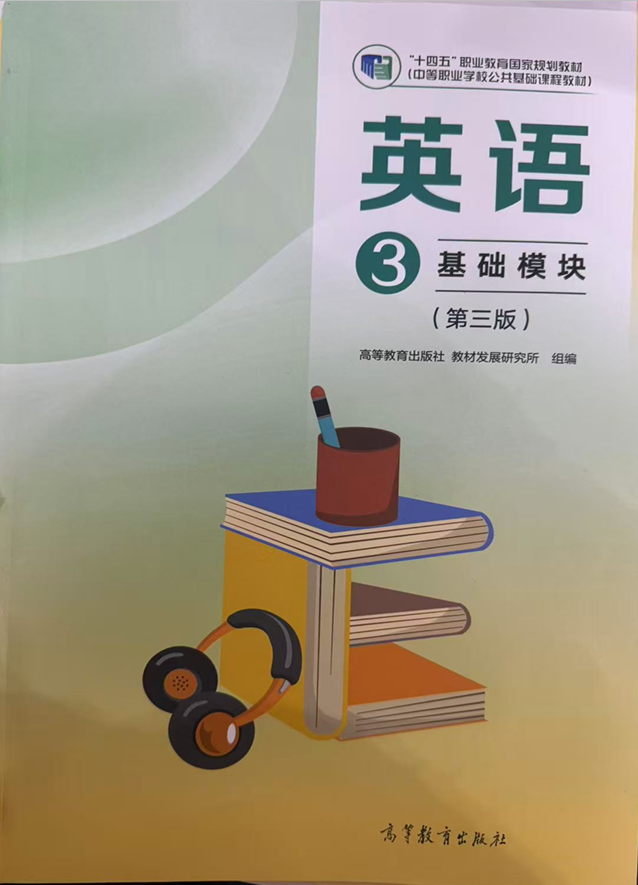
Unit 3 Artificial Intelligence(B卷·能力提升)《英语 基础模块3》(高教版第三版)单元过关卷(原卷版+解析版)
2026-07-23
|
2份
|
21页
|
46人阅读
|
0人下载
摘要:
**基本信息**
《英语 基础模块3》Unit 3人工智能B卷能力提升卷,紧扣教材核心考点,通过AI应用情境设计,适配单元复习,提升语言运用与思维品质。
**题型特征**
|题型|题量/分值|知识覆盖|命题特色|
|----|-----------|----------|----------|
|词汇与语法|25题/25分|单词辨音、词义选择(如AI相关词汇apply)、语法运用(如被动语态)|聚焦单元核心词汇与语法,强化基础语言能力|
|情景交际|15题/30分|简短对话(AI学习工具讨论)、补全对话(AI应用报告)|创设真实交流情境,提升跨文化沟通能力|
|阅读理解|10题/20分|AI工厂参观、AI学习助手利弊|选用科技前沿素材,培养信息获取与批判性思维|
|英汉互译|5题/15分|AI利弊表达(如“过度依赖机器”)|考查语言转换能力,强化知识应用|
|应用写作|1题/10分|AI学习工具看法回信|结合实际问题写作,提升综合语言输出与思维品质|
内容正文:
编写说明:本套试卷紧扣《英语 基础模块3》(高教版第三版)教材,以教材单元为基准精准覆盖核心考点。
每个单元设置AB卷,A卷为基础巩固卷,侧重基础考点训练,帮助学生扎实掌握知识要点;B卷为能力提升卷,注重知识整合与全面检测,引导学生构建知识网络。全书设计4份综合测试卷,模拟实战情境,聚焦解题能力突破,全面提升应试能力与知识应用水平。
《英语 基础模块3》(高教版第三版)《单元过关卷》
Unit 3 Artificial Intelligence
B卷·能力提升
考试时间:70分钟 满分:100分
班级_____姓名_____学号_____成绩_____
综合卷Ⅰ(75分)
一、词汇与语法(共25小题,每小题1分,满分25分)
(一)单词辨音
从下列各小题的A、B、C三个选项中选出一个画线部分发音与所给单词画线部分发音不同的选项。(共5小题,每小题1分,共5分)
1.cause
A.letter B.she C.member
【答案】B
【详解】考查字母 e 的发音。cause、letter、member 中 e 发 /e/,she 中 e 发 /iː/,发音不同。故选 B。
2.communicate
A.shop B.lost C.open
【答案】C
【详解】考查字母 o 的发音。communicate、shop、lost 中 o 发 /ɒ/,open 中 o 发 /əʊ/,发音不同。故选 C。
3.disaster
A.mind B.ticket C.listen
【答案】A
【详解】考查字母 i 的发音。disaster、ticket、listen 中 i 发 /ɪ/,mind 中 i 发 /aɪ/,发音不同。故选 A。
4.apply
A.sky B.fly C.city
【答案】C
【详解】考查字母 y 的发音。apply、sky、fly 中 y 发 /aɪ/,city 中 y 发 /ɪ/,发音不同。故选 C。
5.education
A.car B.hat C.park
【答案】B
【详解】考查字母 a 的发音。education、car、park 中 a 发 /ɑː/,hat 中 a 发 /æ/,发音不同。故选 B。
(二)词义选择
从下列各小题的A、B、C三个选项中选出一个与句子中画线的英文单词或短语含义相符的中文选项。(共10小题,每小题1分,共10分)
6.The factory has applied AI to check products more carefully.
A.申请 B.涂抹 C.应用
【答案】C
【详解】考查动词词义。apply 在句中与 AI to check products 搭配,表示“应用”。故选 C。
7.The manager holds a welcoming attitude toward service robots.
A.态度 B.海拔 C.温度
【答案】A
【详解】考查名词词义。attitude 与 toward 搭配,表示对服务机器人的“态度”。故选 A。
8.The increasing use of smart tools changes the way people work.
A.非常安静的 B.越来越多的 C.完全免费的
【答案】B
【详解】考查形容词词义。increasing 修饰 use,表示“越来越多的使用”。故选 B。
9.Using unknown software may cause serious problems.
A.取消 B.庆祝 C.导致
【答案】C
【详解】考查动词词义。cause 与 problems 搭配,表示“导致问题”。故选 C。
10.The system must be controlled properly before the robot starts working.
A.恰当地 B.迅速地 C.吵闹地
【答案】A
【详解】考查副词词义。properly 修饰 controlled,表示“恰当地;正确地”控制系统。故选 A。
11.Thanks to face recognition, passengers can enter the station quickly.
A.尽管 B.代替 C.由于
【答案】C
【详解】考查固定短语。Thanks to 表示“由于;多亏”,句中说明人脸识别带来的便利。故选 C。
12.AI frees workers from heavy labor in some factories.
A.向……借钱 B.使……免于 C.与……争论
【答案】B
【详解】考查动词短语。free sb. from sth. 表示“使某人免于某事”,句中指让工人免于繁重劳动。故选 B。
13.The new rule can reduce the risk of online harm.
A.风险 B.座位 C.节目
【答案】A
【详解】考查名词词义。risk 与 online harm 构成风险语境,表示“风险”。故选 A。
14.Some people fear that machines may replace workers in simple jobs.
A.修建 B.打印 C.担心
【答案】C
【详解】考查动词词义。fear 后接 that 从句,表示“担心;害怕”某事发生。故选 C。
15.The two students are on the same page about using AI wisely.
A.写在同页 B.意见一致 C.排队等候
【答案】B
【详解】考查固定短语。be on the same page 表示“意见一致”,句中说明两名学生观点相同。故选 B。
(三)语法运用
从下列各小题的A、B、C三个选项中选出一个最佳选项填入空白处完成句子。(共10小题,每小题1分,共10分)
16.Many students use AI tools ______ their writing after class.
A.improve B.to improve C.improved
【答案】B
【详解】考查非谓语动词。不定式 to improve 在句中作目的状语,表示使用AI工具的目的。故选 B。
17.It was the engineer ______ checked the robot before the show.
A.who B.which C.where
【答案】A
【详解】考查强调句。被强调部分 the engineer 指人,强调句中可用 who 引出后续内容。故选 A。
18.The robot waiter ______ by a computer system in the kitchen.
A.controls B.controlled C.is controlled
【答案】C
【详解】考查一般现在时被动语态。主语 The robot waiter 是动作承受者,应用 is controlled。故选 C。
19.The workers invited ______ at the meeting will share their experience.
A.speaking B.to speak C.spoke
【答案】B
【详解】考查非谓语动词。invited to speak 作后置定语,表示“被邀请发言的工人”。故选 B。
20.Students should think by ______ when they use online tools.
A.themselves B.they C.their
【答案】A
【详解】考查反身代词。by oneself 表示“独立地;靠自己”,主语为 Students,用 themselves。故选 A。
21.There is ______ obvious benefit in using robots for dangerous work.
A.a B.the C.an
【答案】C
【详解】考查冠词。obvious 以元音音素开头,且 benefit 为可数名词单数,此处泛指一个明显益处,用 an。故选 C。
22.If people use AI without care, it ______ the risk of harm.
A.increases B.increased C.will increasing
【答案】A
【详解】考查一般现在时。if 从句表达普遍条件,主语 it 为第三人称单数,动词用 increases。故选 A。
23.______ people use technology decides whether it is helpful.
A.What B.How C.Where
【答案】B
【详解】考查主语从句。根据句意“人们如何使用技术决定它是否有帮助”可知,用 How 引导主语从句。故选 B。
24.The more carefully we check the system, ______ it will be.
A.safe B.the safest C.the safer
【答案】C
【详解】考查比较级结构。The more..., the more... 表示“越……越……”,此处用 the safer。故选 C。
25.The app ______ for two years, but some users still need training.
A.has been used B.used C.uses
【答案】A
【详解】考查现在完成时的被动语态。for two years 表示持续时间,主语 The app 是动作承受者,用 has been used。故选 A。
二、情景交际(共15小题,每小题2分,共30分)
(一)简短对话
从下列各小题的A、B、C三个选项中选出一个最佳选项完成对话。(共10小题,每小题2分,共20分)
26.Speaker A: Do you think AI can help us learn English?
Speaker B: ______
A.Yes, if we use it properly. B.It is near the window. C.I bought bread yesterday.
【答案】A
【详解】考查观点回应。对方询问AI是否能帮助学习英语,选项A表达有条件赞同,符合语境。故选 A。
27.Speaker A: I am afraid robots will replace many workers.
Speaker B: ______
A.The food is delicious. B.You have a point, but people still control machines. C.It is my family name.
【答案】B
【详解】考查担忧回应。对方担心机器人替代工人,选项B先认可担忧再说明人的作用,符合语境。故选 B。
28.Speaker A: How do I use face recognition at the gate?
Speaker B: ______
A.I prefer traditional restaurants. B.The robot is heavy. C.Stand here and look at the camera.
【答案】C
【详解】考查操作指导。对方询问如何使用人脸识别,选项C给出具体动作提示,符合语境。故选 C。
29.Speaker A: Our class will discuss the pros and cons of AI tomorrow.
Speaker B: ______
A.Great. I will prepare some examples. B.No, it is not my bag. C.Turn right at the corner.
【答案】A
【详解】考查活动回应。对方说明明天讨论AI利弊,选项A表示会准备例子,符合课堂讨论语境。故选 A。
30.Speaker A: Could you help me check whether this app is safe?
Speaker B: ______
A.It is a sunny day. B.Sure. Let me look at its source first. C.I don't like noodles.
【答案】B
【详解】考查求助回应。对方请求检查应用是否安全,选项B表示愿意帮助并说明先查看来源,符合语境。故选 B。
31.Speaker A: To be honest, I still like reading print books.
Speaker B: ______
A.I understand. They are easy to mark. B.The robot is charging. C.No, I don't have a cold.
【答案】A
【详解】考查偏好回应。对方表达喜欢纸质书,选项A表示理解并说明可做标记,符合语境。故选 A。
32.Speaker A: What can robot waiters do in the restaurant?
Speaker B: ______
A.They serve dishes and communicate with customers. B.They are my classmates. C.They close the school gate.
【答案】A
【详解】考查询问功能。问句询问机器人服务员能做什么,选项A说明送餐和交流功能,符合语境。故选 A。
33.Speaker A: We should not copy every answer from AI tools.
Speaker B: ______
A.It costs thirty yuan. B.I agree. Thinking is still important. C.See you at the bus stop.
【答案】B
【详解】考查学习建议回应。对方提出不能照抄AI答案,选项B表示赞同并强调思考,符合语境。故选 B。
34.Speaker A: Thank you for showing us around the smart factory.
Speaker B: ______
A.It is under repair. B.I don't think so. C.You're welcome.
【答案】C
【详解】考查感谢回应。对方感谢参观讲解,应回答 You're welcome。故选 C。
35.Speaker A: Do we agree that safety comes before efficiency?
Speaker B: ______
A.Yes. We are on the same page. B.It is a red camera. C.I am late for lunch.
【答案】A
【详解】考查表达一致意见。对方询问是否同意安全先于效率,Yes 和 We are on the same page 表示观点一致。故选 A。
(二)补全对话
阅读下面对话,根据上下文从所给的七个选项中选出一个最佳选项补全对话,其中2项多余。(共5小题,每小题2分,共10分)
Li Hua: Our group will give a report on AI applications tomorrow.
Chen Jie: ____ 36 ____ We need clear examples.
Li Hua: I found one about robots on an assembly line.
Chen Jie: Good. ____ 37 ____
Li Hua: They put car parts together and perform repeated work.
Chen Jie: What about daily life?
Li Hua: ____ 38 ____ It helps people pay and enter stations quickly.
Chen Jie: We should also mention problems.
Li Hua: Yes. ____ 39 ____
Chen Jie: Then our conclusion can be that people should use AI wisely.
Li Hua: ____ 40 ____
A. Face recognition is a useful example.
B. What do they do there?
C. I agree. That will make the report balanced.
D. I don't think we need a title.
E. Some people may become dependent on machines.
F. The restaurant closes at nine.
G. You're right.
【答案】36. G 37. B 38. A 39. E 40. C
【解析】36. G 上文说明小组要做AI应用报告,下文提出需要清晰例子,此处用 You're right 表示认可并承接任务。
37. B 上文提到生产线机器人,下文回答其组装零件和重复工作的功能,因此此处询问它们做什么。
38. A 上文询问日常生活例子,下文说明支付和进站便利,Face recognition 与之对应。
39. E 上文要求提到问题,此处说明人们可能依赖机器,属于AI使用问题。
40. C 上文提出结论应为理性使用AI,此处表示同意并说明报告更均衡,语境完整。
三、阅读理解(共10小题,每小题2分,共20分)
阅读下列两篇短文,根据短文内容从每题所给的A、B、C三个选项中选出一个最佳选项。
A
During the school technology week, Zhang Rui's class visited a company that produced service robots for restaurants and hospitals. Before entering the workshop, the guide asked every student to wear a cap, keep behind the yellow line and turn off the flash on their phones, because even a small careless action might influence the sensors that were being tested. Zhang Rui noticed that the assembly line did not look like the noisy factory he had imagined; instead, several robot arms moved slowly and repeatedly while engineers checked numbers on screens.
The most interesting part came when a delivery robot was tested in a narrow hall. It carried a box of medicine, avoided two chairs and stopped when a worker suddenly walked across its path. Although the robot finished the route in less than three minutes, the engineer explained that speed was not the only goal. The machine had to scan the surroundings, choose a safe path and send a warning if the Internet connection became weak, for a mistake in a hospital could bring more trouble than a late delivery.
After the visit, Zhang Rui wrote in his report that AI could free people from repeated or dangerous work, but it also needed careful human design and control. He used to believe that a smart machine only needed a powerful computer. Now he understood that a useful robot was the result of many tests, clear rules and responsible people who were willing to correct small problems before they became serious.
41.What can we learn about the students before they entered the workshop?
A.They had to follow safety rules for the visit.
B.They were asked to repair the robot arms.
C.They could take photos with flash freely.
42.Which information about the assembly line is mentioned?
A.It was noisier than Zhang Rui expected.
B.Students controlled all machines by themselves.
C.Robot arms moved while engineers checked data.
43.Why did the delivery robot have to send a warning when the Internet became weak?
A.Because the robot needed to sell more medicine.
B.Because hospital delivery required careful safety.
C.Because workers wanted to finish lunch earlier.
44.What can we infer from the engineer's explanation?
A.Speed is less important than every other task.
B.Robots should move without checking surroundings.
C.Safe service matters more than being merely fast.
45.What does Zhang Rui finally understand?
A.Smart machines work well only through tests and control.
B.Hospitals should refuse every kind of delivery robot.
C.A powerful computer can solve all service problems.
【答案】41.A 42.C 43.B 44.C 45.A
【导语】本文是一篇记叙文,围绕学生参观机器人生产企业的话题,讲述张瑞在技术周中观察装配线和医院配送机器人测试的经历。文章通过参观规则、机器人避障测试和工程师解释,强调人工智能应用既有便利,也离不开安全意识、反复测试和人的责任。
【详解】41.细节理解题。根据第一段“wear a cap, keep behind the yellow line and turn off the flash”可知,学生进入车间前必须遵守参观安全规则。故选 A。
【详解】42.细节理解题。根据第一段“several robot arms moved slowly and repeatedly while engineers checked numbers on screens”可知,机器人手臂运转时,工程师在屏幕上检查数据。故选 C。
【详解】43.推理判断题。根据第二段“for a mistake in a hospital could bring more trouble than a late delivery”可知,医院配送更重视安全,网络弱时需要警示。故选 B。
【详解】44.推理判断题。根据第二段“speed was not the only goal”和后文安全路径、警示机制可知,安全服务比单纯追求速度更重要。故选 C。
【详解】45.主旨大意题。根据第三段“a useful robot was the result of many tests, clear rules and responsible people”可知,张瑞最终认识到智能机器的可靠运行离不开测试、规则和人工控制。故选 A。
B
AI learning assistants are becoming common in vocational schools, and they bring both useful support and new challenges. A student can ask an app to check pronunciation, translate a difficult sentence or organize notes after class; meanwhile, a teacher can use a platform to see which words many students still cannot remember. However, when a tool answers too quickly, some learners may stop asking why the answer is correct, and this habit can be more harmful than one wrong exercise.
The value of AI depends on the way it is used. If a student first tries to solve a problem, then compares his answer with the suggestion from the tool, he may benefit from immediate feedback without losing his own thinking process. If, on the other hand, he copies a paragraph directly and submits it as his homework, he may finish the task faster, but he also misses the chance to practise choosing words, connecting ideas and checking grammar by himself. This is why many teachers welcome AI as an assistant rather than a replacement.
Future workplaces will probably need people who can cooperate with intelligent machines. In a smart restaurant, robot chefs may cook dishes according to a preset system, and robot waiters may serve customers without getting tired; nevertheless, humans still design menus, deal with special requests and decide whether the service is polite enough. In a factory, AI may perform dangerous tasks, but workers must understand the risk, check the data and stop the machine when something unusual happens. For vocational students, learning to use AI wisely is therefore not only a study skill but also preparation for responsible work.
46.Which information about AI learning assistants is mentioned in Paragraph 1?
A.They can make every student remember all words.
B.They can stop teachers from checking learning problems.
C.They can help check pronunciation and organize notes.
47.Why can copying AI answers directly be harmful according to Paragraph 2?
A.It costs students too much money each time.
B.It makes students lose practice in real thinking.
C.It forces teachers to cancel all writing tasks.
48.What does the underlined word “replacement” in Paragraph 2 mean?
A.替代者
B.申请表
C.生产线
49.Which of the following statements is TRUE about future workplaces?
A.Robot waiters decide whether service is polite enough.
B.Human workers still need to check data and handle risks.
C.Smart restaurants no longer need people to design menus.
50.What is the best title for the text?
A.Using AI Wisely in Study and Work
B.Why Students Should Avoid All Apps
C.Robot Chefs in Traditional Kitchens
【答案】46.C 47.B 48.A 49.B 50.A
【导语】本文是一篇说明文,围绕AI学习助手与未来职业能力话题,分析人工智能在学习中的支持作用、直接复制答案的风险,以及智能餐厅和工厂场景中人机协作的必要性。文章信息密度较高,重点说明AI应作为辅助工具,学生需要在学习与未来工作中理性使用。
【详解】46.细节理解题。根据第一段“check pronunciation, translate a difficult sentence or organize notes after class”可知,AI学习助手能检查发音、翻译难句并整理笔记。故选 C。
【详解】47.推理判断题。根据第二段“misses the chance to practise choosing words, connecting ideas and checking grammar by himself”可知,直接复制AI答案会让学生失去真实思考和练习机会。故选 B。
【详解】48.词义猜测题。根据第二段“as an assistant rather than a replacement”可知,教师欢迎AI作为助手,而不是取代人的工具,replacement 意为“替代者”。故选 A。
【详解】49.细节理解题。根据第三段“workers must understand the risk, check the data and stop the machine when something unusual happens”可知,未来工作中人仍需检查数据并处理风险。故选 B。
【详解】50.标题归纳题。全文围绕AI在学习和工作中的辅助作用、潜在风险与合理使用展开,最佳标题为“Using AI Wisely in Study and Work”。故选 A。
综合卷Ⅱ(25分)
四、英汉互译(共5小题,每小题3分,满分15分)
51.The increasing use of AI does bring some obvious benefits.
_____________________________________________
【答案】人工智能越来越多的使用确实带来了一些明显的益处。
【详解】increasing use 表示“越来越多的使用”;does bring 为强调谓语,表示“确实带来”;obvious benefits 表示“明显的益处”。
52.If AI is not used properly, it may increase the risk of harm.
_____________________________________________
【答案】如果人工智能没有被恰当地使用,它可能会增加危害风险。
【详解】If 引导条件状语从句;is not used properly 为被动结构;increase the risk of harm 表示“增加危害风险”。
53.It is humans that design and control robots.
_____________________________________________
【答案】设计和控制机器人的是人类。
【详解】It is...that... 为强调句,强调 humans;design and control 表示“设计和控制”。
54.智能工具帮助我们提高工作效率。(improve)
_____________________________________________
【答案】Smart tools help us improve work efficiency.
【详解】help sb. do sth. 表示“帮助某人做某事”;improve work efficiency 表示“提高工作效率”。
55.我们不应该变得过度依赖机器。(dependent on)
_____________________________________________
【答案】We should not become too dependent on machines.
【详解】should not 后接动词原形 become;dependent on 表示“依赖”;too 表示程度过高。
五、应用写作(满分10分)
56.假定你是李华,你的英国笔友Tom来信询问你对AI学习工具的看法。请你根据以下提示,给他写一封回信。
提示:1. AI学习工具的一个优点;2. 过度依赖AI的一个问题;3. 你的建议。
要求:1. 词数80-100词;2. 条理清晰,语句通顺;3. 开头和结尾已给出,不计入总词数。
Dear Tom,
I am glad to hear from you. You asked me about AI learning tools, and I would like to share my ideas.
____________________________________________________________________________________________________________________________________________________________________________________________________________
Yours,
Li Hua
【答案】Dear Tom,
I am glad to hear from you. You asked me about AI learning tools, and I would like to share my ideas.
AI learning tools can help us improve efficiency. For example, they can check pronunciation, explain difficult sentences and give quick feedback after class. However, if we copy answers from AI without thinking, we may become too dependent on machines and lose the chance to practise by ourselves. In my opinion, AI should be used as an assistant, not as a replacement for our own thinking. We should try first, compare later and correct mistakes carefully. In this way, we can benefit from AI and still build real abilities.
Yours,
Li Hua
【解析】1. 结构完整,紧扣提示:范文先说明AI学习工具的优点,再指出直接复制答案导致依赖的问题,最后提出“先尝试、再比较、认真改错”的建议。
2. 词汇与句式贴合话题:使用 improve efficiency、quick feedback、dependent on、benefit from 等表达,体现人工智能主题和中职英语表达要求。
3. 观点明确,难度适中:文章强调AI是助手而非替代者,既回应科技便利,也体现理性使用意识,语句连贯自然。
原创精品资源学科网独家享有版权,侵权必究!
学科网(北京)股份有限公司
$
编写说明:本套试卷紧扣《英语 基础模块3》(高教版第三版)教材,以教材单元为基准精准覆盖核心考点。
每个单元设置AB卷,A卷为基础巩固卷,侧重基础考点训练,帮助学生扎实掌握知识要点;B卷为能力提升卷,注重知识整合与全面检测,引导学生构建知识网络。全书设计4份综合测试卷,模拟实战情境,聚焦解题能力突破,全面提升应试能力与知识应用水平。
《英语 基础模块3》(高教版第三版)《单元过关卷》
Unit 3 Artificial Intelligence
B卷·能力提升
考试时间:70分钟 满分:100分
班级_____姓名_____学号_____成绩_____
综合卷Ⅰ(75分)
一、词汇与语法(共25小题,每小题1分,满分25分)
(一)单词辨音
从下列各小题的A、B、C三个选项中选出一个画线部分发音与所给单词画线部分发音不同的选项。(共5小题,每小题1分,共5分)
1.cause
A.letter B.she C.member
2.communicate
A.shop B.lost C.open
3.disaster
A.mind B.ticket C.listen
4.apply
A.sky B.fly C.city
5.education
A.car B.hat C.park
(二)词义选择
从下列各小题的A、B、C三个选项中选出一个与句子中画线的英文单词或短语含义相符的中文选项。(共10小题,每小题1分,共10分)
6.The factory has applied AI to check products more carefully.
A.申请 B.涂抹 C.应用
7.The manager holds a welcoming attitude toward service robots.
A.态度 B.海拔 C.温度
8.The increasing use of smart tools changes the way people work.
A.非常安静的 B.越来越多的 C.完全免费的
9.Using unknown software may cause serious problems.
A.取消 B.庆祝 C.导致
10.The system must be controlled properly before the robot starts working.
A.恰当地 B.迅速地 C.吵闹地
11.Thanks to face recognition, passengers can enter the station quickly.
A.尽管 B.代替 C.由于
12.AI frees workers from heavy labor in some factories.
A.向……借钱 B.使……免于 C.与……争论
13.The new rule can reduce the risk of online harm.
A.风险 B.座位 C.节目
14.Some people fear that machines may replace workers in simple jobs.
A.修建 B.打印 C.担心
15.The two students are on the same page about using AI wisely.
A.写在同页 B.意见一致 C.排队等候
(三)语法运用
从下列各小题的A、B、C三个选项中选出一个最佳选项填入空白处完成句子。(共10小题,每小题1分,共10分)
16.Many students use AI tools ______ their writing after class.
A.improve B.to improve C.improved
17.It was the engineer ______ checked the robot before the show.
A.who B.which C.where
18.The robot waiter ______ by a computer system in the kitchen.
A.controls B.controlled C.is controlled
19.The workers invited ______ at the meeting will share their experience.
A.speaking B.to speak C.spoke
20.Students should think by ______ when they use online tools.
A.themselves B.they C.their
21.There is ______ obvious benefit in using robots for dangerous work.
A.a B.the C.an
22.If people use AI without care, it ______ the risk of harm.
A.increases B.increased C.will increasing
23.______ people use technology decides whether it is helpful.
A.What B.How C.Where
24.The more carefully we check the system, ______ it will be.
A.safe B.the safest C.the safer
25.The app ______ for two years, but some users still need training.
A.has been used B.used C.uses
二、情景交际(共15小题,每小题2分,共30分)
(一)简短对话
从下列各小题的A、B、C三个选项中选出一个最佳选项完成对话。(共10小题,每小题2分,共20分)
26.Speaker A: Do you think AI can help us learn English?
Speaker B: ______
A.Yes, if we use it properly. B.It is near the window. C.I bought bread yesterday.
27.Speaker A: I am afraid robots will replace many workers.
Speaker B: ______
A.The food is delicious. B.You have a point, but people still control machines. C.It is my family name.
28.Speaker A: How do I use face recognition at the gate?
Speaker B: ______
A.I prefer traditional restaurants. B.The robot is heavy. C.Stand here and look at the camera.
29.Speaker A: Our class will discuss the pros and cons of AI tomorrow.
Speaker B: ______
A.Great. I will prepare some examples. B.No, it is not my bag. C.Turn right at the corner.
30.Speaker A: Could you help me check whether this app is safe?
Speaker B: ______
A.It is a sunny day. B.Sure. Let me look at its source first. C.I don't like noodles.
31.Speaker A: To be honest, I still like reading print books.
Speaker B: ______
A.I understand. They are easy to mark. B.The robot is charging. C.No, I don't have a cold.
32.Speaker A: What can robot waiters do in the restaurant?
Speaker B: ______
A.They serve dishes and communicate with customers. B.They are my classmates. C.They close the school gate.
33.Speaker A: We should not copy every answer from AI tools.
Speaker B: ______
A.It costs thirty yuan. B.I agree. Thinking is still important. C.See you at the bus stop.
34.Speaker A: Thank you for showing us around the smart factory.
Speaker B: ______
A.It is under repair. B.I don't think so. C.You're welcome.
35.Speaker A: Do we agree that safety comes before efficiency?
Speaker B: ______
A.Yes. We are on the same page. B.It is a red camera. C.I am late for lunch.
(二)补全对话
阅读下面对话,根据上下文从所给的七个选项中选出一个最佳选项补全对话,其中2项多余。(共5小题,每小题2分,共10分)
Li Hua: Our group will give a report on AI applications tomorrow.
Chen Jie: ____ 36 ____ We need clear examples.
Li Hua: I found one about robots on an assembly line.
Chen Jie: Good. ____ 37 ____
Li Hua: They put car parts together and perform repeated work.
Chen Jie: What about daily life?
Li Hua: ____ 38 ____ It helps people pay and enter stations quickly.
Chen Jie: We should also mention problems.
Li Hua: Yes. ____ 39 ____
Chen Jie: Then our conclusion can be that people should use AI wisely.
Li Hua: ____ 40 ____
A. Face recognition is a useful example.
B. What do they do there?
C. I agree. That will make the report balanced.
D. I don't think we need a title.
E. Some people may become dependent on machines.
F. The restaurant closes at nine.
G. You're right.
三、阅读理解(共10小题,每小题2分,共20分)
阅读下列两篇短文,根据短文内容从每题所给的A、B、C三个选项中选出一个最佳选项。
A
During the school technology week, Zhang Rui's class visited a company that produced service robots for restaurants and hospitals. Before entering the workshop, the guide asked every student to wear a cap, keep behind the yellow line and turn off the flash on their phones, because even a small careless action might influence the sensors that were being tested. Zhang Rui noticed that the assembly line did not look like the noisy factory he had imagined; instead, several robot arms moved slowly and repeatedly while engineers checked numbers on screens.
The most interesting part came when a delivery robot was tested in a narrow hall. It carried a box of medicine, avoided two chairs and stopped when a worker suddenly walked across its path. Although the robot finished the route in less than three minutes, the engineer explained that speed was not the only goal. The machine had to scan the surroundings, choose a safe path and send a warning if the Internet connection became weak, for a mistake in a hospital could bring more trouble than a late delivery.
After the visit, Zhang Rui wrote in his report that AI could free people from repeated or dangerous work, but it also needed careful human design and control. He used to believe that a smart machine only needed a powerful computer. Now he understood that a useful robot was the result of many tests, clear rules and responsible people who were willing to correct small problems before they became serious.
41.What can we learn about the students before they entered the workshop?
A.They had to follow safety rules for the visit.
B.They were asked to repair the robot arms.
C.They could take photos with flash freely.
42.Which information about the assembly line is mentioned?
A.It was noisier than Zhang Rui expected.
B.Students controlled all machines by themselves.
C.Robot arms moved while engineers checked data.
43.Why did the delivery robot have to send a warning when the Internet became weak?
A.Because the robot needed to sell more medicine.
B.Because hospital delivery required careful safety.
C.Because workers wanted to finish lunch earlier.
44.What can we infer from the engineer's explanation?
A.Speed is less important than every other task.
B.Robots should move without checking surroundings.
C.Safe service matters more than being merely fast.
45.What does Zhang Rui finally understand?
A.Smart machines work well only through tests and control.
B.Hospitals should refuse every kind of delivery robot.
C.A powerful computer can solve all service problems.
B
AI learning assistants are becoming common in vocational schools, and they bring both useful support and new challenges. A student can ask an app to check pronunciation, translate a difficult sentence or organize notes after class; meanwhile, a teacher can use a platform to see which words many students still cannot remember. However, when a tool answers too quickly, some learners may stop asking why the answer is correct, and this habit can be more harmful than one wrong exercise.
The value of AI depends on the way it is used. If a student first tries to solve a problem, then compares his answer with the suggestion from the tool, he may benefit from immediate feedback without losing his own thinking process. If, on the other hand, he copies a paragraph directly and submits it as his homework, he may finish the task faster, but he also misses the chance to practise choosing words, connecting ideas and checking grammar by himself. This is why many teachers welcome AI as an assistant rather than a replacement.
Future workplaces will probably need people who can cooperate with intelligent machines. In a smart restaurant, robot chefs may cook dishes according to a preset system, and robot waiters may serve customers without getting tired; nevertheless, humans still design menus, deal with special requests and decide whether the service is polite enough. In a factory, AI may perform dangerous tasks, but workers must understand the risk, check the data and stop the machine when something unusual happens. For vocational students, learning to use AI wisely is therefore not only a study skill but also preparation for responsible work.
46.Which information about AI learning assistants is mentioned in Paragraph 1?
A.They can make every student remember all words.
B.They can stop teachers from checking learning problems.
C.They can help check pronunciation and organize notes.
47.Why can copying AI answers directly be harmful according to Paragraph 2?
A.It costs students too much money each time.
B.It makes students lose practice in real thinking.
C.It forces teachers to cancel all writing tasks.
48.What does the underlined word “replacement” in Paragraph 2 mean?
A.替代者
B.申请表
C.生产线
49.Which of the following statements is TRUE about future workplaces?
A.Robot waiters decide whether service is polite enough.
B.Human workers still need to check data and handle risks.
C.Smart restaurants no longer need people to design menus.
50.What is the best title for the text?
A.Using AI Wisely in Study and Work
B.Why Students Should Avoid All Apps
C.Robot Chefs in Traditional Kitchens
综合卷Ⅱ(25分)
四、英汉互译(共5小题,每小题3分,满分15分)
51.The increasing use of AI does bring some obvious benefits.
_____________________________________________
52.If AI is not used properly, it may increase the risk of harm.
_____________________________________________
53.It is humans that design and control robots.
_____________________________________________
54.智能工具帮助我们提高工作效率。(improve)
_____________________________________________
55.我们不应该变得过度依赖机器。(dependent on)
_____________________________________________
五、应用写作(满分10分)
56.假定你是李华,你的英国笔友Tom来信询问你对AI学习工具的看法。请你根据以下提示,给他写一封回信。
提示:1. AI学习工具的一个优点;2. 过度依赖AI的一个问题;3. 你的建议。
要求:1. 词数80-100词;2. 条理清晰,语句通顺;3. 开头和结尾已给出,不计入总词数。
Dear Tom,
I am glad to hear from you. You asked me about AI learning tools, and I would like to share my ideas.
____________________________________________________________________________________________________________________________________________________________________________________________________________
Yours,
Li Hua
原创精品资源学科网独家享有版权,侵权必究!
学科网(北京)股份有限公司
$
资源预览图

1

2

3
由于学科网是一个信息分享及获取的平台,不确保部分用户上传资料的 来源及知识产权归属。如您发现相关资料侵犯您的合法权益,请联系学科网,我们核实后将及时进行处理。