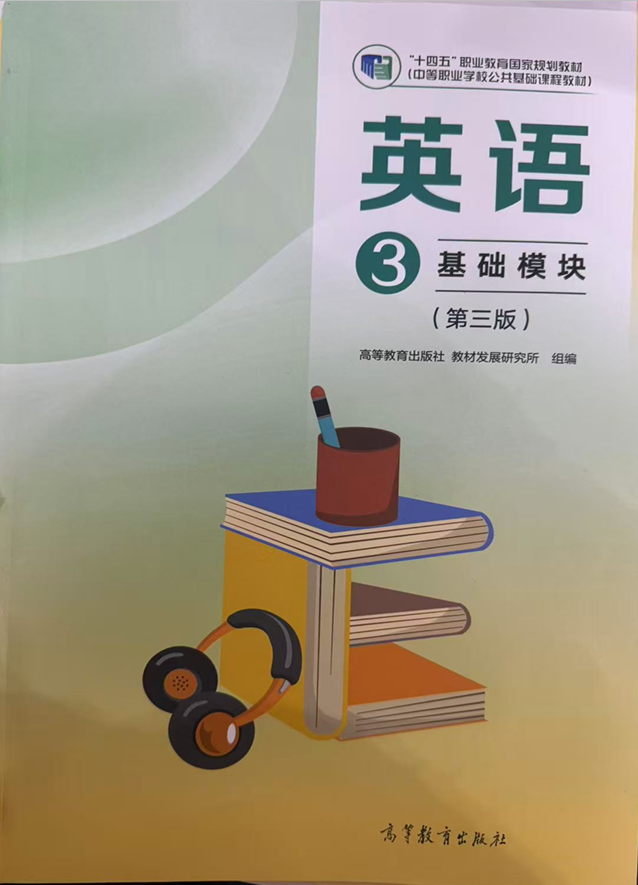
Unit 3 Artificial Intelligence(A卷·基础巩固)《英语 基础模块3》(高教版第三版)单元过关卷(原卷版+解析版)
2026-07-23
|
2份
|
19页
|
69人阅读
|
0人下载
摘要:
**基本信息**
《英语 基础模块3》Unit 3人工智能A卷基础巩固卷,紧扣教材核心考点,通过AI应用情境(如智能餐厅、学习工具)训练基础语言能力,适配中职单元复习需求。
**题型特征**
|题型|题量/分值|知识覆盖|命题特色|
|----|-----------|----------|----------|
|词汇与语法|25题/25分|单词辨音(如advantage)、词义选择(如application)、语法(被动语态、冠词等)|紧扣单元主题词汇,夯实语言基础能力|
|情景交际|15题/30分|简短对话(AI观点讨论)、补全对话(智能餐厅点餐)|创设真实AI场景,提升跨情境语言运用能力|
|阅读理解|10题/20分|智能餐厅服务、AI学习应用利弊|结合科技热点文本,培养信息提取与思维品质|
|英汉互译|5题/15分|AI多领域应用句(如机器人执行危险任务)|考查单元核心句型,强化语言转换能力|
|应用写作|1题/10分|AI利弊电子邮件填空(efficiency等词汇)|聚焦主题词汇运用,提升学习能力与表达准确性|
内容正文:
编写说明:本套试卷紧扣《英语 基础模块3》(高教版第三版)教材,以教材单元为基准精准覆盖核心考点。
每个单元设置AB卷,A卷为基础巩固卷,侧重基础考点训练,帮助学生扎实掌握知识要点;B卷为能力提升卷,注重知识整合与全面检测,引导学生构建知识网络。全书设计4份综合测试卷,模拟实战情境,聚焦解题能力突破,全面提升应试能力与知识应用水平。
《英语 基础模块3》(高教版第三版)《单元过关卷》
Unit 3 Artificial Intelligence
A卷·基础巩固
考试时间:70分钟 满分:100分
班级_____姓名_____学号_____成绩_____
综合卷Ⅰ(75分)
一、词汇与语法(共25小题,每小题1分,满分25分)
(一)单词辨音
从下列各小题的A、B、C三个选项中选出一个画线部分发音与所给单词画线部分发音不同的选项。(共5小题,每小题1分,共5分)
1.advantage
A.travel B.lake C.stand
2.increasing
A.meat B.peace C.head
3.attitude
A.nice B.milk C.swim
4.nice
A.life B.rice C.sit
5.application
A.practice B.make C.camera
(二)词义选择
从下列各小题的A、B、C三个选项中选出一个与句子中画线的英文单词或短语含义相符的中文选项。(共10小题,每小题1分,共10分)
6.The robot can serve dishes to customers in the smart restaurant.
A.保存 B.修理 C.服务
7.Mobile payment makes shopping more convenient for people.
A.方便的 B.昂贵的 C.陌生的
8.AI tools can improve our learning efficiency when we use them properly.
A.阻止 B.提高 C.隐藏
9.Face recognition is a useful application of AI in daily life.
A.申请 B.说明 C.应用
10.Some students benefit from online courses after school.
A.从……受益 B.远离 C.替换
11.We should not become dependent on machines for every small task.
A.反对 B.依靠 C.穿过
12.The new system helps workers finish the job with higher efficiency.
A.效率 B.礼貌 C.声音
13.Robots can perform dangerous tasks in factories.
A.取消 B.观看 C.执行
14.People may face a risk if they download unknown apps.
A.计划 B.风险 C.奖励
15.AI has its pros and cons, so we need to use it wisely.
A.利与弊 B.早与晚 C.远与近
(三)语法运用
从下列各小题的A、B、C三个选项中选出一个最佳选项填入空白处完成句子。(共10小题,每小题1分,共10分)
16.AI tools are used ______ students finish simple learning tasks.
A.to help B.helping C.helped
17.It is robots ______ cook the dishes in the smart restaurant.
A.what B.that C.where
18.Many jobs are dependent ______ computer technology today.
A.for B.with C.on
19.The wallet ______ by the police yesterday.
A.found B.was found C.finds
20.The smart restaurant has ______ robot waiter at the gate.
A.the B./ C.a
21.Students should use AI tools ______.
A.proper B.properly C.properness
22.There ______ many robot arms on the assembly line.
A.are B.is C.be
23.If the machine ______ down, the worker will call the engineer.
A.will break B.breaks C.breaking
24.______ useful application it is!
A.How B.What C.What a
25.The robot receptionist ______ visitors since eight this morning.
A.has served B.served C.serves
二、情景交际(共15小题,每小题2分,共30分)
(一)简短对话
从下列各小题的A、B、C三个选项中选出一个最佳选项完成对话。(共10小题,每小题2分,共20分)
26.Speaker A: I think robots make factory work safer.
Speaker B: ______
A.I lost my ticket. B.It is a blue screen. C.I agree with you.
27.Speaker A: May I use mobile payment here?
Speaker B: ______
A.Yes, you can scan this code. B.I prefer paper books. C.It is a robot arm.
28.Speaker A: What does the robot receptionist do?
Speaker B: ______
A.It is made of glass. B.It welcomes visitors and answers questions. C.It is ten years old.
29.Speaker A: To be honest, I prefer traditional restaurants.
Speaker B: ______
A.The train is late. B.No, I am not a chef. C.I understand. You like communicating with people.
30.Speaker A: Could you show me how to scan my face at the gate?
Speaker B: ______
A.It is too heavy. B.Sure. Please stand in front of the camera. C.I bought a new notebook.
31.Speaker A: AI may cause job losses in some fields.
Speaker B: ______
A.You have a point. B.Happy birthday. C.Turn left at the bank.
32.Speaker A: How can robots help in a hospital?
Speaker B: ______
A.They are made in 2020. B.It is on the second floor. C.They can deliver medicine and guide patients.
33.Speaker A: We should use AI tools properly.
Speaker B: ______
A.I want some noodles. B.We are on the same page. C.It is raining outside.
34.Speaker A: Thank you for explaining the smart restaurant to me.
Speaker B: ______
A.You're welcome. B.No, it isn't mine. C.I don't think so.
35.Speaker A: What are the pros and cons of this app?
Speaker B: ______
A.It is under the chair. B.I am from Quanzhou. C.It saves time, but it may use too much battery.
(二)补全对话
阅读下面对话,根据上下文从所给的七个选项中选出一个最佳选项补全对话,其中2项多余。(共5小题,每小题2分,共10分)
Clerk: Good morning! Welcome to Future Smart Restaurant.
Student: ____ 36 ____ Is there really no human waiter here?
Clerk: Yes. Robot waiters serve most tables. ____ 37 ____
Student: Great. I want to know how to order food.
Clerk: ____ 38 ____ Then choose the dishes on the screen.
Student: That is convenient. But do robots cook the dishes too?
Clerk: ____ 39 ____ The cooking process is controlled by a computer system.
Student: Amazing! I think technology improves efficiency.
Clerk: ____ 40 ____ It also helps lower costs.
A. Please scan the code on the table first.
B. Yes, robot chefs prepare many dishes.
C. We are on the same page.
D. I don't think so.
E. It is my first time here.
F. They can welcome customers and bring dishes.
G. The library is across from the bank.
三、阅读理解(共10小题,每小题2分,共20分)
阅读下列两篇短文,根据短文内容从每题所给的A、B、C三个选项中选出一个最佳选项。
A
Last Friday, Wang Min visited a smart restaurant near her school with two classmates. When they entered the hall, a robot receptionist greeted them and led them to a clean table. Wang Min scanned a code with her phone, chose rice noodles and paid by mobile payment.
A few minutes later, a robot waiter brought the food along a narrow path. It stopped safely when a child walked across the way. Wang Min found the service interesting, but her classmate Chen Hui said she still liked talking with human waiters because they could explain local dishes more warmly.
After lunch, the students interviewed the manager for their technology project. The manager said robots helped lower costs and improve efficiency, especially during busy hours. He also reminded them that people designed, checked and controlled the machines, so human workers were still important.
41.What can we learn about Wang Min's visit to the restaurant?
A.She cooked noodles in the kitchen.
B.She ordered food by scanning a code.
C.She repaired a robot waiter.
42.Which information about the robot waiter is mentioned?
A.It stopped when a child crossed the path.
B.It talked about the history of Fujian food.
C.It asked students to pay in cash.
43.Why did Chen Hui prefer human waiters?
A.Because they moved faster than machines.
B.Because they never made any mistakes.
C.Because they could explain local dishes warmly.
44.What did the manager think robots helped the restaurant do?
A.Close earlier and sell fewer dishes.
B.Lower costs and improve efficiency.
C.Replace all human workers at once.
45.What does the story mainly show?
A.Smart services need both technology and people.
B.Students should avoid all mobile payment.
C.Traditional restaurants have no advantages.
B
Artificial intelligence is changing how students learn and how workers complete tasks. In classrooms, some AI tools can check pronunciation, suggest writing changes and help learners review words after class. These applications are convenient, but they are not perfect teachers.
When students use AI properly, they may benefit from quick feedback and more practice. For example, a student who is afraid of speaking English can practise with an app before talking to classmates. However, if students copy every answer from a tool, they may become dependent on machines and lose the habit of thinking carefully.
In future workplaces, AI will continue to perform repeated or dangerous tasks. At the same time, people still need to ask good questions, make decisions and control the final results. Therefore, the key is not to refuse technology, but to understand its pros and cons and use it wisely.
46.Which information about AI tools in classrooms is mentioned?
A.They can replace all school subjects.
B.They can stop students from speaking.
C.They can help check pronunciation.
47.What can students get when they use AI properly?
A.Quick feedback and extra practice.
B.A promise of full marks in tests.
C.A reason to avoid classmates.
48.What does the underlined word “dependent” in Paragraph 2 mean?
A.独立的
B.依赖的
C.礼貌的
49.What can AI continue to do in future workplaces?
A.Make every personal decision.
B.Cancel all human communication.
C.Perform repeated or dangerous tasks.
50.What does the writer want to tell us?
A.Technology should be used wisely.
B.Students should refuse every app.
C.Machines can think better than people.
综合卷Ⅱ(25分)
四、英汉互译(共5小题,每小题3分,满分15分)
51.Robots are now used in many fields, and our life is getting easier.
_____________________________________________
52.Students benefit from AI tools when they use them properly.
_____________________________________________
53.Whether technology is a blessing depends on how people use it.
_____________________________________________
54.机器人可以执行危险任务。(perform)
_____________________________________________
55.我们在合理使用人工智能方面意见一致。(on the same page)
_____________________________________________
五、应用写作(满分10分)
56.根据提示完成电子邮件填空,每空一词或短语。
Dear David,
Thanks to the development of technology, AI has been used in many fields. It can help people improve ____ (1) ____ and make life more ____ (2) ____. For example, face recognition helps people enter buildings safely, and robots can ____ (3) ____ dangerous tasks. However, we should not become ____ (4) ____ machines. Like many things, AI has its ____ (5) ____. We should use it properly.
Yours,
Li Hua
原创精品资源学科网独家享有版权,侵权必究!
学科网(北京)股份有限公司
$
编写说明:本套试卷紧扣《英语 基础模块3》(高教版第三版)教材,以教材单元为基准精准覆盖核心考点。
每个单元设置AB卷,A卷为基础巩固卷,侧重基础考点训练,帮助学生扎实掌握知识要点;B卷为能力提升卷,注重知识整合与全面检测,引导学生构建知识网络。全书设计4份综合测试卷,模拟实战情境,聚焦解题能力突破,全面提升应试能力与知识应用水平。
《英语 基础模块3》(高教版第三版)《单元过关卷》
Unit 3 Artificial Intelligence
A卷·基础巩固
考试时间:70分钟 满分:100分
班级_____姓名_____学号_____成绩_____
综合卷Ⅰ(75分)
一、词汇与语法(共25小题,每小题1分,满分25分)
(一)单词辨音
从下列各小题的A、B、C三个选项中选出一个画线部分发音与所给单词画线部分发音不同的选项。(共5小题,每小题1分,共5分)
1.advantage
A.travel B.lake C.stand
【答案】B
【详解】考查字母 a 的发音。advantage、travel、stand 中 a 发 /æ/,lake 中 a 发 /eɪ/,发音不同。故选 B。
2.increasing
A.meat B.peace C.head
【答案】C
【详解】考查字母组合 ea 的发音。increasing、meat、peace 中 ea 发 /iː/,head 中 ea 发 /e/,发音不同。故选 C。
3.attitude
A.nice B.milk C.swim
【答案】A
【详解】考查字母 i 的发音。attitude、milk、swim 中 i 发 /ɪ/,nice 中 i 发 /aɪ/,发音不同。故选 A。
4.nice
A.life B.rice C.sit
【答案】C
【详解】考查字母 i 的发音。nice、life、rice 中 i 发 /aɪ/,sit 中 i 发 /ɪ/,发音不同。故选 C。
5.application
A.practice B.make C.camera
【答案】B
【详解】考查字母 a 的发音。application、practice、camera 中 a 发 /æ/,make 中 a 发 /eɪ/,发音不同。故选 B。
(二)词义选择
从下列各小题的A、B、C三个选项中选出一个与句子中画线的英文单词或短语含义相符的中文选项。(共10小题,每小题1分,共10分)
6.The robot can serve dishes to customers in the smart restaurant.
A.保存 B.修理 C.服务
【答案】C
【详解】考查动词词义。serve 在句中与 dishes to customers 搭配,表示“服务;端上饭菜”。故选 C。
7.Mobile payment makes shopping more convenient for people.
A.方便的 B.昂贵的 C.陌生的
【答案】A
【详解】考查形容词词义。convenient 描述移动支付给购物带来的便利,意为“方便的”。故选 A。
8.AI tools can improve our learning efficiency when we use them properly.
A.阻止 B.提高 C.隐藏
【答案】B
【详解】考查动词词义。improve 与 efficiency 搭配,表示“提高效率”。故选 B。
9.Face recognition is a useful application of AI in daily life.
A.申请 B.说明 C.应用
【答案】C
【详解】考查名词词义。application 在句中指人工智能在生活中的“应用”,不是“申请”。故选 C。
10.Some students benefit from online courses after school.
A.从……受益 B.远离 C.替换
【答案】A
【详解】考查动词短语。benefit from 表示“从……受益”,句中说明学生从线上课程中得到帮助。故选 A。
11.We should not become dependent on machines for every small task.
A.反对 B.依靠 C.穿过
【答案】B
【详解】考查形容词短语。dependent on 表示“依靠;依赖”,句中强调不能事事依赖机器。故选 B。
12.The new system helps workers finish the job with higher efficiency.
A.效率 B.礼貌 C.声音
【答案】A
【详解】考查名词词义。efficiency 指完成工作的效率,higher efficiency 意为“更高的效率”。故选 A。
13.Robots can perform dangerous tasks in factories.
A.取消 B.观看 C.执行
【答案】C
【详解】考查动词词义。perform 与 tasks 搭配,表示“执行任务”。故选 C。
14.People may face a risk if they download unknown apps.
A.计划 B.风险 C.奖励
【答案】B
【详解】考查名词词义。risk 在句中指下载未知应用可能带来的“风险”。故选 B。
15.AI has its pros and cons, so we need to use it wisely.
A.利与弊 B.早与晚 C.远与近
【答案】A
【详解】考查固定短语。pros and cons 表示“优点和缺点;利与弊”。故选 A。
(三)语法运用
从下列各小题的A、B、C三个选项中选出一个最佳选项填入空白处完成句子。(共10小题,每小题1分,共10分)
16.AI tools are used ______ students finish simple learning tasks.
A.to help B.helping C.helped
【答案】A
【详解】考查非谓语动词。be used to do sth. 表示“被用来做某事”,此处用 to help 表目的。故选 A。
17.It is robots ______ cook the dishes in the smart restaurant.
A.what B.that C.where
【答案】B
【详解】考查强调句。结构为 It is/was + 被强调部分 + that + 其他成分,此处强调 robots。故选 B。
18.Many jobs are dependent ______ computer technology today.
A.for B.with C.on
【答案】C
【详解】考查固定搭配。be dependent on 表示“依靠;依赖”,介词用 on。故选 C。
19.The wallet ______ by the police yesterday.
A.found B.was found C.finds
【答案】B
【详解】考查一般过去时的被动语态。主语 The wallet 是动作承受者,且时间为 yesterday,用 was found。故选 B。
20.The smart restaurant has ______ robot waiter at the gate.
A.the B./ C.a
【答案】C
【详解】考查冠词。robot waiter 为可数名词单数,首次提到且表示泛指,用 a。故选 C。
21.Students should use AI tools ______.
A.proper B.properly C.properness
【答案】B
【详解】考查副词用法。修饰动词 use 应使用副词 properly,表示“恰当地”。故选 B。
22.There ______ many robot arms on the assembly line.
A.are B.is C.be
【答案】A
【详解】考查 there be 句型。many robot arms 为复数名词,be 动词用 are。故选 A。
23.If the machine ______ down, the worker will call the engineer.
A.will break B.breaks C.breaking
【答案】B
【详解】考查条件状语从句。if 引导条件从句遵循主将从现,主语 the machine 为第三人称单数,用 breaks。故选 B。
24.______ useful application it is!
A.How B.What C.What a
【答案】C
【详解】考查感叹句。application 为可数名词单数,useful 以辅音音素开头,结构为 What a + 形容词 + 名词。故选 C。
25.The robot receptionist ______ visitors since eight this morning.
A.has served B.served C.serves
【答案】A
【详解】考查现在完成时。since eight this morning 表示动作从过去持续到现在,主语为第三人称单数,用 has served。故选 A。
二、情景交际(共15小题,每小题2分,共30分)
(一)简短对话
从下列各小题的A、B、C三个选项中选出一个最佳选项完成对话。(共10小题,每小题2分,共20分)
26.Speaker A: I think robots make factory work safer.
Speaker B: ______
A.I lost my ticket. B.It is a blue screen. C.I agree with you.
【答案】C
【详解】考查表达赞同。对方陈述观点,此处用 I agree with you 表示同意,符合语境。故选 C。
27.Speaker A: May I use mobile payment here?
Speaker B: ______
A.Yes, you can scan this code. B.I prefer paper books. C.It is a robot arm.
【答案】A
【详解】考查购物支付场景。对方询问能否使用移动支付,回答扫码支付最符合语境。故选 A。
28.Speaker A: What does the robot receptionist do?
Speaker B: ______
A.It is made of glass. B.It welcomes visitors and answers questions. C.It is ten years old.
【答案】B
【详解】考查询问功能。问句询问机器人接待员做什么,选项B说明其服务功能,符合语境。故选 B。
29.Speaker A: To be honest, I prefer traditional restaurants.
Speaker B: ______
A.The train is late. B.No, I am not a chef. C.I understand. You like communicating with people.
【答案】C
【详解】考查观点回应。对方表达偏好传统餐厅,回应应围绕人与人交流作出理解。故选 C。
30.Speaker A: Could you show me how to scan my face at the gate?
Speaker B: ______
A.It is too heavy. B.Sure. Please stand in front of the camera. C.I bought a new notebook.
【答案】B
【详解】考查求助回应。对方请求演示人脸扫描,Sure 后给出操作提示,符合语境。故选 B。
31.Speaker A: AI may cause job losses in some fields.
Speaker B: ______
A.You have a point. B.Happy birthday. C.Turn left at the bank.
【答案】A
【详解】考查观点讨论。You have a point 表示“你说得有道理”,适合回应对风险的观点。故选 A。
32.Speaker A: How can robots help in a hospital?
Speaker B: ______
A.They are made in 2020. B.It is on the second floor. C.They can deliver medicine and guide patients.
【答案】C
【详解】考查询问应用。问句询问机器人在医院的帮助,选项C说明送药和引导病人,符合语境。故选 C。
33.Speaker A: We should use AI tools properly.
Speaker B: ______
A.I want some noodles. B.We are on the same page. C.It is raining outside.
【答案】B
【详解】考查表达一致意见。We are on the same page 表示“我们意见一致”,符合观点交流语境。故选 B。
34.Speaker A: Thank you for explaining the smart restaurant to me.
Speaker B: ______
A.You're welcome. B.No, it isn't mine. C.I don't think so.
【答案】A
【详解】考查感谢回应。对方表示感谢,应回答 You're welcome。故选 A。
35.Speaker A: What are the pros and cons of this app?
Speaker B: ______
A.It is under the chair. B.I am from Quanzhou. C.It saves time, but it may use too much battery.
【答案】C
【详解】考查询问利弊。选项C同时说明优点和问题,符合 pros and cons 的语境。故选 C。
(二)补全对话
阅读下面对话,根据上下文从所给的七个选项中选出一个最佳选项补全对话,其中2项多余。(共5小题,每小题2分,共10分)
Clerk: Good morning! Welcome to Future Smart Restaurant.
Student: ____ 36 ____ Is there really no human waiter here?
Clerk: Yes. Robot waiters serve most tables. ____ 37 ____
Student: Great. I want to know how to order food.
Clerk: ____ 38 ____ Then choose the dishes on the screen.
Student: That is convenient. But do robots cook the dishes too?
Clerk: ____ 39 ____ The cooking process is controlled by a computer system.
Student: Amazing! I think technology improves efficiency.
Clerk: ____ 40 ____ It also helps lower costs.
A. Please scan the code on the table first.
B. Yes, robot chefs prepare many dishes.
C. We are on the same page.
D. I don't think so.
E. It is my first time here.
F. They can welcome customers and bring dishes.
G. The library is across from the bank.
【答案】36. E 37. F 38. A 39. B 40. C
【解析】36. E 上文为餐厅欢迎语,下文询问是否没有真人服务员,此处说明第一次到店,语境自然。
37. F 上文提到机器人服务员服务多数餐桌,此处继续说明其迎宾和送餐功能,衔接紧密。
38. A 上文询问如何点餐,下文提到在屏幕上选择菜品,因此先扫码最符合操作顺序。
39. B 上文询问机器人是否也做菜,Yes 后说明机器人厨师备餐,问答对应。
40. C 上文学生认为科技提高效率,此处用 We are on the same page 表示意见一致,并补充降低成本。
三、阅读理解(共10小题,每小题2分,共20分)
阅读下列两篇短文,根据短文内容从每题所给的A、B、C三个选项中选出一个最佳选项。
A
Last Friday, Wang Min visited a smart restaurant near her school with two classmates. When they entered the hall, a robot receptionist greeted them and led them to a clean table. Wang Min scanned a code with her phone, chose rice noodles and paid by mobile payment.
A few minutes later, a robot waiter brought the food along a narrow path. It stopped safely when a child walked across the way. Wang Min found the service interesting, but her classmate Chen Hui said she still liked talking with human waiters because they could explain local dishes more warmly.
After lunch, the students interviewed the manager for their technology project. The manager said robots helped lower costs and improve efficiency, especially during busy hours. He also reminded them that people designed, checked and controlled the machines, so human workers were still important.
41.What can we learn about Wang Min's visit to the restaurant?
A.She cooked noodles in the kitchen.
B.She ordered food by scanning a code.
C.She repaired a robot waiter.
42.Which information about the robot waiter is mentioned?
A.It stopped when a child crossed the path.
B.It talked about the history of Fujian food.
C.It asked students to pay in cash.
43.Why did Chen Hui prefer human waiters?
A.Because they moved faster than machines.
B.Because they never made any mistakes.
C.Because they could explain local dishes warmly.
44.What did the manager think robots helped the restaurant do?
A.Close earlier and sell fewer dishes.
B.Lower costs and improve efficiency.
C.Replace all human workers at once.
45.What does the story mainly show?
A.Smart services need both technology and people.
B.Students should avoid all mobile payment.
C.Traditional restaurants have no advantages.
【答案】41.B 42.A 43.C 44.B 45.A
【导语】本文是一篇记叙文,围绕智能餐厅体验话题,讲述王敏和同学参观智能餐厅、体验扫码点餐和机器人送餐,并采访经理了解机器人服务价值的过程。文章通过学生体验和经理说明,呈现科技便利与人工管理并存的观点。
【详解】41.细节理解题。根据第一段“scanned a code with her phone, chose rice noodles and paid by mobile payment”可知,王敏通过手机扫码完成点餐和支付。故选 B。
【详解】42.细节理解题。根据第二段“It stopped safely when a child walked across the way.”可知,机器人服务员在孩子经过时安全停下。故选 A。
【详解】43.细节理解题。根据第二段“human waiters because they could explain local dishes more warmly”可知,陈慧认为真人服务员能更热情地介绍本地菜品。故选 C。
【详解】44.细节理解题。根据第三段“robots helped lower costs and improve efficiency”可知,经理认为机器人有助于降低成本、提高效率。故选 B。
【详解】45.主旨大意题。文章既写机器人点餐送餐的便利,也写人工设计、检查和控制机器的重要性,说明智能服务需要科技与人的配合。故选 A。
B
Artificial intelligence is changing how students learn and how workers complete tasks. In classrooms, some AI tools can check pronunciation, suggest writing changes and help learners review words after class. These applications are convenient, but they are not perfect teachers.
When students use AI properly, they may benefit from quick feedback and more practice. For example, a student who is afraid of speaking English can practise with an app before talking to classmates. However, if students copy every answer from a tool, they may become dependent on machines and lose the habit of thinking carefully.
In future workplaces, AI will continue to perform repeated or dangerous tasks. At the same time, people still need to ask good questions, make decisions and control the final results. Therefore, the key is not to refuse technology, but to understand its pros and cons and use it wisely.
46.Which information about AI tools in classrooms is mentioned?
A.They can replace all school subjects.
B.They can stop students from speaking.
C.They can help check pronunciation.
47.What can students get when they use AI properly?
A.Quick feedback and extra practice.
B.A promise of full marks in tests.
C.A reason to avoid classmates.
48.What does the underlined word “dependent” in Paragraph 2 mean?
A.独立的
B.依赖的
C.礼貌的
49.What can AI continue to do in future workplaces?
A.Make every personal decision.
B.Cancel all human communication.
C.Perform repeated or dangerous tasks.
50.What does the writer want to tell us?
A.Technology should be used wisely.
B.Students should refuse every app.
C.Machines can think better than people.
【答案】46.C 47.A 48.B 49.C 50.A
【导语】本文是一篇说明文,围绕人工智能应用话题,介绍AI工具在学习和未来工作中的便利作用,同时指出过度依赖可能削弱独立思考。文章从课堂学习、学生使用习惯和职场任务三个角度展开,强调理解利弊、合理使用科技。
【详解】46.细节理解题。根据第一段“some AI tools can check pronunciation”可知,课堂中的AI工具可以帮助检查发音。故选 C。
【详解】47.细节理解题。根据第二段“benefit from quick feedback and more practice”可知,恰当使用AI能获得快速反馈和更多练习机会。故选 A。
【详解】48.词义猜测题。根据第二段“copy every answer from a tool”和“lose the habit of thinking carefully”可知,dependent 表示过度依靠机器,即“依赖的”。故选 B。
【详解】49.细节理解题。根据第三段“AI will continue to perform repeated or dangerous tasks”可知,AI未来仍会执行重复性或危险任务。故选 C。
【详解】50.主旨大意题。根据第三段“understand its pros and cons and use it wisely”可知,作者强调应理解科技利弊并理性使用。故选 A。
综合卷Ⅱ(25分)
四、英汉互译(共5小题,每小题3分,满分15分)
51.Robots are now used in many fields, and our life is getting easier.
_____________________________________________
【答案】机器人现在被用于许多领域,我们的生活正变得更加容易。
【详解】are used 表示“被使用”;in many fields 表示“在许多领域”;is getting easier 表示“正变得更加容易”。
52.Students benefit from AI tools when they use them properly.
_____________________________________________
【答案】当学生恰当地使用人工智能工具时,他们会从中受益。
【详解】benefit from 表示“从……受益”;properly 表示“恰当地”。
53.Whether technology is a blessing depends on how people use it.
_____________________________________________
【答案】技术是否是一种福祉取决于人们如何使用它。
【详解】whether 引导主语从句;depend on 表示“取决于;依靠”;how people use it 表示“人们如何使用它”。
54.机器人可以执行危险任务。(perform)
_____________________________________________
【答案】Robots can perform dangerous tasks.
【详解】perform dangerous tasks 表示“执行危险任务”;情态动词 can 后接动词原形。
55.我们在合理使用人工智能方面意见一致。(on the same page)
_____________________________________________
【答案】We are on the same page about using AI properly.
【详解】be on the same page 表示“意见一致”;about 后接动名词 using;properly 表示“合理地;恰当地”。
五、应用写作(满分10分)
56.根据提示完成电子邮件填空,每空一词或短语。
Dear David,
Thanks to the development of technology, AI has been used in many fields. It can help people improve ____ (1) ____ and make life more ____ (2) ____. For example, face recognition helps people enter buildings safely, and robots can ____ (3) ____ dangerous tasks. However, we should not become ____ (4) ____ machines. Like many things, AI has its ____ (5) ____. We should use it properly.
Yours,
Li Hua
【答案】(1) efficiency (2) convenient (3) perform (4) dependent on (5) pros and cons
【解析】(1) 考查名词词义。improve efficiency 表示“提高效率”,符合科技应用语境。
(2) 考查形容词词义。make life more convenient 表示“使生活更方便”。
(3) 考查动词搭配。perform dangerous tasks 表示“执行危险任务”,can 后接动词原形。
(4) 考查固定短语。become dependent on machines 表示“变得依赖机器”。
(5) 考查固定短语。pros and cons 表示“优点和缺点;利与弊”。
原创精品资源学科网独家享有版权,侵权必究!
学科网(北京)股份有限公司
$
资源预览图

1

2

3
由于学科网是一个信息分享及获取的平台,不确保部分用户上传资料的 来源及知识产权归属。如您发现相关资料侵犯您的合法权益,请联系学科网,我们核实后将及时进行处理。