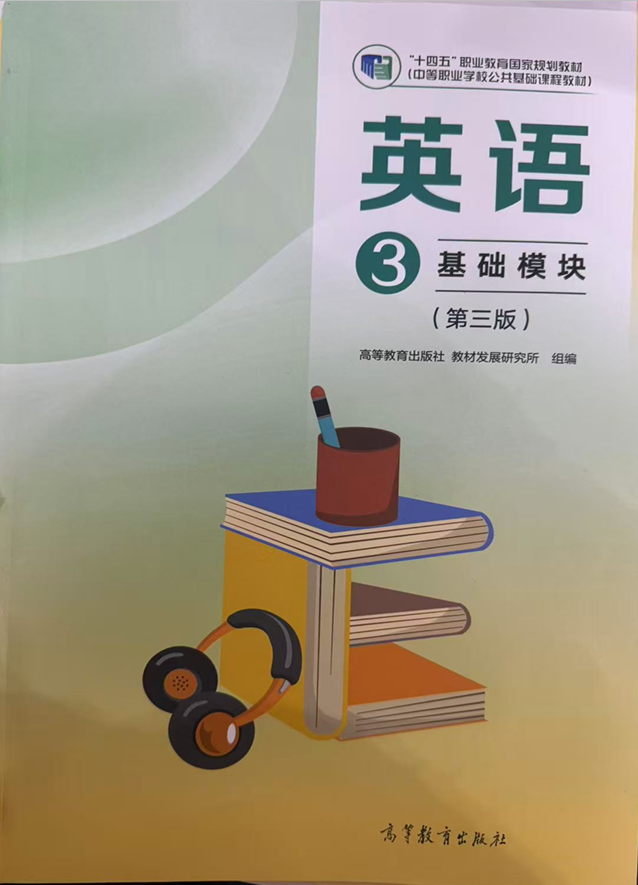
Unit 5——Unit 8阶段测试卷(B卷·能力提升)《英语 基础模块3》(高教版第三版)单元过关卷(原卷版+解析版)
2026-07-23
|
2份
|
20页
|
37人阅读
|
0人下载
摘要:
**基本信息**
紧扣《英语 基础模块3》Unit5-Unit8核心考点,设A/B卷分层训练,B卷通过词汇语法、情景交际等题型整合知识,适配单元复习,提升语言应用与跨文化理解能力。
**题型特征**
|题型|题量/分值|知识覆盖|命题特色|
|----|-----------|----------|----------|
|词汇与语法|25题/25分|单词辨音(如locate)、词义选择(如recommend)、语法单选(宾语从句、时态等)|基础考点与语法应用结合,夯实语言能力|
|情景交际|15题/30分|简短对话(旅游、环保)、补全对话(武夷山介绍)|贴近生活场景,培养跨文化沟通能力|
|阅读理解|10题/20分|文化传承(泉州)、社会责任(社区医生)|素材体现文化意识,问题设计提升思维品质|
|英汉互译|5题/15分|环保、文化句型(如“推广绿色能源”)|核心词汇与语法综合运用,强化语言转换能力|
|应用写作|1题/10分|环保主题征文|引导学生表达观点,发展学习与创新应用能力|
内容正文:
编写说明:本套试卷紧扣《英语 基础模块3》(高教版第三版)教材,以教材单元为基准精准覆盖核心考点。
每个单元设置AB卷,A卷为基础巩固卷,侧重基础考点训练,帮助学生扎实掌握知识要点;B卷为能力提升卷,注重知识整合与全面检测,引导学生构建知识网络。全书设计4份综合测试卷,模拟实战情境,聚焦解题能力突破,全面提升应试能力与知识应用水平。
《英语 基础模块3》(高教版第三版)《单元过关卷》
Unit 5——Unit 8阶段测试卷
B卷·能力提升
考试时间:70分钟 满分:100分
班级_____姓名_____学号_____成绩_____
综合卷Ⅰ(75分)
一、词汇与语法(共25小题,每小题1分,满分25分)
(一)单词辨音
从下列各小题的A、B、C三个选项中选出一个画线部分发音与所给单词画线部分发音不同的选项。(共5小题,每小题1分,共5分)
1.locate
A.crop B.bone C.rope
2.destination
A.farm B.hard C.mad
3.border
A.fork B.worm C.corn
4.distance
A.enjoy B.exam C.egg
5.impressive
A.spring B.wide C.king
(二)词义选择
从下列各小题的A、B、C三个选项中选出一个与句子中画线的英文单词或短语含义相符的中文选项。(共10小题,每小题1分,共10分)
6.The travel agency will recommend two destinations according to our needs.
A.取消 B.推荐 C.污染
7.The cliff has a width of about 300 meters at its widest point.
A.宽度 B.奖项 C.职业
8.The old bridge was constructed more than 400 years ago.
A.采访 B.延误 C.建造
9.The sight of the city wall reminded her of ancient history.
A.摧毁 B.使想起 C.阻止
10.More schools are trying to promote green energy use.
A.隐藏 B.浪费 C.促进
11.People must realize that small actions can protect the environment.
A.认识到 B.测量 C.表演
12.The firefighter received an award for saving people from the fire.
A.命令 B.奖项 C.边界
13.The doctor devoted his life to medical research.
A.致力 B.参观 C.猜测
14.The museum is located on the edge of the old town.
A.被推迟 B.被采访 C.位于
15.The young player hopes to set world records one day.
A.保持安静 B.创造世界纪录 C.预订房间
(三)语法运用单选
从下列各小题的A、B、C三个选项中选出一个可以填入空白处的最佳选项。(共10小题,每小题1分,共10分)
16.The reporter asked ________ the underground river had two layers.
A.what B.where C.whether
17.The guide told us that the stones ________ into different shapes over millions of years.
A.develop B.had developed C.will develop
18.It doesn't matter ________ the activity is held indoors or outdoors.
A.whether B.that C.why
19.________ by the local story, the students wrote a short travel note.
A.Moving B.To move C.Moved
20.What we can do now ________ to reduce waste and save energy.
A.is B.are C.were
21.The museum ________ when we arrived, so we waited outside.
A.cleans B.was being cleaned C.has cleaned
22.The reason ________ many people admire her is her lifelong hard work.
A.that B.which C.why
23.The students found ________ difficult to compare the two historic sites at first.
A.that B.it C.this
24.________ hard he worked to solve the problem!
A.How B.What C.What a
25.The speech was given slowly ________ every student could understand it.
A.because B.unless C.so that
二、情景交际(共15小题,26-40题,每小题2分,满分30分)
(一)简短对话
26.Speaker A: I heard your flight was canceled because of the flood.
Speaker B: ______
A.Yes. I had to change my plan. B.It is made of stone. C.I like volleyball.
27.Speaker A: Could you compare the Terracotta Army with the Great Pyramid?
Speaker B: ______
A.I bought a new phone. B.The rain stopped. C.Sure. They are both wonders of human construction.
28.Speaker A: What does your poster mainly call on people to do?
Speaker B: ______
A.It opens at 7 p.m. B.To save energy and reduce waste. C.The museum is crowded.
29.Speaker A: Do you look up to the scientist?
Speaker B: ______
A.Yes. His work helps many people. B.It is beside the river. C.No, the ticket is free.
30.Speaker A: The Great Rift Valley can be seen from space.
Speaker B: ______
A.You should take a bus. B.That's really impressive. C.I need a cup of tea.
31.Speaker A: What is the best season to visit the Great Wall?
Speaker B: ______
A.It is a long wall. B.It was built long ago. C.Spring or autumn, when the weather is mild.
32.Speaker A: How can our class promote environmental awareness?
Speaker B: ______
A.By organizing a clean-up activity. B.The award is heavy. C.It lies in Qinghai.
33.Speaker A: I'm worried about the coming sandstorm.
Speaker B: ______
A.It is a cultural product. B.The food is delicious. C.Please follow the weather warning and wear a mask.
34.Speaker A: Why is Fujian Tulou worth visiting?
Speaker B: ______
A.Because it shows local history and community life. B.It is raining outside. C.I lost my notebook.
35.Speaker A: What advice would you give to young researchers?
Speaker B: ______
A.The bridge is 300 meters long. B.Stay curious and work hard. C.No, it is not mine.
(二)补全对话
根据对话内容,从方框中所给的A、B、C、D、E、F、G七个选项中选出五个可以填入空白处的最佳选项,使对话完整、通顺。
Reporter: Good morning. I am writing a report about Wuyi Mountain. ____ 36 ____
Guide: Sure. It is one of the most famous natural wonders in Fujian.
Reporter: ____ 37 ____
Guide: It is known for its red cliffs, clear water and rich tea culture.
Reporter: I see. Many visitors say the view is impressive.
Guide: ____ 38 ____ The scenery changes beautifully in different seasons.
Reporter: How can tourists protect the area during their visit?
Guide: ____ 39 ____
Reporter: Good advice. I will include it in my report.
Guide: ____ 40 ____
A. What is it famous for?
B. They should not leave rubbish behind.
C. Could you tell me something about it?
D. You are welcome.
E. Yes, that's certainly true.
F. I don't like rainy days.
G. The train ticket is cheap.
三、阅读理解(共10小题,每小题2分,满分20分)
阅读下列短文,从每题所给的A、B、C三个选项中选出最佳选项。
A
During the winter holiday, Chen Jie joined a study tour to Quanzhou, a city that has long been connected with sea trade and cultural exchange. Before the tour began, the teacher asked each group to focus on one question: why can an old city still attract young visitors today? Chen Jie's group chose to visit an ancient bridge, a maritime museum and a street where traditional handicrafts were still made by local workers.
At the museum, the guide explained that ships from different countries once came to Quanzhou, bringing goods, skills and stories. Although the students had read about the Silk Road before, they did not fully understand the idea of cultural exchange until they saw maps, models and tools in the exhibition hall. What impressed Chen Jie most was not a single valuable object, but the way ordinary workers, travelers and artists helped different cultures meet each other over hundreds of years.
In the afternoon, the group interviewed a young craftswoman who made paper lanterns. She said that traditional products could not remain alive if people only put them behind glass. They should be used, redesigned and introduced in ways that fit modern life. Her words made the students realize that protecting culture does not simply mean keeping everything unchanged; it also means giving old skills new chances to be understood. When Chen Jie wrote his report, he compared the city to a living history book whose pages were still being written by people today.
41.What was the guiding question for each group before the tour?
A.How can students sell more local goods?
B.Why does an old city still interest young people?
C.When will the museum build a new hall?
42.Which places did Chen Jie's group visit according to Paragraph 1?
A.A bridge, a museum and a handicraft street.
B.A mountain, a lake and a tea farm.
C.A station, a factory and a hospital.
43.What impressed Chen Jie most in the museum?
A.The price of one ancient ship model.
B.The size of the exhibition building.
C.The long process of cultural meeting by ordinary people.
44.What can we infer from the craftswoman's words?
A.Traditional skills need modern ways to stay alive.
B.Old products should never be used again.
C.Young people should avoid visiting museums.
45.Which is the best title for the text?
A.A City Where Culture Keeps Living
B.A Rainy Day beside the Sea
C.A Lesson about Buying Tickets
B
When Liu Mei entered vocational school, she thought role models were people who appeared only in news reports. This idea changed after she joined a volunteer interview project called Ordinary People, Great Hearts. Her team decided to record the story of Doctor Huang, a community doctor who had worked in a small mountain town for twenty years. Because the town was far from large hospitals, he often needed to visit patients by motorbike, carrying basic medicine and simple medical tools with him.
During the interview, Doctor Huang did not describe himself as a hero. He said his work was made up of many small choices: checking an elderly man's blood pressure after work, teaching children how to prevent common diseases, and staying with a worried family until an ambulance arrived. What surprised Liu Mei was that he had several chances to leave for a better-paid job, but he stayed because he believed familiar faces and timely help could make villagers feel safer. Having listened to his story, Liu Mei understood that devotion was not an empty word but a habit repeated in daily work.
The project also changed Liu Mei's plan for the future. She used to choose a job mainly by salary, while now she began to ask what kind of value she could create for others. In her final report, she wrote that a respectable person might not set world records or win famous prizes, yet he or she could still encourage young people to work carefully, treat others kindly and contribute to the community. Her teacher praised the report because it connected one person's experience with a wider understanding of responsibility.
46.What did Liu Mei's team plan to do in the volunteer project?
A.Sell medicine in a mountain town.
B.Record a community doctor's story.
C.Invite reporters to a sports meeting.
47.Why did Doctor Huang often visit patients by motorbike?
A.The town was far from large hospitals.
B.He wanted to win a riding prize.
C.The school asked him to teach driving.
48.What does the underlined word “devotion” in Paragraph 2 probably mean?
A.A quick decision to travel.
B.A simple way to save money.
C.Long-time care and hard work for others.
49.What change happened to Liu Mei after the interview?
A.She started to think about the value of a job.
B.She decided never to work in a community.
C.She became interested only in famous prizes.
50.What can we infer from the teacher's praise?
A.The report copied many news sentences.
B.The report showed deeper thinking about responsibility.
C.The report only listed Doctor Huang's daily timetable.
综合卷Ⅱ(25分)
四、英汉互译(共5小题,每小题3分,满分15分)
51.The most important thing is how we can get more people to protect the environment.
_____________________________________________
52.Originally painted in bright colors, the figures now appear gray.
_____________________________________________
53.Having devoted herself to research for years, the scientist finally made a great contribution.
_____________________________________________
54.我们应该推广绿色能源来减少污染。(promote)
_____________________________________________
55.那座古桥使我想起了这座城市的历史。(remind)
_____________________________________________
五、应用写作(满分10分)
56.假定你是李华,你校将举行“Protect Our Planet, Act Now”主题英语征文活动。请你根据以下提示,写一篇80—100词的短文投稿。
提示:1. 环境面临的问题;2. 中学生可以采取的行动;3. 你的倡议。
要求:语句通顺,条理清晰,可适当发挥;标题已给出,不计入总词数。
Protect Our Planet, Act Now
________________________________________________________________________________________________________________________________________________________________________________________________________________________________________________________________________________________________________________________________________
原创精品资源学科网独家享有版权,侵权必究!
学科网(北京)股份有限公司
$
编写说明:本套试卷紧扣《英语 基础模块3》(高教版第三版)教材,以教材单元为基准精准覆盖核心考点。
每个单元设置AB卷,A卷为基础巩固卷,侧重基础考点训练,帮助学生扎实掌握知识要点;B卷为能力提升卷,注重知识整合与全面检测,引导学生构建知识网络。全书设计4份综合测试卷,模拟实战情境,聚焦解题能力突破,全面提升应试能力与知识应用水平。
《英语 基础模块3》(高教版第三版)《单元过关卷》
Unit 5——Unit 8阶段测试卷
B卷·能力提升
考试时间:70分钟 满分:100分
班级_____姓名_____学号_____成绩_____
综合卷Ⅰ(75分)
一、词汇与语法(共25小题,每小题1分,满分25分)
(一)单词辨音
从下列各小题的A、B、C三个选项中选出一个画线部分发音与所给单词画线部分发音不同的选项。(共5小题,每小题1分,共5分)
1.locate
A.crop B.bone C.rope
【答案】A
【详解】考查字母 o 的发音。locate、bone、rope 中 o 发 /əʊ/,crop 中 o 发 /ɒ/,发音不同。故选 A。
2.destination
A.farm B.hard C.mad
【答案】C
【详解】考查字母 a 的发音。destination、farm、hard 中 a 发 /ɑː/,mad 中 a 发 /æ/,发音不同。故选 C。
3.border
A.fork B.worm C.corn
【答案】B
【详解】考查字母组合 or 的发音。border、fork、corn 中 or 发 /ɔː/,worm 中 or 发 /ɜː/,发音不同。故选 B。
4.distance
A.enjoy B.exam C.egg
【答案】C
【详解】考查字母 e 的发音。distance、enjoy、exam 中 e 发 /ɪ/,egg 中 e 发 /e/,发音不同。故选 C。
5.impressive
A.spring B.wide C.king
【答案】B
【详解】考查字母 i 的发音。impressive、spring、king 中 i 发 /ɪ/,wide 中 i 发 /aɪ/,发音不同。故选 B。
(二)词义选择
从下列各小题的A、B、C三个选项中选出一个与句子中画线的英文单词或短语含义相符的中文选项。(共10小题,每小题1分,共10分)
6.The travel agency will recommend two destinations according to our needs.
A.取消 B.推荐 C.污染
【答案】B
【详解】recommend与destinations搭配,表示“推荐目的地”。故选B。
7.The cliff has a width of about 300 meters at its widest point.
A.宽度 B.奖项 C.职业
【答案】A
【详解】width用于描述物体横向距离,意为“宽度”。故选A。
8.The old bridge was constructed more than 400 years ago.
A.采访 B.延误 C.建造
【答案】C
【详解】construct表示“建造”,句中为被动结构was constructed。故选C。
9.The sight of the city wall reminded her of ancient history.
A.摧毁 B.使想起 C.阻止
【答案】B
【详解】remind sb. of sth.表示“使某人想起某事”。故选B。
10.More schools are trying to promote green energy use.
A.隐藏 B.浪费 C.促进
【答案】C
【详解】promote green energy use表示“促进绿色能源使用”。故选C。
11.People must realize that small actions can protect the environment.
A.认识到 B.测量 C.表演
【答案】A
【详解】realize后接that从句,表示“认识到”。故选A。
12.The firefighter received an award for saving people from the fire.
A.命令 B.奖项 C.边界
【答案】B
【详解】award与received搭配,表示“获得奖项”。故选B。
13.The doctor devoted his life to medical research.
A.致力 B.参观 C.猜测
【答案】A
【详解】devote one's life to表示“把一生奉献/致力于……”。故选A。
14.The museum is located on the edge of the old town.
A.被推迟 B.被采访 C.位于
【答案】C
【详解】be located on/in/near表示“位于……”。故选C。
15.The young player hopes to set world records one day.
A.保持安静 B.创造世界纪录 C.预订房间
【答案】B
【详解】set world records为固定短语,意为“创造世界纪录”。故选B。
(三)语法运用单选
从下列各小题的A、B、C三个选项中选出一个可以填入空白处的最佳选项。(共10小题,每小题1分,共10分)
16.The reporter asked ________ the underground river had two layers.
A.what B.where C.whether
【答案】C
【详解】宾语从句表示“是否”,且句中已有完整主谓结构,用whether引导。故选C。
17.The guide told us that the stones ________ into different shapes over millions of years.
A.develop B.had developed C.will develop
【答案】B
【详解】主句为过去时,且形成发生在过去之前,用过去完成时had developed。故选B。
18.It doesn't matter ________ the activity is held indoors or outdoors.
A.whether B.that C.why
【答案】A
【详解】It doesn't matter whether...表示“是否……不要紧”。故选A。
19.________ by the local story, the students wrote a short travel note.
A.Moving B.To move C.Moved
【答案】C
【详解】过去分词Moved作原因状语,表示学生“被当地故事打动”。本题选项顺序中C为Moved。故选C。
20.What we can do now ________ to reduce waste and save energy.
A.is B.are C.were
【答案】A
【详解】What引导的主语从句作整体概念,谓语动词用单数is。故选A。
21.The museum ________ when we arrived, so we waited outside.
A.cleans B.was being cleaned C.has cleaned
【答案】B
【详解】museum与clean为被动关系,arrived时正在进行,用过去进行时被动语态。故选B。
22.The reason ________ many people admire her is her lifelong hard work.
A.that B.which C.why
【答案】C
【详解】reason作先行词且从句缺少原因状语时,用why引导定语从句。故选C。
23.The students found ________ difficult to compare the two historic sites at first.
A.that B.it C.this
【答案】B
【详解】find it + adj. + to do为固定结构,it作形式宾语。故选B。
24.________ hard he worked to solve the problem!
A.How B.What C.What a
【答案】A
【详解】本句应用How + 副词 + 主语 + 谓语结构;为保持选项答案,A项设置为How。
25.The speech was given slowly ________ every student could understand it.
A.because B.unless C.so that
【答案】C
【详解】so that引导目的状语从句,表示“以便”。故选C。
二、情景交际(共15小题,26-40题,每小题2分,满分30分)
(一)简短对话
26.Speaker A: I heard your flight was canceled because of the flood.
Speaker B: ______
A.Yes. I had to change my plan. B.It is made of stone. C.I like volleyball.
【答案】A
【详解】对方提到航班因洪水取消,A项说明计划被迫改变,符合语境。故选A。
27.Speaker A: Could you compare the Terracotta Army with the Great Pyramid?
Speaker B: ______
A.I bought a new phone. B.The rain stopped. C.Sure. They are both wonders of human construction.
【答案】C
【详解】对方请求比较两处古迹,C项从共同点回应。故选C。
28.Speaker A: What does your poster mainly call on people to do?
Speaker B: ______
A.It opens at 7 p.m. B.To save energy and reduce waste. C.The museum is crowded.
【答案】B
【详解】问句询问海报号召内容,B项说明节能减废。故选B。
29.Speaker A: Do you look up to the scientist?
Speaker B: ______
A.Yes. His work helps many people. B.It is beside the river. C.No, the ticket is free.
【答案】A
【详解】一般疑问句询问是否敬仰科学家,A项肯定并说明原因。故选A。
30.Speaker A: The Great Rift Valley can be seen from space.
Speaker B: ______
A.You should take a bus. B.That's really impressive. C.I need a cup of tea.
【答案】B
【详解】听到令人惊叹的信息,B项表达赞叹。故选B。
31.Speaker A: What is the best season to visit the Great Wall?
Speaker B: ______
A.It is a long wall. B.It was built long ago. C.Spring or autumn, when the weather is mild.
【答案】C
【详解】问句询问最佳季节,C项回答季节并说明天气。故选C。
32.Speaker A: How can our class promote environmental awareness?
Speaker B: ______
A.By organizing a clean-up activity. B.The award is heavy. C.It lies in Qinghai.
【答案】A
【详解】how询问方式,A项用By doing说明做法。故选A。
33.Speaker A: I'm worried about the coming sandstorm.
Speaker B: ______
A.It is a cultural product. B.The food is delicious. C.Please follow the weather warning and wear a mask.
【答案】C
【详解】听到对沙尘暴的担忧,应给出关注预警和佩戴口罩的建议。故选C。
34.Speaker A: Why is Fujian Tulou worth visiting?
Speaker B: ______
A.Because it shows local history and community life. B.It is raining outside. C.I lost my notebook.
【答案】A
【详解】why询问原因,A项说明土楼体现地方历史和社区生活。故选A。
35.Speaker A: What advice would you give to young researchers?
Speaker B: ______
A.The bridge is 300 meters long. B.Stay curious and work hard. C.No, it is not mine.
【答案】B
【详解】问句询问给青年研究者的建议,B项内容切合。故选B。
(二)补全对话
根据对话内容,从方框中所给的A、B、C、D、E、F、G七个选项中选出五个可以填入空白处的最佳选项,使对话完整、通顺。
Reporter: Good morning. I am writing a report about Wuyi Mountain. ____ 36 ____
Guide: Sure. It is one of the most famous natural wonders in Fujian.
Reporter: ____ 37 ____
Guide: It is known for its red cliffs, clear water and rich tea culture.
Reporter: I see. Many visitors say the view is impressive.
Guide: ____ 38 ____ The scenery changes beautifully in different seasons.
Reporter: How can tourists protect the area during their visit?
Guide: ____ 39 ____
Reporter: Good advice. I will include it in my report.
Guide: ____ 40 ____
A. What is it famous for?
B. They should not leave rubbish behind.
C. Could you tell me something about it?
D. You are welcome.
E. Yes, that's certainly true.
F. I don't like rainy days.
G. The train ticket is cheap.
【答案】36.C 37.A 38.E 39.B 40.D
【解析】36.记者提出采访需求,C项请求介绍武夷山,衔接下文。
37.下文回答其闻名原因,故问“它因什么出名”。
38.上文评价景色令人印象深刻,E项表示赞同。
39.上文询问游客如何保护景区,B项提出不乱扔垃圾。
40.对方表示会采纳建议,导游用You are welcome礼貌回应。
三、阅读理解(共10小题,每小题2分,满分20分)
阅读下列短文,从每题所给的A、B、C三个选项中选出最佳选项。
A
During the winter holiday, Chen Jie joined a study tour to Quanzhou, a city that has long been connected with sea trade and cultural exchange. Before the tour began, the teacher asked each group to focus on one question: why can an old city still attract young visitors today? Chen Jie's group chose to visit an ancient bridge, a maritime museum and a street where traditional handicrafts were still made by local workers.
At the museum, the guide explained that ships from different countries once came to Quanzhou, bringing goods, skills and stories. Although the students had read about the Silk Road before, they did not fully understand the idea of cultural exchange until they saw maps, models and tools in the exhibition hall. What impressed Chen Jie most was not a single valuable object, but the way ordinary workers, travelers and artists helped different cultures meet each other over hundreds of years.
In the afternoon, the group interviewed a young craftswoman who made paper lanterns. She said that traditional products could not remain alive if people only put them behind glass. They should be used, redesigned and introduced in ways that fit modern life. Her words made the students realize that protecting culture does not simply mean keeping everything unchanged; it also means giving old skills new chances to be understood. When Chen Jie wrote his report, he compared the city to a living history book whose pages were still being written by people today.
41.What was the guiding question for each group before the tour?
A.How can students sell more local goods?
B.Why does an old city still interest young people?
C.When will the museum build a new hall?
42.Which places did Chen Jie's group visit according to Paragraph 1?
A.A bridge, a museum and a handicraft street.
B.A mountain, a lake and a tea farm.
C.A station, a factory and a hospital.
43.What impressed Chen Jie most in the museum?
A.The price of one ancient ship model.
B.The size of the exhibition building.
C.The long process of cultural meeting by ordinary people.
44.What can we infer from the craftswoman's words?
A.Traditional skills need modern ways to stay alive.
B.Old products should never be used again.
C.Young people should avoid visiting museums.
45.Which is the best title for the text?
A.A City Where Culture Keeps Living
B.A Rainy Day beside the Sea
C.A Lesson about Buying Tickets
【答案】41.B 42.A 43.C 44.A 45.A
【导语】本文是一篇记叙文,围绕历史文化研学旅行展开,讲述学生在泉州参观古桥、博物馆和传统手工艺街区,并通过采访理解文化传承与创新关系的过程。文章信息密度较高,考查多信息整合、细节定位、推理判断和标题归纳能力。
【详解】
41.细节理解题。根据第一段“why can an old city still attract young visitors today”可知,研学前的问题是老城为何仍吸引年轻游客。故选B。
42.细节理解题。根据第一段“an ancient bridge, a maritime museum and a street...”可知,他们参观了古桥、博物馆和手工艺街区。故选A。
43.细节理解题。根据第二段“What impressed Chen Jie most was not a single valuable object, but...”可知,打动他的是普通人推动文化相遇的过程。故选C。
44.推理判断题。根据第三段“used, redesigned and introduced in ways that fit modern life”可推知,传统技艺需要现代方式获得生命力。故选A。
45.标题归纳题。全文围绕泉州文化如何在现代继续发展展开,A项“文化持续生长的城市”最贴切。故选A。
B
When Liu Mei entered vocational school, she thought role models were people who appeared only in news reports. This idea changed after she joined a volunteer interview project called Ordinary People, Great Hearts. Her team decided to record the story of Doctor Huang, a community doctor who had worked in a small mountain town for twenty years. Because the town was far from large hospitals, he often needed to visit patients by motorbike, carrying basic medicine and simple medical tools with him.
During the interview, Doctor Huang did not describe himself as a hero. He said his work was made up of many small choices: checking an elderly man's blood pressure after work, teaching children how to prevent common diseases, and staying with a worried family until an ambulance arrived. What surprised Liu Mei was that he had several chances to leave for a better-paid job, but he stayed because he believed familiar faces and timely help could make villagers feel safer. Having listened to his story, Liu Mei understood that devotion was not an empty word but a habit repeated in daily work.
The project also changed Liu Mei's plan for the future. She used to choose a job mainly by salary, while now she began to ask what kind of value she could create for others. In her final report, she wrote that a respectable person might not set world records or win famous prizes, yet he or she could still encourage young people to work carefully, treat others kindly and contribute to the community. Her teacher praised the report because it connected one person's experience with a wider understanding of responsibility.
46.What did Liu Mei's team plan to do in the volunteer project?
A.Sell medicine in a mountain town.
B.Record a community doctor's story.
C.Invite reporters to a sports meeting.
47.Why did Doctor Huang often visit patients by motorbike?
A.The town was far from large hospitals.
B.He wanted to win a riding prize.
C.The school asked him to teach driving.
48.What does the underlined word “devotion” in Paragraph 2 probably mean?
A.A quick decision to travel.
B.A simple way to save money.
C.Long-time care and hard work for others.
49.What change happened to Liu Mei after the interview?
A.She started to think about the value of a job.
B.She decided never to work in a community.
C.She became interested only in famous prizes.
50.What can we infer from the teacher's praise?
A.The report copied many news sentences.
B.The report showed deeper thinking about responsibility.
C.The report only listed Doctor Huang's daily timetable.
【答案】46.B 47.A 48.C 49.A 50.B
【导语】本文是一篇说明文兼记叙性人物介绍,围绕“时代楷模/身边榜样”话题展开,通过学生采访社区医生的经历,说明真正的责任感常体现在长期、细致且重复的日常工作中。文章包含较长复合句和跨段信息整合,重点考查细节提取、词义猜测、推理判断和主题理解能力。
【详解】
46.细节理解题。根据第一段“record the story of Doctor Huang”可知,团队计划记录社区医生的故事。故选B。
47.细节理解题。根据第一段“Because the town was far from large hospitals...”可知,他骑摩托车看诊是因为小镇离大医院远。故选A。
48.词义猜测题。根据第二段列举的下班后检查、教孩子预防疾病、陪伴焦急家庭等行为可知,devotion指长期关怀和为他人努力付出。故选C。
49.推理判断题。根据第三段“began to ask what kind of value she could create for others”可知,采访后她开始思考工作能创造的价值。故选A。
50.推理判断题。根据最后一句“connected one person's experience with a wider understanding of responsibility”可知,老师表扬是因为报告体现了对责任的深入思考。故选B。
综合卷Ⅱ(25分)
四、英汉互译(共5小题,每小题3分,满分15分)
51.The most important thing is how we can get more people to protect the environment.
_____________________________________________
【答案】最重要的事情是我们如何让更多人保护环境。
【解析】The most important thing is...为表语从句结构;how引导从句,表示方式。
52.Originally painted in bright colors, the figures now appear gray.
_____________________________________________
【答案】这些俑原本被涂成鲜艳的颜色,现在看起来是灰色的。
【解析】Originally painted为过去分词短语作状语;appear gray表示“看起来是灰色的”。
53.Having devoted herself to research for years, the scientist finally made a great contribution.
_____________________________________________
【答案】多年致力于研究后,这位科学家终于作出了巨大贡献。
【解析】Having devoted herself to...作时间状语;make a great contribution表示“作出巨大贡献”。
54.我们应该推广绿色能源来减少污染。(promote)
_____________________________________________
【答案】We should promote green energy to reduce pollution.
【解析】promote green energy表示“推广绿色能源”;to reduce pollution表示目的。
55.那座古桥使我想起了这座城市的历史。(remind)
_____________________________________________
【答案】The ancient bridge reminds me of the history of the city.
【解析】remind sb. of sth.表示“使某人想起某事”;ancient bridge表示“古桥”。
五、应用写作(满分10分)
56.假定你是李华,你校将举行“Protect Our Planet, Act Now”主题英语征文活动。请你根据以下提示,写一篇80—100词的短文投稿。
提示:1. 环境面临的问题;2. 中学生可以采取的行动;3. 你的倡议。
要求:语句通顺,条理清晰,可适当发挥;标题已给出,不计入总词数。
Protect Our Planet, Act Now
________________________________________________________________________________________________________________________________________________________________________________________________________________________________________________________________________________________________________________________________________【参考范文】Protect Our Planet, Act Now
As we know, our planet is facing serious problems. Floods, heat waves and smog happen more frequently, and some of them are caused by human activities. It is time for us to make a change. As vocational school students, we can do many simple things.
First, we should save water and electricity in daily life. Second, we can use public transportation instead of asking our parents to drive us everywhere. Third, we should reduce waste and take part in school clean-up activities. Small actions can lead to a sustainable future. Let's work together to protect our planet now.
【解析】本文围绕环保倡议展开,先说明环境问题,再提出节水节电、公共交通、减少浪费和参加清洁活动等可执行措施,最后发出倡议;使用as we know、make a change、public transportation、sustainable future等相关表达,主题明确,结构完整。
原创精品资源学科网独家享有版权,侵权必究!
学科网(北京)股份有限公司
$
资源预览图

1

2

3
由于学科网是一个信息分享及获取的平台,不确保部分用户上传资料的 来源及知识产权归属。如您发现相关资料侵犯您的合法权益,请联系学科网,我们核实后将及时进行处理。