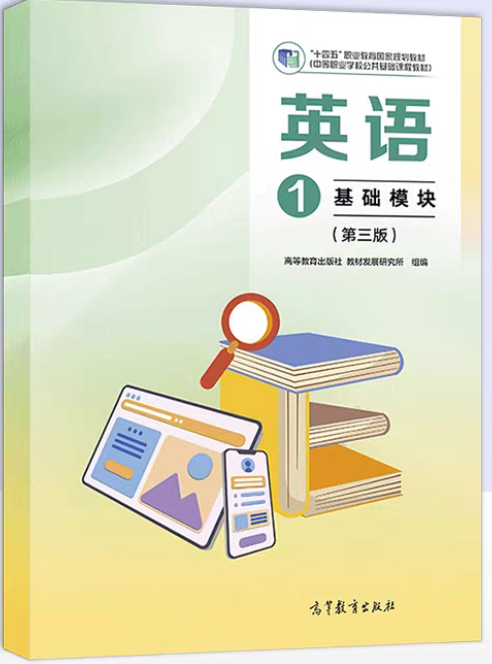
Unit 7 The Smartphone and the Internet(B卷·能力提升)《英语 基础模块1》(高教版第三版)单元过关卷(原卷版+解析版)
2026-07-22
|
2份
|
26页
|
42人阅读
|
0人下载
内容正文:
编写说明:本套试卷紧扣《英语 基础模块1》(高教版第三版)教材,以教材单元为基准精准覆盖核心考点。
每个单元设置AB卷,A卷为基础巩固卷,侧重基础考点训练,帮助学生扎实掌握知识要点;B卷为能力提升卷,注重知识整合与全面检测,引导学生构建知识网络。全书设计4份综合测试卷,模拟实战情境,聚焦解题能力突破,全面提升应试能力与知识应用水平。
《英语 基础模块1》(高教版第三版)《单元过关卷》
Unit 7 The Smartphone and the Internet
B卷·能力提升
考试时间:70分钟 满分:100分
班级_____姓名_____学号_____成绩_____
综合卷Ⅰ(75分)
一、词汇与语法(共25小题,每小题1分,满分25分)
(一)单词辨音
从下列各小题的A、B、C三个选项中选出一个画线部分发音与所给单词画线部分发音不同的选项。(共5小题,每小题1分,共5分)
1.alarm
A.star B.tap C.dark
2.unlock
A.duty B.jump C.under
3.remind
A.night B.child C.rich
4.mobile
A.lock B.hole C.tone
5.affect
A.message B.even C.never
(二)词义选择
从下列各小题的A、B、C三个选项中选出一个与句子中画线的英文单词或短语含义相符的中文选项。(共10小题,每小题1分,共10分)
6.The price range of the new phone is from 2,000 to 3,000 yuan.
A.铃声 B.范围 C.调查
7.You can choose the desired time when ordering takeout.
A.错误的 B.临时的 C.想要的
8.Could you spare five minutes to answer these questions?
A.隐藏 B.浪费 C.抽出
9.Too much screen time can affect both sleep and study.
A.改善 B.影响 C.下载
10.He stayed up to watch short videos and felt tired the next day.
A.准时到达 B.整理房间 C.熬夜
11.During online classes, we must focus on what the teacher says.
A.专注于 B.庆祝 C.扫描
12.Before the meeting, please log in to the survey app.
A.离开 B.排队 C.登录进入
13.Mobile payment is popular in many small shops.
A.固定的 B.移动的 C.昂贵的
14.Scan the payment code before you tap OK.
A.付款码 B.课程表 C.储物柜
15.Taking breaks from screens is good for our eyes.
A.进行采访 B.订购外卖 C.离开屏幕休息
(三)语法运用
从下列各小题的A、B、C三个选项中选出一个最佳选项填入空白处完成句子。(共10小题,每小题1分,共10分)
16.The students ______ a survey about phone use now.
A.do B.are doing C.did
17.Look! Ms. Lin ______ the payment steps on the screen.
A.is showing B.shows C.showed
18.Listen! Who ______ in the online meeting?
A.speaks B.is speaking C.spoke
19.They ______ short videos now; they are going over lessons.
A.watch B.watched C.are not watching
20.I ______ this app is useful for English learning.
A.believes B.am believing C.believe
21.The teacher asks us ______ phones wisely.
A.using B.to use C.use
22.If the network ______ well, we can have the online class smoothly.
A.worked B.will work C.works
23.The payment code ______ by many customers every morning.
A.is scanned B.scans C.scanned
24.______ useful advice it is for smartphone users!
A.How B.What C.What a
25.This is the survey report ______ tells us about students' online habits.
A.who B.where C.that
二、情景交际(共15小题,每小题2分,共30分)
(一)简短对话
从下列各小题的A、B、C三个选项中选出一个最佳选项完成对话。(共10小题,每小题2分,共20分)
26.Speaker A: My eyes hurt after using the phone for a long time.
Speaker B: ______
A.The phone is cheap. B.You should take breaks from the screen. C.I like shopping online.
27.Speaker A: Would you like to answer my questions about online activities?
Speaker B: ______
A.No, I am a code. B.It is a large battery. C.Sure. What do you want to know?
28.Speaker A: How long do you watch videos each day?
Speaker B: ______
A.In the classroom. B.About half an hour. C.With my parents.
29.Speaker A: The store can scan the payment code on your phone.
Speaker B: ______
A.I am studying now. B.It is bad for eyes. C.OK, let me open it.
30.Speaker A: What are you doing with your phone now?
Speaker B: ______
A.I am sending an email to my teacher. B.I send emails every Friday. C.I sent it yesterday.
31.Speaker A: Does playing games affect your study?
Speaker B: ______
A.It is a music app. B.Yes, sometimes I cannot focus. C.The screen is clear.
32.Speaker A: I want to stop staying up late.
Speaker B: ______
A.The network is fast. B.Scan this code. C.You can set an alarm for bedtime.
33.Speaker A: What phone feature helps you study for a long time?
Speaker B: ______
A.A food delivery app. B.A long battery life. C.A nearby park.
34.Speaker A: I forgot the meeting time again.
Speaker B: ______
A.You are welcome. B.Let your phone remind you. C.It is a takeout order.
35.Speaker A: Thank you for sharing your Internet-use tips.
Speaker B: ______
A.No, it isnt. B.I am watching videos. C.My pleasure.
(二)补全对话
阅读下面对话,根据上下文从所给的七个选项中选出一个最佳选项补全对话,其中2项多余。(共5小题,每小题2分,共10分)
Interviewer: Hello! I am doing a survey about smartphone use. ____ 36 ____
Student: Sure. I'd be happy to help.
Interviewer: How much time do you spend on your phone every day?
Student: ____ 37 ____ Sometimes more on weekends.
Interviewer: What do you usually do online?
Student: I have online classes and read news. ____ 38 ____
Interviewer: Does it affect your study or life?
Student: ____ 39 ____ I stay up late when I watch too many videos.
Interviewer: Would you like to change that habit?
Student: ____ 40 ____ I will set a time limit and do more sports.
A. Yes, it sometimes does.
B. About two hours.
C. My phone is under the desk.
D. The price range is high.
E. I also watch short videos for fun.
F. Yes, I would.
G. Could you spare a few minutes?
三、阅读理解(共10小题,每小题2分,共20分)
阅读下列两篇短文,根据短文内容从每题所给的A、B、C三个选项中选出一个最佳选项。
A
Last month, Chen Yi, a first-year vocational student in Fuzhou, joined a school survey about smartphone habits. At first, he believed his phone helped him with almost everything, because it woke him up in the morning, showed the bus route to school, and allowed him to log in to online classes when he was absent. However, when he checked the weekly screen-time report, he was surprised to find that short videos and games took more hours than reading apps and study tasks.
His class teacher asked each student to make a simple change plan, not by giving up the phone completely, but by using it with clearer purposes. Chen Yi set an alarm for bedtime, moved game apps away from the first screen, and put a note beside his desk that said, “Focus first, relax later.” During the following week, although he still used his phone to send homework, order takeout for his younger brother and chat with classmates about group work, he stopped unlocking it whenever he felt bored.
At the end of the survey, Chen Yi shared his experience in class. He said that a smartphone was like a helpful tool only when the user decided what it should do, while it could easily become a time thief if the user followed every reminder without thinking. His classmates agreed that wise use did not mean using the phone less in every situation; instead, it meant choosing the right app, the right time and the right reason.
41.What can we learn about Chen Yi before he checked the screen-time report?
A.He had already stopped using all phone apps.
B.He thought his phone was helpful in many ways.
C.He used reading apps more than short videos.
42.Which change did Chen Yi make during the following week?
A.He placed game apps away from the first screen.
B.He asked his teacher to keep his phone every day.
C.He deleted all apps for chatting with classmates.
43.Why does the writer mention sending homework and ordering takeout in Paragraph 2?
A.To show Chen Yi used the phone only for fun.
B.To prove all reminders on phones are helpful.
C.To show he still used useful phone functions.
44.What can we infer from Chen Yi's words at the end of the survey?
A.Phones become time thieves only for younger students.
B.Users should decide the purpose before using phones.
C.Every student should use the same app at the same time.
45.Which is the best title for the text?
A.Turning a Smartphone Back into a Tool
B.Buying a Phone with a Larger Screen
C.Joining an Online Game Competition
B
Mobile payment is now a normal part of daily life, but using it well requires more than knowing where to tap. In a small training program at a community service center, volunteers teach older residents how to download a payment app, create an account with a phone number, add a bank card, and scan a store payment code. These steps seem simple to young people, yet they may be confusing for those who are not used to reading instructions on a small screen.
The volunteers therefore slow down the lesson and connect every step with a real shopping situation. Before the residents scan a code, they are asked to check whether the store name and the price on the screen are the same as what the clerk has said; after they tap OK, they learn to read the payment message instead of closing the app at once. One volunteer also explains that, although mobile payment is convenient, users should not show their payment code to strangers or use public networks when paying for expensive goods.
The program does not simply teach a digital skill. It helps different generations understand one another: young volunteers realize that clear words and patient practice matter more than quick instructions, while older residents discover that smartphones can support safer and easier shopping if they form careful habits. As mobile services continue to change, this kind of learning may become as important as the technology itself.
46.What can we learn about the training program from Paragraph 1?
A.It asks residents to pay only with cash.
B.It teaches volunteers to repair smartphones.
C.It shows older residents how to use payment apps.
47.Why do volunteers connect each step with a real shopping situation?
A.To make the instructions easier to understand.
B.To sell more goods to the older residents.
C.To make residents stop using bank cards.
48.Which information about safe payment is mentioned in Paragraph 2?
A.Users should close the app before checking messages.
B.Users should compare the store name and price first.
C.Users should show payment codes to nearby strangers.
49.What does the underlined word “generations” in Paragraph 3 refer to?
A.Different phone brands.
B.Different payment codes.
C.People of different age groups.
50.What is the writer’s attitude towards the training program?
A.Supportive, because it improves skills and understanding.
B.Doubtful, because it makes shopping slower for everyone.
C.Worried, because it teaches residents to ignore safety.
综合卷Ⅱ(25分)
四、英汉互译(共5小题,每小题3分,满分15分)
51.Although smartphones make life convenient, we should not spend all our time on them.
_____________________________________________
52.Before you scan a payment code, check the store name and the price carefully.
_____________________________________________
53.The survey shows that some students are spending more time on short videos than on study apps.
_____________________________________________
54.我正在采访同学们的网络活动。(interview)
_____________________________________________
55.我们应该明智地使用智能手机,而不是一直看屏幕。(instead of)
_____________________________________________
五、应用写作(满分10分)
56.假定你是李华,你的英国笔友 Tom 想了解你如何合理使用智能手机。请你根据以下提示,给他写一封回信。
提示:
1.说明你常用手机做的两件有益事情;
2.介绍你避免沉迷手机的做法;
3.谈谈你对合理使用手机的看法。
要求:
1.词数80—100词;
2.条理清晰,语句通顺;
3.开头和结尾已给出,不计入总词数。
Dear Tom,
I am glad to tell you how I use my smartphone wisely.
____________________________________________________________________________________________________________________________________________________________________________________________________________________________________________________
Yours,
Li Hua
原创精品资源学科网独家享有版权,侵权必究!
学科网(北京)股份有限公司
$
编写说明:本套试卷紧扣《英语 基础模块1》(高教版第三版)教材,以教材单元为基准精准覆盖核心考点。
每个单元设置AB卷,A卷为基础巩固卷,侧重基础考点训练,帮助学生扎实掌握知识要点;B卷为能力提升卷,注重知识整合与全面检测,引导学生构建知识网络。全书设计4份综合测试卷,模拟实战情境,聚焦解题能力突破,全面提升应试能力与知识应用水平。
《英语 基础模块1》(高教版第三版)《单元过关卷》
Unit 7 The Smartphone and the Internet
B卷·能力提升
考试时间:70分钟 满分:100分
班级_____姓名_____学号_____成绩_____
综合卷Ⅰ(75分)
一、词汇与语法(共25小题,每小题1分,满分25分)
(一)单词辨音
从下列各小题的A、B、C三个选项中选出一个画线部分发音与所给单词画线部分发音不同的选项。(共5小题,每小题1分,共5分)
1.alarm
A.star B.tap C.dark
【答案】B
【详解】考查字母 a 的发音。alarm、star、dark 中 a 发 /ɑː/,tap 中 a 发 /æ/,发音不同。故选 B。
2.unlock
A.duty B.jump C.under
【答案】A
【详解】考查字母 u 的发音。unlock、jump、under 中 u 发 /ʌ/,duty 中 u 发 /juː/,发音不同。故选 A。
3.remind
A.night B.child C.rich
【答案】C
【详解】考查字母 i 的发音。remind、night、child 中 i 发 /aɪ/,rich 中 i 发 /ɪ/,发音不同。故选 C。
4.mobile
A.lock B.hole C.tone
【答案】A
【详解】考查字母 o 的发音。mobile、hole、tone 中 o 发 /əʊ/,lock 中 o 发 /ɒ/,发音不同。故选 A。
5.affect
A.message B.even C.never
【答案】B
【详解】考查字母 e 的发音。affect、message、never 中 e 发 /e/,even 中 e 发 /iː/,发音不同。故选 B。
(二)词义选择
从下列各小题的A、B、C三个选项中选出一个与句子中画线的英文单词或短语含义相符的中文选项。(共10小题,每小题1分,共10分)
6.The price range of the new phone is from 2,000 to 3,000 yuan.
A.铃声 B.范围 C.调查
【答案】B
【详解】考查名词词义。range 与 from...to... 搭配,表示价格“范围”。故选 B。
7.You can choose the desired time when ordering takeout.
A.错误的 B.临时的 C.想要的
【答案】C
【详解】考查形容词词义。desired 修饰 time,表示用户“想要的”送达时间。故选 C。
8.Could you spare five minutes to answer these questions?
A.隐藏 B.浪费 C.抽出
【答案】C
【详解】考查动词词义。spare five minutes 表示“抽出五分钟”。故选 C。
9.Too much screen time can affect both sleep and study.
A.改善 B.影响 C.下载
【答案】B
【详解】考查动词词义。affect 与 sleep and study 搭配,表示“影响”睡眠和学习。故选 B。
10.He stayed up to watch short videos and felt tired the next day.
A.准时到达 B.整理房间 C.熬夜
【答案】C
【详解】考查动词短语。stayed up 与 felt tired the next day 呼应,表示“熬夜”。故选 C。
11.During online classes, we must focus on what the teacher says.
A.专注于 B.庆祝 C.扫描
【答案】A
【详解】考查动词短语。focus on 与 what the teacher says 搭配,表示“专注于”老师所讲内容。故选 A。
12.Before the meeting, please log in to the survey app.
A.离开 B.排队 C.登录进入
【答案】C
【详解】考查动词短语。log in to the app 表示“登录进入应用”。故选 C。
13.Mobile payment is popular in many small shops.
A.固定的 B.移动的 C.昂贵的
【答案】B
【详解】考查形容词词义。Mobile payment 指通过手机进行的“移动”支付。故选 B。
14.Scan the payment code before you tap OK.
A.付款码 B.课程表 C.储物柜
【答案】A
【详解】考查名词短语。payment code 与 scan 搭配,表示用于扫码支付的“付款码”。故选 A。
15.Taking breaks from screens is good for our eyes.
A.进行采访 B.订购外卖 C.离开屏幕休息
【答案】C
【详解】考查短语含义。Taking breaks from screens 表示暂时不看屏幕、让眼睛休息。故选 C。
(三)语法运用
从下列各小题的A、B、C三个选项中选出一个最佳选项填入空白处完成句子。(共10小题,每小题1分,共10分)
16.The students ______ a survey about phone use now.
A.do B.are doing C.did
【答案】B
【详解】考查现在进行时。now 表示动作正在进行,主语 The students 为复数,用 are doing。故选 B。
17.Look! Ms. Lin ______ the payment steps on the screen.
A.is showing B.shows C.showed
【答案】A
【详解】考查现在进行时。Look 提示当前正在发生的动作,主语 Ms. Lin 为单数,用 is showing。故选 A。
18.Listen! Who ______ in the online meeting?
A.speaks B.is speaking C.spoke
【答案】B
【详解】考查现在进行时。Listen 提示此刻正在说话,用 is speaking。故选 B。
19.They ______ short videos now; they are going over lessons.
A.watch B.watched C.are not watching
【答案】C
【详解】考查现在进行时否定形式。根据后半句正在复习可知,并没有正在看短视频。故选 C。
20.I ______ this app is useful for English learning.
A.believes B.am believing C.believe
【答案】C
【详解】考查状态动词。believe 表示心理状态,通常不用现在进行时;句子表达现在看法,用一般现在时。故选 C。
21.The teacher asks us ______ phones wisely.
A.using B.to use C.use
【答案】B
【详解】考查固定搭配。ask sb. to do sth. 表示“要求某人做某事”,故用 to use。故选 B。
22.If the network ______ well, we can have the online class smoothly.
A.worked B.will work C.works
【答案】C
【详解】考查条件状语从句。if 引导条件状语从句时,主句含 can,从句用一般现在时表示条件。故选 C。
23.The payment code ______ by many customers every morning.
A.is scanned B.scans C.scanned
【答案】A
【详解】考查一般现在时被动语态。主语 The payment code 是动作承受者,结构为 is scanned。故选 A。
24.______ useful advice it is for smartphone users!
A.How B.What C.What a
【答案】B
【详解】考查感叹句。advice 为不可数名词,结构为 What + 形容词 + 不可数名词 + 主语 + 谓语。故选 B。
25.This is the survey report ______ tells us about students' online habits.
A.who B.where C.that
【答案】C
【详解】考查定语从句。先行词 report 指物,关系代词可用 that。故选 C。
二、情景交际(共15小题,每小题2分,共30分)
(一)简短对话
从下列各小题的A、B、C三个选项中选出一个最佳选项完成对话。(共10小题,每小题2分,共20分)
26.Speaker A: My eyes hurt after using the phone for a long time.
Speaker B: ______
A.The phone is cheap. B.You should take breaks from the screen. C.I like shopping online.
【答案】B
【详解】考查健康建议。对方因长时间用手机眼睛疼,应建议离开屏幕休息。故选 B。
27.Speaker A: Would you like to answer my questions about online activities?
Speaker B: ______
A.No, I am a code. B.It is a large battery. C.Sure. What do you want to know?
【答案】C
【详解】考查访谈邀请回应。对方邀请回答问题,A 项表示同意并引出下文,符合语境。故选 C。
28.Speaker A: How long do you watch videos each day?
Speaker B: ______
A.In the classroom. B.About half an hour. C.With my parents.
【答案】B
【详解】考查询问时长。How long 提问持续时间,About half an hour 符合语境。故选 B。
29.Speaker A: The store can scan the payment code on your phone.
Speaker B: ______
A.I am studying now. B.It is bad for eyes. C.OK, let me open it.
【答案】C
【详解】考查移动支付场景。店员说明可扫手机付款码,顾客应打开付款码配合。故选 C。
30.Speaker A: What are you doing with your phone now?
Speaker B: ______
A.I am sending an email to my teacher. B.I send emails every Friday. C.I sent it yesterday.
【答案】A
【详解】考查现在进行时语境。问句询问现在正在做什么,A 项用 am sending 回答。故选 A。
31.Speaker A: Does playing games affect your study?
Speaker B: ______
A.It is a music app. B.Yes, sometimes I cannot focus. C.The screen is clear.
【答案】B
【详解】考查调查问答。问句询问游戏是否影响学习,B 项说明有时无法专注,符合语境。故选 B。
32.Speaker A: I want to stop staying up late.
Speaker B: ______
A.The network is fast. B.Scan this code. C.You can set an alarm for bedtime.
【答案】C
【详解】考查提出建议。对方想停止熬夜,可建议设置睡觉提醒。故选 C。
33.Speaker A: What phone feature helps you study for a long time?
Speaker B: ______
A.A food delivery app. B.A long battery life. C.A nearby park.
【答案】B
【详解】考查手机特性。能帮助长时间学习的是长电池续航,B 项符合语境。故选B。
34.Speaker A: I forgot the meeting time again.
Speaker B: ______
A.You are welcome. B.Let your phone remind you. C.It is a takeout order.
【答案】B
【详解】考查提醒建议。对方忘记会议时间,可建议用手机提醒。故选 B。
35.Speaker A: Thank you for sharing your Internet-use tips.
Speaker B: ______
A.No, it isnt. B.I am watching videos. C.My pleasure.
【答案】C
【详解】考查感谢回应。对方表示感谢,My pleasure 是恰当回应。故选 C。
(二)补全对话
阅读下面对话,根据上下文从所给的七个选项中选出一个最佳选项补全对话,其中2项多余。(共5小题,每小题2分,共10分)
Interviewer: Hello! I am doing a survey about smartphone use. ____ 36 ____
Student: Sure. I'd be happy to help.
Interviewer: How much time do you spend on your phone every day?
Student: ____ 37 ____ Sometimes more on weekends.
Interviewer: What do you usually do online?
Student: I have online classes and read news. ____ 38 ____
Interviewer: Does it affect your study or life?
Student: ____ 39 ____ I stay up late when I watch too many videos.
Interviewer: Would you like to change that habit?
Student: ____ 40 ____ I will set a time limit and do more sports.
A. Yes, it sometimes does.
B. About two hours.
C. My phone is under the desk.
D. The price range is high.
E. I also watch short videos for fun.
F. Yes, I would.
G. Could you spare a few minutes?
【答案】
36. G 37. B 38. E 39. A 40. F
【解析】
36. G 下文学生表示愿意帮助,说明此处采访者请求对方抽出几分钟。
37. B 上文询问每天使用手机的时长,此处回答 About two hours,符合问答关系。
38. E 上文列举上网课和读新闻,此处补充观看短视频,仍围绕网络活动展开。
39. A 上文询问是否影响学习或生活,下文说明熬夜,故用肯定回答。
40. F 上文询问是否愿意改变习惯,下文说明具体改变措施,故回答 Yes, I would.
三、阅读理解(共10小题,每小题2分,共20分)
阅读下列两篇短文,根据短文内容从每题所给的A、B、C三个选项中选出一个最佳选项。
A
Last month, Chen Yi, a first-year vocational student in Fuzhou, joined a school survey about smartphone habits. At first, he believed his phone helped him with almost everything, because it woke him up in the morning, showed the bus route to school, and allowed him to log in to online classes when he was absent. However, when he checked the weekly screen-time report, he was surprised to find that short videos and games took more hours than reading apps and study tasks.
His class teacher asked each student to make a simple change plan, not by giving up the phone completely, but by using it with clearer purposes. Chen Yi set an alarm for bedtime, moved game apps away from the first screen, and put a note beside his desk that said, “Focus first, relax later.” During the following week, although he still used his phone to send homework, order takeout for his younger brother and chat with classmates about group work, he stopped unlocking it whenever he felt bored.
At the end of the survey, Chen Yi shared his experience in class. He said that a smartphone was like a helpful tool only when the user decided what it should do, while it could easily become a time thief if the user followed every reminder without thinking. His classmates agreed that wise use did not mean using the phone less in every situation; instead, it meant choosing the right app, the right time and the right reason.
41.What can we learn about Chen Yi before he checked the screen-time report?
A.He had already stopped using all phone apps.
B.He thought his phone was helpful in many ways.
C.He used reading apps more than short videos.
42.Which change did Chen Yi make during the following week?
A.He placed game apps away from the first screen.
B.He asked his teacher to keep his phone every day.
C.He deleted all apps for chatting with classmates.
43.Why does the writer mention sending homework and ordering takeout in Paragraph 2?
A.To show Chen Yi used the phone only for fun.
B.To prove all reminders on phones are helpful.
C.To show he still used useful phone functions.
44.What can we infer from Chen Yi's words at the end of the survey?
A.Phones become time thieves only for younger students.
B.Users should decide the purpose before using phones.
C.Every student should use the same app at the same time.
45.Which is the best title for the text?
A.Turning a Smartphone Back into a Tool
B.Buying a Phone with a Larger Screen
C.Joining an Online Game Competition
【答案】41.B 42.A 43.C 44.B 45.A
【导语】本文是一篇记叙文,围绕中职学生智能手机使用习惯调查展开,讲述陈逸通过查看屏幕使用报告、制定改变计划并在班级分享经验,逐步学会有目的地使用手机的过程。文章通过多处生活与学习细节,强调工具价值取决于使用者的选择。
【详解】
41.细节理解题。根据第一段“he believed his phone helped him with almost everything”可知,陈逸原本认为手机在很多方面都有帮助。故选 B。
42.细节理解题。根据第二段“moved game apps away from the first screen”可知,他把游戏应用从首页移开。故选 A。
43.推理判断题。第二段提到 send homework、order takeout 和 chat with classmates,是为了说明他没有完全不用手机,而是保留了有用功能。故选 C。
44.推理判断题。根据第三段“only when the user decided what it should do”可知,使用者应先决定手机使用目的。故选 B。
45.标题归纳题。全文讲述陈逸把手机从分散注意力的来源重新变成学习和生活工具,A 项概括准确。故选 A。
B
Mobile payment is now a normal part of daily life, but using it well requires more than knowing where to tap. In a small training program at a community service center, volunteers teach older residents how to download a payment app, create an account with a phone number, add a bank card, and scan a store payment code. These steps seem simple to young people, yet they may be confusing for those who are not used to reading instructions on a small screen.
The volunteers therefore slow down the lesson and connect every step with a real shopping situation. Before the residents scan a code, they are asked to check whether the store name and the price on the screen are the same as what the clerk has said; after they tap OK, they learn to read the payment message instead of closing the app at once. One volunteer also explains that, although mobile payment is convenient, users should not show their payment code to strangers or use public networks when paying for expensive goods.
The program does not simply teach a digital skill. It helps different generations understand one another: young volunteers realize that clear words and patient practice matter more than quick instructions, while older residents discover that smartphones can support safer and easier shopping if they form careful habits. As mobile services continue to change, this kind of learning may become as important as the technology itself.
46.What can we learn about the training program from Paragraph 1?
A.It asks residents to pay only with cash.
B.It teaches volunteers to repair smartphones.
C.It shows older residents how to use payment apps.
47.Why do volunteers connect each step with a real shopping situation?
A.To make the instructions easier to understand.
B.To sell more goods to the older residents.
C.To make residents stop using bank cards.
48.Which information about safe payment is mentioned in Paragraph 2?
A.Users should close the app before checking messages.
B.Users should compare the store name and price first.
C.Users should show payment codes to nearby strangers.
49.What does the underlined word “generations” in Paragraph 3 refer to?
A.Different phone brands.
B.Different payment codes.
C.People of different age groups.
50.What is the writer’s attitude towards the training program?
A.Supportive, because it improves skills and understanding.
B.Doubtful, because it makes shopping slower for everyone.
C.Worried, because it teaches residents to ignore safety.
【答案】46.C 47.A 48.B 49.C 50.A
【导语】本文是一篇说明文,介绍社区服务中心通过真实购物场景教授老年居民使用移动支付的培训项目。文章不仅说明下载应用、绑定银行卡、扫码付款等步骤,还强调核对店名价格、保护付款码和跨年龄沟通的重要性。
【详解】
46.细节理解题。根据第一段“teach older residents how to download a payment app... scan a store payment code”可知,该项目教老年居民使用支付应用。故选 C。
47.推理判断题。根据第一段“they may be confusing”和第二段“connect every step with a real shopping situation”可知,联系真实购物场景是为了让步骤更易理解。故选 A。
48.细节理解题。根据第二段“check whether the store name and the price... are the same”可知,用户应先核对店名和价格。故选 B。
49.词义猜测题。根据第三段 young volunteers 与 older residents 的对比可知,generations 指“不同年龄群体的人”。故选 C。
50.观点态度题。文章说明该项目既提升数字技能,又促进不同年龄群体理解,作者态度是支持的。故选 A。
综合卷Ⅱ(25分)
四、英汉互译(共5小题,每小题3分,满分15分)
51.Although smartphones make life convenient, we should not spend all our time on them.
_____________________________________________
【答案】虽然智能手机使生活便利,但我们不应该把所有时间都花在手机上。
【详解】although 引导让步状语从句,不能与 but 连用;spend time on sth. 表示“把时间花在某事上”。
52.Before you scan a payment code, check the store name and the price carefully.
_____________________________________________
【答案】在你扫描付款码之前,要仔细核对店名和价格。
【详解】Before 引导时间状语从句;scan a payment code 表示“扫描付款码”。
53.The survey shows that some students are spending more time on short videos than on study apps.
_____________________________________________
【答案】这项调查显示,一些学生花在短视频上的时间比花在学习应用上的时间更多。
【详解】shows 后接宾语从句;more...than... 表示“比……更多”。
54.我正在采访同学们的网络活动。(interview)
_____________________________________________
【答案】I am interviewing my classmates about online activities.
【详解】am interviewing 为现在进行时;interview sb. about sth. 表示“就某事采访某人”。
55.我们应该明智地使用智能手机,而不是一直看屏幕。(instead of)
_____________________________________________
【答案】We should use smartphones wisely instead of looking at screens all the time.
【详解】should 后接动词原形;instead of 后接动名词 looking。
五、应用写作(满分10分)
56.假定你是李华,你的英国笔友 Tom 想了解你如何合理使用智能手机。请你根据以下提示,给他写一封回信。
提示:
1.说明你常用手机做的两件有益事情;
2.介绍你避免沉迷手机的做法;
3.谈谈你对合理使用手机的看法。
要求:
1.词数80—100词;
2.条理清晰,语句通顺;
3.开头和结尾已给出,不计入总词数。
Dear Tom,
I am glad to tell you how I use my smartphone wisely.
____________________________________________________________________________________________________________________________________________________________________________________________________________________________________________________
Yours,
Li Hua
【参考范文】
Dear Tom,
I am glad to tell you how I use my smartphone wisely. My smartphone is helpful when I use it for clear purposes. I often log in to online classes and send homework by email. I also read English news on a study app after school. However, I do not want the phone to affect my life. I set an alarm for bedtime and put the phone away when I do homework. At weekends, I take breaks from the screen and play sports with friends. I think smartphones are useful tools, but students should choose the right time and the right app.
Yours,
Li Hua
【解析】
结构清晰,覆盖要点:范文先说明手机的有益用途,再介绍避免沉迷的具体做法,最后表达合理使用手机的观点。
语言适配,表达准确:文章使用 log in to、send homework、set an alarm、take breaks from the screen 等表达,紧扣智能手机使用话题。
内容真实,层次分明:范文从学习、作息管理和运动替代三个角度展开,体现中职学生可执行的手机使用建议。
原创精品资源学科网独家享有版权,侵权必究!
学科网(北京)股份有限公司
$
资源预览图

1

2

3
由于学科网是一个信息分享及获取的平台,不确保部分用户上传资料的 来源及知识产权归属。如您发现相关资料侵犯您的合法权益,请联系学科网,我们核实后将及时进行处理。