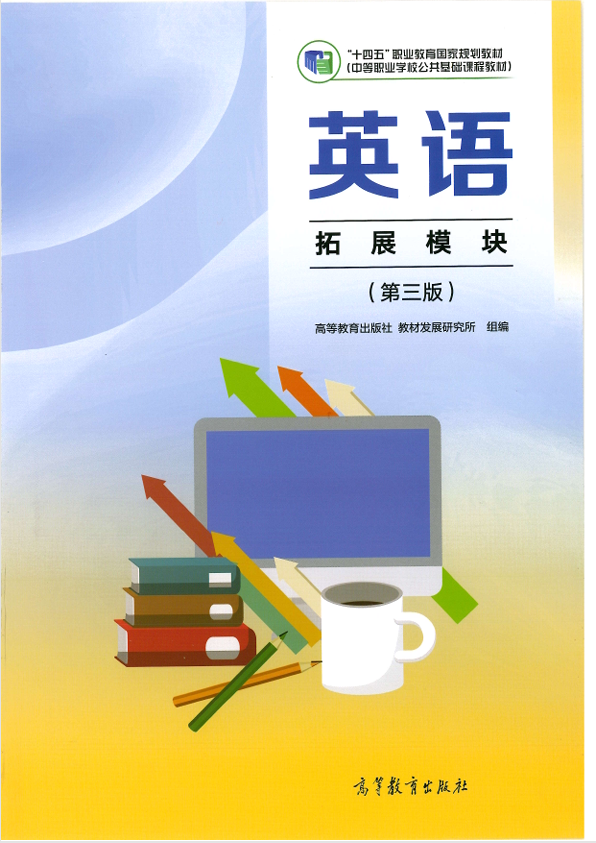
Unit 5——Unit 8 阶段测试卷(A卷·基础巩固)《英语 拓展模块》(高教版第三版)单元过关卷(原卷版+解析版)
2026-07-22
|
2份
|
26页
|
36人阅读
|
0人下载
摘要:
**基本信息**
本试卷为《英语 拓展模块》(高教版第三版)Unit5-Unit8阶段测试A卷(基础巩固),紧扣教材核心考点,以科技应用(如smart locker、drone)、职业场景(面试、职业规划)和文化传承(陶艺、木工)为情境,覆盖语言能力、思维品质等核心素养,适配单元复习需求。
**题型特征**
|题型|题量/分值|知识覆盖|命题特色|
|----|-----------|----------|----------|
|单项选择|25题/25分|核心词汇(install, QR code)、基础语法(时态、从句)|紧扣教材单元词汇,融入科技与职业场景|
|完形填空|20题/30分|语篇理解、工匠精神(patience, teamwork)|以陶艺实践为情境,渗透思维品质培养|
|阅读理解|25题/50分|智能服务、劳动教育、面试技巧、职业规划|主题贴近生活与职业,提升信息获取能力|
|情景对话|10题/20分|智能办公操作、面试准备|模拟真实交际场景,强化语言应用能力|
|书面表达|1题/25分|职业目标与行动计划|引导学生结合自身规划,发展学习能力|
内容正文:
编写说明:本套试卷紧扣《英语 拓展模块》(高教版第三版)教材,以教材单元为基准精准覆盖核心考点。
每个单元设置AB卷,A卷为基础巩固卷,侧重基础考点训练,帮助学生扎实掌握知识要点;B卷为能力提升卷,注重知识整合与全面检测,引导学生构建知识网络。全书设计4份综合测试卷,模拟实战情境,聚焦解题能力突破,全面提升应试能力与知识应用水平。
《英语 拓展模块》(高教版第三版)《单元过关卷》
Unit 5——Unit 8阶段测试卷
A卷·基础巩固
考试时间:120分钟 满分:150分
班级_____姓名_____学号_____成绩_____
第一部分:单项选择题(共25小题;每小题1分,满分25分)
从A、B、C、D四个选项中,选出可以填入空白处的最佳选项。
1.Before using the smart meeting room, employees should ______ the office app on their phones.
A. repair B. translate
C. borrow D. install
2.The unmanned store allows customers to pay by scanning a ______ code at the exit.
A. clay B. QR
C. folk D. salary
3.China's high-speed trains are famous for being safe, fast and ______ for passengers.
A. routine B. delayed
C. convenient D. private
4.The community plans to ______ a smart locker near the gate for express packages.
A. set up B. give up
C. turn down D. look after
5.The young technician checked the drone carefully ______ it took off over the field.
A. unless B. although
C. before D. because
6.The smart glasses ______ by the company can help workers read instructions quickly.
A. developed B. developing
C. develop D. develops
7.A good craft worker should always ______ perfection instead of finishing the job carelessly.
A. delay B. print
C. refund D. seek
8.The apprentice was praised because he could keep his ______ up during difficult practice.
A. prices B. spirits
C. forms D. tickets
9.Master Liu devoted ten years ______ improving the traditional clay figure skill.
A. on B. to
C. with D. by
10.The students learned that tiny details can ______ the quality of a handmade product.
A. cancel B. interview
C. affect D. export
11.The model bridge ______ by the training group won first prize in the school contest.
A. made B. making
C. makes D. make
12.It is patience and practice ______ help young workers build excellent skills.
A. who B. where
C. what D. that
13.Tang Wei wants to ______ for the position of hotel receptionist after graduation.
A. apply B. quit
C. delay D. rate
14.A clear résumé should include your educational background, work experience and ______.
A. drones B. anniversaries
C. cashiers D. qualifications
15.The interviewer asked me ______ I could speak English with foreign guests.
A. whose B. which
C. whether D. where
16.She is used to ______ job information on reliable websites every morning.
A. check B. checking
C. checked D. checks
17.Bring extra copies of your résumé, ______ the interviewer may not have one.
A. unless B. although
C. because D. until
18.—Could you tell me why you chose our company? —______.
A. No, I cannot find the office B. Because it offers more chances to develop myself
C. I lost my phone yesterday D. The train is very fast
19.The applicant ______ arrived late should explain the reason politely.
A. which B. where
C. when D. who
20.Before making a career plan, students should know their abilities and ______ clearly.
A. interests B. lockers
C. tickets D. machines
21.Chen Lin found a new job by joining an online group and ______ information with others.
A. exchange B. exchanged
C. exchanges D. exchanging
22.If you have a practical goal, you ______ more likely to stay active at work.
A. will be B. were
C. being D. was
23.The young designer worked hard ______ she could become a senior designer in three years.
A. as if B. even though
C. so that D. as soon as
24.The more clearly you plan your career, ______ confident you will feel.
A. many B. the more
C. more D. the most
25.—Where do you see yourself in three years? —______.
A. The meeting room is on the second floor B. It costs thirty yuan
C. I bought it yesterday D. I hope to become a skilled accounting assistant
第二部分:完形填空(共20小题;每小题1.5分,满分30分)
阅读下面短文,从每题所给的A、B、C、D四个选项中,选出可以填入空白处的最佳选项。
During the Skills Week in Nanchang, our class visited a small pottery workshop run by Master Zhou, a craftsman from Jingdezhen. He did not begin the visit with a long speech. Instead, he placed a simple clay cup on the table and asked us to look at it carefully.
At first, I thought the cup was ____26____ ordinary object. Master Zhou smiled and said that every good product began with respect for small details. He gave each of us some clay and asked us to make a cup ____27____ our own hands. I was excited, but my first cup looked uneven. The mouth was too wide, the bottom was too thin, and the handle was not in the right ____28____. I wanted to throw it away, but my partner Lin Mei stopped me and said we could ____29____ it together.
Master Zhou walked around the room and watched us quietly. When he came to our table, he did not blame us. He showed us how to press the clay and how to keep the same ____30____ on both sides. He said, 'A patient heart can turn a mistake into a lesson.' His words kept our spirits ____31____. We tried again, and this time we worked more ____32____. Lin Mei measured the cup, while I shaped the handle. After twenty minutes, our cup finally stood straight.
Before we left, Master Zhou asked us to rate our own work. I gave our cup only seven points because it was still not ____33____. He nodded and told us that a craft worker should always seek ____34____, but should also know how much progress has been made. On the bus back to school, I realized that craftsmanship was not only about a beautiful product. It was also about ____35____, teamwork and the courage to improve.
The workshop ____36____ us to think about future work in a new way. We were not real ____37____, ____38____ we felt proud when we ____39____ our cup with the class. Master Zhou reminded us that every mistake could become a useful ____40____. If we pressed the clay ____41____ and checked the ____42____, the product would become better. Each member had to ____43____ one task, and the final ____44____ showed everyone's effort. The experience was ____45____ to all of us.
26.A. a B. an C. the D. /
27.A. for B. by C. with D. about
28.A. position B. salary C. interview D. network
29.A. export B. delay C. repair D. hire
30.A. thickness B. weather C. message D. ticket
31.A. off B. out C. down D. up
32.A. suddenly B. carefully C. cheaply D. loudly
33.A. private B. perfect C. delayed D. routine
34.A. pollution B. transportation C. perfection D. application
35.A. patience B. cashier C. drone D. salary
36.A. printed B. locked C. canceled D. inspired
37.A. apprentices B. passengers C. customers D. tourists
38.A. because B. until C. if D. although
39.A. hid B. broke C. shared D. forgot
40.A. locker B. lesson C. refund D. camera
41.A. angrily B. carelessly C. slowly D. silently
42.A. noise B. quality C. price D. weather
43.A. look forward to B. run out of C. make fun of D. take charge of
44.A. result B. accident C. advertisement D. address
45.A. hungry B. absent C. narrow D. valuable
第三部分:阅读理解(共25小题;每小题2分,满分50分)
阅读下列短文,从每题所给的A、B、C、D四个选项中,选出最佳选项。
A
Nanchang River Vocational School used to have a busy package corner near the school gate. Every afternoon, many students waited in a long line to get their parcels. Some students forgot their phone numbers, and some packages were placed on the wrong shelf. The security workers had to answer the same questions again and again, so the school decided to set up a smart locker beside the gate.
The locker is a piece of unmanned self-service equipment. When a delivery person puts a package into the locker, the owner receives a code on the phone. The student can scan the code or type it on the screen, and the door will open automatically. The system also sends a message if the package stays in the locker for more than two days. In this way, the school can keep the area clean and help students get packages faster.
However, the school did not simply put the machine there and leave. At the beginning, volunteers stood near the locker to teach students how to use it. They reminded everyone not to share the code with strangers and not to open a box for another person. The computer club also made a short video to explain the steps. After one month, most students could use the locker by themselves. The service became quicker, but the school still asked students to protect personal information carefully. Technology was useful, but responsible habits were just as important. The school also put a small notice on the locker, reminding students to check the package name before closing the door. This extra step made the service safer for everyone.
46.Why did the school decide to set up a smart locker?
A. Because the old package corner was crowded and inefficient.
B. Because students wanted a new sports field.
C. Because the gate needed more decorations.
D. Because teachers asked for fewer classes.
47.What will a student receive after a package is put into the locker?
A. A paper ticket from the office. B. A new student card.
C. A code on the phone. D. A printed school map.
48.What does the system do if a package stays for more than two days?
A. It throws the package away. B. It sends a message.
C. It changes the owner's phone. D. It closes the school gate.
49.What did volunteers do at the beginning?
A. They repaired every phone. B. They delivered all packages home.
C. They sold new lockers to students. D. They taught students how to use the locker.
50.What does the passage mainly tell us?
A. All school services should be unmanned. B. Smart service needs both technology and responsible habits.
C. Students should stop buying things online. D. Volunteers are more useful than technology.
B
For the Labor Education Day, Class Two visited a small woodcraft studio in Ganzhou. The studio was not large, but every tool was placed in order. On the wall there were photos of chairs, small boxes and wooden toys made by former students. The teacher, Mr. Huang, first showed us a plain wooden ruler. He said that a ruler looked simple, but it could test whether a worker was careful enough.
Each group received a piece of wood and tried to make a phone stand. My group thought the task would be easy. We drew lines quickly and began to cut. Soon we found that one side was longer than the other, so the stand could not hold a phone steadily. Mr. Huang asked us to stop and compare the two sides. He did not say we were wrong. Instead, he asked, 'What can the wood teach you?' We realized that careful measuring should come before quick action.
After that, we sanded the wood slowly and checked every corner. Liu Fan was good at using tools, while I was better at drawing the pattern. We divided the work and encouraged each other. When the stand was finished, it was not perfect, but it stood firmly on the desk. The activity helped me understand that craftsmanship is a working attitude. It asks people to respect materials, follow standards and improve details step by step. A small phone stand can also carry a serious lesson about quality. After the visit, several students said they would be slower but more accurate in future training tasks, because speed without standards could waste more time.
51.What did Mr. Huang use first to begin the lesson?
A. A smart phone. B. A red school bag.
C. A plain wooden ruler. D. A new computer.
52.Why could the first phone stand not hold a phone steadily?
A. One side was longer than the other. B. The wood was too colorful.
C. The phone was too old. D. The classroom was too noisy.
53.What lesson did the group learn before cutting wood?
A. Drawing lines is unnecessary. B. Fast work is always better.
C. Careful measuring should come before quick action. D. A phone stand needs no standard.
54.How did the students finish the second try?
A. They divided the work and encouraged each other. B. They asked Mr. Huang to do everything.
C. They stopped checking the corners. D. They bought a stand from a shop.
55.What is the best title for the passage?
A. How to Sell Wooden Toys B. The Fastest Way to Cut Wood
C. A Phone That Changed a Class D. A Small Stand, A Serious Lesson
C
When Yu Han received an interview notice from a travel company near Tengwang Pavilion, she was both excited and nervous. She was going to apply for a junior tour guide position. Although she had learned tourism service at school, it was her first formal interview. Her teacher advised her not to memorize long answers blindly, but to prepare with clear steps.
First, Yu Han read the company's website carefully. She learned about its main routes, customer groups and recent volunteer travel project. Then she looked at the job requirements again and wrote down her own advantages. She could speak English clearly, introduce local culture and stay patient with visitors. To make her answers more convincing, she prepared two short examples from her school practice. One was about helping a lost visitor, and the other was about explaining a museum rule politely.
The night before the interview, Yu Han put two copies of her résumé into a folder and chose a clean suit. She also checked the bus route and planned to arrive thirty minutes early. During the interview, she did not give perfect answers to every question, but she spoke honestly and smiled naturally. When the manager asked why she wanted the job, she connected her interest in Jiangxi culture with the company's service goals. A week later, she got the offer. She learned that good preparation is not only about saying beautiful words. It is about knowing the job, knowing yourself and showing a positive attitude. She also understood that every interview question was a chance to show how her learning experiences could solve real service problems.
56.What position did Yu Han apply for?
A. A computer programmer position. B. A junior tour guide position.
C. A pottery designer position. D. A railway driver position.
57.What did her teacher advise her not to do?
A. Read the company website. B. Memorize long answers blindly.
C. Prepare with clear steps. D. Arrive early for the interview.
58.Which advantage did Yu Han write down?
A. She could repair drones. B. She could design smart lockers.
C. She could introduce local culture. D. She could make clay figures.
59.Why did Yu Han check the bus route?
A. To arrive early and avoid being late. B. To buy a cheaper ticket.
C. To visit the museum after work. D. To send her résumé by bus.
60.What helped Yu Han get the offer according to the passage?
A. Giving very long answers to every question. B. Choosing the most expensive suit.
C. Talking only about her school grades. D. Knowing the job, knowing herself and staying positive.
D
Many vocational students think a career plan must be a very big document. In fact, a useful plan can begin with three simple questions: What do I enjoy doing? What can I do well? What skills should I improve next? These questions help students choose a direction instead of following others blindly. A student who likes numbers may consider accounting, while a student who enjoys talking with people may choose service or sales work.
A good plan should include both a long-term goal and short-term steps. For example, Peng Rui wants to become an AI operations assistant in the future. His three-year goal is to enter a technology company after graduation. To reach it, he makes smaller plans for each term. This term, he will improve Excel skills and learn basic data analysis. Next term, he will join a school project and practice writing reports. During the vacation, he hopes to find an internship related to office technology.
However, a plan is not a locked door. Students may meet new chances or find new interests. When that happens, they can ask teachers, superiors or experienced workers for advice. The important thing is to keep the main direction clear and keep learning. Career growth often comes from routine tasks done well. If students finish small tasks responsibly, they will be ready for bigger opportunities. Planning ahead does not promise immediate success, but it helps people walk toward success with clearer steps. For vocational students, such a plan can also connect daily lessons, skills contests and internships into one practical path.
61.What can help students choose a direction?
A. Asking what they enjoy, do well and need to improve. B. Buying a thick notebook.
C. Following their classmates' choices. D. Changing goals every day.
62.What is Peng Rui's long-term goal?
A. To become a tour guide next week. B. To open a pottery shop immediately.
C. To stop learning data analysis. D. To enter a technology company after graduation.
63.What does Peng Rui plan to do during the vacation?
A. Forget his report writing practice. B. Travel without any learning task.
C. Find an internship related to office technology. D. Teach all classmates accounting.
64.What does the phrase 'not a locked door' mean in the passage?
A. A plan should never be written down. B. A plan can be adjusted when necessary.
C. A plan must be kept secret. D. A plan only belongs to managers.
65.What is the writer's opinion about routine tasks?
A. They are useless for career growth. B. They should always be refused.
C. Doing them well can prepare students for bigger chances. D. They only waste young people's time.
E
Jiangxi Future Skills School held a Technology and Career Day last month. The event did not focus on one subject only. It connected new technology, craftsmanship, job preparation and career planning. In the morning, students visited four booths in the gym. At the first booth, they learned how drones can help farmers check fields safely. At the second booth, a technician showed how a smart office system books meeting rooms and sends notices automatically.
The third booth was quieter but very popular. Two senior students displayed handmade metal nameplates. They explained that digital machines could cut basic shapes quickly, but final polishing still needed human patience. Many students were surprised to see that technology and craftsmanship could work together. At the fourth booth, the school career center helped students check their résumés. Teachers reminded them that a résumé should be honest, clear and short enough for an interviewer to read quickly.
In the afternoon, a graduate named Luo Xin shared her experience. She first worked as an office assistant, then learned data tools after work, and finally became a service project coordinator. She said her career plan changed twice, but her habit of learning never changed. The event helped students understand that the future workplace needs more than one ability. People should learn to use technology, respect quality, communicate politely and plan their growth step by step. The school later used students' notes from the event to design more practice tasks, so the lessons did not stop after one busy day.
66.How many booths did students visit in the morning?
A. Two. B. Four.
C. Three. D. Five.
67.What can drones help farmers do according to the passage?
A. Write résumés quickly. B. Polish metal nameplates.
C. Choose interview clothes. D. Check fields safely.
68.Why were students surprised at the third booth?
A. They saw technology and craftsmanship could work together. B. They found the gym was closed.
C. They learned all interviews were canceled. D. They saw no handmade products there.
69.What did teachers say about a résumé?
A. It should include every small hobby. B. It should be written in very long sentences.
C. It should hide all work experience. D. It should be honest, clear and short enough.
70.What is the main purpose of the passage?
A. To show students need mixed abilities for future work. B. To ask students to become farmers only.
C. To compare four cities in Jiangxi. D. To advertise a single smart office app.
第四部分:情景对话(共10小题;每小题2分,满分20分)
根据对话内容,从方框内所给的选项中选出能填入空白处的最佳选项。
A
At a smart office training
A: Good morning, Li Nan. This is the Smart Office System.
B: It looks useful. ____71____
A: First, install the app and log in with your work number.
B: OK. I want to book a meeting room for Friday. ____72____
A: Select the date first, and then choose the room size.
B: I see. ____73____
A: Yes. The system will send a notice to all participants.
B: That saves time. What if I make a mistake?
A: ____74____
B: Thank you. Technology really helps office work.
A: ____75____
A. You can change the booking before it is confirmed.
B. What should I do first?
C. You are right, but careful checking is still important.
D. Which step comes first?
E. Will it remind other people?
B
Before a job interview
A: You look a little nervous, Wang Tao.
B: Yes. I have an interview tomorrow morning.
A: ____76____
B: I have read the company's website and prepared my résumé.
A: Good. ____77____
B: Two copies. I also put my certificate in the folder.
A: Excellent. How will you answer questions about your strengths?
B: ____78____
A: That sounds clear. Don't forget to arrive early.
B: ____79____
A: About thirty minutes earlier is better.
B: Thank you for your advice.
A: ____80____
A. How many copies will you bring?
B. You are welcome. Wish you success.
C. What have you done to prepare?
D. I will give examples from my internship.
E. How early should I arrive?
第五部分:书面表达(满分25分)
假如你是李华,学校英语社团正在开展“My Three-year Career Plan”主题征文活动。请根据以下要点写一篇英文短文:1. 说明你的职业目标;2. 介绍你已经具备的能力和仍需提升的技能;3. 写出未来三年的具体行动计划。词数100词左右。
____________________________________________________________________________________________________________________________________________________________________________________________________________________________________________________________________________________________________________________________
原创精品资源学科网独家享有版权,侵权必究!
学科网(北京)股份有限公司
$
编写说明:本套试卷紧扣《英语 拓展模块》(高教版第三版)教材,以教材单元为基准精准覆盖核心考点。
每个单元设置AB卷,A卷为基础巩固卷,侧重基础考点训练,帮助学生扎实掌握知识要点;B卷为能力提升卷,注重知识整合与全面检测,引导学生构建知识网络。全书设计4份综合测试卷,模拟实战情境,聚焦解题能力突破,全面提升应试能力与知识应用水平。
《英语 拓展模块》(高教版第三版)《单元过关卷》
Unit 5——Unit 8阶段测试卷
A卷·基础巩固
考试时间:120分钟 满分:150分
班级_____姓名_____学号_____成绩_____
第一部分:单项选择题(共25小题;每小题1分,满分25分)
从A、B、C、D四个选项中,选出可以填入空白处的最佳选项。
1.Before using the smart meeting room, employees should ______ the office app on their phones.
A. repair B. translate
C. borrow D. install
【答案】D
【解析】install表示“安装”,与app搭配,符合使用智能会议室前的准备。故选D。
2.The unmanned store allows customers to pay by scanning a ______ code at the exit.
A. clay B. QR
C. folk D. salary
【答案】B
【解析】QR code表示“二维码”,与scan和pay搭配自然。故选B。
3.China's high-speed trains are famous for being safe, fast and ______ for passengers.
A. routine B. delayed
C. convenient D. private
【答案】C
【解析】convenient表示“便利的”,能概括高铁给乘客带来的出行优势。故选C。
4.The community plans to ______ a smart locker near the gate for express packages.
A. set up B. give up
C. turn down D. look after
【答案】A
【解析】set up表示“建立、设置”,与smart locker搭配符合语境。故选A。
5.The young technician checked the drone carefully ______ it took off over the field.
A. unless B. although
C. before D. because
【答案】C
【解析】before引导时间状语从句,表示起飞前先检查。故选C。
6.The smart glasses ______ by the company can help workers read instructions quickly.
A. developed B. developing
C. develop D. develops
【答案】A
【解析】glasses与develop之间是被动关系,过去分词developed作后置定语。故选A。
7.A good craft worker should always ______ perfection instead of finishing the job carelessly.
A. delay B. print
C. refund D. seek
【答案】D
【解析】seek perfection表示“追求完美”,符合工匠精神语境。故选D。
8.The apprentice was praised because he could keep his ______ up during difficult practice.
A. prices B. spirits
C. forms D. tickets
【答案】B
【解析】keep one's spirits up表示“保持高昂情绪”,符合训练中受表扬的原因。故选B。
9.Master Liu devoted ten years ______ improving the traditional clay figure skill.
A. on B. to
C. with D. by
【答案】B
【解析】devote...to...表示“把……奉献于……”,to为固定介词。故选B。
10.The students learned that tiny details can ______ the quality of a handmade product.
A. cancel B. interview
C. affect D. export
【答案】C
【解析】affect表示“影响”,与quality构成合理语义。故选C。
11.The model bridge ______ by the training group won first prize in the school contest.
A. made B. making
C. makes D. make
【答案】A
【解析】bridge与make为被动关系,made作过去分词后置定语。故选A。
12.It is patience and practice ______ help young workers build excellent skills.
A. who B. where
C. what D. that
【答案】D
【解析】It is...that...为强调句结构,此处强调patience and practice。故选D。
13.Tang Wei wants to ______ for the position of hotel receptionist after graduation.
A. apply B. quit
C. delay D. rate
【答案】A
【解析】apply for the position表示“申请职位”,符合毕业求职语境。故选A。
14.A clear résumé should include your educational background, work experience and ______.
A. drones B. anniversaries
C. cashiers D. qualifications
【答案】D
【解析】qualifications表示“资历、资格”,适合简历信息。故选D。
15.The interviewer asked me ______ I could speak English with foreign guests.
A. whose B. which
C. whether D. where
【答案】C
【解析】whether引导宾语从句,表示“是否”。故选C。
16.She is used to ______ job information on reliable websites every morning.
A. check B. checking
C. checked D. checks
【答案】B
【解析】be used to中的to为介词,后接动名词checking。故选B。
17.Bring extra copies of your résumé, ______ the interviewer may not have one.
A. unless B. although
C. because D. until
【答案】C
【解析】because引导原因状语从句,说明携带额外简历的原因。故选C。
18.—Could you tell me why you chose our company? —______.
A. No, I cannot find the office B. Because it offers more chances to develop myself
C. I lost my phone yesterday D. The train is very fast
【答案】B
【解析】问句询问选择公司的原因,应回答发展机会等与求职相关的理由。故选B。
19.The applicant ______ arrived late should explain the reason politely.
A. which B. where
C. when D. who
【答案】D
【解析】先行词applicant指人,定语从句中缺主语,用who。故选D。
20.Before making a career plan, students should know their abilities and ______ clearly.
A. interests B. lockers
C. tickets D. machines
【答案】A
【解析】abilities and interests表示“能力和兴趣”,是职业规划前应了解的内容。故选A。
21.Chen Lin found a new job by joining an online group and ______ information with others.
A. exchange B. exchanged
C. exchanges D. exchanging
【答案】D
【解析】and连接joining与exchanging两个并列动名词。故选D。
22.If you have a practical goal, you ______ more likely to stay active at work.
A. will be B. were
C. being D. was
【答案】A
【解析】if引导条件状语从句,主句用一般将来时。故选A。
23.The young designer worked hard ______ she could become a senior designer in three years.
A. as if B. even though
C. so that D. as soon as
【答案】C
【解析】so that表示目的,“以便”三年后成为高级设计师。故选C。
24.The more clearly you plan your career, ______ confident you will feel.
A. many B. the more
C. more D. the most
【答案】B
【解析】the more...the more...表示“越……越……”。故选B。
25.—Where do you see yourself in three years? —______.
A. The meeting room is on the second floor B. It costs thirty yuan
C. I bought it yesterday D. I hope to become a skilled accounting assistant
【答案】D
【解析】问句询问三年后的职业目标,应回答职业发展方向。故选D。
第二部分:完形填空(共20小题;每小题1.5分,满分30分)
阅读下面短文,从每题所给的A、B、C、D四个选项中,选出可以填入空白处的最佳选项。
During the Skills Week in Nanchang, our class visited a small pottery workshop run by Master Zhou, a craftsman from Jingdezhen. He did not begin the visit with a long speech. Instead, he placed a simple clay cup on the table and asked us to look at it carefully.
At first, I thought the cup was ____26____ ordinary object. Master Zhou smiled and said that every good product began with respect for small details. He gave each of us some clay and asked us to make a cup ____27____ our own hands. I was excited, but my first cup looked uneven. The mouth was too wide, the bottom was too thin, and the handle was not in the right ____28____. I wanted to throw it away, but my partner Lin Mei stopped me and said we could ____29____ it together.
Master Zhou walked around the room and watched us quietly. When he came to our table, he did not blame us. He showed us how to press the clay and how to keep the same ____30____ on both sides. He said, 'A patient heart can turn a mistake into a lesson.' His words kept our spirits ____31____. We tried again, and this time we worked more ____32____. Lin Mei measured the cup, while I shaped the handle. After twenty minutes, our cup finally stood straight.
Before we left, Master Zhou asked us to rate our own work. I gave our cup only seven points because it was still not ____33____. He nodded and told us that a craft worker should always seek ____34____, but should also know how much progress has been made. On the bus back to school, I realized that craftsmanship was not only about a beautiful product. It was also about ____35____, teamwork and the courage to improve.
The workshop ____36____ us to think about future work in a new way. We were not real ____37____, ____38____ we felt proud when we ____39____ our cup with the class. Master Zhou reminded us that every mistake could become a useful ____40____. If we pressed the clay ____41____ and checked the ____42____, the product would become better. Each member had to ____43____ one task, and the final ____44____ showed everyone's effort. The experience was ____45____ to all of us.
26.A. a B. an C. the D. /
27.A. for B. by C. with D. about
28.A. position B. salary C. interview D. network
29.A. export B. delay C. repair D. hire
30.A. thickness B. weather C. message D. ticket
31.A. off B. out C. down D. up
32.A. suddenly B. carefully C. cheaply D. loudly
33.A. private B. perfect C. delayed D. routine
34.A. pollution B. transportation C. perfection D. application
35.A. patience B. cashier C. drone D. salary
36.A. printed B. locked C. canceled D. inspired
37.A. apprentices B. passengers C. customers D. tourists
38.A. because B. until C. if D. although
39.A. hid B. broke C. shared D. forgot
40.A. locker B. lesson C. refund D. camera
41.A. angrily B. carelessly C. slowly D. silently
42.A. noise B. quality C. price D. weather
43.A. look forward to B. run out of C. make fun of D. take charge of
44.A. result B. accident C. advertisement D. address
45.A. hungry B. absent C. narrow D. valuable
【答案】26.B 27.C 28.A 29.C 30.A 31.D 32.B 33.B 34.C 35.A 36.D 37.A 38.D 39.C 40.B 41.C 42.B 43.D 44.A 45.D
【导语】本文讲述一名学生在景德镇陶艺工作坊中学习精益求精、耐心改进和合作交流的故事。
【详解】
26.ordinary以元音音素开头,表示“一个普通物品”应用an。故选B。
27.with our own hands表示“用我们自己的双手”。故选C。
28.handle位置不对,position符合器物部件的位置语境。故选A。
29.前文说想扔掉,搭档建议一起修补,repair符合语义。故选C。
30.两侧应保持相同厚度,thickness符合陶杯制作语境。故选A。
31.keep one's spirits up为固定搭配,表示保持振作。故选D。
32.重新尝试时更认真细致,carefully符合上下文。故选B。
33.七分说明仍不完美,perfect符合评价语境。故选B。
34.seek perfection表示追求完美。故选C。
35.文章多次强调耐心改进,因此patience符合主题。故选A。
36.Master Zhou的话鼓舞学生继续练习,inspired符合语义。故选D。
37.在工作坊学习技艺的学生像学徒,apprentices符合工匠话题。故选A。
38.前后构成让步关系:虽然作品不完美,但我们很自豪。故选D。
39.小组展示时分享经验,shared符合语境。故选C。
40.从错误中得到的是lesson。故选B。
41.压泥需要慢慢进行,slowly符合动作要求。故选C。
42.细节影响产品质量,quality符合主题。故选B。
43.每人负责一个步骤,take charge of表示负责。故选D。
44.最终成果能体现合作与努力,result符合语境。故选A。
45.此次经历有价值,valuable符合总结。故选D。
第三部分:阅读理解(共25小题;每小题2分,满分50分)
阅读下列短文,从每题所给的A、B、C、D四个选项中,选出最佳选项。
A
Nanchang River Vocational School used to have a busy package corner near the school gate. Every afternoon, many students waited in a long line to get their parcels. Some students forgot their phone numbers, and some packages were placed on the wrong shelf. The security workers had to answer the same questions again and again, so the school decided to set up a smart locker beside the gate.
The locker is a piece of unmanned self-service equipment. When a delivery person puts a package into the locker, the owner receives a code on the phone. The student can scan the code or type it on the screen, and the door will open automatically. The system also sends a message if the package stays in the locker for more than two days. In this way, the school can keep the area clean and help students get packages faster.
However, the school did not simply put the machine there and leave. At the beginning, volunteers stood near the locker to teach students how to use it. They reminded everyone not to share the code with strangers and not to open a box for another person. The computer club also made a short video to explain the steps. After one month, most students could use the locker by themselves. The service became quicker, but the school still asked students to protect personal information carefully. Technology was useful, but responsible habits were just as important. The school also put a small notice on the locker, reminding students to check the package name before closing the door. This extra step made the service safer for everyone.
46.Why did the school decide to set up a smart locker?
A. Because the old package corner was crowded and inefficient.
B. Because students wanted a new sports field.
C. Because the gate needed more decorations.
D. Because teachers asked for fewer classes.
47.What will a student receive after a package is put into the locker?
A. A paper ticket from the office. B. A new student card.
C. A code on the phone. D. A printed school map.
48.What does the system do if a package stays for more than two days?
A. It throws the package away. B. It sends a message.
C. It changes the owner's phone. D. It closes the school gate.
49.What did volunteers do at the beginning?
A. They repaired every phone. B. They delivered all packages home.
C. They sold new lockers to students. D. They taught students how to use the locker.
50.What does the passage mainly tell us?
A. All school services should be unmanned. B. Smart service needs both technology and responsible habits.
C. Students should stop buying things online. D. Volunteers are more useful than technology.
【答案】46.A 47.C 48.B 49.D 50.B
【导语】本文介绍南昌一所职业学校使用智能包裹柜改善校园服务的过程和注意事项。
【详解】
46.第一段说明包裹角排队长、包裹易放错、工作人员反复答疑,因此设置智能柜。故选A。
47.第二段明确写到owner receives a code on the phone。故选C。
48.第二段说明系统会在包裹超过两天未取时发送信息。故选B。
49.第三段说明志愿者在智能柜旁教学生使用。故选D。
50.文章既介绍智能柜的便利,也强调保护个人信息和负责任使用。故选B。
B
For the Labor Education Day, Class Two visited a small woodcraft studio in Ganzhou. The studio was not large, but every tool was placed in order. On the wall there were photos of chairs, small boxes and wooden toys made by former students. The teacher, Mr. Huang, first showed us a plain wooden ruler. He said that a ruler looked simple, but it could test whether a worker was careful enough.
Each group received a piece of wood and tried to make a phone stand. My group thought the task would be easy. We drew lines quickly and began to cut. Soon we found that one side was longer than the other, so the stand could not hold a phone steadily. Mr. Huang asked us to stop and compare the two sides. He did not say we were wrong. Instead, he asked, 'What can the wood teach you?' We realized that careful measuring should come before quick action.
After that, we sanded the wood slowly and checked every corner. Liu Fan was good at using tools, while I was better at drawing the pattern. We divided the work and encouraged each other. When the stand was finished, it was not perfect, but it stood firmly on the desk. The activity helped me understand that craftsmanship is a working attitude. It asks people to respect materials, follow standards and improve details step by step. A small phone stand can also carry a serious lesson about quality. After the visit, several students said they would be slower but more accurate in future training tasks, because speed without standards could waste more time.
51.What did Mr. Huang use first to begin the lesson?
A. A smart phone. B. A red school bag.
C. A plain wooden ruler. D. A new computer.
52.Why could the first phone stand not hold a phone steadily?
A. One side was longer than the other. B. The wood was too colorful.
C. The phone was too old. D. The classroom was too noisy.
53.What lesson did the group learn before cutting wood?
A. Drawing lines is unnecessary. B. Fast work is always better.
C. Careful measuring should come before quick action. D. A phone stand needs no standard.
54.How did the students finish the second try?
A. They divided the work and encouraged each other. B. They asked Mr. Huang to do everything.
C. They stopped checking the corners. D. They bought a stand from a shop.
55.What is the best title for the passage?
A. How to Sell Wooden Toys B. The Fastest Way to Cut Wood
C. A Phone That Changed a Class D. A Small Stand, A Serious Lesson
【答案】51.C 52.A 53.C 54.A 55.D
【导语】本文讲述学生参加传统木工体验活动,在细节训练中理解工匠精神。
【详解】
51.第一段说明黄老师先展示一把普通木尺。故选C。
52.第二段说明一边比另一边长,导致支架不稳。故选A。
53.第二段最后明确学生认识到行动前要认真测量。故选C。
54.第三段说明两人按优势分工并互相鼓励。故选A。
55.文章通过制作小支架说明严谨态度和质量意识,标题应突出小作品中的大启示。故选D。
C
When Yu Han received an interview notice from a travel company near Tengwang Pavilion, she was both excited and nervous. She was going to apply for a junior tour guide position. Although she had learned tourism service at school, it was her first formal interview. Her teacher advised her not to memorize long answers blindly, but to prepare with clear steps.
First, Yu Han read the company's website carefully. She learned about its main routes, customer groups and recent volunteer travel project. Then she looked at the job requirements again and wrote down her own advantages. She could speak English clearly, introduce local culture and stay patient with visitors. To make her answers more convincing, she prepared two short examples from her school practice. One was about helping a lost visitor, and the other was about explaining a museum rule politely.
The night before the interview, Yu Han put two copies of her résumé into a folder and chose a clean suit. She also checked the bus route and planned to arrive thirty minutes early. During the interview, she did not give perfect answers to every question, but she spoke honestly and smiled naturally. When the manager asked why she wanted the job, she connected her interest in Jiangxi culture with the company's service goals. A week later, she got the offer. She learned that good preparation is not only about saying beautiful words. It is about knowing the job, knowing yourself and showing a positive attitude. She also understood that every interview question was a chance to show how her learning experiences could solve real service problems.
56.What position did Yu Han apply for?
A. A computer programmer position. B. A junior tour guide position.
C. A pottery designer position. D. A railway driver position.
57.What did her teacher advise her not to do?
A. Read the company website. B. Memorize long answers blindly.
C. Prepare with clear steps. D. Arrive early for the interview.
58.Which advantage did Yu Han write down?
A. She could repair drones. B. She could design smart lockers.
C. She could introduce local culture. D. She could make clay figures.
59.Why did Yu Han check the bus route?
A. To arrive early and avoid being late. B. To buy a cheaper ticket.
C. To visit the museum after work. D. To send her résumé by bus.
60.What helped Yu Han get the offer according to the passage?
A. Giving very long answers to every question. B. Choosing the most expensive suit.
C. Talking only about her school grades. D. Knowing the job, knowing herself and staying positive.
【答案】56.B 57.B 58.C 59.A 60.D
【导语】本文介绍学生准备求职面试的具体做法,强调自我认识与公司调研。
【详解】
56.第一段说明她申请的是junior tour guide position。故选B。
57.第一段说明老师建议她不要盲目背长答案。故选B。
58.第二段提到她能介绍当地文化。故选C。
59.第三段说明她规划路线并提前三十分钟到达,目的是避免迟到。故选A。
60.结尾概括准备包括了解岗位、认识自己和展示积极态度。故选D。
D
Many vocational students think a career plan must be a very big document. In fact, a useful plan can begin with three simple questions: What do I enjoy doing? What can I do well? What skills should I improve next? These questions help students choose a direction instead of following others blindly. A student who likes numbers may consider accounting, while a student who enjoys talking with people may choose service or sales work.
A good plan should include both a long-term goal and short-term steps. For example, Peng Rui wants to become an AI operations assistant in the future. His three-year goal is to enter a technology company after graduation. To reach it, he makes smaller plans for each term. This term, he will improve Excel skills and learn basic data analysis. Next term, he will join a school project and practice writing reports. During the vacation, he hopes to find an internship related to office technology.
However, a plan is not a locked door. Students may meet new chances or find new interests. When that happens, they can ask teachers, superiors or experienced workers for advice. The important thing is to keep the main direction clear and keep learning. Career growth often comes from routine tasks done well. If students finish small tasks responsibly, they will be ready for bigger opportunities. Planning ahead does not promise immediate success, but it helps people walk toward success with clearer steps. For vocational students, such a plan can also connect daily lessons, skills contests and internships into one practical path.
61.What can help students choose a direction?
A. Asking what they enjoy, do well and need to improve. B. Buying a thick notebook.
C. Following their classmates' choices. D. Changing goals every day.
62.What is Peng Rui's long-term goal?
A. To become a tour guide next week. B. To open a pottery shop immediately.
C. To stop learning data analysis. D. To enter a technology company after graduation.
63.What does Peng Rui plan to do during the vacation?
A. Forget his report writing practice. B. Travel without any learning task.
C. Find an internship related to office technology. D. Teach all classmates accounting.
64.What does the phrase 'not a locked door' mean in the passage?
A. A plan should never be written down. B. A plan can be adjusted when necessary.
C. A plan must be kept secret. D. A plan only belongs to managers.
65.What is the writer's opinion about routine tasks?
A. They are useless for career growth. B. They should always be refused.
C. Doing them well can prepare students for bigger chances. D. They only waste young people's time.
【答案】61.A 62.D 63.C 64.B 65.C
【导语】本文说明职业规划中短期目标与长期目标的关系,强调持续学习和及时调整。
【详解】
61.第一段提出三个问题帮助学生确定方向。故选A。
62.第二段说明他的三年目标是毕业后进入科技公司。故选D。
63.第二段最后说明假期希望找与办公技术相关的实习。故选C。
64.第三段后文说明遇到新机会或兴趣时可以寻求建议,说明计划可调整。故选B。
65.第三段说明认真完成常规任务能为更大机会做准备。故选C。
E
Jiangxi Future Skills School held a Technology and Career Day last month. The event did not focus on one subject only. It connected new technology, craftsmanship, job preparation and career planning. In the morning, students visited four booths in the gym. At the first booth, they learned how drones can help farmers check fields safely. At the second booth, a technician showed how a smart office system books meeting rooms and sends notices automatically.
The third booth was quieter but very popular. Two senior students displayed handmade metal nameplates. They explained that digital machines could cut basic shapes quickly, but final polishing still needed human patience. Many students were surprised to see that technology and craftsmanship could work together. At the fourth booth, the school career center helped students check their résumés. Teachers reminded them that a résumé should be honest, clear and short enough for an interviewer to read quickly.
In the afternoon, a graduate named Luo Xin shared her experience. She first worked as an office assistant, then learned data tools after work, and finally became a service project coordinator. She said her career plan changed twice, but her habit of learning never changed. The event helped students understand that the future workplace needs more than one ability. People should learn to use technology, respect quality, communicate politely and plan their growth step by step. The school later used students' notes from the event to design more practice tasks, so the lessons did not stop after one busy day.
66.How many booths did students visit in the morning?
A. Two. B. Four.
C. Three. D. Five.
67.What can drones help farmers do according to the passage?
A. Write résumés quickly. B. Polish metal nameplates.
C. Choose interview clothes. D. Check fields safely.
68.Why were students surprised at the third booth?
A. They saw technology and craftsmanship could work together. B. They found the gym was closed.
C. They learned all interviews were canceled. D. They saw no handmade products there.
69.What did teachers say about a résumé?
A. It should include every small hobby. B. It should be written in very long sentences.
C. It should hide all work experience. D. It should be honest, clear and short enough.
70.What is the main purpose of the passage?
A. To show students need mixed abilities for future work. B. To ask students to become farmers only.
C. To compare four cities in Jiangxi. D. To advertise a single smart office app.
【答案】66.B 67.D 68.A 69.D 70.A
【导语】本文围绕校园科技展示日,综合介绍新技术、技能训练、求职意识和职业规划。
【详解】
66.第一段说明上午学生参观了四个展台。故选B。
67.第一段说明无人机可以帮助农民安全查看田地。故选D。
68.第二段说明学生看到机器加工与人工精修结合后感到惊讶。故选A。
69.第二段说明简历应诚实、清楚且简洁。故选D。
70.全文通过活动说明未来工作需要技术、质量意识、沟通和规划等综合能力。故选A。
第四部分:情景对话(共10小题;每小题2分,满分20分)
根据对话内容,从方框内所给的选项中选出能填入空白处的最佳选项。
A
At a smart office training
A: Good morning, Li Nan. This is the Smart Office System.
B: It looks useful. ____71____
A: First, install the app and log in with your work number.
B: OK. I want to book a meeting room for Friday. ____72____
A: Select the date first, and then choose the room size.
B: I see. ____73____
A: Yes. The system will send a notice to all participants.
B: That saves time. What if I make a mistake?
A: ____74____
B: Thank you. Technology really helps office work.
A: ____75____
A. You can change the booking before it is confirmed.
B. What should I do first?
C. You are right, but careful checking is still important.
D. Which step comes first?
E. Will it remind other people?
【答案】71.B 72.D 73.E 74.A 75.C
【导语】本文是一段智能办公系统培训对话,围绕安装、预订会议室、提醒和修改信息展开。
【详解】
71.下文回答先安装并登录,空处应询问第一步做什么。故填B。
72.下文回答先选择日期再选房间大小,空处询问哪个步骤先来。故填D。
73.下文说系统会通知参会者,空处应询问是否会提醒他人。故填E。
74.上文问出错怎么办,空处说明确认前可修改预订。故填A。
75.上文评价技术有帮助,空处补充仍需认真检查,语义自然。故填C。
B
Before a job interview
A: You look a little nervous, Wang Tao.
B: Yes. I have an interview tomorrow morning.
A: ____76____
B: I have read the company's website and prepared my résumé.
A: Good. ____77____
B: Two copies. I also put my certificate in the folder.
A: Excellent. How will you answer questions about your strengths?
B: ____78____
A: That sounds clear. Don't forget to arrive early.
B: ____79____
A: About thirty minutes earlier is better.
B: Thank you for your advice.
A: ____80____
A. How many copies will you bring?
B. You are welcome. Wish you success.
C. What have you done to prepare?
D. I will give examples from my internship.
E. How early should I arrive?
【答案】76.C 77.A 78.D 79.E 80.B
【导语】本文是一段面试前准备的对话,涉及公司调研、简历材料、优势表达和到达时间。
【详解】
76.下文列举已做准备,空处应询问准备情况。故填C。
77.下文回答两份,空处应询问携带几份简历。故填A。
78.上文问如何回答优势,空处回答用实习例子说明。故填D。
79.下文回答提前约三十分钟,空处应询问提前多久到。故填E。
80.对方致谢后应礼貌回应并祝成功。故填B。
第五部分:书面表达(满分25分)
假如你是李华,学校英语社团正在开展“My Three-year Career Plan”主题征文活动。请根据以下要点写一篇英文短文:1. 说明你的职业目标;2. 介绍你已经具备的能力和仍需提升的技能;3. 写出未来三年的具体行动计划。词数100词左右。
____________________________________________________________________________________________________________________________________________________________________________________________________________________________________________________________________________________________________________________________【参考范文】
My Three-year Career Plan
I want to become an AI operations assistant after graduation. I am interested in new technology and I can use common office software. I am also careful with numbers, so I think this job may fit me well.
However, I still need to improve my data analysis skills and English communication. In the first year, I will learn Excel and practise writing short reports. In the second year, I plan to join a school technology project and learn from experienced teachers. In the third year, I hope to find an internship in a technology company.
A clear goal can guide my daily study. I will keep learning and try to turn my plan into real progress.
【词汇积累】career plan职业规划;AI operations assistant人工智能运营助理;data analysis数据分析;internship实习;turn...into...把……变成……。
【句式拓展】I want to become...;I still need to improve...;In the first year, I will...。
【点睛】范文按照目标、现有基础与不足、三年行动计划展开,内容具体,能体现职业规划的可操作性。
原创精品资源学科网独家享有版权,侵权必究!
学科网(北京)股份有限公司
$
资源预览图

1

2

3
由于学科网是一个信息分享及获取的平台,不确保部分用户上传资料的 来源及知识产权归属。如您发现相关资料侵犯您的合法权益,请联系学科网,我们核实后将及时进行处理。