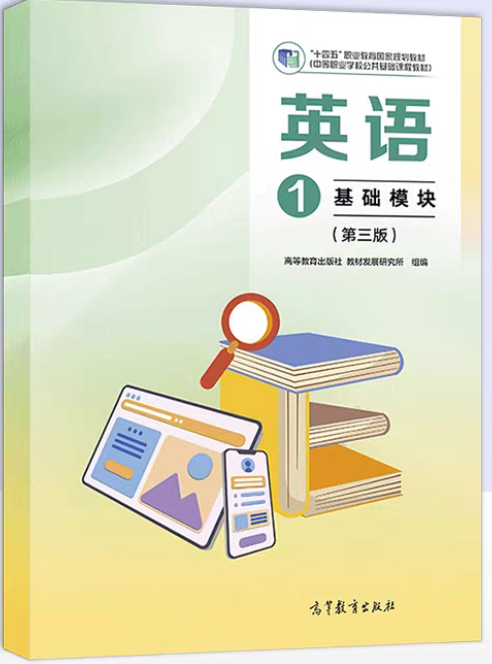
Unit 8 People and Events(B卷·能力提升)《英语 基础模块1》(高教版第三版)单元过关卷(原卷版+解析版)
2026-07-21
|
2份
|
27页
|
58人阅读
|
0人下载
摘要:
**基本信息**
紧扣《英语 基础模块1》Unit 8核心考点,A卷巩固基础、B卷提升能力,综合测试卷模拟实战,适配单元复习,全面培养语言能力与思维品质。
**题型特征**
|题型|题量/分值|知识覆盖|命题特色|
|----|-----------|----------|----------|
|单项选择|25题/25分|核心词汇(如invent, record)、情态动词及时态|基础考点精准训练,夯实语言基础|
|完形填空|20题/30分|语篇理解与词汇运用(如improve, carefully)|真实发明情境,培养问题解决思维|
|阅读理解|25题/50分|科技周、高铁等主题,细节与主旨题|时代性素材,提升信息获取与思辨能力|
|情景对话|10题/20分|项目讨论、师生咨询等交际场景|模拟真实沟通,强化语言应用能力|
|书面表达|1题/25分|人物介绍与感悟表达|结合自我认知,促进思维与表达融合|
内容正文:
编写说明:本套试卷紧扣《英语 基础模块1》(高教版第三版)教材,以教材单元为基准精准覆盖核心考点。
每个单元设置AB卷,A卷为基础巩固卷,侧重基础考点训练,帮助学生扎实掌握知识要点;B卷为能力提升卷,注重知识整合与全面检测,引导学生构建知识网络。全书设计4份综合测试卷,模拟实战情境,聚焦解题能力突破,全面提升应试能力与知识应用水平。
《英语 基础模块1》(高教版第三版)《单元过关卷》
Unit 8 People and Events
B卷·能力提升
考试时间:120分钟 满分:150分
班级_____姓名_____学号_____成绩_____
第一部分:单项选择题(共25小题;每小题1分,满分25分)
从A、B、C、D四个选项中,选出可以填入空白处的最佳选项。
1.The young worker tried to ______ a safer method for checking the machine.
A. invent B. borrow
C. miss D. hide
【答案】A
【解析】invent a method表示“发明/创造一种方法”,符合改进机器检查方式的语境。故选A。
2.The camera can ______ special moments during the school technology week.
A. reduce B. record
C. believe D. complete
【答案】B
【解析】record special moments表示“记录特殊时刻”,与camera功能相符。故选B。
3.The students used a new ______ to solve the problem more quickly.
A. hunger B. province
C. method D. bulb
【答案】C
【解析】method表示“方法”,与solve the problem搭配自然。故选C。
4.After graduation, Chen Jie plans to ______ to his hometown and work there.
A. take notes B. succeed in
C. show interest in D. return to
【答案】D
【解析】return to his hometown表示“回到家乡”,符合毕业后的计划。故选D。
5.The rescue team ______ in sending food to the village before dark.
A. succeeded B. designed
C. recorded D. stretched
【答案】A
【解析】succeed in doing sth.表示“成功做成某事”,符合天黑前送达食物。故选A。
6.This ______ railway station uses smart screens to guide passengers.
A. ancient B. modern
C. hungry D. chief
【答案】B
【解析】modern表示“现代的”,与智能屏幕引导乘客的语境相符。故选B。
7.The chief engineer asked the team to ______ the bridge design once more.
A. improve B. forget
C. wash D. sell
【答案】A
【解析】improve the design表示“改进设计”,符合总工程师要求。故选A。
8.The new road has helped ______ travel time between the two towns.
A. record B. invent
C. reduce D. believe
【答案】C
【解析】reduce travel time表示“减少出行时间”,与新路作用相符。故选C。
9.—Must we finish the poster tonight? —No, you ______. Tomorrow morning is OK.
A. mustn't B. needn't
C. can't D. shouldn't
【答案】B
【解析】Must...? 的否定回答用needn't,表示“不必”。故选B。
10.The girl over there ______ be Linda, but I am not sure.
A. must B. should
C. might D. can't
【答案】C
【解析】might表示不确定推测,后文I am not sure提供线索。故选C。
11.Visitors ______ touch the old railway model because it is easy to break.
A. can B. mustn't
C. may D. could
【答案】B
【解析】mustn't表示“禁止”,符合易损模型不能触摸的规则。故选B。
12.You ______ read the safety notice before entering the workshop.
A. should B. might not
C. couldn't D. needn't
【答案】A
【解析】should表示建议或应当,进入车间前读安全提示合乎语境。故选A。
13.—Could I borrow your notebook about famous inventors? —Yes, you ______.
A. must B. should
C. can D. need
【答案】C
【解析】Could I...? 表请求许可,肯定回答可用Yes, you can。故选C。
14.The workers ______ the task ahead of schedule last month.
A. complete B. will complete
C. are completing D. completed
【答案】D
【解析】last month提示一般过去时,complete用completed。故选D。
15.The invention ______ by the students won first prize in the school show.
A. designed B. designing
C. designs D. to design
【答案】A
【解析】designed作过去分词后置定语,表示“由学生设计的发明”。故选A。
16.I don't know ______ the paper-making workshop will start.
A. what B. when
C. whose D. which
【答案】B
【解析】句子询问工作坊开始时间,用when引导宾语从句。故选B。
17.There ______ two cameras and one tablet on the desk.
A. is B. was
C. are D. be
【答案】C
【解析】there be结构就近主语two cameras为复数,故用are。故选C。
18.The story of the railway builders is ______ of all the reports today.
A. moving B. more moving
C. the most moving D. moved
【答案】C
【解析】of all the reports提示最高级,moving的最高级为the most moving。故选C。
19.Study the facts carefully, ______ you may choose the wrong answer.
A. or B. and
C. so D. but
【答案】A
【解析】祈使句+or表示“否则”,符合不仔细研究事实可能选错答案。故选A。
20.It was the new method ______ helped the group finish the project faster.
A. who B. that
C. where D. when
【答案】B
【解析】It was...that...为强调句结构,强调new method。故选B。
21.The old station ______ in 1909 still attracts many visitors today.
A. opened B. opening
C. opens D. to open
【答案】A
【解析】opened作过去分词后置定语,表示“于1909年开通的车站”。故选A。
22.—Why do you like the smartphone? —______ It helps me stay connected.
A. Really? B. Why is that?
C. Because it is useful. D. Me too.
【答案】C
【解析】问句询问原因,答语应说明理由,Because it is useful符合语境。故选C。
23.The project will be finished ______ Friday if everything goes well.
A. at B. by
C. with D. from
【答案】B
【解析】by Friday表示“到星期五之前/截止星期五”,符合完成期限。故选B。
24.The boy was born ______ Jiangxi Province and later became an engineer.
A. on B. for
C. in D. with
【答案】C
【解析】be born in+地点表示“出生于某地”。故选C。
25.The class ______ a poster about China's great achievements next week.
A. makes B. made
C. has made D. will make
【答案】D
【解析】next week提示一般将来时,用will make。故选D。
第二部分:完形填空(共20小题;每小题1.5分,满分30分)
阅读下面短文,从各题所给的A、B、C、D四个选项中选出可以填入空白处的最佳选项。
Zhou Ming was a second-year student at a vocational school, and he dreamed of designing useful machines for farmers.
During the school science week, his teacher showed the class ____26____ notice about an invention project. Students ____27____ different majors could form teams and solve a real problem in daily life. Zhou Ming thought of his grandfather, who still carried heavy baskets in the field. He hoped ____28____ could help him design a small cart. The project required each team to write an application ____29____, make a model and give a report. Zhou Ming visited a nearby village and talked with an old ____30____ who repaired farm tools. On ____31____ way back, he wrote down the worker's advice and shared ____32____ with his group.
The first model did not work well. Its wheels were too small, and the handle was too low. Zhou Ming felt ____33____, but he did not stop. His teammate Li Jia ____34____ him to test the cart on different roads. They ____35____ the design several times and checked every part ____36____. After two weeks, the model could carry more things and turn more easily. The team made clear ____37____ in their notebook. Zhou Ming ____38____ the report, while Li Jia took photos. When they showed the cart to the class, they became ____39____ because the model solved a real problem. Their teacher said the project showed both skill and ____40____.
____41____ the model was simple, it taught the team an important lesson. Zhou Ming said, “____42____” The class agreed. He believed the project was ____43____ ____44____ it connected learning with people's needs. From that day on, he wanted to keep ____45____ and use his skills to make life easier.
26.A. an B. a C. the D. some
27.A. from B. on C. at D. by
28.A. nothing B. anywhere C. someone D. everywhere
29.A. forest B. meal C. season D. form
30.A. employee B. river C. ticket D. cloud
31.A. his B. her C. their D. its
32.A. them B. him C. it D. she
33.A. excited B. disappointed C. active D. brilliant
34.A. punished B. covered C. encouraged D. locked
35.A. forgot B. improved C. refused D. missed
36.A. carelessly B. angrily C. suddenly D. carefully
37.A. noise B. progress C. weather D. price
38.A. prepared B. broke C. washed D. hid
39.A. proud B. lazy C. absent D. empty
40.A. corner B. confidence C. responsibility D. accident
41.A. Because B. Although C. Until D. If
42.A. Where is the train? B. Good ideas should serve real life.
C. Close the window. D. This cup is red.
43.A. valuable B. terrible C. hungry D. silent
44.A. but B. or C. unless D. because
45.A. arguing B. learning C. sleeping D. throwing
【答案】26.B 27.A 28.C 29.D 30.A 31.A 32.C 33.B 34.C 35.B 36.D 37.B 38.A 39.A 40.C 41.B 42.B 43.A 44.D 45.B
【导语】本文围绕人物、发明与实践活动展开,讲述主人公通过参观或项目学习理解重要事件的意义,并在合作中获得成长。
【详解】
26.考查冠词。A. an;B. a;C. the;D. some。notice为可数名词单数,首次提到且以辅音音素开头,用a。故选B。
27.考查介词。A. from;B. on;C. at;D. by。students from different majors表示“来自不同专业的学生”。故选A。
28.考查不定代词。A. nothing;B. anywhere;C. someone;D. everywhere。周明需要有人一起设计小推车,someone符合语境。故选C。
29.考查名词。A. forest;B. meal;C. season;D. form。application form表示“申请表”,与项目报名要求相符。故选D。
30.考查名词。A. employee;B. river;C. ticket;D. cloud。修理农具的人可视为工人或雇员,employee最符合人物身份。故选A。
31.考查代词。A. his;B. her;C. their;D. its。主语为Zhou Ming,on his way back表示“在他回来的路上”。故选A。
32.考查代词。A. them;B. him;C. it;D. she。it指前面的advice,作shared的宾语。故选C。
33.考查形容词。A. excited;B. disappointed;C. active;D. brilliant。模型效果不好,他感到失望,disappointed符合情绪线索。故选B。
34.考查动词。A. punished;B. covered;C. encouraged;D. locked。队友鼓励他继续测试,encouraged符合正向互动。故选C。
35.考查动词。A. forgot;B. improved;C. refused;D. missed。根据前文问题和后文模型变好可知,他们多次改进设计。故选B。
36.考查副词。A. carelessly;B. angrily;C. suddenly;D. carefully。检查每个部件应当认真,carefully符合语境。故选D。
37.考查名词。A. noise;B. progress;C. weather;D. price。make progress表示“取得进步”,与两周改进过程相符。故选B。
38.考查动词。A. prepared;B. broke;C. washed;D. hid。prepared the report表示“准备报告”,与展示项目相关。故选A。
39.考查形容词。A. proud;B. lazy;C. absent;D. empty。模型解决真实问题,小组感到自豪,proud符合情感变化。故选A。
40.考查名词。A. corner;B. confidence;C. responsibility;D. accident。项目服务老人和实际需求,体现责任感,responsibility符合总结。故选C。
41.考查连词。A. Because;B. Although;C. Until;D. If。前后为让步关系:模型虽简单,却带来重要启发。故选B。
42.考查情景句。A. Where is the train?;B. Good ideas should serve real life.;C. Close the window.;D. This cup is red.。该句概括项目启示,与服务现实生活相符。故选B。
43.考查形容词。A. valuable;B. terrible;C. hungry;D. silent。项目连接学习和需求,因此有价值,valuable符合语境。故选A。
44.考查连词。A. but;B. or;C. unless;D. because。后句解释项目有价值的原因,用because。故选D。
45.考查主旨。A. arguing;B. learning;C. sleeping;D. throwing。结尾强调继续学习并用技能改善生活,learning概括主旨。故选B。
第三部分:阅读理解(共25小题;每小题2分,满分50分)
阅读下列短文,从每题所给的A、B、C、D四个选项中,选出最佳选项。
A
Jiangxi Vocational School Science Week: Project Choices. The school will hold a science week from June 3 to June 7. Students can choose one project and work in groups of four to six. Project 1 is “Paper and Knowledge”. Groups will visit a small paper-making workshop, record the steps, and design an information card about how paper helps people share ideas. Project 2 is “Railways Through Time”. Groups will compare an old railway with a modern high-speed railway and make an infographic. Project 3 is “Smart Tools in Daily Life”. Groups will choose one modern tool, such as a tablet, a camera or a smart lamp, and explain how it improves study or work. The school hopes each project can connect facts with students' daily learning.
Each group must submit an application form before May 25. The form should include the project name, members' roles, a simple schedule and the expected result. On June 6, every group will give a five-minute presentation in English. The presentation should have clear facts, pictures and at least one example from real life. Teachers will give scores for teamwork, language, creativity and practical value.
Students should notice three rules. First, do not copy long paragraphs from the Internet. Use your own words and list the sources at the end. Second, keep every model safe. If a project uses electricity, a teacher must check it first. Third, every group member should speak during the presentation. The best projects will be shown near the school gate, and visitors can vote for their favorite one.
46.How many project choices are listed in the notice?
A. Two. B. Three.
C. Four. D. Six.
47.What should groups do in Project 2?
A. Compare two railways and make an infographic. B. Cook food for visitors.
C. Design a school uniform. D. Learn nursing in a hospital.
48.What must be included in the application form?
A. Members' roles and a simple schedule. B. Only the teacher's phone number.
C. A long paragraph from the Internet. D. The visitors' votes.
49.When will groups give presentations?
A. On May 25. B. On June 3.
C. On June 6. D. On June 7 evening.
50.Which rule is TRUE according to the notice?
A. Only one student may speak. B. Models using electricity need teacher checking.
C. Students may copy any online article. D. Sources are not needed.
【答案】46.B 47.A 48.A 49.C 50.B
【导语】本文是一则校园科技周项目通知,介绍三个项目方向、申请要求、展示安排和安全规则。
【详解】
46.细节理解题。通知列出Project 1、Project 2和Project 3,共三个项目选择。故选B。
47.细节理解题。Project 2要求compare an old railway with a modern high-speed railway and make an infographic,A准确概括。故选A。
48.细节理解题。第二段说明申请表应包含project name、members' roles、simple schedule和expected result,A符合原文。故选A。
49.细节理解题。原文写明On June 6, every group will give a five-minute presentation,C为正确时间。故选C。
50.细节理解题。规则第二条说明使用电的项目必须先由老师检查,B符合;其余选项与规则相反。故选B。
B
During the summer holiday, Peng Yu helped his aunt in a small village library. The library was not large, but it had many old books, maps and notebooks donated by local families. Peng Yu first thought the work would be boring. He only needed to put books back on shelves and write down readers' names. However, on the second day, he found a box of yellow notebooks in a corner. The notebooks recorded how villagers built the first bridge across a small river thirty years ago. The neat handwriting and simple drawings made him curious about the people behind the event.
Peng Yu became interested in the event. He read that people once had to walk a long way to reach the school on rainy days. A village teacher suggested building a bridge, but there was not enough money. Farmers, workers and students all joined the project. Some gave stones, some carried sand, and some cooked meals for the builders. An old carpenter designed the wooden parts and checked them carefully. The bridge was simple, but it changed daily life.
Peng Yu decided to make a display board for the library. He took photos of the notebooks, interviewed three old villagers and drew a timeline. At first, his writing was messy. His aunt told him to divide the story into “problem, action and result”. After revision, the board became clear. Many children stopped to read it. Peng Yu realized that important events were not always in big museums. Sometimes they were in ordinary places, waiting for young people to record and share them.
51.What did Peng Yu find in the corner of the library?
A. A box of yellow notebooks. B. A new tablet.
C. A broken camera. D. A railway ticket.
52.Why did villagers want to build the bridge?
A. To sell more old books. B. To hold a music show.
C. To move the library. D. To make rainy-day travel to school easier.
53.Who designed the wooden parts of the bridge?
A. A village teacher. B. An old carpenter.
C. Peng Yu's aunt. D. A young doctor.
54.How did Peng Yu improve his display board?
A. By copying all the notebooks. B. By removing the timeline.
C. By dividing the story into problem, action and result. D. By refusing interviews.
55.What did Peng Yu learn?
A. Small local events can also be worth recording. B. Libraries are only for exams.
C. Old notebooks are useless. D. Young people should avoid village stories.
【答案】51.A 52.D 53.B 54.C 55.A
【导语】本文是一篇生活化记叙文,讲述彭宇在乡村图书馆发现并整理本地建桥故事,认识到普通事件也有记录价值。
【详解】
51.细节理解题。第一段写he found a box of yellow notebooks in a corner,A为直接信息。故选A。
52.细节理解题。第二段说明雨天去学校要走很远,因此建桥改善上学出行,D符合原文。故选D。
53.细节理解题。第二段写An old carpenter designed the wooden parts,B为正确人物。故选B。
54.细节理解题。第三段中阿姨建议按problem, action and result划分故事,C准确概括修改方法。故选C。
55.推理判断题。结尾说明重要事件不一定在大博物馆,普通地方的故事也值得记录分享,A符合启示。故选A。
C
Huang Xia was a nursing major who admired Florence Nightingale. She did not admire her only because she was famous. She admired the way Nightingale used careful records to improve care. In Huang Xia's training class, the teacher asked students to design a simple “patient comfort plan” for a school volunteer activity. The plan had to include communication, room cleaning, and a short record of each visitor's needs.
At first, Huang Xia focused only on kind words. She wrote, “Smile and say hello.” Her teacher said kindness was important, but good service also needed methods. Huang Xia then observed a volunteer station near a community clinic. She noticed that some elderly visitors forgot medicine times, and some felt nervous when they could not find the right room. She recorded these problems in a small notebook. She also asked two classmates to help design signs with larger words and warmer colors.
On the activity day, Huang Xia's group welcomed visitors at the door. One member guided people to different rooms, one cleaned chairs, and Huang Xia checked the record cards. When an old man said he could not read the medicine notice clearly, she helped him mark the time with a red pen and explained it slowly. The man thanked her several times. After the activity, the teacher said their plan was practical because it came from real needs. Huang Xia understood that professional spirit was not a loud slogan. It was careful work that made people feel safe and respected.
56.Why did Huang Xia admire Nightingale?
A. Because she used careful records to improve care. B. Because she built railways.
C. Because she invented the light bulb. D. Because she opened a restaurant.
57.What did the patient comfort plan need to include?
A. Cooking, shopping and painting. B. Communication, cleaning and records.
C. Travel, sports and music. D. Tickets, prices and maps.
58.What does the underlined word “practical” mean?
A. Difficult to pronounce. B. Full of jokes.
C. Useful in real situations. D. Impossible to finish.
59.How did Huang Xia help the old man?
A. She asked him to leave. B. She sold him a tablet.
C. She changed his room without asking. D. She marked medicine time and explained slowly.
60.What is the main lesson of the story?
A. Records are never needed in service. B. Careful service should meet real needs.
C. Kind words are always enough. D. Volunteer work is only about signs.
【答案】56.A 57.B 58.C 59.D 60.B
【导语】本文是一篇职业成长故事,讲述护理专业学生在志愿服务中通过观察、记录和改进方法提升服务质量。
【详解】
56.细节理解题。第一段说明她敬佩Nightingale使用careful records to improve care,A符合原文。故选A。
57.细节理解题。计划要求include communication, room cleaning, and a short record,B为概括表达。故选B。
58.词义猜测题。老师说计划practical的原因是it came from real needs,说明该词表示“切合实际、有用”。故选C。
59.细节理解题。第三段写她用红笔标出时间并慢慢解释,D符合原文。故选D。
60.主旨大意题。全文强调服务不是口号,而是基于真实需求的细致工作,B最能概括故事启示。故选B。
D
High-speed railways have changed travel in many parts of China. For students, workers and families, a long journey can now become much shorter. People can visit a city for study, medical care or business and return home on the same day. This convenience is not only about speed. It also changes how people plan their time, choose jobs and stay connected with family members. It also gives small towns more confidence to welcome learners, customers and new services.
Building a railway is a difficult project. Engineers must study land, weather, water and safety. In mountain areas, a railway may need tunnels and bridges. In busy cities, it must connect with stations, buses and subways. A small mistake can bring problems, so teams need careful design and repeated checking. Modern technology helps engineers collect data, but human responsibility is still important. Workers must follow rules, and managers must make clear schedules.
Railways also bring new chances to local areas. A town with a station may receive more visitors. Local products can reach bigger markets. Young people may find internships or jobs in another city without leaving home for a long time. At the same time, railway development should respect the environment. Builders need to reduce waste, protect water and make noise control plans.
From old railways to high-speed lines, the goal has not changed: to connect people and places safely. When students learn about railway history, they are not only learning dates and numbers. They are learning how knowledge, teamwork and responsibility can turn a hard task into a useful achievement.
61.What change do high-speed railways bring according to Paragraph 1?
A. They make some long journeys much shorter. B. They make all people leave their families.
C. They stop students from studying. D. They remove every bus in cities.
62.Why do railway teams need repeated checking?
A. Because managers dislike schedules. B. Because small mistakes can bring problems.
C. Because mountains are always flat. D. Because data is never useful.
63.What does Paragraph 3 mainly talk about?
A. The colors of railway tickets. B. How to cook local products.
C. Chances and responsibilities brought by railways. D. Why all towns need airports.
64.What does the underlined word “they” in the last paragraph refer to?
A. Dates and numbers. B. Railway builders.
C. Useful achievements. D. Students.
65.Which is the best title for the passage?
A. How to Buy a Ticket B. A Faster Road to Connection
C. A Day in a Restaurant D. The Rules of a Library
【答案】61.A 62.B 63.C 64.D 65.B
【导语】本文是一篇说明文,介绍高铁带来的便利、建设要求、地方发展机会以及背后的责任意识。
【详解】
61.细节理解题。第一段写a long journey can now become much shorter,A准确概括。故选A。
62.细节理解题。第二段说明A small mistake can bring problems,因此需要careful design and repeated checking。故选B。
63.段落大意题。第三段先讲地方机会,再讲环境责任,C概括完整。故选C。
64.代词指代题。前句主语为students,后句they are learning...继续说明学生学习内容,they指students。故选D。
65.最佳标题题。全文围绕铁路如何更快连接人与地方,并强调建设责任,B题目概括准确。故选B。
E
When students talk about inventions, they often think of famous names first. Names are important, but the deeper question is why an invention lasts. Some inventions last because they solve a problem shared by many people. Paper helped ideas travel. The light bulb made night work safer and more convenient. The smartphone connects families, classmates and workplaces. These inventions entered daily life because they answered real needs.
Another reason is continuous improvement. An invention is rarely perfect at the beginning. Early tools may be slow, heavy or expensive. Later users and designers test them, find weaknesses and improve the method. A tablet today is not only a screen for reading. It can help people draw, take notes, join online meetings and record learning progress. The same spirit of improvement can be seen in transportation, medical care and office work.
However, useful inventions also ask users to be responsible. A smartphone can help people learn, but it can also waste time if it is used without a plan. A fast railway can bring convenience, but builders and passengers must follow safety rules. A medical tool can help patients, but workers must use it carefully. The value of an invention depends not only on the tool itself, but also on how people use it.
For vocational students, this idea is practical. In future jobs, they may not all become famous inventors, but they can improve a small step in their work. A cook can reduce waste in a kitchen. A mechanic can design a clearer checking list. A service worker can create a better way to guide visitors. Small improvements may not appear in history books, but they can make real life better.
66.Why do some inventions last according to Paragraph 1?
A. They solve common real needs. B. They have difficult names.
C. They are always expensive. D. They are used without rules.
67.What does Paragraph 2 mainly explain?
A. Early tools are always perfect. B. Inventions need continuous improvement.
C. Tablets can only read books. D. Transportation never changes.
68.What does the writer say about smartphone use?
A. It can never help learning. B. It should be planned and responsible.
C. It must replace all teachers. D. It is useful only at night.
69.Which example is mentioned for vocational students?
A. A tourist can close every station. B. A farmer can stop using tools.
C. A cook can reduce waste in a kitchen. D. A nurse can ignore patients.
70.What is the main idea of the passage?
A. Only famous inventors can improve life. B. All modern tools should be refused.
C. History books record every small change. D. Useful inventions meet needs, improve over time and require responsible use.
【答案】66.A 67.B 68.B 69.C 70.D
【导语】本文是一篇观点说明文,分析发明能够长期发挥作用的原因,并引导学生关注改进意识和负责任使用。
【详解】
66.细节理解题。第一段指出Some inventions last because they solve a problem shared by many people,A为同义表达。故选A。
67.段落大意题。第二段首句Another reason is continuous improvement,后文围绕持续改进展开。故选B。
68.推理判断题。第三段说明智能手机能助学,也会浪费时间,关键在有计划、负责任使用。故选B。
69.细节理解题。末段列举A cook can reduce waste in a kitchen,C符合原文。故选C。
70.主旨大意题。全文从真实需求、持续改进和负责任使用三方面讨论有用发明,D概括最全面。故选D。
第四部分:情景对话(共10小题;每小题2分,满分20分)
根据对话内容,从方框内选出能填入空白处的最佳选项,其中有两项为多余选项。
A
At a science week project meeting
A: We need to choose a project for science week. ____71____
B: I prefer Railways Through Time.
A: Why do you like it?
B: ____72____ We can compare an old railway with a high-speed railway.
A: Sounds meaningful. What should I do?
B: ____73____ I will look for pictures and key dates.
A: OK. When shall we finish the first draft?
B: ____74____
A: Good. Let's check the facts carefully.
B: ____75____ A clear report needs correct information.
A. You can write the introduction.
B. Because railways show how technology connects people.
C. Which project do you prefer?
D. By this Friday afternoon.
E. I agree with you.
F. The soup is too hot.
G. I lost my umbrella.
【答案】71.C 72.B 73.A 74.D 75.E
【导语】本文是一段科技周项目讨论,围绕选题、分工、截止时间和事实核查展开。
【详解】
71.根据答语“I prefer...”可知,此处询问更喜欢哪个项目, C符合语境。故填C。
72.上文询问原因,B以Because开头并说明铁路连接人的意义,符合语境。故填B。
73.上文问“What should I do?”,A给出具体分工“写介绍”,符合语境。故填A。
74.上文问完成初稿时间,D给出截止时间,符合问答关系。故填D。
75.前文提出仔细核查事实,后文说明清晰报告需要准确信息,E表示赞同,承接自然。故填E。
B
A student is asking for advice after class
A: Ms. Chen, may I ask you a question?
B: Of course. ____76____
A: I want to write about a great person, but my summary is too long.
B: ____77____ Choose only the key facts.
A: Which facts are key facts?
B: Birth, main achievement, difficulty and influence are enough. ____78____
A: Should I add my own opinion at the end?
B: Yes. ____79____
A: I see. I will revise it tonight.
B: Good. ____80____
A. What is the problem?
B. You should not put every detail into it.
C. They can make the summary clear.
D. One or two sentences about what you learn are fine.
E. Remember to check your grammar before handing it in.
【答案】76.A 77.B 78.C 79.D 80.E
【导语】本文是一段课后请教对话,学生就人物摘要写作向老师询问,老师给出筛选事实和修改建议。
【详解】
76.根据上文学生请求提问和下文说明摘要太长可知,老师询问问题是什么,A符合语境。故填A。
77.前文说summary太长,B建议不要放入所有细节,直接回应问题。故填B。
78.前文列出出生、成就、困难和影响等关键信息,C说明这些信息能让摘要清楚,承接自然。故填C。
79.上文问是否应加入个人观点,D说明一两句学习收获即可,符合回答。故填D。
80.学生表示今晚修改,老师提醒提交前检查语法,E符合课后指导语境。故填E。
第五部分:书面表达(满分25分)
假如你是王明,你校英文网站正在征集题为“A Person I Admire”的短文。请你根据以下要点写一篇英文短文:1. 介绍你敬佩的人物;2. 说明他/她的重要成就或影响;3. 谈谈你从他/她身上学到什么。词数100词左右。
____________________________________________________________________________________________________________________________________________________________________________________________________________________________________________________________________________________________________________________________【参考范文】
A Person I Admire
The person I admire is Zhan Tianyou. He was a great engineer in Chinese railway history. When many people thought it was too difficult to build a railway through hills and mountains, he did not give up. He worked with his team, overcame many difficulties and completed an important railway ahead of schedule.
I admire him because he had knowledge, courage and a strong sense of responsibility. His story tells me that success does not come from words only. It comes from careful plans and hard work. As a vocational school student, I should learn skills well and use them to solve real problems in the future.
【词汇积累】admire敬佩;engineer工程师;overcome difficulties克服困难;ahead of schedule提前;sense of responsibility责任感。
【句式拓展】The person I admire is...;When many people thought..., he/she...;His/Her story tells me that...。
【点睛】范文按照“人物身份—主要成就—个人启发”组织内容,句式清晰,主题积极,符合人物介绍类写作要求。
原创精品资源学科网独家享有版权,侵权必究!
学科网(北京)股份有限公司
$
编写说明:本套试卷紧扣《英语 基础模块1》(高教版第三版)教材,以教材单元为基准精准覆盖核心考点。
每个单元设置AB卷,A卷为基础巩固卷,侧重基础考点训练,帮助学生扎实掌握知识要点;B卷为能力提升卷,注重知识整合与全面检测,引导学生构建知识网络。全书设计4份综合测试卷,模拟实战情境,聚焦解题能力突破,全面提升应试能力与知识应用水平。
《英语 基础模块1》(高教版第三版)《单元过关卷》
Unit 8 People and Events
B卷·能力提升
考试时间:120分钟 满分:150分
班级_____姓名_____学号_____成绩_____
第一部分:单项选择题(共25小题;每小题1分,满分25分)
从A、B、C、D四个选项中,选出可以填入空白处的最佳选项。
1.The young worker tried to ______ a safer method for checking the machine.
A. invent B. borrow
C. miss D. hide
2.The camera can ______ special moments during the school technology week.
A. reduce B. record
C. believe D. complete
3.The students used a new ______ to solve the problem more quickly.
A. hunger B. province
C. method D. bulb
4.After graduation, Chen Jie plans to ______ to his hometown and work there.
A. take notes B. succeed in
C. show interest in D. return to
5.The rescue team ______ in sending food to the village before dark.
A. succeeded B. designed
C. recorded D. stretched
6.This ______ railway station uses smart screens to guide passengers.
A. ancient B. modern
C. hungry D. chief
7.The chief engineer asked the team to ______ the bridge design once more.
A. improve B. forget
C. wash D. sell
8.The new road has helped ______ travel time between the two towns.
A. record B. invent
C. reduce D. believe
9.—Must we finish the poster tonight? —No, you ______. Tomorrow morning is OK.
A. mustn't B. needn't
C. can't D. shouldn't
10.The girl over there ______ be Linda, but I am not sure.
A. must B. should
C. might D. can't
11.Visitors ______ touch the old railway model because it is easy to break.
A. can B. mustn't
C. may D. could
12.You ______ read the safety notice before entering the workshop.
A. should B. might not
C. couldn't D. needn't
13.—Could I borrow your notebook about famous inventors? —Yes, you ______.
A. must B. should
C. can D. need
14.The workers ______ the task ahead of schedule last month.
A. complete B. will complete
C. are completing D. completed
15.The invention ______ by the students won first prize in the school show.
A. designed B. designing
C. designs D. to design
16.I don't know ______ the paper-making workshop will start.
A. what B. when
C. whose D. which
17.There ______ two cameras and one tablet on the desk.
A. is B. was
C. are D. be
18.The story of the railway builders is ______ of all the reports today.
A. moving B. more moving
C. the most moving D. moved
19.Study the facts carefully, ______ you may choose the wrong answer.
A. or B. and
C. so D. but
20.It was the new method ______ helped the group finish the project faster.
A. who B. that
C. where D. when
21.The old station ______ in 1909 still attracts many visitors today.
A. opened B. opening
C. opens D. to open
22.—Why do you like the smartphone? —______ It helps me stay connected.
A. Really? B. Why is that?
C. Because it is useful. D. Me too.
23.The project will be finished ______ Friday if everything goes well.
A. at B. by
C. with D. from
24.The boy was born ______ Jiangxi Province and later became an engineer.
A. on B. for
C. in D. with
25.The class ______ a poster about China's great achievements next week.
A. makes B. made
C. has made D. will make
第二部分:完形填空(共20小题;每小题1.5分,满分30分)
阅读下面短文,从各题所给的A、B、C、D四个选项中选出可以填入空白处的最佳选项。
Zhou Ming was a second-year student at a vocational school, and he dreamed of designing useful machines for farmers.
During the school science week, his teacher showed the class ____26____ notice about an invention project. Students ____27____ different majors could form teams and solve a real problem in daily life. Zhou Ming thought of his grandfather, who still carried heavy baskets in the field. He hoped ____28____ could help him design a small cart. The project required each team to write an application ____29____, make a model and give a report. Zhou Ming visited a nearby village and talked with an old ____30____ who repaired farm tools. On ____31____ way back, he wrote down the worker's advice and shared ____32____ with his group.
The first model did not work well. Its wheels were too small, and the handle was too low. Zhou Ming felt ____33____, but he did not stop. His teammate Li Jia ____34____ him to test the cart on different roads. They ____35____ the design several times and checked every part ____36____. After two weeks, the model could carry more things and turn more easily. The team made clear ____37____ in their notebook. Zhou Ming ____38____ the report, while Li Jia took photos. When they showed the cart to the class, they became ____39____ because the model solved a real problem. Their teacher said the project showed both skill and ____40____.
____41____ the model was simple, it taught the team an important lesson. Zhou Ming said, “____42____” The class agreed. He believed the project was ____43____ ____44____ it connected learning with people's needs. From that day on, he wanted to keep ____45____ and use his skills to make life easier.
26.A. an B. a C. the D. some
27.A. from B. on C. at D. by
28.A. nothing B. anywhere C. someone D. everywhere
29.A. forest B. meal C. season D. form
30.A. employee B. river C. ticket D. cloud
31.A. his B. her C. their D. its
32.A. them B. him C. it D. she
33.A. excited B. disappointed C. active D. brilliant
34.A. punished B. covered C. encouraged D. locked
35.A. forgot B. improved C. refused D. missed
36.A. carelessly B. angrily C. suddenly D. carefully
37.A. noise B. progress C. weather D. price
38.A. prepared B. broke C. washed D. hid
39.A. proud B. lazy C. absent D. empty
40.A. corner B. confidence C. responsibility D. accident
41.A. Because B. Although C. Until D. If
42.A. Where is the train? B. Good ideas should serve real life.
C. Close the window. D. This cup is red.
43.A. valuable B. terrible C. hungry D. silent
44.A. but B. or C. unless D. because
45.A. arguing B. learning C. sleeping D. throwing
第三部分:阅读理解(共25小题;每小题2分,满分50分)
阅读下列短文,从每题所给的A、B、C、D四个选项中,选出最佳选项。
A
Jiangxi Vocational School Science Week: Project Choices. The school will hold a science week from June 3 to June 7. Students can choose one project and work in groups of four to six. Project 1 is “Paper and Knowledge”. Groups will visit a small paper-making workshop, record the steps, and design an information card about how paper helps people share ideas. Project 2 is “Railways Through Time”. Groups will compare an old railway with a modern high-speed railway and make an infographic. Project 3 is “Smart Tools in Daily Life”. Groups will choose one modern tool, such as a tablet, a camera or a smart lamp, and explain how it improves study or work. The school hopes each project can connect facts with students' daily learning.
Each group must submit an application form before May 25. The form should include the project name, members' roles, a simple schedule and the expected result. On June 6, every group will give a five-minute presentation in English. The presentation should have clear facts, pictures and at least one example from real life. Teachers will give scores for teamwork, language, creativity and practical value.
Students should notice three rules. First, do not copy long paragraphs from the Internet. Use your own words and list the sources at the end. Second, keep every model safe. If a project uses electricity, a teacher must check it first. Third, every group member should speak during the presentation. The best projects will be shown near the school gate, and visitors can vote for their favorite one.
46.How many project choices are listed in the notice?
A. Two. B. Three.
C. Four. D. Six.
47.What should groups do in Project 2?
A. Compare two railways and make an infographic. B. Cook food for visitors.
C. Design a school uniform. D. Learn nursing in a hospital.
48.What must be included in the application form?
A. Members' roles and a simple schedule. B. Only the teacher's phone number.
C. A long paragraph from the Internet. D. The visitors' votes.
49.When will groups give presentations?
A. On May 25. B. On June 3.
C. On June 6. D. On June 7 evening.
50.Which rule is TRUE according to the notice?
A. Only one student may speak. B. Models using electricity need teacher checking.
C. Students may copy any online article. D. Sources are not needed.
B
During the summer holiday, Peng Yu helped his aunt in a small village library. The library was not large, but it had many old books, maps and notebooks donated by local families. Peng Yu first thought the work would be boring. He only needed to put books back on shelves and write down readers' names. However, on the second day, he found a box of yellow notebooks in a corner. The notebooks recorded how villagers built the first bridge across a small river thirty years ago. The neat handwriting and simple drawings made him curious about the people behind the event.
Peng Yu became interested in the event. He read that people once had to walk a long way to reach the school on rainy days. A village teacher suggested building a bridge, but there was not enough money. Farmers, workers and students all joined the project. Some gave stones, some carried sand, and some cooked meals for the builders. An old carpenter designed the wooden parts and checked them carefully. The bridge was simple, but it changed daily life.
Peng Yu decided to make a display board for the library. He took photos of the notebooks, interviewed three old villagers and drew a timeline. At first, his writing was messy. His aunt told him to divide the story into “problem, action and result”. After revision, the board became clear. Many children stopped to read it. Peng Yu realized that important events were not always in big museums. Sometimes they were in ordinary places, waiting for young people to record and share them.
51.What did Peng Yu find in the corner of the library?
A. A box of yellow notebooks. B. A new tablet.
C. A broken camera. D. A railway ticket.
52.Why did villagers want to build the bridge?
A. To sell more old books. B. To hold a music show.
C. To move the library. D. To make rainy-day travel to school easier.
53.Who designed the wooden parts of the bridge?
A. A village teacher. B. An old carpenter.
C. Peng Yu's aunt. D. A young doctor.
54.How did Peng Yu improve his display board?
A. By copying all the notebooks. B. By removing the timeline.
C. By dividing the story into problem, action and result. D. By refusing interviews.
55.What did Peng Yu learn?
A. Small local events can also be worth recording. B. Libraries are only for exams.
C. Old notebooks are useless. D. Young people should avoid village stories.
C
Huang Xia was a nursing major who admired Florence Nightingale. She did not admire her only because she was famous. She admired the way Nightingale used careful records to improve care. In Huang Xia's training class, the teacher asked students to design a simple “patient comfort plan” for a school volunteer activity. The plan had to include communication, room cleaning, and a short record of each visitor's needs.
At first, Huang Xia focused only on kind words. She wrote, “Smile and say hello.” Her teacher said kindness was important, but good service also needed methods. Huang Xia then observed a volunteer station near a community clinic. She noticed that some elderly visitors forgot medicine times, and some felt nervous when they could not find the right room. She recorded these problems in a small notebook. She also asked two classmates to help design signs with larger words and warmer colors.
On the activity day, Huang Xia's group welcomed visitors at the door. One member guided people to different rooms, one cleaned chairs, and Huang Xia checked the record cards. When an old man said he could not read the medicine notice clearly, she helped him mark the time with a red pen and explained it slowly. The man thanked her several times. After the activity, the teacher said their plan was practical because it came from real needs. Huang Xia understood that professional spirit was not a loud slogan. It was careful work that made people feel safe and respected.
56.Why did Huang Xia admire Nightingale?
A. Because she used careful records to improve care. B. Because she built railways.
C. Because she invented the light bulb. D. Because she opened a restaurant.
57.What did the patient comfort plan need to include?
A. Cooking, shopping and painting. B. Communication, cleaning and records.
C. Travel, sports and music. D. Tickets, prices and maps.
58.What does the underlined word “practical” mean?
A. Difficult to pronounce. B. Full of jokes.
C. Useful in real situations. D. Impossible to finish.
59.How did Huang Xia help the old man?
A. She asked him to leave. B. She sold him a tablet.
C. She changed his room without asking. D. She marked medicine time and explained slowly.
60.What is the main lesson of the story?
A. Records are never needed in service. B. Careful service should meet real needs.
C. Kind words are always enough. D. Volunteer work is only about signs.
D
High-speed railways have changed travel in many parts of China. For students, workers and families, a long journey can now become much shorter. People can visit a city for study, medical care or business and return home on the same day. This convenience is not only about speed. It also changes how people plan their time, choose jobs and stay connected with family members. It also gives small towns more confidence to welcome learners, customers and new services.
Building a railway is a difficult project. Engineers must study land, weather, water and safety. In mountain areas, a railway may need tunnels and bridges. In busy cities, it must connect with stations, buses and subways. A small mistake can bring problems, so teams need careful design and repeated checking. Modern technology helps engineers collect data, but human responsibility is still important. Workers must follow rules, and managers must make clear schedules.
Railways also bring new chances to local areas. A town with a station may receive more visitors. Local products can reach bigger markets. Young people may find internships or jobs in another city without leaving home for a long time. At the same time, railway development should respect the environment. Builders need to reduce waste, protect water and make noise control plans.
From old railways to high-speed lines, the goal has not changed: to connect people and places safely. When students learn about railway history, they are not only learning dates and numbers. They are learning how knowledge, teamwork and responsibility can turn a hard task into a useful achievement.
61.What change do high-speed railways bring according to Paragraph 1?
A. They make some long journeys much shorter. B. They make all people leave their families.
C. They stop students from studying. D. They remove every bus in cities.
62.Why do railway teams need repeated checking?
A. Because managers dislike schedules. B. Because small mistakes can bring problems.
C. Because mountains are always flat. D. Because data is never useful.
63.What does Paragraph 3 mainly talk about?
A. The colors of railway tickets. B. How to cook local products.
C. Chances and responsibilities brought by railways. D. Why all towns need airports.
64.What does the underlined word “they” in the last paragraph refer to?
A. Dates and numbers. B. Railway builders.
C. Useful achievements. D. Students.
65.Which is the best title for the passage?
A. How to Buy a Ticket B. A Faster Road to Connection
C. A Day in a Restaurant D. The Rules of a Library
E
When students talk about inventions, they often think of famous names first. Names are important, but the deeper question is why an invention lasts. Some inventions last because they solve a problem shared by many people. Paper helped ideas travel. The light bulb made night work safer and more convenient. The smartphone connects families, classmates and workplaces. These inventions entered daily life because they answered real needs.
Another reason is continuous improvement. An invention is rarely perfect at the beginning. Early tools may be slow, heavy or expensive. Later users and designers test them, find weaknesses and improve the method. A tablet today is not only a screen for reading. It can help people draw, take notes, join online meetings and record learning progress. The same spirit of improvement can be seen in transportation, medical care and office work.
However, useful inventions also ask users to be responsible. A smartphone can help people learn, but it can also waste time if it is used without a plan. A fast railway can bring convenience, but builders and passengers must follow safety rules. A medical tool can help patients, but workers must use it carefully. The value of an invention depends not only on the tool itself, but also on how people use it.
For vocational students, this idea is practical. In future jobs, they may not all become famous inventors, but they can improve a small step in their work. A cook can reduce waste in a kitchen. A mechanic can design a clearer checking list. A service worker can create a better way to guide visitors. Small improvements may not appear in history books, but they can make real life better.
66.Why do some inventions last according to Paragraph 1?
A. They solve common real needs. B. They have difficult names.
C. They are always expensive. D. They are used without rules.
67.What does Paragraph 2 mainly explain?
A. Early tools are always perfect. B. Inventions need continuous improvement.
C. Tablets can only read books. D. Transportation never changes.
68.What does the writer say about smartphone use?
A. It can never help learning. B. It should be planned and responsible.
C. It must replace all teachers. D. It is useful only at night.
69.Which example is mentioned for vocational students?
A. A tourist can close every station. B. A farmer can stop using tools.
C. A cook can reduce waste in a kitchen. D. A nurse can ignore patients.
70.What is the main idea of the passage?
A. Only famous inventors can improve life. B. All modern tools should be refused.
C. History books record every small change. D. Useful inventions meet needs, improve over time and require responsible use.
第四部分:情景对话(共10小题;每小题2分,满分20分)
根据对话内容,从方框内选出能填入空白处的最佳选项,其中有两项为多余选项。
A
At a science week project meeting
A: We need to choose a project for science week. ____71____
B: I prefer Railways Through Time.
A: Why do you like it?
B: ____72____ We can compare an old railway with a high-speed railway.
A: Sounds meaningful. What should I do?
B: ____73____ I will look for pictures and key dates.
A: OK. When shall we finish the first draft?
B: ____74____
A: Good. Let's check the facts carefully.
B: ____75____ A clear report needs correct information.
A. You can write the introduction.
B. Because railways show how technology connects people.
C. Which project do you prefer?
D. By this Friday afternoon.
E. I agree with you.
F. The soup is too hot.
G. I lost my umbrella.
B
A student is asking for advice after class
A: Ms. Chen, may I ask you a question?
B: Of course. ____76____
A: I want to write about a great person, but my summary is too long.
B: ____77____ Choose only the key facts.
A: Which facts are key facts?
B: Birth, main achievement, difficulty and influence are enough. ____78____
A: Should I add my own opinion at the end?
B: Yes. ____79____
A: I see. I will revise it tonight.
B: Good. ____80____
A. What is the problem?
B. You should not put every detail into it.
C. They can make the summary clear.
D. One or two sentences about what you learn are fine.
E. Remember to check your grammar before handing it in.
第五部分:书面表达(满分25分)
假如你是王明,你校英文网站正在征集题为“A Person I Admire”的短文。请你根据以下要点写一篇英文短文:1. 介绍你敬佩的人物;2. 说明他/她的重要成就或影响;3. 谈谈你从他/她身上学到什么。词数100词左右。
____________________________________________________________________________________________________________________________________________________________________________________________________________________________________________________________________________________________________________________________
原创精品资源学科网独家享有版权,侵权必究!
学科网(北京)股份有限公司
$
资源预览图

1

2

3
由于学科网是一个信息分享及获取的平台,不确保部分用户上传资料的 来源及知识产权归属。如您发现相关资料侵犯您的合法权益,请联系学科网,我们核实后将及时进行处理。