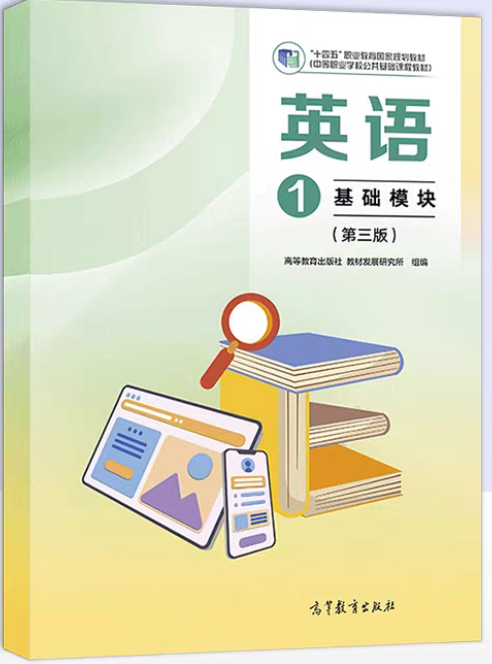
Unit 1——Unit 4阶段测试卷(B卷·能力提升)《英语 基础模块1》(高教版第三版)单元过关卷(原卷版+解析版)
2026-07-21
|
2份
|
37页
|
49人阅读
|
0人下载
摘要:
**基本信息**
紧扣《英语 基础模块1》(高教版第三版)Unit 1-Unit 4核心考点,B卷能力提升卷通过真实校园与生活情境整合知识,适配单元复习,提升语言应用、思维品质与学习能力。
**题型特征**
|题型|题量/分值|知识覆盖|命题特色|
|----|-----------|----------|----------|
|单项选择|25题/25分|词汇(given name)、语法(时态、情态动词、比较级)|基础考点与语境结合,如考查日常交际用语|
|完形填空|20题/30分|校园活动(开放日路线规划)、词汇搭配|以王宁规划路线为情境,融合责任意识与问题解决|
|阅读理解|25题/50分|校园开放周、网购理性消费、志愿者服务等|素材贴近学生生活,如通过网购经历培养批判性思维|
|情景对话|10题/20分|日常安排、路线规划|模拟真实交际场景,提升语言运用能力|
|书面表达|1题/20分|绿色出行计划|综合语言输出,体现责任意识与规划能力|
内容正文:
编写说明:本套试卷紧扣《英语 基础模块1》(高教版第三版)教材,以教材单元为基准精准覆盖核心考点。
每个阶段设置AB卷,A卷为基础巩固卷,侧重基础考点训练,帮助学生扎实掌握知识要点;B卷为能力提升卷,注重知识整合与全面检测,引导学生构建知识网络。全书设计4份综合测试卷,模拟实战情境,聚焦解题能力突破,全面提升应试能力与知识应用水平。
《英语 基础模块1》(高教版第三版)《单元过关卷》
Unit 1——Unit 4阶段测试卷
B卷·能力提升
考试时间:120分钟 满分:150分
班级_____姓名_____学号_____成绩_____
第一部分:单项选择题(共25小题;每小题1分,满分25分)
从A、B、C、D四个选项中,选出可以填入空白处的最佳选项。
1.Ella's family name is Baker, and her ______ name is Ella.
A. given B. green
C. golden D. general
2.My cousin is energetic. He ______ jogging with his friends every morning.
A. go B. goes
C. going D. went
3.Mr. Liu manages a sales ______ in a car company.
A. airport B. discount
C. department D. direction
4.—Who is the woman holding a baby in the photo?
—She ______ be your mother. You look like her.
A. needn't B. can't
C. shouldn't D. must
5.______ left at the crossing, and the subway station is beside the bank.
A. Turn B. Turning
C. Turns D. To turn
6.The hotel is far from the airport, so the taxi may ______ about one hour.
A. cost B. take
C. spend D. pay
7.You'd better get ______ at Zhonghua Square Station and take Exit B.
A. on B. off
C. up D. to
8.The map app shows ______ way to the station during rush hour.
A. convenient B. more convenient
C. the most convenient D. conveniently
9.This dictionary ______ many useful examples for English learners.
A. includes B. include
C. including D. included
10.The red sweater is not as ______ as the blue one.
A. cheaper B. cheap
C. cheapest D. the cheapest
11.If the shoes are too tight, you can ask for a larger ______.
A. price B. review
C. size D. style
12.Many students choose online shopping because it saves time, ______ they still check reviews carefully.
A. or B. so
C. because D. but
13.The meeting ______ in Room 205 at four o'clock this afternoon.
A. will be held B. holds
C. held D. was holding
14.—What are you going to do after lunch?
—I ______ a practical training class.
A. have B. am going to have
C. had D. was having
15.The school trip sounds ______, and many students want to join it.
A. exciting B. excited
C. excite D. excitement
16.Could you tell me ______ the English speech competition begins?
A. what B. when
C. who D. whose
17.The intern has to prepare a work report ______ he takes the minutes.
A. before B. near
C. without D. among
18.My sister is ______ than me at comparing products online.
A. careful B. more careful
C. most careful D. the most careful
19.It is the training center ______ helps students get hands-on experience.
A. which B. who
C. that D. where
20.—Would you like to watch the club competition with us?
—______. I will be free then.
A. I'd love to B. I'm sorry to hear that
C. No problem? D. That's all right
21.The product page says the bag is ______ cotton and easy to carry.
A. made of B. worried about
C. strict with D. good at
22.We should choose green transportation ______ the weather is fine and the distance is short.
A. though B. if
C. until D. unless
23.The student card ______ before you enter the training room.
A. checks B. checking
C. must check D. must be checked
24.The 618 shopping festival is one of ______ online shopping events in China.
A. large B. larger
C. the largest D. largest than
25.—______ do you go to the library?
—Twice a week.
A. How often B. How far
C. How soon D. How much
第二部分:完形填空(共20小题;每小题1.5分,满分30分)
阅读下面短文,从各题所给的A、B、C、D四个选项中选出可以填入空白处的最佳选项。
Wang Ning studies at a vocational school in Jiujiang, and she hopes to become a confident guide for visitors one day.
At the beginning of the term, her class received ____26____ task: plan a school open day for new students and their parents. Wang Ning was ____27____ charge of the route plan. She first asked ____28____ in her group to list important places, such as the library, the training center, the meeting hall and the cafeteria. Then she opened a map app and made ____29____ simple route from the school gate.
The work was not easy. Some parents would drive, some would take the bus, and others might arrive by subway. Wang Ning compared different ways and ____30____ the greenest one for short distances. She also went to a mall after class to buy name cards. The first cards were cheap, ____31____ the paper was too thin. After reading customer reviews, she chose another style and paid ____32____ her phone.
On Friday afternoon, Wang Ning practiced the introduction again and again. She felt ____33____ when she had to speak in front of the whole class, but her teacher ____34____ her to slow down and smile. During the open day, she gave directions clearly, introduced school subjects, and explained the activity time. When a visitor asked, “____35____,” she answered politely and showed the way. The parents were satisfied because the plan was ____36____ and convenient.
After the activity, Wang Ning wrote a reflection. ____37____ students connect family communication, transportation plans, responsible shopping and school activities, they can solve real problems. She believed this experience would ____38____ her for future work. Her final sentence was simple: “A clear plan makes a busy day ____39____.” That sentence became her new ____40____ for school life. The next week, Wang Ning helped two classmates make activity plans. They compared choices and found a better ____41____ together. The teacher said the experience was ____42____ because it turned knowledge into action. When a younger student asked, “____43____” Wang Ning showed her notebook. She was busy, ____44____ she enjoyed helping others. She finally understood that real learning means service, practice and ____45____.
26.A. a B. an C. the D. some
27.A. on B. in C. at D. by
28.A. someone B. nothing C. everyone D. anything
29.A. gift B. price C. review D. a
30.A. chose B. broke C. missed D. forgot
31.A. so B. but C. or D. because
32.A. over B. under C. with D. across
33.A. alone B. online C. nearby D. nervous
34.A. encouraged B. damaged C. covered D. locked
35.A. What color is it? B. Could you tell me the way? C. How much is this scarf? D. Who cooks dinner?
36.A. quickly B. carefully C. clearly D. heavily
37.A. Unless B. Although C. Because D. If
38.A. prepare B. punish C. repair D. compare
39.A. harder B. easier C. colder D. noisier
40.A. address B. ticket C. direction D. motto
41.A. choice B. fever C. wall D. noise
42.A. careless B. valuable C. empty D. sleepy
43.A. Where is my old cup? B. How old is the tree? C. Can you help me make a plan? D. Why is the door red?
44.A. or B. so C. unless D. but
45.A. responsibility B. weather C. hunger D. silence
第三部分:阅读理解(共25小题;每小题2分,满分50分)
阅读下列短文,从每题所给的A、B、C、D四个选项中,选出最佳选项。
A
Honggu Vocational School Open Week
Honggu Vocational School will welcome Grade 9 students and their parents from June 10 to June 14. The open week is designed to help visitors understand school life, majors and future learning choices. Visitors may choose one of three routes.
Route A, “Family and Communication”, starts at 9:00 a.m. in Meeting Hall 1. Student volunteers will introduce the school in English and share stories about how they get along with classmates and family members. Route B, “Green Campus Travel”, starts at 10:00 a.m. at the school gate. Visitors will walk to the library, the gym and the training center. Volunteers will explain the safest walking route and show where to take the city bus after the visit. Route C, “Shopping and Business Practice”, starts at 2:30 p.m. in Training Room 204. Teachers will show how students compare product features, prices and reviews in a marketing project.
Each route lasts about ninety minutes. Visitors should register on the school website before June 6. Please bring an ID card and arrive ten minutes early. If it rains heavily, Route B will move to Room 106, where volunteers will introduce the campus map instead. For more information, call 0791-7156-9023.
During the open week, each visitor will receive a simple guide card. The card includes a small campus map, emergency phone numbers and a place for notes. Student volunteers will wear blue name cards so that parents can ask questions easily. The school also prepares drinking water near the library. These details are small, but they help visitors feel welcome and show how students practice service skills in real situations.
46.Who is the open week mainly for?
A. Online shop owners. B. Only foreign teachers.
C. Taxi drivers in Honggu. D. Grade 9 students and their parents.
47.Where does Route C start?
A. At the school gate. B. In Meeting Hall 1.
C. In Training Room 204. D. In Room 106.
48.What should visitors do before June 6?
A. Buy a new dictionary. B. Register on the school website.
C. Clean the gym. D. Write customer reviews.
49.How long does each route last?
A. About ninety minutes. B. Four hours.
C. One week. D. Ten minutes.
50.What will happen to Route B if it rains heavily?
A. It will require no volunteers. B. It will start at 2:30 p.m.
C. It will become a shopping lesson. D. It will move to Room 106.
B
Miao Jia loved shopping online. At first, she bought things whenever she saw a big discount: notebooks, phone cases, cups and snacks. Her desk became crowded, but she still felt that she needed more. One afternoon, her mother asked her to help buy a birthday gift for Grandma. Miao Jia opened a shopping app quickly and chose the first scarf she saw.
Her mother stopped her and said, “A gift is not only about price. Think about the person who will use it.” Miao Jia looked at Grandma's daily life. Grandma liked walking in the park, preferred soft materials and did not like bright colors. Miao Jia then compared three scarves. The first one was cheap but too thin. The second one was beautiful but had many bad reviews about size. The third one was light gray, made of cotton, and had clear washing instructions. It was not the cheapest, but it seemed the most suitable.
Before paying, Miao Jia checked the delivery time and wrote a short greeting card. When Grandma received the gift, she touched the scarf and smiled, saying it was comfortable. Miao Jia was happy. She realized that responsible shopping was not boring. It helped her care about people, avoid waste and use money wisely. From then on, she made a list before shopping and asked herself whether each product was truly needed.
Later, Miao Jia also checked her past orders. She found that several notebooks were almost the same, and two phone cases were still unused. She gave one notebook to her younger cousin and kept only the things she truly needed. This small clean-up made her desk tidier. More importantly, it made her understand that every order should have a clear reason. A low price is useful only when the product really matches someone's needs.
51.What problem did Miao Jia have at first?
A. She disliked her grandmother. B. She never used shopping apps.
C. She bought things too quickly because of discounts. D. She could not read prices.
52.What did Grandma prefer?
A. Bright colors. B. Hard materials.
C. Very large bags. D. Soft materials.
53.Why did Miao Jia choose the third scarf?
A. It was the cheapest product. B. It seemed the most suitable.
C. It had no delivery time. D. It was made of silk only.
54.How did Grandma feel about the gift?
A. She liked it. B. She was worried.
C. She returned it at once. D. She was angry.
55.What did Miao Jia learn?
A. A list makes shopping impossible. B. The first product is always the best.
C. Reviews are never useful. D. Shopping wisely can show care and avoid waste.
C
Every Tuesday, Peng Lei helped at the information desk of his vocational school. He was not a teacher. He was a student volunteer who guided visitors during club activities. At first, he thought the job was simple: say hello, point to a building, and give a smile. After one busy afternoon, he changed his mind.
That day, a new student wanted to find the meeting hall for a singing competition. A parent needed the cafeteria because she had arrived early and had not eaten lunch. Two exchange students asked how to get to the library. Peng Lei answered each question, but he soon found that pointing was not enough. The campus had several crossings, and some signs were partly covered by trees.
Peng Lei took out a small notebook and drew a clear route. He used simple expressions: “Go straight for two minutes,” “Turn right at the training center,” and “The library is on your left.” When the exchange students still looked confused, he walked with them to the first crossing and checked whether they understood the rest of the way.
After the activity, Peng Lei suggested making new direction cards in both Chinese and English. His teacher agreed, and the cards were put near the school gate the next week. More visitors found places easily. Peng Lei learned that good service needed patience, clear language and careful observation. He also became more confident in speaking English because every real question gave him a chance to practice.
The new cards had arrows, simple English words and small pictures of important places. Peng Lei tested them with two classmates before they were printed. One classmate pretended to be a parent, and the other pretended to be a visitor from another city. They found one unclear sentence and changed it into a shorter one. This practice helped Peng Lei see that good public information should be easy for different people to understand.
56.What was Peng Lei's volunteer job?
A. Driving buses for parents. B. Selling scarves online.
C. Cooking lunch for teachers. D. Guiding visitors during club activities.
57.Why was pointing not enough?
A. No one asked questions. B. The library was closed all day.
C. The campus had several crossings and unclear signs. D. The notebook was too expensive.
58.What did Peng Lei do when exchange students were still confused?
A. He asked them to leave school. B. He walked with them to the first crossing.
C. He gave them a shopping list. D. He stopped answering questions.
59.What does the underlined word “observation” mean?
A. Speaking without thinking. B. Buying products quickly.
C. Forgetting important details. D. Watching and noticing things carefully.
60.What made Peng Lei more confident in English?
A. The signs were all removed. B. He never met visitors again.
C. Real questions gave him chances to practice. D. He only spoke Chinese at the desk.
D
Many vocational school students have full days. They study basic subjects, take practical training, join clubs and sometimes help at home. Without a plan, small tasks can pile up and make students nervous. A weekly timetable is a useful tool, but it only works when it is realistic.
First, students should write down fixed activities. These include classes, training sessions, club meetings and family duties. Fixed activities cannot be moved easily, so they should be placed on the timetable first. Second, students should add flexible tasks, such as reviewing English words, comparing materials for a project or buying stationery. These tasks can be moved, but they still need clear time. Third, students should leave short breaks. A timetable without rest may look perfect, but it is hard to follow.
A good timetable also needs checking. On Sunday evening, students can ask three questions: What did I finish? What took more time than I expected? What should I change next week? These questions help students learn from experience. If a shopping task takes longer because the product size is unclear, students can plan more time for reading reviews next time. If a bus route is often crowded, they can choose the subway or leave earlier.
Planning does not make every day easy. It helps students see problems earlier and make better choices. In this way, time management becomes a life skill, not just a school task.
Students do not need to make a perfect timetable at the first try. The first version can be simple, with only school time, homework time and rest time. After one week, they can add more details, such as club meetings, family visits or shopping tasks. Color marks may also help: blue for study, green for rest, and orange for important deadlines. The purpose is not to make the page beautiful, but to make action easier.
61.What should students write down first?
A. All advertisements. B. Only shopping lists.
C. Unexpected gifts. D. Fixed activities.
62.Why should students leave short breaks?
A. Rest is more important than all tasks. B. Breaks make classes disappear.
C. A timetable without rest is hard to follow. D. Breaks stop students from learning.
63.When can students check their timetable?
A. At midnight every day. B. On Sunday evening.
C. Only before a test. D. After graduation.
64.What can students do if a bus route is often crowded?
A. Buy more stationery. B. Forget the activity.
C. Choose the subway or leave earlier. D. Stop using timetables.
65.What is the writer's purpose?
A. To introduce a famous visitor center. B. To tell students to avoid all club activities.
C. To compare different scarf materials. D. To explain how to make a realistic weekly timetable.
E
When students learn English, they often ask, “How can I remember words better?” One useful answer is to connect words with real actions. Words become easier to remember when students meet them in family life, transportation, shopping and school activities.
For example, the word “introduce” is not only a word on a page. A student can introduce a new classmate to a friend. The phrase “take care of” becomes clear when a child helps grandparents carry bags or cooks a simple meal for them. Transportation words are also practical. If students use “go straight”, “turn left”, “get off” and “rush hour” while planning a route, they will remember both the meaning and the situation.
Shopping words can be learned in the same way. Before buying a product, students may compare size, material, price, discount and customer reviews. When they explain why one product is better than another, they naturally use comparative forms. School life gives more chances. Students talk about favorite subjects, future plans, competitions and practical training. Phrases such as “be going to”, “prepare for” and “sound like” are used in real conversations.
Connecting words with actions does not mean students should stop reading or writing. It means they should use reading and writing to support real communication. A small notebook can help. After using a word in daily life, write down the sentence and the situation. Over time, vocabulary will become a living tool instead of a list to fear.
This method also helps students prepare for tests. If a learner only memorizes the Chinese meaning of a word, he may forget it quickly. If he uses the word in a sentence about his own school, family or shopping experience, the memory becomes stronger. Teachers can ask students to bring one real sentence to class each week. Then students share the sentence, explain the situation and learn from one another.
66.What is the useful way to remember words in the passage?
A. Avoid using words in life. B. Copy a word without meaning.
C. Connect words with real actions. D. Read only one long list.
67.Which phrase can be learned when helping grandparents?
A. rush hour B. take care of
C. on sale D. meeting hall
68.When may students use comparative forms naturally?
A. When they forget the route. B. When they close all books.
C. When they compare products. D. When they refuse to speak.
69.What does the writer suggest students write in a notebook?
A. A list of mistakes to hide. B. Only product prices.
C. Names of all buses. D. The sentence and the situation.
70.Which is the best title for the passage?
A. The History of Nanchang B. Buy the Cheapest Product
C. Never Join School Activities D. Make Vocabulary a Living Tool
第四部分:情景对话(共10小题;每小题2分,满分20分)
根据对话内容,从所给选项中选出能填入空白处的最佳选项。
A
After class
A: Hi, Li Ming. Are you free this afternoon?
B: Not before 3:30. ____71____
A: What are you going to do after that?
B: I plan to watch the English speech competition. ____72____
A: In the meeting hall, I think.
B: ____73____
A: It begins at 4:00 and lasts about one hour.
B: Sounds great. Shall we go together?
A: ____74____ Let's meet at the school gate at 3:50.
B: ____75____
A. Where will it be held?
B. No problem.
C. I have a practical training class.
D. Good idea.
E. What time does it begin?
B
Planning a route
A: We need to get to the city museum before 9:30 tomorrow.
B: The map app shows three ways. ____76____
A: I think the subway is better during rush hour.
B: ____77____
A: About thirty minutes. We should leave school at 8:40.
B: OK. Where should we get off?
A: ____78____ Then take Exit C.
B: What if someone is late?
A: ____79____
B: Good plan. ____80____
A. How long does it take by subway?
B. Let's meet ten minutes earlier.
C. Which one should we choose?
D. Get off at People's Square Station.
E. I will write it down.
第五部分:书面表达(满分20分)
假设你是王宁,你和同学计划周末从学校前往江西省博物馆参加研学活动。请以“A Green Travel Plan”为题,写一篇100词左右的短文。内容包括:1. 出行方式和路线;2. 选择该方式的理由;3. 集合时间及注意事项。
_______________________________________________________________________________
_______________________________________________________________________________
_______________________________________________________________________________
_______________________________________________________________________________
原创精品资源学科网独家享有版权,侵权必究!
学科网(北京)股份有限公司
$
编写说明:本套试卷紧扣《英语 基础模块1》(高教版第三版)教材,以教材单元为基准精准覆盖核心考点。
每个阶段设置AB卷,A卷为基础巩固卷,侧重基础考点训练,帮助学生扎实掌握知识要点;B卷为能力提升卷,注重知识整合与全面检测,引导学生构建知识网络。全书设计4份综合测试卷,模拟实战情境,聚焦解题能力突破,全面提升应试能力与知识应用水平。
《英语 基础模块1》(高教版第三版)《单元过关卷》
Unit 1——Unit 4阶段测试卷
B卷·能力提升
考试时间:120分钟 满分:150分
班级_____姓名_____学号_____成绩_____
第一部分:单项选择题(共25小题;每小题1分,满分25分)
从A、B、C、D四个选项中,选出可以填入空白处的最佳选项。
1.Ella's family name is Baker, and her ______ name is Ella.
A. given B. green
C. golden D. general
【答案】A
【解析】given name表示“名”,与family name相对应。故选A。
2.My cousin is energetic. He ______ jogging with his friends every morning.
A. go B. goes
C. going D. went
【答案】B
【解析】go jogging表示“慢跑”,主语He为第三人称单数,日常习惯用goes。故选B。
3.Mr. Liu manages a sales ______ in a car company.
A. airport B. discount
C. department D. direction
【答案】C
【解析】sales department表示“销售部门”,符合公司管理场景。故选C。
4.—Who is the woman holding a baby in the photo?
—She ______ be your mother. You look like her.
A. needn't B. can't
C. shouldn't D. must
【答案】D
【解析】must表示较有把握的推测,符合从长相推断身份。故选D。
5.______ left at the crossing, and the subway station is beside the bank.
A. Turn B. Turning
C. Turns D. To turn
【答案】A
【解析】祈使句以动词原形开头,用于指路。故选A。
6.The hotel is far from the airport, so the taxi may ______ about one hour.
A. cost B. take
C. spend D. pay
【答案】B
【解析】It/taxi takes time表示“花费时间”,主语为交通方式时用take。故选B。
7.You'd better get ______ at Zhonghua Square Station and take Exit B.
A. on B. off
C. up D. to
【答案】B
【解析】get off表示“下车”,与车站和出口信息匹配。故选B。
8.The map app shows ______ way to the station during rush hour.
A. convenient B. more convenient
C. the most convenient D. conveniently
【答案】C
【解析】在多个路线中显示最方便的一条,应用最高级the most convenient。故选C。
9.This dictionary ______ many useful examples for English learners.
A. includes B. include
C. including D. included
【答案】A
【解析】主语dictionary为单数,描述功能用一般现在时includes。故选A。
10.The red sweater is not as ______ as the blue one.
A. cheaper B. cheap
C. cheapest D. the cheapest
【答案】B
【解析】not as...as结构中间用形容词或副词原级。故选B。
11.If the shoes are too tight, you can ask for a larger ______.
A. price B. review
C. size D. style
【答案】C
【解析】鞋子太紧应更换更大尺码,size符合语境。故选C。
12.Many students choose online shopping because it saves time, ______ they still check reviews carefully.
A. or B. so
C. because D. but
【答案】D
【解析】前后形成转折:省时但仍需看评价。故选D。
13.The meeting ______ in Room 205 at four o'clock this afternoon.
A. will be held B. holds
C. held D. was holding
【答案】A
【解析】meeting与hold之间为被动关系,this afternoon提示将来。故选A。
14.—What are you going to do after lunch?
—I ______ a practical training class.
A. have B. am going to have
C. had D. was having
【答案】B
【解析】问句询问计划,答语应用将来表达。故选B。
15.The school trip sounds ______, and many students want to join it.
A. exciting B. excited
C. excite D. excitement
【答案】A
【解析】修饰事物school trip应用-ing形容词exciting。故选A。
16.Could you tell me ______ the English speech competition begins?
A. what B. when
C. who D. whose
【答案】B
【解析】宾语从句询问开始时间,when符合语境。故选B。
17.The intern has to prepare a work report ______ he takes the minutes.
A. before B. near
C. without D. among
【答案】A
【解析】两个任务存在先后顺序,before符合语义。故选A。
18.My sister is ______ than me at comparing products online.
A. careful B. more careful
C. most careful D. the most careful
【答案】B
【解析】than提示比较级,careful的比较级为more careful。故选B。
19.It is the training center ______ helps students get hands-on experience.
A. which B. who
C. that D. where
【答案】C
【解析】It is...that...为强调句结构。故选C。
20.—Would you like to watch the club competition with us?
—______. I will be free then.
A. I'd love to B. I'm sorry to hear that
C. No problem? D. That's all right
【答案】A
【解析】答语表示有空并愿意参加,I'd love to符合邀请场景。故选A。
21.The product page says the bag is ______ cotton and easy to carry.
A. made of B. worried about
C. strict with D. good at
【答案】A
【解析】be made of表示“由……制成”,说明材质。故选A。
22.We should choose green transportation ______ the weather is fine and the distance is short.
A. though B. if
C. until D. unless
【答案】B
【解析】天气好且距离短是选择绿色出行的条件,if符合语义。故选B。
23.The student card ______ before you enter the training room.
A. checks B. checking
C. must check D. must be checked
【答案】D
【解析】student card与check之间为被动关系,must后接be done。故选D。
24.The 618 shopping festival is one of ______ online shopping events in China.
A. large B. larger
C. the largest D. largest than
【答案】C
【解析】one of后接形容词最高级和名词复数,the largest符合结构。故选C。
25.—______ do you go to the library?
—Twice a week.
A. How often B. How far
C. How soon D. How much
【答案】A
【解析】答语Twice a week表示频率,应用How often提问。故选A。
第二部分:完形填空(共20小题;每小题1.5分,满分30分)
阅读下面短文,从各题所给的A、B、C、D四个选项中选出可以填入空白处的最佳选项。
Wang Ning studies at a vocational school in Jiujiang, and she hopes to become a confident guide for visitors one day.
At the beginning of the term, her class received ____26____ task: plan a school open day for new students and their parents. Wang Ning was ____27____ charge of the route plan. She first asked ____28____ in her group to list important places, such as the library, the training center, the meeting hall and the cafeteria. Then she opened a map app and made ____29____ simple route from the school gate.
The work was not easy. Some parents would drive, some would take the bus, and others might arrive by subway. Wang Ning compared different ways and ____30____ the greenest one for short distances. She also went to a mall after class to buy name cards. The first cards were cheap, ____31____ the paper was too thin. After reading customer reviews, she chose another style and paid ____32____ her phone.
On Friday afternoon, Wang Ning practiced the introduction again and again. She felt ____33____ when she had to speak in front of the whole class, but her teacher ____34____ her to slow down and smile. During the open day, she gave directions clearly, introduced school subjects, and explained the activity time. When a visitor asked, “____35____,” she answered politely and showed the way. The parents were satisfied because the plan was ____36____ and convenient.
After the activity, Wang Ning wrote a reflection. ____37____ students connect family communication, transportation plans, responsible shopping and school activities, they can solve real problems. She believed this experience would ____38____ her for future work. Her final sentence was simple: “A clear plan makes a busy day ____39____.” That sentence became her new ____40____ for school life. The next week, Wang Ning helped two classmates make activity plans. They compared choices and found a better ____41____ together. The teacher said the experience was ____42____ because it turned knowledge into action. When a younger student asked, “____43____” Wang Ning showed her notebook. She was busy, ____44____ she enjoyed helping others. She finally understood that real learning means service, practice and ____45____.
26.A. a B. an C. the D. some
27.A. on B. in C. at D. by
28.A. someone B. nothing C. everyone D. anything
29.A. gift B. price C. review D. a
30.A. chose B. broke C. missed D. forgot
31.A. so B. but C. or D. because
32.A. over B. under C. with D. across
33.A. alone B. online C. nearby D. nervous
34.A. encouraged B. damaged C. covered D. locked
35.A. What color is it? B. Could you tell me the way? C. How much is this scarf? D. Who cooks dinner?
36.A. quickly B. carefully C. clearly D. heavily
37.A. Unless B. Although C. Because D. If
38.A. prepare B. punish C. repair D. compare
39.A. harder B. easier C. colder D. noisier
40.A. address B. ticket C. direction D. motto
41.A. choice B. fever C. wall D. noise
42.A. careless B. valuable C. empty D. sleepy
43.A. Where is my old cup? B. How old is the tree? C. Can you help me make a plan? D. Why is the door red?
44.A. or B. so C. unless D. but
45.A. responsibility B. weather C. hunger D. silence
【答案】26.A 27.B 28.C 29.D 30.A 31.B 32.C 33.D 34.A 35.B 36.C 37.D 38.A 39.B 40.D 41.A 42.B 43.C 44.D 45.A
【导语】本文是一篇记叙文,围绕学生在家庭沟通、交通规划、购物选择和校园活动中的真实任务展开,表现计划意识、礼貌交流和责任担当。
【详解】
26.task首次提到且以辅音音素开头,用a。故选A。
27.in charge of表示“负责”。故选B。
28.小组任务需要每个人列出地点,everyone符合语境。故选C。
29.make a simple route表示“制定一条简单路线”。故选D。
30.比较多种方式后选择绿色出行方式,chose符合语境。故选A。
31.便宜与纸张太薄之间是转折关系。故选B。
32.pay with one's phone表示“用手机支付”。故选C。
33.在全班面前发言会紧张,nervous符合语境。故选D。
34.老师鼓励她放慢语速并微笑。故选A。
35.访客需要问路,Could you tell me the way符合场景。故选B。
36.计划清楚便利,clearly修饰前文说明。故选C。
37.如果学生把不同生活任务联系起来,就能解决实际问题,If符合条件关系。故选D。
38.prepare sb. for future work表示为未来工作做准备。故选A。
39.清晰计划让忙碌一天更容易。故选B。
40.这句话成为她新的座右铭,motto符合总结。故选D。
41.比较后找到更好的选择,choice符合语境。故选A。
42.把知识转化为行动是有价值的,valuable符合语境。故选B。
43.后文她展示笔记本,说明对方请求帮助制定计划。故选C。
44.她很忙但乐于帮助别人,but表示转折。故选D。
45.service、practice和responsibility共同概括真实学习的意义。故选A。
第三部分:阅读理解(共25小题;每小题2分,满分50分)
阅读下列短文,从每题所给的A、B、C、D四个选项中,选出最佳选项。
A
Honggu Vocational School Open Week
Honggu Vocational School will welcome Grade 9 students and their parents from June 10 to June 14. The open week is designed to help visitors understand school life, majors and future learning choices. Visitors may choose one of three routes.
Route A, “Family and Communication”, starts at 9:00 a.m. in Meeting Hall 1. Student volunteers will introduce the school in English and share stories about how they get along with classmates and family members. Route B, “Green Campus Travel”, starts at 10:00 a.m. at the school gate. Visitors will walk to the library, the gym and the training center. Volunteers will explain the safest walking route and show where to take the city bus after the visit. Route C, “Shopping and Business Practice”, starts at 2:30 p.m. in Training Room 204. Teachers will show how students compare product features, prices and reviews in a marketing project.
Each route lasts about ninety minutes. Visitors should register on the school website before June 6. Please bring an ID card and arrive ten minutes early. If it rains heavily, Route B will move to Room 106, where volunteers will introduce the campus map instead. For more information, call 0791-7156-9023.
During the open week, each visitor will receive a simple guide card. The card includes a small campus map, emergency phone numbers and a place for notes. Student volunteers will wear blue name cards so that parents can ask questions easily. The school also prepares drinking water near the library. These details are small, but they help visitors feel welcome and show how students practice service skills in real situations.
46.Who is the open week mainly for?
A. Online shop owners. B. Only foreign teachers.
C. Taxi drivers in Honggu. D. Grade 9 students and their parents.
47.Where does Route C start?
A. At the school gate. B. In Meeting Hall 1.
C. In Training Room 204. D. In Room 106.
48.What should visitors do before June 6?
A. Buy a new dictionary. B. Register on the school website.
C. Clean the gym. D. Write customer reviews.
49.How long does each route last?
A. About ninety minutes. B. Four hours.
C. One week. D. Ten minutes.
50.What will happen to Route B if it rains heavily?
A. It will require no volunteers. B. It will start at 2:30 p.m.
C. It will become a shopping lesson. D. It will move to Room 106.
【答案】46.D 47.C 48.B 49.A 50.D
【导语】本文是一则学校开放周通知,介绍三条参观路线、报名时间、活动地点和雨天安排。
【详解】
46.细节理解题。第一段写明will welcome Grade 9 students and their parents。干扰项与原文关键信息、对象或逻辑不符。故选D。
47.细节理解题。Route C部分说明starts...in Training Room 204。干扰项与原文关键信息、对象或逻辑不符。故选C。
48.细节理解题。通知要求Visitors should register on the school website before June 6。干扰项与原文关键信息、对象或逻辑不符。故选B。
49.细节理解题。第三段指出Each route lasts about ninety minutes。干扰项与原文关键信息、对象或逻辑不符。故选A。
50.细节理解题。最后部分说明大雨时Route B will move to Room 106。干扰项与原文关键信息、对象或逻辑不符。故选D。
B
Miao Jia loved shopping online. At first, she bought things whenever she saw a big discount: notebooks, phone cases, cups and snacks. Her desk became crowded, but she still felt that she needed more. One afternoon, her mother asked her to help buy a birthday gift for Grandma. Miao Jia opened a shopping app quickly and chose the first scarf she saw.
Her mother stopped her and said, “A gift is not only about price. Think about the person who will use it.” Miao Jia looked at Grandma's daily life. Grandma liked walking in the park, preferred soft materials and did not like bright colors. Miao Jia then compared three scarves. The first one was cheap but too thin. The second one was beautiful but had many bad reviews about size. The third one was light gray, made of cotton, and had clear washing instructions. It was not the cheapest, but it seemed the most suitable.
Before paying, Miao Jia checked the delivery time and wrote a short greeting card. When Grandma received the gift, she touched the scarf and smiled, saying it was comfortable. Miao Jia was happy. She realized that responsible shopping was not boring. It helped her care about people, avoid waste and use money wisely. From then on, she made a list before shopping and asked herself whether each product was truly needed.
Later, Miao Jia also checked her past orders. She found that several notebooks were almost the same, and two phone cases were still unused. She gave one notebook to her younger cousin and kept only the things she truly needed. This small clean-up made her desk tidier. More importantly, it made her understand that every order should have a clear reason. A low price is useful only when the product really matches someone's needs.
51.What problem did Miao Jia have at first?
A. She disliked her grandmother. B. She never used shopping apps.
C. She bought things too quickly because of discounts. D. She could not read prices.
52.What did Grandma prefer?
A. Bright colors. B. Hard materials.
C. Very large bags. D. Soft materials.
53.Why did Miao Jia choose the third scarf?
A. It was the cheapest product. B. It seemed the most suitable.
C. It had no delivery time. D. It was made of silk only.
54.How did Grandma feel about the gift?
A. She liked it. B. She was worried.
C. She returned it at once. D. She was angry.
55.What did Miao Jia learn?
A. A list makes shopping impossible. B. The first product is always the best.
C. Reviews are never useful. D. Shopping wisely can show care and avoid waste.
【答案】51.C 52.D 53.B 54.A 55.D
【导语】本文是一篇生活化记叙文,讲述苗佳通过为奶奶选礼物理解负责任购物的意义。
【详解】
51.细节理解题。第一段说明她看到大折扣就买,导致桌面拥挤,C项准确。干扰项与原文关键信息、对象或逻辑不符。故选C。
52.细节理解题。第二段写Grandma preferred soft materials。干扰项与原文关键信息、对象或逻辑不符。故选D。
53.细节理解题。第二段结尾说明第三条围巾not the cheapest但most suitable。干扰项与原文关键信息、对象或逻辑不符。故选B。
54.细节理解题。第三段奶奶摸着围巾微笑并说舒服,说明她喜欢。干扰项与原文关键信息、对象或逻辑不符。故选A。
55.主旨理解题。结尾说明理性购物能关心他人、避免浪费、合理用钱,D项概括准确。干扰项与原文关键信息、对象或逻辑不符。故选D。
C
Every Tuesday, Peng Lei helped at the information desk of his vocational school. He was not a teacher. He was a student volunteer who guided visitors during club activities. At first, he thought the job was simple: say hello, point to a building, and give a smile. After one busy afternoon, he changed his mind.
That day, a new student wanted to find the meeting hall for a singing competition. A parent needed the cafeteria because she had arrived early and had not eaten lunch. Two exchange students asked how to get to the library. Peng Lei answered each question, but he soon found that pointing was not enough. The campus had several crossings, and some signs were partly covered by trees.
Peng Lei took out a small notebook and drew a clear route. He used simple expressions: “Go straight for two minutes,” “Turn right at the training center,” and “The library is on your left.” When the exchange students still looked confused, he walked with them to the first crossing and checked whether they understood the rest of the way.
After the activity, Peng Lei suggested making new direction cards in both Chinese and English. His teacher agreed, and the cards were put near the school gate the next week. More visitors found places easily. Peng Lei learned that good service needed patience, clear language and careful observation. He also became more confident in speaking English because every real question gave him a chance to practice.
The new cards had arrows, simple English words and small pictures of important places. Peng Lei tested them with two classmates before they were printed. One classmate pretended to be a parent, and the other pretended to be a visitor from another city. They found one unclear sentence and changed it into a shorter one. This practice helped Peng Lei see that good public information should be easy for different people to understand.
56.What was Peng Lei's volunteer job?
A. Driving buses for parents. B. Selling scarves online.
C. Cooking lunch for teachers. D. Guiding visitors during club activities.
57.Why was pointing not enough?
A. No one asked questions. B. The library was closed all day.
C. The campus had several crossings and unclear signs. D. The notebook was too expensive.
58.What did Peng Lei do when exchange students were still confused?
A. He asked them to leave school. B. He walked with them to the first crossing.
C. He gave them a shopping list. D. He stopped answering questions.
59.What does the underlined word “observation” mean?
A. Speaking without thinking. B. Buying products quickly.
C. Forgetting important details. D. Watching and noticing things carefully.
60.What made Peng Lei more confident in English?
A. The signs were all removed. B. He never met visitors again.
C. Real questions gave him chances to practice. D. He only spoke Chinese at the desk.
【答案】56.D 57.C 58.B 59.D 60.C
【导语】本文讲述学生志愿者彭磊在校园指路服务中改进方法并提升英语表达自信的经历。
【详解】
56.细节理解题。第一段说明他是student volunteer who guided visitors during club activities。干扰项与原文关键信息、对象或逻辑不符。故选D。
57.细节理解题。第二段说明校园有多个路口且部分标志被树遮住,因此仅指方向不够。干扰项与原文关键信息、对象或逻辑不符。故选C。
58.细节理解题。第三段写他walked with them to the first crossing。干扰项与原文关键信息、对象或逻辑不符。故选B。
59.词义猜测题。结合他发现标志被遮挡并建议制作指路卡可知,observation指仔细观察和注意。干扰项与原文关键信息、对象或逻辑不符。故选D。
60.细节理解题。最后一句说明every real question gave him a chance to practice。干扰项与原文关键信息、对象或逻辑不符。故选C。
D
Many vocational school students have full days. They study basic subjects, take practical training, join clubs and sometimes help at home. Without a plan, small tasks can pile up and make students nervous. A weekly timetable is a useful tool, but it only works when it is realistic.
First, students should write down fixed activities. These include classes, training sessions, club meetings and family duties. Fixed activities cannot be moved easily, so they should be placed on the timetable first. Second, students should add flexible tasks, such as reviewing English words, comparing materials for a project or buying stationery. These tasks can be moved, but they still need clear time. Third, students should leave short breaks. A timetable without rest may look perfect, but it is hard to follow.
A good timetable also needs checking. On Sunday evening, students can ask three questions: What did I finish? What took more time than I expected? What should I change next week? These questions help students learn from experience. If a shopping task takes longer because the product size is unclear, students can plan more time for reading reviews next time. If a bus route is often crowded, they can choose the subway or leave earlier.
Planning does not make every day easy. It helps students see problems earlier and make better choices. In this way, time management becomes a life skill, not just a school task.
Students do not need to make a perfect timetable at the first try. The first version can be simple, with only school time, homework time and rest time. After one week, they can add more details, such as club meetings, family visits or shopping tasks. Color marks may also help: blue for study, green for rest, and orange for important deadlines. The purpose is not to make the page beautiful, but to make action easier.
61.What should students write down first?
A. All advertisements. B. Only shopping lists.
C. Unexpected gifts. D. Fixed activities.
62.Why should students leave short breaks?
A. Rest is more important than all tasks. B. Breaks make classes disappear.
C. A timetable without rest is hard to follow. D. Breaks stop students from learning.
63.When can students check their timetable?
A. At midnight every day. B. On Sunday evening.
C. Only before a test. D. After graduation.
64.What can students do if a bus route is often crowded?
A. Buy more stationery. B. Forget the activity.
C. Choose the subway or leave earlier. D. Stop using timetables.
65.What is the writer's purpose?
A. To introduce a famous visitor center. B. To tell students to avoid all club activities.
C. To compare different scarf materials. D. To explain how to make a realistic weekly timetable.
【答案】61.D 62.C 63.B 64.C 65.D
【导语】本文是一篇说明文,说明如何制定并检查现实可行的周计划,帮助学生管理学习与生活。
【详解】
61.细节理解题。第二段First后指出应先写下fixed activities。干扰项与原文关键信息、对象或逻辑不符。故选D。
62.细节理解题。第二段说明没有休息的时间表look perfect但hard to follow。干扰项与原文关键信息、对象或逻辑不符。故选C。
63.细节理解题。第三段开头写On Sunday evening可进行检查。干扰项与原文关键信息、对象或逻辑不符。故选B。
64.细节理解题。第三段最后说明公交拥挤时可choose the subway or leave earlier。干扰项与原文关键信息、对象或逻辑不符。故选C。
65.写作目的题。全文围绕现实可行周计划的步骤和检查方法展开,D项准确。干扰项与原文关键信息、对象或逻辑不符。故选D。
E
When students learn English, they often ask, “How can I remember words better?” One useful answer is to connect words with real actions. Words become easier to remember when students meet them in family life, transportation, shopping and school activities.
For example, the word “introduce” is not only a word on a page. A student can introduce a new classmate to a friend. The phrase “take care of” becomes clear when a child helps grandparents carry bags or cooks a simple meal for them. Transportation words are also practical. If students use “go straight”, “turn left”, “get off” and “rush hour” while planning a route, they will remember both the meaning and the situation.
Shopping words can be learned in the same way. Before buying a product, students may compare size, material, price, discount and customer reviews. When they explain why one product is better than another, they naturally use comparative forms. School life gives more chances. Students talk about favorite subjects, future plans, competitions and practical training. Phrases such as “be going to”, “prepare for” and “sound like” are used in real conversations.
Connecting words with actions does not mean students should stop reading or writing. It means they should use reading and writing to support real communication. A small notebook can help. After using a word in daily life, write down the sentence and the situation. Over time, vocabulary will become a living tool instead of a list to fear.
This method also helps students prepare for tests. If a learner only memorizes the Chinese meaning of a word, he may forget it quickly. If he uses the word in a sentence about his own school, family or shopping experience, the memory becomes stronger. Teachers can ask students to bring one real sentence to class each week. Then students share the sentence, explain the situation and learn from one another.
66.What is the useful way to remember words in the passage?
A. Avoid using words in life. B. Copy a word without meaning.
C. Connect words with real actions. D. Read only one long list.
67.Which phrase can be learned when helping grandparents?
A. rush hour B. take care of
C. on sale D. meeting hall
68.When may students use comparative forms naturally?
A. When they forget the route. B. When they close all books.
C. When they compare products. D. When they refuse to speak.
69.What does the writer suggest students write in a notebook?
A. A list of mistakes to hide. B. Only product prices.
C. Names of all buses. D. The sentence and the situation.
70.Which is the best title for the passage?
A. The History of Nanchang B. Buy the Cheapest Product
C. Never Join School Activities D. Make Vocabulary a Living Tool
【答案】66.C 67.B 68.C 69.D 70.D
【导语】本文是一篇学习方法说明文,介绍把词汇与真实行动连接起来的记忆方法。
【详解】
66.细节理解题。第一段指出useful answer is to connect words with real actions。干扰项与原文关键信息、对象或逻辑不符。故选C。
67.细节理解题。第二段说明帮助祖辈时take care of的含义更清楚。干扰项与原文关键信息、对象或逻辑不符。故选B。
68.细节理解题。第三段指出学生比较商品并解释优劣时会自然使用比较级。干扰项与原文关键信息、对象或逻辑不符。故选C。
69.细节理解题。最后一段建议写下the sentence and the situation。干扰项与原文关键信息、对象或逻辑不符。故选D。
70.最佳标题题。文章核心是让词汇成为生活中可使用的工具,D项概括准确。干扰项与原文关键信息、对象或逻辑不符。故选D。
第四部分:情景对话(共10小题;每小题2分,满分20分)
根据对话内容,从所给选项中选出能填入空白处的最佳选项。
A
After class
A: Hi, Li Ming. Are you free this afternoon?
B: Not before 3:30. ____71____
A: What are you going to do after that?
B: I plan to watch the English speech competition. ____72____
A: In the meeting hall, I think.
B: ____73____
A: It begins at 4:00 and lasts about one hour.
B: Sounds great. Shall we go together?
A: ____74____ Let's meet at the school gate at 3:50.
B: ____75____
A. Where will it be held?
B. No problem.
C. I have a practical training class.
D. Good idea.
E. What time does it begin?
【答案】71.C 72.A 73.E 74.D 75.B
【导语】本文是课后活动安排对话,两名学生讨论实训课后观看英语演讲比赛。
【详解】
71.根据Not before 3:30可知此处说明3:30前有安排,C项符合。故填C。
72.答语In the meeting hall说明询问举办地点,A项符合。故填A。
73.答语It begins at 4:00说明询问开始时间,E项符合。故填E。
74.上文提出一起去,D项表示赞同。故填D。
75.约定见面时间地点后,B项“No problem”符合应答。故填B。
B
Planning a route
A: We need to get to the city museum before 9:30 tomorrow.
B: The map app shows three ways. ____76____
A: I think the subway is better during rush hour.
B: ____77____
A: About thirty minutes. We should leave school at 8:40.
B: OK. Where should we get off?
A: ____78____ Then take Exit C.
B: What if someone is late?
A: ____79____
B: Good plan. ____80____
A. How long does it take by subway?
B. Let's meet ten minutes earlier.
C. Which one should we choose?
D. Get off at People's Square Station.
E. I will write it down.
【答案】76.C 77.A 78.D 79.B 80.E
【导语】本文是交通方案对话,两名学生比较路线并确定出发、下车与集合安排。
【详解】
76.前文有three ways,后文选择subway,C项询问选择哪种方式。故填C。
77.答语About thirty minutes说明询问所需时间,A项符合。故填A。
78.问句Where should we get off询问下车站,D项符合。故填D。
79.前文担心迟到,B项提议提前十分钟集合。故填B。
80.计划确定后写下来,E项符合任务落实语境。故填E。
第五部分:书面表达(满分20分)
假设你是王宁,你和同学计划周末从学校前往江西省博物馆参加研学活动。请以“A Green Travel Plan”为题,写一篇100词左右的短文。内容包括:1. 出行方式和路线;2. 选择该方式的理由;3. 集合时间及注意事项。
_______________________________________________________________________________
_______________________________________________________________________________
_______________________________________________________________________________
_______________________________________________________________________________
【参考范文】
A Green Travel Plan
This weekend, my classmates and I are going to visit Jiangxi Provincial Museum. We plan to choose green transportation. First, we will meet at the school gate at 8:00 a.m. Then we will walk to the subway station and take Line 2. We will get off at the nearest station and walk to the museum. The subway is fast and convenient, especially during rush hour. It also costs less than taking taxis. Everyone should bring a student card and arrive on time. I think a clear travel plan can help us save time, protect the environment and enjoy the activity safely.
【词汇积累】green transportation绿色出行;get off下车;during rush hour在高峰期;arrive on time准时到达
【句式拓展】We plan to...;The subway is...especially...;I think a clear travel plan can...
【点睛】范文紧扣交通计划,路线、理由和提醒完整,使用将来表达和祈使提醒,任务完成度高。
原创精品资源学科网独家享有版权,侵权必究!
学科网(北京)股份有限公司
$
资源预览图

1

2

3
由于学科网是一个信息分享及获取的平台,不确保部分用户上传资料的 来源及知识产权归属。如您发现相关资料侵犯您的合法权益,请联系学科网,我们核实后将及时进行处理。