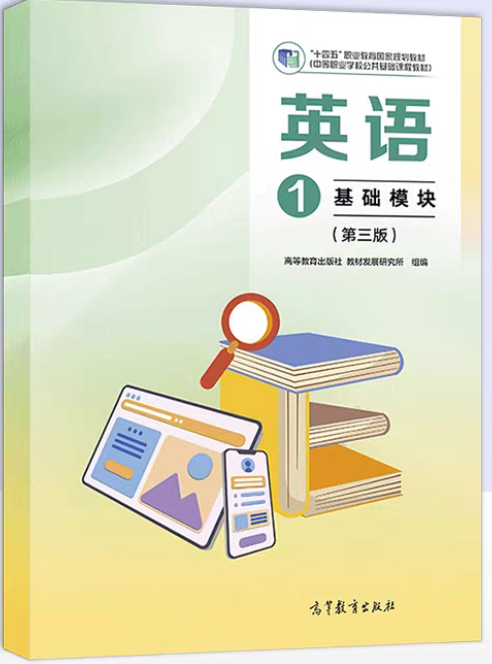
Unit 5——Unit 8阶段测试卷(A卷·基础巩固)《英语 基础模块1》(高教版第三版)单元过关卷(原卷版+解析版)
2026-07-21
|
2份
|
27页
|
53人阅读
|
0人下载
摘要:
**基本信息**
《英语 基础模块1》(高教版第三版)Unit5-Unit8阶段测试A卷,紧扣教材核心考点,通过基础巩固与情境化设计,适配单元复习,提升语言应用与跨文化沟通能力。
**题型特征**
|题型|题量/分值|知识覆盖|命题特色|
|----|-----------|----------|----------|
|单项选择|25/25|时态(如现在完成时)、词汇(contribute)、语法(there be句型)|聚焦基础语言知识,如第1题考查现在完成时|
|完形填空|20/30|动词(overcame)、名词(preparation)、上下文理解|以欢迎派对为情境,渗透文化意识与服务理念|
|阅读理解|25/50|校园活动(Culture and Food Week)、科技使用(智能手机调查)|结合社会热点,引导思维品质与学习能力,如D篇探讨手机合理使用|
|情景对话|10/20|餐厅点餐、调查交流|模拟真实场景,提升语言交际能力|
|书面表达|1/25|邀请邮件写作|融合文化传承与实用表达,强化语言输出能力|
内容正文:
编写说明:本套试卷紧扣《英语 基础模块1》(高教版第三版)教材,以教材单元为基准精准覆盖核心考点。
每个单元设置AB卷,A卷为基础巩固卷,侧重基础考点训练,帮助学生扎实掌握知识要点;B卷为能力提升卷,注重知识整合与全面检测,引导学生构建知识网络。全书设计4份综合测试卷,模拟实战情境,聚焦解题能力突破,全面提升应试能力与知识应用水平。
《英语 基础模块1》(高教版第三版)《单元过关卷》
Unit 5——Unit 8阶段测试卷
A卷·基础巩固
考试时间:120分钟 满分:150分
班级_____姓名_____学号_____成绩_____
第一部分:单项选择题(共25小题;每小题1分,满分25分)
从A、B、C、D四个选项中,选出可以填入空白处的最佳选项。
1.The students have ______ the welcome banquet for the exchange students since Monday.
A. prepare B. prepared
C. preparing D. prepares
【答案】B
【解析】since Monday提示现在完成时,主语students为复数,应用have prepared。故选B。
2.—Would you like to come to our opening ceremony this Friday? —______. I have no class that morning.
A. I'd love to B. Never mind
C. I'm sorry D. You're welcome
【答案】A
【解析】问句发出邀请,答语说明有时间,应表示愿意参加,I'd love to符合语境。故选A。
3.Good service can ______ greatly to a pleasant dining experience.
A. connect B. order
C. contribute D. record
【答案】C
【解析】contribute to意为“有助于”,与pleasant dining experience搭配自然。故选C。
4.—How would you like your steak? —______, please. I don't want it too dry.
A. Sour B. Noisy
C. Online D. Medium
【答案】D
【解析】服务员询问牛排熟度,medium表示“中等熟度”,符合点餐语境。故选D。
5.Look! Several students ______ an online survey about smartphone use in the hall.
A. do B. did
C. are doing D. have done
【答案】C
【解析】Look提示动作正在发生,应用现在进行时are doing。故选C。
6.The new phone has a large ______, so it is comfortable to read e-books on it.
A. price B. banquet
C. ceremony D. screen
【答案】D
【解析】读电子书需要大屏幕,screen符合手机功能语境。故选D。
7.Zhan Tianyou and his team ______ many difficulties while building the railway.
A. ordered B. overcame
C. invited D. recommended
【答案】B
【解析】overcome difficulties表示“克服困难”,与修建铁路的艰难过程对应。故选B。
8.Cai Lun improved the method of paper-making, and people could ______ ideas more easily.
A. record B. spend
C. ruin D. taste
【答案】A
【解析】纸张用于记录和传播思想,record ideas符合语义。故选A。
9.There ______ some orange juice and two cups of tea on the table.
A. is B. are
C. were D. be
【答案】A
【解析】there be结构遵循就近原则,some orange juice为不可数名词,be动词用is。故选A。
10.We don't have ______ salt left. Could you buy some on your way home?
A. many B. a few
C. several D. much
【答案】D
【解析】salt为不可数名词,否定句中表示数量用much。故选D。
11.The invitation email ______ to Mr. Smith before November 1.
A. send B. has been sent
C. sent D. sending
【答案】B
【解析】主语email与send之间为被动关系,且强调已经发送,has been sent符合语境。故选B。
12.Li Mei has never been to a welcome party, ______?
A. is she B. does she
C. has she D. did she
【答案】C
【解析】反意疑问句遵循前否后肯,陈述部分为has never been,疑问部分用has she。故选C。
13.—______ are you spending on short videos every day? —About thirty minutes.
A. How many B. How soon
C. How often D. How long
【答案】D
【解析】答语为一段时间,询问时长用How long。故选D。
14.Please focus ______ your homework first, and then you can listen to music.
A. for B. with
C. on D. about
【答案】C
【解析】focus on为固定搭配,表示“专注于”。故选C。
15.The railway ______ by Zhan Tianyou was completed ahead of schedule.
A. designed B. design
C. designing D. to design
【答案】A
【解析】railway与design之间为被动关系,designed作过去分词后置定语。故选A。
16.You ______ run in the classroom. It is dangerous.
A. may B. mustn't
C. needn't D. could
【答案】B
【解析】在教室奔跑危险,mustn't表示“禁止”,符合规则提醒。故选B。
17.______ useful advice the waiter gave us when we ordered Jiangxi dishes!
A. How B. What
C. What a D. How a
【答案】B
【解析】advice为不可数名词,感叹句用What useful advice。故选B。
18.This is the restaurant ______ offers quiet music and reasonable prices.
A. which B. who
C. where D. when
【答案】A
【解析】先行词restaurant指物,定语从句缺主语,用which。故选A。
19.The students are looking forward to ______ traditional music at the party.
A. enjoy B. enjoyed
C. enjoying D. enjoys
【答案】C
【解析】look forward to后接动名词,应用enjoying。故选C。
20.It was Zhan Tianyou ______ designed and built the Jingzhang Railway with his team.
A. which B. where
C. when D. that
【答案】D
【解析】It was...that...为强调句结构,强调人物时也可用that。故选D。
21.The restaurant is a bit far, ______ we can go there on the weekend.
A. because B. unless
C. but D. until
【答案】C
【解析】前后为转折关系:距离远,但周末可以去,but符合语义。故选C。
22.—May I use your tablet to take notes? —______. I have finished my work.
A. No way B. I'm afraid not
C. Bad luck D. Of course
【答案】D
【解析】对方请求使用平板,答语说明自己已完成工作,应表示允许。故选D。
23.The smartphone helps students stay ______ with classmates after school.
A. salty B. connected
C. ancient D. medium
【答案】B
【解析】stay connected表示“保持联系”,符合智能手机用途。故选B。
24.If you want to choose a restaurant wisely, you should consider the food quality ______ the price.
A. as well as B. instead
C. ahead D. without
【答案】A
【解析】as well as表示“以及”,连接food quality和price两个考虑因素。故选A。
25.The engineer returned to China after ______ from Yale University.
A. graduation B. rating
C. dessert D. storage
【答案】A
【解析】after graduation表示“毕业后”,符合人物经历。故选A。
第二部分:完形填空(共20小题;每小题1.5分,满分30分)
阅读下面短文,从各题所给的A、B、C、D四个选项中选出可以填入空白处的最佳选项。
Last Friday, Class 2 held a small welcome party for four exchange students from the UK. It was the first time that many students had planned a formal celebration by themselves.
Li Hua checked the invitation email and found that the class had ____26____ enough drinks but had not prepared name cards. Wang Mei suggested using colored paper because paper could help people ____27____ names clearly. The food group discussed the menu. Some students wanted spicy noodles, but others were not fans of spicy food. Finally, they chose dumplings, fruit salad and orange juice so that everyone could enjoy the ____28____.
Before the party, the room looked quiet and a little ____29____. The students played light music and put flowers on the tables. When the guests arrived, Mary said, “____30____ to our school.” During the banquet, students introduced Chinese food, showed a short performance and played a guessing game about majors. The guests were ____31____ because each activity helped them know the school better.
After dinner, one guest asked how to order takeout and use shared bikes in China. Li Hua explained the apps ____32____ and said the phone could ____33____ him of class time. When the group photo was taken, everyone smiled ____34____.
Although the party lasted only two hours, it connected people, food and culture. Mary wrote that careful ____35____ had turned a simple event into a warm memory. Good service meant giving help when others were in ____36____. If students kept this idea in mind, they could ____37____ better with people from different cultures. The class believed every celebration could become a lesson in ____38____. At the end, the teacher said, “____39____.” That was the real ____40____ of the event. For the next party, if ____41____ arrived early, the opening would be smoother. They would choose music ____42____, ____43____ more friends, say “____44____” to helpful guests, and show respect and ____45____.
26.A. broken B. forgotten C. sold D. bought
27.A. waste B. record C. hide D. burn
28.A. screen B. survey C. meal D. railway
29.A. active B. famous C. connected D. empty
30.A. Order B. Believe C. Welcome D. Reduce
31.A. pleased B. worried C. tired D. late
32.A. noisily B. patiently C. suddenly D. badly
33.A. taste B. remind C. invite D. ruin
34.A. brightly B. clearly C. politely D. heavily
35.A. distance B. storage C. preparation D. hunger
36.A. public B. common C. schedule D. need
37.A. invent B. download C. communicate D. complete
38.A. sleeping B. throwing C. arguing D. learning
39.A. Close the door B. Never stop learning C. Change the price D. Delete the email
40.A. value B. problem C. secret D. noise
41.A. everyone B. nothing C. somewhere D. anybody
42.A. angrily B. widely C. hungrily D. carefully
43.A. repair B. invite C. reduce D. unlock
44.A. Where is my train B. The phone is broken
C. Thank you for your kindness D. I dislike all music
45.A. weather B. accident C. ticket D. cooperation
【答案】26.D 27.B 28.C 29.D 30.C 31.A 32.B 33.B 34.A 35.C 36.D 37.C 38.D 39.B 40.A 41.A 42.D 43.B 44.C 45.D
【导语】本文是一篇记叙文,围绕阶段复习中的校园活动或项目任务展开,讲述学生在真实情境中完成准备、沟通、服务和反思的过程,传递合作、责任和成长的积极价值。
【详解】
26.前文说检查饮品,后文说还没准备姓名卡,说明饮品已经买好,bought符合语境。故选D。
27.纸卡能清楚记录姓名和想法,record与names and ideas搭配自然。故选B。
28.前文讨论菜单,dumplings、fruit salad和orange juice构成一顿餐食,meal符合语境。故选C。
29.聚会前房间安静且略显空,empty与后文布置房间形成照应。故选D。
30.客人到来时应说Welcome to our school,符合欢迎场景。故选C。
31.活动帮助客人了解学校,因此客人感到高兴,pleased符合情绪线索。故选A。
32.解释应用程序需要耐心,patiently符合人物服务态度。故选B。
33.手机能提醒上课时间,remind sb. of sth.符合语境。故选B。
34.拍集体照时大家笑得灿烂,brightly修饰smiled自然。故选A。
35.全文强调聚会前的准备,preparation概括前文。故选C。
36.in need表示“需要帮助”,与giving help搭配。故选D。
37.与不同文化的人更好交流,communicate符合跨文化场景。故选C。
38.小型庆祝活动也能成为学习经验,learning概括主题。故选D。
39.教师总结成长意义,Never stop learning最符合正向结尾。故选B。
40.聚会真正的价值在于获得自信和能力,value符合主旨。故选A。
41.句意为如果每个人都早到,开场会更顺利,everyone符合语境。故选A。
42.选择音乐需谨慎,因为吵闹音乐会影响交流,carefully符合语义。故选D。
43.希望下次邀请更多朋友,invite符合活动语境。故选B。
44.收到手工卡片时表达感谢,Thank you for your kindness符合交际逻辑。故选C。
45.活动能培养尊重与合作,cooperation概括团队活动价值。故选D。
第三部分:阅读理解(共25小题;每小题2分,满分50分)
阅读下列短文,从每题所给的A、B、C、D四个选项中,选出最佳选项。
A
Green Star Vocational School will hold a “Culture and Food Week” from May 12 to May 16 for students in Grade One. The activity is designed to help students learn how to plan celebrations, introduce Chinese food and use smartphones wisely during school events. All activities will be held after class, so they will not affect normal lessons.
On Monday, the school cafeteria will offer a Jiangxi food corner. Students can taste rice noodles, lotus root soup and fruit tea. A cook will explain why some dishes are spicy while others are light. Students who want to help should register before May 8.
On Wednesday, the school meeting hall will have an invitation-writing workshop. Students will learn how to write a formal invitation email, confirm attendance and reply politely. The workshop is free, but seats are limited to forty students.
On Friday, there will be a smartphone survey in Room 306. Students will answer questions about online classes, takeout apps, music apps and screen time. The Student Union will use the results to write tips for using smartphones wisely.
Students may join one, two or all three activities. Please bring your student card and arrive ten minutes early. For more information, call 0791-8806**** or visit the school website. The school hopes every student can learn, share and celebrate in a safe and meaningful way. The teacher also asked students to write one short reflection after reading it. They needed to mark useful words, compare details, and explain how the passage connected with school life, service work, culture, technology, or personal growth. This extra task helped them read with a clearer purpose.
46.When will the Jiangxi food corner be held?
A. On Wednesday. B. On Friday.
C. On Monday. D. On Sunday.
47.What will students learn in the invitation-writing workshop?
A. How to write and reply to invitations. B. How to cook lotus root soup.
C. How to repair smartphones. D. How to build a railway.
48.Where will the smartphone survey take place?
A. In the cafeteria. B. In Room 306.
C. In the school library. D. At the front gate.
49.What should students bring when they join the activities?
A. A camera. B. A student card.
C. A lunch box. D. A paper ticket.
50.What is the purpose of the notice?
A. To introduce school activities for Culture and Food Week. B. To sell phones to students.
C. To ask students to stop all celebrations. D. To compare two restaurants.
【答案】46.C 47.A 48.B 49.B 50.A
【导语】本文是一篇应用文,围绕阶段复习相关话题展开,考查学生提取信息、整合判断和理解主旨的能力。
【详解】
46.通知第二段明确On Monday设置Jiangxi food corner;其他时间对应不同活动或未提及。故选C。
47.第三段说明workshop教授formal invitation email、confirm attendance和reply politely。故选A。
48.第四段写明smartphone survey in Room 306,地点信息清楚。故选B。
49.末段要求Please bring your student card,其他物品未作要求。故选B。
50.全文按时间介绍三项校园活动,目的为告知Culture and Food Week安排。故选A。
B
Chen Rui was a first-year student in a vocational school in Ganzhou. He was good at cooking, but he was shy when he had to speak in front of others. When his class planned a welcome banquet for exchange students, the teacher asked every group to introduce one Chinese dish in English. Chen Rui’s group chose lotus root soup, a dish that was popular in his family.
At first, Chen Rui only wanted to prepare the food and let others speak. His classmate Liu Yan noticed his worry and said, “You know the dish best. Why not try a short introduction?” Chen Rui shook his head because he was afraid of making mistakes. Liu Yan did not push him. She helped him write three simple sentences: what the soup was made of, what it tasted like and why it was good for guests.
For the next three evenings, Chen Rui practiced after dinner. He recorded his voice on his smartphone and listened again. Sometimes he found that he spoke too fast. Sometimes he forgot a word. Each time, he corrected himself and tried again.
On the day of the banquet, Chen Rui served the soup and introduced it slowly. The guests smiled and asked for a second bowl. Chen Rui felt proud. He learned that a smartphone was not only for games or music. Used wisely, it could help him prepare, practice and become braver. The teacher also asked students to write one short reflection after reading it. They needed to mark useful words, compare details, and explain how the passage connected with school life, service work, culture, technology, or personal growth. This extra task helped them read with a clearer purpose.
51.What was Chen Rui good at?
A. Repairing phones. B. Designing railways.
C. Cooking. D. Writing surveys.
52.Why did Chen Rui not want to introduce the dish at first?
A. He disliked lotus root soup. B. He had no smartphone.
C. He arrived too late. D. He was afraid of making mistakes.
53.How did Liu Yan help Chen Rui?
A. She ordered takeout for him. B. She asked guests to leave.
C. She helped him write three simple sentences. D. She played loud music.
54.What did Chen Rui do with his smartphone?
A. He used it to buy a new screen. B. He used it to avoid practice.
C. He used it to change the menu. D. He used it to record and check his speaking.
55.What can we learn from the story?
A. Guests never like Chinese soup. B. Wise use of tools can help students improve themselves.
C. Shy students should not speak English. D. A banquet only needs expensive food.
【答案】51.C 52.D 53.C 54.D 55.B
【导语】本文是一篇记叙文,围绕阶段复习相关话题展开,考查学生提取信息、整合判断和理解主旨的能力。
【详解】
51.第一段直接说明He was good at cooking,其他选项与人物特长不符。故选C。
52.第二段写他shook his head because he was afraid of making mistakes。故选D。
53.第二段末尾说明Liu Yan helped him write three simple sentences。故选C。
54.第三段写He recorded his voice on his smartphone and listened again。故选D。
55.结尾点明手机若被合理使用,可帮助准备、练习并变勇敢,C概括主旨。故选B。
C
When the school held a science-and-culture exhibition, students in Class 5 decided to make an infographic about paper and the railway. Some students wondered why these two topics should be shown together. Their teacher explained that both inventions helped people connect with the world: paper recorded ideas, and railways moved people and goods.
The group first searched for key facts. Wang Jun wrote that Cai Lun improved the method of paper-making, so knowledge could be recorded and shared more easily. Another student, He Min, drew a simple timeline of the Jingzhang Railway. She marked 1905 as the year when Zhan Tianyou began the work and 1909 as the year when the railway was completed ahead of schedule.
The hardest part was not finding facts but making them clear. Their first poster was crowded with long sentences. Visitors could not understand it quickly. After a discussion, the group changed the design. They used short notes, arrows and two small pictures. They also added a question at the bottom: “What can we do on the shoulders of giants?”
During the exhibition, many students stopped at the poster. A boy said he had never thought that a sheet of paper and a railway could both change daily life. Wang Jun answered, “Great people did not only create something useful. They also showed courage when things were difficult.” The group finally understood that learning about people and events was not just remembering dates. It was learning how ideas, hard work and responsibility could build a better future.
56.Why did the teacher connect paper and railways?
A. Both helped people connect with the world. B. Both were invented in the same year.
C. Both were used only in schools. D. Both were difficult to draw.
57.What did He Min put on the timeline?
A. The years 1905 and 1909. B. Food prices and menus.
C. Online class times. D. Phone screen sizes.
58.What problem did the group have with their first poster?
A. It had no facts about food. B. It was lost before the exhibition.
C. It used only English names. D. It was too crowded with long sentences.
59.What did the group add at the bottom of the poster?
A. A restaurant rating. B. A question about learning from great people.
C. A takeout code. D. A list of phone games.
60.What is the main idea of the passage?
A. Poster design is easier than reading. B. Paper is more important than railways.
C. Learning about achievements can teach courage and responsibility. D. Students should avoid exhibitions.
【答案】56.A 57.A 58.D 59.B 60.C
【导语】本文是一篇记叙文,围绕阶段复习相关话题展开,考查学生提取信息、整合判断和理解主旨的能力。
【详解】
56.第一段说明paper recorded ideas, and railways moved people and goods,二者都帮助人与世界连接。故选A。
57.第二段写He Min标出1905开始修建、1909提前完成。故选A。
58.第三段明确Their first poster was crowded with long sentences。故选D。
59.第三段说明底部添加问题“What can we do on the shoulders of giants?”。故选B。
60.全文通过制作展板说明伟大成就背后的思想、努力和责任,D概括主旨。故选C。
D
Smartphones are useful tools for vocational school students, but they can also bring problems if students use them without a plan. Many students use phones to set alarms, have online classes, order takeout, send homework by email and ride shared bikes. These activities make life convenient. However, the same phone can also lead to late nights, tired eyes and poor focus.
A recent school survey found three common habits. Type A students used phones mainly for study and daily services. They checked messages at fixed times and usually put the phone away during class. Type B students used phones for both study and fun, but they sometimes spent more than two hours watching videos. Type C students played online games almost every day and often stayed up late. Teachers found that Type C students were more likely to feel sleepy in the morning.
Using smartphones wisely does not mean refusing them. It means setting clear rules. Students can make a daily screen-time plan, turn off unnecessary notices and keep the phone away while doing homework. They can also use learning apps, dictionaries and recording tools to support study.
The key is self-control. A phone itself is not good or bad. It depends on how the user chooses. If students use smartphones to learn, communicate and solve real problems, the phone can become a helpful partner. If they let the phone control their time, it may become a barrier to growth. The teacher also asked students to write one short reflection after reading it. They needed to mark useful words, compare details, and explain how the passage connected with school life, service work, culture, technology, or personal growth. This extra task helped them read with a clearer purpose.
61.Which activity is mentioned as a useful use of smartphones?
A. Breaking school rules. B. Staying up all night.
C. Avoiding homework. D. Sending homework by email.
62.What did Type B students sometimes do?
A. They never used phones. B. They only repaired phones.
C. They spent more than two hours watching videos. D. They refused online classes.
63.What does “Using smartphones wisely” mean in the passage?
A. Using phones with clear rules and self-control. B. Throwing phones away.
C. Buying the newest phone. D. Playing games whenever possible.
64.What may happen if students let phones control their time?
A. They will always get better grades. B. Phones may become a barrier to growth.
C. Teachers will stop surveys. D. All notices will disappear.
65.Which is the best title for the passage?
A. How to Cook Jiangxi Food B. Smartphones: Use Them Wisely
C. The History of Paper D. A Railway Through Mountains
【答案】61.D 62.C 63.A 64.B 65.B
【导语】本文是一篇说明文,围绕阶段复习相关话题展开,考查学生提取信息、整合判断和理解主旨的能力。
【详解】
61.第一段列举send homework by email为手机便利用途,其他选项属于问题或未提及。故选D。
62.第二段说明Type B students sometimes spent more than two hours watching videos。故选C。
63.第三、四段说明合理使用手机是制定规则、控制时间,而非拒绝手机。故选A。
64.最后一句指出若让手机控制时间,它可能成为成长障碍。故选B。
65.全文围绕智能手机的利弊与合理使用建议展开,B最适合作标题。故选B。
E
Choosing a restaurant seems easy, but a thoughtful choice can make a meal more enjoyable and meaningful. Many people first look at the star rating on an app. A high rating may show that many customers have had a good experience, but it should not be the only factor. A restaurant with four stars, reasonable prices and friendly service may be better for a family meal than a very expensive place with five stars.
Distance is also important. On weekdays, people often choose nearby restaurants because they have limited time after work or school. On weekends, they may go further to try a different cooking style. For example, a family in Nanchang may choose a restaurant that offers Gan Cuisine because they want children to learn about local flavors.
Food quality and service should be considered together. Fresh food can make customers feel safe, while polite service can make them relaxed. If a waiter explains the menu clearly, recommends a suitable dish and checks whether the guests need help, the meal becomes more pleasant. Environment matters too. A quiet and cozy place is good for talking with family, while a lively place may fit a birthday celebration.
In short, choosing a restaurant is not just about eating. It is about planning, communication and respect for different needs. When students learn to compare distance, price, food quality, service and environment, they are also learning how to make wise decisions in daily life. The teacher also asked students to write one short reflection after reading it. They needed to mark useful words, compare details, and explain how the passage connected with school life, service work, culture, technology, or personal growth. This extra task helped them read with a clearer purpose.
66.What do many people first look at when choosing a restaurant on an app?
A. The star rating. B. The chef's age.
C. The wall color. D. The train number.
67.Why do people often choose nearby restaurants on weekdays?
A. Because all far restaurants are bad. B. Because they dislike family meals.
C. Because they have limited time. D. Because apps cannot show prices.
68.What does the writer say about polite service?
A. It makes food cheaper. B. It replaces food quality.
C. It makes the restaurant farther. D. It can make guests relaxed.
69.Which place may fit a birthday celebration according to the passage?
A. A silent library. B. A railway station.
C. A lively restaurant. D. A phone shop.
70.What is the writer's purpose?
A. To ask everyone to choose the most expensive restaurant. B. To teach students how to invent paper.
C. To compare two phone brands. D. To encourage students to make wise restaurant choices.
【答案】66.A 67.C 68.D 69.C 70.D
【导语】本文是一篇说明文,围绕阶段复习相关话题展开,考查学生提取信息、整合判断和理解主旨的能力。
【详解】
66.第一段说明Many people first look at the star rating on an app。故选A。
67.第二段说明工作日选择附近餐馆是因为时间有限。故选C。
68.第三段写polite service can make them relaxed。故选D。
69.第三段说明lively place may fit a birthday celebration。故选C。
70.全文介绍选择餐馆时应综合比较多个因素,目的在于引导理性选择。故选D。
第四部分:情景对话(共10小题;每小题2分,满分20分)
根据对话内容,从方框内选出能填入空白处的最佳选项。
A
At a restaurant in Nanchang
Waiter: Good evening. ____71____
Guest: Yes. We'd like to try some local dishes.
Waiter: Sure. ____72____
Guest: Not very spicy. My parents prefer light food.
Waiter: Then I recommend lotus root soup and steamed fish.
Guest: Sounds good. ____73____
Waiter: It is 88 yuan. It is enough for three people.
Guest: OK. We'll have it. ____74____
Waiter: Yes, orange juice and tea are both available.
Guest: Tea, please. Thank you.
Waiter: ____75____
A. Do you have any drinks?
B. How much is the fish?
C. You're welcome.
D. What flavor do you prefer?
E. May I take your order now?
【答案】71.E 72.D 73.B 74.A 75.C
【导语】本文是一段情景对话,围绕阶段主题中的真实交际任务展开,体现询问信息、提供建议、表达感谢等功能。
【详解】
71.服务员开场询问是否点餐,May I take your order now符合餐馆场景。故填E。
72.答语说明口味“不太辣”,上文应询问偏好口味。故填D。
73.答语给出价格88元,空处应询问鱼的价格。故填B。
74.答语说明有橙汁和茶,空处应询问饮品。故填A。
75.对方表示感谢,服务员应回答You're welcome。故填C。
B
Two classmates are talking about a school survey
A: Hi, Xu Lin. What are you doing with the questionnaire?
B: ____76____
A: Sure. What do you want to know?
B: First, ____77____
A: About one hour. I usually watch English videos.
B: Good. ____78____
A: No, it doesn't. I finish homework before using my phone.
B: That's a wise habit. ____79____
A: I set a screen-time plan and turn off game notices.
B: Great. Your answers are very helpful.
A: ____80____
A. I'm doing a survey about smartphone use.
B. Does phone use affect your study?
C. How do you control your phone time?
D. How long do you use your phone for fun every day?
E. You're welcome.
【答案】76.A 77.D 78.B 79.C 80.E
【导语】本文是一段情景对话,围绕阶段主题中的真实交际任务展开,体现询问信息、提供建议、表达感谢等功能。
【详解】
76.前文提到questionnaire,空处说明正在做手机使用调查。故填A。
77.答语About one hour回答时长,空处应问每天娱乐用手机多久。故填D。
78.答语No, it doesn't并解释不影响作业,空处应问是否影响学习。故填B。
79.答语说明设置屏幕时间和关闭提醒,空处应问如何控制手机时间。故填C。
80.对方感谢回答,回应You're welcome符合交际逻辑。故填E。
第五部分:书面表达(满分25分)
假如你是李华,你班将为来自英国的交换生举办一场欢迎宴会。请你根据以下要点写一封英文邀请邮件:1. 说明宴会的时间和地点;2. 简要介绍宴会上的食物和活动;3. 邀请对方参加并请其确认是否出席。词数100词左右。
________________________________________________________________________________
________________________________________________________________________________
________________________________________________________________________________
________________________________________________________________________________
【参考范文】
Dear Peter,
I am Li Hua from Class 2. I am writing to invite you to our welcome banquet for the exchange students from the UK. The banquet will be held in the school cafeteria from 6:30 p.m. to 8:00 p.m. this Friday.
At the banquet, you can taste some Chinese food, such as dumplings, fruit salad and lotus root soup. We will also enjoy traditional music and play a guessing game about our majors. I believe these activities will help you know more about our school and Chinese culture.
We really hope you can come. Please confirm your attendance before Wednesday.
Yours,
Li Hua
【词汇积累】invite邀请;welcome banquet欢迎宴会;confirm attendance确认出席;traditional music传统音乐;exchange student交换生。
【句式拓展】I am writing to invite you to...;The banquet will be held...;We really hope you can come.
【点睛】范文紧扣邀请邮件的时间、地点、活动和确认出席四个关键信息,语气礼貌,结构完整,适合中职学生仿写。
原创精品资源学科网独家享有版权,侵权必究!
学科网(北京)股份有限公司
$
编写说明:本套试卷紧扣《英语 基础模块1》(高教版第三版)教材,以教材单元为基准精准覆盖核心考点。
每个单元设置AB卷,A卷为基础巩固卷,侧重基础考点训练,帮助学生扎实掌握知识要点;B卷为能力提升卷,注重知识整合与全面检测,引导学生构建知识网络。全书设计4份综合测试卷,模拟实战情境,聚焦解题能力突破,全面提升应试能力与知识应用水平。
《英语 基础模块1》(高教版第三版)《单元过关卷》
Unit 5——Unit 8阶段测试卷
A卷·基础巩固
考试时间:120分钟 满分:150分
班级_____姓名_____学号_____成绩_____
第一部分:单项选择题(共25小题;每小题1分,满分25分)
从A、B、C、D四个选项中,选出可以填入空白处的最佳选项。
1.The students have ______ the welcome banquet for the exchange students since Monday.
A. prepare B. prepared
C. preparing D. prepares
2.—Would you like to come to our opening ceremony this Friday? —______. I have no class that morning.
A. I'd love to B. Never mind
C. I'm sorry D. You're welcome
3.Good service can ______ greatly to a pleasant dining experience.
A. connect B. order
C. contribute D. record
4.—How would you like your steak? —______, please. I don't want it too dry.
A. Sour B. Noisy
C. Online D. Medium
5.Look! Several students ______ an online survey about smartphone use in the hall.
A. do B. did
C. are doing D. have done
6.The new phone has a large ______, so it is comfortable to read e-books on it.
A. price B. banquet
C. ceremony D. screen
7.Zhan Tianyou and his team ______ many difficulties while building the railway.
A. ordered B. overcame
C. invited D. recommended
8.Cai Lun improved the method of paper-making, and people could ______ ideas more easily.
A. record B. spend
C. ruin D. taste
9.There ______ some orange juice and two cups of tea on the table.
A. is B. are
C. were D. be
10.We don't have ______ salt left. Could you buy some on your way home?
A. many B. a few
C. several D. much
11.The invitation email ______ to Mr. Smith before November 1.
A. send B. has been sent
C. sent D. sending
12.Li Mei has never been to a welcome party, ______?
A. is she B. does she
C. has she D. did she
13.—______ are you spending on short videos every day? —About thirty minutes.
A. How many B. How soon
C. How often D. How long
14.Please focus ______ your homework first, and then you can listen to music.
A. for B. with
C. on D. about
15.The railway ______ by Zhan Tianyou was completed ahead of schedule.
A. designed B. design
C. designing D. to design
16.You ______ run in the classroom. It is dangerous.
A. may B. mustn't
C. needn't D. could
17.______ useful advice the waiter gave us when we ordered Jiangxi dishes!
A. How B. What
C. What a D. How a
18.This is the restaurant ______ offers quiet music and reasonable prices.
A. which B. who
C. where D. when
19.The students are looking forward to ______ traditional music at the party.
A. enjoy B. enjoyed
C. enjoying D. enjoys
20.It was Zhan Tianyou ______ designed and built the Jingzhang Railway with his team.
A. which B. where
C. when D. that
21.The restaurant is a bit far, ______ we can go there on the weekend.
A. because B. unless
C. but D. until
22.—May I use your tablet to take notes? —______. I have finished my work.
A. No way B. I'm afraid not
C. Bad luck D. Of course
23.The smartphone helps students stay ______ with classmates after school.
A. salty B. connected
C. ancient D. medium
24.If you want to choose a restaurant wisely, you should consider the food quality ______ the price.
A. as well as B. instead
C. ahead D. without
25.The engineer returned to China after ______ from Yale University.
A. graduation B. rating
C. dessert D. storage
第二部分:完形填空(共20小题;每小题1.5分,满分30分)
阅读下面短文,从各题所给的A、B、C、D四个选项中选出可以填入空白处的最佳选项。
Last Friday, Class 2 held a small welcome party for four exchange students from the UK. It was the first time that many students had planned a formal celebration by themselves.
Li Hua checked the invitation email and found that the class had ____26____ enough drinks but had not prepared name cards. Wang Mei suggested using colored paper because paper could help people ____27____ names clearly. The food group discussed the menu. Some students wanted spicy noodles, but others were not fans of spicy food. Finally, they chose dumplings, fruit salad and orange juice so that everyone could enjoy the ____28____.
Before the party, the room looked quiet and a little ____29____. The students played light music and put flowers on the tables. When the guests arrived, Mary said, “____30____ to our school.” During the banquet, students introduced Chinese food, showed a short performance and played a guessing game about majors. The guests were ____31____ because each activity helped them know the school better.
After dinner, one guest asked how to order takeout and use shared bikes in China. Li Hua explained the apps ____32____ and said the phone could ____33____ him of class time. When the group photo was taken, everyone smiled ____34____.
Although the party lasted only two hours, it connected people, food and culture. Mary wrote that careful ____35____ had turned a simple event into a warm memory. Good service meant giving help when others were in ____36____. If students kept this idea in mind, they could ____37____ better with people from different cultures. The class believed every celebration could become a lesson in ____38____. At the end, the teacher said, “____39____.” That was the real ____40____ of the event. For the next party, if ____41____ arrived early, the opening would be smoother. They would choose music ____42____, ____43____ more friends, say “____44____” to helpful guests, and show respect and ____45____.
26.A. broken B. forgotten C. sold D. bought
27.A. waste B. record C. hide D. burn
28.A. screen B. survey C. meal D. railway
29.A. active B. famous C. connected D. empty
30.A. Order B. Believe C. Welcome D. Reduce
31.A. pleased B. worried C. tired D. late
32.A. noisily B. patiently C. suddenly D. badly
33.A. taste B. remind C. invite D. ruin
34.A. brightly B. clearly C. politely D. heavily
35.A. distance B. storage C. preparation D. hunger
36.A. public B. common C. schedule D. need
37.A. invent B. download C. communicate D. complete
38.A. sleeping B. throwing C. arguing D. learning
39.A. Close the door B. Never stop learning C. Change the price D. Delete the email
40.A. value B. problem C. secret D. noise
41.A. everyone B. nothing C. somewhere D. anybody
42.A. angrily B. widely C. hungrily D. carefully
43.A. repair B. invite C. reduce D. unlock
44.A. Where is my train B. The phone is broken
C. Thank you for your kindness D. I dislike all music
45.A. weather B. accident C. ticket D. cooperation
第三部分:阅读理解(共25小题;每小题2分,满分50分)
阅读下列短文,从每题所给的A、B、C、D四个选项中,选出最佳选项。
A
Green Star Vocational School will hold a “Culture and Food Week” from May 12 to May 16 for students in Grade One. The activity is designed to help students learn how to plan celebrations, introduce Chinese food and use smartphones wisely during school events. All activities will be held after class, so they will not affect normal lessons.
On Monday, the school cafeteria will offer a Jiangxi food corner. Students can taste rice noodles, lotus root soup and fruit tea. A cook will explain why some dishes are spicy while others are light. Students who want to help should register before May 8.
On Wednesday, the school meeting hall will have an invitation-writing workshop. Students will learn how to write a formal invitation email, confirm attendance and reply politely. The workshop is free, but seats are limited to forty students.
On Friday, there will be a smartphone survey in Room 306. Students will answer questions about online classes, takeout apps, music apps and screen time. The Student Union will use the results to write tips for using smartphones wisely.
Students may join one, two or all three activities. Please bring your student card and arrive ten minutes early. For more information, call 0791-8806**** or visit the school website. The school hopes every student can learn, share and celebrate in a safe and meaningful way. The teacher also asked students to write one short reflection after reading it. They needed to mark useful words, compare details, and explain how the passage connected with school life, service work, culture, technology, or personal growth. This extra task helped them read with a clearer purpose.
46.When will the Jiangxi food corner be held?
A. On Wednesday. B. On Friday.
C. On Monday. D. On Sunday.
47.What will students learn in the invitation-writing workshop?
A. How to write and reply to invitations. B. How to cook lotus root soup.
C. How to repair smartphones. D. How to build a railway.
48.Where will the smartphone survey take place?
A. In the cafeteria. B. In Room 306.
C. In the school library. D. At the front gate.
49.What should students bring when they join the activities?
A. A camera. B. A student card.
C. A lunch box. D. A paper ticket.
50.What is the purpose of the notice?
A. To introduce school activities for Culture and Food Week. B. To sell phones to students.
C. To ask students to stop all celebrations. D. To compare two restaurants.
B
Chen Rui was a first-year student in a vocational school in Ganzhou. He was good at cooking, but he was shy when he had to speak in front of others. When his class planned a welcome banquet for exchange students, the teacher asked every group to introduce one Chinese dish in English. Chen Rui’s group chose lotus root soup, a dish that was popular in his family.
At first, Chen Rui only wanted to prepare the food and let others speak. His classmate Liu Yan noticed his worry and said, “You know the dish best. Why not try a short introduction?” Chen Rui shook his head because he was afraid of making mistakes. Liu Yan did not push him. She helped him write three simple sentences: what the soup was made of, what it tasted like and why it was good for guests.
For the next three evenings, Chen Rui practiced after dinner. He recorded his voice on his smartphone and listened again. Sometimes he found that he spoke too fast. Sometimes he forgot a word. Each time, he corrected himself and tried again.
On the day of the banquet, Chen Rui served the soup and introduced it slowly. The guests smiled and asked for a second bowl. Chen Rui felt proud. He learned that a smartphone was not only for games or music. Used wisely, it could help him prepare, practice and become braver. The teacher also asked students to write one short reflection after reading it. They needed to mark useful words, compare details, and explain how the passage connected with school life, service work, culture, technology, or personal growth. This extra task helped them read with a clearer purpose.
51.What was Chen Rui good at?
A. Repairing phones. B. Designing railways.
C. Cooking. D. Writing surveys.
52.Why did Chen Rui not want to introduce the dish at first?
A. He disliked lotus root soup. B. He had no smartphone.
C. He arrived too late. D. He was afraid of making mistakes.
53.How did Liu Yan help Chen Rui?
A. She ordered takeout for him. B. She asked guests to leave.
C. She helped him write three simple sentences. D. She played loud music.
54.What did Chen Rui do with his smartphone?
A. He used it to buy a new screen. B. He used it to avoid practice.
C. He used it to change the menu. D. He used it to record and check his speaking.
55.What can we learn from the story?
A. Guests never like Chinese soup. B. Wise use of tools can help students improve themselves.
C. Shy students should not speak English. D. A banquet only needs expensive food.
C
When the school held a science-and-culture exhibition, students in Class 5 decided to make an infographic about paper and the railway. Some students wondered why these two topics should be shown together. Their teacher explained that both inventions helped people connect with the world: paper recorded ideas, and railways moved people and goods.
The group first searched for key facts. Wang Jun wrote that Cai Lun improved the method of paper-making, so knowledge could be recorded and shared more easily. Another student, He Min, drew a simple timeline of the Jingzhang Railway. She marked 1905 as the year when Zhan Tianyou began the work and 1909 as the year when the railway was completed ahead of schedule.
The hardest part was not finding facts but making them clear. Their first poster was crowded with long sentences. Visitors could not understand it quickly. After a discussion, the group changed the design. They used short notes, arrows and two small pictures. They also added a question at the bottom: “What can we do on the shoulders of giants?”
During the exhibition, many students stopped at the poster. A boy said he had never thought that a sheet of paper and a railway could both change daily life. Wang Jun answered, “Great people did not only create something useful. They also showed courage when things were difficult.” The group finally understood that learning about people and events was not just remembering dates. It was learning how ideas, hard work and responsibility could build a better future.
56.Why did the teacher connect paper and railways?
A. Both helped people connect with the world. B. Both were invented in the same year.
C. Both were used only in schools. D. Both were difficult to draw.
57.What did He Min put on the timeline?
A. The years 1905 and 1909. B. Food prices and menus.
C. Online class times. D. Phone screen sizes.
58.What problem did the group have with their first poster?
A. It had no facts about food. B. It was lost before the exhibition.
C. It used only English names. D. It was too crowded with long sentences.
59.What did the group add at the bottom of the poster?
A. A restaurant rating. B. A question about learning from great people.
C. A takeout code. D. A list of phone games.
60.What is the main idea of the passage?
A. Poster design is easier than reading. B. Paper is more important than railways.
C. Learning about achievements can teach courage and responsibility. D. Students should avoid exhibitions.
D
Smartphones are useful tools for vocational school students, but they can also bring problems if students use them without a plan. Many students use phones to set alarms, have online classes, order takeout, send homework by email and ride shared bikes. These activities make life convenient. However, the same phone can also lead to late nights, tired eyes and poor focus.
A recent school survey found three common habits. Type A students used phones mainly for study and daily services. They checked messages at fixed times and usually put the phone away during class. Type B students used phones for both study and fun, but they sometimes spent more than two hours watching videos. Type C students played online games almost every day and often stayed up late. Teachers found that Type C students were more likely to feel sleepy in the morning.
Using smartphones wisely does not mean refusing them. It means setting clear rules. Students can make a daily screen-time plan, turn off unnecessary notices and keep the phone away while doing homework. They can also use learning apps, dictionaries and recording tools to support study.
The key is self-control. A phone itself is not good or bad. It depends on how the user chooses. If students use smartphones to learn, communicate and solve real problems, the phone can become a helpful partner. If they let the phone control their time, it may become a barrier to growth. The teacher also asked students to write one short reflection after reading it. They needed to mark useful words, compare details, and explain how the passage connected with school life, service work, culture, technology, or personal growth. This extra task helped them read with a clearer purpose.
61.Which activity is mentioned as a useful use of smartphones?
A. Breaking school rules. B. Staying up all night.
C. Avoiding homework. D. Sending homework by email.
62.What did Type B students sometimes do?
A. They never used phones. B. They only repaired phones.
C. They spent more than two hours watching videos. D. They refused online classes.
63.What does “Using smartphones wisely” mean in the passage?
A. Using phones with clear rules and self-control. B. Throwing phones away.
C. Buying the newest phone. D. Playing games whenever possible.
64.What may happen if students let phones control their time?
A. They will always get better grades. B. Phones may become a barrier to growth.
C. Teachers will stop surveys. D. All notices will disappear.
65.Which is the best title for the passage?
A. How to Cook Jiangxi Food B. Smartphones: Use Them Wisely
C. The History of Paper D. A Railway Through Mountains
E
Choosing a restaurant seems easy, but a thoughtful choice can make a meal more enjoyable and meaningful. Many people first look at the star rating on an app. A high rating may show that many customers have had a good experience, but it should not be the only factor. A restaurant with four stars, reasonable prices and friendly service may be better for a family meal than a very expensive place with five stars.
Distance is also important. On weekdays, people often choose nearby restaurants because they have limited time after work or school. On weekends, they may go further to try a different cooking style. For example, a family in Nanchang may choose a restaurant that offers Gan Cuisine because they want children to learn about local flavors.
Food quality and service should be considered together. Fresh food can make customers feel safe, while polite service can make them relaxed. If a waiter explains the menu clearly, recommends a suitable dish and checks whether the guests need help, the meal becomes more pleasant. Environment matters too. A quiet and cozy place is good for talking with family, while a lively place may fit a birthday celebration.
In short, choosing a restaurant is not just about eating. It is about planning, communication and respect for different needs. When students learn to compare distance, price, food quality, service and environment, they are also learning how to make wise decisions in daily life. The teacher also asked students to write one short reflection after reading it. They needed to mark useful words, compare details, and explain how the passage connected with school life, service work, culture, technology, or personal growth. This extra task helped them read with a clearer purpose.
66.What do many people first look at when choosing a restaurant on an app?
A. The star rating. B. The chef's age.
C. The wall color. D. The train number.
67.Why do people often choose nearby restaurants on weekdays?
A. Because all far restaurants are bad. B. Because they dislike family meals.
C. Because they have limited time. D. Because apps cannot show prices.
68.What does the writer say about polite service?
A. It makes food cheaper. B. It replaces food quality.
C. It makes the restaurant farther. D. It can make guests relaxed.
69.Which place may fit a birthday celebration according to the passage?
A. A silent library. B. A railway station.
C. A lively restaurant. D. A phone shop.
70.What is the writer's purpose?
A. To ask everyone to choose the most expensive restaurant. B. To teach students how to invent paper.
C. To compare two phone brands. D. To encourage students to make wise restaurant choices.
第四部分:情景对话(共10小题;每小题2分,满分20分)
根据对话内容,从方框内选出能填入空白处的最佳选项。
A
At a restaurant in Nanchang
Waiter: Good evening. ____71____
Guest: Yes. We'd like to try some local dishes.
Waiter: Sure. ____72____
Guest: Not very spicy. My parents prefer light food.
Waiter: Then I recommend lotus root soup and steamed fish.
Guest: Sounds good. ____73____
Waiter: It is 88 yuan. It is enough for three people.
Guest: OK. We'll have it. ____74____
Waiter: Yes, orange juice and tea are both available.
Guest: Tea, please. Thank you.
Waiter: ____75____
A. Do you have any drinks?
B. How much is the fish?
C. You're welcome.
D. What flavor do you prefer?
E. May I take your order now?
B
Two classmates are talking about a school survey
A: Hi, Xu Lin. What are you doing with the questionnaire?
B: ____76____
A: Sure. What do you want to know?
B: First, ____77____
A: About one hour. I usually watch English videos.
B: Good. ____78____
A: No, it doesn't. I finish homework before using my phone.
B: That's a wise habit. ____79____
A: I set a screen-time plan and turn off game notices.
B: Great. Your answers are very helpful.
A: ____80____
A. I'm doing a survey about smartphone use.
B. Does phone use affect your study?
C. How do you control your phone time?
D. How long do you use your phone for fun every day?
E. You're welcome.
第五部分:书面表达(满分25分)
假如你是李华,你班将为来自英国的交换生举办一场欢迎宴会。请你根据以下要点写一封英文邀请邮件:1. 说明宴会的时间和地点;2. 简要介绍宴会上的食物和活动;3. 邀请对方参加并请其确认是否出席。词数100词左右。
________________________________________________________________________________
________________________________________________________________________________
________________________________________________________________________________
________________________________________________________________________________
原创精品资源学科网独家享有版权,侵权必究!
学科网(北京)股份有限公司
$
资源预览图

1

2

3
由于学科网是一个信息分享及获取的平台,不确保部分用户上传资料的 来源及知识产权归属。如您发现相关资料侵犯您的合法权益,请联系学科网,我们核实后将及时进行处理。