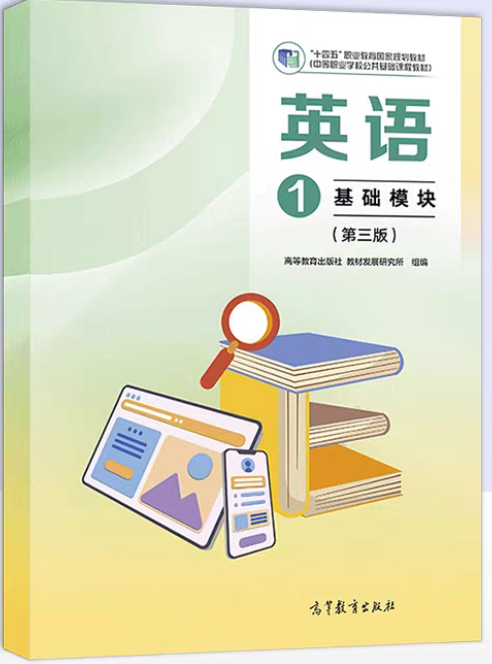
Unit 1 Personal and Family Life(B卷·能力提升)《英语 基础模块1》(高教版第三版)单元过关卷(原卷版+解析版)
2026-07-21
|
2份
|
37页
|
78人阅读
|
0人下载
内容正文:
编写说明:本套试卷紧扣《英语 基础模块1》(高教版第三版)教材,以教材单元为基准精准覆盖核心考点。
每个单元设置AB卷,A卷为基础巩固卷,侧重基础考点训练,帮助学生扎实掌握知识要点;B卷为能力提升卷,注重知识整合与全面检测,引导学生构建知识网络。全书设计4份综合测试卷,模拟实战情境,聚焦解题能力突破,全面提升应试能力与知识应用水平。
《英语 基础模块1》(高教版第三版)《单元过关卷》
Unit 1 Personal and Family Life
B卷·能力提升
考试时间:120分钟 满分:150分
班级_____姓名_____学号_____成绩_____
第一部分:单项选择题(共25小题;每小题1分,满分25分)
从A、B、C、D四个选项中,选出可以填入空白处的最佳选项。
1.At the welcome meeting, every student should ______ himself or herself clearly.
A. repair B. hide
C. introduce D. borrow
【答案】C
【解析】introduce oneself表示“介绍自己”,符合迎新会议语境。故选C。
2.My cousin is a ______. She serves passengers on the plane with a warm smile.
A. ticket B. flight attendant
C. department D. festival
【答案】B
【解析】flight attendant表示“空乘人员”,与plane和passengers相符。故选B。
3.The young worker sends food and parcels around the city. He is a ______.
A. doctor B. manager
C. teacher D. delivery person
【答案】D
【解析】delivery person指递送员,与sends food and parcels语境一致。故选D。
4.My grandmother lives ______, so we can visit her after school.
A. nearby B. loudly
C. early D. again
【答案】A
【解析】nearby表示“在附近”,与visit her after school构成因果关系。故选A。
5.The name Ming ______ brightness, so Xu Ming likes his given name very much.
A. visits B. means
C. cooks D. jogs
【答案】B
【解析】mean表示“意思是”,用于说明名字含义。故选B。
6.The parents are strict ______ their son because they want him to form good habits.
A. for B. of
C. with D. by
【答案】C
【解析】be strict with sb.表示“对某人严格”,son指人。故选C。
7.The old man lives ______, but his children call him every evening.
A. together B. outside
C. already D. alone
【答案】D
【解析】alone表示“独自”,与children call him形成语义补充。故选D。
8.My sister made a ______ card for Grandpa's birthday instead of buying one.
A. handmade B. formal
C. vocational D. common
【答案】A
【解析】handmade表示“手工制作的”,与instead of buying one形成对比。故选A。
9.—______ is your family name?
—It is Luo.
A. When B. Where
C. What D. Why
【答案】C
【解析】询问姓氏用What is your family name?故选C。
10.Tengwang Pavilion ______ many visitors because it is famous in Jiangxi.
A. attract B. attracts
C. attracting D. attracted
【答案】B
【解析】一般事实用一般现在时,主语为第三人称单数,谓语用attracts。故选B。
11.My parents ______ jogging every morning to keep energetic.
A. go B. goes
C. went D. going
【答案】A
【解析】主语My parents为复数,一般现在时谓语用go。故选A。
12.There ______ two family photos and a handmade card on the desk.
A. is B. was
C. are D. be
【答案】C
【解析】there be结构中two family photos为复数,应用are。故选C。
13.The girl ______ is speaking English at the front desk is our new classmate.
A. which B. who
C. where D. when
【答案】B
【解析】先行词girl指人,定语从句关系词用who。故选B。
14.Could you tell me ______ you usually visit your grandparents?
A. how often B. whose
C. which D. what
【答案】A
【解析】答句预期为频率,how often用于询问频率。故选A。
15.The family poster ______ by Class One yesterday afternoon.
A. makes B. is made
C. will make D. was made
【答案】D
【解析】poster与make为被动关系,yesterday afternoon提示一般过去时。故选D。
16.______ carefully the boy listened when his grandmother told family stories!
A. How a B. What
C. What a D. How
【答案】D
【解析】carefully为副词,感叹句结构为How+副词+主语+谓语。故选D。
17.______ warm family dinner we had near the Ganjiang River!
A. How B. What
C. What a D. How a
【答案】C
【解析】dinner此处为一次晚餐,可数单数,感叹句用What a warm family dinner。故选C。
18.My teacher asks us ______ our parents politely before introducing our own ideas.
A. greet B. to greet
C. greeting D. greeted
【答案】B
【解析】ask sb. to do sth.表示“要求某人做某事”。故选B。
19.It is important ______ students to learn how to introduce people politely.
A. with B. at
C. of D. for
【答案】D
【解析】It is important for sb. to do sth.表示“对某人来说做某事很重要”。故选D。
20.My brother is ______ than me, but I am more careful about family duties.
A. tall B. taller
C. tallest D. the tallest
【答案】B
【解析】than提示比较级,taller符合结构。故选B。
21.This is the first name card ______ I made for the school introduction wall.
A. that B. who
C. where D. when
【答案】A
【解析】先行词name card指物且有序数词first修饰,关系代词用that更合适。故选A。
22.Not only my parents but also my sister ______ interested in the family tree.
A. are B. am
C. is D. be
【答案】C
【解析】not only...but also连接主语时遵循就近原则,my sister为单数,用is。故选C。
23.So clearly ______ that everyone knew his family story at once.
A. did he speak B. he spoke
C. does he speak D. he speaks
【答案】A
【解析】So+副词位于句首可引起部分倒装,且语境为过去,did he speak正确。故选A。
24.The man ______ a red jacket in the photo is my uncle, a brave firefighter.
A. wear B. wears
C. wore D. wearing
【答案】D
【解析】wearing a red jacket为现在分词短语作后置定语,修饰the man。故选D。
25.—Could you tell me something about your family?
—______
A. Sure. My family is small but warm. B. No, I am not a doctor.
C. It is eight o'clock. D. The book is on the desk.
【答案】A
【解析】对询问家庭情况的请求,Sure后介绍家庭最自然。故选A。
第二部分:完形填空(共20小题;每小题1.5分,满分30分)
阅读下面短文,从短文后各题所给的A、B、C、D四个选项中,选出可以填入空白处的最佳选项。
Before the class family show, Wu Qian thought her life was too ordinary to share with others.
Her father was ____26____ technician in a bus company, and her mother worked as a nurse. They were busy, so Wu Qian often stayed ____27____ with her little brother after school. She had to cook rice, check his homework, and wait for her parents. At first, she felt tired ____28____ she wanted more free time. One evening, her brother said, “Sister, you are like a small ____29____ of our home.” Wu Qian laughed, but she began to think about the word.
The next day, the teacher asked each student to introduce one family member and one family habit. Many classmates talked about trips and birthday parties. Wu Qian felt ____30____ and nearly gave up. Then she remembered how her father repaired buses carefully and how her mother treated patients kindly. She decided to ____31____ their stories with the class. She made a poster with three photos: Father in his work clothes, Mother smiling at the hospital gate, and her brother holding a ____32____ card for her.
During the show, Wu Qian spoke ____33____. She said her parents taught her responsibility through daily actions, not long speeches. She also explained that taking care of her brother helped her become patient. Her classmates listened quietly and then clapped warmly. The teacher said, “A common family can still give uncommon ____34____.” Wu Qian understood the meaning. She did not need a big event to feel proud. ____35____ she looked carefully, she could find love in ordinary days. From then on, she planned family time better, talked with her parents more often, and treated every small duty as a chance to ____36____. She knew family love was not loud, ____37____ it was always there. It made her heart ____38____ when she met difficulties. Her story became the most popular one ____39____ it was true and warm. In the end, Wu Qian wrote one sentence under her poster: “My family helps me become a better ____40____.” Later, she kept that poster near her desk ____41____ she could see it every morning. It reminded her to ____42____ her parents' hard work and to help without being asked. When her brother made mistakes, she tried to speak ____43____ instead of shouting. She also learned that each family ____44____ has a role to play. Those small changes gave her real ____45____.
26.A. an B. a C. the D. /
27.A. alone B. nearby C. outside D. early
28.A. unless B. though C. because D. until
29.A. manager B. visitor C. driver D. doctor
30.A. confident B. nervous C. energetic D. formal
31.A. hide B. forget C. copy D. share
32.A. handmade B. vocational C. common D. strict
33.A. suddenly B. carelessly C. clearly D. angrily
34.A. markets B. tickets C. names D. lessons
35.A. Before B. If C. Although D. Until
36.A. grow B. sleep C. wait D. arrive
37.A. or B. but C. so D. for
38.A. small B. heavy C. bright D. empty
39.A. after B. unless C. when D. because
40.A. student B. visitor C. speaker D. member
41.A. if B. but C. so D. because
42.A. change B. respect C. borrow D. count
43.A. politely B. slowly C. badly D. loudly
44.A. photo B. rule C. member D. festival
45.A. trouble B. weather C. noise D. confidence
【答案】26.B 27.A 28.C 29.A 30.B 31.D 32.A 33.C 34.D 35.B 36.A 37.B 38.C 39.D 40.D 41.C 42.B 43.A 44.C 45.D
【导语】本文是一篇记叙文,讲述学生从家庭照片、日常责任或课堂展示中理解亲情、责任与尊重的意义,传递珍惜家庭和主动成长的价值。
【详解】
26.考查冠词。technician为可数名词单数,读音以辅音音素开头,用a。
27.考查副词。父母忙,所以她常和弟弟单独在家,alone符合语境。
28.考查连词。她累是因为想要更多自由时间,because表示原因。
29.考查名词。弟弟说她像家里的小经理,manager与照管家庭事务呼应。
30.考查形容词。看到别人讲旅行和生日,她感到紧张,nervous符合语境。
31.考查动词。下文她向全班讲父母故事,share符合。
32.考查形容词。弟弟拿着给她的手工卡片,handmade符合。
33.考查副词。她在展示中清楚表达,clearly符合语境。
34.考查名词。普通家庭也能给人不普通的启示,lessons符合。
35.考查连词。如果认真观察,就能发现爱,if引导条件。
36.考查动词。把小责任当作成长机会,grow符合主旨。
37.考查连词。爱不张扬但一直存在,but表示转折。
38.考查形容词。家庭爱让她遇到困难时内心明亮,bright符合正向语境。
39.考查连词。故事受欢迎是因为真实温暖,because表原因。
40.考查名词。成为更好的家庭成员,member符合全文主题。
41.考查连词。把海报放桌边以便每天看到,so表示目的。
42.考查动词。尊重父母辛劳,respect符合家庭价值。
43.考查副词。不喊叫而礼貌说话,politely符合。
44.考查名词。每位家庭成员都有角色,member符合。
45.考查名词。小改变带来真正自信,confidence符合结尾升华。
第三部分:阅读理解(共25小题;每小题2分,满分50分)
阅读下列短文,从每题所给的A、B、C、D四个选项中,选出最佳选项。
A
A community center in Nanchang is looking for student volunteers for the “Warm Family Visit” project. The project will run from 9:00 a.m. to 4:00 p.m. on Saturday. It is designed for elderly people who live alone or whose children work far away. Volunteers will work in groups of four. Each group will visit two families near the center and spend about one hour with each family.
Before the visits, volunteers must attend a short training meeting on Friday afternoon. The trainer will teach them how to greet elderly people politely, how to introduce themselves, and how to listen without asking private questions. Volunteers should wear clean school uniforms and bring notebooks. They do not need to bring gifts, because the center will prepare fruit and health cards for every family.
During each visit, volunteers may read newspapers, help water flowers, check whether lights are safe, or simply talk about daily life. They should not give medical advice or move heavy furniture. After the visits, every group needs to write a short report about what they did and what they learned. Students who want to join should send their names to Mr. Deng before Thursday evening. His phone number is 0791-88221908.
The center reminds volunteers that listening is more important than doing many tasks. Some elderly people may only want to talk about family photos, old jobs, or daily meals. Volunteers should answer with patience and respect. If they meet a problem they cannot solve, they should report it to the group leader at once.
46.Who will the volunteers mainly visit?
A. New workers. B. Young tourists.
C. Primary pupils. D. Elderly people living alone or far from children.
47.When is the training meeting?
A. On Thursday evening. B. On Friday afternoon.
C. On Saturday morning. D. On Sunday afternoon.
48.What should volunteers bring?
A. Notebooks. B. Heavy furniture.
C. Medicine. D. Birthday cakes.
49.What must volunteers avoid doing?
A. Reading newspapers. B. Watering flowers.
C. Giving medical advice. D. Talking about daily life.
50.How can students sign up?
A. By visiting two families first. B. By buying health cards.
C. By calling every elderly person. D. By sending names to Mr. Deng.
【答案】46.D 47.B 48.A 49.C 50.D
【导语】本文是一篇志愿服务通知,介绍南昌社区家庭探访项目的对象、培训、活动要求和报名方式。
【详解】
46.细节理解题。第一段说明对象是独居或子女在远方工作的老人;A、B、C对象错误。故选D。
47.细节理解题。第二段写培训在Friday afternoon;其他时间均不符。故选B。
48.细节理解题。第二段要求带notebooks;B、C、D不是要求物品。故选A。
49.细节理解题。第三段明确不应给医疗建议;其他三项是可做事项。故选C。
50.细节理解题。最后说明把姓名发给Deng老师报名;其他方式无依据。故选D。
B
Zhao Min used to think her father was too serious. He was a bus technician and always checked his tools twice before leaving home. When Zhao Min forgot to turn off the lights, he reminded her at once. When she put her schoolbag on the sofa, he asked her to place it neatly. Zhao Min felt that her father cared more about rules than feelings.
One rainy morning, Zhao Min’s school bus had a problem on the road. The driver called the bus company, and Zhao Min saw her father arrive with another technician. He did not talk much. He put on his raincoat, checked the engine, and explained the situation to the driver calmly. The students waited inside the bus. After twenty minutes, the bus was safe to move again. Before leaving, her father looked at Zhao Min and said, “Small checks keep people safe.”
That sentence stayed in Zhao Min’s mind. She began to understand why her father was strict about small things. At home, his reminders were not meant to make her unhappy. They were his way of teaching care and responsibility. That evening, Zhao Min turned off the lights before dinner and put her bag on the shelf. Her father smiled but said nothing. Zhao Min smiled too, because she finally understood his quiet love.
A week later, Zhao Min used the story in her English speech. She introduced her father not only as a technician, but also as a careful family member. Her classmates understood the word strict in a new way. Zhao Min learned that quiet actions can sometimes express love more strongly than sweet words.
51.What job does Zhao Min's father do?
A. A bus technician. B. A flight attendant.
C. A sales manager. D. A school doctor.
52.Why did Zhao Min feel unhappy before?
A. Her father never came home. B. Her father disliked buses.
C. Her father often reminded her of small rules. D. Her father asked her to leave school.
53.What happened to Zhao Min's school bus?
A. It was sold. B. It had a problem on a rainy morning.
C. It arrived too early. D. It lost all the students.
54.What did the father mean by “Small checks keep people safe”?
A. Raincoats are always useful. B. Students should repair buses.
C. Drivers do not need help. D. Careful habits can prevent trouble.
55.How did Zhao Min change at the end?
A. She understood her father's love. B. She stopped taking the bus.
C. She became a technician at once. D. She refused all family rules.
【答案】51.A 52.C 53.B 54.D 55.A
【导语】本文是一篇家庭故事,讲述赵敏通过一次校车故障理解父亲严格背后的责任与关爱。
【详解】
51.细节理解题。第一段说明父亲是bus technician;其余职业不符。故选A。
52.细节理解题。第一段列举父亲总提醒小规则,导致她不开心;其他选项无依据。故选C。
53.细节理解题。第二段写雨天校车在路上出问题;其余选项错误。故选B。
54.推理判断题。父亲通过检查保障安全,句子强调细心习惯能避免麻烦;A、B、C偏离含义。故选D。
55.细节理解题。结尾说她理解了父亲安静的爱;B、C、D都不符合变化。故选A。
C
In Class Two, students were asked to make a wall of family names. Each student wrote his or her full name on a card and added one sentence about the meaning of the name. Most students finished quickly, but a boy named Deng Liang sat quietly. He did not know the meaning of Liang and felt his card would be boring.
After school, Deng Liang called his grandmother. Grandma laughed and told him that Liang meant brightness in their family story. When Deng Liang was born, his parents hoped he would bring light and kindness to people around him. Grandma also told him that his great-grandfather had used the same character in a poem. Deng Liang listened carefully and wrote down the story.
The next day, Deng Liang put his card in the center of the wall. He wrote, “My given name Liang means brightness. My family hopes I can be kind and useful.” His classmates stopped to read it. Some asked him about the poem, and others began to call their own grandparents for name stories. The wall became more than a display. It became a bridge between students and their families. Deng Liang learned that a name may look short, but it can carry a long memory.
The teacher later asked the class to compare different name stories. Some names showed parents' wishes for health, while others came from places, seasons, or family traditions. Students found that asking about a name was a natural way to start a warm talk. It also helped them introduce themselves with more confidence.
56.What did students need to write on the card?
A. A travel plan. B. A job report.
C. A full name and its meaning. D. A shopping list.
57.Who told Deng Liang the meaning of his name?
A. His teacher. B. His classmate.
C. His father only. D. His grandmother.
58.What does Liang mean in Deng Liang's family story?
A. Health. B. Brightness.
C. Silence. D. Strength.
59.What did other students do after reading Deng Liang's card?
A. Some called grandparents for name stories. B. They took the wall down.
C. They changed all their names. D. Some stopped doing homework.
60.What can we learn from the story?
A. Name cards are hard to make. B. Poems are only for old people.
C. Names can carry family memories. D. Students should write shorter cards.
【答案】56.C 57.D 58.B 59.A 60.C
【导语】本文是一篇人文类故事,讲述学生通过姓名含义了解家庭记忆并带动同学探寻姓名故事。
【详解】
56.细节理解题。第一段说明卡片需写全名和名字含义;A、B、D均不符合任务。故选C。
57.细节理解题。第二段说明祖母告诉他名字含义;其他人物不符。故选D。
58.细节理解题。第二段写Liang meant brightness;其余含义未提及。故选B。
59.细节理解题。第三段说一些同学给祖父母打电话询问姓名故事;其他选项无依据。故选A。
60.主旨推断题。故事强调短短名字承载长久家庭记忆;A、B、D不是核心启示。故选C。
D
A family tree is a simple chart, but it can help students learn many things. It shows the relationships among family members, such as grandparents, parents, brothers, sisters, uncles, aunts, and cousins. When students draw a family tree, they practise words about family and learn to introduce people in a clear order. They may begin with grandparents at the top and then add younger generations below.
Making a family tree also improves communication. Students often need to ask parents or grandparents for names, jobs, birthdays, and old photos. During the talk, they may hear stories that are not written in any book. For example, a grandmother may explain why a family moved to another city, or an uncle may describe his first job. These stories help young people understand how family members support one another.
However, students should be polite when collecting information. Some family members may not want to share private details. Students can ask simple questions and accept “I prefer not to say” as an answer. They should also check spellings of names carefully. A good family tree is not the biggest one. It is the one that shows relationships clearly and records family memories respectfully.
Teachers can also use family trees for speaking practice. One student may introduce a cousin's hobby, while another may describe a grandparent's job. The activity encourages students to use simple present tense correctly. More importantly, it reminds them that every name on the chart stands for a real person and a real story.
61.What does a family tree show?
A. The price of old photos. B. Relationships among family members.
C. The rules of a company. D. The weather of a city.
62.Where may students put grandparents on a family tree?
A. At the top. B. Outside the chart.
C. Under cousins. D. Beside school names.
63.Why does making a family tree improve communication?
A. Students must buy many books. B. Students never need to ask questions.
C. Students can talk with family members for information. D. Students only use computers.
64.What does the underlined word “private” mean?
A. Easy to spell. B. Known by everyone.
C. Personal and not for everyone. D. Useful for a poster.
65.What is a good family tree like according to the passage?
A. It has the most expensive photos. B. It is clear and respectful.
C. It includes every neighbor. D. It hides all relationships.
【答案】61.B 62.A 63.C 64.C 65.B
【导语】本文是一篇说明文,介绍家庭树的作用、制作过程中的交流价值以及收集信息时的礼貌原则。
【详解】
61.细节理解题。第一段说明family tree展示家庭成员关系;其他选项无关。故选B。
62.细节理解题。第一段提到祖父母可放在顶部;其他位置不符合说明。故选A。
63.细节理解题。第二段说明学生需向家人询问信息,因此促进交流;A、B、D与原文不符。故选C。
64.词义猜测题。后文说可接受“不想说”,说明private指个人隐私的;其他释义不合语境。故选C。
65.细节理解题。最后说明好的家庭树关系清楚、记录尊重;A、C、D均错误。故选B。
E
Introducing a person sounds easy, but doing it well needs care. Some students only say a name and a job. This is correct, but it may not help listeners know the person. A better introduction gives basic facts and one or two meaningful details. For example, “This is my aunt. She is a nurse. She is patient with children and often teaches me how to stay calm.” Such sentences are simple but warm.
A good introduction also depends on the situation. At a formal meeting, speakers should use full names, polite titles, and clear voices. With close friends, the introduction can be more relaxed. When introducing an older family member, it is polite to mention something respectful, such as hard work, kindness, or a useful skill. The speaker should not share jokes or private information that may make the person uncomfortable.
Students can prepare introductions by using three questions: Who is the person? What does he or she do? Why is this person important to me? These questions keep the introduction organized. They also help students move from facts to feelings. When we introduce someone thoughtfully, we are not only practising English. We are also showing how we see and value people around us.
Before speaking, students may write several key words on a card. The card should not be a full script, because reading every sentence may sound unnatural. Key words help speakers remember the order and keep eye contact with listeners. With practice, students can make introductions that are accurate, polite, and personal.
66.What problem do some students have when introducing a person?
A. They speak too many languages. B. They never say the name.
C. They only give a name and a job. D. They ask too many private questions.
67.What should a better introduction include?
A. Only funny jokes. B. Basic facts and meaningful details.
C. Long difficult words. D. Private family problems.
68.What should speakers use at a formal meeting?
A. Full names and polite titles. B. Nicknames only.
C. Loud jokes. D. Secret stories.
69.Which question helps prepare an organized introduction?
A. How much money does the person have? B. Where can I buy a gift?
C. Why is this person important to me? D. Which game is the most popular?
70.What is the main idea of the passage?
A. Introductions should be as long as possible. B. Jobs are the only useful information.
C. Formal meetings are uncomfortable. D. Thoughtful introductions show facts and respect.
【答案】66.C 67.B 68.A 69.C 70.D
【导语】本文是一篇观点建议类短文,说明如何根据场合有礼貌、有细节地介绍他人。
【详解】
66.细节理解题。第一段指出一些学生只说姓名和职业;A、B、D均不符合问题。故选C。
67.细节理解题。第一段说明更好的介绍包含基本事实和有意义细节;其他内容不恰当。故选B。
68.细节理解题。第二段说明正式会议使用全名、礼貌称谓和清楚声音;B、C、D不符合正式场合。故选A。
69.细节理解题。第三段列出三个准备问题,其中包括Why is this person important to me?;其他问题无关。故选C。
70.主旨大意题。全文强调用事实、细节和尊重来介绍他人;A、B、C都片面。故选D。
第四部分:情景对话(共10小题;每小题2分,满分20分)
根据对话内容,从方框内选出能填入空白处的最佳选项。
A
At an English corner
A: Hi, I'm Chen Jie. ____71____
B: My name is Anna Green. Nice to meet you.
A: Nice to meet you, too. ____72____
B: Green is my family name.
A: Thanks. In Chinese names, the family name usually comes first.
B: Really? ____73____
A: My family name is Chen, and Jie is my given name.
B: That's clear. ____74____
A: He is a firefighter. He is brave and energetic.
B: Sounds great. ____75____
A: Sure. I can show it to you after the activity.
A. Could you show me your family photo?
B. What is your father's job?
C. May I have your name?
D. Which one is your family name?
E. What about your name?
【答案】71.C 72.D 73.E 74.B 75.A
【导语】本文是一段英语角对话,围绕姓名顺序、家庭成员职业和家庭照片展开交流。
【详解】
71.答语为姓名,说明此处询问姓名,C项符合。故填C。
72.答语说明Green是姓,D项询问哪一部分是姓。故填D。
73.前文介绍中文姓在前,答语介绍自己的姓名结构,E项符合。故填E。
74.答语说明父亲职业,B项询问职业。故填B。
75.答语表示可展示照片,A项请求看家庭照片。故填A。
B
Two classmates are preparing a family poster
A: We need to finish the family value poster today.
B: Yes. ____76____
A: How about “sharing housework”? It is close to our life.
B: Good idea. ____77____
A: We can draw a dinner table and family members washing dishes together.
B: Nice. What sentence should we write under it?
A: ____78____
B: I like it. It is short and clear.
A: Could you bring some family photos tomorrow?
B: ____79____ I have two photos about cooking with my grandparents.
A: Great. ____80____
B: OK. Let's work together.
A. Everyone can do a small part at home.
B. What theme shall we choose?
C. I will bring them.
D. Then I will write the title.
E. What can we draw?
【答案】76.B 77.E 78.A 79.C 80.D
【导语】本文是一段制作家庭价值海报的对话,体现商量主题、分工合作和表达家庭责任。
【详解】
76.上文说要完成海报,下文提出主题,B项询问选择什么主题。故填B。
77.答语说明可以画什么,E项询问绘画内容。故填E。
78.上文问海报下写什么句子,A项是合适标语。故填A。
79.上文请求带照片,下文补充照片内容,C项表示会带来。故填C。
80.前文确定对方带照片,此处自己负责写标题,D项体现分工。故填D。
第五部分:书面表达(满分25分)
假如你是王琳,你校正在开展“Introduce a Family Member”英文展示活动。请你根据以下要点写一篇英语短文:1. 介绍一位家庭成员的姓名或称呼、职业;2. 描述他/她的性格或日常习惯;3. 说明他/她对你的影响。词数100词左右。
________________________________________________________________________________
________________________________________________________________________________
________________________________________________________________________________
________________________________________________________________________________
________________________________________________________________________________
【参考范文】
Introduce a Family Member
I would like to introduce my aunt, Wang Jing. She is a flight attendant. She is friendly, patient and careful at work. Every time she meets passengers, she greets them with a warm smile. At home, she often tells me that polite words can make people feel comfortable. She is also energetic. After work, she goes jogging and visits my grandparents on weekends. I learn a lot from her. She teaches me to be polite to others and serious about my future job. I hope I can become a responsible person like her.
【词汇积累】would like to do想要做;flight attendant空乘人员;with a warm smile带着温暖的微笑;be serious about对……认真;responsible有责任心的。
【句式拓展】Every time she..., she...可用于描述习惯性行为;She teaches me to...可用于说明影响;I hope I can...可用于表达个人愿望。
【点睛】范文围绕人物身份、性格习惯和个人影响展开,内容完整,使用一般现在时描述日常特点,表达自然。
原创精品资源学科网独家享有版权,侵权必究!
学科网(北京)股份有限公司
$
编写说明:本套试卷紧扣《英语 基础模块1》(高教版第三版)教材,以教材单元为基准精准覆盖核心考点。
每个单元设置AB卷,A卷为基础巩固卷,侧重基础考点训练,帮助学生扎实掌握知识要点;B卷为能力提升卷,注重知识整合与全面检测,引导学生构建知识网络。全书设计4份综合测试卷,模拟实战情境,聚焦解题能力突破,全面提升应试能力与知识应用水平。
《英语 基础模块1》(高教版第三版)《单元过关卷》
Unit 1 Personal and Family Life
B卷·能力提升
考试时间:120分钟 满分:150分
班级_____姓名_____学号_____成绩_____
第一部分:单项选择题(共25小题;每小题1分,满分25分)
从A、B、C、D四个选项中,选出可以填入空白处的最佳选项。
1.At the welcome meeting, every student should ______ himself or herself clearly.
A. repair B. hide
C. introduce D. borrow
2.My cousin is a ______. She serves passengers on the plane with a warm smile.
A. ticket B. flight attendant
C. department D. festival
3.The young worker sends food and parcels around the city. He is a ______.
A. doctor B. manager
C. teacher D. delivery person
4.My grandmother lives ______, so we can visit her after school.
A. nearby B. loudly
C. early D. again
5.The name Ming ______ brightness, so Xu Ming likes his given name very much.
A. visits B. means
C. cooks D. jogs
6.The parents are strict ______ their son because they want him to form good habits.
A. for B. of
C. with D. by
7.The old man lives ______, but his children call him every evening.
A. together B. outside
C. already D. alone
8.My sister made a ______ card for Grandpa's birthday instead of buying one.
A. handmade B. formal
C. vocational D. common
9.—______ is your family name?
—It is Luo.
A. When B. Where
C. What D. Why
10.Tengwang Pavilion ______ many visitors because it is famous in Jiangxi.
A. attract B. attracts
C. attracting D. attracted
11.My parents ______ jogging every morning to keep energetic.
A. go B. goes
C. went D. going
12.There ______ two family photos and a handmade card on the desk.
A. is B. was
C. are D. be
13.The girl ______ is speaking English at the front desk is our new classmate.
A. which B. who
C. where D. when
14.Could you tell me ______ you usually visit your grandparents?
A. how often B. whose
C. which D. what
15.The family poster ______ by Class One yesterday afternoon.
A. makes B. is made
C. will make D. was made
16.______ carefully the boy listened when his grandmother told family stories!
A. How a B. What
C. What a D. How
17.______ warm family dinner we had near the Ganjiang River!
A. How B. What
C. What a D. How a
18.My teacher asks us ______ our parents politely before introducing our own ideas.
A. greet B. to greet
C. greeting D. greeted
19.It is important ______ students to learn how to introduce people politely.
A. with B. at
C. of D. for
20.My brother is ______ than me, but I am more careful about family duties.
A. tall B. taller
C. tallest D. the tallest
21.This is the first name card ______ I made for the school introduction wall.
A. that B. who
C. where D. when
22.Not only my parents but also my sister ______ interested in the family tree.
A. are B. am
C. is D. be
23.So clearly ______ that everyone knew his family story at once.
A. did he speak B. he spoke
C. does he speak D. he speaks
24.The man ______ a red jacket in the photo is my uncle, a brave firefighter.
A. wear B. wears
C. wore D. wearing
25.—Could you tell me something about your family?
—______
A. Sure. My family is small but warm. B. No, I am not a doctor.
C. It is eight o'clock. D. The book is on the desk.
第二部分:完形填空(共20小题;每小题1.5分,满分30分)
阅读下面短文,从短文后各题所给的A、B、C、D四个选项中,选出可以填入空白处的最佳选项。
Before the class family show, Wu Qian thought her life was too ordinary to share with others.
Her father was ____26____ technician in a bus company, and her mother worked as a nurse. They were busy, so Wu Qian often stayed ____27____ with her little brother after school. She had to cook rice, check his homework, and wait for her parents. At first, she felt tired ____28____ she wanted more free time. One evening, her brother said, “Sister, you are like a small ____29____ of our home.” Wu Qian laughed, but she began to think about the word.
The next day, the teacher asked each student to introduce one family member and one family habit. Many classmates talked about trips and birthday parties. Wu Qian felt ____30____ and nearly gave up. Then she remembered how her father repaired buses carefully and how her mother treated patients kindly. She decided to ____31____ their stories with the class. She made a poster with three photos: Father in his work clothes, Mother smiling at the hospital gate, and her brother holding a ____32____ card for her.
During the show, Wu Qian spoke ____33____. She said her parents taught her responsibility through daily actions, not long speeches. She also explained that taking care of her brother helped her become patient. Her classmates listened quietly and then clapped warmly. The teacher said, “A common family can still give uncommon ____34____.” Wu Qian understood the meaning. She did not need a big event to feel proud. ____35____ she looked carefully, she could find love in ordinary days. From then on, she planned family time better, talked with her parents more often, and treated every small duty as a chance to ____36____. She knew family love was not loud, ____37____ it was always there. It made her heart ____38____ when she met difficulties. Her story became the most popular one ____39____ it was true and warm. In the end, Wu Qian wrote one sentence under her poster: “My family helps me become a better ____40____.” Later, she kept that poster near her desk ____41____ she could see it every morning. It reminded her to ____42____ her parents' hard work and to help without being asked. When her brother made mistakes, she tried to speak ____43____ instead of shouting. She also learned that each family ____44____ has a role to play. Those small changes gave her real ____45____.
26.A. an B. a C. the D. /
27.A. alone B. nearby C. outside D. early
28.A. unless B. though C. because D. until
29.A. manager B. visitor C. driver D. doctor
30.A. confident B. nervous C. energetic D. formal
31.A. hide B. forget C. copy D. share
32.A. handmade B. vocational C. common D. strict
33.A. suddenly B. carelessly C. clearly D. angrily
34.A. markets B. tickets C. names D. lessons
35.A. Before B. If C. Although D. Until
36.A. grow B. sleep C. wait D. arrive
37.A. or B. but C. so D. for
38.A. small B. heavy C. bright D. empty
39.A. after B. unless C. when D. because
40.A. student B. visitor C. speaker D. member
41.A. if B. but C. so D. because
42.A. change B. respect C. borrow D. count
43.A. politely B. slowly C. badly D. loudly
44.A. photo B. rule C. member D. festival
45.A. trouble B. weather C. noise D. confidence
第三部分:阅读理解(共25小题;每小题2分,满分50分)
阅读下列短文,从每题所给的A、B、C、D四个选项中,选出最佳选项。
A
A community center in Nanchang is looking for student volunteers for the “Warm Family Visit” project. The project will run from 9:00 a.m. to 4:00 p.m. on Saturday. It is designed for elderly people who live alone or whose children work far away. Volunteers will work in groups of four. Each group will visit two families near the center and spend about one hour with each family.
Before the visits, volunteers must attend a short training meeting on Friday afternoon. The trainer will teach them how to greet elderly people politely, how to introduce themselves, and how to listen without asking private questions. Volunteers should wear clean school uniforms and bring notebooks. They do not need to bring gifts, because the center will prepare fruit and health cards for every family.
During each visit, volunteers may read newspapers, help water flowers, check whether lights are safe, or simply talk about daily life. They should not give medical advice or move heavy furniture. After the visits, every group needs to write a short report about what they did and what they learned. Students who want to join should send their names to Mr. Deng before Thursday evening. His phone number is 0791-88221908.
The center reminds volunteers that listening is more important than doing many tasks. Some elderly people may only want to talk about family photos, old jobs, or daily meals. Volunteers should answer with patience and respect. If they meet a problem they cannot solve, they should report it to the group leader at once.
46.Who will the volunteers mainly visit?
A. New workers. B. Young tourists.
C. Primary pupils. D. Elderly people living alone or far from children.
47.When is the training meeting?
A. On Thursday evening. B. On Friday afternoon.
C. On Saturday morning. D. On Sunday afternoon.
48.What should volunteers bring?
A. Notebooks. B. Heavy furniture.
C. Medicine. D. Birthday cakes.
49.What must volunteers avoid doing?
A. Reading newspapers. B. Watering flowers.
C. Giving medical advice. D. Talking about daily life.
50.How can students sign up?
A. By visiting two families first. B. By buying health cards.
C. By calling every elderly person. D. By sending names to Mr. Deng.
B
Zhao Min used to think her father was too serious. He was a bus technician and always checked his tools twice before leaving home. When Zhao Min forgot to turn off the lights, he reminded her at once. When she put her schoolbag on the sofa, he asked her to place it neatly. Zhao Min felt that her father cared more about rules than feelings.
One rainy morning, Zhao Min’s school bus had a problem on the road. The driver called the bus company, and Zhao Min saw her father arrive with another technician. He did not talk much. He put on his raincoat, checked the engine, and explained the situation to the driver calmly. The students waited inside the bus. After twenty minutes, the bus was safe to move again. Before leaving, her father looked at Zhao Min and said, “Small checks keep people safe.”
That sentence stayed in Zhao Min’s mind. She began to understand why her father was strict about small things. At home, his reminders were not meant to make her unhappy. They were his way of teaching care and responsibility. That evening, Zhao Min turned off the lights before dinner and put her bag on the shelf. Her father smiled but said nothing. Zhao Min smiled too, because she finally understood his quiet love.
A week later, Zhao Min used the story in her English speech. She introduced her father not only as a technician, but also as a careful family member. Her classmates understood the word strict in a new way. Zhao Min learned that quiet actions can sometimes express love more strongly than sweet words.
51.What job does Zhao Min's father do?
A. A bus technician. B. A flight attendant.
C. A sales manager. D. A school doctor.
52.Why did Zhao Min feel unhappy before?
A. Her father never came home. B. Her father disliked buses.
C. Her father often reminded her of small rules. D. Her father asked her to leave school.
53.What happened to Zhao Min's school bus?
A. It was sold. B. It had a problem on a rainy morning.
C. It arrived too early. D. It lost all the students.
54.What did the father mean by “Small checks keep people safe”?
A. Raincoats are always useful. B. Students should repair buses.
C. Drivers do not need help. D. Careful habits can prevent trouble.
55.How did Zhao Min change at the end?
A. She understood her father's love. B. She stopped taking the bus.
C. She became a technician at once. D. She refused all family rules.
C
In Class Two, students were asked to make a wall of family names. Each student wrote his or her full name on a card and added one sentence about the meaning of the name. Most students finished quickly, but a boy named Deng Liang sat quietly. He did not know the meaning of Liang and felt his card would be boring.
After school, Deng Liang called his grandmother. Grandma laughed and told him that Liang meant brightness in their family story. When Deng Liang was born, his parents hoped he would bring light and kindness to people around him. Grandma also told him that his great-grandfather had used the same character in a poem. Deng Liang listened carefully and wrote down the story.
The next day, Deng Liang put his card in the center of the wall. He wrote, “My given name Liang means brightness. My family hopes I can be kind and useful.” His classmates stopped to read it. Some asked him about the poem, and others began to call their own grandparents for name stories. The wall became more than a display. It became a bridge between students and their families. Deng Liang learned that a name may look short, but it can carry a long memory.
The teacher later asked the class to compare different name stories. Some names showed parents' wishes for health, while others came from places, seasons, or family traditions. Students found that asking about a name was a natural way to start a warm talk. It also helped them introduce themselves with more confidence.
56.What did students need to write on the card?
A. A travel plan. B. A job report.
C. A full name and its meaning. D. A shopping list.
57.Who told Deng Liang the meaning of his name?
A. His teacher. B. His classmate.
C. His father only. D. His grandmother.
58.What does Liang mean in Deng Liang's family story?
A. Health. B. Brightness.
C. Silence. D. Strength.
59.What did other students do after reading Deng Liang's card?
A. Some called grandparents for name stories. B. They took the wall down.
C. They changed all their names. D. Some stopped doing homework.
60.What can we learn from the story?
A. Name cards are hard to make. B. Poems are only for old people.
C. Names can carry family memories. D. Students should write shorter cards.
D
A family tree is a simple chart, but it can help students learn many things. It shows the relationships among family members, such as grandparents, parents, brothers, sisters, uncles, aunts, and cousins. When students draw a family tree, they practise words about family and learn to introduce people in a clear order. They may begin with grandparents at the top and then add younger generations below.
Making a family tree also improves communication. Students often need to ask parents or grandparents for names, jobs, birthdays, and old photos. During the talk, they may hear stories that are not written in any book. For example, a grandmother may explain why a family moved to another city, or an uncle may describe his first job. These stories help young people understand how family members support one another.
However, students should be polite when collecting information. Some family members may not want to share private details. Students can ask simple questions and accept “I prefer not to say” as an answer. They should also check spellings of names carefully. A good family tree is not the biggest one. It is the one that shows relationships clearly and records family memories respectfully.
Teachers can also use family trees for speaking practice. One student may introduce a cousin's hobby, while another may describe a grandparent's job. The activity encourages students to use simple present tense correctly. More importantly, it reminds them that every name on the chart stands for a real person and a real story.
61.What does a family tree show?
A. The price of old photos. B. Relationships among family members.
C. The rules of a company. D. The weather of a city.
62.Where may students put grandparents on a family tree?
A. At the top. B. Outside the chart.
C. Under cousins. D. Beside school names.
63.Why does making a family tree improve communication?
A. Students must buy many books. B. Students never need to ask questions.
C. Students can talk with family members for information. D. Students only use computers.
64.What does the underlined word “private” mean?
A. Easy to spell. B. Known by everyone.
C. Personal and not for everyone. D. Useful for a poster.
65.What is a good family tree like according to the passage?
A. It has the most expensive photos. B. It is clear and respectful.
C. It includes every neighbor. D. It hides all relationships.
E
Introducing a person sounds easy, but doing it well needs care. Some students only say a name and a job. This is correct, but it may not help listeners know the person. A better introduction gives basic facts and one or two meaningful details. For example, “This is my aunt. She is a nurse. She is patient with children and often teaches me how to stay calm.” Such sentences are simple but warm.
A good introduction also depends on the situation. At a formal meeting, speakers should use full names, polite titles, and clear voices. With close friends, the introduction can be more relaxed. When introducing an older family member, it is polite to mention something respectful, such as hard work, kindness, or a useful skill. The speaker should not share jokes or private information that may make the person uncomfortable.
Students can prepare introductions by using three questions: Who is the person? What does he or she do? Why is this person important to me? These questions keep the introduction organized. They also help students move from facts to feelings. When we introduce someone thoughtfully, we are not only practising English. We are also showing how we see and value people around us.
Before speaking, students may write several key words on a card. The card should not be a full script, because reading every sentence may sound unnatural. Key words help speakers remember the order and keep eye contact with listeners. With practice, students can make introductions that are accurate, polite, and personal.
66.What problem do some students have when introducing a person?
A. They speak too many languages. B. They never say the name.
C. They only give a name and a job. D. They ask too many private questions.
67.What should a better introduction include?
A. Only funny jokes. B. Basic facts and meaningful details.
C. Long difficult words. D. Private family problems.
68.What should speakers use at a formal meeting?
A. Full names and polite titles. B. Nicknames only.
C. Loud jokes. D. Secret stories.
69.Which question helps prepare an organized introduction?
A. How much money does the person have? B. Where can I buy a gift?
C. Why is this person important to me? D. Which game is the most popular?
70.What is the main idea of the passage?
A. Introductions should be as long as possible. B. Jobs are the only useful information.
C. Formal meetings are uncomfortable. D. Thoughtful introductions show facts and respect.
第四部分:情景对话(共10小题;每小题2分,满分20分)
根据对话内容,从方框内选出能填入空白处的最佳选项。
A
At an English corner
A: Hi, I'm Chen Jie. ____71____
B: My name is Anna Green. Nice to meet you.
A: Nice to meet you, too. ____72____
B: Green is my family name.
A: Thanks. In Chinese names, the family name usually comes first.
B: Really? ____73____
A: My family name is Chen, and Jie is my given name.
B: That's clear. ____74____
A: He is a firefighter. He is brave and energetic.
B: Sounds great. ____75____
A: Sure. I can show it to you after the activity.
A. Could you show me your family photo?
B. What is your father's job?
C. May I have your name?
D. Which one is your family name?
E. What about your name?
B
Two classmates are preparing a family poster
A: We need to finish the family value poster today.
B: Yes. ____76____
A: How about “sharing housework”? It is close to our life.
B: Good idea. ____77____
A: We can draw a dinner table and family members washing dishes together.
B: Nice. What sentence should we write under it?
A: ____78____
B: I like it. It is short and clear.
A: Could you bring some family photos tomorrow?
B: ____79____ I have two photos about cooking with my grandparents.
A: Great. ____80____
B: OK. Let's work together.
A. Everyone can do a small part at home.
B. What theme shall we choose?
C. I will bring them.
D. Then I will write the title.
E. What can we draw?
第五部分:书面表达(满分25分)
假如你是王琳,你校正在开展“Introduce a Family Member”英文展示活动。请你根据以下要点写一篇英语短文:1. 介绍一位家庭成员的姓名或称呼、职业;2. 描述他/她的性格或日常习惯;3. 说明他/她对你的影响。词数100词左右。
________________________________________________________________________________
________________________________________________________________________________
________________________________________________________________________________
________________________________________________________________________________
________________________________________________________________________________
原创精品资源学科网独家享有版权,侵权必究!
学科网(北京)股份有限公司
$
资源预览图

1

2

3
由于学科网是一个信息分享及获取的平台,不确保部分用户上传资料的 来源及知识产权归属。如您发现相关资料侵犯您的合法权益,请联系学科网,我们核实后将及时进行处理。