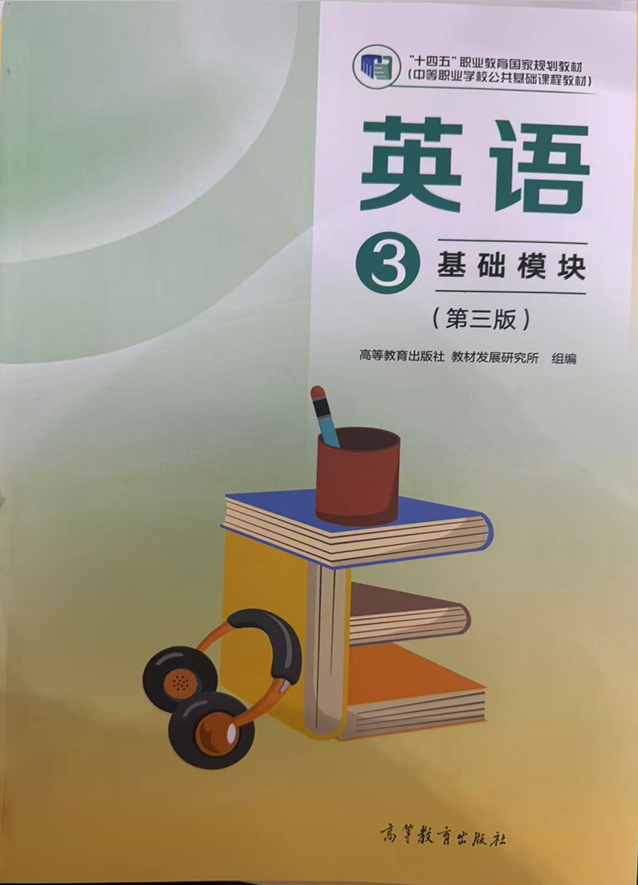
Unit3 Artificial Intelligence单元复习讲义-《英语 基础模块3》(高教版第三版)(原卷版+解析版)
2026-07-14
|
2份
|
14页
|
100人阅读
|
1人下载
精品
摘要:
该中职英语单元复习讲义围绕Unit 3 Artificial Intelligence,涵盖重点词汇、非谓语动词作定语语法、主题语篇拓展及学习自检,采用“学习版—辨析版—训练版—自检版”结构,搭建从基础识记到综合应用的递进式学习支架。
清单通过红色标记核心词汇、教材语境复现词义强化语言能力,语法部分“学习版精讲+提升练习”结合AI情境培养思维品质,自检清单助力学生自主核对学习效果。如词汇表标注必须掌握项并嵌入教材句子,语法练习设计机器人服务等真实场景,教师可据此精准巩固重点,学生能高效提升语言应用与自主学习能力。
内容正文:
《英语 基础模块3》(高教版第三版)单元复习讲义
Unit 3 Artificial Intelligence
班级__________ 姓名__________ 成绩__________
编写说明:本讲义围绕 Unit 3 的重点词汇、非谓语动词作定语和人工智能、智能服务与合理使用技术主题语篇进行复习提升,采用“学习版—辨析版—训练版—自检版”的结构,适合课堂巩固、阶段复习和课后练习使用。
一、词汇积累:先识记,再对折自测
重点标记规则:红色答案为必须掌握项;教材语境用于回到句子中复现词义,避免只背孤立中文。
(一)重点单词
序号
中文提示
英文答案
英文提示
中文答案
教材语境
1
申请;应用
__________
apply
__________
Students apply AI tools in learning.
2
改进
__________
improve
__________
AI can improve service quality.
3
交流
__________
communicate
__________
Robots can communicate with customers.
4
服务
__________
serve
__________
A robot serves food in a smart restaurant.
5
多亏
__________
thanks to
__________
Thanks to AI, work becomes faster.
6
依赖的
__________
dependent
__________
People should not be too dependent on AI.
7
风险
__________
risk
__________
Using AI without thinking may bring risks.
8
不断增加的
__________
increasing
__________
The increasing use of AI changes our life.
9
好处
__________
benefit
__________
AI brings benefits to many jobs.
10
导致
__________
cause
__________
Wrong information may cause problems.
11
人工智能
__________
artificial intelligence
__________
Artificial intelligence is changing restaurants.
12
机器人
__________
robot
__________
A robot working in the hall can guide visitors.
(二)重点短语
序号
中文提示
英文答案
英文提示
中文答案
教材语境
1
多亏
__________
thanks to
__________
Thanks to AI, customers can get quick service.
2
依赖于
__________
be dependent on
__________
We should not be dependent on AI for every answer.
3
与……交流
__________
communicate with
__________
Robots communicate with customers politely.
4
智能餐厅
__________
smart restaurant
__________
Promote a smart restaurant to customers.
5
高科技产品
__________
high-tech product
__________
Choose a high-tech product and introduce it.
6
提高效率
__________
improve efficiency
__________
AI can improve efficiency in service work.
7
带来风险
__________
bring risks
__________
AI may bring risks if people use it carelessly.
8
合理使用
__________
use ... wisely
__________
Use AI wisely in study and work.
二、语法闯关:非谓语动词作定语的综合运用
学习版精讲
• 非谓语动词作定语可放在名词后,补充说明人、物或动作关系。
• 现在分词作定语常表示主动或正在进行,如 the man sitting at the desk。
• 过去分词作定语常表示被动或已完成,如 the man praised at the meeting。
• 不定式作定语常表示将来、目的或待完成动作,如 an application form to fill in。
• 介绍 AI 产品和服务时,可用 a robot serving customers, data collected by AI 等结构压缩信息。
提升练习
1. Please give the application form to the man ________ at the desk. A. sit B. sitting C. sat D. to sit
2. The robot ________ customers can answer simple questions. A. served B. serving C. serves D. to serve
3. 翻译:被会议表扬的那个人是一名工程师。
4. 改错:The data collecting by AI should be checked.
5. We need a room ________ a smart restaurant to visitors. A. introduce B. introduced C. to introduce D. introducing
6. 将句子补充完整:The students ________ (using) AI tools must think carefully.
7. The product ________ by the team is useful for elderly people. A. designed B. designing C. design D. to designing
8. 用英语表达:正在大厅工作的机器人能引导顾客。
三、易错易混辨析:先辨析,再迁移
1. apply / application:apply 是动词;application 可指申请表或应用程序。
2. serve / service:serve 是动词;service 是名词。
3. sitting / praised:现在分词常表主动,过去分词常表被动或完成。
4. dependent on / depend on:dependent 是形容词,depend 是动词。
5. benefit / risk:介绍 AI 时要同时说明 benefits 和 risks,观点更平衡。
四、主题提升:人工智能、智能服务与合理使用技术语篇拓展训练
(一)完形填空:The Smart Restaurant Trial
At a training restaurant, Chen Rui helped test a new smart ordering system. The machine could recommend dishes, print tickets and send orders to the kitchen. On the first morning, one customer chose a vegetarian meal, but the screen showed a beef set by mistake. Chen did not say that artificial intelligence was useless. He first checked the customer's 1) ________ and compared it with the kitchen ticket. The difference proved that the system needed correction, not blind trust.
Chen asked the customer to wait for one minute and reported the problem to the technician. He wrote the exact time, table number and wrong dish on a form. The technician explained that the system had learned from old data, so it sometimes recommended popular meals too quickly. Chen suggested adding a clear 2) ________ button before payment. The manager agreed because customers should control their own choices.
In the afternoon, Chen introduced the improved system to visitors. He said the smart restaurant could save time, reduce repeated work and help workers communicate with the kitchen. However, he also reminded everyone that technology should be used with 3) ________. Staff members still needed to check special needs, allergies and customer questions. A robot could guide people to a table, but a worker should offer warm service when guests felt confused.
After the trial, the restaurant received better comments. Customers liked the fast ordering process, and workers felt less 4) ________ during busy hours. Chen learned that AI is useful when people understand its limits. Promoting a smart restaurant is not only about showing machines. It is about explaining how technology improves service, protects choices and keeps communication 5) ________. He saved the trial report in the 6) ________ and marked two points for the next test: clearer food labels and a stronger 7) ________ for special orders. The experience made him more 8) ________ about future service work. He believed that smart tools could 9) ________ people only when people used them carefully. In the end, the best advertisement for the restaurant was not the screen itself, but a 10) ________ service experience.
1. A. opinion B. order C. garden D. candle
2. A. confirm B. borrow C. forget D. paint
3. A. noise B. sugar C. care D. river
4. A. blue B. empty C. narrow D. tired
5. A. clear B. cold C. late D. cheap
6. A. mirror B. folder C. spoon D. storm
7. A. song B. cloud C. check D. pillow
8. A. confident B. nervous C. absent D. broken
9. A. punish B. hide C. cancel D. help
10. A. plastic B. human C. cloudy D. silent
(二)阅读理解:Smart Restaurant Promotion Page
Smart Restaurant Promotion Page
Welcome to Future Taste, a smart restaurant that uses technology to make ordering easier. Customers can choose dishes on a screen, check pictures and ingredients, and confirm the order before payment. The system sends the order to the kitchen quickly, so customers do not need to repeat the same information several times. A service robot can guide guests to free tables during busy hours.
The restaurant is smart, but it is not cold. Staff members are always ready to help. If customers have allergies, vegetarian needs or questions about ingredients, they should speak to a worker before paying. The worker will check the order and add a note for the kitchen. The system also keeps a record of waiting time and popular dishes, which helps the manager improve service.
Future Taste is suitable for office workers, students and families who want quick meals and clear information. It is also friendly to first-time visitors because the screen shows each step in simple English. Smart technology improves speed, but warm communication builds trust. Try Future Taste this weekend and enjoy a faster, clearer and more comfortable dining experience. The page also reminds staff that smart tools should support people instead of replacing careful service. When customers understand each step, they can use technology with confidence and still receive warm help from workers.
1. What can customers do before payment?
A. Repair the robot. B. Paint the kitchen.
C. Confirm the order. D. Close the restaurant.
2. Who can guide guests to free tables?
A. A delivery driver. B. A service robot.
C. A music teacher. D. A bus cleaner.
3. What should customers do if they have allergies?
A. Speak to a worker. B. Throw away the screen.
C. Wait outside all day. D. Choose dishes blindly.
4. What helps the manager improve service?
A. A list of old novels. B. A broken table number.
C. A picture of a mountain. D. A record of waiting time and popular dishes.
5. What is the main purpose of the page?
A. To cancel a meal. B. To teach painting.
C. To promote a smart restaurant. D. To sell bus tickets.
(三)书面表达
请撰写一段介绍智能餐厅的英文推广词,说明智能服务、人工帮助、适合人群和推荐理由。 要求:不少于80词,至少使用5个本单元重点词汇或短语,并尽量使用本单元语法点。
五、学习自检清单:完成后逐项核对
□ 我能默写本单元核心单词和短语,并能在句子中使用。
□ 我能说明非谓语动词作定语的基本结构和易错点。
□ 我能完成本单元主题完形、阅读和写作训练。
□ 我能用本单元句型完成真实生活或职业情境表达。
□ 我已整理错题,并标出需要二次复习的内容。
原创精品资源学科网独家享有版权,侵权必究!
学科网(北京)股份有限公司
$
《英语 基础模块3》(高教版第三版)单元复习讲义
Unit 3 Artificial Intelligence
班级__________ 姓名__________ 成绩__________
编写说明:本讲义围绕 Unit 3 的重点词汇、非谓语动词作定语和人工智能、智能服务与合理使用技术主题语篇进行复习提升,采用“学习版—辨析版—训练版—自检版”的结构,适合课堂巩固、阶段复习和课后练习使用。
一、词汇积累:先识记,再对折自测
重点标记规则:红色答案为必须掌握项;教材语境用于回到句子中复现词义,避免只背孤立中文。
(一)重点单词
序号
中文提示
英文答案
英文提示
中文答案
教材语境
1
申请;应用
apply
apply
申请;应用
Students apply AI tools in learning.
2
改进
improve
improve
改进
AI can improve service quality.
3
交流
communicate
communicate
交流
Robots can communicate with customers.
4
服务
serve
serve
服务
A robot serves food in a smart restaurant.
5
多亏
thanks to
thanks to
多亏
Thanks to AI, work becomes faster.
6
依赖的
dependent
dependent
依赖的
People should not be too dependent on AI.
7
风险
risk
risk
风险
Using AI without thinking may bring risks.
8
不断增加的
increasing
increasing
不断增加的
The increasing use of AI changes our life.
9
好处
benefit
benefit
好处
AI brings benefits to many jobs.
10
导致
cause
cause
导致
Wrong information may cause problems.
11
人工智能
artificial intelligence
artificial intelligence
人工智能
Artificial intelligence is changing restaurants.
12
机器人
robot
robot
机器人
A robot working in the hall can guide visitors.
(二)重点短语
序号
中文提示
英文答案
英文提示
中文答案
教材语境
1
多亏
thanks to
thanks to
多亏
Thanks to AI, customers can get quick service.
2
依赖于
be dependent on
be dependent on
依赖于
We should not be dependent on AI for every answer.
3
与……交流
communicate with
communicate with
与……交流
Robots communicate with customers politely.
4
智能餐厅
smart restaurant
smart restaurant
智能餐厅
Promote a smart restaurant to customers.
5
高科技产品
high-tech product
high-tech product
高科技产品
Choose a high-tech product and introduce it.
6
提高效率
improve efficiency
improve efficiency
提高效率
AI can improve efficiency in service work.
7
带来风险
bring risks
bring risks
带来风险
AI may bring risks if people use it carelessly.
8
合理使用
use ... wisely
use ... wisely
合理使用
Use AI wisely in study and work.
二、语法闯关:非谓语动词作定语的综合运用
学习版精讲
• 非谓语动词作定语可放在名词后,补充说明人、物或动作关系。
• 现在分词作定语常表示主动或正在进行,如 the man sitting at the desk。
• 过去分词作定语常表示被动或已完成,如 the man praised at the meeting。
• 不定式作定语常表示将来、目的或待完成动作,如 an application form to fill in。
• 介绍 AI 产品和服务时,可用 a robot serving customers, data collected by AI 等结构压缩信息。
提升练习
1. Please give the application form to the man ________ at the desk. A. sit B. sitting C. sat D. to sit
【答案】B
【解析】man 与 sit 是主动关系,用现在分词 sitting 作后置定语。
2. The robot ________ customers can answer simple questions. A. served B. serving C. serves D. to serve
【答案】B
【解析】robot 与 serve 是主动关系,用 serving 作定语。
3. 翻译:被会议表扬的那个人是一名工程师。
【答案】The man praised at the meeting is an engineer.
【解析】man 与 praise 是被动关系,用过去分词 praised 作后置定语。
4. 改错:The data collecting by AI should be checked.
【答案】collecting 改为 collected:The data collected by AI should be checked.
【解析】data 与 collect 是被动关系,用过去分词 collected。
5. We need a room ________ a smart restaurant to visitors. A. introduce B. introduced C. to introduce D. introducing
【答案】C
【解析】不定式作定语,表示将要用于介绍的房间或目的。
6. 将句子补充完整:The students ________ (using) AI tools must think carefully.
【答案】using
【解析】students 与 use 是主动关系,用现在分词作后置定语。
7. The product ________ by the team is useful for elderly people. A. designed B. designing C. design D. to designing
【答案】A
【解析】product 与 design 是被动关系,用 designed。
8. 用英语表达:正在大厅工作的机器人能引导顾客。
【答案】The robot working in the hall can guide customers.
【解析】working in the hall 作后置定语,修饰 robot。
三、易错易混辨析:先辨析,再迁移
1. apply / application:apply 是动词;application 可指申请表或应用程序。
2. serve / service:serve 是动词;service 是名词。
3. sitting / praised:现在分词常表主动,过去分词常表被动或完成。
4. dependent on / depend on:dependent 是形容词,depend 是动词。
5. benefit / risk:介绍 AI 时要同时说明 benefits 和 risks,观点更平衡。
四、主题提升:人工智能、智能服务与合理使用技术语篇拓展训练
(一)完形填空:The Smart Restaurant Trial
At a training restaurant, Chen Rui helped test a new smart ordering system. The machine could recommend dishes, print tickets and send orders to the kitchen. On the first morning, one customer chose a vegetarian meal, but the screen showed a beef set by mistake. Chen did not say that artificial intelligence was useless. He first checked the customer's 1) ________ and compared it with the kitchen ticket. The difference proved that the system needed correction, not blind trust.
Chen asked the customer to wait for one minute and reported the problem to the technician. He wrote the exact time, table number and wrong dish on a form. The technician explained that the system had learned from old data, so it sometimes recommended popular meals too quickly. Chen suggested adding a clear 2) ________ button before payment. The manager agreed because customers should control their own choices.
In the afternoon, Chen introduced the improved system to visitors. He said the smart restaurant could save time, reduce repeated work and help workers communicate with the kitchen. However, he also reminded everyone that technology should be used with 3) ________. Staff members still needed to check special needs, allergies and customer questions. A robot could guide people to a table, but a worker should offer warm service when guests felt confused.
After the trial, the restaurant received better comments. Customers liked the fast ordering process, and workers felt less 4) ________ during busy hours. Chen learned that AI is useful when people understand its limits. Promoting a smart restaurant is not only about showing machines. It is about explaining how technology improves service, protects choices and keeps communication 5) ________. He saved the trial report in the 6) ________ and marked two points for the next test: clearer food labels and a stronger 7) ________ for special orders. The experience made him more 8) ________ about future service work. He believed that smart tools could 9) ________ people only when people used them carefully. In the end, the best advertisement for the restaurant was not the screen itself, but a 10) ________ service experience.
1. A. opinion B. order C. garden D. candle
2. A. confirm B. borrow C. forget D. paint
3. A. noise B. sugar C. care D. river
4. A. blue B. empty C. narrow D. tired
5. A. clear B. cold C. late D. cheap
6. A. mirror B. folder C. spoon D. storm
7. A. song B. cloud C. check D. pillow
8. A. confident B. nervous C. absent D. broken
9. A. punish B. hide C. cancel D. help
10. A. plastic B. human C. cloudy D. silent
【答案】1.B 2.A 3.C 4.D 5.A 6.B 7.C 8.A 9.D 10.B
【导语】本文以智能餐厅系统试用为情境,强调人工智能应用中的核对、选择权和人工服务。
【解析】
1. customer order 表示顾客订单。
2. confirm button 表示确认按钮。
3. with care 表示谨慎使用。
4. busy hours 中员工不那么 tired。
5. communication clear 表示沟通清楚。
6. report 保存到 folder。
7. special orders 需要更强 check。
8. 成功试用后更 confident。
9. smart tools help people。
10. human service experience 表示有温度的服务体验。
(二)阅读理解:Smart Restaurant Promotion Page
Smart Restaurant Promotion Page
Welcome to Future Taste, a smart restaurant that uses technology to make ordering easier. Customers can choose dishes on a screen, check pictures and ingredients, and confirm the order before payment. The system sends the order to the kitchen quickly, so customers do not need to repeat the same information several times. A service robot can guide guests to free tables during busy hours.
The restaurant is smart, but it is not cold. Staff members are always ready to help. If customers have allergies, vegetarian needs or questions about ingredients, they should speak to a worker before paying. The worker will check the order and add a note for the kitchen. The system also keeps a record of waiting time and popular dishes, which helps the manager improve service.
Future Taste is suitable for office workers, students and families who want quick meals and clear information. It is also friendly to first-time visitors because the screen shows each step in simple English. Smart technology improves speed, but warm communication builds trust. Try Future Taste this weekend and enjoy a faster, clearer and more comfortable dining experience. The page also reminds staff that smart tools should support people instead of replacing careful service. When customers understand each step, they can use technology with confidence and still receive warm help from workers.
1. What can customers do before payment?
A. Repair the robot. B. Paint the kitchen.
C. Confirm the order. D. Close the restaurant.
2. Who can guide guests to free tables?
A. A delivery driver. B. A service robot.
C. A music teacher. D. A bus cleaner.
3. What should customers do if they have allergies?
A. Speak to a worker. B. Throw away the screen.
C. Wait outside all day. D. Choose dishes blindly.
4. What helps the manager improve service?
A. A list of old novels. B. A broken table number.
C. A picture of a mountain. D. A record of waiting time and popular dishes.
5. What is the main purpose of the page?
A. To cancel a meal. B. To teach painting.
C. To promote a smart restaurant. D. To sell bus tickets.
【答案】1.C 2.B 3.A 4.D 5.C
【导语】阅读材料采用智能餐厅推广页,考查系统功能、人工服务、适合人群和推广目的。
【解析】
1. 第一段说明付款前确认订单。
2. service robot 可引导客人。
3. 有过敏需求应 speak to a worker。
4. waiting time and popular dishes 的记录帮助改善服务。
5. 全文旨在 promote a smart restaurant。
(三)书面表达
请撰写一段介绍智能餐厅的英文推广词,说明智能服务、人工帮助、适合人群和推荐理由。 要求:不少于80词,至少使用5个本单元重点词汇或短语,并尽量使用本单元语法点。
【参考范文】Promoting Future Taste is easy because it offers a smart and friendly dining experience. In this restaurant, customers can use a screen to choose dishes, check ingredients and confirm the order. The order sent to the kitchen by the system saves time and reduces mistakes. A robot working in the hall can guide guests to free tables. At the same time, workers are ready to help people who have allergies or special needs. Thanks to artificial intelligence, service becomes faster and clearer. Future Taste is right for students, office workers and families. Come and enjoy technology with warm human service.
【导语】推广词要直接介绍智能餐厅,突出智能服务、人工帮助、适合人群和推荐理由。
【解析】范文使用 Promoting 作主语,并运用 sent、working 等非谓语结构介绍智能餐厅。
五、学习自检清单:完成后逐项核对
□ 我能默写本单元核心单词和短语,并能在句子中使用。
□ 我能说明非谓语动词作定语的基本结构和易错点。
□ 我能完成本单元主题完形、阅读和写作训练。
□ 我能用本单元句型完成真实生活或职业情境表达。
□ 我已整理错题,并标出需要二次复习的内容。
原创精品资源学科网独家享有版权,侵权必究!
学科网(北京)股份有限公司
$
资源预览图

1

2

3
由于学科网是一个信息分享及获取的平台,不确保部分用户上传资料的 来源及知识产权归属。如您发现相关资料侵犯您的合法权益,请联系学科网,我们核实后将及时进行处理。